PRODUCTS SOLD ON PEPTIDESLABIRELAND.COM ARE FOR RESEARCH PURPOSES ONLY AND ARE NOT FOR HUMAN OR VETERINARY USE.
Fast Ireland delivery — dispatched to Dublin, Cork, Galway, Limerick and nationwide.

€68.00
GLP-1 — native glucagon-like peptide-1 reference compound for GLP-1 receptor pharmacology research. HPLC-verified ≥99% purity, per-batch COA. Fast Ireland delivery.
For laboratory research use only. Not for human or veterinary use.


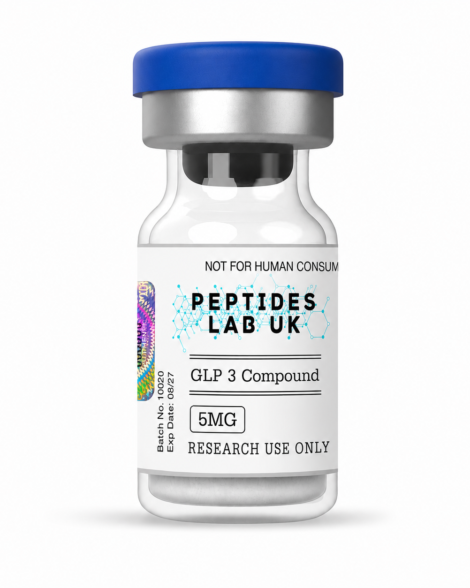

GLP-1 , Glucagon-Like Peptide-1 and is a synthetic incretin hormone peptide and one of the most extensively characterised and therapeutically significant gut-derived metabolic regulatory research compounds available to laboratories in Ireland and a 30-amino acid proglucagon-derived peptide produced by intestinal L-cells in response to nutrient ingestion that activates the GLP-1 receptor (GLP-1R) across pancreatic beta cells, hypothalamic nuclei, brainstem vagal circuits, cardiac tissue, and peripheral organs to drive glucose-stimulated insulin secretion, glucagon suppression, gastric emptying inhibition, central appetite reduction, beta cell proliferation and survival, and cardioprotective biology through mechanisms that have established GLP-1R signalling as one of the most pharmacologically productive metabolic research targets of the past three decades , making it an indispensable research tool for studying GLP-1R pharmacology and Gs-cAMP-PKA signal transduction in pancreatic beta cells, incretin biology and glucose-stimulated insulin secretion mechanisms, central GLP-1R appetite and satiety neurocircuitry in hypothalamic and brainstem nuclei, beta cell mass regulation and GLP-1-driven beta cell survival and proliferation biology, glucagon secretion suppression and alpha cell GLP-1R biology, gastric motility regulation and peripheral GLP-1R enteroendocrine physiology, cardioprotective GLP-1R signalling in cardiac tissue independent of glycaemic effects, and the comparative pharmacology of native GLP-1 versus long-acting GLP-1R agonist analogues in the research context of incretin biology and metabolic disease, Researchers and institutions across Ireland can source verified, research-grade GLP-1 directly from our Irish peptide supply, with domestic-speed dispatch and complete batch documentation.
✅ ≥99% Purity , HPLC & Mass Spectrometry Verified
✅ Batch-Specific Certificate of Analysis (CoA) Included
✅ Sterile Lyophilised Powder | GMP Manufactured
✅ Fast Dispatch to Ireland | Peptides Ireland Stock
GLP-1 , Glucagon-Like Peptide-1 , is a 30-amino acid incretin hormone derived from post-translational processing of proglucagon in intestinal L-cells and a subset of brainstem neurons in the nucleus tractus solitarius . A tissue-specific processing event in which the proglucagon precursor is cleaved by prohormone convertase 1/3 to generate GLP-1(7-36)amide and GLP-1(7-37), the two biologically active GLP-1 forms, alongside GLP-2 and oxyntomodulin. GLP-1 is released from intestinal L-cells in the distal small intestine and colon within minutes of nutrient ingestion and in response to dietary fat, carbohydrate, and protein and in a biphasic secretory pattern involving early vagal neural stimulation of proximal L-cells and later direct nutrient contact with distal L-cells. Circulating GLP-1 acts as an incretin hormone , potentiating glucose-stimulated insulin secretion from pancreatic beta cells in a glucose-concentration-dependent manner that distinguishes GLP-1R-mediated insulin release from sulfonylurea-driven insulin secretion and established the incretin effect as a major determinant of postprandial insulin responses.
The GLP-1 receptor . GLP-1R and is a class B GPCR expressed at highest density on pancreatic beta cells, with expression also characterised on pancreatic alpha cells, gastric parietal cells, intestinal enteroendocrine cells, vagal afferent neurons, hypothalamic arcuate and paraventricular nuclei, brainstem nucleus tractus solitarius, cardiac myocytes, endothelial cells, and kidney. GLP-1R signals primarily through Gs-coupled adenylate cyclase activation . Elevating intracellular cAMP, activating PKA and EPAC2, and driving multiple downstream effector pathways including closure of ATP-sensitive potassium channels, activation of voltage-gated calcium channels, enhancement of calcium-triggered insulin exocytosis, and potentiation of the transcription factor PDX-1 driving insulin gene expression. Secondary GLP-1R signalling through Gq/11 and beta-arrestin pathways contributes to GLP-1R-mediated beta cell proliferation, anti-apoptotic biology, and receptor internalisation dynamics that are independent of the canonical Gs-cAMP insulin secretory pathway.
Native GLP-1 has an extremely short circulating half-life of 1–2 minutes , degraded rapidly by dipeptidyl peptidase IV (DPP-IV) cleavage of the His7-Ala8 N-terminal dipeptide to generate the inactive GLP-1(9-36)amide fragment, and cleared renally . Severely limiting its utility as a pharmacological agent and requiring continuous infusion protocols for in vivo research applications requiring sustained GLP-1R stimulation. This pharmacokinetic limitation drove the development of the long-acting GLP-1R agonist class . Exenatide, liraglutide, semaglutide, and related compounds . Through DPP-IV resistance engineering, albumin binding, and fatty acid conjugation strategies that extend half-life from minutes to days or weeks. In the research context, native GLP-1 remains the essential reference agonist for GLP-1R pharmacology characterisation , providing the benchmark physiological receptor activation profile against which all long-acting GLP-1R analogue pharmacology is evaluated , and serves as the irreplaceable standard for in vitro beta cell biology, receptor signal transduction, and mechanistic incretin research applications where pharmacokinetic limitations are operationally managed through direct cell culture or isolated tissue paradigms.
In controlled laboratory and pre-clinical settings, GLP-1 is studied across pancreatic beta cell biology, incretin pharmacology, central appetite neurocircuitry, alpha cell glucagon suppression, gastric motility regulation, beta cell mass and survival, cardiac GLP-1R biology, and comparative incretin research applications:
GLP-1 is the reference endogenous agonist for GLP-1R pharmacology . Used to characterise receptor binding kinetics, Gs-cAMP-PKA signal transduction, EPAC2 activation, secondary Gq/11 and beta-arrestin pathway engagement, and the complete downstream effector cascade linking GLP-1R activation to insulin exocytosis in pancreatic beta cell models including MIN6, INS-1, and primary human and rodent islet preparations. Research uses GLP-1 to establish reference pharmacodynamic profiles for GLP-1R activation . Characterising concentration-response relationships for cAMP accumulation, calcium channel activation, insulin secretion potentiation, and receptor internalisation kinetics. These signal transduction studies provide the canonical GLP-1R activation dataset against which all long-acting GLP-1R agonist analogues are pharmacologically evaluated and establish the molecular basis of glucose-dependent insulin secretory potentiation.
GLP-1 is the reference incretin for studying glucose-stimulated insulin secretion , used to characterise the molecular mechanisms of incretin-potentiated insulin exocytosis in isolated islets and beta cell lines across a range of glucose concentrations establishing the glucose-dependency of GLP-1R-mediated insulin secretory potentiation. Research has characterised GLP-1-induced KATP channel closure, L-type calcium channel activation, calcium-triggered granule exocytosis, and the cAMP-PKA and EPAC2 effector pathways amplifying glucose-driven insulin secretion and establishing the mechanistic basis of GLP-1’s incretin biology at the beta cell level. Studies have examined the first and second phase insulin secretory responses to GLP-1, the concentration thresholds for glucose-dependent versus glucose-independent GLP-1R-mediated insulin secretion, and the incretin effect’s contribution to total postprandial insulin responses. These incretin biology studies have established GLP-1 as the reference physiological insulin secretory potentiator and the essential benchmark for characterising long-acting GLP-1R agonist incretin pharmacology.
Beyond acute insulin secretory potentiation, GLP-1 drives beta cell survival and proliferation through GLP-1R-mediated PI3K-Akt anti-apoptotic signalling, PDX-1 transcription factor activation, and beta cell neogenesis from ductal progenitor populations , establishing GLP-1R signalling as a pharmacologically accessible target for beta cell mass restoration research in diabetes biology. Research has characterised GLP-1’s beta cell trophic biology in isolated islet models, beta cell lines, and rodent diabetes models — examining caspase inhibition and Bcl-2 family anti-apoptotic protein upregulation protecting against cytokine and glucolipotoxicity-induced beta cell death, beta cell proliferation rate increases measured by BrdU and Ki67 incorporation, and pancreatic beta cell mass expansion in GLP-1-treated rodent models. These beta cell mass regulation studies have established GLP-1 as the reference endogenous beta cell trophic factor and the benchmark for evaluating beta cell protective biology of long-acting GLP-1R agonist analogues.
GLP-1R expression in hypothalamic arcuate and paraventricular nuclei and brainstem nucleus tractus solitarius mediates GLP-1’s central appetite-suppressing and satiety-promoting biology . Establishing GLP-1 as both a peripheral incretin hormone and a central anorexigenic neuropeptide signal. Research has characterised central GLP-1R-mediated appetite regulation . Examining food intake reduction following central and peripheral GLP-1 administration, hypothalamic neuropeptide Y and POMC neurone responses to GLP-1R activation, vagal afferent GLP-1R signalling transmitting satiety information from gut to brainstem, and the downstream hypothalamic energy balance circuit modifications producing sustained anorexigenic responses to GLP-1R agonism. Studies have characterised the nucleus tractus solitarius as a critical central GLP-1R site integrating peripheral nutrient sensing with central appetite regulation , establishing GLP-1 as the reference endogenous gut-brain axis peptide for studying incretin hormone central appetite neurocircuitry.
GLP-1R activation on pancreatic alpha cells suppresses glucagon secretion in a glucose-dependent manner and contributing to postprandial glucose control by reducing hepatic glucose output through attenuated glucagonaemia during hyperglycaemic conditions while preserving glucagon responses to hypoglycaemia. Research has characterised GLP-1’s alpha cell biology and examining GLP-1R expression and signal transduction in alpha cells, the glucose-dependency of GLP-1-mediated glucagon suppression, the paracrine versus direct mechanisms through which GLP-1R activation reduces alpha cell secretory activity, and how insulin co-secretion and somatostatin release from delta cells contribute to the net glucagon-suppressive response to GLP-1R agonism in intact islets. These alpha cell biology studies have established the mechanistic basis of GLP-1’s glucagon-suppressing incretin biology and contributed to characterisation of the coordinated beta-alpha-delta cell islet network responses to GLP-1R activation.
GLP-1 inhibits gastric emptying through vagal GLP-1R-mediated pathways slowing nutrient delivery from stomach to small intestine and contributing to postprandial glucose excursion reduction through a mechanism independent of and additive to direct pancreatic incretin biology. Research has characterised GLP-1’s gastric motility inhibitory biology and examining GLP-1R expression and signalling in gastric smooth muscle and enteric nervous system, vagal afferent nerve GLP-1R-mediated gastric emptying delay signalling, and the relative contributions of gastric emptying inhibition versus pancreatic insulin secretion potentiation to the net postprandial glucose-lowering biology of GLP-1R agonism. These enteroendocrine biology studies have established gastric motility inhibition as an independent and pharmacologically significant component of GLP-1’s metabolic biology and contributed to understanding of the gut-pancreas-brain axis coordinated metabolic response to nutrient ingestion.
GLP-1R expression on cardiomyocytes and cardiac endothelial cells mediates direct cardioprotective biology , including anti-apoptotic signalling, ischaemia-reperfusion injury protection, and positive chronotropic and inotropic effects , independently of glycaemic improvements and systemic metabolic effects. Research has characterised GLP-1’s cardiac biology in isolated cardiomyocyte models and rodent cardiac ischaemia-reperfusion paradigms — examining PI3K-Akt and AMPK pro-survival pathway activation, reduced cardiomyocyte apoptosis, decreased infarct size, improved post-ischaemic left ventricular functional recovery, and anti-inflammatory responses following GLP-1 treatment. Studies have examined the relative contributions of direct cardiac GLP-1R activation versus systemic metabolic improvements to the cardioprotective outcomes of GLP-1R agonism , establishing the direct tissue GLP-1R signalling component of cardiac protection and contributing to understanding of GLP-1’s cardiovascular biology beyond glucose lowering.
Native GLP-1 is studied in comparative paradigms alongside long-acting GLP-1R agonists including exenatide, liraglutide, and semaglutide , characterising how DPP-IV resistance engineering, albumin binding, and fatty acid conjugation modify GLP-1R binding kinetics, receptor internalisation and trafficking, biased agonism profiles, beta cell trophic biology, central appetite effects, and cardioprotective biology relative to the native endogenous reference agonist. These comparative pharmacology studies establish the pharmacological consequences of structural modification as independent variables in GLP-1R agonist research , separating the effects of receptor binding affinity, half-life, biased signalling, and receptor trafficking on downstream biological outcomes to inform mechanistic interpretation of long-acting GLP-1R agonist biology.
Research has mechanistically established GLP-1’s glucose-dependent insulin secretory potentiation and documenting GLP-1R-mediated cAMP elevation, KATP channel closure amplification, L-type calcium channel activation, and calcium-triggered exocytosis enhancement in isolated beta cells and islets across defined glucose concentration ranges establishing the strict glucose-dependency of incretin-potentiated insulin secretion. These mechanistic studies established the molecular basis of the incretin effect and validated GLP-1 as the reference physiological insulin secretory potentiator against which all GLP-1R agonist pharmacology is benchmarked.
Research has documented GLP-1’s beta cell trophic biology and characterising anti-apoptotic protection against cytokine and glucolipotoxicity-induced beta cell death, proliferation rate increases in isolated islets and beta cell lines, and beta cell mass expansion in GLP-1-treated rodent models. These beta cell survival and proliferation studies established GLP-1R signalling as a pharmacologically accessible beta cell protective target and contributed to the foundational biology supporting therapeutic interest in long-acting GLP-1R agonists for beta cell mass preservation in type 2 diabetes research.
Research has documented central GLP-1R-mediated appetite suppression . Characterising food intake reduction following central GLP-1 administration, hypothalamic POMC neurone activation and NPY suppression, vagal afferent satiety signalling, and nucleus tractus solitarius GLP-1R-mediated anorexigenic biology. These central appetite studies established the gut-brain axis incretin neurocircuitry of GLP-1 and contributed to understanding of the central anorexigenic biology underlying the weight-reducing effects of long-acting GLP-1R agonists.
Research has confirmed GLP-1’s glucose-dependent glucagon suppression in isolated islet and in vivo models characterising attenuated alpha cell secretory responses to GLP-1R activation under hyperglycaemic but not hypoglycaemic conditions and establishing the mechanistic basis of GLP-1’s glucagonostatic biology as a distinct and additive component of its overall glucose-lowering pharmacology.
Research has documented significant GLP-1 cardioprotection in rodent cardiac ischaemia-reperfusion models . Characterising reduced infarct size, preserved left ventricular function, attenuated cardiomyocyte apoptosis, and PI3K-Akt pro-survival pathway activation through direct cardiac GLP-1R signalling independent of systemic glycaemic effects. These cardioprotection studies established the direct tissue-protective component of GLP-1R cardiac biology and contributed to the mechanistic basis of cardiovascular outcome biology in GLP-1R agonist research.
Research has characterised GLP-1’s rapid DPP-IV-mediated degradation and documenting His7-Ala8 dipeptide cleavage kinetics, GLP-1(9-36)amide inactive metabolite generation, renal clearance contribution to short half-life, and the resulting 1–2 minute circulating half-life in plasma. These pharmacokinetic characterisation studies established the molecular basis of native GLP-1’s short half-life and provided the structural rationale for Ala8 modification strategies employed in developing DPP-IV-resistant long-acting GLP-1R agonist analogues.
| Feature | GLP-1 (Native) | GIP | Exenatide | Liraglutide | Semaglutide | Glucagon |
|---|---|---|---|---|---|---|
| Type | Endogenous 30-aa incretin and L-cell derived | Endogenous 42-aa incretin and K-cell derived | Synthetic exendin-4 , DPP-IV resistant GLP-1R agonist | Fatty acid conjugated GLP-1 analogue . Albumin binding | PEGylated fatty acid GLP-1 analogue , once weekly | Endogenous 29-aa pancreatic alpha cell hormone |
| Primary Receptor | GLP-1R , class B GPCR . Gs-cAMP primary | GIPR . Class B GPCR and Gs-cAMP | GLP-1R , GLP-1R selective | GLP-1R and GLP-1R selective | GLP-1R . GLP-1R selective | GCGR . Class B GPCR . Gs-cAMP |
| Insulin Secretion | Yes . Glucose-dependent potentiation | Yes — glucose-dependent , additive to GLP-1 | Yes , glucose-dependent | Yes . Glucose-dependent | Yes . Glucose-dependent | Indirect , via glucose elevation |
| Glucagon Suppression | Yes and glucose-dependent | Partial . Context-dependent | Yes | Yes | Yes , pronounced | N/A , glucagon is glucagonogenic |
| Half-Life | ~1–2 minutes DPP-IV labile | ~5–7 minutes . DPP-IV labile | ~2.4 hours (SC) | ~13 hours | ~1 week | ~5 minutes |
| Beta Cell Trophic Biology | Yes and reference | Limited data | Yes | Yes | Yes | Limited |
| Central Appetite Effect | Yes , hypothalamic + NTS | Limited | Yes | Yes , pronounced | Yes , pronounced weight reduction | Orexigenic |
| Cardioprotection | Yes , direct GLP-1R | Limited direct data | Yes documented | Yes , documented | Yes and major cardiovascular outcome trials | Limited direct |
| Gastric Emptying Inhibition | Yes | Minimal | Yes and pronounced | Yes | Yes , pronounced | Stimulatory |
| Key Research Distinction | Reference endogenous incretin . Physiological GLP-1R activation benchmark , essential in vitro and mechanistic research standard | Reference endogenous K-cell incretin , GIP receptor pharmacology , dual incretin biology | First approved GLP-1R agonist , DPP-IV resistance reference , exendin-4 scaffold | Fatty acid conjugation half-life extension model | Maximum half-life extension , once weekly clinical reference | Reference glucagon receptor agonist and counter-regulatory biology |
| Parameter | Detail |
|---|---|
| Name | GLP-1 |
| Also Designated | Glucagon-Like Peptide-1 / GLP-1(7-36)amide / GLP-1(7-37) and specify active form per batch CoA |
| Type | Synthetic 30-Amino Acid Incretin Hormone Peptide . Endogenous GLP-1R Agonist . Research Grade |
| Molecular Weight | 3297.7 Da (GLP-1 7-36 amide) |
| Active Forms | GLP-1(7-36)amide , primary circulating bioactive form / GLP-1(7-37) and minor bioactive form with equivalent GLP-1R activity |
| Mechanism | GLP-1R Gs-cAMP-PKA/EPAC2 → KATP closure + L-type Ca²⁺ channel activation + insulin exocytosis potentiation + beta cell survival and proliferation + central appetite suppression + glucagon suppression + gastric emptying inhibition + cardiac cytoprotection |
| Primary Receptor | GLP-1R and class B GPCR , Gs-cAMP primary / Gq/11 and beta-arrestin secondary , pancreatic beta cells / hypothalamus / brainstem NTS / cardiac / enteric |
| DPP-IV Sensitivity | Highly labile and His7-Ala8 N-terminal dipeptide cleavage by DPP-IV → inactive GLP-1(9-36)amide , half-life ~1–2 minutes in plasma |
| Key Research Distinction | Reference endogenous GLP-1R agonist , physiological incretin pharmacology benchmark , essential standard for in vitro beta cell biology, receptor signal transduction, and mechanistic incretin research |
| Primary Research Areas | GLP-1R pharmacology / incretin biology / glucose-stimulated insulin secretion / beta cell trophic biology / central appetite regulation / glucagon suppression / gastric motility / cardioprotection / comparative GLP-1R agonist pharmacology |
| Glucose-Dependency | Insulin secretory potentiation and glucagon suppression strictly glucose-concentration-dependent , critical experimental variable |
| Purity | ≥99% HPLC & MS Verified |
| Form | Sterile Lyophilised Powder |
| Solubility | Sterile water or sterile PBS pH 7.4 with 0.1% BSA carrier recommended |
| Storage (Powder) | -20°C, protect from light and moisture |
| Storage (Reconstituted) | -80°C in single-use aliquots and critical: DPP-IV in biological matrices degrades GLP-1 rapidly , add DPP-IV inhibitor to reconstitution buffer for plasma or ex vivo tissue studies |
| Manufacturing | GMP Manufactured |
| Intended Use | Research use only |
GLP-1 requires specific handling precautions to preserve biological activity given its extreme DPP-IV sensitivity. Reconstitute in sterile water or sterile PBS pH 7.4 , add BSA at 0.1% final concentration to reconstitution buffer to prevent peptide adsorption to polypropylene and glass surfaces at low working concentrations, which is a significant source of apparent potency loss in GLP-1 dose-response studies at sub-nanomolar concentrations. Critical: for any reconstitution or working solution preparation in biological matrices containing DPP-IV activity . Including serum-containing culture media, plasma, or ex vivo tissue preparations . Include a DPP-IV inhibitor (diprotin A, sitagliptin, or valine-pyrrolidide at established inhibitory concentrations) in all buffers to prevent GLP-1 degradation and maintain receptor-active intact GLP-1(7-36)amide concentration, Failure to inhibit DPP-IV activity in biological matrices will result in rapid loss of GLP-1 biological activity and confounded concentration-response data in cell culture and tissue incubation experiments. For isolated islet insulin secretion studies, prepare GLP-1 working solutions in HEPES-buffered Krebs-Ringer solution supplemented with 0.1% BSA and defined glucose concentration immediately before addition — the glucose concentration in the assay buffer is a critical experimental variable determining the magnitude of GLP-1R-mediated insulin secretory potentiation. For in vivo infusion protocols requiring sustained plasma GLP-1 exposure, continuous intravenous infusion with DPP-IV inhibitor co-administration is required to maintain pharmacologically active GLP-1 concentrations. Prepare single-use aliquots and store at -80°C , avoid freeze-thaw cycles that accelerate peptide degradation.
Every order of GLP-1 in Ireland includes:
✅ Batch-Specific Certificate of Analysis (CoA)
✅ HPLC Chromatogram
✅ Mass Spectrometry Confirmation . Active form specification (7-36 amide or 7-37)
✅ Sterility & Endotoxin Testing Report
✅ Reconstitution Protocol , including DPP-IV inhibitor requirement, BSA carrier guidance, and glucose-dependency experimental notes
✅ Technical Research Support
Yes and research-grade GLP-1 is available to researchers and institutions across Ireland with fast dispatch and full batch documentation. Supplied strictly for laboratory research purposes only.
Both are biologically active endogenous GLP-1 forms with equivalent GLP-1R binding affinity and insulin secretory potentiation biology. GLP-1(7-36)amide . The C-terminally amidated form and is the predominant circulating bioactive species produced by intestinal L-cells, while GLP-1(7-37) . With a free C-terminal arginine , is the minor bioactive form. Both are DPP-IV-sensitive at the His7-Ala8 N-terminal dipeptide and degrade to equivalent inactive GLP-1(9-36) metabolites.
DPP-IV cleaves GLP-1’s His7-Ala8 N-terminal dipeptide with a half-life of 1–2 minutes in plasma , any biological matrix containing DPP-IV activity will rapidly degrade GLP-1 to the inactive GLP-1(9-36)amide fragment. All in vitro experiments using serum-containing media and all ex vivo tissue studies must include validated DPP-IV inhibitors to maintain receptor-active GLP-1 concentrations and produce reliable dose-response data.
The incretin effect is the amplification of glucose-stimulated insulin secretion produced by gut-derived hormones , mainly GLP-1 and GIP and released in response to oral nutrient ingestion. GLP-1 accounts for the majority of the incretin effect in humans and is the reference endogenous incretin for mechanistic research and establishing the molecular basis of glucose-dependent insulin secretory potentiation through GLP-1R-Gs-cAMP-PKA-EPAC2-KATP-calcium signalling in beta cells.
Vehicle controls with matched BSA concentration, DPP-IV inhibitor-only controls confirming absence of DPP-IV inhibitor-intrinsic insulin secretory effects, GLP-1R antagonist exendin(9-39) controls confirming GLP-1R specificity, and varied glucose concentration controls establishing glucose-dependency of insulin secretory potentiation. For beta cell trophic studies, GLP-1R knockout cell or islet controls confirm receptor-mediated versus receptor-independent biology.
Native GLP-1 is the endogenous reference agonist with physiological receptor activation kinetics and a 1–2 minute half-life, Essential for mechanistic in vitro and acute in vivo research but impractical as a sustained pharmacological agent, Semaglutide and other long-acting analogues achieve days-to-weeks half-life through structural modifications conferring DPP-IV resistance and albumin binding . But may show different GLP-1R internalisation, biased signalling, and receptor trafficking profiles relative to native GLP-1 that are pharmacologically significant variables in comparative mechanistic research.
≥99% purity by HPLC and mass spectrometry is essential , GLP-1(9-36)amide DPP-IV cleavage product impurities, des-His7 truncation fragments, and oxidised Met or Trp variants show substantially altered or absent GLP-1R binding affinity and would confound concentration-response characterisation. Active form specification confirming GLP-1(7-36)amide versus GLP-1(7-37) identity is a critical analytical requirement. All GLP-1 Ireland stock is verified to ≥99% purity with active form identity confirmed by mass spectrometry.
GLP-1 is supplied exclusively for legitimate scientific research purposes conducted within licensed laboratory environments. This product isn’t intended for human consumption, self-administration, or any therapeutic application. It must be handled by qualified researchers in compliance with applicable Irish and EU regulations and institutional ethics guidelines. By purchasing, you confirm that this compound will be used solely for approved in vitro or pre-clinical research purposes.
GLP-1 isn’t authorised as a medicine by the HPRA. It’s legal to buy, hold and use as a research chemical for in-vitro laboratory work, and that’s the only use we supply it for. If you want the full regulatory picture, see our Irish researcher’s guide to peptide legality.
Every vial ships with an HPLC purity trace (typically ≥99%), mass-spec identity confirmation, and endotoxin/heavy-metal screening on the batch. The full per-batch Certificate of Analysis is available on request from research@peptideslabireland.com. Our quality system is ISO 9001 certified and third-party testing runs through a UKAS-accredited lab.
Standard protocol: let the GLP-1 vial and your bacteriostatic water come to room temperature, wipe both stoppers with a 70% isopropyl swab, then add the water slowly down the side wall of the peptide vial. Don’t stream directly onto the powder cake. Swirl gently, don’t shake, and give it five to ten minutes to fully dissolve. Label the vial with compound, concentration and reconstitution date, store at 2–8°C between assays.
Same-day dispatch on orders placed before 2pm on a working day. Delivery is 24–48 hours to any Irish county via An Post Express or DPD. Cold chain is preserved with insulated wrap plus gel pack. No customs step, no border delays because it never leaves Ireland.
In the Irish research space GLP-1 tends to appear in GLP-1 receptor signalling and glucose-homeostasis research. It’s often paired with Tirzepatide or Retatrutide in comparison studies when researchers are studying combined mechanisms rather than the compound alone.
Lyophilised GLP-1 is refrigerated post-reconstitution, working shelf life 14–28 days. Once reconstituted, keep it refrigerated at 2–8°C and use within the working shelf life described on the CoA. Freeze/thaw cycles degrade peptides, so aliquot the reconstituted solution if you plan to run assays over several weeks.
Receive News