PRODUCTS SOLD ON PEPTIDESLABIRELAND.COM ARE FOR RESEARCH PURPOSES ONLY AND ARE NOT FOR HUMAN OR VETERINARY USE.
Fast Ireland delivery — dispatched to Dublin, Cork, Galway, Limerick and nationwide.
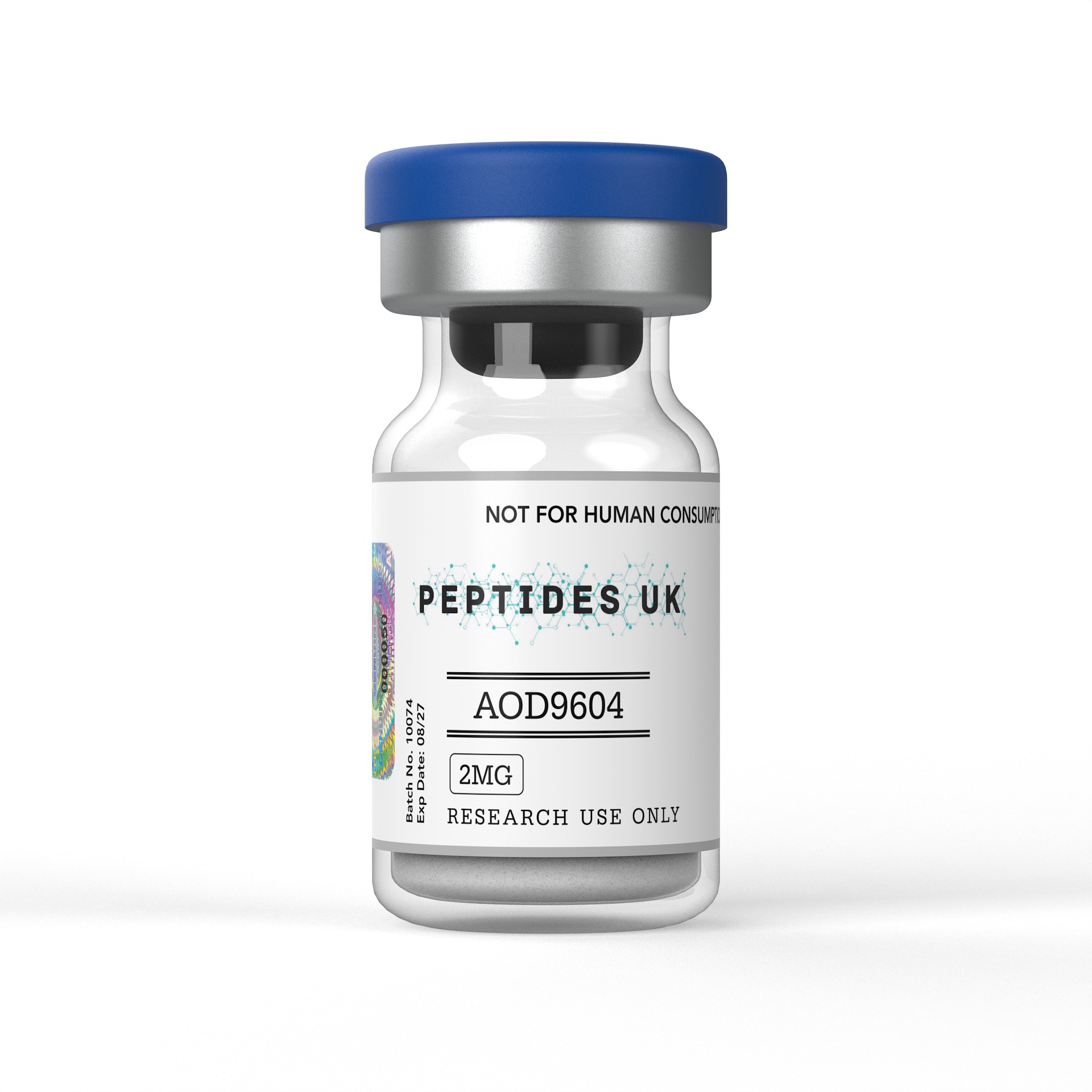
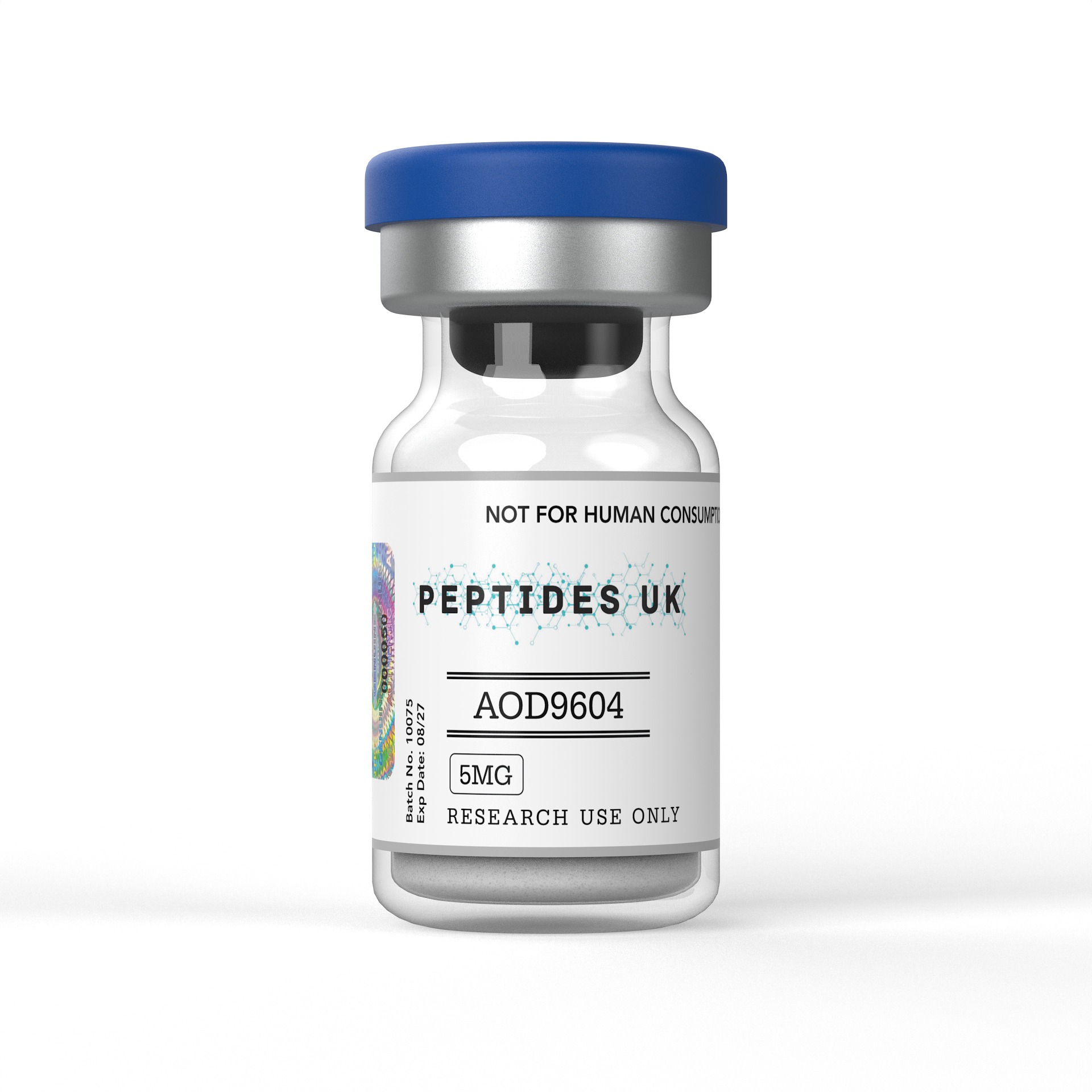
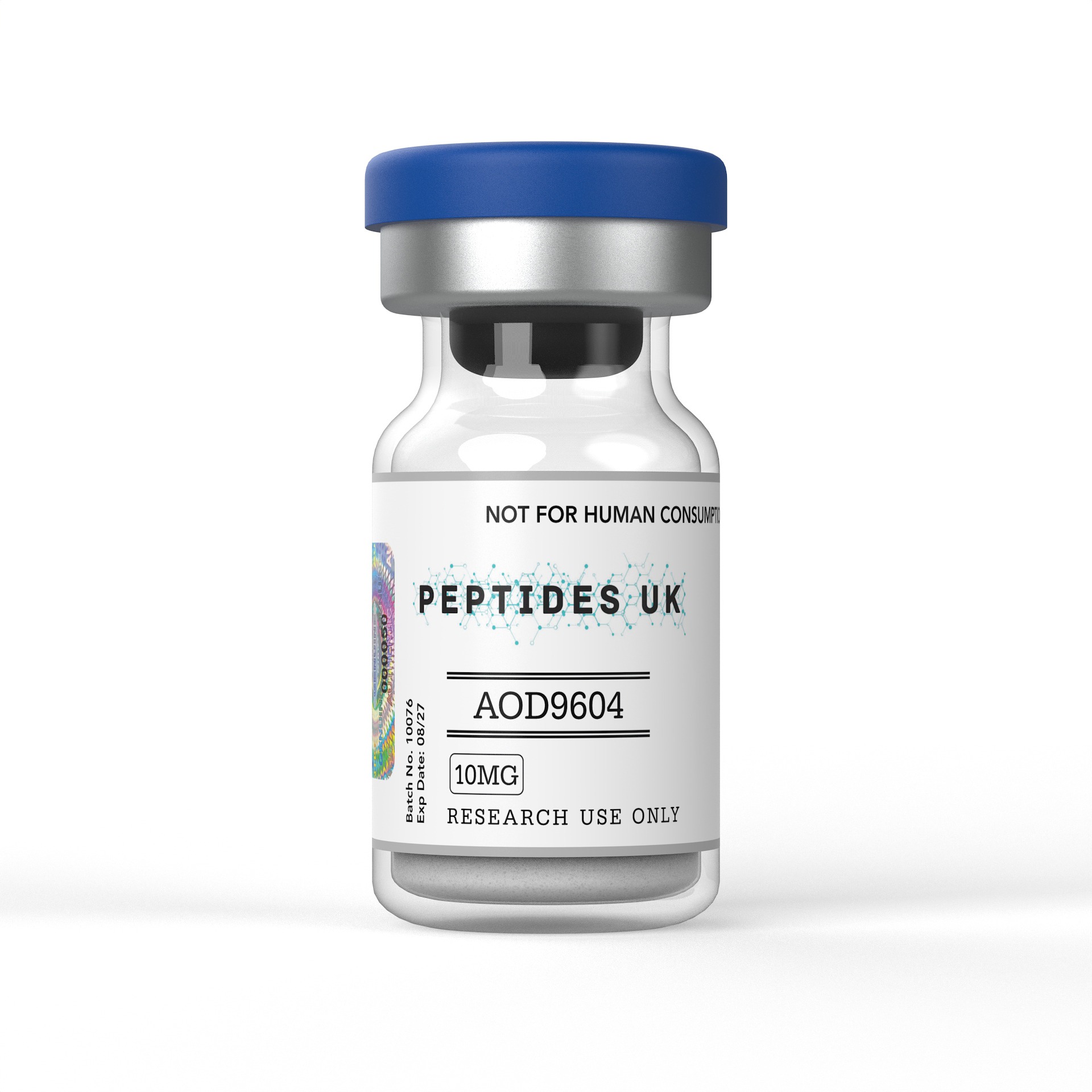
€29.00 – €121.00Price range: €29.00 through €121.00
AOD9604 — synthetic modified fragment 176-191 of human growth hormone studied in lipolysis and fat-mobilisation research models. HPLC-verified ≥99% purity, per-batch COA. Fast Ireland delivery.
For laboratory research use only. Not for human or veterinary use.



AOD9604 , Anti-Obesity Drug 9604 , is a synthetic 16-amino acid stabilised analogue of the lipolytic C-terminal domain of human growth hormone and one of the most precisely characterised GH-derived selective lipolytic research compounds available to laboratories in Ireland . A Tyr-Leu-Arg-Ile-Val-Gln-Cys-Arg-Ser-Val-Glu-Gly-Ser-Cys-Gly-Phe peptide corresponding to residues 177–191 of the native hGH sequence with a disulphide-stabilised cyclic conformation and an N-terminal tyrosine addition that selectively recapitulates and enhances the lipolytic biological activity of the hGH C-terminal domain without engaging the GH receptor, stimulating IGF-1 production, or producing the insulin-desensitising anabolic effects of intact GH . Making it an indispensable research tool for studying the dissociated lipolytic pharmacology of the GH molecule, the mechanism of GH-derived peptide-induced adipocyte fat mobilisation, beta-3 adrenergic receptor sensitisation and adipocyte cAMP biology, the structure-activity relationships governing GH C-terminal domain lipolytic potency, the anti-lipogenic biology of GH-derived fragment peptides, and the comparative lipolytic pharmacology of AOD9604 versus HGH Fragment 176-191 and intact hGH in the research context of adipose tissue metabolism and selective GH domain biology, Researchers and institutions across Ireland can source verified, research-grade AOD9604 directly from our Irish peptide supply, with domestic-speed dispatch and complete batch documentation.
✅ ≥99% Purity , HPLC & Mass Spectrometry Verified
✅ Batch-Specific Certificate of Analysis (CoA) Included
✅ Sterile Lyophilised Powder | GMP Manufactured
✅ Fast Dispatch to Ireland | Peptides Ireland Stock
AOD9604 and Anti-Obesity Drug 9604, Tyr-Leu-Arg-Ile-Val-Gln-Cys-Arg-Ser-Val-Glu-Gly-Ser-Cys-Gly-Phe with N-terminal tyrosine and Cys-Cys disulphide bridge and is a synthetic stabilised analogue of the HGH Fragment 176-191 lipolytic domain developed through structure-activity relationship optimisation of the hGH C-terminal lipolytic pharmacophore at Monash University in Melbourne, Australia and a research and development programme directed by Professor Frank Ng that aimed to identify the minimal GH-derived peptide structure capable of reproducing the fat-mobilising biology of full-length growth hormone with complete pharmacological separation from GH receptor-mediated anabolic, mitogenic, and insulin-antagonising effects. AOD9604 emerged from this programme as a structurally refined successor to HGH Fragment 176-191 and retaining the 177–191 core sequence and the pharmacophore-stabilising Cys-Cys disulphide bridge while adding an N-terminal tyrosine that enhances structural definition, aqueous solubility, and analytical characterisation relative to the parent HGH Fragment 176-191 compound.
The structural relationship between AOD9604 and HGH Fragment 176-191 is defined by the single N-terminal Tyr addition , AOD9604 corresponds to residues 177–191 of hGH with an additional N-terminal Tyr0 residue producing the complete Tyr-Leu-Arg-Ile-Val-Gln-Cys-Arg-Ser-Val-Glu-Gly-Ser-Cys-Gly-Phe sequence, whereas HGH Fragment 176-191 begins at Tyr176 of the native hGH sequence. This N-terminal modification confers improved HPLC characterisation, enhanced aqueous stability, and modified proteolytic susceptibility at the N-terminus relative to the Leu-initiated HGH Fragment 176-191 sequence. The Cys182–Cys189 disulphide bridge , bridging positions 7 and 14 in the AOD9604 sequence — is retained from the parent fragment and is equally critical for the α-helical pharmacophore conformation required for full lipolytic potency in AOD9604.
AOD9604’s lipolytic mechanism in adipocytes is mediated through beta-3 adrenergic receptor sensitisation, direct cAMP pathway activation, hormone-sensitive lipase phosphorylation, and anti-lipogenic suppression of fatty acid uptake and de novo lipogenesis and mechanisms characterised as operating independently of GH receptor engagement, IGF-1R activation, and canonical GH axis signalling. Research has additionally characterised AOD9604 as demonstrating activity in stimulating fat metabolism through pathways involving beta-3 adrenergic receptor interaction that extend beyond the lipolytic biology of the parent HGH Fragment 176-191 , establishing AOD9604 as a structurally refined and pharmacologically distinct research tool relative to the parent fragment while sharing the core GH domain lipolytic pharmacophore biology. AOD9604 has advanced further through regulatory characterisation than any other GH-derived lipolytic fragment having received GRAS (Generally Recognised As Safe) designation from the US FDA following extensive safety evaluation . Making it the most thoroughly safety-characterised GH C-terminal domain peptide research compound and a uniquely validated reference tool for GH lipolytic domain biology research.
In controlled laboratory and pre-clinical settings, AOD9604 is studied across adipocyte lipolysis biology, GH domain structure-activity relationships, anti-lipogenic mechanisms, beta-3 adrenergic receptor pharmacology, metabolic substrate regulation, cartilage and tissue repair biology, and comparative GH fragment pharmacology applications:
AOD9604 is studied as a selective GH-derived lipolytic peptide in adipocyte biology and used to characterise triglyceride hydrolysis activation, hormone-sensitive lipase stimulation, glycerol and free fatty acid mobilisation, and the concentration-response relationships governing lipolytic potency in isolated adipocyte models and adipose tissue preparations. Research has employed AOD9604 to dissect the adipocyte signalling pathways downstream of the stabilised hGH C-terminal lipolytic pharmacophore and examining beta-3 adrenergic receptor interaction, cAMP elevation, PKA activation, and perilipin phosphorylation as components of the lipolytic cascade. These lipolysis biology studies characterise AOD9604 as a reference stabilised GH domain lipolytic peptide for studying GH-mediated fat mobilisation at the adipocyte level, with the N-terminal Tyr modification enabling enhanced analytical resolution in concentration-response characterisation relative to HGH Fragment 176-191.
Beyond stimulating triglyceride hydrolysis, AOD9604 produces anti-lipogenic effects in adipocytes . Suppressing de novo fatty acid synthesis, inhibiting fatty acid uptake from circulating lipoproteins, and reducing triglyceride re-esterification through mechanisms complementary to its lipolytic biology. Research has characterised AOD9604’s anti-lipogenic biology in adipocyte cell models and examining acetyl-CoA carboxylase and fatty acid synthase activity inhibition, VLDL-derived fatty acid uptake suppression, and transcriptional modulation of lipogenic regulators including PPAR-gamma and SREBP-1c. These anti-lipogenic studies have characterised AOD9604 as a dual-action fat metabolism modulator producing net adipose tissue lipid reduction through combined lipolytic stimulation and lipogenesis suppression and a pharmacological profile producing greater net fat mobilisation than lipolysis stimulation alone.
AOD9604’s lipolytic mechanism involves beta-3 adrenergic receptor sensitisation in adipocytes and making it a research tool for studying the intersection of GH C-terminal domain peptide biology and adrenergic signalling in fat cell metabolism. Research has characterised AOD9604’s interaction with beta-3 adrenergic receptor pathways — examining cAMP accumulation kinetics, PKA activation profiles, and the synergistic or additive lipolytic effects produced when AOD9604 is combined with selective beta-3 adrenergic receptor agonists. Studies have addressed whether AOD9604 acts as a direct beta-3 adrenergic receptor ligand, an allosteric sensitiser of adrenergic signalling, or a parallel cAMP pathway activator . Characterising the receptor pharmacology that underlies the adrenergic component of AOD9604’s adipocyte lipolytic biology.
AOD9604 is studied alongside HGH Fragment 176-191, truncated variants, and substitution analogues to characterise the structure-activity relationships governing GH C-terminal lipolytic domain potency , examining how the N-terminal Tyr0 addition, the Cys-Cys disulphide bridge geometry, specific residue contributions within the 177–191 sequence, and conformational dynamics of the α-helical pharmacophore determine lipolytic activity magnitude. Research has used AOD9604 as the N-terminally extended reference compound for comparative structure-activity studies with HGH Fragment 176-191 — characterising whether the Tyr0 addition modifies lipolytic potency, receptor binding kinetics, or adipocyte signalling pathway engagement relative to the parent fragment. These structure-activity studies have contributed to mapping the minimal pharmacophore requirements for GH domain-selective lipolytic biology and establishing the conformational determinants of adipocyte target engagement within the hGH C-terminal sequence.
AOD9604’s established GH receptor non-engagement makes it the reference compound for studying dissociated GH biology . Enabling research that examines fat mobilisation pharmacology in complete isolation from GH receptor-mediated anabolic, mitogenic, and insulin-antagonising biology. Research has used AOD9604 in parallel with full-length hGH and GH receptor agonist and antagonist controls , characterising which aspects of GH’s metabolic biology are mediated through the C-terminal lipolytic domain versus GH receptor dimerisation, and establishing the pharmacological boundary between GH domain peptide biology and receptor-mediated intact GH pharmacology. These dissociation studies have established AOD9604 as the most thoroughly characterised selective GH lipolytic domain research tool and the preferred reference compound for studies where GH receptor engagement must be pharmacologically eliminated.
AOD9604 has been studied in pre-clinical cartilage biology and osteoarthritis models , characterising effects on chondrocyte metabolism, proteoglycan synthesis, cartilage matrix preservation, and joint tissue homeostasis that extend beyond the adipose tissue lipolytic biology for which the compound was originally developed. Research has examined AOD9604’s effects on chondrocyte proliferation, aggrecan and collagen type II expression, matrix metalloproteinase activity, and pro-inflammatory cytokine-driven cartilage degradation in in vitro and in vivo osteoarthritis models . Characterising a potential tissue-protective chondrocyte biology that represents a pharmacological activity of the GH C-terminal domain peptide extending beyond adipose tissue. These cartilage biology studies have positioned AOD9604 as a multi-tissue research compound whose biological significance may not be limited to the fat mobilisation biology for which it was originally characterised.
AOD9604 and HGH Fragment 176-191 are studied in direct comparative paradigms , characterising the pharmacological consequences of the N-terminal Tyr0 addition on lipolytic potency, receptor binding kinetics, proteolytic stability, aqueous solubility, and adipocyte signalling pathway engagement. Research has used side-by-side AOD9604 and HGH Fragment 176-191 treatments in adipocyte lipolysis assays, adipose tissue preparations, and in vivo fat mobilisation models and characterising whether the N-terminal structural modification produces quantitative or qualitative differences in lipolytic biology relative to the parent fragment. These comparative studies have established the pharmacological relationship between the two GH C-terminal domain research compounds and defined AOD9604’s position as the structurally refined, more thoroughly safety-characterised successor to HGH Fragment 176-191 in GH lipolytic domain research.
Research has confirmed AOD9604’s selective lipolytic activity in adipocyte models and rodent pre-clinical studies characterising triglyceride hydrolysis stimulation, free fatty acid mobilisation, and fat mass reduction without detectable GH receptor activation, IGF-1 elevation, insulin resistance induction, or mitogenic signalling. These selectivity studies established AOD9604 as a pharmacologically validated selective GH domain lipolytic research tool and confirmed that GH receptor non-engagement is preserved in the N-terminally extended AOD9604 structure relative to the parent HGH Fragment 176-191.
Rodent pre-clinical research has documented AOD9604-induced fat mass reduction in diet-induced and genetic obesity models and characterising reduced adipose tissue mass, decreased fat cell size, and improved body composition parameters over treatment periods without the insulin resistance, hyperglycaemia, or IGF-1 elevation associated with equivalent fat-mobilising doses of full-length hGH. These in vivo fat mobilisation studies established the whole-animal efficacy of AOD9604’s combined lipolytic and anti-lipogenic biology and validated the GH domain-selective fat mobilisation pharmacology at the systemic level.
AOD9604 has received Generally Recognised As Safe (GRAS) designation from the US FDA following comprehensive safety evaluation and establishing it as the most thoroughly safety-characterised GH C-terminal domain peptide research compound and uniquely validating its non-toxic profile across extensive pre-clinical and clinical safety assessment. This regulatory characterisation distinguishes AOD9604 from all other GH fragment research compounds and positions it as the reference safety-validated GH lipolytic domain peptide for comparative research applications.
Structure-activity research has confirmed that the Cys-Cys disulphide bridge in AOD9604 is required for full lipolytic potency . With reduced free-thiol forms showing substantially attenuated lipolytic activity in adipocyte assays consistent with the HGH Fragment 176-191 structure-activity data. These structure-activity studies confirmed that the α-helical pharmacophore conformation stabilised by the disulphide bridge is equally critical for adipocyte target engagement in the N-terminally extended AOD9604 structure.
Pre-clinical research has documented AOD9604 effects in osteoarthritis models , characterising chondroprotective biology including enhanced proteoglycan synthesis, reduced cartilage matrix degradation, and attenuation of pro-inflammatory cytokine-driven cartilage destruction in treated joints. These cartilage biology studies established that AOD9604’s pharmacological activity extends beyond adipose tissue lipolysis and contributed to characterisation of GH C-terminal domain peptide biology in non-adipose tissue contexts.
Research has characterised AOD9604’s interaction with beta-3 adrenergic receptor-mediated signalling in adipocytes . Documenting cAMP elevation, hormone-sensitive lipase activation, and lipolytic responses consistent with adrenergic pathway engagement. These mechanism studies established that the GH C-terminal lipolytic pharmacophore in AOD9604 engages beta-3 adrenergic signalling components in adipocytes and provided the molecular basis for understanding how the stabilised hGH domain drives cAMP-dependent triglyceride mobilisation.
| Feature | AOD9604 | HGH Fragment 176-191 | Full-Length hGH | CJC-1295 With DAC | GHRP-6 | PEG MGF |
|---|---|---|---|---|---|---|
| Type | Stabilised synthetic hGH C-terminal domain analogue and N-Tyr extended | Synthetic hGH C-terminal domain peptide and parent fragment | Full 191-residue hGH glycoprotein | Long-acting GHRH analogue DAC albumin binding | Synthetic hexapeptide GHS-R1a agonist | PEGylated MGF E-domain peptide |
| Primary Mechanism | Direct adipocyte beta-3 adrenergic sensitisation → cAMP → HSL → lipolysis + anti-lipogenesis and GH receptor independent | Same core mechanism no N-Tyr | GH receptor dimerisation → JAK2-STAT5 → IGF-1 + lipolytic domain biology | GHRHR Gs-cAMP-PKA → sustained GH release → indirect lipolysis via GH | GHS-R1a → GH release → indirect lipolysis via GH | MGF-specific receptor + ERK1/2 → satellite cell activation + cytoprotection |
| GH Receptor Engagement | None confirmed | None confirmed | Full canonical engagement | None . Indirect via released GH | None , indirect via released GH | None |
| IGF-1 Stimulation | None documented | None documented | Yes . Primary anabolic mechanism | Indirect via GH | Indirect via GH | Partial IGF-1R component |
| Direct Lipolytic Activity | Yes and primary research application | Yes , primary research application | Yes and includes C-terminal domain | Indirect via GH | Indirect via GH | No |
| Insulin Sensitivity | No adverse effects documented | No adverse effects documented | Resistance at pharmacological doses | Indirect via GH | Indirect via GH | No adverse effects |
| Cartilage Biology | Yes — documented | Limited data | Yes and IGF-1 mediated | No | No | Limited data |
| Regulatory Status | US FDA GRAS designated | No GRAS designation | Prescription medicine | Research compound | Research compound | Research compound |
| Key Research Distinction | Most safety-characterised GH lipolytic domain peptide — N-Tyr stabilised AOD9604 reference . Cartilage biology extension | Parent GH lipolytic fragment . Direct structural comparator | Complete GH biology reference | Long-acting GHRH and indirect GH axis activation | Reference GHS-R1a agonist . Indirect GH | Long-acting MGF . Satellite cell activation |
| Parameter | Detail |
|---|---|
| Name | AOD9604 |
| Also Designated | Anti-Obesity Drug 9604 / AOD-9604 / Tyr-hGH Fragment 177-191 |
| Sequence | Tyr-Leu-Arg-Ile-Val-Gln-Cys-Arg-Ser-Val-Glu-Gly-Ser-Cys-Gly-Phe |
| Type | Synthetic Stabilised hGH C-Terminal Domain Analogue , Selective GH Lipolytic Domain Peptide and Research Grade |
| Molecular Weight | 1815.1 Da |
| Structural Distinction vs HGH Fragment 176-191 | N-terminal Tyr0 addition , corresponds to hGH residues 177–191 with additional N-terminal Tyr versus HGH Fragment 176-191 residues 176–191 |
| Disulphide Bridge | Cys7–Cys14 (Cys182–Cys189 in hGH numbering) and essential for α-helical pharmacophore conformation and full lipolytic potency |
| Mechanism | Beta-3 adrenergic receptor sensitisation → cAMP elevation → PKA activation → hormone-sensitive lipase phosphorylation → triglyceride hydrolysis + de novo lipogenesis suppression + fatty acid uptake inhibition , GH receptor independent |
| GH Receptor Engagement | None confirmed — pharmacologically dissociated from GH receptor-binding N-terminal hGH domains |
| IGF-1 Induction | None documented |
| Regulatory Characterisation | US FDA GRAS (Usually, Recognised As Safe) designation and most safety-characterised GH C-terminal domain peptide research compound |
| Primary Research Areas | Adipocyte lipolysis / anti-lipogenic biology / beta-3 adrenergic receptor pharmacology / GH domain structure-activity relationships / GH receptor dissociation / cartilage biology / comparative GH fragment pharmacology |
| Key Research Distinction | Structurally refined and most thoroughly safety-characterised GH lipolytic domain peptide — N-Tyr stabilised successor to HGH Fragment 176-191 . Reference compound for GH C-terminal domain selective lipolytic biology |
| Purity | ≥99% HPLC & MS Verified |
| Form | Sterile Lyophilised Powder |
| Solubility | Sterile water or 0.1% acetic acid aqueous solution and avoid reducing agents |
| Storage (Powder) | -20°C, protect from light and moisture . Avoid reducing agents that cleave disulphide bridge |
| Storage (Reconstituted) | -80°C in single-use aliquots , minimise freeze-thaw cycles |
| Manufacturing | GMP Manufactured |
| Intended Use | Research use only |
AOD9604 reconstitutes readily in sterile water or 0.1% acetic acid in sterile water and add reconstitution solvent slowly to the lyophilised powder and swirl gently until fully dissolved. Critical handling requirement: the Cys7–Cys14 disulphide bridge is essential for full lipolytic potency and must be preserved throughout reconstitution and storage . All reconstitution buffers and downstream assay media must be completely free of reducing agents including DTT, beta-mercaptoethanol, TCEP, glutathione, and cysteine. Thiol-containing reagents will reduce the disulphide bridge and produce the substantially less potent free-thiol form of AOD9604, confounding dose-response studies and producing falsely attenuated lipolytic potency data. Verify reducing agent absence in all buffers used across the experimental workflow. The N-terminal Tyr residue is susceptible to mild oxidation under prolonged storage in reconstituted form and under UV light exposure . Prepare working solutions in amber or foil-wrapped tubes and store reconstituted aliquots at -80°C in the dark. For adipocyte lipolysis assays, prepare working dilutions in serum-free assay buffer at 37°C immediately before addition. For comparative studies with HGH Fragment 176-191, prepare matched vehicle controls and verify disulphide status of both compounds by Ellman’s assay before use in critical experiments. For structure-activity studies requiring reduced free-thiol AOD9604, reduce with TCEP immediately before use and confirm reduction by Ellman’s assay.
Every order of AOD9604 in Ireland includes:
✅ Batch-Specific Certificate of Analysis (CoA)
✅ HPLC Chromatogram
✅ Mass Spectrometry Confirmation
✅ Disulphide Bridge Integrity Verification
✅ Sterility & Endotoxin Testing Report
✅ Reconstitution Protocol and including disulphide preservation, reducing agent exclusion, and N-Tyr oxidation guidance
✅ Technical Research Support
Yes and research-grade AOD9604 is available to researchers and institutions across Ireland with fast dispatch and full batch documentation. Supplied strictly for laboratory research purposes only.
AOD9604 adds an N-terminal tyrosine to the HGH Fragment 176-191 sequence and corresponding to hGH residues 177–191 plus Tyr0 versus HGH Fragment 176-191’s residues 176–191. The N-Tyr addition confers improved aqueous stability, enhanced analytical characterisation, and modified N-terminal proteolytic susceptibility. Both compounds share the core Cys-Cys disulphide-stabilised lipolytic pharmacophore and GH receptor-independent fat mobilisation mechanism.
AOD9604 received US FDA GRAS designation following extensive pre-clinical and clinical safety evaluation , confirming an established non-toxic safety profile across comprehensive assessment. For research applications this means AOD9604 is the most thoroughly safety-characterised GH C-terminal domain peptide, providing a uniquely validated reference compound for GH lipolytic domain biology and making it the preferred choice where compound safety characterisation is a research selection criterion.
No , research has confirmed that AOD9604 produces no detectable GH receptor activation, IGF-1 elevation, or insulin resistance at lipolytically active concentrations. The GH receptor-binding N-terminal domains of full-length hGH are absent from the 16-residue AOD9604 sequence, and GH receptor non-engagement has been validated in both in vitro receptor binding assays and in vivo endocrine studies.
Vehicle controls in matched thiol-free buffer, reduced free-thiol AOD9604 as a low-potency disulphide-disrupted control, HGH Fragment 176-191 as a direct structural comparator, full-length hGH as a complete GH biology reference, beta-3 adrenergic receptor antagonist controls confirming adrenergic pathway involvement, and GH receptor antagonist controls confirming GH receptor non-engagement. Ellman’s assay disulphide integrity verification before critical experiments is essential.
Pre-clinical studies have documented AOD9604 effects on chondrocyte biology and cartilage matrix preservation in osteoarthritis models , establishing pharmacological activity extending beyond the adipose tissue lipolytic biology for which the compound was developed. This cartilage biology makes AOD9604 a research tool for studying GH C-terminal domain peptide activity in connective tissue contexts and raises questions about the broader tissue distribution of the AOD9604-responsive receptor targets mediating both lipolytic and chondroprotective biology.
≥99% purity by HPLC and mass spectrometry is essential , reduced disulphide variants, N-Tyr oxidation products, and truncated fragments lacking key pharmacophore residues produce substantially altered lipolytic potency and confound dose-response and comparative pharmacology studies. Disulphide bridge integrity verification is a critical specification beyond standard HPLC purity. All AOD9604 Ireland stock is verified to ≥99% purity with disulphide status confirmed.
AOD9604 is supplied exclusively for legitimate scientific research purposes conducted within licensed laboratory environments. This product isn’t intended for human consumption, self-administration, or any therapeutic application. It must be handled by qualified researchers in compliance with applicable Irish and EU regulations and institutional ethics guidelines. By purchasing, you confirm that this compound will be used solely for approved in vitro or pre-clinical research purposes.
AOD9604 isn’t authorised as a medicine by the HPRA. It’s legal to buy, hold and use as a research chemical for in-vitro laboratory work, and that’s the only use we supply it for. If you want the full regulatory picture, see our Irish researcher’s guide to peptide legality.
Every vial ships with an HPLC purity trace (most of the time ≥99%), mass-spec identity confirmation, and endotoxin/heavy-metal screening on the batch. The full per-batch Certificate of Analysis is available on request from research@peptideslabireland.com. Our quality system is ISO 9001 certified and third-party testing runs through a UKAS-accredited lab.
Standard protocol: let the AOD9604 vial and your bacteriostatic water come to room temperature, wipe both stoppers with a 70% isopropyl swab, then inject the water slowly down the side wall of the peptide vial. Don’t stream directly onto the powder cake. Swirl gently, don’t shake, and give it five to ten minutes to fully dissolve. Label the vial with compound, concentration and reconstitution date, store at 2–8°C between assays.
Same-day dispatch on orders placed before 2pm on a working day. Delivery is 24–48 hours to any Irish county via An Post Express or DPD. Cold chain is preserved with insulated wrap plus gel pack. No customs step, no border delays , because it never leaves Ireland.
In the Irish research space AOD9604 tends to appear in GLP-1 receptor signalling and glucose-homeostasis research. It’s often paired with Tirzepatide or Retatrutide in comparison studies when researchers are studying combined mechanisms rather than the compound alone.
Lyophilised AOD9604 is refrigerated post-reconstitution, working shelf life 14–28 days. Once reconstituted, keep it refrigerated at 2–8°C and use within the working shelf life described on the CoA. Freeze/thaw cycles degrade peptides, so aliquot the reconstituted solution if you plan to run assays over several weeks.

Receive News