PRODUCTS SOLD ON PEPTIDESLABIRELAND.COM ARE FOR RESEARCH PURPOSES ONLY AND ARE NOT FOR HUMAN OR VETERINARY USE.
€184.00
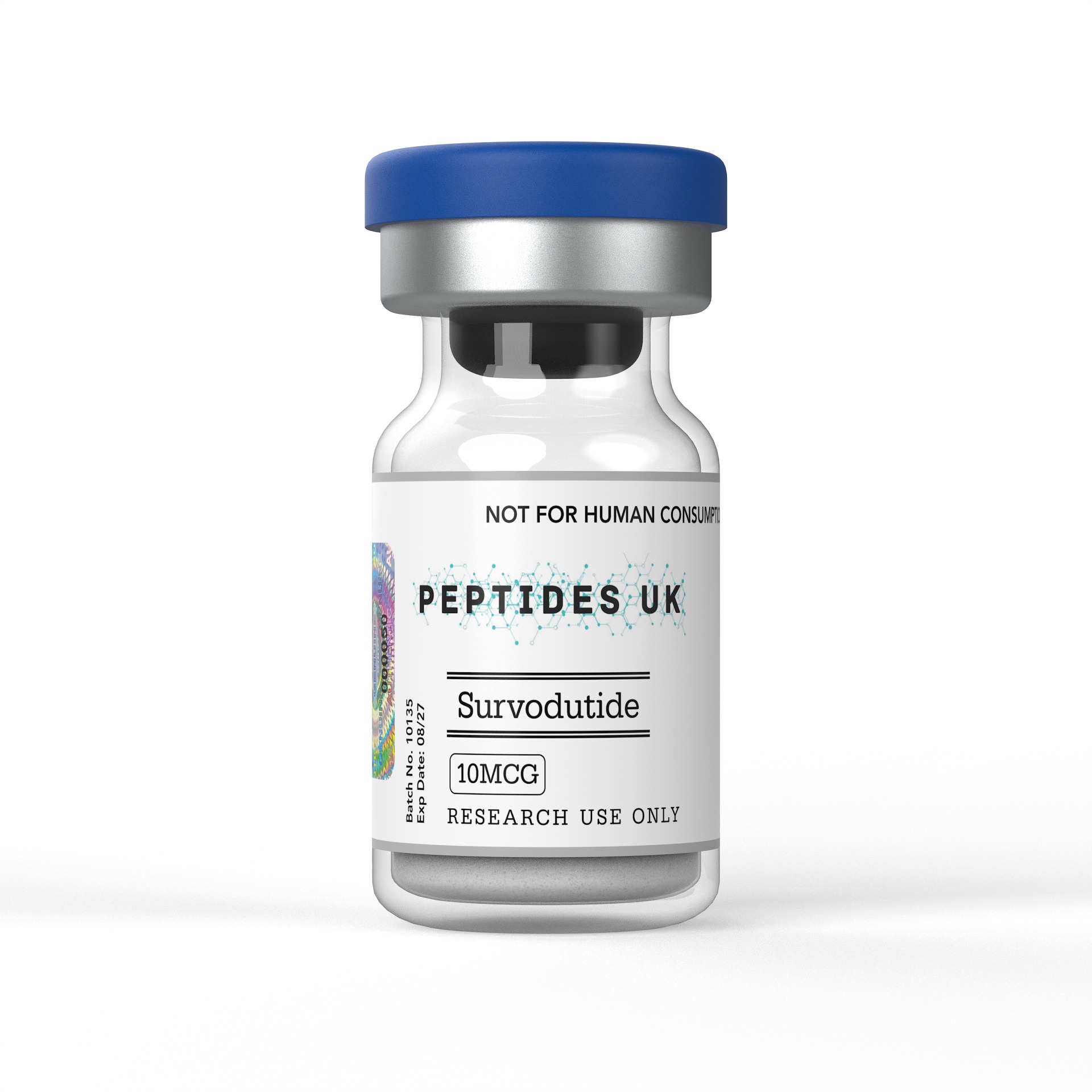
Survodutide Ireland – Buy Online | In Stock & Ready to Ship
Buy Survodutide in Ireland with fast shipping and guaranteed ≥99% purity — verified with COA and HPLC documentation. A trusted choice for peptides Ireland research teams rely on, with no customs delays or international wait times. Whether you’re searching for Survodutide Ireland suppliers or looking to buy peptides Ireland-wide, we have you covered. Irish research teams can count on consistent stock, rapid fulfilment and full batch documentation every time.
For research use only. Not intended for human or veterinary use.

Survodutide is a synthetic long-acting dual glucagon and GLP-1 receptor agonist peptide and one of the most mechanistically distinctive metabolic disease research compounds available to laboratories in Ireland — a fatty acid-acylated peptide co-agonist engineered to simultaneously activate both the glucagon receptor and the GLP-1 receptor with balanced potency, producing complementary and synergistic metabolic effects including profound body weight reduction through combined central appetite suppression and increased energy expenditure, hepatic fat reduction through glucagon receptor-mediated lipid oxidation and gluconeogenesis suppression, and improved glycaemic control through GLP-1 receptor-mediated insulin secretion enhancement, making it an indispensable research tool for studying dual incretin-glucagon receptor pharmacology and signal transduction, the complementary metabolic biology of simultaneous GLP-1 and glucagon receptor activation, hepatic lipid metabolism and NASH biology, the comparative pharmacology of mono versus dual versus triple receptor agonist approaches to obesity and metabolic disease, energy expenditure regulation through glucagon receptor-mediated thermogenesis, and the rapidly expanding research into multi-receptor co-agonist strategies that exploit the distinct and additive metabolic effects of simultaneously engaging multiple metabolic hormone receptor pathways. Researchers and institutions across Ireland can source verified, research-grade Survodutide directly from our Irish peptide supply, with domestic-speed dispatch and complete batch documentation.
✅ ≥99% Purity — HPLC & Mass Spectrometry Verified
✅ Batch-Specific Certificate of Analysis (CoA) Included
✅ Sterile Lyophilised Powder | GMP Manufactured
✅ Fast Dispatch to Ireland | Peptides Ireland Stock
Survodutide — designated BI 456906 in its development code — is a synthetic acylated peptide dual agonist developed by Boehringer Ingelheim as a once-weekly subcutaneous GLP-1 receptor and glucagon receptor co-agonist, engineered through peptide backbone design and fatty acid acylation to achieve balanced agonist activity at both receptor targets alongside the extended plasma half-life required for infrequent dosing in pre-clinical and clinical research. The compound belongs to the class of unimolecular dual incretin co-agonists — single peptide molecules engineered to engage two or more metabolic hormone receptors simultaneously — whose development has been driven by the recognition that single receptor agonism produces submaximal metabolic benefits and that exploiting the complementary and synergistic metabolic effects of multiple receptor pathways in a single molecule can produce superior outcomes to monotherapy or combination of separate agents.
The pharmacological rationale for combining GLP-1 and glucagon receptor agonism — an approach that might superficially appear contradictory given glucagon’s role as a hyperglycaemic counter-regulatory hormone — rests on a fundamental insight into the distinct and complementary metabolic biology of the two receptor systems when engaged simultaneously in the context of obesity and metabolic disease. GLP-1 receptor agonism drives food intake reduction through central hypothalamic and brainstem satiety circuits, enhances glucose-stimulated insulin secretion from pancreatic beta cells, suppresses postprandial glucagon from alpha cells, and slows gastric emptying — producing weight loss primarily through reduced caloric intake and improved glycaemic control. Glucagon receptor agonism drives energy expenditure through brown adipose tissue thermogenesis activation, promotes hepatic fatty acid oxidation and reduces hepatic lipid accumulation, suppresses appetite through central glucagon receptor mechanisms complementary to those of GLP-1, and increases basal metabolic rate — producing weight loss through both reduced intake and increased expenditure. When both receptor systems are activated simultaneously by a single molecule like Survodutide, the combined metabolic effects — appetite suppression, increased energy expenditure, hepatic lipid reduction, and glycaemic improvement — produce body weight and fat mass reductions exceeding those achievable through GLP-1 receptor agonism alone, establishing the dual agonist approach as a research strategy with superior metabolic biology.
Survodutide’s acylated peptide architecture achieves the albumin-binding-mediated extended half-life that enables once-weekly dosing — essential for sustained receptor activation biology studies in pre-clinical research — while the peptide backbone is engineered to maintain balanced potency at both GLP-1 and glucagon receptors rather than showing the strong preference for one receptor that would effectively reduce the compound to a functionally selective agonist. This pharmacological balance between the two receptor targets is a defining design characteristic of Survodutide and a primary variable distinguishing it from other dual agonist research compounds with differing GLP-1/glucagon potency ratios.
In controlled laboratory and pre-clinical settings, Survodutide is studied across dual receptor pharmacology, hepatic lipid metabolism, obesity biology, energy expenditure, NASH research, and comparative multi-receptor agonist applications:
Survodutide is used as a reference dual agonist for characterising simultaneous GLP-1 receptor and glucagon receptor pharmacology — examining receptor binding affinities at each target, the Gs-coupled cAMP signalling downstream of both receptors, receptor internalisation and desensitisation kinetics at GLP-1R and GCGR simultaneously, and how balanced dual receptor engagement differs mechanistically from selective single receptor activation. Research uses Survodutide alongside GLP-1R-selective and GCGR-selective compounds to establish the pharmacodynamic signatures of dual versus mono receptor activation and to characterise any receptor cross-talk or downstream signalling interactions produced by simultaneous engagement of both pathways.
Glucagon receptor activation drives brown adipose tissue thermogenesis — increasing uncoupling protein 1 (UCP1) expression, mitochondrial uncoupling, and basal metabolic rate through sympathoadrenal mechanisms — producing energy expenditure increases that complement GLP-1 receptor-driven food intake reductions. Research has used Survodutide to characterise glucagon receptor-mediated thermogenesis in the context of dual agonism — examining brown adipose tissue activation markers, whole-body energy expenditure by indirect calorimetry, and whether glucagon receptor-mediated energy expenditure increases are maintained, augmented, or attenuated by simultaneous GLP-1 receptor activation. These studies contribute to understanding of the combined caloric deficit achievable through dual receptor engagement through both intake reduction and expenditure increase simultaneously.
Survodutide’s glucagon receptor agonist component drives pronounced hepatic effects — stimulating hepatic fatty acid oxidation, reducing de novo lipogenesis, promoting hepatic autophagy of lipid droplets, and reducing hepatic triglyceride accumulation — making NASH and hepatic steatosis biology one of the primary research applications for dual GLP-1/glucagon agonists. Research has examined Survodutide’s effects on hepatic fat content, liver inflammation, hepatocyte injury markers, and fibrosis in diet-induced NASH models — characterising how glucagon receptor-mediated hepatic lipid metabolism effects combine with GLP-1 receptor-driven weight loss to produce hepatic improvement exceeding that achievable with GLP-1 receptor monotherapy. These NASH biology studies are particularly scientifically significant given the unmet need for effective NASH treatments and the hepatic biology rationale for glucagon receptor co-agonism.
Survodutide produces profound body weight and fat mass reductions in pre-clinical obesity models — through the combination of GLP-1 receptor-mediated appetite suppression and glucagon receptor-mediated energy expenditure increase — and research has characterised the body composition changes accompanying dual agonist treatment. Studies have examined fat mass versus lean mass changes, adipose tissue depot-specific effects including visceral adipose tissue regression, and the metabolic rate changes underlying dual agonist-induced weight loss using indirect calorimetry and body composition imaging. These obesity biology studies compare Survodutide’s body weight and composition effects with GLP-1R monotherapy to quantify the incremental benefit attributable to glucagon receptor co-agonism.
Survodutide’s GLP-1 receptor agonist component drives glucose-stimulated insulin secretion enhancement, glucagon suppression, and gastric emptying delay — producing improved postprandial glycaemic control — while its glucagon receptor agonist component has the potential to raise fasting glucose through hepatic glycogenolysis stimulation. Research has characterised how these opposing glycaemic inputs are balanced in Survodutide’s overall glycaemic profile — examining fasting and postprandial glucose dynamics, insulin secretion kinetics, and how the hyperglycaemic potential of glucagon receptor activation is mitigated by simultaneous GLP-1 receptor-mediated insulin secretion enhancement in the context of obesity and insulin resistance. These glycaemic studies establish the net glycaemic biology of dual agonism and characterise the dose-dependent balance between the two opposing glycaemic mechanisms.
Survodutide is studied alongside GLP-1R monoagonists, GLP-1R/GIPR dual agonists such as tirzepatide, and GLP-1R/GIPR/GCGR triple agonists to characterise how the specific combination of receptor targets engaged determines the metabolic biology profile of multi-receptor agonist approaches. Research compares body weight reduction magnitude, body composition changes, hepatic lipid effects, energy expenditure changes, and glycaemic profiles across compounds with different receptor selectivity combinations — establishing the incremental metabolic biology contribution of each receptor target when added to a GLP-1R agonist backbone and informing understanding of the optimal receptor combination for different metabolic disease research contexts.
Glucagon receptor activation influences cardiac function and vascular biology — with inotropic and chronotropic effects through cardiac glucagon receptors and potential vascular effects through glucagon receptor-mediated mechanisms. Research has examined Survodutide’s cardiovascular biology — characterising heart rate, blood pressure, and cardiac function changes following dual agonist treatment, and examining whether glucagon receptor-mediated cardiovascular effects are attenuated or amplified by simultaneous GLP-1 receptor activation. Studies have also characterised the cardiometabolic consequences of Survodutide-induced weight loss and metabolic improvement in obesity models — examining cardiovascular risk factor changes secondary to body composition and glycaemic improvements.
Both GLP-1 and glucagon receptors are expressed in hypothalamic and brainstem regions governing appetite and energy balance — and research has examined how simultaneous central GLP-1R and GCGR activation by Survodutide influences food intake, meal patterns, and the hypothalamic neurochemical changes governing satiety. Studies characterise the central nervous system basis of Survodutide’s appetite-suppressing effects — examining hypothalamic neuropeptide changes, vagal afferent signalling, and whether dual receptor activation in central appetite circuits produces additive food intake reductions beyond GLP-1R monoagonism through complementary hypothalamic mechanisms.
Pre-clinical research has documented Survodutide’s superior body weight reduction in diet-induced obesity models relative to GLP-1 receptor monoagonist comparators at equivalent doses — characterising the incremental weight loss attributable to glucagon receptor co-agonism and establishing that the combined appetite suppression and energy expenditure increase of dual agonism produces greater fat mass reduction than GLP-1R agonism alone. These studies provided the foundational pre-clinical pharmacodynamic rationale for advancing Survodutide into clinical obesity research.
Research has documented pronounced hepatic fat reduction following Survodutide treatment in diet-induced NASH models — characterising decreases in hepatic triglyceride content, reductions in liver inflammation markers, and attenuation of hepatic fibrosis in treated animals. These NASH biology studies established Survodutide’s glucagon receptor-mediated hepatic lipid metabolism benefit and positioned dual GLP-1/glucagon agonism as a pharmacological approach with particular relevance to NASH research given the glucagon receptor’s direct hepatic lipid regulatory biology.
Research has characterised Survodutide-induced increases in whole-body energy expenditure — documenting brown adipose tissue UCP1 upregulation, increased oxygen consumption, and elevated resting metabolic rate through glucagon receptor-dependent mechanisms that are not produced by GLP-1R monoagonism at equivalent doses. These thermogenesis studies established energy expenditure enhancement as a mechanistically distinct and glucagon receptor-dependent contribution to Survodutide’s superior weight loss biology.
Clinical Phase 2 research in individuals with obesity documented significant and dose-dependent body weight reductions with Survodutide — with findings demonstrating weight loss substantially exceeding typical GLP-1R monoagonist benchmarks at comparable treatment durations and establishing clinical proof-of-concept for the superior weight loss biology of dual GLP-1/glucagon receptor agonism in humans. These clinical data validated the pre-clinical pharmacodynamic rationale and established Survodutide as a clinically active dual agonist research compound.
Clinical research in patients with NASH has documented Survodutide-induced improvements in hepatic fat content by MRI-PDFF, liver enzyme normalisation, and histological improvement in liver biopsies — providing clinical validation of the pre-clinical NASH biology and establishing dual GLP-1/glucagon agonism as a pharmacologically active approach to hepatic steatosis and inflammation in human subjects. These clinical NASH findings have made Survodutide one of the most clinically advanced dual agonist compounds in NASH research.
Research has characterised the net glycaemic biology of Survodutide’s dual agonism — documenting that the glucose-raising potential of glucagon receptor activation is offset by simultaneous GLP-1 receptor-mediated insulin secretion enhancement, producing an overall glycaemic profile that is neutral to mildly beneficial in insulin-resistant obese subjects despite incorporating glucagon receptor agonist activity. These glycaemic balance studies established the mechanistic basis for the acceptable glycaemic safety profile of dual GLP-1/glucagon agonism in metabolic disease research contexts.
Research has characterised Survodutide’s gastrointestinal tolerability — documenting nausea, vomiting, and diarrhoea as the predominant adverse effects consistent with GLP-1 receptor agonist class effects, with tolerability manageable through dose escalation titration protocols. These tolerability characterisation studies have informed research protocol design for Survodutide administration in pre-clinical and clinical settings.
| Feature | Survodutide | Semaglutide | Tirzepatide | Retatrutide | Cagrilintide |
|---|---|---|---|---|---|
| Type | GLP-1R / GCGR dual agonist — acylated peptide | GLP-1R monoagonist — acylated peptide | GLP-1R / GIPR dual agonist — acylated peptide | GLP-1R / GIPR / GCGR triple agonist | Amylin receptor agonist — acylated peptide |
| Receptors Targeted | GLP-1R + GCGR | GLP-1R | GLP-1R + GIPR | GLP-1R + GIPR + GCGR | AMY1/2/3 |
| Glucagon Receptor | Yes — balanced co-agonism | No | No | Yes — triple agonist | No |
| GIP Receptor | No | No | Yes — primary differentiator from semaglutide | Yes | No |
| Primary Weight Loss Mechanism | Appetite suppression (GLP-1R) + energy expenditure increase (GCGR) | Appetite suppression (GLP-1R) | Appetite suppression (GLP-1R + GIPR) | Appetite suppression + energy expenditure (triple pathway) | Satiety signalling (amylin receptor) |
| Hepatic Lipid Effect | Pronounced — glucagon receptor-driven hepatic fat oxidation | Moderate — weight loss mediated | Moderate | Pronounced | Moderate |
| Glycaemic Effect | Balanced — GLP-1R insulin secretion offsets GCGR hyperglycaemia | Improved — insulin secretion + glucagon suppression | Improved — GLP-1R + GIPR insulin secretion | Improved | Improved postprandial |
| Key Research Distinction | Reference GLP-1R/GCGR dual agonist for studying glucagon receptor contribution to metabolic co-agonism | Reference GLP-1R monoagonist | Reference GLP-1R/GIPR dual agonist | Broadest receptor coverage — triple agonist reference | Reference amylin receptor agonist |
| Research Profile | Growing — advanced clinical stage dual agonist | Extensively studied | Extensively studied | Growing | Growing |
| Parameter | Detail |
|---|---|
| Name | Survodutide |
| Development Code | BI 456906 |
| Type | Synthetic Long-Acting GLP-1 Receptor / Glucagon Receptor Dual Agonist — Acylated Peptide — Research Grade |
| Mechanism | Simultaneous GLP-1R agonism (appetite suppression / insulin secretion / glucagon suppression) + GCGR agonism (energy expenditure / hepatic lipid oxidation / complementary appetite suppression) → combined body weight reduction exceeding GLP-1R monotherapy |
| Receptor Targets | GLP-1 receptor (GLP-1R) + Glucagon receptor (GCGR) — balanced dual agonism |
| Half-Life | Extended — albumin-binding fatty acid acylation enabling once-weekly dosing |
| Key Research Distinction | Reference balanced GLP-1R/GCGR dual agonist — uniquely suited for studying glucagon receptor metabolic co-agonism contribution and hepatic lipid biology beyond GLP-1R monoagonism |
| Primary Research Areas | Dual receptor pharmacology / obesity and body composition / NASH and hepatic lipid metabolism / energy expenditure and thermogenesis / glycaemic biology of dual agonism / comparative multi-receptor agonist pharmacology / cardiovascular biology |
| Purity | ≥99% HPLC & MS Verified |
| Form | Sterile Lyophilised Powder |
| Solubility | Sterile water or aqueous buffer — see reconstitution note |
| Storage (Powder) | -20°C, protect from light and moisture |
| Storage (Reconstituted) | -80°C in aliquots — minimise freeze-thaw cycles |
| Manufacturing | GMP Manufactured |
| Intended Use | Research use only |
Survodutide is an acylated peptide with amphipathic properties from its fatty acid chain — reconstitute by adding sterile water or PBS slowly to the lyophilised powder and swirling gently. Avoid vortexing which promotes aggregation. If solubility is incomplete, gentle bath sonication at room temperature may assist dissolution. Prepare working dilutions in PBS or cell culture media supplemented with 0.1% BSA to minimise surface adsorption. Prepare single-use aliquots and store at -80°C. For combination studies with other metabolic peptides, prepare each compound separately and combine immediately before administration. For in vivo metabolic studies requiring once-weekly dosing, prepare fresh dosing solutions at each administration timepoint and maintain on ice during handling.
Every order of Survodutide in Ireland includes:
✅ Batch-Specific Certificate of Analysis (CoA)
✅ HPLC Chromatogram
✅ Mass Spectrometry Confirmation
✅ Sterility & Endotoxin Testing Report
✅ Reconstitution Protocol — including acylated peptide solubility guidance
✅ Technical Research Support
Yes — we supply research-grade Survodutide to researchers and institutions across Ireland with fast dispatch and full batch documentation. Supplied strictly for laboratory research purposes only.
GLP-1R agonism reduces food intake through central satiety circuits and improves glycaemic control through insulin secretion enhancement — producing weight loss primarily through caloric restriction. Glucagon receptor agonism increases energy expenditure through brown adipose tissue thermogenesis and drives hepatic fat oxidation — producing weight loss through metabolic rate elevation and hepatic lipid clearance. The two mechanisms are complementary and non-overlapping — simultaneously engaging both produces additive body weight reduction through both reduced intake and increased expenditure alongside pronounced hepatic lipid benefit not achievable with GLP-1R monotherapy.
Glucagon receptor activation alone raises blood glucose through hepatic glycogenolysis and gluconeogenesis stimulation. In Survodutide, simultaneous GLP-1 receptor activation enhances glucose-stimulated insulin secretion from beta cells — providing a counterbalancing insulinotropic signal that offsets glucagon receptor-mediated glucose elevation. In the context of obesity and insulin resistance where Survodutide is primarily studied, the net glycaemic effect of dual agonism is neutral to mildly beneficial rather than hyperglycaemic.
Glucagon receptor activation directly stimulates hepatic fatty acid oxidation, reduces de novo lipogenesis, and promotes hepatic autophagy — producing hepatic fat reduction through mechanisms operating independently of systemic weight loss. This direct hepatic lipid regulatory biology of the glucagon receptor makes GLP-1/glucagon dual agonism particularly suited for NASH research — where hepatic lipid accumulation, inflammation, and fibrosis are the primary pathological endpoints. Survodutide’s NASH biology exceeds GLP-1R monotherapy in pre-clinical and clinical studies specifically because of this glucagon receptor-mediated direct hepatic effect.
Tirzepatide is a GLP-1R/GIPR dual agonist — combining GLP-1 and GIP receptor activation — without glucagon receptor activity. Survodutide is a GLP-1R/GCGR dual agonist — combining GLP-1 and glucagon receptor activation — without GIP receptor activity. The two compounds represent different multi-receptor strategies: tirzepatide exploits GIP receptor-mediated potentiation of GLP-1R signalling and adipose tissue direct effects, while Survodutide exploits glucagon receptor-mediated energy expenditure and hepatic lipid oxidation. Survodutide produces more pronounced hepatic fat reduction and thermogenesis-driven energy expenditure increases; tirzepatide has a more established glycaemic improvement profile. Together they are important comparative research tools for dissecting the incremental metabolic contributions of GIPR versus GCGR co-agonism.
Vehicle controls matched to the reconstitution solvent are essential. GLP-1R monoagonist comparator groups at equivalent doses establish the incremental biology attributable to glucagon receptor co-agonism. Selective GCGR antagonist co-treatment confirms glucagon receptor-dependence of observed hepatic and energy expenditure effects. For NASH studies, liver histology, MRI fat quantification, and serum liver enzyme measurements should be included as complementary endpoints. For glycaemic studies, concurrent insulin and glucagon measurement alongside glucose characterises the dynamic balance between the two receptor-mediated glycaemic inputs.
≥99% purity is essential for dual receptor pharmacology studies, body composition research, NASH biology, energy expenditure characterisation, and comparative multi-receptor agonist research. Given Survodutide’s acylated structure, impurities including partially acylated or deacylated species would show altered albumin binding, shortened half-life, and potentially altered receptor potency ratios — confounding pharmacodynamic characterisation. All Survodutide Ireland stock is verified to ≥99% purity by HPLC and mass spectrometry with identity confirmation.
Retatrutide is a GLP-1R/GIPR/GCGR triple agonist — incorporating all three receptor targets of Survodutide plus the GIP receptor. Comparing Survodutide and Retatrutide in research allows direct characterisation of the incremental metabolic biology contribution of GIPR co-agonism when added to the GLP-1R/GCGR dual agonist backbone — establishing how GIP receptor engagement modifies the body weight, glycaemic, and hepatic lipid outcomes of dual GLP-1/glucagon agonism. This comparison is one of the most pharmacologically informative experimental designs in contemporary metabolic peptide research.
Survodutide is supplied exclusively for legitimate scientific research purposes conducted within licensed laboratory environments. This product is not intended for human consumption, self-administration, or any therapeutic application. It must be handled by qualified researchers in compliance with applicable Irish and EU regulations and institutional ethics guidelines. By purchasing, you confirm that this compound will be used solely for approved in vitro or pre-clinical research purposes.

WhatsApp us
Receive News
