
PRODUCTS SOLD ON PEPTIDESLABIRELAND.COM ARE FOR RESEARCH PURPOSES ONLY AND ARE NOT FOR HUMAN OR VETERINARY USE.
€263.50
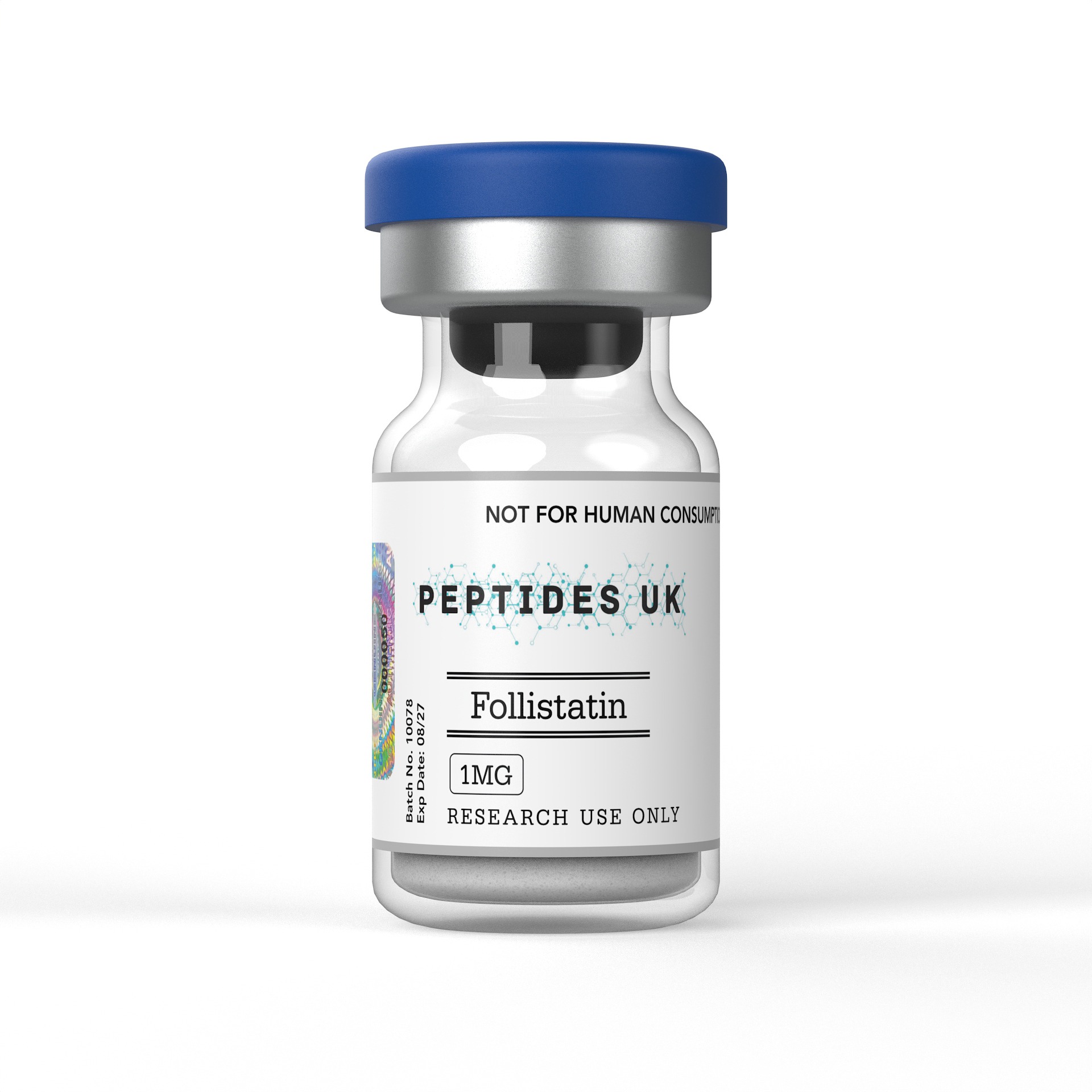
Follistatin Ireland – Buy Online | In Stock & Ready to Ship
Buy Follistatin in Ireland with fast shipping and guaranteed ≥99% purity — verified with COA and HPLC documentation. A trusted choice for peptides Ireland research teams rely on, with no customs delays or international wait times. Whether you’re searching for Follistatin Ireland suppliers or looking to buy peptides Ireland-wide, we have you covered. Irish research teams can count on consistent stock, rapid fulfilment and full batch documentation every time.
For research use only. Not intended for human or veterinary use.

Follistatin is a naturally occurring glycoprotein and one of the most significant myostatin-antagonising and activin-binding research proteins available to laboratories in Ireland — a single-chain polypeptide produced endogenously in multiple tissues that functions as a potent neutralising binding protein for myostatin, activin, and multiple TGF-beta superfamily ligands, making it a critical research tool for studying muscle biology and hypertrophy mechanisms, myostatin pathway pharmacology, reproductive endocrinology, follicle-stimulating hormone regulation, and the broader TGF-beta superfamily signalling biology that governs tissue growth, differentiation, and homeostasis across multiple organ systems. Researchers and institutions across Ireland can source verified, research-grade Follistatin — in both the 344 and 315 isoform designations — directly from our Irish peptide supply, with domestic-speed dispatch and complete batch documentation.
✅ ≥99% Purity — HPLC & Mass Spectrometry Verified
✅ Batch-Specific Certificate of Analysis (CoA) Included
✅ Sterile Lyophilised Powder | GMP Manufactured
✅ Fast Dispatch to Ireland | Peptides Ireland Stock
Follistatin is an activin-binding glycoprotein — first isolated in 1987 from ovarian follicular fluid as a factor capable of suppressing pituitary follicle-stimulating hormone (FSH) secretion — subsequently characterised as a structurally unique single-chain polypeptide that functions as a high-affinity neutralising binding protein for multiple members of the TGF-beta superfamily, most significantly activin A, activin B, myostatin (GDF-8), GDF-11, and BMP-2/4/7. Unlike classical receptor antagonists that compete with ligands for receptor binding sites, Follistatin acts by directly binding its target ligands with extremely high affinity — sequestering them in stable, biologically inactive complexes that prevent receptor engagement entirely — functioning as an endogenous ligand trap that physically removes TGF-beta superfamily members from the tissue signalling environment.
Two primary isoforms of Follistatin are available for research — Follistatin-344 and Follistatin-315 — designated by their amino acid lengths following signal peptide cleavage. Follistatin-344 is the primary secreted isoform produced by alternative mRNA splicing and post-translational processing, and represents the circulating and locally acting form with a heparan sulphate proteoglycan-binding domain at its C-terminus that anchors it to cell surfaces and extracellular matrix. Follistatin-315 is a shorter isoform produced by further proteolytic processing that removes the C-terminal heparan sulphate-binding domain — resulting in a form with reduced cell surface binding and more freely diffusible behaviour in the tissue environment. In research terms, Follistatin-344 is more relevant to cell surface and extracellular matrix-associated biology, while Follistatin-315 more closely models circulating and freely diffusible Follistatin activity — making isoform selection an important consideration in experimental design.
The biological significance of Follistatin is perhaps most dramatically illustrated by genetic studies examining myostatin pathway biology — where myostatin knockout animals and animals with transgenic Follistatin overexpression both display the same extraordinary phenotype of massively increased muscle mass, establishing Follistatin as a physiological brake on muscle growth of comparable importance to myostatin itself. The well-documented cases of human myostatin loss-of-function mutations — producing children with exceptional muscle development — and the cattle breeds carrying natural myostatin mutations that produce the double-muscling phenotype have established myostatin/Follistatin biology as one of the most compelling pathways in muscle biology research, with Follistatin occupying the central antagonist position in this pathway.
Beyond muscle biology, Follistatin’s roles in reproductive endocrinology — regulating FSH secretion through activin neutralisation in the pituitary-gonadal axis — and in embryonic development, tissue differentiation, and organ biology through TGF-beta superfamily modulation make it a research protein of unusually broad biological significance across multiple fields of biomedical science.
In controlled laboratory and pre-clinical settings, Follistatin is studied across a range of muscle biology, myostatin pathway research, reproductive endocrinology, and TGF-beta superfamily signalling applications:
Myostatin Pathway Antagonism Research — Follistatin’s capacity to bind and neutralise myostatin with extremely high affinity makes it the primary endogenous myostatin antagonist and a central research tool for studying myostatin pathway biology. Studies have examined how Follistatin-mediated myostatin neutralisation influences downstream SMAD2/3 signalling, muscle protein synthesis pathway regulation, and the balance between muscle anabolic and catabolic signalling — providing fundamental insights into the molecular mechanisms through which myostatin restrains muscle growth and how Follistatin modulates this restraint in physiological and experimental contexts.
Skeletal Muscle Hypertrophy Biology Research — The myostatin-Follistatin axis is one of the most important regulatory systems governing skeletal muscle mass — with research examining how modulating Follistatin levels influences muscle hypertrophy responses in pre-clinical models. Studies have characterised Follistatin-driven muscle mass increases through myostatin neutralisation, satellite cell activation, and enhanced protein synthesis signalling — documenting the cellular and molecular mechanisms through which reduced myostatin pathway activity translates to increased muscle fibre size and muscle mass accumulation.
Satellite Cell Biology and Muscle Regeneration Research — Follistatin influences satellite cell biology through multiple mechanisms — including direct effects on satellite cell proliferation and differentiation through activin and myostatin pathway modulation, and effects on the muscle stem cell niche through TGF-beta superfamily signalling regulation. Research has examined how Follistatin influences satellite cell activation following muscle injury, myoblast proliferation and differentiation dynamics, and the overall efficiency of muscle regeneration — establishing it as a research tool relevant to both muscle growth and muscle repair biology.
Activin Biology and FSH Regulation Research — Follistatin’s original characterisation as an FSH-suppressing factor reflects its high-affinity neutralisation of activin A and B — the primary activin isoforms that drive pituitary FSH secretion through SMAD2/3-dependent signalling in gonadotroph cells. Research has used Follistatin to study the activin-FSH regulatory axis in reproductive endocrinology — examining how activin neutralisation modulates FSH secretion dynamics, the pituitary-gonadal axis, and the broader reproductive biology governed by the activin/Follistatin balance in hypothalamic-pituitary signalling.
TGF-beta Superfamily Signalling Research — Beyond myostatin and activin, Follistatin binds multiple BMP family members — including BMP-2, BMP-4, and BMP-7 — providing a research tool for studying how Follistatin-mediated BMP neutralisation influences bone morphogenetic protein biology in skeletal development, bone formation, adipogenesis, and other BMP-regulated biological processes. Studies have examined the competitive dynamics between Follistatin and BMP receptors for shared ligands — contributing to understanding of how the TGF-beta superfamily ligand environment is shaped by endogenous binding proteins.
Muscular Dystrophy and Muscle Wasting Pre-Clinical Research — Follistatin has been studied extensively in pre-clinical models of muscular dystrophy and muscle wasting conditions — with research examining whether myostatin pathway antagonism through Follistatin can preserve or restore muscle mass and function in dystrophic and atrophying muscle models. Studies in mdx mice — the primary pre-clinical model of Duchenne muscular dystrophy — have documented Follistatin-associated improvements in muscle mass, strength parameters, and pathological remodelling markers — establishing Follistatin as an important research tool in the muscular dystrophy biology field.
Ageing and Sarcopenia Research — The relationship between myostatin/activin pathway activity and age-related muscle loss — sarcopenia — has been examined using Follistatin as a research tool for studying whether TGF-beta superfamily antagonism can attenuate age-associated muscle mass decline. Studies have characterised changes in Follistatin expression and myostatin pathway activity with ageing — and have examined whether restoring Follistatin-mediated pathway antagonism can preserve muscle mass parameters in aged pre-clinical models — contributing to research into the biology of sarcopenia and the role of the myostatin/activin axis in age-related muscle biology.
Follistatin-344 vs Follistatin-315 Isoform Biology Research — The distinct tissue distribution, heparan sulphate binding properties, and diffusion characteristics of the two primary Follistatin isoforms have been studied in comparative research examining how isoform-specific biology influences the spatial and temporal pattern of TGF-beta superfamily ligand neutralisation in different tissue contexts. Research has characterised how the C-terminal heparan sulphate-binding domain of Follistatin-344 anchors it to cell surfaces and matrix while the absence of this domain in Follistatin-315 allows more diffusible tissue distribution — contributing to understanding of how Follistatin isoform biology shapes the TGF-beta superfamily ligand microenvironment.
Bone Biology and BMP Pathway Research — Follistatin’s capacity to bind BMP family members — particularly BMP-2, -4, and -7, which are major regulators of osteoblast differentiation and bone formation — has made it a research tool for studying how Follistatin-mediated BMP antagonism influences skeletal biology. Studies have examined the balance between BMP signalling and Follistatin-mediated neutralisation in bone formation, fracture repair, and the regulation of osteoblast and osteoclast biology — contributing to understanding of how endogenous BMP binding proteins shape skeletal biology.
Reproductive Biology and Ovarian Research — Follistatin’s original identification in ovarian follicular fluid and its roles in activin neutralisation within the ovarian follicle have made it a research tool for studying local activin/Follistatin signalling in follicle development, granulosa cell biology, and the paracrine regulation of ovarian function. Research has examined how the balance between activin and Follistatin in the follicular microenvironment influences follicle maturation, selection, and the biology of ovarian function — contributing to fundamental understanding of reproductive endocrinology at the gonadal level.
Follistatin has accumulated one of the most extensive and scientifically significant research literatures of any endogenous growth regulatory protein — spanning muscle biology, reproductive endocrinology, developmental biology, and TGF-beta superfamily pharmacology across decades of pre-clinical investigation.
Extraordinary Muscle Mass Phenotypes Documented in Genetic Studies — The most visually dramatic evidence for Follistatin’s biological significance in muscle biology comes from genetic studies documenting the phenotypes produced by Follistatin overexpression and myostatin pathway elimination. Research has documented that transgenic animals overexpressing Follistatin — and separately, myostatin knockout animals — both develop massively increased skeletal muscle mass, with some Follistatin overexpression models showing muscle mass increases of 200% or greater compared to wild-type controls. These genetic studies established the myostatin-Follistatin axis as one of the most powerful regulators of muscle mass in mammalian biology — and have provided the fundamental scientific rationale for Follistatin as a research tool in muscle hypertrophy biology.
High-Affinity Myostatin and Activin Binding Characterised — Biochemical studies have characterised Follistatin’s binding affinities for its primary ligands — establishing sub-nanomolar dissociation constants for activin A, activin B, and myostatin that place Follistatin among the highest-affinity endogenous ligand-binding proteins in mammalian biology. Structural biology research has resolved the crystal structures of Follistatin in complex with activin and myostatin — providing atomic-resolution understanding of how Follistatin encircles its ligands to prevent receptor engagement and establishing the structural basis for its extraordinary binding potency. These structural and biochemical studies have provided the mechanistic foundation for interpreting all downstream Follistatin biology research.
Muscular Dystrophy Pre-Clinical Research Documented — Studies in mdx mice — the standard pre-clinical model of Duchenne muscular dystrophy — have documented Follistatin-associated preservation and restoration of muscle mass, improvements in muscle contractile force parameters, and reductions in markers of dystrophic muscle pathology. Research has characterised how myostatin pathway antagonism through Follistatin influences the dystrophic muscle environment — including effects on fibrosis, satellite cell function, and the regenerative capacity of dystrophic muscle — establishing Follistatin as an important research tool in the muscular dystrophy biology and pre-clinical therapeutic research field.
Activin-FSH Regulatory Axis Established — Research has firmly characterised Follistatin as the primary endogenous regulator of activin-driven FSH secretion — with studies documenting that Follistatin neutralisation of activin A and B suppresses SMAD2/3-dependent FSH beta-subunit gene transcription in pituitary gonadotroph cells. In vivo studies have confirmed that Follistatin levels in the pituitary-portal circulation directly modulate FSH secretion dynamics — establishing Follistatin as a key regulator of the hypothalamic-pituitary-gonadal axis and a research tool of central importance in reproductive endocrinology research.
Follistatin-344 vs 315 Isoform Biology Characterised — Research has documented the distinct tissue distribution and signalling properties of the two primary Follistatin isoforms — confirming that Follistatin-344’s C-terminal heparan sulphate-binding domain drives cell surface and extracellular matrix association while Follistatin-315 displays more diffusible behaviour consistent with circulating activity. Studies have examined how this isoform-specific distribution influences the spatial pattern of TGF-beta superfamily ligand neutralisation in different tissue contexts — contributing important mechanistic context for isoform selection in Follistatin research protocols.
SMAD2/3 Pathway Modulation Confirmed — Research has characterised how Follistatin-mediated ligand neutralisation influences downstream SMAD signalling in myostatin and activin pathway biology — with studies documenting reduced SMAD2/3 phosphorylation, attenuated SMAD-dependent transcriptional activity, and the downstream consequences for muscle protein synthesis and degradation pathway regulation. These signalling studies have provided the molecular mechanistic framework connecting Follistatin’s ligand-binding activity to the cellular biology of muscle growth and protein turnover that has been the central focus of muscle biology research with Follistatin.
Ageing and Sarcopenia Biology Examined — Research has characterised age-associated changes in Follistatin expression and myostatin/activin pathway activity — with studies documenting reduced Follistatin levels and increased myostatin pathway signalling in aged muscle consistent with the progressive muscle loss characteristic of sarcopenia. Pre-clinical studies examining Follistatin supplementation in aged models have reported attenuation of age-associated muscle mass decline — providing mechanistic evidence for the myostatin/activin pathway as a contributor to sarcopenic muscle loss and establishing Follistatin as a research tool for studying the biology of age-related muscle wasting.
| Feature | Follistatin 344/315 | Myostatin (GDF-8) | Activin A | GDF-11 | MSTN Propeptide |
|---|---|---|---|---|---|
| Biological Role | Endogenous ligand trap — TGF-beta antagonist | Muscle growth inhibitor — TGF-beta member | FSH regulation, muscle catabolism | Ageing biology, tissue homeostasis | Endogenous myostatin inhibitor |
| Primary Ligands Bound | Myostatin, Activin A/B, BMP-2/4/7 | ActRIIB — SMAD2/3 | ActRIIA/B — SMAD2/3 | ActRIIB — SMAD2/3 | Myostatin only |
| Muscle Biology Effect | Pro-hypertrophic — removes inhibitory signals | Anti-hypertrophic — inhibits muscle growth | Anti-hypertrophic — drives catabolism | Complex — context dependent | Pro-hypertrophic — myostatin-specific |
| Mechanism | Ligand sequestration — prevents receptor binding | Receptor activation | Receptor activation | Receptor activation | Prodomain binding — propeptide inhibition |
| Isoform Distinction | 344 (cell-bound) vs 315 (diffusible) | Single primary form | Multiple isoforms A/B | Single form | Single propeptide |
| Reproductive Biology | Central — FSH regulation via activin | Limited | Primary FSH driver | Limited | None |
| BMP Pathway Relevance | Yes — binds BMP-2/4/7 | No | No | No | No |
| Research Profile | Extensively studied | Extensively studied | Extensively studied | Well-documented | Well-documented |
| Parameter | Detail |
|---|---|
| Name | Follistatin (FST) |
| Available Isoforms | Follistatin-344 / Follistatin-315 |
| Isoform Distinction | FST-344: full-length with heparan sulphate binding domain / FST-315: truncated — more diffusible |
| Biological Classification | Activin and myostatin binding glycoprotein — TGF-beta superfamily antagonist |
| Primary Ligands | Myostatin (GDF-8), Activin A, Activin B, BMP-2, BMP-4, BMP-7, GDF-11 |
| Binding Mechanism | High-affinity ligand sequestration — prevents receptor engagement |
| Key Research Areas | Muscle hypertrophy / myostatin pathway / satellite cell biology / FSH regulation / TGF-beta superfamily |
| Purity | ≥99% HPLC & MS Verified |
| Form | Sterile Lyophilised Powder |
| Solubility | Sterile PBS or suitable laboratory buffer — see reconstitution note |
| Storage (Powder) | -20°C, protect from light and moisture |
| Storage (Reconstituted) | 2–8°C, use within 5–7 days or aliquot at -80°C |
| Manufacturing | GMP Manufactured — recombinant expression |
| Intended Use | Research use only |
Follistatin should be reconstituted in sterile PBS (phosphate-buffered saline) or appropriate laboratory buffer — carrier protein addition such as 0.1% BSA is recommended when working at low concentrations to minimise adsorption to tube and plate surfaces and preserve biological activity. Add diluent slowly down the inside wall of the vial and swirl gently — do not inject directly onto the lyophilised powder and do not vortex or shake vigorously as Follistatin is sensitive to mechanical agitation that can cause protein aggregation and loss of binding activity. Prepare a concentrated stock solution and dilute to working concentration in PBS or cell culture media as required. Store reconstituted stock at 2–8°C for short-term use within 5–7 days, or aliquot into single-use volumes and store at -80°C for longer-term preservation. Use low-binding tubes where possible — Follistatin at low concentrations can adsorb to standard plastic surfaces, particularly without carrier protein. Avoid repeated freeze-thaw cycles.
Every order of Follistatin in Ireland includes:
✅ Batch-Specific Certificate of Analysis (CoA)
✅ HPLC Chromatogram
✅ Mass Spectrometry Confirmation
✅ Biological Activity Verification Report
✅ Sterility & Endotoxin Testing Report
✅ Reconstitution Protocol
✅ Technical Research Support
Yes — we supply research-grade Follistatin 344 and Follistatin 315 to researchers and institutions across Ireland with fast dispatch and full batch documentation. This compound is supplied strictly for laboratory research purposes only.
Follistatin-344 and Follistatin-315 are the two primary isoforms produced from the FST gene through alternative mRNA splicing and post-translational proteolytic processing — differing by the presence or absence of a C-terminal heparan sulphate proteoglycan-binding domain. Follistatin-344 retains this C-terminal domain — which drives strong binding to heparan sulphate proteoglycans on cell surfaces and in the extracellular matrix, anchoring Follistatin-344 in the tissue microenvironment close to cells and restricting its diffusion. Follistatin-315 lacks this domain following proteolytic removal — resulting in a more freely diffusible form that is less cell-surface associated and better represents circulating Follistatin biology. In research practice, Follistatin-344 is preferred for studies examining cell surface-associated TGF-beta superfamily ligand neutralisation and local tissue biology, while Follistatin-315 is preferred for studies modelling circulating or diffusible Follistatin activity. Both isoforms bind myostatin, activin, and BMP family members with high affinity — the distinction is in their tissue distribution behaviour rather than their ligand binding pharmacology.
Follistatin neutralises myostatin through direct high-affinity binding that sterically occludes myostatin’s receptor engagement surfaces — preventing myostatin from binding its signalling receptors ActRIIA and ActRIIB and thereby blocking the downstream SMAD2/3 phosphorylation cascade that drives myostatin’s muscle growth-inhibitory transcriptional programme. Crystal structure studies have resolved the atomic architecture of Follistatin-myostatin complexes — showing that Follistatin wraps around the myostatin dimer using three follistatin domain modules (FSD1, FSD2, and FS-N domain) to cover both the type I and type II receptor binding epitopes simultaneously, creating an exceptionally stable 2:1 Follistatin:myostatin complex with sub-nanomolar binding affinity. This structural encirclement mechanism — physically blocking both receptor binding surfaces — explains the extraordinary potency of Follistatin-mediated myostatin neutralisation and the very high stability of Follistatin-myostatin complexes in the biological environment.
The myostatin-Follistatin axis represents one of the most powerful endogenous regulators of skeletal muscle mass identified in mammalian biology — with genetic evidence from multiple species establishing that disrupting this axis in either direction produces dramatic muscle mass phenotypes. Myostatin loss-of-function mutations in cattle produce the double-muscling phenotype characterised by exceptional muscle development and reduced fat mass — the same phenotype has been documented in sheep, dogs, and in rare human cases of myostatin mutation. Transgenic overexpression of Follistatin in mice produces muscle mass increases of 200% or more compared to wild-type animals. These genetic phenotypes establish the myostatin-Follistatin axis as a physiological governor of muscle mass with few parallels in terms of the magnitude of its effects — making it one of the most intensively studied pathways in muscle biology research and positioning Follistatin as a central research tool for understanding how muscle mass is regulated at the molecular level.
Follistatin’s original characterisation as an FSH-suppressing factor reflects its central role in reproductive endocrinology through activin neutralisation. Within the hypothalamic-pituitary-gonadal axis, activin A and B produced in the pituitary and gonads stimulate FSH secretion from gonadotroph cells through SMAD2/3-dependent upregulation of FSH beta-subunit gene transcription. Follistatin neutralises these activins — suppressing their FSH-stimulating activity and thereby modulating FSH secretion dynamics. In the ovary, local activin/Follistatin balance within developing follicles influences follicle maturation, granulosa cell proliferation and differentiation, and the selection of dominant follicles for ovulation. In research terms, Follistatin provides a tool for studying how activin pathway neutralisation influences FSH regulation and ovarian biology — contributing to fundamental research in reproductive endocrinology and the biology of the pituitary-gonadal axis.
Yes — Follistatin has been one of the most extensively studied myostatin pathway antagonists in muscular dystrophy pre-clinical research, with studies in mdx mice — the standard Duchenne muscular dystrophy model — documenting significant improvements in muscle mass, force production parameters, and dystrophic pathology markers following Follistatin administration or overexpression. Research has characterised how myostatin pathway antagonism through Follistatin influences the dystrophic muscle environment — including effects on satellite cell function, fibrotic remodelling, and the overall regenerative capacity of dystrophic muscle — establishing important pre-clinical evidence for the myostatin/activin axis as a research target in dystrophin-deficient muscle biology. These mdx model studies have contributed substantially to understanding how muscle wasting in the context of primary structural protein deficiency can be modulated through growth regulatory pathway antagonism.
≥99% purity is strongly recommended for myostatin binding assays, SMAD pathway signalling studies, satellite cell biology experiments, muscle hypertrophy pre-clinical models, and FSH regulation research — where protein purity directly determines the reliability of ligand binding measurements, signalling data, and biological activity outcomes. Given Follistatin’s mechanism of action through high-affinity protein-protein interactions, impurities or misfolded protein fractions could compete with correctly folded Follistatin for ligand binding or introduce confounding biological signals in sensitive signalling assays. All Follistatin Ireland stock is independently verified to ≥99% purity with biological activity confirmation.
Allow the vial to reach room temperature before opening. Add sterile PBS or appropriate laboratory buffer slowly down the inside wall of the vial and swirl gently — do not inject directly onto the lyophilised powder and do not vortex or shake vigorously, as mechanical agitation can cause protein aggregation and loss of biological activity. For low-concentration working solutions, add 0.1% BSA as a carrier protein to minimise surface adsorption losses. Prepare a concentrated stock solution and dilute to working concentration in PBS or cell culture media as required by your research protocol. Store reconstituted stock at 2–8°C for short-term use within 5–7 days, or aliquot into single-use volumes and store at -80°C for longer-term preservation. Use low-binding tubes where possible and avoid repeated freeze-thaw cycles.
Follistatin is supplied exclusively for legitimate scientific research purposes conducted within licensed laboratory environments. This product is not intended for human consumption, self-administration, or any therapeutic application. It must be handled by qualified researchers in compliance with applicable Irish and EU regulations and institutional ethics guidelines. By purchasing, you confirm that this compound will be used solely for approved in vitro or pre-clinical research purposes.

WhatsApp us
Receive News
