PRODUCTS SOLD ON PEPTIDESLABIRELAND.COM ARE FOR RESEARCH PURPOSES ONLY AND ARE NOT FOR HUMAN OR VETERINARY USE.
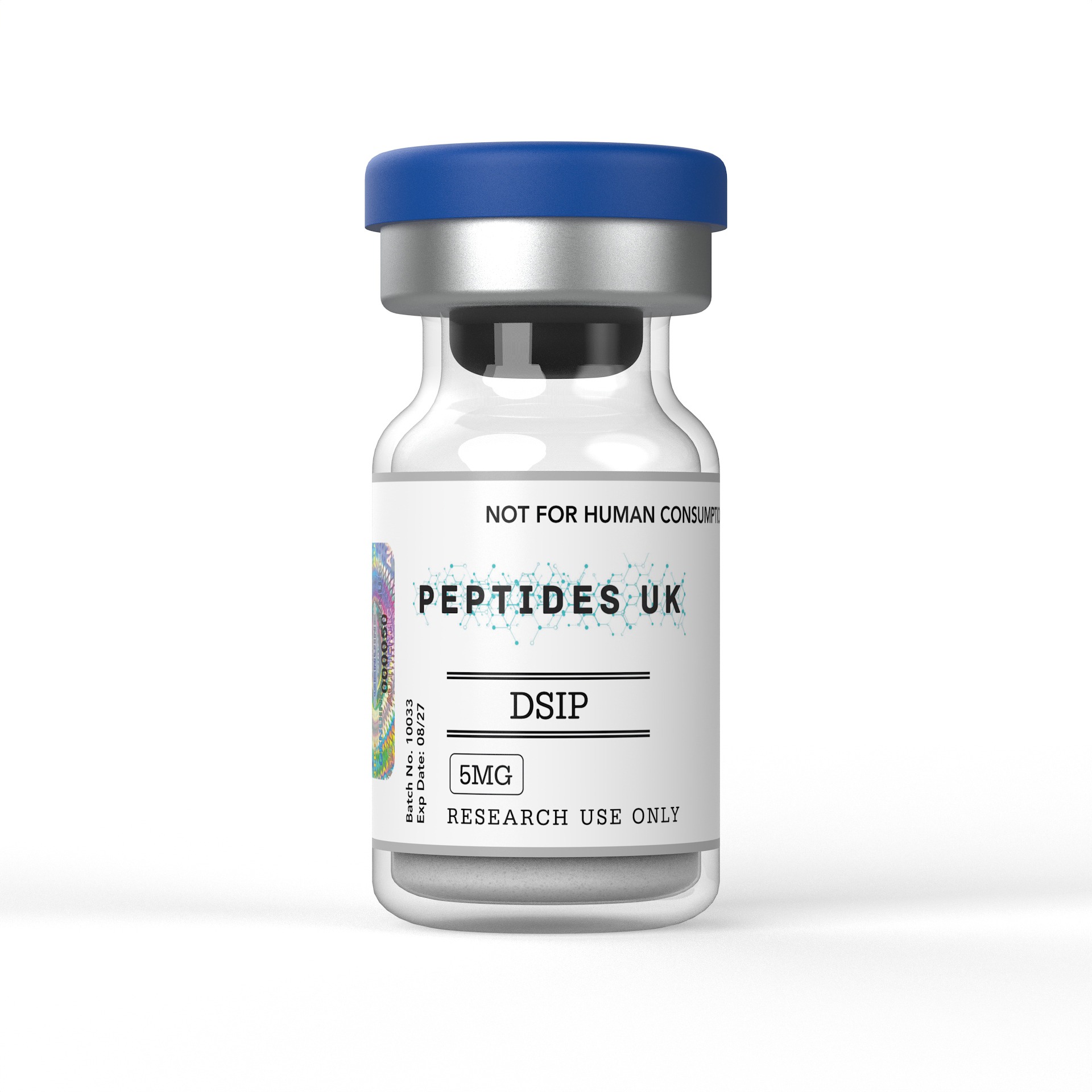
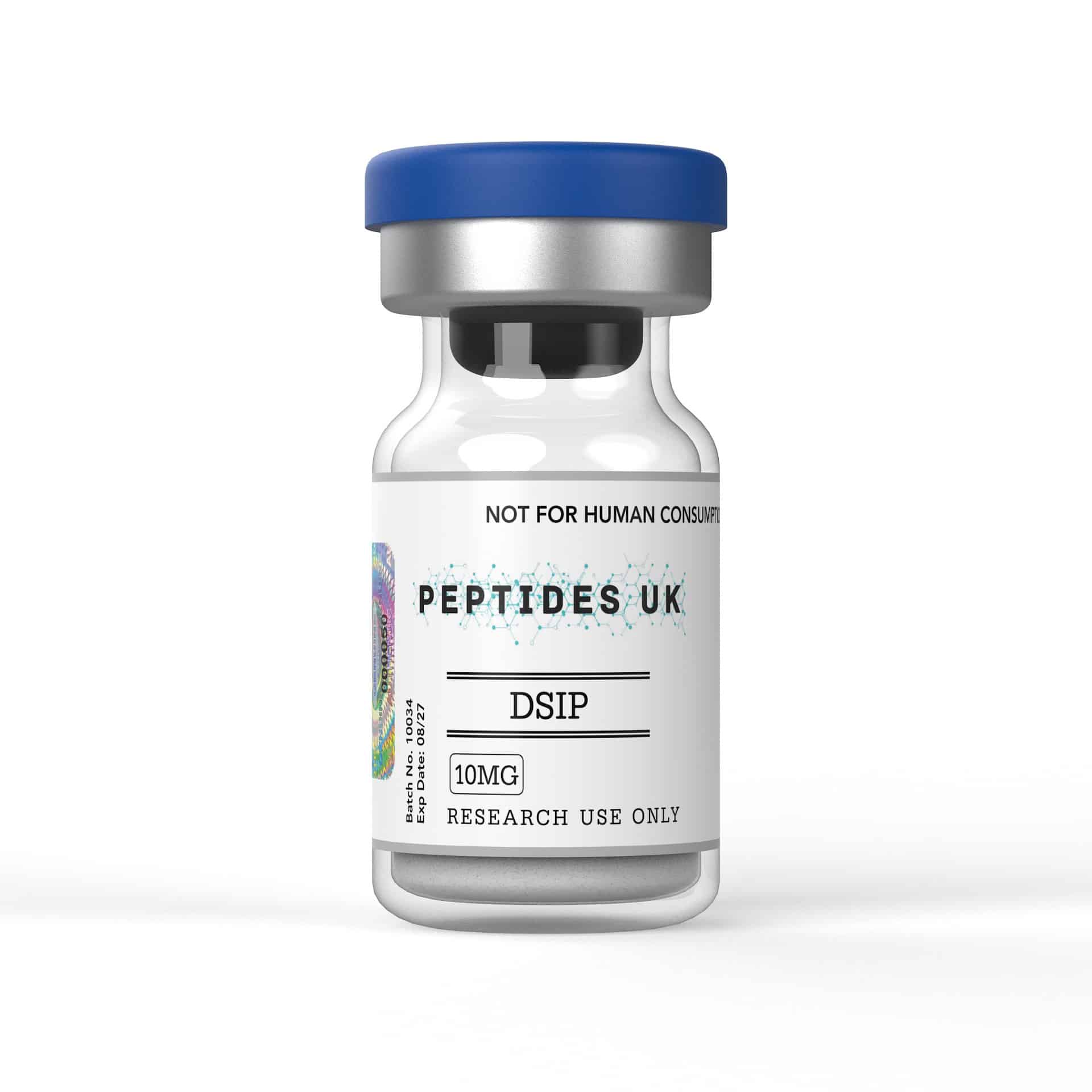
€27.00 – €46.00Price range: €27.00 through €46.00
DSIP Ireland – Buy Online | In Stock & Ready to Ship
Buy DSIP in Ireland with fast shipping and guaranteed ≥99% purity — verified with COA and HPLC documentation. A trusted choice for peptides Ireland research teams rely on, with no customs delays or international wait times. Whether you’re searching for DSIP Ireland suppliers or looking to buy peptides Ireland-wide, we have you covered. Irish research teams can count on consistent stock, rapid fulfilment and full batch documentation every time.
For research use only. Not intended for human or veterinary use.



DSIP — Delta Sleep-Inducing Peptide — is a synthetic nonapeptide neuromodulator and one of the most extensively studied sleep-regulatory and stress-modulatory research compounds available to laboratories in Ireland — a Trp-Ala-Gly-Gly-Asp-Ala-Ser-Gly-Glu nonapeptide originally isolated from rabbit cerebral venous blood during electrically induced slow-wave sleep that modulates delta wave electroencephalographic activity, hypothalamic-pituitary-adrenal axis biology, GH secretory rhythms, and a broad spectrum of neuroendocrine and neuroprotective functions through receptor interactions and neuromodulatory mechanisms that remain an active area of fundamental research — making it an indispensable research tool for studying delta sleep and slow-wave sleep neurophysiology and EEG biology, hypothalamic neuromodulatory peptide pharmacology and receptor characterisation, HPA axis stress response modulation and corticotropin-releasing factor biology, GH secretory rhythm and somatotroph regulatory biology, antioxidant and neuroprotective mechanisms of endogenous sleep-regulatory peptides, the intersection of sleep biology and neuroendocrine axis regulation, and the comparative pharmacology of endogenous sleep-modulatory peptides in the research context of sleep neuroscience and hypothalamic neuropeptide biology. Researchers and institutions across Ireland can source verified, research-grade DSIP directly from our Irish peptide supply, with domestic-speed dispatch and complete batch documentation.
✅ ≥99% Purity — HPLC & Mass Spectrometry Verified
✅ Batch-Specific Certificate of Analysis (CoA) Included
✅ Sterile Lyophilised Powder | GMP Manufactured
✅ Fast Dispatch to Ireland | Peptides Ireland Stock
DSIP — Delta Sleep-Inducing Peptide, Trp-Ala-Gly-Gly-Asp-Ala-Ser-Gly-Glu — is a synthetic nonapeptide corresponding to the sequence of the endogenous sleep-regulatory peptide first isolated and characterised by Marcel Monnier and colleagues at the University of Basel in 1977 from the cerebral venous blood of rabbits during thalamic stimulation-induced slow-wave delta sleep — a landmark discovery in sleep neuroscience that established the existence of endogenous humoral sleep-promoting factors and initiated a research programme into the molecular biology of sleep regulation that continues to the present. DSIP was identified through the cross-perfusion experimental paradigm in which blood from electrically stimulated donor rabbits — in which slow-wave delta sleep had been induced — was transferred to recipient rabbits, who subsequently showed characteristic delta wave EEG activity and behavioural sleep induction — establishing the existence of a dialysable humoral sleep factor in cerebral venous blood and enabling its subsequent isolation, sequencing, and structural characterisation as the Trp-Ala-Gly-Gly-Asp-Ala-Ser-Gly-Glu nonapeptide.
The molecular biology and receptor pharmacology of DSIP remains one of the most fascinating and incompletely resolved questions in neuropeptide research — despite decades of study establishing DSIP’s biological activities across sleep regulation, neuroendocrine modulation, stress response biology, antioxidant biology, and neuroprotection, a dedicated high-affinity DSIP receptor has not been definitively cloned and characterised. Research has proposed that DSIP’s biological effects may be mediated through multiple receptor interactions — including opioid receptor modulation, GABA-B receptor interaction, and direct effects on voltage-gated ion channels — or through receptor-independent mechanisms involving direct membrane interactions or intracellular signalling pathway modulation. This receptor biology uncertainty makes DSIP an active and open research question in neuropeptide pharmacology and positions synthetic DSIP as an essential research tool for the fundamental receptor characterisation studies required to resolve the molecular basis of DSIP’s diverse biological activities.
DSIP’s structural features are pharmacologically notable — the nonapeptide’s linear conformation, absence of disulphide bridge constraints, and the presence of the N-terminal Trp residue and C-terminal Glu residue contribute to its amphipathic character and proposed membrane interaction capacity. DSIP crosses the blood-brain barrier with relative efficiency for a nonapeptide — a property that has been characterised through radiotracer and pharmacokinetic studies and attributed to the peptide’s physicochemical properties and possible active transport mechanisms — establishing it as a peripherally accessible CNS-active research compound. The circadian variation in endogenous DSIP-like immunoreactivity — with plasma DSIP levels showing sleep-wake cycle-dependent fluctuation — further establishes DSIP as a physiologically regulated neuromodulatory peptide whose biology is integrated with circadian rhythm and sleep homeostasis mechanisms.
In controlled laboratory and pre-clinical settings, DSIP is studied across slow-wave sleep neurophysiology, HPA axis modulation, GH secretory biology, antioxidant and neuroprotective mechanisms, stress response biology, and the fundamental receptor pharmacology of endogenous sleep-regulatory peptides:
DSIP is the founding and reference compound for humoral sleep factor research — used to characterise delta wave EEG induction, slow-wave sleep promotion, and sleep architecture modulation in rodent and rabbit sleep neuroscience models. Research has employed DSIP in EEG-monitored sleep studies — examining delta power spectral increases following DSIP administration, slow-wave sleep episode duration and frequency changes, sleep latency effects, and the dose-response relationships governing DSIP-induced EEG delta activity. Studies have characterised DSIP’s sleep-promoting biology across central administration routes — intracerebroventricular and direct hypothalamic injection — and peripheral administration paradigms to establish the pharmacokinetic requirements for CNS access and EEG delta activity induction. These sleep neurophysiology studies have established DSIP as the reference endogenous humoral sleep factor for studying the biology of slow-wave sleep promotion by hypothalamic peptide neuromodulators.
DSIP is studied as a hypothalamic neuromodulatory peptide to characterise its receptor interactions, signal transduction mechanisms, and the molecular basis of its diverse biological activities — addressing the fundamental unresolved question of DSIP receptor identity and pharmacology. Research has used synthetic DSIP in radioligand binding studies, functional signalling assays, and receptor expression profiling to characterise potential DSIP binding sites in hypothalamic, limbic, and brainstem tissue preparations — examining opioid receptor interaction, GABA-B receptor modulation, voltage-gated calcium channel effects, and receptor-independent membrane interaction models. These receptor pharmacology studies address the core mechanistic question in DSIP biology and provide the foundation for understanding how a single nonapeptide produces effects spanning sleep regulation, neuroendocrine modulation, and neuroprotection through potentially pleiotropic receptor engagement.
DSIP produces modulatory effects on the hypothalamic-pituitary-adrenal axis — attenuating stress-induced corticotropin-releasing factor (CRF) release, modifying ACTH secretion dynamics, and normalising aberrant glucocorticoid secretion patterns in stress and withdrawal paradigms. Research has characterised DSIP’s HPA axis modulatory biology in rodent stress models — examining CRF release attenuation, ACTH pulse frequency and amplitude changes, corticosterone normalisation under chronic stress conditions, and the extent to which DSIP-mediated HPA axis modulation reflects direct hypothalamic CRF neurone effects versus upstream limbic circuit modulation. Studies have also examined DSIP’s effects in opioid and alcohol withdrawal models — characterising attenuation of withdrawal-associated HPA axis hyperactivation and stress response normalisation — establishing DSIP as a research tool for studying humoral modulation of the stress neuroendocrine axis.
DSIP modulates growth hormone secretory patterns — producing effects on GH pulse frequency, amplitude, and the circadian organisation of GH secretory rhythms that have been characterised in both acute and chronic administration paradigms in rodent and human research contexts. Research has examined DSIP’s GH modulatory biology — characterising GH pulse frequency changes, interactions with somatostatin inhibitory tone, and the extent to which DSIP-driven GH secretory modifications reflect hypothalamic GHRH and somatostatin neurone modulation versus direct somatotroph effects. Studies have examined the relationship between DSIP’s sleep-promoting biology and its GH modulatory activity — characterising whether DSIP-induced slow-wave sleep and GH secretory effects represent coupled or dissociable biological outcomes that reflect shared or distinct receptor mechanisms at hypothalamic neuroendocrine control nodes.
DSIP demonstrates direct antioxidant activity and neuroprotective biology in oxidative stress models — characterising free radical scavenging capacity, lipid peroxidation inhibition, and cytoprotective effects in neuronal cell models exposed to oxidative insult. Research has examined DSIP’s antioxidant biology in neural cell lines and primary neuronal cultures — characterising reactive oxygen species scavenging, mitochondrial membrane potential preservation under oxidative challenge, and neuroprotective effects against hydrogen peroxide, glutamate excitotoxicity, and ischaemia-reperfusion-induced oxidative damage. These antioxidant and neuroprotection studies have established DSIP as a multifunctional neuropeptide whose biological significance extends beyond sleep and neuroendocrine modulation into direct cellular protection against oxidative injury — a finding that has contributed to understanding of endogenous sleep regulatory peptides as candidate neuroprotective agents in the sleeping brain.
DSIP-like immunoreactivity shows circadian variation in plasma and cerebrospinal fluid — with endogenous DSIP levels fluctuating across the sleep-wake cycle in patterns consistent with a physiological role in sleep homeostasis and circadian rhythm entrainment. Research has used synthetic DSIP to study circadian biology — examining how exogenous DSIP administration modifies circadian locomotor activity rhythms, the phase-shifting effects of DSIP on circadian oscillator biology in suprachiasmatic nucleus preparations, and the relationship between endogenous DSIP fluctuation and sleep pressure accumulation in the two-process model of sleep regulation. These circadian biology studies have contributed to characterisation of DSIP as a humoral signal linking peripheral and central biological clocks to the hypothalamic sleep regulatory network.
DSIP interacts with opioid receptor systems — producing analgesic effects in nociception models and modifying the pharmacological responses to opioid agonists and antagonists — establishing a functional intersection between DSIP’s neuromodulatory biology and the endogenous opioid system. Research has characterised DSIP’s nociceptive biology in rodent pain models — examining hot plate and tail flick analgesic responses, interaction with mu and delta opioid receptor pharmacology, and the opioid antagonist sensitivity of DSIP-induced analgesia. Studies have also examined DSIP’s role in opioid tolerance and withdrawal biology — characterising attenuation of naloxone-precipitated withdrawal signs and normalisation of opioid-sensitised HPA axis responses. These opioid interaction studies have contributed to characterisation of the receptor pharmacological basis of DSIP biology and established opioid receptor interaction as a candidate mechanism for DSIP’s sleep-promoting and stress-modulatory activities.
DSIP produces anticonvulsant effects in rodent seizure models — attenuating pentylenetetrazole and electroconvulsive shock-induced seizure activity and modifying neuronal excitability parameters consistent with inhibitory neuromodulatory biology. Research has characterised DSIP’s anticonvulsant biology — examining seizure threshold elevation, seizure duration reduction, and the extent to which DSIP’s anticonvulsant effects are mediated through GABA-B receptor modulation, voltage-gated calcium channel inhibition, or opioid receptor-dependent mechanisms. These seizure biology studies have contributed to understanding of DSIP as a broadly inhibitory neuromodulator whose anticonvulsant biology parallels its sleep-promoting activity and may reflect shared receptor mechanisms underlying both classes of CNS inhibitory response.
Research has documented DSIP-induced delta wave EEG activity and slow-wave sleep promotion in rabbits, rats, cats, and humans — characterising increased delta power spectral density, enhanced slow-wave sleep episode frequency and duration, and behavioural sleep induction following DSIP administration. These multi-species sleep promotion studies established DSIP as a pharmacologically validated humoral sleep factor with conserved sleep-promoting biology across mammalian species and provided the experimental foundation for subsequent mechanistic investigation of DSIP’s sleep regulatory pharmacology.
Research has documented DSIP’s normalising effects on HPA axis dysregulation in chronic stress, opioid withdrawal, and alcohol withdrawal models — characterising attenuation of stress-induced corticosterone elevation, reduction of withdrawal-associated ACTH hyperactivation, and restoration of normal glucocorticoid secretory patterns. These HPA axis studies established DSIP as a research tool for studying humoral modulation of stress neuroendocrine biology and contributed to characterisation of endogenous sleep-regulatory peptides as candidate stress-buffering neuromodulators.
Research has documented DSIP’s modulatory effects on GH secretory patterns in rodent studies and early human pharmacology investigations — characterising GH pulse amplitude and frequency changes, interactions with the sleep-GH axis coupling biology, and the neuroendocrine basis of DSIP’s GH modulatory activity. These GH secretion studies established that DSIP’s neuroendocrine biology extends beyond sleep promotion to encompass modulation of the hypothalamic GH regulatory axis and contributed to characterisation of the sleep-GH secretory coupling mechanism.
Research has confirmed DSIP’s direct antioxidant activity and neuroprotective biology in neural cell models — characterising free radical scavenging, lipid peroxidation inhibition, and cytoprotective effects against oxidative challenge. These antioxidant studies established DSIP as a multifunctional neuropeptide with direct cellular protective biology and contributed to the broader characterisation of endogenous sleep regulatory peptides as candidate neuroprotective agents operating in parallel with their sleep-modulatory functions.
Research has characterised DSIP’s blood-brain barrier penetration — documenting radiotracer DSIP CNS access following peripheral administration and characterising the pharmacokinetic parameters governing brain uptake relative to peripheral distribution. These BBB penetration studies established that peripheral DSIP administration achieves meaningful CNS exposure and validated peripherally administered synthetic DSIP as a pharmacologically relevant research tool for studying central neuromodulatory biology without requiring intracerebroventricular administration routes.
Research has documented DSIP’s anticonvulsant effects in pentylenetetrazole and electroconvulsive shock rodent seizure models — characterising seizure threshold elevation and seizure duration attenuation consistent with inhibitory neuromodulatory biology. These anticonvulsant studies established DSIP as a broadly inhibitory neuropeptide whose CNS biology spans sleep promotion, stress response modulation, and neuronal excitability regulation — contributing to characterisation of the pleiotropic neuromodulatory biology of endogenous sleep regulatory peptides.
| Feature | DSIP | Orexin-A | GHRH | CRF | Melatonin | Selank |
|---|---|---|---|---|---|---|
| Type | Endogenous nonapeptide — humoral sleep factor | Endogenous 33-aa hypothalamic neuropeptide — wake-promoting | Endogenous 44-aa hypothalamic peptide — GH regulatory | Endogenous 41-aa hypothalamic peptide — stress axis | Endogenous pineal indole — circadian hormone | Synthetic heptapeptide — anxiolytic neuromodulator |
| Primary Mechanism | Proposed opioid/GABA-B/channel modulation → delta sleep promotion + HPA modulation + antioxidant biology | OX1R/OX2R agonism → arousal, wakefulness, appetite, autonomic activation | GHRHR Gs-cAMP → GH release + sleep-GH coupling | CRF-R1/R2 → HPA axis activation → ACTH → cortisol | MT1/MT2 receptor agonism → circadian phase shifting → sleep onset | Proposed neurotensin-like modulation → anxiolysis + cognition |
| Sleep Effect | Pro-sleep — delta wave promotion | Pro-wake — arousal and wakefulness | Pro-sleep — slow wave sleep coupling via GH | Pro-wake — stress arousal | Pro-sleep — circadian phase | Anxiolytic — indirect sleep facilitation |
| HPA Axis Effect | Normalising / attenuating | Activating | Indirect via GH axis | Activating — primary HPA driver | Attenuating — cortisol inhibition | Attenuating — anxiolytic |
| GH Modulation | Yes — GH pulse modulation | Indirect | Direct — primary GHRHR agonist | Inhibitory via CRF stress axis | Indirect | Limited |
| Neuroprotection | Yes — antioxidant + direct | Limited data | Limited | Limited | Yes — antioxidant | Yes — neurotrophic |
| BBB Penetration | Yes — documented peripheral CNS access | Limited peripheral access | Limited | Limited | Yes — passive diffusion | Yes |
| Receptor Status | Uncloned — active research area | OX1R/OX2R — cloned and characterised | GHRHR — cloned and characterised | CRF-R1/R2 — cloned and characterised | MT1/MT2 — cloned and characterised | Proposed — incompletely characterised |
| Key Research Distinction | Founding humoral sleep factor — reference endogenous delta sleep peptide — unresolved receptor biology — pleiotropic neuroendocrine and neuroprotective research tool | Reference wake-promoting neuropeptide — narcolepsy biology — appetite and arousal | Reference GH axis regulatory peptide — sleep-GH coupling | Reference HPA stress axis activator | Reference circadian phase regulator — melatonin receptor pharmacology | Anxiolytic neuromodulator — cognitive biology |
| Parameter | Detail |
|---|---|
| Name | DSIP |
| Also Designated | Delta Sleep-Inducing Peptide / Delta Sleep Peptide / DSIP nonapeptide |
| Sequence | Trp-Ala-Gly-Gly-Asp-Ala-Ser-Gly-Glu |
| Type | Synthetic Nonapeptide Neuromodulator — Endogenous Humoral Sleep Factor — Research Grade |
| Molecular Weight | 848.8 Da |
| Structural Features | Linear nonapeptide — no disulphide bridge — N-terminal Trp (light-sensitive, antioxidant-active) — C-terminal Glu — amphipathic character — BBB-penetrant |
| Mechanism | Proposed multimodal — opioid receptor modulation / GABA-B receptor interaction / voltage-gated ion channel modulation / receptor-independent membrane interaction — → delta wave EEG promotion + HPA axis normalisation + GH secretory modulation + antioxidant neuroprotection |
| Primary Receptor | Uncloned — active research area — proposed opioid receptor, GABA-B receptor, and voltage-gated channel interactions |
| BBB Penetration | Documented — peripheral administration achieves CNS exposure |
| Key Research Distinction | Founding reference endogenous humoral sleep factor — unresolved receptor biology making it an active fundamental pharmacology research target — pleiotropic neuroendocrine, sleep regulatory, antioxidant, and neuroprotective biology spanning multiple CNS research domains |
| Primary Research Areas | Delta sleep and slow-wave sleep neurophysiology / hypothalamic neuromodulatory peptide pharmacology / HPA axis stress modulation / GH secretory rhythm biology / antioxidant neuroprotection / circadian rhythm biology / opioid system interaction / seizure biology |
| Endogenous Distribution | Hypothalamus, limbic system, brainstem, cerebrospinal fluid, peripheral plasma — circadian variation documented |
| Purity | ≥99% HPLC & MS Verified |
| Form | Sterile Lyophilised Powder |
| Solubility | Sterile water or sterile PBS pH 7.4 |
| Storage (Powder) | -20°C, protect from light — Trp1 residue is light-sensitive |
| Storage (Reconstituted) | -80°C in single-use aliquots — protect from light — minimise freeze-thaw cycles |
| Manufacturing | GMP Manufactured |
| Intended Use | Research use only |
DSIP is a linear nonapeptide with good aqueous solubility — reconstitute by adding sterile water or sterile PBS pH 7.4 slowly to the lyophilised powder and swirling gently until fully dissolved. The N-terminal Trp1 residue is light-sensitive and susceptible to oxidative degradation — all reconstitution and handling steps must be performed away from direct light exposure and working solutions prepared in amber or foil-wrapped tubes. Prolonged storage of reconstituted DSIP under light exposure produces Trp oxidation products including kynurenine and hydroxytryptophan derivatives that show altered receptor pharmacology and would confound dose-response studies — verify Trp integrity by HPLC before use in critical experiments if reconstituted solutions have been stored for extended periods. Unlike disulphide-containing peptides such as AOD9604 and HGH Fragment 176-191, DSIP does not require reducing agent exclusion from reconstitution buffers — however, strongly oxidising conditions should be avoided to protect the Trp1 residue. For CNS sleep EEG studies requiring intracerebroventricular administration, prepare DSIP in sterile artificial cerebrospinal fluid at physiological osmolarity. For peripheral administration paradigms exploiting DSIP’s BBB penetration, prepare in sterile saline and administer promptly after reconstitution. For in vitro receptor binding and cell signalling studies, prepare working dilutions in assay buffer supplemented with 0.1% BSA to prevent peptide adsorption to vessel surfaces at low working concentrations. Store all reconstituted aliquots at -80°C in the dark and avoid repeated freeze-thaw cycles.
Every order of DSIP in Ireland includes:
✅ Batch-Specific Certificate of Analysis (CoA)
✅ HPLC Chromatogram
✅ Mass Spectrometry Confirmation
✅ Sterility & Endotoxin Testing Report
✅ Reconstitution Protocol — including Trp1 light sensitivity, oxidation protection, and CNS administration guidance
✅ Technical Research Support
Yes — research-grade DSIP is available to researchers and institutions across Ireland with fast dispatch and full batch documentation. Supplied strictly for laboratory research purposes only.
DSIP is a nonapeptide isolated from rabbit cerebral venous blood during electrically induced slow-wave sleep by Monnier and colleagues in 1977. Blood from sleep-stimulated donor rabbits induced characteristic delta wave EEG activity and behavioural sleep in recipient animals — establishing a dialysable humoral sleep factor that was subsequently isolated and sequenced as the Trp-Ala-Gly-Gly-Asp-Ala-Ser-Gly-Glu nonapeptide.
No — a dedicated high-affinity DSIP receptor has not been definitively cloned and characterised despite decades of research. Current evidence suggests DSIP biology may involve opioid receptor modulation, GABA-B receptor interaction, and voltage-gated ion channel effects, but the primary receptor mediating its sleep-promoting and neuroendocrine activities remains an active and unresolved fundamental research question.
Yes — radiotracer pharmacokinetic studies have documented DSIP’s CNS penetration following peripheral administration, attributable to the peptide’s physicochemical properties and possible active transport mechanisms. This BBB penetration makes peripherally administered synthetic DSIP a relevant research tool for studying central neuromodulatory biology without requiring intracerebroventricular routes.
Vehicle controls in matched buffer, Trp1-oxidised DSIP as a degraded-peptide negative control confirming activity dependence on intact sequence, opioid receptor antagonist naloxone controls characterising opioid-dependent versus independent biology, and GABA-B receptor antagonist controls examining GABA-B pathway involvement. For sleep EEG studies, matched-vehicle sham injection controls and electroencephalographic baseline recording periods are essential for delta power spectral analysis.
DSIP modulates GH secretory patterns — particularly GH pulse organisation and the coupling between slow-wave sleep and nocturnal GH release. These GH modulatory effects likely reflect DSIP’s hypothalamic neuromodulatory activity at GHRH and somatostatin regulatory neurones rather than direct somatotroph engagement, positioning DSIP as a higher-order GH axis modulator operating through hypothalamic sleep-neuroendocrine coupling circuits.
≥99% purity by HPLC and mass spectrometry is essential — Trp1 oxidation products, des-Trp1 truncation fragments, and Asp5 deamidation variants show substantially altered receptor interaction profiles and biological activity. Trp1 integrity verification is a critical specification for DSIP given the residue’s light sensitivity and oxidative lability. All DSIP Ireland stock is verified to ≥99% purity with Trp1 integrity confirmed by mass spectrometry.
DSIP is supplied exclusively for legitimate scientific research purposes conducted within licensed laboratory environments. This product is not intended for human consumption, self-administration, or any therapeutic application. It must be handled by qualified researchers in compliance with applicable Irish and EU regulations and institutional ethics guidelines. By purchasing, you confirm that this compound will be used solely for approved in vitro or pre-clinical research purposes.


WhatsApp us
Receive News
