PRODUCTS SOLD ON PEPTIDESLABIRELAND.COM ARE FOR RESEARCH PURPOSES ONLY AND ARE NOT FOR HUMAN OR VETERINARY USE.
Fast Ireland delivery — dispatched to Dublin, Cork, Galway, Limerick and nationwide.
€80.00
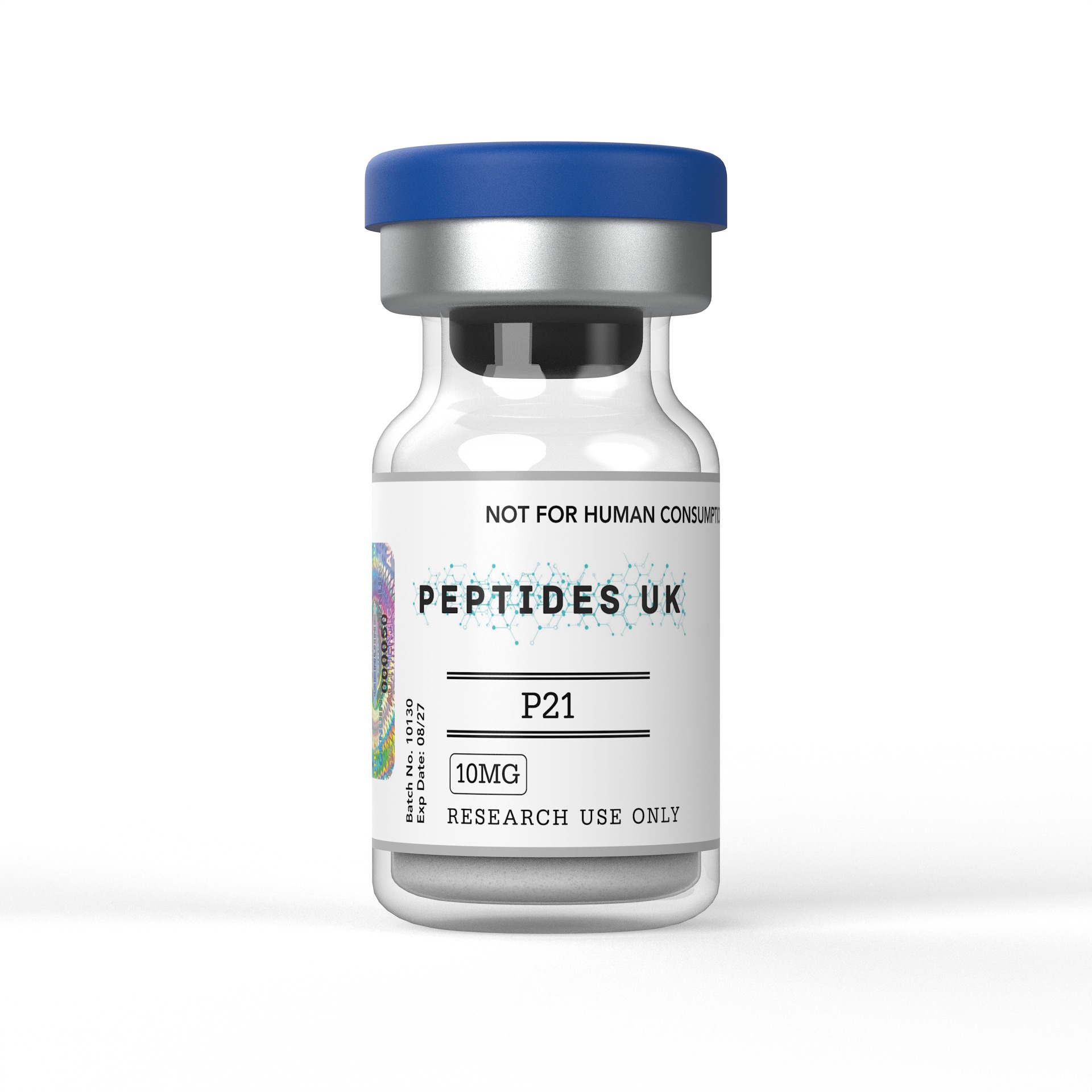
P21 — synthetic derivative of ciliary neurotrophic factor (CNTF), studied in cognitive-enhancement, neurogenesis and BDNF research models. HPLC-verified ≥99% purity, per-batch COA. Fast Ireland delivery.
For laboratory research use only. Not for human or veterinary use.


P21 is a synthetic peptide analogue of CNTF (Ciliary Neurotrophic Factor) and one of the most compelling and rapidly emerging compounds in neurogenesis, cognitive biology, and BDNF-pathway research, Available to buy in Ireland with fast dispatch and full batch documentation included.
P21 is a small, stable peptide derived from the active region of CNTF that crosses the blood-brain barrier and stimulates BDNF (Brain-Derived Neurotrophic Factor) production, promotes neurogenesis in the hippocampus, and modulates the JAK-STAT signalling pathway , producing a neurobiological profile in pre-clinical research that has generated significant interest across cognitive function, memory, neurodegeneration, and psychiatric disease research, Researchers and institutions across Ireland can source verified, research-grade P21 directly from our Irish peptide supply, with domestic-speed dispatch and complete batch documentation.
✅ ≥99% Purity , HPLC & Mass Spectrometry Verified
✅ Batch-Specific Certificate of Analysis (CoA) Included
✅ Sterile Lyophilised Powder | GMP Manufactured
✅ Fast Dispatch to Ireland | Peptides Ireland Stock
P21 is a synthetic peptide fragment derived from CNTF — Ciliary Neurotrophic Factor , a naturally occurring neurotrophic cytokine that supports the survival, differentiation, and maintenance of neurons in the central and peripheral nervous system. CNTF itself is a large protein with limited blood-brain barrier penetration and a short biological half-life, making it poorly suited as a direct research tool for central nervous system studies. P21 was developed as a small, stable peptide analogue that retains and in some respects enhances the neurobiological activity of CNTF . While being sufficiently small to cross the blood-brain barrier and reach central nervous system target tissues following systemic administration in pre-clinical models.
P21’s most studied and most significant biological property is its ability to increase the expression and production of BDNF , Brain-Derived Neurotrophic Factor , one of the most important growth factors in the brain, responsible for supporting neuronal survival, promoting synaptic plasticity, stimulating adult neurogenesis in the hippocampus, and maintaining the cognitive and emotional functions that depend on healthy hippocampal biology. BDNF is frequently described as the brain’s most important growth factor for learning, memory, and mood regulation , and its decline is implicated in the pathology of depression, cognitive decline, Alzheimer’s disease, and other neurological and psychiatric conditions.
P21 acts on the JAK-STAT signalling pathway , the intracellular signalling cascade through which CNTF and related cytokines exert their neurobiological effects . Stimulating STAT3 phosphorylation and transcriptional activation of BDNF and other neurotrophic gene programmes. Critically, P21 has also been shown to stimulate hippocampal neurogenesis . The formation of new neurons in the adult hippocampus, One of the most significant and actively researched phenomena in modern neuroscience, with direct relevance to memory, learning, antidepressant biology, and cognitive resilience research.
In controlled laboratory and pre-clinical settings, P21 is studied across a wide range of neurological, cognitive, and psychiatric biology research applications:
BDNF Upregulation Research . P21’s most defining and consistently documented research property is its ability to increase BDNF expression and production in brain tissue . Particularly in the hippocampus. Studies have examined how P21 stimulates BDNF gene expression through JAK-STAT3 pathway activation, how the magnitude and duration of BDNF upregulation relates to P21 dose and administration schedule, and what downstream neurobiological consequences of BDNF elevation are produced in pre-clinical models , establishing BDNF upregulation as the central mechanistic pillar of P21’s neurobiological research profile.
Hippocampal Neurogenesis Research , Adult hippocampal neurogenesis . The generation of new neurons in the dentate gyrus of the hippocampus throughout adult life and is one of the most important and actively studied phenomena in neuroscience, with established roles in memory formation, pattern separation, cognitive flexibility, and the neurobiological response to antidepressant treatment. P21 has been studied for its ability to stimulate hippocampal neurogenesis in pre-clinical models . With research examining effects on neural progenitor cell proliferation, new neuron survival, and integration into existing hippocampal circuits, making it one of the most neurogenesis-relevant research peptides available.
Cognitive Function and Memory Research , Pre-clinical studies have examined P21’s effects on cognitive performance , including spatial memory, working memory, and learning tasks in rodent behavioural models with research documenting improvements in cognitive performance parameters in P21-treated animals consistent with BDNF-driven enhancement of hippocampal synaptic plasticity and neurogenesis. These cognitive biology findings have made P21 one of the most actively discussed nootropic-adjacent research peptides in current neuroscience.
JAK-STAT Signalling Research . P21 activates the JAK-STAT pathway . Specifically JAK2-STAT3 signalling , downstream of its CNTF receptor interaction. Studies have examined P21’s effects on STAT3 phosphorylation, nuclear translocation, and transcriptional activation of neurotrophic gene programmes — using P21 as a research tool to study JAK-STAT biology in neural cells and to examine how CNTF-type cytokine signalling drives neurobiological responses in the central nervous system.
Depression and Mood Biology Research and The established connections between BDNF, hippocampal neurogenesis, and antidepressant biology have made P21 a significant research tool in depression and mood disorder research. Studies have examined P21 in pre-clinical depression and stress models , exploring whether BDNF upregulation and neurogenesis stimulation by P21 produces antidepressant-like behavioural effects and what this reveals about the neurobiological mechanisms through which neurotrophic support affects mood biology.
Alzheimer’s Disease and Neurodegeneration Research , BDNF deficiency is a well-established feature of Alzheimer’s disease pathology and with significant reductions in hippocampal BDNF levels documented in both human Alzheimer’s brains and pre-clinical Alzheimer’s models. P21 has been studied in Alzheimer’s disease research contexts , examining whether BDNF upregulation and neurogenesis stimulation can modify amyloid pathology, tau biology, neuroinflammation, and cognitive decline in pre-clinical Alzheimer’s models — positioning it as a research tool for studying neurotrophic approaches to neurodegeneration.
Synaptic Plasticity Research , BDNF is one of the most important regulators of synaptic plasticity , the ability of synaptic connections to strengthen or weaken in response to activity, which is the cellular basis of learning and memory. Research has examined how P21-driven BDNF upregulation affects long-term potentiation (LTP), synaptic protein expression, dendritic spine density, and other markers of synaptic plasticity in hippocampal and cortical tissue models.
Neuroprotection Research , P21 has been studied for neuroprotective properties in pre-clinical models of neurological injury and degeneration and with research examining whether JAK-STAT activation and BDNF upregulation protect neuronal populations from excitotoxic, oxidative, and inflammatory insults in cell culture and pre-clinical injury models, contributing to the understanding of how neurotrophic signalling supports neuronal survival under stress conditions.
Neural Progenitor Cell Biology Research and Studies have examined P21’s effects on neural progenitor cell populations , the stem-like cells in the adult brain responsible for generating new neurons — documenting effects on progenitor cell proliferation, differentiation, and survival that contribute to the neurogenesis-promoting research profile documented in hippocampal studies.
Blood-Brain Barrier Penetration Research and P21’s ability to cross the blood-brain barrier following systemic administration in pre-clinical models is a critical and pharmacologically significant property , distinguishing it from the large CNTF protein from which it’s derived and making it a more tractable research tool for studying central nervous system neurotrophic biology. Research has examined P21’s CNS penetration, tissue distribution, and central biological activity following peripheral administration in pre-clinical models.
Psychiatric Disease Biology Research , Beyond depression, P21 has been studied in the context of other psychiatric conditions where BDNF and hippocampal neurogenesis are implicated , including anxiety disorders, PTSD biology, and schizophrenia research, Contributing to the broader understanding of how neurotrophic factor support and neurogenesis affect the neurobiology of psychiatric disease in pre-clinical models.
P21 has a focused, compelling, and growing pre-clinical research profile centred on BDNF biology and hippocampal neurogenesis:
BDNF Upregulation Consistently Documented , Pre-clinical studies have consistently documented that P21 administration increases BDNF protein and mRNA expression in the hippocampus , with research confirming STAT3-dependent transcriptional upregulation of BDNF as the primary mechanism, and documenting dose-dependent BDNF elevation in hippocampal tissue following systemic P21 administration in rodent models. BDNF upregulation is the most consistently replicated finding in the P21 research literature.
Hippocampal Neurogenesis Stimulation Confirmed and Pre-clinical studies have confirmed that P21 stimulates adult hippocampal neurogenesis . With research using BrdU incorporation and neuronal marker immunohistochemistry to document increased neural progenitor cell proliferation and new neuron formation in the dentate gyrus of P21-treated animals, supporting the neurogenesis-promoting mechanism proposed from its BDNF-upregulating and JAK-STAT activating properties.
Cognitive Improvements in Pre-Clinical Models . Pre-clinical behavioural studies have reported improvements in spatial memory, working memory, and learning task performance in P21-treated rodent models . Including both normal animals and models of cognitive impairment , with performance improvements consistent with BDNF-driven enhancement of hippocampal function and neuroplasticity, establishing cognitive biology as one of the most significant and discussed aspects of P21’s pre-clinical research profile.
Antidepressant-Like Effects in Pre-Clinical Models Pre-clinical depression and stress models have reported antidepressant-like behavioural effects in P21-treated animals and including reduced immobility in forced swim tests and improved performance in sucrose preference and other depression-relevant behavioural paradigms , consistent with the established neurobiological connection between BDNF, hippocampal neurogenesis, and antidepressant response biology.
Blood-Brain Barrier Penetration Confirmed and Studies have confirmed that P21 reaches the central nervous system following systemic administration in pre-clinical models and with research documenting CNS tissue distribution and central biological activity following peripheral administration, validating P21’s blood-brain barrier penetration and central bioavailability as key pharmacological properties distinguishing it from the large CNTF protein.
Superior CNS Activity vs CNTF , Research has documented that P21 produces BDNF upregulation and neurobiological effects in the CNS following systemic administration more effectively than equivalent doses of CNTF . Attributed to P21’s superior blood-brain barrier penetration, longer biological half-life, and potentially enhanced receptor interaction properties and establishing P21 as a more pharmacologically tractable CNS research tool than its parent protein for studies of central CNTF-type biology.
Alzheimer’s Model Research Data . Pre-clinical Alzheimer’s disease model studies have examined P21’s effects on disease-relevant pathological and behavioural endpoints and with research reporting modifications in amyloid-related pathology markers, neuroinflammatory parameters, and cognitive performance in treated Alzheimer’s model animals, generating research interest in P21 as a neurotrophic approach to studying neurodegeneration biology.
| Feature | P21 | Semax | Selank | Dihexa |
|---|---|---|---|---|
| Origin | Synthetic CNTF fragment | Synthetic ACTH fragment | Synthetic tuftsin analogue | Synthetic angiotensin IV analogue |
| Primary Mechanism | JAK-STAT3 / BDNF upregulation / neurogenesis | BDNF upregulation / dopaminergic / neuroprotection | Anxiolytic / BDNF modulation / immune | HGF/MET pathway / synaptic plasticity |
| BDNF Activity | Very High and primary documented mechanism | High . Well-documented BDNF upregulation | Moderate and BDNF modulation | Indirect and HGF pathway synaptogenesis |
| Neurogenesis Research | Very High and hippocampal neurogenesis documented | Moderate | Low | Moderate |
| Cognitive Research | Very High . Spatial / working memory data | Very High and broad cognitive profile | Moderate . Anxiety / cognition | Very High . Potent synaptic research tool |
| Anxiety / Mood Research | High , antidepressant-like pre-clinical data | Moderate | Very High , primary research focus | Low |
| Blood-Brain Barrier | Yes confirmed CNS penetration | Yes | Yes | Yes |
| Key Research Distinction | Only CNTF-derived peptide / hippocampal neurogenesis tool | Most studied ACTH-derived nootropic peptide | Most studied anxiolytic research peptide | Most potent synaptogenic peptide research tool |
P21 is the only research peptide derived from CNTF and the only peptide combining JAK-STAT3 activation, direct BDNF upregulation, and confirmed hippocampal neurogenesis stimulation in a single blood-brain barrier-penetrant compound . Giving it a uniquely comprehensive neurobiological research profile in the neurogenesis and cognitive biology research space.
| Parameter | Detail |
|---|---|
| Name | P21 |
| Type | Synthetic CNTF-derived peptide analogue |
| Primary Mechanism | JAK-STAT3 activation / BDNF upregulation / hippocampal neurogenesis stimulation |
| Primary Target | CNTF receptor / JAK2-STAT3 pathway |
| Key Research Areas | Neurogenesis / cognitive biology / BDNF research / depression / neurodegeneration |
| Blood-Brain Barrier | Penetrant , confirmed CNS bioavailability in pre-clinical models |
| Purity | ≥99% HPLC & MS Verified |
| Form | Sterile Lyophilised Powder |
| Solubility | Sterile water, bacteriostatic water, PBS |
| Storage (Powder) | -20°C, protect from light |
| Storage (Reconstituted) | 2–8°C, use promptly or aliquot at -80°C |
| Manufacturing | GMP Manufactured |
Every order of P21 in Ireland includes:
✅ Batch-Specific Certificate of Analysis (CoA)
✅ HPLC Chromatogram
✅ Mass Spectrometry Confirmation
✅ Sterility & Endotoxin Testing Report
✅ Reconstitution Protocol
✅ Technical Research Support
Can I buy P21 peptide in Ireland? Yes and we supply research-grade P21 to researchers and institutions across Ireland with fast dispatch and full batch documentation. This compound is supplied strictly for laboratory research purposes only.
What is P21 peptide and what makes it significant in neuroscience research? P21 is a synthetic peptide derived from CNTF Ciliary Neurotrophic Factor, Engineered to cross the blood-brain barrier and stimulate BDNF production and hippocampal neurogenesis in pre-clinical models. Its significance lies in combining three neurobiologically important properties in a single small, stable, BBB-penetrant peptide . JAK-STAT3 pathway activation, direct BDNF upregulation, and confirmed adult hippocampal neurogenesis stimulation , making it one of the most mechanistically comprehensive and neuroscientifically relevant research peptides in current cognitive and neurogenesis biology research.
What is BDNF and why is its upregulation important in research? BDNF , Brain-Derived Neurotrophic Factor and is the most important growth factor for neuronal health, synaptic plasticity, and adult neurogenesis in the brain, particularly in the hippocampus. It is essential for memory formation, learning, cognitive flexibility, and mood regulation , and its deficiency is implicated in the pathology of depression, Alzheimer’s disease, cognitive decline, and other neurological and psychiatric conditions. P21’s ability to reliably upregulate BDNF in hippocampal tissue through JAK-STAT3 activation makes it a uniquely valuable research tool for studying neurotrophic factor biology and its consequences for brain function in pre-clinical models.
What is hippocampal neurogenesis and why does it matter in research? Adult hippocampal neurogenesis . The ongoing generation of new neurons in the dentate gyrus of the hippocampus throughout adult life . Is one of the most significant phenomena in modern neuroscience. New hippocampal neurons contribute to memory formation, pattern separation, cognitive flexibility, and the neurobiological effects of antidepressant treatments, Disruption of hippocampal neurogenesis is associated with depression, cognitive ageing, and stress-related disorders , while its stimulation is associated with improved cognitive performance and antidepressant-like effects in pre-clinical models. P21’s confirmed neurogenesis-stimulating activity makes it one of the most directly relevant research tools for studying this phenomenon pharmacologically.
How does P21 differ from Semax as a BDNF-upregulating research peptide? Both P21 and Semax upregulate BDNF in pre-clinical models but through different mechanisms and with different biological profiles. Semax is derived from ACTH and acts through melanocortin receptors and neurotrophin receptor pathways . With a broad cognitive and neuroprotective research profile that extends into dopaminergic and serotonergic neurotransmission. P21 acts through the CNTF receptor and JAK-STAT3 pathway , with its research profile more specifically focused on hippocampal neurogenesis, STAT3-driven BDNF transcription, and the neurobiology of CNTF-type cytokine signalling. The two compounds are mechanistically complementary rather than equivalent research tools for studying BDNF biology through distinct upstream pathways.
What purity is recommended for P21 research? ≥99% purity is strongly recommended for BDNF quantification studies, neurogenesis assays, JAK-STAT signalling research, behavioural cognitive studies, and any in vivo pre-clinical research where compound quality directly affects biological activity and reproducibility. All P21 Ireland stock is independently verified to ≥99%.
How do I reconstitute P21 for laboratory use? Allow the vial to reach room temperature before opening. Reconstitute in sterile water or bacteriostatic water by adding solvent slowly down the inside wall of the vial and swirling gently , don’t shake. P21 is generally water-soluble at research concentrations and should dissolve readily. Use promptly after reconstitution for cell-based and in vitro assays, or aliquot into single-use volumes and store at -80°C to preserve peptide stability and biological activity across multiple experimental uses. Avoid repeated freeze-thaw cycles.
P21 is supplied exclusively for legitimate scientific research purposes conducted within licensed laboratory environments. This product isn’t intended for human consumption, self-administration, or any therapeutic application. It must be handled by qualified researchers in compliance with applicable Irish and EU regulations and institutional ethics guidelines. By purchasing, you confirm that this compound will be used solely for approved in-vitro or pre-clinical research purposes.
P21 isn’t authorised as a medicine by the HPRA. It’s legal to buy, hold and use as a research chemical for in-vitro laboratory work, and that’s the only use we supply it for. If you want the full regulatory picture, see our Irish researcher’s guide to peptide legality.
Every vial ships with an HPLC purity trace (typically ≥99%), mass-spec identity confirmation, and endotoxin/heavy-metal screening on the batch. The full per-batch Certificate of Analysis is available on request from research@peptideslabireland.com. Our quality system is ISO 9001 certified and third-party testing runs through a UKAS-accredited lab.
Standard protocol: let the P21 vial and your bacteriostatic water come to room temperature, wipe both stoppers with a 70% isopropyl swab, then inject the water slowly down the side wall of the peptide vial. Don’t stream directly onto the powder cake. Swirl gently, don’t shake, and give it five to ten minutes to fully dissolve. Label the vial with compound, concentration and reconstitution date, store at 2–8°C between assays.
Same-day dispatch on orders placed before 2pm on a working day. Delivery is 24–48 hours to any Irish county via An Post Express or DPD. Cold chain is preserved with insulated wrap plus gel pack. No customs step, no border delays and because it never leaves Ireland.
In the Irish research space P21 tends to appear in neuroprotection, cognitive-pathway and neurotransmission research. It’s often paired with Semax or Selank when researchers are studying combined mechanisms rather than the compound alone.
Lyophilised P21 is stable at ≤-20°C long-term, dessicated. Once reconstituted, keep it refrigerated at 2–8°C and use within the working shelf life described on the CoA. Freeze/thaw cycles degrade peptides, so aliquot the reconstituted solution if you plan to run assays over several weeks.

Receive News