PRODUCTS SOLD ON PEPTIDESLABIRELAND.COM ARE FOR RESEARCH PURPOSES ONLY AND ARE NOT FOR HUMAN OR VETERINARY USE.
€172.00
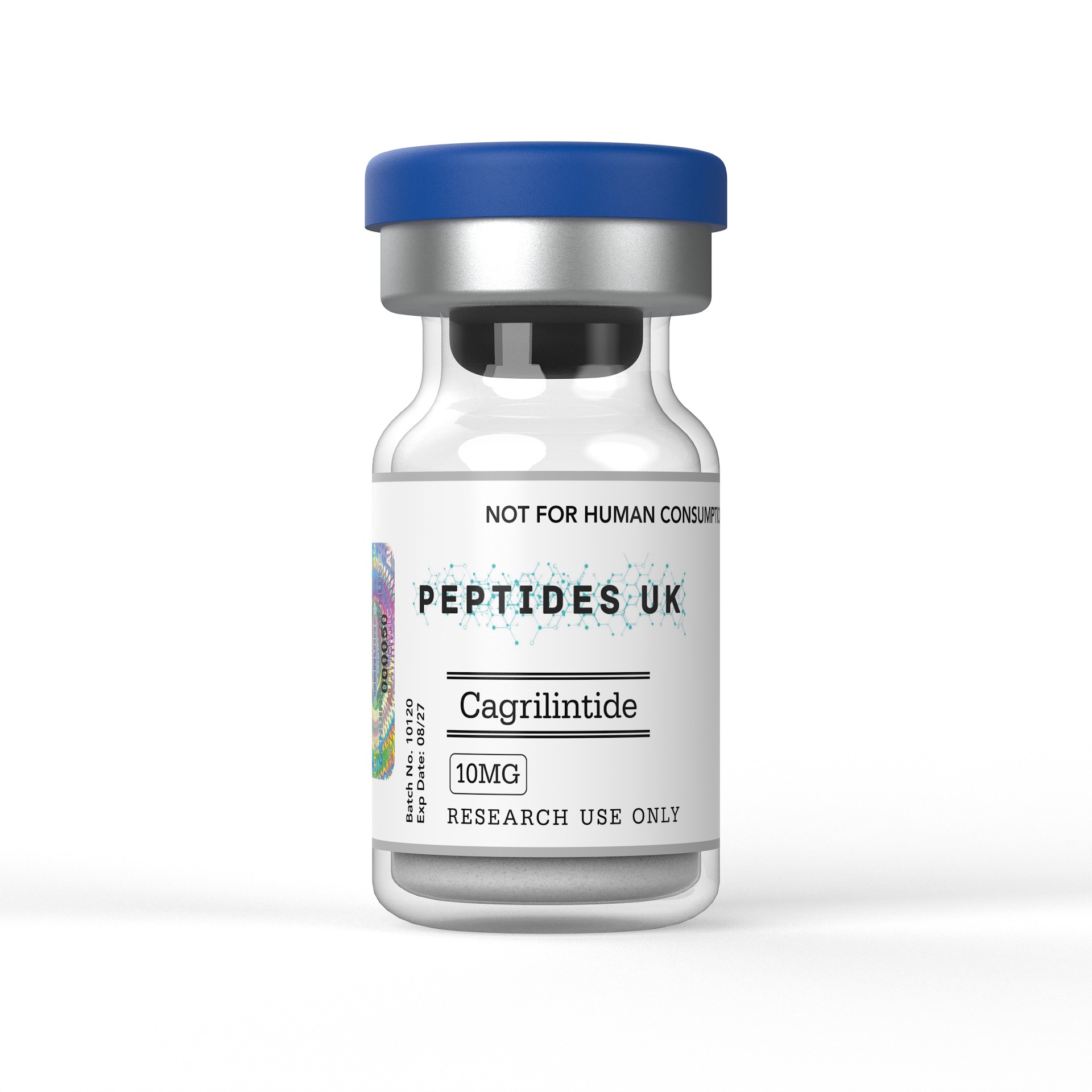
Cagrilintide Ireland – Buy Online | In Stock & Ready to Ship
Buy Cagrilintide in Ireland with fast shipping and guaranteed ≥99% purity — verified with COA and HPLC documentation. A trusted choice for peptides Ireland research teams rely on, with no customs delays or international wait times. Whether you’re searching for Cagrilintide Ireland suppliers or looking to buy peptides Ireland-wide, we have you covered. Irish research teams can count on consistent stock, rapid fulfilment and full batch documentation every time.
For research use only. Not intended for human or veterinary use.


Cagrilintide is a synthetic long-acting acylated amylin analogue peptide and one of the most mechanistically distinctive metabolic research compounds available to laboratories in Ireland — a fatty acid-conjugated amylin receptor agonist engineered for extended half-life and sustained amylin receptor pathway activation that produces potent reductions in food intake, body weight, and postprandial glucose excursions through amylin receptor-mediated central and peripheral mechanisms, making it an indispensable research tool for studying amylin receptor pharmacology and signal transduction, hypothalamic energy balance and satiety neurocircuitry, postprandial glucose regulation and gastric emptying biology, the interaction between amylin and GLP-1 receptor pathways in additive and synergistic metabolic regulation, and the emerging biology of combination amylin-incretin approaches to obesity and metabolic disease research. Researchers and institutions across Ireland can source verified, research-grade Cagrilintide directly from our Irish peptide supply, with domestic-speed dispatch and complete batch documentation.
✅ ≥99% Purity — HPLC & Mass Spectrometry Verified
✅ Batch-Specific Certificate of Analysis (CoA) Included
✅ Sterile Lyophilised Powder | GMP Manufactured
✅ Fast Dispatch to Ireland | Peptides Ireland Stock
Cagrilintide is a synthetic acylated amylin analogue developed by Novo Nordisk as a long-acting amylin receptor agonist — engineered through a combination of peptide backbone modifications and fatty acid acylation to achieve the extended plasma half-life that distinguishes it from earlier amylin analogues including pramlintide, which requires multiple daily injections due to its short duration of action. The structural engineering of Cagrilintide incorporates amino acid substitutions relative to human amylin that reduce amyloidogenic self-aggregation — a property of native amylin and early analogues that limits their utility in both research and therapeutic contexts — alongside C-terminal fatty acid acylation through an albumin-binding linker that extends plasma half-life to approximately seven days by exploiting non-covalent albumin binding to retard renal clearance and proteolytic degradation, enabling once-weekly dosing in pre-clinical and clinical research models.
Native amylin — also designated islet amyloid polypeptide (IAPP) — is a 37-amino acid peptide co-secreted with insulin from pancreatic beta cells in response to nutrient ingestion, functioning as a satiety hormone that complements insulin’s peripheral glucose disposal actions through distinct central and peripheral mechanisms. Amylin acts primarily through a family of amylin receptors — heterodimeric complexes formed by the calcitonin receptor (CTR) combined with receptor activity-modifying proteins (RAMPs), principally RAMP1, RAMP2, and RAMP3 — generating AMY1, AMY2, and AMY3 receptor subtypes with distinct tissue distribution and signalling properties. In the central nervous system, amylin receptor activation in the area postrema, nucleus tractus solitarius, and hypothalamic nuclei mediates the satiety and food intake-reducing effects of circulating amylin — effects that are anatomically and mechanistically distinct from those of GLP-1 receptor agonists acting primarily through arcuate nucleus and vagal afferent pathways, providing the biological rationale for combining amylin and GLP-1 receptor agonism to produce additive or synergistic metabolic effects.
Cagrilintide’s significance as a research compound extends beyond its role as a simple amylin receptor agonist — its extended pharmacokinetic profile and reduced amyloidogenicity make it the most pharmacologically suitable tool available for studying sustained amylin receptor activation biology, for establishing chronic amylin receptor stimulation models in pre-clinical research, and for investigating the combination biology of amylin plus GLP-1 receptor co-agonism that has become one of the most scientifically productive areas in obesity and metabolic disease research following the clinical development of CagriSema — the fixed-ratio combination of Cagrilintide with semaglutide that has demonstrated body weight reductions substantially exceeding those achievable with GLP-1 receptor agonism alone.
In controlled laboratory and pre-clinical settings, Cagrilintide is studied across a range of amylin receptor pharmacology, hypothalamic energy balance, postprandial glucose regulation, obesity biology, and combination metabolic pharmacology applications:
Cagrilintide’s high-affinity, long-acting amylin receptor engagement makes it a valuable research tool for studying amylin receptor pharmacology — examining receptor binding kinetics across AMY1, AMY2, and AMY3 receptor subtypes, characterising the signal transduction cascades activated downstream of calcitonin receptor-RAMP heterodimer engagement including cAMP-PKA and calcium mobilisation pathways, and investigating how sustained versus acute amylin receptor stimulation influences receptor expression, downstream signalling adaptation, and biological output. Research has used Cagrilintide to probe amylin receptor subtype selectivity, to characterise RAMP-dependent modulation of calcitonin receptor pharmacology, and to study how the extended pharmacokinetic profile of acylated amylin analogues influences receptor occupancy dynamics and downstream signalling compared to shorter-acting amylin receptor agonists.
Cagrilintide is used as a research tool for studying amylin receptor-mediated regulation of hypothalamic and brainstem energy balance neurocircuitry — examining how amylin receptor activation in the area postrema, nucleus tractus solitarius, lateral parabrachial nucleus, and hypothalamic nuclei modulates food intake, meal size, meal frequency, and energy expenditure. Research has characterised the neuronal populations expressing amylin receptors in brain regions relevant to satiety signalling, the downstream hypothalamic neuropeptide systems engaged by amylin receptor activation including melanocortin and NPY/AgRP pathways, and how chronic sustained amylin receptor stimulation with long-acting analogues like Cagrilintide alters hypothalamic gene expression and synaptic connectivity in energy balance circuits. These hypothalamic satiety neurocircuitry studies have contributed to understanding of how amylin receptor-mediated satiety signalling is anatomically and mechanistically distinct from leptin, GLP-1, and other satiety hormone pathways.
Cagrilintide recapitulates amylin’s peripheral metabolic actions — including suppression of postprandial glucagon secretion from pancreatic alpha cells, slowing of gastric emptying that reduces the rate of nutrient absorption and blunts postprandial glucose excursions, and reduction of postprandial hepatic glucose output — making it a research tool for studying the physiological role of amylin in postprandial glucose homeostasis and the pharmacological consequences of sustained amylin receptor activation on glucose regulation. Research has used Cagrilintide in glucose tolerance and meal challenge models to characterise postprandial glucose and glucagon dynamics under sustained amylin receptor agonism, to study the mechanisms of amylin-mediated gastric motility regulation, and to examine how amylin receptor-mediated glucose regulation complements and interacts with insulin-mediated glucose disposal.
Cagrilintide’s potent and sustained food intake-reducing and body weight-lowering effects in pre-clinical models make it a research tool for studying the amylin receptor-mediated regulation of adiposity — examining how chronic amylin receptor agonism produces reductions in fat mass, the adipose tissue biology of amylin receptor-mediated weight loss including effects on adipocyte lipolysis and lipogenesis, the role of amylin receptor signalling in regulating energy expenditure and metabolic rate alongside food intake, and the hypothalamic and peripheral mechanisms through which long-acting amylin analogues produce sustained rather than transient food intake suppression. These obesity biology studies have contributed to understanding of how amylin receptor signalling contributes to the long-term regulation of body adiposity and how pharmacological amylin receptor agonism can be exploited to produce meaningful and sustained reductions in body weight in pre-clinical obesity models.
One of the most scientifically significant research applications of Cagrilintide is in combination biology studies examining the interaction between amylin receptor and GLP-1 receptor agonism — motivated by the observation that the two pathways activate anatomically and mechanistically distinct satiety neurocircuits and that their combination produces additive to synergistic metabolic effects exceeding those of either agonist alone. Research has used Cagrilintide in combination with semaglutide and other GLP-1 receptor agonists to characterise the pharmacodynamic interactions between amylin and GLP-1 receptor pathways on food intake, body weight, glucose regulation, and energy expenditure — examining the central nervous system regions and neuronal populations where amylin and GLP-1 receptor signalling converge or act in parallel, the metabolic endpoints where combination agonism produces effects greater than additive, and the mechanistic basis for the superior body weight reduction observed with CagriSema relative to semaglutide alone in clinical research.
Cagrilintide is used in pancreatic islet biology research to study the paracrine and autocrine roles of amylin receptor signalling within the islet — examining how amylin receptor activation influences insulin secretion, beta cell survival, and islet function, the crosstalk between amylin and insulin secretory pathways in beta cells co-secreting both peptides, and how chronic amylin receptor stimulation modulates pancreatic islet biology in diabetes and obesity models. Research has also examined whether Cagrilintide’s amylin receptor agonism produces effects on beta cell mass and function relevant to type 2 diabetes models — contributing to understanding of whether sustained amylin receptor activation has beta cell-protective or -detrimental effects in the context of metabolic disease.
Because amylin receptors are heterodimeric complexes formed by the calcitonin receptor — a receptor with well-established roles in bone metabolism and calcium homeostasis — Cagrilintide provides a research tool for studying the relationship between amylin receptor pharmacology and calcitonin receptor-mediated bone biology. Research has examined whether long-acting amylin receptor agonists influence bone turnover markers, bone mineral density, and calcitonin receptor signalling in bone-relevant cell types — contributing to understanding of the intersection between amylin receptor pharmacology, calcitonin receptor biology, and skeletal metabolism that is relevant to the safety and metabolic biology characterisation of amylin analogue research compounds.
Amylin receptors are expressed in cardiovascular tissues including heart and vasculature, and research has examined the cardiovascular biology of amylin receptor activation — studying effects of Cagrilintide on heart rate, blood pressure, cardiac function, and vascular biology in pre-clinical models. Research has also examined the cardiometabolic consequences of Cagrilintide-induced weight loss and metabolic improvement — characterising how amylin receptor agonism-mediated reductions in adiposity and improvement in glucose regulation translate into cardiovascular risk factor changes in metabolic disease models. These cardiovascular biology studies are relevant to understanding the full metabolic biology profile of amylin receptor agonism and the cardiovascular biology implications of combination amylin-GLP-1 receptor approaches in obesity research.
Pre-clinical research has documented Cagrilintide’s potent food intake-reducing and body weight-lowering effects in rodent obesity models — with studies characterising dose-dependent reductions in food intake, body weight, and fat mass following chronic Cagrilintide administration, and demonstrating that the extended pharmacokinetic profile of the acylated analogue produces sustained weight reduction without the tachyphylaxis observed with shorter-acting amylin analogues. These pre-clinical obesity model studies established Cagrilintide’s pharmacodynamic profile as a long-acting amylin receptor agonist and provided the foundational evidence for translating Cagrilintide into clinical obesity research.
Research has documented additive to synergistic body weight reduction when Cagrilintide is combined with GLP-1 receptor agonists — with pre-clinical studies in diet-induced obesity models demonstrating that Cagrilintide plus semaglutide combination produces body weight reductions substantially exceeding those of either agent alone at equivalent doses. These combination biology studies provided the mechanistic and pharmacodynamic rationale for the clinical development of CagriSema and characterised the anatomical and mechanistic basis for the superior efficacy of combined amylin-GLP-1 receptor agonism — establishing that the two pathways engage distinct but complementary satiety neurocircuits whose co-activation produces superior metabolic outcomes.
Research has characterised Cagrilintide’s effects on postprandial glucose regulation — documenting suppression of postprandial glucagon secretion, slowing of gastric emptying, and reduction of postprandial glucose excursions in pre-clinical metabolic challenge models. These glucose regulation studies characterised the peripheral metabolic actions of sustained amylin receptor agonism and established the contribution of amylin receptor-mediated glucagon suppression and gastric emptying delay to overall glucose homeostasis — demonstrating that Cagrilintide recapitulates and extends the postprandial glucose-regulating biology of native amylin through sustained receptor engagement.
Research has confirmed that Cagrilintide’s amino acid substitutions relative to native amylin produce markedly reduced amyloidogenic self-aggregation — a critical improvement over native IAPP whose tendency to form amyloid fibrils limits its research utility and contributed to beta cell pathology in type 2 diabetes. Structural and biophysical studies characterising Cagrilintide’s aggregation properties demonstrated that the engineered substitutions prevent the formation of amyloid-competent conformations while preserving amylin receptor binding affinity and agonist activity — establishing the structural basis for Cagrilintide’s improved research utility relative to native amylin and earlier analogues.
Clinical research — including the SCALE and CagriSema combination trials — has documented body weight reductions with Cagrilintide-containing regimens that substantially exceed those achievable with GLP-1 receptor agonist monotherapy. Phase 2 clinical data demonstrated meaningful body weight reduction with Cagrilintide monotherapy, and combination CagriSema data demonstrated weight reductions in the range of 15–25% of body weight — among the largest pharmacologically induced weight reductions documented in clinical obesity research at the time of publication. These clinical findings validated the pre-clinical combination biology rationale and established Cagrilintide as a clinically relevant amylin receptor agonist component in next-generation obesity pharmacotherapy research.
Research has characterised the central nervous system mechanisms underlying Cagrilintide’s satiety and food intake-reducing effects — documenting amylin receptor activation in the area postrema, nucleus tractus solitarius, and hypothalamic regions, the downstream neuronal signalling cascades engaged by amylin receptor activation in these brain regions, and the neuroanatomical circuits through which brainstem amylin receptor activation is relayed to hypothalamic energy balance centres. These central mechanism studies have established the neurobiological basis for amylin receptor-mediated satiety and provided the anatomical framework for understanding how amylin and GLP-1 receptor pathways interact at the level of central satiety neurocircuitry.
Pre-clinical and clinical research has characterised Cagrilintide’s safety and tolerability profile — with studies documenting the predominantly gastrointestinal nature of adverse effects observed at therapeutic doses, the absence of significant hypoglycaemia risk consistent with the glucose-dependent mechanism of amylin receptor-mediated glucagon suppression, and the cardiovascular and bone safety biology relevant to calcitonin receptor-mediated effects. These safety characterisation studies have been important for establishing Cagrilintide’s research profile relative to other metabolic peptide research compounds and for understanding the tolerability biology of sustained amylin receptor agonism.
| Feature | Cagrilintide | Pramlintide | Native Amylin (IAPP) | Semaglutide | CagriSema |
|---|---|---|---|---|---|
| Type | Long-acting acylated amylin analogue | Short-acting amylin analogue | Endogenous islet peptide | Long-acting GLP-1 receptor agonist | Fixed-ratio Cagrilintide + semaglutide combination |
| Receptor Target | AMY1/AMY2/AMY3 — CTR/RAMP heterodimers | AMY1/AMY2/AMY3 | AMY1/AMY2/AMY3 | GLP-1 receptor | AMY1/2/3 + GLP-1 receptor |
| Half-Life | ~7 days — albumin-binding acylation | ~48 minutes | Minutes | ~7 days | ~7 days (both components) |
| Dosing Frequency | Once weekly | Multiple daily injections | Not applicable — endogenous | Once weekly | Once weekly |
| Amyloidogenicity | Markedly reduced — engineered substitutions | Reduced relative to native IAPP | High — amyloid-forming | Not applicable | Markedly reduced |
| Primary Metabolic Effects | Food intake reduction, body weight loss, postprandial glucose regulation | Postprandial glucose regulation, modest weight reduction | Satiety, gastric emptying, glucagon suppression | Food intake reduction, body weight loss, glucose regulation | Additive/synergistic food intake reduction and body weight loss |
| Weight Reduction Magnitude | Substantial — exceeds GLP-1 monotherapy in combination | Modest | Modest | Substantial — reference GLP-1 agonist | Among highest documented pharmacologically |
| p53/HPG Axis Dependence | Independent — metabolic/neuroendocrine mechanism | Independent | Independent | Independent | Independent |
| Research Profile | Growing — key amylin receptor agonist in combination obesity research | Well-documented — established amylin analogue | Extensively studied — reference amylin biology | Extensively studied — reference GLP-1 agonist | Rapidly growing — next-generation obesity combination research |
| Parameter | Detail |
|---|---|
| Name | Cagrilintide |
| Type | Synthetic Long-Acting Acylated Amylin Analogue — Research Grade |
| Structure | Fatty acid-acylated amylin analogue with engineered amino acid substitutions reducing amyloidogenicity and albumin-binding linker extending half-life |
| Mechanism | Amylin receptor (AMY1/AMY2/AMY3) agonism → hypothalamic and brainstem satiety signalling → food intake reduction, body weight loss, postprandial glucagon suppression, gastric emptying delay |
| Receptor Targets | AMY1, AMY2, AMY3 — calcitonin receptor / RAMP1, RAMP2, RAMP3 heterodimers |
| Half-Life | ~7 days — albumin-binding fatty acid acylation |
| Key Research Distinction | Only long-acting acylated amylin analogue suitable for once-weekly pre-clinical dosing and chronic sustained amylin receptor activation models |
| Primary Research Areas | Amylin receptor pharmacology / hypothalamic energy balance / postprandial glucose regulation / obesity biology / amylin-GLP-1 combination pharmacology |
| Amyloidogenicity | Markedly reduced relative to native amylin — engineered amino acid substitutions |
| Purity | ≥99% HPLC & MS Verified |
| Form | Sterile Lyophilised Powder |
| Solubility | Sterile water or aqueous buffer — see reconstitution note |
| Storage (Powder) | -20°C, protect from light and moisture |
| Storage (Reconstituted) | -80°C in aliquots — minimise freeze-thaw cycles |
| Manufacturing | GMP Manufactured |
| Intended Use | Research use only |
Cagrilintide is an acylated peptide with amphipathic properties arising from its fatty acid chain — reconstitution requires careful attention to solvent composition and handling to maintain peptide solubility and prevent aggregation that could reduce amylin receptor binding activity and confound biological assays. For standard aqueous reconstitution, add sterile water or phosphate-buffered saline slowly to the lyophilised powder and swirl gently — avoid vortexing which can promote peptide aggregation and foaming. If solubility is incomplete at the desired stock concentration, gentle bath sonication at room temperature may assist dissolution. For protocols requiring higher stock concentrations, a small volume of DMSO may be used to prepare an initial concentrated solution before dilution into aqueous buffer — maintain final DMSO concentration at ≤0.1% in biological assays to avoid solvent-mediated confounds.
Prepare single-use aliquots immediately after reconstitution and store at -80°C — the extended plasma half-life conferred by albumin-binding acylation does not prevent peptide degradation in reconstituted form at higher temperatures or following multiple freeze-thaw cycles. Use low-binding polypropylene tubes throughout to minimise surface adsorption at working concentrations. For in vivo pre-clinical studies, prepare fresh dosing solutions at the time of administration and maintain on ice during handling — validate amylin receptor agonist activity of reconstituted material against reference standards where possible for critical pre-clinical studies. For combination studies with GLP-1 receptor agonists, prepare Cagrilintide and the GLP-1 agonist as separate stock solutions and combine immediately before administration unless co-formulation stability has been specifically validated.
Every order of Cagrilintide in Ireland includes:
✅ Batch-Specific Certificate of Analysis (CoA)
✅ HPLC Chromatogram
✅ Mass Spectrometry Confirmation
✅ Sterility & Endotoxin Testing Report
✅ Reconstitution Protocol — including acylated peptide solubility guidance
✅ Technical Research Support
Yes — we supply research-grade Cagrilintide to researchers and institutions across Ireland with fast dispatch and full batch documentation. This compound is supplied strictly for laboratory research purposes only.
The amylin receptor is a family of heterodimeric G protein-coupled receptor complexes formed by the calcitonin receptor (CTR) in combination with receptor activity-modifying proteins — primarily RAMP1, RAMP2, and RAMP3 — generating the AMY1, AMY2, and AMY3 receptor subtypes respectively. Each subtype exhibits distinct tissue distribution, ligand binding pharmacology, and signalling properties — with AMY1 and AMY3 expressed most prominently in brain regions relevant to satiety signalling including the area postrema and hypothalamus, and amylin receptor subtypes also expressed in pancreatic islets, cardiovascular tissues, kidney, and bone. Amylin receptor signalling proceeds primarily through Gs-coupled cAMP-PKA pathways and Gq-coupled calcium mobilisation — producing the downstream cellular effects that mediate amylin’s satiety, glucagon-suppressive, and gastric motility-regulating biology. Cagrilintide’s research significance derives directly from its ability to engage amylin receptors with high affinity and sustained occupancy — making it the optimal tool for studying chronic amylin receptor activation biology in contexts where native amylin’s short half-life and amyloidogenicity limit research utility.
Pramlintide — the first synthetic amylin analogue developed for research and clinical use — differs from human amylin at three amino acid positions (substituting proline for alanine at positions 25, 28, and 29) to reduce amyloidogenicity, but retains the short plasma half-life of native amylin requiring multiple daily injections in clinical use. Cagrilintide incorporates the same anti-amyloidogenic structural strategy but additionally incorporates fatty acid acylation through an albumin-binding linker that extends plasma half-life to approximately seven days — transforming the pharmacokinetic profile from a short-acting multiple-daily-dosing compound to a once-weekly long-acting amylin receptor agonist. For research purposes, this pharmacokinetic distinction is critical — Pramlintide is the established reference compound for short-term amylin receptor activation and postprandial glucose regulation studies, while Cagrilintide is the tool for chronic sustained amylin receptor activation models, once-weekly pre-clinical dosing paradigms, and the combination biology with long-acting GLP-1 receptor agonists that requires pharmacokinetically matched components.
The additive to synergistic metabolic effects of Cagrilintide plus semaglutide combination are mechanistically grounded in the anatomical and neurobiological complementarity of amylin and GLP-1 receptor signalling pathways in central satiety neurocircuitry. GLP-1 receptor agonists including semaglutide act primarily through GLP-1 receptors expressed on arcuate nucleus neurons, vagal afferent terminals in the nodose ganglion, and brainstem neurons in the nucleus tractus solitarius — engaging melanocortin pathway activation, NPY/AgRP neuron inhibition, and vagal-brainstem satiety signalling to reduce food intake and body weight. Amylin receptor agonists including Cagrilintide act primarily through amylin receptors in the area postrema and lateral parabrachial nucleus — engaging distinct neuronal populations and downstream circuits that relay satiety signals through different anatomical routes to hypothalamic energy balance centres. Because the two pathways engage different neuronal populations and receptor systems, their simultaneous activation does not produce simple receptor-level competition or redundancy — instead the convergent activation of complementary satiety circuits at multiple anatomical levels produces food intake suppression and body weight reduction exceeding what either pathway can achieve alone, providing the mechanistic rationale for the superior clinical efficacy of CagriSema.
Native human amylin — IAPP — is one of the most amyloidogenic peptides known, readily forming beta-sheet-rich amyloid fibrils in vitro and in vivo at physiologically relevant concentrations. This amyloidogenic property makes native IAPP challenging to work with in research settings — aggregation produces variable receptor binding activity, inconsistent biological potency between preparations, and potential non-specific membrane-disrupting effects of fibrillar aggregates that confound interpretation of receptor-mediated biology. Additionally, IAPP amyloid deposition in pancreatic islets is a pathological feature of type 2 diabetes that contributes to beta cell death — meaning native IAPP research is complicated by the overlap between receptor agonist biology and amyloid cytotoxicity. Cagrilintide’s engineered amino acid substitutions prevent adoption of the amyloid-competent conformation — producing a monomeric or small oligomeric solution structure that maintains amylin receptor binding affinity while eliminating the aggregation-related confounds that limit native IAPP research utility. For researchers studying amylin receptor pharmacology, this non-amyloidogenic property is essential for ensuring that observed biological effects can be attributed to receptor-mediated signalling rather than amyloid aggregate toxicity.
Cagrilintide recapitulates and extends the postprandial glucose-regulating actions of native amylin through sustained amylin receptor activation — engaging three complementary mechanisms that collectively blunt postprandial glucose excursions. First, amylin receptor activation suppresses postprandial glucagon secretion from pancreatic alpha cells — reducing hepatic glucose output that would otherwise contribute to the postprandial glucose rise. Second, amylin receptor-mediated signalling slows gastric emptying — reducing the rate at which ingested carbohydrate reaches the small intestine for absorption and thereby flattening the postprandial glucose absorption curve. Third, centrally mediated effects of amylin receptor activation in brainstem nuclei contribute to regulation of autonomic outflow to the pancreas and liver that modulates postprandial glucose metabolism. The consequence is a reduction in both the magnitude and duration of postprandial glucose excursions — an effect complementary to the insulin secretion-stimulating actions of GLP-1 receptor agonists, making amylin and GLP-1 receptor pathway co-activation particularly effective for overall postprandial glucose regulation.
Cagrilintide research has been focused primarily on metabolic disease models — with the most extensively studied research contexts centred on diet-induced obesity, type 2 diabetes, and the metabolic syndrome rather than cancer biology. Pre-clinical diet-induced obesity models in rodents have been the primary experimental system for characterising Cagrilintide’s food intake-reducing and body weight-lowering effects. Type 2 diabetes models have been used to characterise effects on glycaemic control, postprandial glucose regulation, and pancreatic islet biology. Combination studies with semaglutide in diet-induced obesity models provided the pre-clinical rationale for CagriSema development. Beyond these primary metabolic disease contexts, the calcitonin receptor component of amylin receptors has motivated research examining Cagrilintide’s effects in bone metabolism models — given the established role of calcitonin receptor signalling in bone turnover. Research has also examined cardiovascular biology in metabolic disease models where Cagrilintide-induced weight loss and glucose regulation improvement produce secondary cardiovascular benefit.
Vehicle controls matched to the Cagrilintide reconstitution solvent are essential in all cell biology and in vivo studies — ensuring that solvent effects are distinguished from amylin receptor-mediated biology. Amylin receptor antagonist controls — particularly the selective amylin receptor antagonist AC187 or salmon calcitonin fragment 8-32 — are important for confirming that observed biological effects of Cagrilintide are receptor-mediated rather than non-specific, and should be included in mechanistic studies where receptor-dependence of the observed effect is the primary question. In combination studies with GLP-1 receptor agonists, appropriate factorial design including each agonist alone alongside the combination is essential for determining whether combination effects are additive, synergistic, or less than additive. For in vivo body weight and food intake studies, pair-feeding controls are important for distinguishing direct metabolic effects of amylin receptor activation from secondary consequences of reduced caloric intake. For postprandial glucose studies, matched glucose challenge timing and meal composition controls ensure that differences in gastric emptying rate are appropriately controlled across experimental groups.
≥99% purity is strongly recommended for amylin receptor pharmacology studies, hypothalamic satiety neurocircuitry research, postprandial glucose regulation studies, combination biology research with GLP-1 receptor agonists, and pre-clinical obesity and metabolic disease models — where compound purity directly determines the reliability of receptor binding affinity measurements, food intake and body weight pharmacodynamics, and the interpretation of combination pharmacology studies. Given Cagrilintide’s acylated amphipathic structure, peptide impurities with membrane-active or receptor-binding properties could introduce non-specific biological signals that confound amylin receptor-specific pharmacology — making high purity verification particularly important for research designs where receptor selectivity and mechanistic attribution are primary endpoints. All Cagrilintide Ireland stock is independently verified to ≥99% purity by HPLC and mass spectrometry with identity confirmation.
Cagrilintide is supplied exclusively for legitimate scientific research purposes conducted within licensed laboratory environments. This product is not intended for human consumption, self-administration, or any therapeutic application. It must be handled by qualified researchers in compliance with applicable Irish and EU regulations and institutional ethics guidelines. By purchasing, you confirm that this compound will be used solely for approved in vitro or pre-clinical research purposes.
WhatsApp us
Receive News
