PRODUCTS SOLD ON PEPTIDESLABIRELAND.COM ARE FOR RESEARCH PURPOSES ONLY AND ARE NOT FOR HUMAN OR VETERINARY USE.
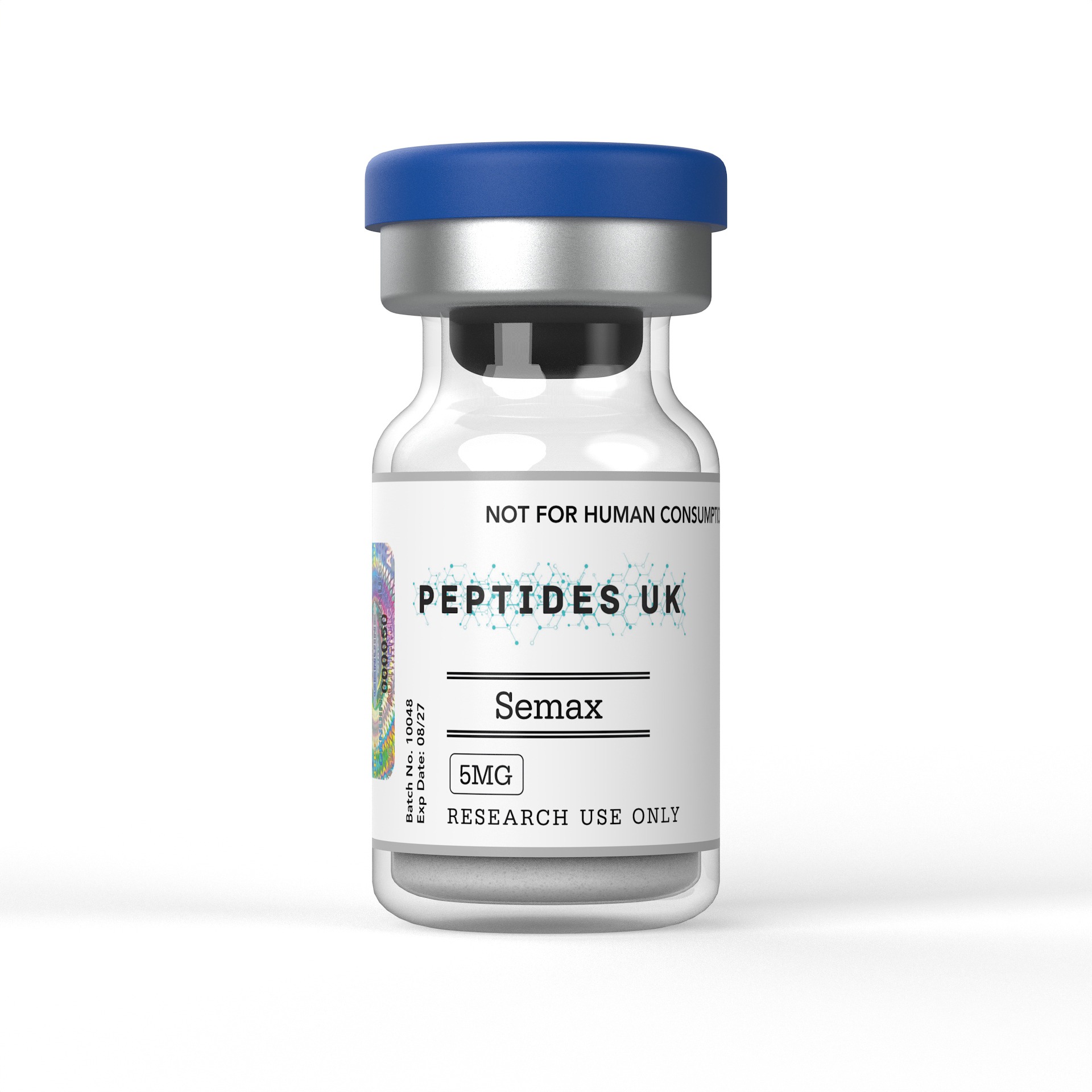
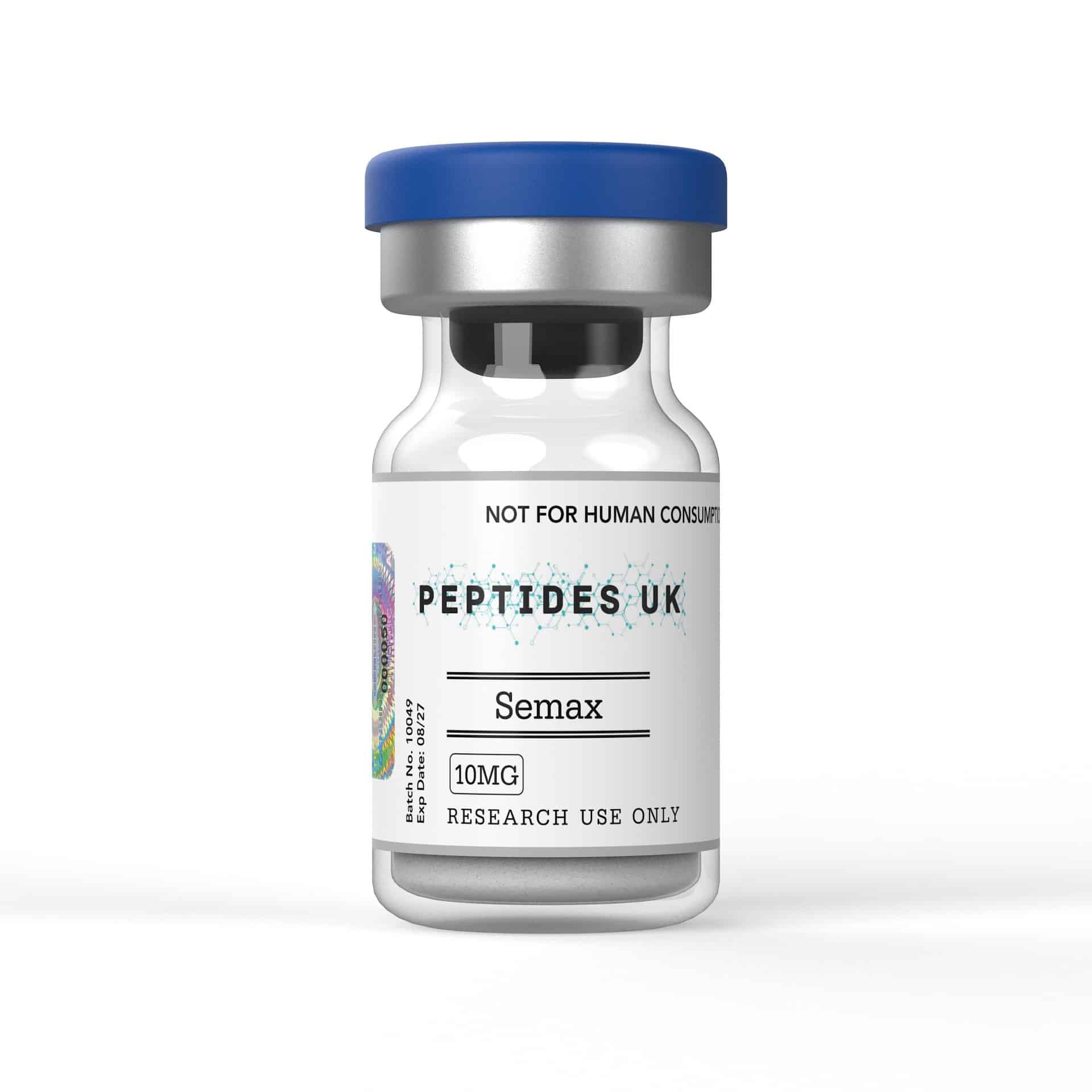
€20.00 – €35.00Price range: €20.00 through €35.00
Semax Ireland – Buy Online | In Stock & Ready to Ship
Buy Semax in Ireland with fast shipping and guaranteed ≥99% purity — verified with COA and HPLC documentation. A trusted choice for peptides Ireland research teams rely on, with no customs delays or international wait times. Whether you’re searching for Semax Ireland suppliers or looking to buy peptides Ireland-wide, we have you covered. Irish research teams can count on consistent stock, rapid fulfilment and full batch documentation every time.
For research use only. Not intended for human or veterinary use.


Semax is a synthetic heptapeptide neuropeptide and one of the most extensively studied centrally acting cognitive and neuroprotective research compounds available to laboratories in Ireland — a metabolically stabilised analogue of the ACTH(4-10) fragment Met-Glu-His-Phe-Pro-Gly-Pro, developed at the Institute of Molecular Genetics of the Russian Academy of Sciences as a research tool for studying ACTH-derived neuropeptide pharmacology, BDNF and neurotrophin system regulation, cognitive enhancement and memory consolidation biology, neuroprotection and ischaemic brain injury mechanisms, dopaminergic and serotonergic system modulation, HPA axis-independent ACTH fragment biology, and the intersection of neuropeptide signalling with neuroplasticity and neurorecovery, making it an indispensable research tool for studying ACTH fragment receptor pharmacology, hypothalamic-pituitary-adrenal axis-independent cognitive neuropeptide biology, BDNF upregulation mechanisms in hippocampal and cortical circuits, the neurotrophic and neuroprotective biology of ACTH-derived peptides stripped of adrenocorticotropic activity, dopaminergic reward and attention circuit modulation by neuropeptides, and the comparative pharmacology of Semax against structurally and functionally related cognitive neuropeptide research compounds including Selank, Semax analogues, and ACTH fragment derivatives. Researchers and institutions across Ireland can source verified, research-grade Semax directly from our Irish peptide supply, with domestic-speed dispatch and complete batch documentation.
✅ ≥99% Purity — HPLC & Mass Spectrometry Verified
✅ Batch-Specific Certificate of Analysis (CoA) Included
✅ Sterile Lyophilised Powder | GMP Manufactured
✅ Fast Dispatch to Ireland | Peptides Ireland Stock
Semax — Met-Glu-His-Phe-Pro-Gly-Pro — is a synthetic heptapeptide representing the ACTH(4-10) core sequence with a C-terminal Pro-Gly-Pro extension that confers metabolic stability against prolyl endopeptidase and other peptidases that rapidly degrade the native ACTH(4-10) fragment, extending its biological activity window and enabling sustained neuropeptide receptor engagement in research protocols. The compound was developed through the systematic neuropeptide research programme at the Institute of Molecular Genetics of the Russian Academy of Sciences — the same institution that produced Selank — with the design rationale of creating a metabolically stable ACTH fragment derivative that preserves the cognitive-enhancing and neurotrophic biology of ACTH(4-10) without the adrenocorticotropic activity of full-length ACTH, enabling research into ACTH-derived neuropeptide biology that is pharmacologically separable from HPA axis glucocorticoid-mediated effects.
The biological significance of ACTH(4-10) as a neuropeptide — distinct from its role as the N-terminal steroidogenic fragment of full-length ACTH — was established through decades of research demonstrating that the ACTH(4-10) core sequence produces cognitive-enhancing, attention-modulating, and neuroprotective effects through central nervous system mechanisms entirely independent of adrenal steroidogenesis. These ACTH fragment effects — characterised in the Bohus and De Wied laboratories as improvements in passive and active avoidance learning, enhanced attention and arousal, and resistance to extinction of conditioned behaviour — established that melanocortin receptors in the brain mediate cognitive and behavioural biology separable from the peripheral endocrine biology of ACTH. Semax’s design preserves and extends this ACTH fragment neuropeptide biology while adding the metabolic stability necessary for practical research utility in intact biological systems.
Semax’s primary mechanism involves multiple and partially characterised signalling pathways — including melanocortin receptor engagement in the brain contributing to dopaminergic and attention-modulating effects, potent BDNF upregulation in hippocampal and cortical regions through mechanisms that remain under active investigation, serotonin metabolism modulation through effects on serotonin turnover and receptor expression, and enkephalin-degrading enzyme inhibition through the Pro-Gly-Pro C-terminal extension shared with Selank. The convergence of these multiple neurochemical mechanisms on shared endpoints of cognitive enhancement, neuroprotection, and neuroplasticity makes Semax a multi-target neuropeptide research tool whose full mechanistic biology continues to be characterised.
In controlled laboratory and pre-clinical settings, Semax is studied across ACTH fragment pharmacology, BDNF regulation, cognitive neuroscience, neuroprotection, dopaminergic and serotonergic biology, and neuroplasticity research applications:
Semax is used as a research tool for studying the central nervous system biology of ACTH-derived peptides acting through melanocortin receptors independently of adrenal steroidogenesis — characterising how ACTH(4-10) core sequence engagement of brain melanocortin receptors produces cognitive, attentional, and arousal effects distinct from the peripheral endocrine biology of full-length ACTH. Research uses Semax to examine melanocortin receptor-mediated signalling in hippocampal, cortical, and dopaminergic brain regions — characterising the receptor subtypes and downstream signalling pathways through which ACTH fragment neuropeptide biology produces its cognitive and neuroprotective effects.
Semax produces potent and reproducible BDNF upregulation in hippocampal and cortical regions — one of its most consistently documented neurobiological effects and a primary mechanistic basis for its neuroprotective and cognitive-enhancing biology. Research has characterised the temporal dynamics and brain region specificity of Semax-induced BDNF elevation — examining hippocampal CA1 and CA3 BDNF mRNA and protein increases, cortical BDNF upregulation, downstream TrkB receptor activation, and the BDNF-dependent synaptic plasticity changes accompanying Semax treatment. Studies have used Semax as a pharmacological tool for studying how neuropeptide-driven BDNF upregulation influences neuroplasticity, dendritic spine density, and long-term potentiation in hippocampal circuits — contributing to understanding of how neuropeptide signalling engages the neurotrophin system.
Semax produces well-documented improvements in learning and memory parameters across multiple pre-clinical cognitive paradigms — with research characterising enhanced performance in Morris water maze spatial navigation, passive and active avoidance conditioning, novel object recognition, and working memory tasks. Studies have examined the neurochemical and circuit-level mechanisms underlying Semax’s pro-cognitive effects — characterising the contributions of BDNF upregulation, dopaminergic modulation, and attention enhancement to improved task performance. These cognitive biology studies have established Semax as a research tool for studying neuropeptide contributions to memory consolidation and cognitive function across multiple hippocampal and prefrontal cortex-dependent task domains.
Semax has been extensively studied for neuroprotective effects in ischaemic brain injury models — with research characterising significant reductions in infarct volume, attenuation of neurological deficit scores, reduction of oxidative stress markers, and improvement of neurological recovery in rodent focal and global ischaemia models following Semax administration. Studies have characterised the neuroprotective mechanisms — examining BDNF-dependent neuronal survival signalling, anti-apoptotic pathway activation, reduction of glutamate excitotoxicity, attenuation of neuroinflammatory responses, and preservation of blood-brain barrier integrity in Semax-treated ischaemic brain tissue. These neuroprotection studies have established Semax as one of the most pharmacologically active neuroprotective neuropeptides in pre-clinical ischaemia research.
Semax modulates dopaminergic neurotransmission — with research characterising effects on dopamine synthesis, release, and metabolism in striatal and prefrontal circuits, and documenting Semax-induced changes in dopamine receptor expression and dopaminergic neurone activity. Studies have examined Semax’s influence on attention, motivation, and reward-related behaviour through dopaminergic mechanisms — characterising parallels with the attentional and arousal-enhancing effects of ACTH fragments that were originally attributed to dopaminergic circuit engagement. These dopamine system studies have contributed to understanding of how ACTH-derived neuropeptides modulate catecholaminergic circuits governing cognitive function and motivated behaviour.
Semax modulates serotonin metabolism — with research characterising effects on serotonin turnover, 5-HT receptor expression, and serotonergic neurotransmission in limbic and cortical regions. Studies have examined Semax’s effects in anxiety and depression-related pre-clinical models — characterising anxiolytic-like and antidepressant-like effects in forced swim, elevated plus maze, and open field paradigms. These serotonergic biology studies have established that Semax’s neurochemical profile encompasses serotonin system modulation alongside its dopaminergic and neurotrophic effects — contributing to understanding of how multi-target neuropeptide signalling produces combined cognitive and mood-relevant biological outputs.
Semax modulates neuroinflammatory signalling — with research characterising suppression of pro-inflammatory cytokine production, reduction of microglial activation markers, and attenuation of neuroinflammatory cascades in brain injury and neurodegeneration models. Studies have examined Semax’s effects on NF-κB pathway activation, TNF-alpha and IL-1beta production, and microglial polarisation state in ischaemic and inflammatory brain injury models — characterising how ACTH fragment-derived neuropeptide signalling engages anti-neuroinflammatory biology that contributes to the compound’s neuroprotective effects independently of its neurotrophic mechanisms.
Semax is studied in comparative research alongside ACTH(4-10), ACTH(4-7), Selank, and other neuropeptide cognitive enhancers — characterising how the Pro-Gly-Pro C-terminal extension modifies the pharmacological profile of the native ACTH(4-10) fragment and how Semax’s multi-target neuropeptide profile compares with structurally distinct cognitive neuropeptides acting through different primary mechanisms. These comparative studies examine BDNF upregulation potency, cognitive enhancement magnitude, neuroprotective efficacy, and neurochemical mechanism profiles across the neuropeptide cognitive enhancer class — contributing to understanding of the structure-activity relationships governing ACTH fragment biology.
Research has documented Semax’s potent BDNF upregulation in hippocampal and cortical regions — with studies characterising significant increases in BDNF mRNA and protein levels within hours of Semax administration, sustained elevation across multiple time points, and downstream TrkB receptor phosphorylation confirming biologically active BDNF signalling. These neurotrophin studies established BDNF upregulation as a primary and reproducible neurobiological effect of Semax and provided the mechanistic foundation for its neuroprotective and pro-cognitive biology.
Research has documented significant neuroprotective effects of Semax in rodent focal cerebral ischaemia models — characterising 30–50% reductions in infarct volume, improved neurological deficit scores, preservation of cortical tissue architecture, and reduced apoptotic cell death in Semax-treated ischaemic animals. These neuroprotection studies established Semax as one of the most pharmacologically active neuroprotective compounds in the ACTH fragment class and provided pre-clinical validation for its neurological research applications.
Research has documented Semax’s pro-cognitive effects across Morris water maze, passive and active avoidance, novel object recognition, and working memory paradigms — with studies characterising improved acquisition, enhanced retention, and accelerated reversal learning in Semax-treated animals. These cognitive biology studies established the breadth of Semax’s pro-cognitive biology across hippocampal and prefrontal cortex-dependent task domains and characterised the dose-response relationships for cognitive enhancement.
Research has characterised Semax’s modulation of dopaminergic neurotransmission — documenting effects on striatal and prefrontal dopamine metabolism, dopamine receptor expression changes, and attentional enhancement in pre-clinical paradigms consistent with dopaminergic circuit engagement. These dopamine system studies established the neurochemical basis for Semax’s attentional and arousal-enhancing biology and its relationship to the broader ACTH fragment literature on melanocortin receptor-mediated catecholaminergic modulation.
Research has documented Semax’s modulation of serotonin metabolism — characterising increased serotonin turnover, altered 5-HT receptor expression, and anxiolytic-like effects in elevated plus maze and open field paradigms. These serotonergic studies established that Semax’s neurochemical profile extends beyond dopaminergic and neurotrophic mechanisms to encompass serotonin system modulation contributing to its mood-relevant biological effects.
Research has characterised Semax’s suppression of neuroinflammatory cascades in ischaemic and inflammatory brain injury models — documenting reduced pro-inflammatory cytokine production, attenuated microglial activation, and reduced NF-κB pathway engagement in Semax-treated brain tissue. These neuroinflammation studies established anti-inflammatory signalling as a mechanistically distinct contributor to Semax’s neuroprotective biology alongside its neurotrophic effects.
Research has confirmed that the C-terminal Pro-Gly-Pro extension in Semax provides substantially enhanced resistance to prolyl endopeptidase and other peptidase-mediated degradation relative to the native ACTH(4-10) fragment — establishing the metabolic stability basis for Semax’s extended biological activity window and improved research utility in intact biological systems. These stability studies validated the design rationale of the Pro-Gly-Pro modification and established Semax as a more practical research tool than native ACTH(4-10) for in vivo cognitive and neuroprotection research.
| Feature | Semax | Selank | ACTH(4-10) | N-Acetyl Semax | Dihexa |
|---|---|---|---|---|---|
| Type | Synthetic heptapeptide — ACTH(4-10) + Pro-Gly-Pro extension | Synthetic heptapeptide — tuftsin + Pro-Gly-Pro extension | Endogenous ACTH fragment | N-acetylated Semax analogue — enhanced lipophilicity | Synthetic hexapeptide — angiotensin IV analogue |
| Primary Mechanism | BDNF upregulation / melanocortin receptor / dopamine modulation / serotonin modulation | GABAergic modulation / BDNF upregulation / serotonin modulation / enkephalin inhibition | Melanocortin receptor — ACTH fragment biology | Enhanced CNS penetration vs Semax — same core mechanism | HGF/c-Met receptor agonism — BDNF-independent neurotrophin pathway |
| BDNF Upregulation | Yes — potent and primary mechanism | Yes — documented | Limited — rapid degradation | Yes — enhanced | Yes — via HGF/c-Met |
| Anxiolytic Profile | Moderate — serotonergic | Pronounced — GABAergic + serotonergic | Minimal | Moderate | Minimal |
| Cognitive Enhancement | Yes — primary research application | Yes — alongside anxiolytic | Limited by stability | Yes — enhanced CNS penetration | Yes — synaptic plasticity |
| Neuroprotection | Yes — ischaemia / BDNF-dependent | Moderate | Limited | Yes | Yes |
| Metabolic Stability | High — Pro-Gly-Pro extension | High — Pro-Gly-Pro extension | Low — rapid degradation | High — acetylation + Pro-Gly-Pro | Moderate |
| Key Research Distinction | Reference ACTH fragment cognitive neuropeptide — BDNF upregulation + dopaminergic attentional enhancement | Reference anxiolytic-nootropic neuropeptide — GABAergic + BDNF without sedation | Native sequence reference — stability-limited | Lipophilicity-enhanced Semax analogue | Non-peptide mechanism neurotrophin biology |
| Research Profile | Extensively studied | Extensively studied | Extensively studied | Growing | Growing |
| Parameter | Detail |
|---|---|
| Name | Semax |
| Also Designated | Met-Glu-His-Phe-Pro-Gly-Pro / ACTH(4-10)-Pro-Gly-Pro |
| Sequence | Met-Glu-His-Phe-Pro-Gly-Pro |
| Type | Synthetic Heptapeptide Neuropeptide — ACTH Fragment Derivative — Research Grade |
| Molecular Weight | 813.9 Da |
| Mechanism | ACTH(4-10) melanocortin receptor engagement + BDNF upregulation in hippocampus and cortex + dopaminergic neurotransmission modulation + serotonin metabolism modulation + enkephalin-degrading enzyme inhibition via Pro-Gly-Pro → cognitive enhancement + neuroprotection + attentional modulation |
| Primary Mechanisms | Melanocortin receptor engagement / BDNF-TrkB upregulation / dopaminergic modulation / serotonergic modulation / prolyl endopeptidase inhibition |
| Key Research Distinction | Reference ACTH fragment cognitive neuropeptide — potent BDNF upregulation + dopaminergic attentional enhancement + ischaemic neuroprotection without adrenocorticotropic activity; metabolically stabilised by Pro-Gly-Pro C-terminal extension |
| Primary Research Areas | ACTH fragment pharmacology / BDNF and neurotrophin biology / cognitive enhancement and memory consolidation / ischaemic neuroprotection / dopaminergic system modulation / serotonergic biology / neuroinflammation / comparative neuropeptide cognitive enhancer research |
| C-terminal Extension | Pro-Gly-Pro — prolyl endopeptidase resistance + metabolic stability vs native ACTH(4-10) |
| Purity | ≥99% HPLC & MS Verified |
| Form | Sterile Lyophilised Powder |
| Solubility | Sterile water or sterile saline — readily water soluble |
| Storage (Powder) | -20°C, protect from light and moisture |
| Storage (Reconstituted) | -80°C in aliquots — minimise freeze-thaw cycles |
| Manufacturing | GMP Manufactured |
| Intended Use | Research use only |
Semax is a hydrophilic heptapeptide with excellent aqueous solubility — reconstitute by adding sterile water or sterile physiological saline slowly to the lyophilised powder and swirling gently until fully dissolved. No acidified aqueous solution or organic solvents are required. The Met residue at position 1 is susceptible to oxidation under strongly oxidising conditions — avoid hydrogen peroxide, strong oxidants, and prolonged exposure to dissolved oxygen at elevated temperatures. Avoid strongly alkaline conditions. Prepare single-use aliquots and store at -80°C. For intranasal administration paradigms — the primary in vivo delivery route used in Semax neuroprotection and cognitive research — prepare working solutions in sterile saline at physiologically compatible pH immediately before administration. For cell-based BDNF upregulation studies, dilute into serum-free or low-serum culture media immediately before addition. Use low-binding tubes at working concentrations.
Every order of Semax in Ireland includes:
✅ Batch-Specific Certificate of Analysis (CoA)
✅ HPLC Chromatogram
✅ Mass Spectrometry Confirmation
✅ Sterility & Endotoxin Testing Report
✅ Reconstitution Protocol — including Met residue oxidation and intranasal administration guidance
✅ Technical Research Support
Yes — we supply research-grade Semax to researchers and institutions across Ireland with fast dispatch and full batch documentation. Supplied strictly for laboratory research purposes only.
ACTH(4-10) is the native endogenous fragment — rapidly degraded by prolyl endopeptidase with a very short biological activity window limiting its research utility in intact biological systems. Semax adds a C-terminal Pro-Gly-Pro extension that confers substantial resistance to prolyl endopeptidase-mediated degradation — extending the biological activity window and enabling consistent neuropeptide receptor engagement in in vivo cognitive and neuroprotection research protocols. The Pro-Gly-Pro extension also contributes enkephalin-degrading enzyme inhibition activity absent from the native fragment.
The precise molecular mechanism of Semax-induced BDNF upregulation remains under active investigation — with studies implicating melanocortin receptor-mediated cAMP-PKA signalling driving BDNF gene transcription, possible direct engagement of neurotrophin receptor pathways, and downstream TrkB receptor activation amplifying BDNF-dependent synaptic plasticity. The BDNF upregulation is hippocampus and cortex-preferential, temporally sustained beyond the peptide’s direct receptor occupancy window, and reproducible across multiple research groups — establishing it as a primary and pharmacologically robust effect of Semax administration.
Semax is based on the ACTH(4-10) fragment — producing cognitive enhancement primarily through BDNF upregulation, dopaminergic attentional modulation, and melanocortin receptor engagement, with a cognitive-enhancing and neuroprotective profile as the primary research biology. Selank is based on the tuftsin immunomodulatory peptide — producing anxiolytic effects primarily through GABAergic modulation alongside BDNF upregulation and serotonin modulation, with a combined anxiolytic-nootropic profile without sedation as its primary research distinction. Both share the Pro-Gly-Pro C-terminal extension and metabolic stability characteristics. Semax is the preferred tool for BDNF upregulation, dopaminergic attentional biology, and ischaemic neuroprotection research; Selank is preferred for GABAergic anxiolytic biology and combined anxiety-cognition research.
Semax’s neuroprotective biology in ischaemia combines multiple complementary mechanisms — BDNF upregulation driving neuronal survival signalling, anti-apoptotic pathway activation, attenuation of glutamate excitotoxicity, suppression of neuroinflammatory cascades, and preservation of blood-brain barrier integrity. The combination of neurotrophic and anti-inflammatory mechanisms produces neuroprotection exceeding what any single mechanism alone would predict — making Semax a pharmacologically distinctive neuroprotective research tool for studying multi-mechanism approaches to ischaemic brain injury biology.
Vehicle controls matched to reconstitution solvent are essential. For BDNF mechanism studies, TrkB receptor antagonist controls — ANA-12 or K252a — confirm BDNF-TrkB dependence of observed neuroprotective and pro-cognitive effects. Melanocortin receptor antagonist controls characterise the receptor-mediated versus receptor-independent components of Semax’s neurobiological effects. For comparative neuropeptide studies, parallel Selank treatment groups at matched doses enable direct comparison of ACTH fragment versus tuftsin-based neuropeptide biology. For ischaemia studies, administration timing controls examining pre-ischaemic versus post-ischaemic Semax treatment characterise the neuroprotective administration window.
≥99% purity is essential for BDNF upregulation studies, cognitive behaviour paradigms, ischaemic neuroprotection research, and mechanistic neurochemical studies — where impurities including oxidised Met1 species or Pro-Gly-Pro truncation products would show altered receptor engagement and reduced BDNF-upregulating activity. Met residue oxidation state verification is a critical purity specification. All Semax Ireland stock is verified to ≥99% purity by HPLC and mass spectrometry with Met residue integrity confirmation.
Semax is supplied exclusively for legitimate scientific research purposes conducted within licensed laboratory environments. This product is not intended for human consumption, self-administration, or any therapeutic application. It must be handled by qualified researchers in compliance with applicable Irish and EU regulations and institutional ethics guidelines. By purchasing, you confirm that this compound will be used solely for approved in vitro or pre-clinical research purposes.

WhatsApp us
Receive News
