
PRODUCTS SOLD ON PEPTIDESLABIRELAND.COM ARE FOR RESEARCH PURPOSES ONLY AND ARE NOT FOR HUMAN OR VETERINARY USE.
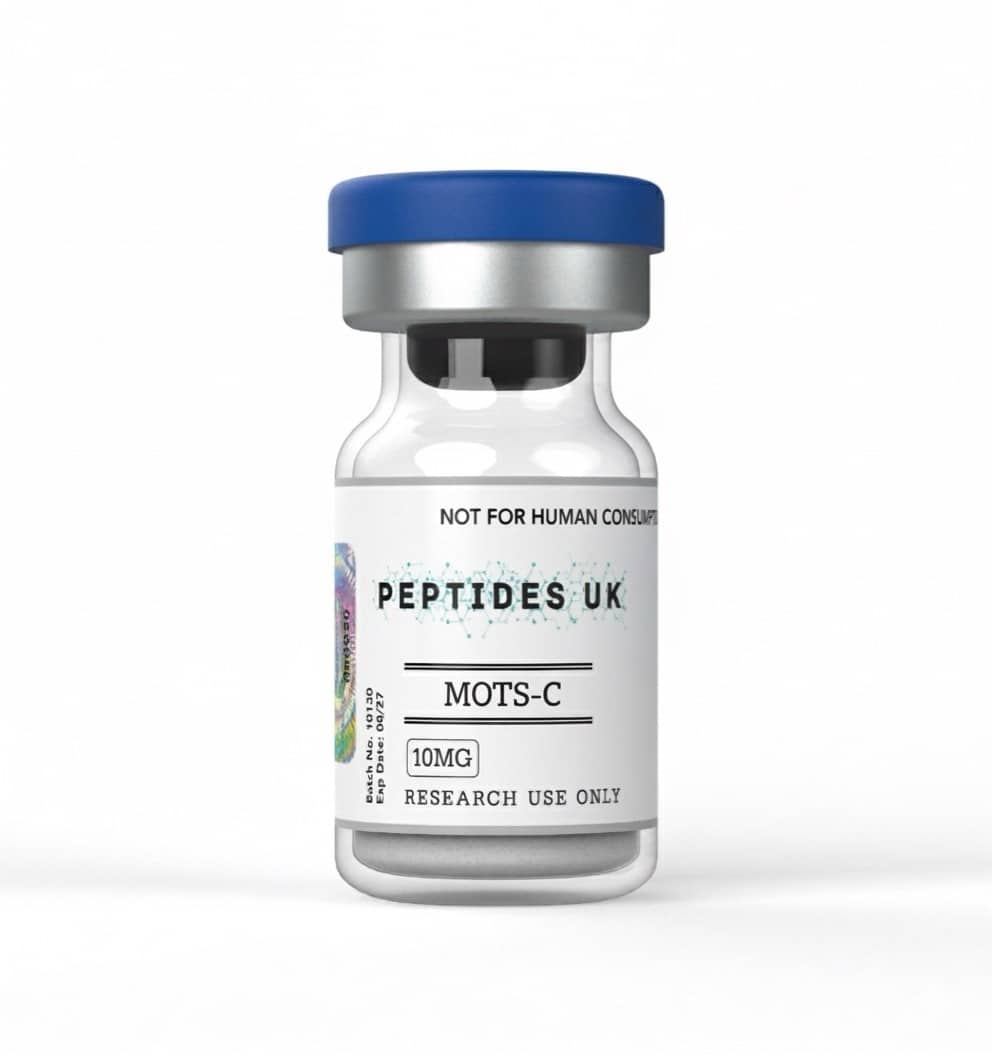
€34.00 – €104.00Price range: €34.00 through €104.00
MOTS-c Ireland – Buy Online | In Stock & Ready to Ship
Buy MOTS-c in Ireland with fast shipping and guaranteed ≥99% purity — verified with COA and HPLC documentation. A trusted choice for peptides Ireland research teams rely on, with no customs delays or international wait times. Whether you’re searching for MOTS-c Ireland suppliers or looking to buy peptides Ireland-wide, we have you covered. Irish research teams can count on consistent stock, rapid fulfilment and full batch documentation every time.
For research use only. Not intended for human or veterinary use.

MOTS-c is a mitochondria-derived peptide encoded within mitochondrial DNA — one of the most significant discoveries in metabolic and longevity research in recent years — available to buy in Ireland with fast dispatch and full batch documentation included.
MOTS-c (Mitochondrial Open Reading Frame of the Twelve S rRNA-c) is a naturally occurring peptide produced by the body’s own mitochondria, with research demonstrating roles in metabolic regulation, insulin sensitivity, exercise response, cellular stress resistance, and healthy ageing biology. Researchers and institutions across Ireland can source verified, research-grade MOTS-c directly from our Irish peptide supply, with domestic-speed dispatch and complete batch documentation.
✅ ≥99% Purity — HPLC & Mass Spectrometry Verified
✅ Batch-Specific Certificate of Analysis (CoA) Included
✅ Sterile Lyophilised Powder | GMP Manufactured
✅ Fast Dispatch to Ireland | Peptides Ireland Stock
MOTS-c is a 16-amino acid peptide encoded not in the nuclear genome — like most proteins — but within the mitochondrial genome itself, specifically within the 12S ribosomal RNA gene. This makes it part of a newly recognised class of biologically active peptides called mitochondria-derived peptides (MDPs), and its discovery has fundamentally changed the understanding of what mitochondria do beyond simply producing cellular energy.
Under conditions of metabolic stress, exercise, or caloric restriction, MOTS-c is released from mitochondria and can travel — both within cells and into the bloodstream — to regulate metabolic processes in distant tissues including skeletal muscle, liver, and fat tissue. It has been described in research as functioning similarly to an exercise signal or metabolic stress hormone, activating many of the same biological pathways triggered by physical activity.
MOTS-c primarily works by activating AMPK (AMP-activated protein kinase) — often described as the body’s master metabolic switch — along with related pathways that improve glucose uptake, reduce fat accumulation, and enhance cellular resilience. It also translocates to the nucleus under stress conditions, where it directly regulates gene expression related to metabolic adaptation and stress response.
In controlled laboratory and pre-clinical settings, MOTS-c is studied across a wide range of metabolic, longevity, and cellular biology research areas:
Insulin Sensitivity and Glucose Metabolism — MOTS-c is one of the most studied mitochondria-derived peptides for its effects on glucose regulation. Pre-clinical studies have examined how MOTS-c improves insulin sensitivity and glucose uptake in skeletal muscle, with research identifying the AMPK pathway and GLUT4 transporter activity as key downstream mechanisms — making it a significant research tool in type 2 diabetes and metabolic disease biology.
Exercise Mimetic Research — MOTS-c levels rise in response to exercise in pre-clinical models and human studies, and it activates many of the same metabolic pathways as physical activity. Research has examined MOTS-c as a potential exercise mimetic — studying how it reproduces aspects of the metabolic benefit of exercise at the cellular and tissue level, and what this reveals about the biology of exercise adaptation.
Obesity and Fat Metabolism Research — Studies have examined MOTS-c’s effects on white adipose tissue accumulation, fat oxidation, and body composition in pre-clinical obesity models — with research documenting reductions in fat mass and improvements in metabolic profiles following MOTS-c treatment, linked to AMPK activation and improved mitochondrial function in metabolic tissues.
Longevity and Healthy Ageing Biology — MOTS-c levels have been observed to decline with age in pre-clinical models, and the peptide has been studied in the context of longevity research. Studies have examined how MOTS-c supplementation in aged pre-clinical models affects physical performance, metabolic health, and stress resilience — with research positioning it as one of the most biologically relevant compounds in mitochondrial longevity biology.
Mitochondrial Stress Response Research — MOTS-c is produced in response to mitochondrial stress and functions as part of the mitochondrial unfolded protein response (UPRmt) — a cellular quality control system for mitochondrial health. Research has used MOTS-c to study how cells sense and respond to mitochondrial dysfunction, and how this stress signalling system connects to broader metabolic regulation.
AMPK Pathway Research — Because MOTS-c is a potent activator of AMPK, it is widely used in metabolic research to study AMPK-dependent processes — including fatty acid oxidation, glucose uptake, mitochondrial biogenesis, and cellular energy sensing — providing a physiologically relevant tool for dissecting AMPK biology compared to synthetic pharmacological activators.
Inflammation and Immune Research — Emerging research has examined MOTS-c’s effects on inflammatory signalling, with studies suggesting it modulates immune cell metabolism and inflammatory pathway activation — contributing to research on the interface between mitochondrial biology, metabolism, and immune function.
Skeletal Muscle Biology — Skeletal muscle is a primary target tissue for MOTS-c, and research has examined how it affects muscle glucose uptake, mitochondrial content, and metabolic adaptation — particularly in the context of exercise physiology and metabolic disease models.
Nuclear Translocation and Gene Regulation Research — A particularly novel aspect of MOTS-c biology is its ability to translocate from the cytoplasm to the nucleus under stress conditions, where it directly regulates stress-response gene expression. Research has examined this nuclear signalling role, exploring how a mitochondria-derived peptide can act as a direct regulator of nuclear gene activity.
The research profile for MOTS-c is rapidly growing and scientifically compelling:
Improved Insulin Sensitivity in Pre-Clinical Models — Studies in rodent models of diet-induced obesity and type 2 diabetes have reported significant improvements in insulin sensitivity and glucose tolerance following MOTS-c treatment, with research identifying AMPK activation in skeletal muscle as a central mechanism — establishing metabolic improvement as the most consistently documented pre-clinical effect of MOTS-c.
Exercise-Like Metabolic Effects — Research has shown that MOTS-c administration in pre-clinical models produces metabolic improvements that closely parallel the effects of exercise training — including improved mitochondrial function, enhanced fat oxidation, and better glucose regulation — supporting its characterisation as a physiological exercise-response signal with mimetic research potential.
Increased Physical Performance in Aged Models — Pre-clinical ageing studies have reported that MOTS-c treatment in older rodent models improved physical performance, muscle function, and metabolic parameters compared to untreated aged controls — supporting the relevance of MOTS-c to longevity and age-related metabolic decline research.
Age-Related Decline in MOTS-c Levels — Studies have documented that circulating MOTS-c levels decline with age in both pre-clinical models and human population studies — particularly with age-related declines in metabolic health — positioning MOTS-c as a potentially important biomarker and research target in healthy ageing biology.
Human Observational Data — Beyond pre-clinical studies, MOTS-c has been measured in human blood samples, with research associating higher MOTS-c levels with better insulin sensitivity, healthier metabolic profiles, and favourable longevity markers in older populations — a relatively rare translational data point that gives additional research weight to the pre-clinical findings.
Body Composition Effects — Pre-clinical obesity studies have reported reductions in fat mass, improvements in lean mass ratios, and beneficial metabolic shifts following MOTS-c treatment — with effects attributed to enhanced fat oxidation, improved mitochondrial efficiency, and AMPK-driven metabolic reprogramming in adipose and muscle tissue.
| Feature | MOTS-c | Humanin | BPC-157 | AOD-9604 |
|---|---|---|---|---|
| Origin | Mitochondrial genome (12S rRNA) | Mitochondrial genome (16S rRNA) | Gastric protein fragment | GH C-terminal fragment |
| Primary Mechanism | AMPK activation / mitochondrial stress signalling | Cytoprotection / neuroprotection / insulin sensitivity | Tissue repair / angiogenesis / cytoprotection | Beta-3 adrenergic stimulation / lipolysis |
| Key Research Area | Metabolic disease / ageing / exercise biology | Neuroprotection / metabolic protection / longevity | Regenerative biology / gut / musculoskeletal | Lipolysis / fat oxidation |
| Longevity Relevance | High — age-related decline documented | High — neuroprotective longevity biology | Moderate | Low |
| Human Data Available | Yes — observational population studies | Yes — observational studies | Limited | Limited |
MOTS-c is unique among research peptides in being encoded by mitochondrial rather than nuclear DNA, and in functioning as a genuine physiological signal that links mitochondrial status to whole-body metabolic regulation.
| Parameter | Detail |
|---|---|
| Name | MOTS-c |
| Full Designation | Mitochondrial Open Reading Frame of the Twelve S rRNA-c |
| Sequence | MRWQEMGYIFYPRKLR |
| Length | 16 amino acids |
| Type | Mitochondria-derived peptide (MDP) |
| Primary Mechanism | AMPK activation / mitochondrial stress signalling |
| Purity | ≥99% HPLC & MS Verified |
| Form | Sterile Lyophilised Powder |
| Solubility | Sterile water, bacteriostatic water, PBS |
| Storage (Powder) | -20°C, protect from light |
| Storage (Reconstituted) | 2–8°C, use promptly |
| Manufacturing | GMP Manufactured |
Every order of MOTS-c in Ireland includes:
✅ Batch-Specific Certificate of Analysis (CoA)
✅ HPLC Chromatogram
✅ Mass Spectrometry Confirmation
✅ Sterility & Endotoxin Testing Report
✅ Reconstitution Protocol
✅ Technical Research Support
Can I buy MOTS-c in Ireland? Yes — we supply research-grade MOTS-c to researchers and institutions across Ireland with fast dispatch and full batch documentation. This compound is supplied strictly for laboratory research purposes only.
What is MOTS-c and why is it significant in research? MOTS-c is a peptide encoded within mitochondrial DNA — not nuclear DNA — making it part of a newly recognised class of mitochondria-derived signalling peptides. Its significance lies in demonstrating that mitochondria do far more than produce energy: they generate bioactive peptide signals that regulate whole-body metabolism, exercise adaptation, and cellular stress responses. This makes MOTS-c one of the most conceptually important research peptides in modern metabolic and longevity biology.
What is MOTS-c’s relationship to exercise? Research has shown that MOTS-c levels rise in response to exercise in pre-clinical models and produces many of the same downstream metabolic effects as physical activity — including AMPK activation, improved glucose uptake, and enhanced fat oxidation. This has led to significant research interest in MOTS-c as a potential exercise mimetic and as a tool for studying the molecular basis of exercise-induced metabolic benefits.
How does MOTS-c differ from Humanin? Both MOTS-c and Humanin are mitochondria-derived peptides encoded within the mitochondrial genome, but they differ in their primary biological roles. Humanin is primarily studied for its cytoprotective and neuroprotective effects, whereas MOTS-c is more closely associated with metabolic regulation, insulin sensitivity, and exercise physiology. Both are relevant to longevity research but through distinct biological mechanisms.
What purity is recommended for MOTS-c research? ≥99% purity is strongly recommended for metabolic assays, AMPK pathway studies, in vivo pre-clinical models, and any research where compound quality directly affects biological activity and reproducibility. All MOTS-c Ireland stock is independently verified to ≥99%.
How do I reconstitute MOTS-c for laboratory use? Allow the vial to reach room temperature before opening. Reconstitute in sterile water or bacteriostatic water by adding solvent slowly down the inside of the vial wall and swirling gently — do not shake. Use promptly after reconstitution, or aliquot and store at -80°C to preserve peptide stability and biological activity across multiple experimental uses.
MOTS-c is supplied exclusively for legitimate scientific research purposes conducted within licensed laboratory environments. This product is not intended for human consumption, self-administration, or any therapeutic application. It must be handled by qualified researchers in compliance with applicable Irish and EU regulations and institutional ethics guidelines. By purchasing, you confirm that this compound will be used solely for approved in-vitro or pre-clinical research purposes.

WhatsApp us
Receive News
