
PRODUCTS SOLD ON PEPTIDESLABIRELAND.COM ARE FOR RESEARCH PURPOSES ONLY AND ARE NOT FOR HUMAN OR VETERINARY USE.
€58.00
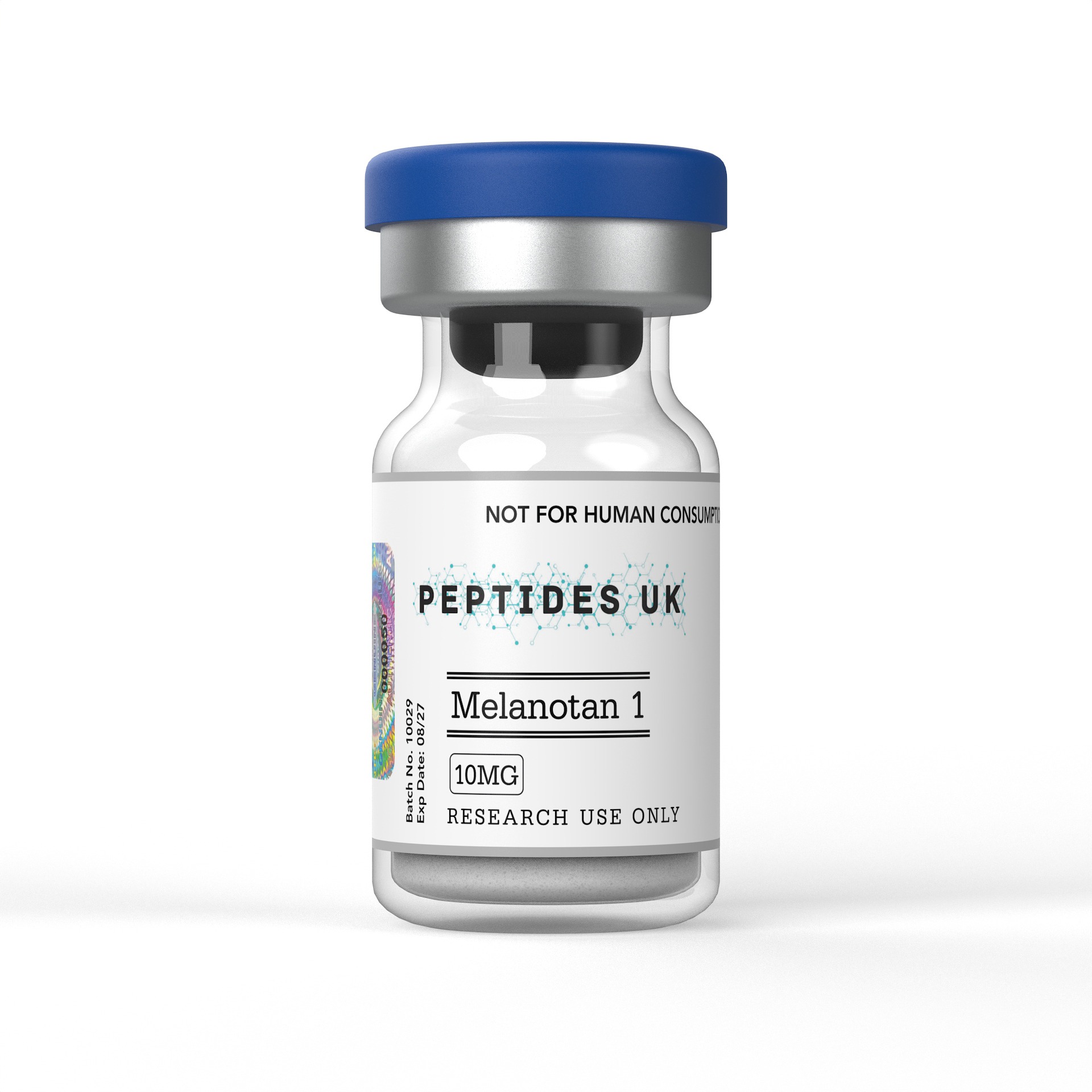
Melanotan 1 (MT-1) Ireland – Buy Online | In Stock & Ready to Ship
Buy Melanotan 1 (MT-1) in Ireland with fast shipping and guaranteed ≥99% purity — verified with COA and HPLC documentation. A trusted choice for peptides Ireland research teams rely on, with no customs delays or international wait times. Whether you’re searching for Melanotan 1 Ireland suppliers or looking to buy peptides Ireland-wide, we have you covered. Irish research teams can count on consistent stock, rapid fulfilment and full batch documentation every time.
For research use only. Not intended for human or veterinary use.


Melanotan 1 — also designated Afamelanotide — is a synthetic tridecapeptide melanocortin receptor agonist and one of the most extensively characterised MC1R-selective research compounds available to laboratories in Ireland — a metabolically stabilised linear analogue of alpha-melanocyte-stimulating hormone (α-MSH) incorporating Nle4 and D-Phe7 substitutions that confer proteolytic resistance and enhanced MC1R binding affinity while preserving the natural α-MSH peptide backbone, producing potent and sustained melanogenesis, photoprotection, and anti-inflammatory effects through MC1R activation in melanocytes, keratinocytes, and immune cells, making it an indispensable research tool for studying MC1R receptor pharmacology and downstream melanogenesis signal transduction, ultraviolet radiation-independent melanin synthesis and skin pigmentation biology, MC1R-mediated photoprotection and DNA damage prevention mechanisms, the anti-inflammatory biology of melanocortin receptor activation in skin and systemic immune contexts, erythropoietic protoporphyria biology and photoprotection research, MC1R genetics and the relationship between receptor polymorphisms and pigmentation phenotype, and the comparative pharmacology of melanocortin receptor agonists across the MC1R through MC5R receptor family. Researchers and institutions across Ireland can source verified, research-grade Melanotan 1 directly from our Irish peptide supply, with domestic-speed dispatch and complete batch documentation.
✅ ≥99% Purity — HPLC & Mass Spectrometry Verified ✅ Batch-Specific Certificate of Analysis (CoA) Included ✅ Sterile Lyophilised Powder | GMP Manufactured ✅ Fast Dispatch to Ireland | Peptides Ireland Stock
Melanotan 1 — Afamelanotide — is a synthetic tridecapeptide with the sequence Ac-Ser-Tyr-Ser-Nle-Glu-His-D-Phe-Arg-Trp-Gly-Lys-Pro-Val-NH2, representing a stabilised analogue of the endogenous tridecapeptide α-melanocyte-stimulating hormone (α-MSH) in which methionine at position 4 is replaced by norleucine (Nle4) to prevent oxidative inactivation, and phenylalanine at position 7 is replaced by D-phenylalanine (D-Phe7) to confer resistance to endopeptidase cleavage and stabilise the pharmacophore conformation required for high-affinity MC1R binding. These two substitutions — the Nle4 and D-Phe7 modifications — were introduced through the systematic structure-activity relationship programme in Victor Hruby’s laboratory at the University of Arizona that established the pharmacophore requirements for melanocortin receptor agonism and produced MT-1 as a more potent, metabolically stable, and pharmacologically tractable research tool than native α-MSH.
The biological significance of MT-1 as a research compound rests on its selectivity profile within the melanocortin receptor family — while native α-MSH activates MC1R, MC3R, MC4R, and MC5R with overlapping potency, MT-1’s structural modifications confer preferential activity at MC1R relative to the centrally expressed MC3R and MC4R subtypes, making it a more MC1R-selective research tool than either the native peptide or Melanotan II. MC1R is the primary melanocortin receptor governing skin pigmentation — expressed on melanocytes, keratinocytes, fibroblasts, and immune cells in the skin — whose activation by α-MSH drives melanin synthesis, melanocyte dendritic extension, photoprotective eumelanin production, and anti-inflammatory signalling in response to ultraviolet radiation. MT-1’s MC1R-preferential activity makes it the primary research tool for studying MC1R biology in pigmentation, photoprotection, and skin immunology without the confounding central melanocortin receptor activation that limits the interpretability of studies using less selective melanocortin agonists.
MT-1’s clinical development as Afamelanotide for erythropoietic protoporphyria — a rare photodermatosis caused by ferrochelatase enzyme deficiency producing phototoxic protoporphyrin accumulation — has generated a substantial translational research programme characterising MC1R-mediated photoprotection mechanisms that extends the compound’s research relevance beyond basic pigmentation biology to encompass UV-independent photoprotection research, DNA damage prevention biology, and the molecular mechanisms through which MC1R activation confers protection against UV-induced skin damage independent of melanin pigmentation itself.
In controlled laboratory and pre-clinical settings, Melanotan 1 is studied across MC1R receptor pharmacology, melanogenesis biology, photoprotection, skin immunology, anti-inflammatory biology, and comparative melanocortin agonist research applications:
MT-1 is the primary reference agonist for MC1R pharmacology — used to characterise receptor binding kinetics and affinity, Gs-coupled cAMP-PKA signal transduction downstream of MC1R engagement, MITF transcription factor activation and downstream melanogenesis gene upregulation, tyrosinase and TYRP1/TYRP2 enzyme expression and activity, and melanosome biogenesis and transfer to keratinocytes. Research uses MT-1 to establish the reference pharmacodynamic profile for MC1R activation — characterising concentration-response relationships, receptor internalisation kinetics, and downstream melanin synthesis biology that serve as the benchmark for evaluating other melanocortin agonists and antagonists at MC1R.
MT-1’s potent MC1R activation drives melanin synthesis independent of UV radiation — providing experimental control over the melanogenesis pathway without the confounding DNA damage, oxidative stress, and inflammatory responses that UV exposure produces alongside its melanogenic effects. Research uses MT-1 to study the pure MC1R-cAMP-MITF-tyrosinase signalling cascade in isolation from UV-induced biology — characterising how MC1R activation alone drives the transition from phaeomelanin to eumelanin synthesis, examining melanocyte dendritic extension and melanosome distribution, and studying melanin transfer to keratinocytes through the MC1R-dependent pathway. These UV-independent melanogenesis studies have established MT-1 as the reference tool for dissecting MC1R-specific pigmentation biology from UV-dependent mechanisms.
Beyond melanin-dependent photoprotection through increased UV absorption by eumelanin, research has characterised MC1R-mediated photoprotection mechanisms that operate independently of melanin production — including enhancement of nucleotide excision repair capacity in melanocytes and keratinocytes following MT-1 treatment, reduction of UV-induced cyclobutane pyrimidine dimer formation, activation of antioxidant defence pathways, and upregulation of DNA repair enzyme expression downstream of MC1R-cAMP signalling. Research has used MT-1 to characterise these melanin-independent photoprotection mechanisms — establishing that MC1R activation provides a layer of cellular UV protection through DNA repair enhancement and oxidative stress reduction that is distinct from and additive to the physical UV-screening function of melanin pigmentation.
MC1R is expressed on keratinocytes, fibroblasts, dendritic cells, mast cells, and other immune cells in the skin — and MT-1-mediated MC1R activation produces anti-inflammatory effects in these cell types through cAMP-mediated suppression of NF-κB activation, reduction of pro-inflammatory cytokine production including TNF-alpha and IL-6, inhibition of reactive oxygen species generation, and modulation of dendritic cell maturation and antigen presentation. Research has used MT-1 to characterise MC1R-mediated anti-inflammatory signalling in skin cell models — examining the downstream mechanisms through which MC1R-cAMP signalling antagonises inflammatory cytokine production and studying how MT-1’s anti-inflammatory effects in skin cells contribute to its photoprotective biology beyond melanin-dependent UV absorption.
Erythropoietic protoporphyria — caused by ferrochelatase deficiency producing phototoxic protoporphyrin IX accumulation in erythrocytes, plasma, and skin — provides a research model for studying MC1R-mediated photoprotection in a disease context where protection from visible light-induced phototoxicity is the primary biological endpoint. Research has used MT-1 in EPP models to characterise the mechanisms through which MC1R activation protects against protoporphyrin-mediated phototoxicity — examining whether photoprotection in EPP biology reflects melanin-dependent light attenuation, melanin-independent DNA repair enhancement, anti-inflammatory signalling, or combinations of these mechanisms. This EPP research programme has contributed substantially to understanding the complete biology of MC1R-mediated photoprotection beyond suntan induction.
The MC1R gene is among the most polymorphic in the human genome — with numerous loss-of-function variants associated with red hair, fair skin, increased UV sensitivity, and elevated melanoma risk — and MT-1 is used as a research tool for studying how MC1R polymorphisms influence receptor function, signalling capacity, and downstream melanogenesis and photoprotection biology. Research has used MT-1 in cell-based assays expressing wild-type versus variant MC1R — characterising how specific amino acid changes in variant receptors alter binding affinity, Gs coupling efficiency, cAMP signalling, and MITF activation in response to MC1R agonist stimulation. These MC1R polymorphism studies have contributed to understanding the molecular basis for the phenotypic consequences of loss-of-function MC1R variants in skin cancer risk and pigmentation biology.
MT-1 is used in comparative receptor subtype selectivity research alongside Melanotan II, native α-MSH, PT-141, and receptor subtype-selective agonists and antagonists — characterising how the Nle4/D-Phe7 modification pattern determines receptor subtype binding affinity ratios across MC1R through MC5R and examining how these binding selectivity differences translate into differential biological outputs in tissues expressing different melanocortin receptor subtype combinations. These comparative studies establish the pharmacological basis for the different biological profiles of MT-1 versus MT-II — with MT-1’s MC1R preference explaining its predominantly pigmentary and skin photoprotection biology in contrast to MT-II’s broader melanocortin receptor activation producing pro-sexual, pro-erectile, and central appetite effects alongside pigmentation.
Melanocortin receptors — including MC1R — are expressed on peripheral immune cells including macrophages, neutrophils, and lymphocytes, and research has examined MT-1’s systemic anti-inflammatory effects in inflammatory disease models beyond skin biology. Studies have characterised MC1R-mediated anti-inflammatory signalling in macrophage and neutrophil models — examining cAMP-mediated NF-κB suppression and cytokine production inhibition — and have examined MT-1’s effects in inflammatory bowel disease, arthritis, and ischaemia-reperfusion injury models where melanocortin anti-inflammatory biology has been characterised. These systemic immunomodulatory studies establish MT-1’s research relevance beyond skin biology to encompass broader inflammatory disease research.
Research has documented MT-1’s potent MC1R activation-driven melanogenesis in human and rodent melanocyte models — characterising dose-dependent cAMP elevation, MITF nuclear translocation, tyrosinase upregulation, melanin synthesis increases, and eumelanin versus phaeomelanin ratio shifts following MT-1 treatment. These melanogenesis studies established MT-1 as the most pharmacologically tractable reference agonist for MC1R-mediated pigmentation biology and provided the foundational characterisation of the MC1R-cAMP-MITF-tyrosinase signalling cascade.
Research has characterised MT-1’s ability to confer photoprotection through mechanisms operating independently of melanin synthesis — documenting enhanced nucleotide excision repair activity, reduced cyclobutane pyrimidine dimer accumulation following UV challenge, and antioxidant pathway upregulation in MT-1-treated melanocytes and keratinocytes. These melanin-independent photoprotection studies established that MC1R activation provides cellular UV protection through DNA repair and antioxidant mechanisms beyond the physical UV-screening function of melanin.
Clinical research with Afamelanotide — MT-1 in subcutaneous implant formulation — documented significant increases in pain-free sun exposure time in EPP patients, with studies characterising reduced phototoxic reactions, improved quality of life, and clinically meaningful photoprotection in a patient population where even brief visible light exposure produces severe phototoxic pain. These clinical EPP studies established the translational relevance of MC1R-mediated photoprotection biology and validated MT-1’s mechanism in human subjects.
Research has confirmed that the Nle4 and D-Phe7 substitutions in MT-1 produce substantially extended in vitro and in vivo stability relative to native α-MSH — documenting resistance to endopeptidase cleavage at the position 7 Phe bond and prevention of methionine oxidation that inactivates native α-MSH, resulting in prolonged receptor occupancy and sustained downstream signalling. These stability studies established the pharmacokinetic basis for MT-1’s superior research utility over native α-MSH.
Research using MT-1 in cell systems expressing MC1R variants associated with red hair and fair skin has characterised reduced cAMP signalling responses, impaired MITF activation, and decreased melanogenesis — documenting the functional consequences of loss-of-function MC1R polymorphisms at the receptor signalling level and establishing the molecular basis for the reduced photoprotective melanogenesis capacity associated with these variants.
Research has documented MT-1’s anti-inflammatory effects across skin cell models and systemic inflammatory models — characterising NF-κB suppression, reduced TNF-alpha and IL-6 production, neutrophil activation inhibition, and anti-inflammatory effects in ischaemia-reperfusion and colitis models through MC1R-cAMP-mediated mechanisms. These anti-inflammatory studies established the immunomodulatory biology of MC1R activation as a significant pharmacological property of MT-1 beyond its pigmentary effects.
| Feature | Melanotan 1 (MT-1) | Melanotan II (MT-II) | Native α-MSH | PT-141 (Bremelanotide) | Agouti Signal Protein |
|---|---|---|---|---|---|
| Type | Linear tridecapeptide — Nle4/D-Phe7 α-MSH analogue | Cyclic heptapeptide melanocortin agonist | Endogenous linear tridecapeptide | Cyclic heptapeptide — PT-141 / Bremelanotide | Endogenous MC1R/MC2R/MC4R antagonist |
| Receptor Profile | MC1R preferential — also MC3R/MC4R/MC5R at higher concentrations | MC1R / MC3R / MC4R — broader subtype activation | MC1R / MC3R / MC4R / MC5R — full profile | MC3R / MC4R primary — lower MC1R activity | Competitive antagonist at MC1R, MC2R, MC4R |
| Primary Biological Effect | Melanogenesis / photoprotection / anti-inflammatory | Melanogenesis + pro-sexual + pro-erectile + anorexia | Melanogenesis / pigmentation / anti-inflammatory | Pro-sexual and pro-erectile — central mechanism | Blocks melanocortin signalling — yellow obese mouse model |
| Tanning Effect | Pronounced — primary research application | Pronounced | Yes — short duration | Minimal | Blocks tanning |
| Pro-Sexual Effect | Minimal at MC1R-selective doses | Yes — significant | Minimal | Primary effect | Blocks pro-sexual melanocortin effects |
| Central Effects | Minimal at research doses — MC1R peripheral preference | Yes — MC3R/MC4R central activation | Minimal | Primary — hypothalamic MC3R/MC4R | Blocks central melanocortin |
| Metabolic Stability | High — Nle4/D-Phe7 modifications | High — cyclic structure | Low — rapid degradation | High — cyclic structure | Endogenous protein — stable |
| Key Research Use | MC1R pharmacology / melanogenesis / photoprotection / EPP / MC1R polymorphism biology | Broad melanocortin agonism / pro-sexual biology | Native sequence reference / full receptor profile | Central sexual function / MC3R/MC4R pharmacology | Melanocortin antagonist reference / obesity model |
| Research Profile | Extensively studied — clinical stage MC1R agonist | Extensively studied | Extensively studied | Extensively studied | Extensively studied |
| Parameter | Detail |
|---|---|
| Name | Melanotan 1 (MT-1) |
| Also Designated | Afamelanotide / [Nle4, D-Phe7]-α-MSH |
| Sequence | Ac-Ser-Tyr-Ser-Nle-Glu-His-D-Phe-Arg-Trp-Gly-Lys-Pro-Val-NH2 |
| Type | Synthetic Tridecapeptide Melanocortin Receptor Agonist — Research Grade |
| Molecular Weight | 1646.9 Da |
| Mechanism | MC1R agonism (preferential) → Gs-coupled cAMP elevation → PKA activation → MITF transcription factor nuclear translocation → tyrosinase / TYRP1 / TYRP2 upregulation → eumelanin synthesis + DNA repair enzyme upregulation + NF-κB suppression → photoprotection and anti-inflammatory signalling |
| Primary Receptor Target | MC1R — preferential; also MC3R, MC4R, MC5R at higher concentrations |
| Key Research Distinction | Most MC1R-selective clinically characterised melanocortin agonist — reference compound for MC1R pharmacology, UV-independent melanogenesis, photoprotection biology, and EPP research without significant central melanocortin receptor activation |
| Primary Research Areas | MC1R pharmacology / melanogenesis signal transduction / UV-independent photoprotection / DNA repair biology / skin anti-inflammatory biology / EPP research / MC1R polymorphism biology / comparative melanocortin subtype selectivity |
| Key Structural Modifications | Nle4 — prevents Met oxidation / D-Phe7 — endopeptidase resistance and pharmacophore stabilisation / N-terminal acetylation and C-terminal amide — match native α-MSH termini |
| Purity | ≥99% HPLC & MS Verified |
| Form | Sterile Lyophilised Powder |
| Solubility | Sterile water or 0.1% acetic acid aqueous solution |
| Storage (Powder) | -20°C, protect from light and moisture |
| Storage (Reconstituted) | -80°C in aliquots — minimise freeze-thaw cycles |
| Manufacturing | GMP Manufactured |
| Intended Use | Research use only |
Melanotan 1 is a hydrophilic tridecapeptide with good aqueous solubility — reconstitute by adding sterile water or 0.1% acetic acid in sterile water slowly to the lyophilised powder and swirling gently. The N-terminal acetylation and C-terminal amide are both structural features important for MC1R binding geometry — avoid strongly alkaline conditions above pH 8 that promote amide hydrolysis, and avoid strongly oxidising conditions that could modify the Trp9 residue despite the Nle4 substitution eliminating the oxidation-sensitive methionine of native α-MSH. Prepare single-use aliquots and store at -80°C. For melanocyte cell biology studies, dilute into serum-free or low-serum culture media immediately before addition — serum components can interact with MT-1 and reduce apparent potency at lower working concentrations. For in vivo photoprotection studies, prepare fresh working solutions in sterile saline at the time of administration. Use low-binding tubes throughout to minimise adsorptive losses.
Every order of Melanotan 1 in Ireland includes:
✅ Batch-Specific Certificate of Analysis (CoA)
✅ HPLC Chromatogram
✅ Mass Spectrometry Confirmation
✅ Sterility & Endotoxin Testing Report
✅ Reconstitution Protocol — including Trp residue oxidation and amide stability guidance
✅ Technical Research Support
Yes — we supply research-grade Melanotan 1 to researchers and institutions across Ireland with fast dispatch and full batch documentation. Supplied strictly for laboratory research purposes only.
MT-1 is a linear tridecapeptide closely matching the full α-MSH sequence with Nle4/D-Phe7 modifications — preferentially activating MC1R with limited central melanocortin receptor activity at research doses. MT-II is a shorter cyclic heptapeptide with a lactam bridge — activating MC1R, MC3R, and MC4R more broadly, producing tanning alongside significant pro-sexual, pro-erectile, and anorectic effects through central receptor activation. MT-1 is the research tool for MC1R-specific pigmentation and photoprotection biology; MT-II is used when broader melanocortin receptor activation including central effects is the research objective.
MC1R activation by MT-1 drives cAMP-PKA signalling that upregulates nucleotide excision repair enzymes, reduces cyclobutane pyrimidine dimer formation following UV challenge, activates antioxidant defence pathways, and suppresses UV-induced inflammatory cytokine production through NF-κB inhibition. These melanin-independent mechanisms provide cellular UV protection additive to the physical UV-screening function of melanin — explaining why MT-1 provides photoprotection in EPP patients where the primary clinical endpoint is protection from visible light rather than UV-induced tanning.
EPP is a rare photodermatosis caused by ferrochelatase deficiency — producing phototoxic protoporphyrin IX accumulation in erythrocytes and skin that causes severe pain and burning on exposure to visible light. MT-1 (Afamelanotide) induces skin pigmentation and MC1R-mediated photoprotection that physically and biologically shields the skin from the phototoxic light wavelengths activating protoporphyrin — providing meaningful increases in pain-free light exposure time. EPP is the primary approved clinical indication for Afamelanotide and has generated the most extensive translational research programme characterising MT-1’s photoprotection mechanisms in human subjects.
Multiple MC1R variants — particularly the R151C, R160W, and D294H variants strongly associated with red hair and melanoma risk — show impaired Gs coupling and reduced cAMP signalling responses to MC1R agonist stimulation. Research using MT-1 in cell systems expressing these variants documents reduced melanogenesis, impaired MITF activation, and diminished DNA repair responses — establishing that individuals carrying loss-of-function MC1R variants have reduced capacity to respond to endogenous α-MSH or exogenous MC1R agonists. These studies use MT-1 as the pharmacological probe for characterising the functional consequences of MC1R genetic variation.
Vehicle controls matched to reconstitution solvent are essential. MC1R-selective antagonist controls — such as the MC1R antagonist MSG606 — confirm receptor specificity of melanogenesis and anti-inflammatory effects. For photoprotection studies, UV-irradiated controls without MT-1 pre-treatment establish baseline DNA damage levels for comparison. For comparative melanocortin selectivity studies, parallel treatment with MC3R/MC4R-selective agonists and antagonists distinguishes MC1R-specific from broader melanocortin receptor-mediated effects. For MC1R polymorphism studies, wild-type MC1R expressing cells as positive controls alongside variant-expressing cells are essential for quantifying functional impairment.
≥99% purity is essential for MC1R receptor pharmacology, melanogenesis signal transduction studies, photoprotection biology research, and MC1R polymorphism characterisation — where impurities including partially oxidised or degraded peptide fragments would show altered receptor binding and confound dose-response characterisation. The Trp9 residue is susceptible to oxidation under suboptimal storage conditions — high purity verification confirming intact Trp9 is particularly important for receptor binding assays where oxidised tryptophan-containing fragments show reduced MC1R affinity. All MT-1 Ireland stock is verified to ≥99% purity by HPLC and mass spectrometry.
Both melanogenesis and anti-inflammatory signalling downstream of MC1R activation share the same upstream cAMP-PKA pathway — MC1R-driven cAMP elevation simultaneously activates MITF for melanogenesis and suppresses NF-κB for anti-inflammatory effects. These are not independent mechanisms but parallel outputs from the same receptor activation event. Research uses MT-1 to study whether the anti-inflammatory and melanogenic arms of MC1R biology can be pharmacologically dissected through downstream pathway selective interventions — examining whether PKA inhibition differentially affects the two outputs and contributing to understanding of how MC1R-cAMP signalling branches to produce distinct cellular outcomes simultaneously.
Melanotan 1 is supplied exclusively for legitimate scientific research purposes conducted within licensed laboratory environments. This product is not intended for human consumption, self-administration, or any therapeutic application. It must be handled by qualified researchers in compliance with applicable Irish and EU regulations and institutional ethics guidelines. By purchasing, you confirm that this compound will be used solely for approved in vitro or pre-clinical research purposes.


WhatsApp us
Receive News
