PRODUCTS SOLD ON PEPTIDESLABIRELAND.COM ARE FOR RESEARCH PURPOSES ONLY AND ARE NOT FOR HUMAN OR VETERINARY USE.
Fast Ireland delivery — dispatched to Dublin, Cork, Galway, Limerick and nationwide.
€102.50
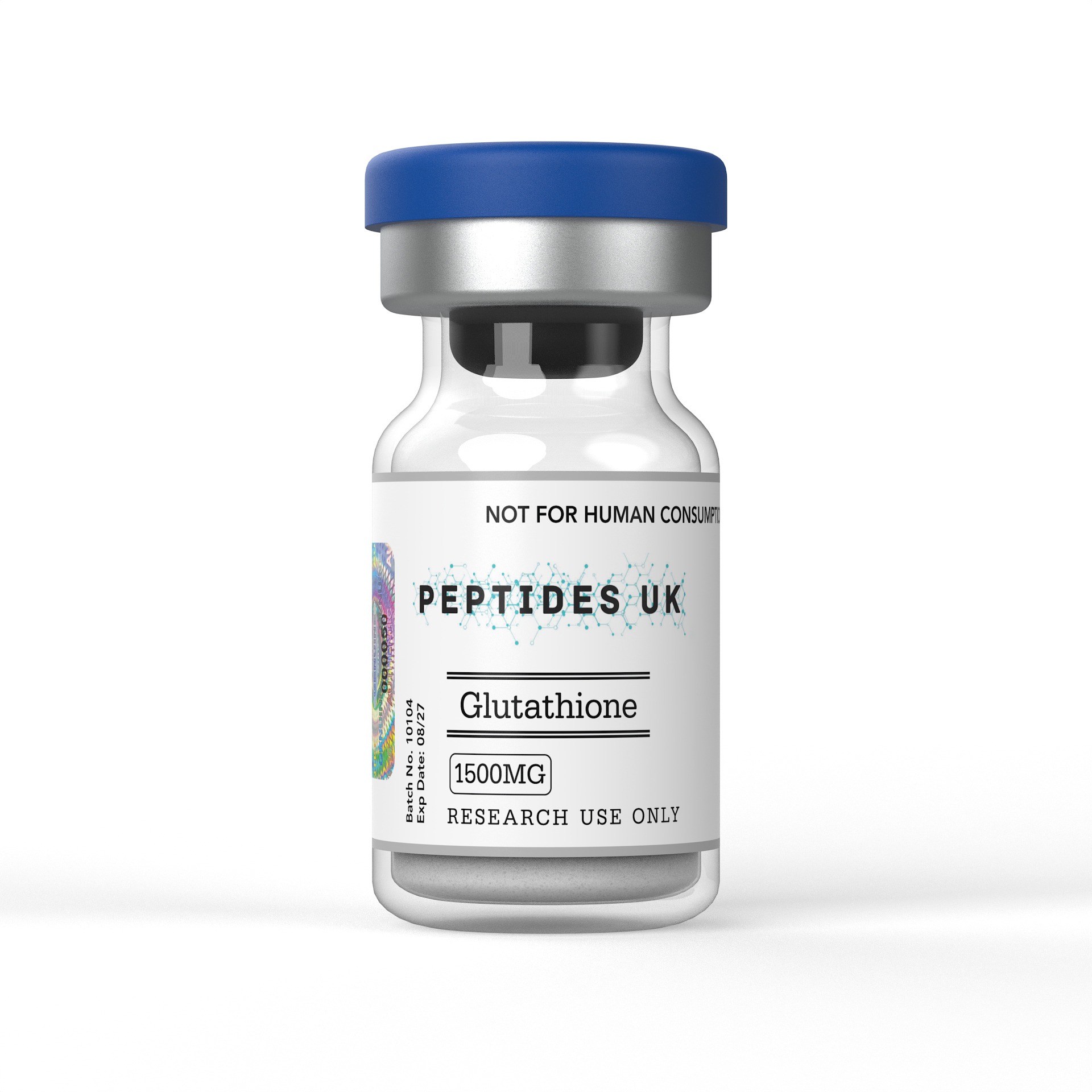
Glutathione — tripeptide antioxidant reference (Glu-Cys-Gly) central to redox biology and oxidative-stress research protocols. HPLC-verified per-batch COA. Fast Ireland delivery.
For laboratory research use only. Not for human or veterinary use.

Glutathione (GSH) is the body’s most abundant and most important endogenous antioxidant . A naturally occurring tripeptide found in virtually every cell in the human body and one of the most extensively studied molecules in oxidative stress, detoxification, immune function, and cellular health research , available to buy in Ireland with fast dispatch and full batch documentation included.
Glutathione (L-Glutamyl-L-Cysteinyl-Glycine) is a three-amino acid peptide that functions simultaneously as the cell’s master antioxidant, a central detoxification cofactor, an immune system regulator, and a critical maintainer of cellular redox balance . With its intracellular concentration serving as one of the most important indicators of overall cellular health and resilience across virtually every tissue type, Researchers and institutions across Ireland can source verified, research-grade Glutathione directly from our Irish peptide supply, with domestic-speed dispatch and complete batch documentation.
✅ ≥99% Purity . HPLC & Mass Spectrometry Verified
✅ Batch-Specific Certificate of Analysis (CoA) Included
✅ Sterile Lyophilised Powder | GMP Manufactured
✅ Fast Dispatch to Ireland | Peptides Ireland Stock
Glutathione (GSH) is a naturally occurring tripeptide composed of three amino acids and glutamate, cysteine, and glycine and synthesised endogenously in virtually all mammalian cells, with the highest concentrations found in the liver, where it plays a central role in detoxification biology. It exists in two primary forms: the reduced form GSH . The biologically active antioxidant , and the oxidised form GSSG (glutathione disulphide), which is regenerated back to GSH by the enzyme glutathione reductase in a NADPH-dependent reaction. The ratio of GSH to GSSG within cells is one of the most important indicators of cellular redox status and oxidative stress load in biological research.
What makes Glutathione uniquely significant among antioxidants is the combination of its extraordinary intracellular concentration and most of the time in the millimolar range, far higher than most other antioxidants — its ability to be continuously regenerated rather than consumed irreversibly, and its central role not only in direct free radical neutralisation but in the regeneration of other antioxidants including vitamins C and E, in Phase II detoxification enzyme activity, and in the regulation of immune cell function and inflammatory signalling.
Glutathione’s cysteine residue and specifically its thiol (-SH) group — is the chemically active centre of the molecule, responsible for its electron-donating antioxidant activity, its ability to form mixed disulphides with protein cysteines (S-glutathionylation) as a regulatory post-translational modification, and its conjugation with electrophilic compounds in detoxification reactions catalysed by glutathione S-transferases (GSTs).
Glutathione levels decline with age, chronic disease, oxidative stress load, and nutrient deficiency and this decline has been extensively studied as both a contributor to and a biomarker of cellular ageing, metabolic dysfunction, neurodegeneration, and immune decline, making it one of the most researched molecules in the biology of ageing and chronic disease.
In controlled laboratory and pre-clinical settings, Glutathione is studied across an exceptionally broad range of oxidative stress, cellular biology, immunology, detoxification, and disease research applications:
Oxidative Stress and Redox Biology Research , Glutathione is the foundational research tool in cellular oxidative stress biology . Used to study the GSH/GSSG redox couple, cellular antioxidant capacity, reactive oxygen species (ROS) neutralisation, and the consequences of glutathione depletion or supplementation on cellular redox homeostasis. Studies have examined how GSH levels respond to oxidative challenges, how glutathione depletion affects cell viability and function, and how restoration of GSH protects against oxidative injury across virtually every cell type studied.
Detoxification and Xenobiotic Research and Glutathione is the primary cofactor in Phase II hepatic detoxification and conjugating with electrophilic compounds, reactive metabolites, heavy metals, and xenobiotics through glutathione S-transferase enzymes to form water-soluble glutathione conjugates that can be excreted. Research has studied GSH’s role in hepatic detoxification biology, drug metabolism, heavy metal chelation, and the consequences of GSH depletion on detoxification capacity in liver cell models and pre-clinical hepatotoxicity studies.
Liver Biology and Hepatoprotection Research , The liver contains the highest concentration of glutathione of any organ and is the primary site of GSH synthesis and detoxification activity. Research has extensively studied glutathione’s hepatoprotective properties , examining its ability to protect hepatocytes from toxic insult, its role in alcoholic and non-alcoholic liver disease models, and the consequences of hepatic GSH depletion in drug-induced liver injury research. Glutathione is a central research tool in hepatology and liver toxicology.
Immune Function and Lymphocyte Research , Glutathione plays a critical regulatory role in immune cell biology . With intracellular GSH levels in lymphocytes, macrophages, and dendritic cells directly affecting their proliferation, cytokine production, and antiviral activity. Research has examined how GSH modulates T cell activation and proliferation, natural killer cell cytotoxicity, and macrophage inflammatory responses and establishing glutathione as a key regulator at the intersection of redox biology and immune function research.
Neurological and Neuroprotection Research , The brain is particularly vulnerable to oxidative stress due to its high oxygen consumption, abundant polyunsaturated fatty acids, and relatively limited antioxidant defences . And neuronal GSH depletion is implicated in the pathology of multiple neurodegenerative conditions including Parkinson’s disease, Alzheimer’s disease, and ALS. Research has used glutathione to study neuroprotection against oxidative and excitotoxic injury, the role of GSH depletion in neurodegeneration models, and the potential for GSH restoration to protect neuronal populations in pre-clinical disease models.
Mitochondrial Biology Research A distinct mitochondrial glutathione pool and separate from cytosolic GSH , is critical for protecting mitochondrial DNA, membrane lipids, and respiratory chain proteins from oxidative damage. Research has studied mitochondrial GSH biology . Examining how mitochondrial GSH depletion affects respiratory chain function, mitochondrial membrane integrity, and apoptotic signalling , contributing to the understanding of how oxidative stress at the mitochondrial level connects to cell death and disease pathology.
Ageing and Longevity Research . GSH levels decline progressively with age across multiple tissues , and this age-related GSH decline has been studied as both a driver of and biomarker for biological ageing. Research has examined how GSH restoration affects markers of cellular ageing, oxidative damage accumulation, mitochondrial function, and the hallmarks of ageing in pre-clinical models and positioning glutathione as one of the most biologically relevant molecules in longevity and healthy ageing research.
Skin Biology and Melanogenesis Research , Glutathione has been studied extensively in skin biology and with research examining its ability to inhibit tyrosinase activity and shift melanin synthesis from eumelanin (dark pigment) towards phaeomelanin (lighter pigment) through antioxidant and tyrosinase-inhibitory mechanisms. This melanogenesis-modulating activity makes glutathione a research tool at the intersection of antioxidant biology and skin pigmentation science . Complementing other tyrosinase inhibitor research compounds such as Kojic Acid and Alpha-Arbutin.
Cancer Biology and Chemotherapy Research . Glutathione plays a complex dual role in cancer biology , acting as a tumour suppressor through its antioxidant and DNA-protective functions in normal cells, while also potentially contributing to chemotherapy resistance in cancer cells through drug conjugation and detoxification. Research has studied GSH’s role in cancer cell redox biology, the consequences of GSH depletion on cancer cell sensitivity to oxidative and chemotherapeutic insult, and the development of GSH-depleting strategies as adjuncts to cancer treatment research.
Cardiovascular Research , Oxidative stress is a central mechanism in cardiovascular disease pathology , and glutathione’s role in protecting vascular endothelium, cardiac tissue, and circulating cells from oxidative injury has been extensively studied. Research has examined GSH levels in cardiovascular disease models, the consequences of GSH depletion on endothelial function and vascular inflammation, and the cardioprotective potential of GSH restoration in ischaemia-reperfusion and atherosclerosis research models.
Respiratory and Pulmonary Research — The lung epithelial lining fluid contains high concentrations of glutathione , a critical defence against inhaled oxidants and pathogens . And GSH depletion in lung tissue is associated with inflammatory lung disease pathology. Research has studied glutathione’s role in pulmonary oxidative stress, its depletion in models of asthma, COPD, and acute lung injury, and the potential for GSH restoration to protect against pulmonary inflammatory and oxidative damage.
Diabetes and Metabolic Disease Research , Oxidative stress contributes a lot to the pathology of type 2 diabetes and its complications , and GSH depletion is consistently observed in diabetic models and human diabetic populations. Research has examined glutathione’s role in pancreatic beta cell protection from oxidative damage, its effects on insulin signalling and glucose metabolism in metabolically compromised models, and the relationship between GSH status and diabetic complication biology.
Glutathione has one of the largest and most long-standing research bibliographies of any molecule in biomedical science . Spanning over a century of research from its initial isolation to modern systems biology investigations:
Master Antioxidant Status Firmly Established . Decades of biochemical and cell biology research have firmly established GSH as the most abundant and most important intracellular antioxidant in mammalian cells , with studies consistently documenting its central role in neutralising hydrogen peroxide, lipid peroxides, and reactive oxygen species through glutathione peroxidase enzymes, and in regenerating oxidised vitamins C and E , confirming its position at the apex of the cellular antioxidant network.
GSH Depletion and Disease Pathology Consistently Linked , A large body of research has documented that GSH depletion is a consistent feature of oxidative stress-associated disease states , including neurodegenerative disease, liver disease, cardiovascular disease, diabetes, HIV infection, and ageing , with studies examining both the consequences of GSH depletion in disease pathology and the potential for GSH restoration to modify disease outcomes in pre-clinical models.
Hepatoprotective Effects Well Documented , Pre-clinical and clinical research has documented glutathione’s hepatoprotective properties across multiple liver injury models , including acetaminophen toxicity, alcohol-induced liver damage, and ischaemia-reperfusion injury , with studies reporting reduced hepatocellular damage markers, improved liver function parameters, and enhanced survival in GSH-treated models compared to controls. Intravenous glutathione has been studied in clinical liver disease research settings with documented biological activity.
Neuroprotective Effects in Pre-Clinical Models . Pre-clinical neurodegenerative research has documented neuroprotective effects of GSH supplementation or GSH precursor treatment in models of Parkinson’s disease, Alzheimer’s disease, and other neurodegenerative conditions and with studies reporting reduced oxidative damage markers, improved neuronal survival, and preserved neurological function in GSH-supported models , consistent with the established role of GSH depletion in neurodegeneration pathology.
Immune Enhancement Documented . Studies have documented that intracellular GSH levels in lymphocytes and other immune cells directly affect their functional capacity and with research confirming that GSH depletion impairs T cell proliferation, cytokine production, and antiviral responses, while GSH restoration supports immune cell function in immunocompromised and oxidatively stressed models.
Tyrosinase Inhibition and Melanogenesis Modulation . Research has confirmed glutathione’s ability to inhibit tyrosinase activity , the rate-limiting enzyme in melanin synthesis , and to shift melanogenesis towards phaeomelanin production through both antioxidant and direct enzyme-inhibitory mechanisms, supporting its research relevance in skin pigmentation biology and its inclusion alongside other tyrosinase-inhibiting research compounds.
Age-Related GSH Decline Consistently Documented . Studies across species and tissue types have consistently documented progressive GSH decline with ageing and with research in human populations confirming lower erythrocyte, plasma, and tissue GSH levels in older versus younger individuals and establishing the correlation between GSH status and biological age markers — supporting glutathione’s central relevance to longevity and healthy ageing research.
| Feature | Glutathione (GSH) | N-Acetyl Cysteine (NAC) | Vitamin C | Alpha-Lipoic Acid |
|---|---|---|---|---|
| Type | Endogenous tripeptide antioxidant | GSH precursor / cysteine donor | Water-soluble vitamin antioxidant | Endogenous dithiol antioxidant |
| Mechanism | Direct ROS neutralisation / GPx cofactor / detoxification conjugation | Provides cysteine for GSH synthesis / direct antioxidant | Direct ROS scavenging / GSH regeneration / collagen synthesis | Regenerates GSH, vitamins C and E / mitochondrial antioxidant |
| Intracellular Concentration | Very High and millimolar range | Moderate as precursor | Low and micromolar range | Low . Nanomolar range |
| Detoxification Role | Central , Phase II GST conjugation | Supporting . Via GSH synthesis | Minimal | Minimal |
| Liver Biology Research | Very High . Primary hepatic antioxidant | High and GSH precursor for liver | Moderate | Moderate |
| Neuroprotection Research | Very High , central neuronal GSH pool | High and via GSH restoration | Moderate | High and mitochondrial |
| Skin / Melanogenesis Research | High tyrosinase inhibition / redox | Moderate | Moderate . Collagen / redox | Low |
| Key Research Distinction | Only endogenous master antioxidant with direct detox conjugation role | Most studied GSH precursor | Gold standard vitamin antioxidant | Only antioxidant regenerating both GSH and vitamins C and E |
Glutathione is irreplaceable as a research tool because it’s the endogenous molecule itself , not a precursor, analogue, or synthetic approximation , giving research conducted with GSH direct biological relevance to the cellular antioxidant systems operating in living tissue.
| Parameter | Detail |
|---|---|
| Name | Glutathione (GSH) |
| Full Name | L-Glutamyl-L-Cysteinyl-Glycine |
| Type | Endogenous antioxidant tripeptide |
| Molecular Formula | C₁₀H₁₇N₃O₆S |
| Active Group | Thiol (-SH) on cysteine residue |
| Primary Roles | Antioxidant / detoxification / immune regulation / redox balance |
| Key Research Areas | Oxidative stress / liver biology / neuroprotection / ageing / skin / immune function |
| Purity | ≥99% HPLC & MS Verified |
| Form | Sterile Lyophilised Powder |
| Solubility | Sterile water, PBS . Dissolves readily |
| Storage (Powder) | -20°C, protect from light and air |
| Storage (Reconstituted) | Use promptly and GSH oxidises readily in solution |
| Manufacturing | GMP Manufactured |
Every order of Glutathione in Ireland includes:
✅ Batch-Specific Certificate of Analysis (CoA)
✅ HPLC Chromatogram
✅ Mass Spectrometry Confirmation
✅ Sterility & Endotoxin Testing Report
✅ Reconstitution Protocol
✅ Technical Research Support
Can I buy Glutathione in Ireland? Yes , we supply research-grade Glutathione to researchers and institutions across Ireland with fast dispatch and full batch documentation. This compound is supplied strictly for laboratory research purposes only.
What is Glutathione and why is it important in research? Glutathione is a naturally occurring tripeptide, Composed of glutamate, cysteine, and glycine and that functions as the body’s master endogenous antioxidant and central detoxification cofactor. Its importance in research stems from its central role in virtually every aspect of cellular redox biology , from direct free radical neutralisation and Phase II detoxification to immune cell regulation, mitochondrial protection, and the regeneration of other antioxidants. Its progressive decline with age and disease makes it one of the most biologically relevant molecules in ageing, chronic disease, and oxidative stress research.
How does Glutathione work as an antioxidant? Glutathione neutralises reactive oxygen species (ROS) mainly through two mechanisms , directly, via its thiol group donating electrons to neutralise free radicals and oxidants, and enzymatically, as the essential cofactor for glutathione peroxidase (GPx) enzymes that reduce hydrogen peroxide and lipid peroxides to water and alcohols. The resulting oxidised glutathione (GSSG) is continuously regenerated back to active GSH by glutathione reductase using NADPH . Allowing GSH to function as a renewable rather than consumable antioxidant system, which is the basis for its extraordinary cellular concentration and central antioxidant status.
What is the relationship between Glutathione and NAC in research? N-Acetyl Cysteine (NAC) is a glutathione precursor . It provides cysteine, the rate-limiting amino acid in GSH synthesis, and is widely used in research as an indirect way to raise intracellular GSH levels. Glutathione itself provides the active molecule directly . Bypassing the synthesis step. The two compounds are complementary research tools: NAC is useful for studying GSH synthesis regulation and as a cell-permeable cysteine donor, while reduced GSH is used when direct supplementation with the active antioxidant molecule itself is required for the research question being studied.
Why does Glutathione need to be used promptly after reconstitution? The reduced form of glutathione (GSH) — the biologically active form , is susceptible to oxidation in aqueous solution, converting to the oxidised disulphide form GSSG on exposure to oxygen and light. This oxidation is accelerated in dilute solution and at room temperature, meaning that reconstituted GSH solutions lose active reduced glutathione content over time. For research requiring precise GSH concentrations and confirmed reduced-form activity, freshly prepared solutions or properly frozen aliquots stored at -80°C under inert gas where possible are recommended , and the reconstitution protocol provided with each order details optimal handling procedures.
What purity is recommended for Glutathione research? ≥99% purity is strongly recommended for oxidative stress assays, GSH/GSSG ratio measurements, detoxification studies, cell viability research, and in vivo pre-clinical models where compound quality and confirmed reduced-form content directly affect biological activity and assay reproducibility. All Glutathione Ireland stock is independently verified to ≥99%.
How do I reconstitute Glutathione for laboratory use? Allow the vial to reach room temperature before opening — minimising condensation that can introduce moisture and begin oxidation. Reconstitute in cold, degassed sterile water or PBS by adding solvent slowly down the inside wall of the vial and swirling gently , don’t shake or vortex vigorously as this introduces oxygen. Work quickly and keep solutions on ice where possible. Prepare only the volume needed for immediate use, or aliquot into single-use portions under inert gas and store at -80°C protected from light. Adding a small amount of reducing agent such as DTT to stock solutions can help maintain the reduced form during short-term storage if compatible with downstream assays.
Glutathione is supplied exclusively for legitimate scientific research purposes conducted within licensed laboratory environments. This product isn’t intended for human consumption, self-administration, or any therapeutic application. It must be handled by qualified researchers in compliance with applicable Irish and EU regulations and institutional ethics guidelines. By purchasing, you confirm that this compound will be used solely for approved in-vitro or pre-clinical research purposes.
Glutathione isn’t authorised as a medicine by the HPRA. It’s legal to buy, hold and use as a research chemical for in-vitro laboratory work, and that’s the only use we supply it for. If you want the full regulatory picture, see our Irish researcher’s guide to peptide legality.
Every vial ships with an HPLC purity trace (typically ≥99%), mass-spec identity confirmation, and endotoxin/heavy-metal screening on the batch. The full per-batch Certificate of Analysis is available on request from research@peptideslabireland.com. Our quality system is ISO 9001 certified and third-party testing runs through a UKAS-accredited lab.
Standard protocol: let the Glutathione vial and your bacteriostatic water come to room temperature, wipe both stoppers with a 70% isopropyl swab, then inject the water slowly down the side wall of the peptide vial. Don’t stream directly onto the powder cake. Swirl gently, don’t shake, and give it five to ten minutes to fully dissolve. Label the vial with compound, concentration and reconstitution date, store at 2–8°C between assays.
Same-day dispatch on orders placed before 2pm on a working day. Delivery is 24–48 hours to any Irish county via An Post Express or DPD. Cold chain is preserved with insulated wrap plus gel pack. No customs step, no border delays , because it never leaves Ireland.
In the Irish research space Glutathione tends to appear in tissue repair and healing pathways. It’s often paired with TB-500 or GHK-Cu in dual-compound studies when researchers are studying combined mechanisms rather than the compound alone.
Lyophilised Glutathione is stable at ≤-20°C long-term. Once reconstituted, keep it refrigerated at 2–8°C and use within the working shelf life described on the CoA. Freeze/thaw cycles degrade peptides, so aliquot the reconstituted solution if you plan to run assays over several weeks.
Receive News