PRODUCTS SOLD ON PEPTIDESLABIRELAND.COM ARE FOR RESEARCH PURPOSES ONLY AND ARE NOT FOR HUMAN OR VETERINARY USE.
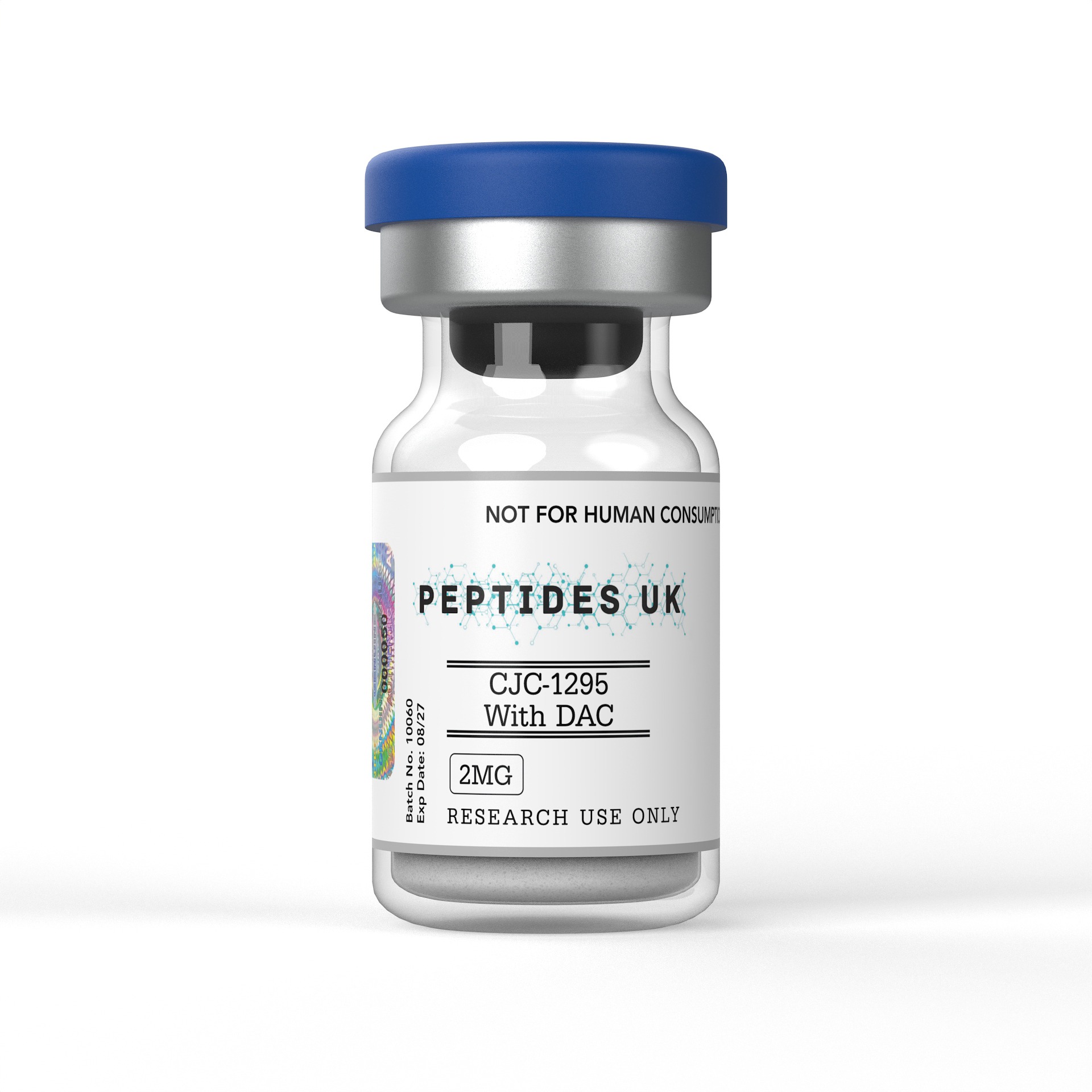
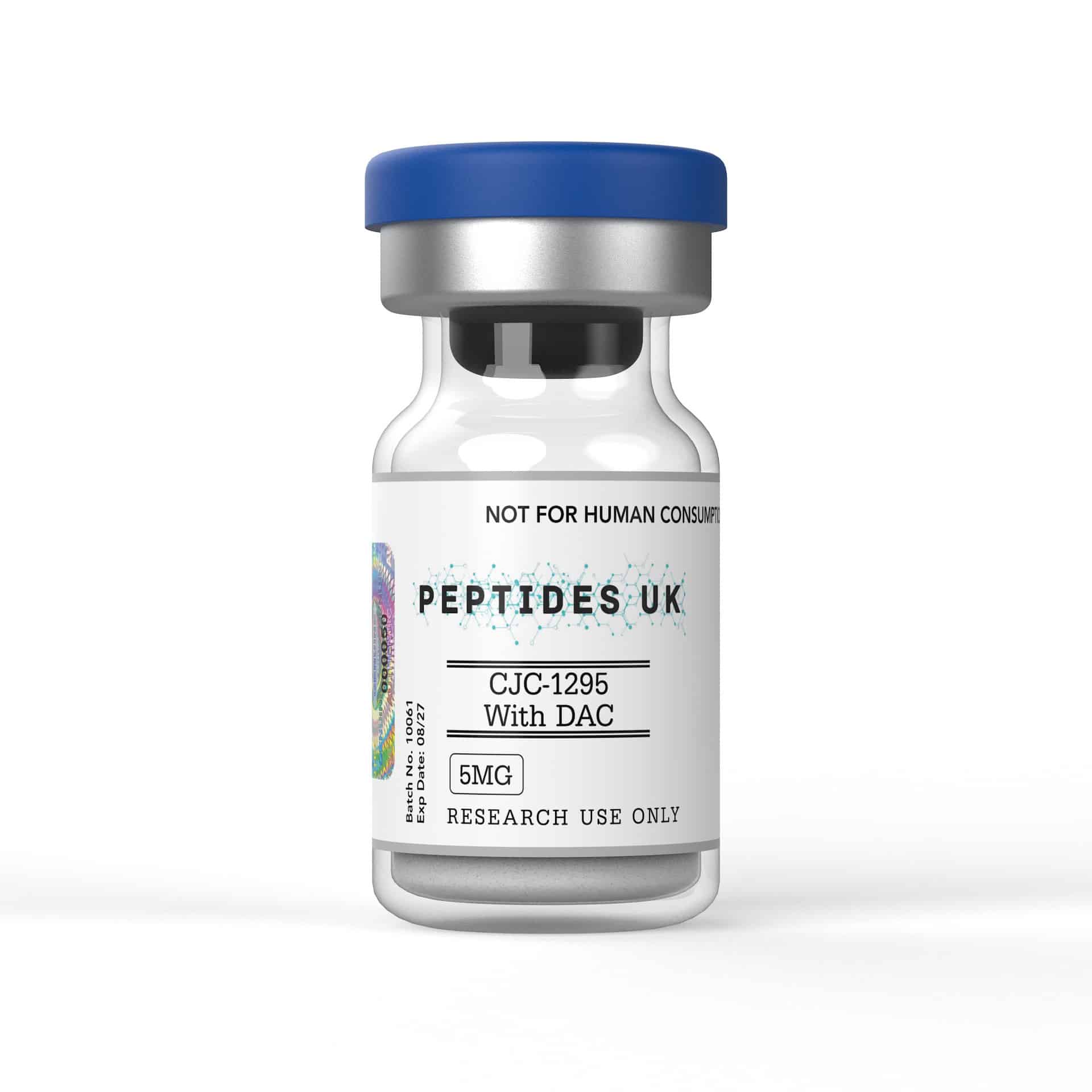
€69.50 – €114.00Price range: €69.50 through €114.00
CJC-1295 With DAC Ireland – Buy Online | In Stock & Ready to Ship
Buy CJC-1295 With DAC in Ireland with fast shipping and guaranteed ≥99% purity — verified with COA and HPLC documentation. A trusted choice for peptides Ireland research teams rely on, with no customs delays or international wait times. Whether you’re searching for CJC-1295 With DAC Ireland suppliers or looking to buy peptides Ireland-wide, we have you covered. Irish research teams can count on consistent stock, rapid fulfilment and full batch documentation every time.
For research use only. Not intended for human or veterinary use.


CJC-1295 With DAC — CJC-1295 with Drug Affinity Complex — is a synthetic tetrasubstituted 30-amino acid GHRH analogue peptide and one of the most extensively characterised long-acting growth hormone releasing hormone research compounds available to laboratories in Ireland — a modified GHRH(1-29) analogue incorporating four amino acid substitutions for proteolytic stability combined with a maleimidoproprionic acid-lysine Drug Affinity Complex technology that enables covalent albumin binding in vivo to dramatically extend circulating half-life from minutes to days, producing sustained pulsatile GH release and prolonged IGF-1 elevation through continuous GHRH receptor stimulation — making it an indispensable research tool for studying GHRH receptor pharmacology and Gs-cAMP-PKA signal transduction, long-acting GHRH analogue biology and albumin-binding prodrug pharmacokinetics, sustained somatotroph stimulation and chronic GH axis activation, the pharmacological consequences of continuous versus pulsatile GHRH receptor occupancy on GH secretory dynamics, IGF-1 axis downstream biology under chronic GH stimulation, and the comparative pharmacology of short-acting versus long-acting GHRH analogues in the research context of GH axis regulation. Researchers and institutions across Ireland can source verified, research-grade CJC-1295 With DAC directly from our Irish peptide supply, with domestic-speed dispatch and complete batch documentation.
✅ ≥99% Purity — HPLC & Mass Spectrometry Verified
✅ Batch-Specific Certificate of Analysis (CoA) Included
✅ Sterile Lyophilised Powder | GMP Manufactured
✅ Fast Dispatch to Ireland | Peptides Ireland Stock
CJC-1295 With DAC — a tetrasubstituted GHRH(1-29) analogue bearing Ala8, Gln15, Ala18, Leu27 substitutions for proteolytic resistance combined with a C-terminal maleimidoproprionic acid-lysine (MPA-Lys) Drug Affinity Complex linker — is a long-acting synthetic growth hormone releasing hormone analogue developed through a systematic programme of GHRH analogue optimisation targeting the two primary limitations of native GHRH as a research and pharmacological tool: the extremely short in vivo half-life of endogenous GHRH(1-44) — typically 5–7 minutes due to dipeptidyl peptidase IV (DPP-IV) cleavage at the Ala2 position and ubiquitous endopeptidase activity — and the consequently transient and difficult-to-sustain GHRH receptor stimulation achievable with unmodified GHRH peptides. CJC-1295 Without DAC (also known as Modified GRF 1-29) addresses the proteolytic instability through the four amino acid substitutions alone, extending half-life to approximately 30 minutes. The addition of the DAC technology — the reactive maleimidoproprionic acid group attached via a lysine spacer to the C-terminus — extends half-life dramatically further by enabling covalent conjugation to circulating serum albumin through Michael addition to the free thiol of Cys34 on albumin, producing an albumin-bound peptide depot with a circulating half-life of 6–8 days that mirrors albumin’s own pharmacokinetics.
The GHRH receptor — GHRHR — is a Gs-coupled class B GPCR expressed predominantly on pituitary somatotroph cells, with lower expression in peripheral tissues. Endogenous GHRH(1-44) binding to GHRHR activates adenylate cyclase through Gs-cAMP signalling — elevating intracellular cAMP, activating PKA, and driving GH gene transcription, GH synthesis, and GH granule exocytosis from somatotrophs in a pulsatile pattern that constitutes the primary positive drive of the GH axis. CJC-1295 With DAC replicates this GHRHR-Gs-cAMP-PKA signalling mechanism with high fidelity — the four amino acid substitutions at positions 8, 15, 18, and 27 preserve GHRHR binding affinity while eliminating the principal proteolytic vulnerabilities of native GHRH, and the albumin conjugation achieved through DAC provides the circulating depot that sustains GHRHR stimulation over days rather than minutes.
The pharmacological consequence of CJC-1295 With DAC’s extended half-life is a fundamental shift in GH secretory dynamics relative to short-acting GHRH analogues — rather than producing discrete GH pulses following individual peptide administrations, CJC-1295 With DAC produces sustained baseline elevation of GH release superimposed with preserved endogenous GH pulsatility, and prolonged IGF-1 elevation reflecting the integrated GH secretory stimulus over the multi-day activity window. This pharmacodynamic profile — sustained GH axis activation rather than episodic pulsatile stimulation — makes CJC-1295 With DAC a uniquely informative research tool for studying the biological consequences of chronic versus pulsatile GHRH receptor occupancy, the regulatory responses of the somatotroph and the GH axis to prolonged GHRHR stimulation, and the downstream IGF-1 axis biology of sustained as opposed to episodic GH secretory stimulation.
In controlled laboratory and pre-clinical settings, CJC-1295 With DAC is studied across GHRH receptor pharmacology, long-acting GH axis stimulation biology, albumin-binding prodrug pharmacokinetics, chronic IGF-1 axis activation, somatotroph regulatory biology, and comparative GHRH analogue applications:
CJC-1295 With DAC is studied as a long-acting GHRHR agonist for characterising sustained Gs-cAMP-PKA signal transduction in somatotroph cell models — used alongside short-acting GHRH analogues to examine how prolonged versus transient GHRHR occupancy modifies adenylate cyclase activation kinetics, cAMP accumulation dynamics, PKA activation profiles, and downstream GH gene transcription. Research uses CJC-1295 With DAC to establish pharmacodynamic profiles for sustained GHRHR activation — characterising receptor desensitisation and resensitisation kinetics under chronic agonist exposure, the extent of GHRHR downregulation following prolonged CJC-1295 With DAC stimulation, and the signal transduction consequences of continuous versus episodic GHRHR engagement on somatotroph biology. These signal transduction studies provide a dataset uniquely enabled by the DAC technology that cannot be replicated with short-acting GHRH analogues.
CJC-1295 With DAC produces sustained and prolonged GH release — with single-dose GH secretory stimulation extending over 6–8 days in pre-clinical and human pharmacology studies — making it the primary research tool for studying chronic GHRHR-driven somatotroph stimulation and its regulatory consequences. Research has characterised CJC-1295 With DAC-induced GH secretory profiles in rodent and primate models — examining GH pulse amplitude changes, GH trough elevation, preservation of endogenous GH pulsatility superimposed on the elevated baseline, and the extent to which sustained GHRHR stimulation recruits additional somatotroph secretory reserve relative to equivalent cumulative doses of short-acting GHRH. These long-acting GH secretion studies have established CJC-1295 With DAC as the reference compound for studying GH axis biology under conditions of sustained GHRHR stimulation.
The maleimidoproprionic acid-lysine DAC linker in CJC-1295 With DAC represents a pharmacologically tractable albumin-binding prodrug technology — enabling research into the pharmacokinetic consequences of reversible and covalent albumin conjugation as a half-life extension strategy for therapeutic peptides. Research has used CJC-1295 With DAC as a model compound for characterising DAC technology pharmacokinetics — examining albumin conjugation kinetics in plasma, the albumin-bound peptide depot dynamics, the relationship between albumin half-life and CJC-1295 With DAC biological activity duration, and how DAC conjugation modifies tissue distribution and receptor access relative to the unconjugated CJC-1295 Without DAC. These prodrug pharmacokinetics studies have established CJC-1295 With DAC as a reference model for albumin-binding peptide half-life extension research with implications beyond GHRH analogue biology.
CJC-1295 With DAC produces prolonged IGF-1 elevation reflecting the sustained GH secretory stimulus over its multi-day activity window — making it the primary research tool for studying chronic GH axis activation and its downstream IGF-1 axis biological consequences. Research has characterised CJC-1295 With DAC-induced IGF-1 elevation profiles — examining the temporal relationship between GH secretory stimulus, hepatic IGF-1 production and secretion, circulating IGF-1 and IGFBP-3 elevation kinetics, and the tissue-level IGF-1 axis signalling consequences in muscle, bone, liver, and adipose tissue. These chronic IGF-1 axis studies have established CJC-1295 With DAC as the reference long-acting GHRH analogue for studying sustained downstream GH axis biology in research contexts requiring days-long IGF-1 elevation rather than the transient IGF-1 responses achievable with short-acting GHRH analogues.
Despite producing sustained GHRHR stimulation, CJC-1295 With DAC research has documented preservation of endogenous GH pulsatility — suggesting that somatostatinergic inhibitory tone continues to modulate GH secretion over the elevated baseline produced by chronic GHRHR stimulation. Research has studied this pulsatility preservation to characterise how the hypothalamic somatostatin-GHRH regulatory axis responds to sustained exogenous GHRHR agonism — examining whether somatostatin tone increases compensatorily, whether endogenous GHRH production is suppressed through short-loop feedback, and how the GH axis regulatory network adapts to continuous versus pulsatile GHRHR input. These regulatory axis studies have contributed to understanding of the dynamic GH axis homeostatic mechanisms engaged by long-acting GHRH analogue research compounds.
CJC-1295 With DAC’s multi-day activity window enables GHRH-GHS synergy research over extended temporal protocols not achievable with short-acting GHRH analogues — allowing studies that examine how sustained background GHRHR stimulation modifies the GH secretory responses to superimposed GHS-R1a agonist administration with GHRP-6, GHRP-2, Ipamorelin, or MK-677. Research has used CJC-1295 With DAC as a sustained GHRH backbone to examine how chronic GHRHR occupancy modifies somatotroph sensitivity to acute GHS-R1a stimulation — characterising whether primed somatotrophs under continuous GHRHR input show amplified, attenuated, or equivalent GH secretory responses to GHS-R1a agonists relative to non-primed controls. These extended synergy studies have established CJC-1295 With DAC as a uniquely enabling research tool for studying GH axis regulatory dynamics over multi-day experimental windows.
CJC-1295 With DAC is studied in direct comparison with CJC-1295 Without DAC (Modified GRF 1-29), native GHRH(1-44), and sermorelin — characterising how DAC-mediated albumin binding and extended half-life modify GH secretory profiles, GHRHR desensitisation dynamics, IGF-1 elevation magnitude and duration, and downstream tissue biology relative to pharmacologically equivalent short-acting GHRH analogue exposures. These comparative studies establish the pharmacological consequences of half-life extension as an independent variable in GHRH analogue research — separating the effects of GHRHR binding affinity, proteolytic stability, and circulating half-life as distinct determinants of long-acting GH axis biology.
Research has documented CJC-1295 With DAC-induced GH elevation persisting for 6–8 days following single administration in rodent and human pharmacology studies — characterising a pharmacokinetic and pharmacodynamic profile fundamentally distinct from all short-acting GHRH analogues and establishing DAC technology as an effective strategy for multi-day GH axis stimulation from a single peptide dose. These duration-of-action studies validated the albumin-binding DAC mechanism as the pharmacokinetic basis for the extended GH secretory stimulus.
Research has documented sustained IGF-1 elevation following CJC-1295 With DAC administration — characterising IGF-1 increases of 1.5–3 fold above baseline persisting over the multi-day activity window in parallel with the extended GH secretory profile. These IGF-1 axis studies established that CJC-1295 With DAC’s prolonged GH stimulus translates into correspondingly sustained downstream IGF-1 axis activation and validated hepatic IGF-1 production as a reliable functional readout for CJC-1295 With DAC pharmacodynamic activity in research protocols.
Research has documented preservation of endogenous GH pulsatility superimposed on the elevated GH baseline produced by CJC-1295 With DAC — establishing that continuous GHRHR stimulation does not abolish somatostatinergic pulsatility regulation of GH secretion. These pulsatility studies have contributed to understanding of GH axis homeostatic mechanisms and established that CJC-1295 With DAC produces a pharmacodynamic profile of elevated pulsatile GH secretion rather than the continuous non-pulsatile GH release that would be expected from complete somatostatin axis suppression.
Research has characterised the albumin conjugation mechanism of the DAC linker — documenting rapid and near-quantitative Michael addition of the maleimide group to albumin Cys34 in plasma, the stability of the resulting thioether bond, and the pharmacokinetic equivalence of CJC-1295 With DAC and albumin half-lives following conjugation. These prodrug pharmacokinetics studies validated the DAC technology mechanism and established that albumin conjugation rather than peptide-intrinsic stability is the primary determinant of CJC-1295 With DAC’s extended circulating half-life.
Research has characterised dose-dependent GH and IGF-1 responses to CJC-1295 With DAC — establishing concentration-response relationships for both peak GH amplitude and sustained IGF-1 elevation that provide the reference pharmacodynamic dataset for research protocol dose selection. These dose-response studies established the pharmacological parameters governing CJC-1295 With DAC GH axis biology and provided the framework for rational research protocol design across pre-clinical and comparative pharmacology applications.
Research has reported relatively modest GHRHR desensitisation under CJC-1295 With DAC’s chronic stimulation profile relative to what might be predicted from continuous receptor occupancy — suggesting that the pulsatile GH secretory pattern preserved by somatostatinergic regulation partially protects against the receptor downregulation that would be expected from uninterrupted GHRHR agonism. These desensitisation studies have contributed to understanding of GHRHR regulatory dynamics under sustained agonist exposure and established CJC-1295 With DAC as a research tool for studying GHRHR homeostatic regulation.
| Feature | CJC-1295 With DAC | CJC-1295 Without DAC (Modified GRF 1-29) | Sermorelin (GHRH 1-29) | GHRP-6 | Ipamorelin | MK-677 |
|---|---|---|---|---|---|---|
| Type | Tetrasubstituted GHRH(1-29) analogue + albumin-binding DAC linker | Tetrasubstituted GHRH(1-29) analogue — no DAC | Native sequence GHRH(1-29) truncation | Synthetic hexapeptide GHS-R1a agonist — first generation | Synthetic pentapeptide selective GHS-R1a agonist | Non-peptide oral GHS-R1a agonist |
| Mechanism | GHRHR Gs-cAMP-PKA agonism — albumin-bound depot — sustained | GHRHR Gs-cAMP-PKA agonism — short acting | GHRHR Gs-cAMP-PKA agonism — short acting | GHS-R1a Gq/11-calcium agonism | GHS-R1a Gq/11-calcium agonism — selective | GHS-R1a Gq/11-calcium agonism — oral |
| Half-Life | 6–8 days — albumin conjugation via DAC | ~30 minutes — proteolytic substitutions only | ~10–12 minutes | ~15–60 minutes | ~2 hours | ~24 hours |
| GH Release Profile | Sustained elevated pulsatile — multi-day | Episodic pulse — single administration | Episodic pulse — short duration | Episodic pulse — GHS-R1a driven | Episodic pulse — selective GHS-R1a | Sustained — oral dosing |
| IGF-1 Elevation | Prolonged — days | Transient | Transient | Indirect — via GH | Indirect — via GH | Sustained — oral |
| GHRH-GHS Synergy | Yes — sustained backbone for extended synergy studies | Yes — episodic | Yes — episodic | Synergistic with GHRH | Synergistic with GHRH | Synergistic with GHRH |
| Albumin Binding | Yes — covalent via DAC maleimide-Cys34 | No | No | No | No | No |
| Key Research Distinction | Only long-acting GHRH analogue with multi-day GH axis activity — DAC pharmacokinetics reference — chronic GH axis stimulation research | Proteolytically stable short-acting GHRH reference — episodic GH pulse research | Native-sequence short-acting GHRH reference | Reference first-generation GHS-R1a agonist | Selective GH release reference | Oral long-acting GHS-R1a reference |
| Parameter | Detail |
|---|---|
| Name | CJC-1295 With DAC |
| Also Designated | CJC-1295 DAC / Long-Acting GHRH Analogue / DAC-GRF |
| Type | Synthetic Tetrasubstituted GHRH(1-29) Analogue — Albumin-Binding DAC Technology — Long-Acting GHRH Receptor Agonist — Research Grade |
| Substitutions | Ala8 (DPP-IV resistance) / Gln15 (endopeptidase resistance) / Ala18 (endopeptidase resistance) / Leu27 (proteolytic stability) |
| DAC Linker | Maleimidoproprionic acid-Lys C-terminal extension — Michael addition to albumin Cys34 → covalent albumin conjugation |
| Molecular Weight | ~3367 Da (peptide) / ~69,000 Da (albumin-conjugated form) |
| Mechanism | GHRHR Gs-coupled adenylate cyclase activation → cAMP elevation → PKA activation → GH gene transcription + GH granule exocytosis from somatotrophs — sustained over 6–8 days via albumin-bound depot |
| Primary Receptor | GHRHR — Gs-coupled class B GPCR — pituitary somatotrophs |
| Half-Life | ~6–8 days (albumin-conjugated) |
| GH Secretory Profile | Sustained elevated pulsatile GH release — endogenous pulsatility preserved over elevated baseline |
| Key Research Distinction | Only long-acting GHRH analogue achieving multi-day GH axis stimulation from single administration — reference compound for chronic GHRHR biology, DAC albumin-binding pharmacokinetics, and sustained IGF-1 axis research |
| Primary Research Areas | GHRHR pharmacology / long-acting GH axis stimulation / DAC prodrug pharmacokinetics / chronic IGF-1 elevation / somatotroph regulatory biology / GHRH-GHS extended synergy / comparative GHRH analogue pharmacology |
| Purity | ≥99% HPLC & MS Verified |
| Form | Sterile Lyophilised Powder |
| Solubility | Sterile water or 0.1% acetic acid aqueous solution |
| Storage (Powder) | -20°C, protect from light and moisture — avoid reducing agents that may react with maleimide DAC group |
| Storage (Reconstituted) | -80°C in aliquots — minimise freeze-thaw cycles — note that in biological matrices containing albumin, DAC conjugation will occur rapidly |
| Manufacturing | GMP Manufactured |
| Intended Use | Research use only |
CJC-1295 With DAC requires specific handling precautions due to the reactive maleimidoproprionic acid DAC linker group. Reconstitute in sterile water or 0.1% acetic acid in sterile water — swirl gently until dissolved, do not vortex. Critical: the maleimide DAC group will react rapidly with free thiols in the reconstitution environment — do not reconstitute in buffers containing DTT, beta-mercaptoethanol, glutathione, cysteine, or any thiol-containing reagents, as these will quench the DAC maleimide group and prevent albumin conjugation in subsequent biological assays, abolishing the extended half-life mechanism. For in vitro receptor pharmacology studies where albumin conjugation is not desired — such as direct GHRHR binding assays or somatotroph cell signalling studies — reconstitute in albumin-free buffer and add to albumin-free assay media; note that under these conditions CJC-1295 With DAC behaves as a standard short-acting GHRH analogue. For in vivo studies where full DAC pharmacokinetics are required, reconstitute in sterile saline and administer promptly — albumin conjugation will occur rapidly in plasma. Store lyophilised powder at -20°C away from light and moisture; do not store reconstituted solutions containing free maleimide in contact with thiol-containing materials. Prepare single-use aliquots and store at -80°C for in vitro applications.
Every order of CJC-1295 With DAC in Ireland includes:
✅ Batch-Specific Certificate of Analysis (CoA)
✅ HPLC Chromatogram
✅ Mass Spectrometry Confirmation — including DAC linker integrity verification
✅ Sterility & Endotoxin Testing Report
✅ Reconstitution Protocol — including DAC maleimide thiol-reactivity guidance and albumin conjugation notes
✅ Technical Research Support
Yes — research-grade CJC-1295 With DAC is available to researchers and institutions across Ireland with fast dispatch and full batch documentation. Supplied strictly for laboratory research purposes only.
DAC — Drug Affinity Complex — is a maleimidoproprionic acid-lysine linker attached to the C-terminus of CJC-1295 that reacts via Michael addition with the free thiol of Cys34 on circulating serum albumin. The resulting covalent albumin conjugate inherits albumin’s half-life of 6–8 days, producing a circulating peptide depot that sustains GHRHR stimulation over days from a single administration.
CJC-1295 Without DAC (Modified GRF 1-29) contains the same four amino acid substitutions for proteolytic stability but lacks the DAC albumin-binding linker — giving it a half-life of approximately 30 minutes and an episodic GH pulse profile. CJC-1295 With DAC adds the DAC linker to extend half-life to 6–8 days, producing sustained multi-day GH and IGF-1 elevation from a single dose.
Yes — the maleimide DAC group is reactive toward free thiols. Reconstitution buffers must be completely free of DTT, beta-mercaptoethanol, TCEP, cysteine, glutathione, and all thiol-containing reagents. Thiol quenching of the maleimide abolishes albumin conjugation capacity and eliminates the extended half-life mechanism, converting the compound to a short-acting GHRH analogue.
Yes — research has documented preservation of endogenous GH pulsatility superimposed on the elevated GH baseline produced by CJC-1295 With DAC. Somatostatinergic inhibitory tone continues to modulate GH secretion rhythmically over the sustained GHRHR stimulation, producing elevated pulsatile GH release rather than constant non-pulsatile secretion.
Vehicle controls in matched thiol-free buffer, CJC-1295 Without DAC as a short-acting GHRH reference at equivalent molar concentrations, GHRHR antagonist controls confirming receptor specificity, maleimide-quenched CJC-1295 With DAC as an albumin-conjugation negative control, and somatostatin controls for pulsatility regulation studies. For in vivo studies, albumin-depleted models can isolate DAC-independent peptide biology.
≥99% purity by HPLC and mass spectrometry is essential — DAC linker hydrolysis products, des-Ala8 fragments, and maleimide-quenched species would show substantially altered pharmacokinetics and GHRHR binding profiles. DAC linker integrity verification by MS is a critical additional specification confirming that the maleimide group is intact and albumin-conjugation competent. All CJC-1295 With DAC Ireland stock is verified to ≥99% purity with DAC integrity confirmed.
CJC-1295 With DAC is supplied exclusively for legitimate scientific research purposes conducted within licensed laboratory environments. This product is not intended for human consumption, self-administration, or any therapeutic application. It must be handled by qualified researchers in compliance with applicable Irish and EU regulations and institutional ethics guidelines. By purchasing, you confirm that this compound will be used solely for approved in vitro or pre-clinical research purposes.
WhatsApp us
Receive News
