PRODUCTS SOLD ON PEPTIDESLABIRELAND.COM ARE FOR RESEARCH PURPOSES ONLY AND ARE NOT FOR HUMAN OR VETERINARY USE.
€46.00
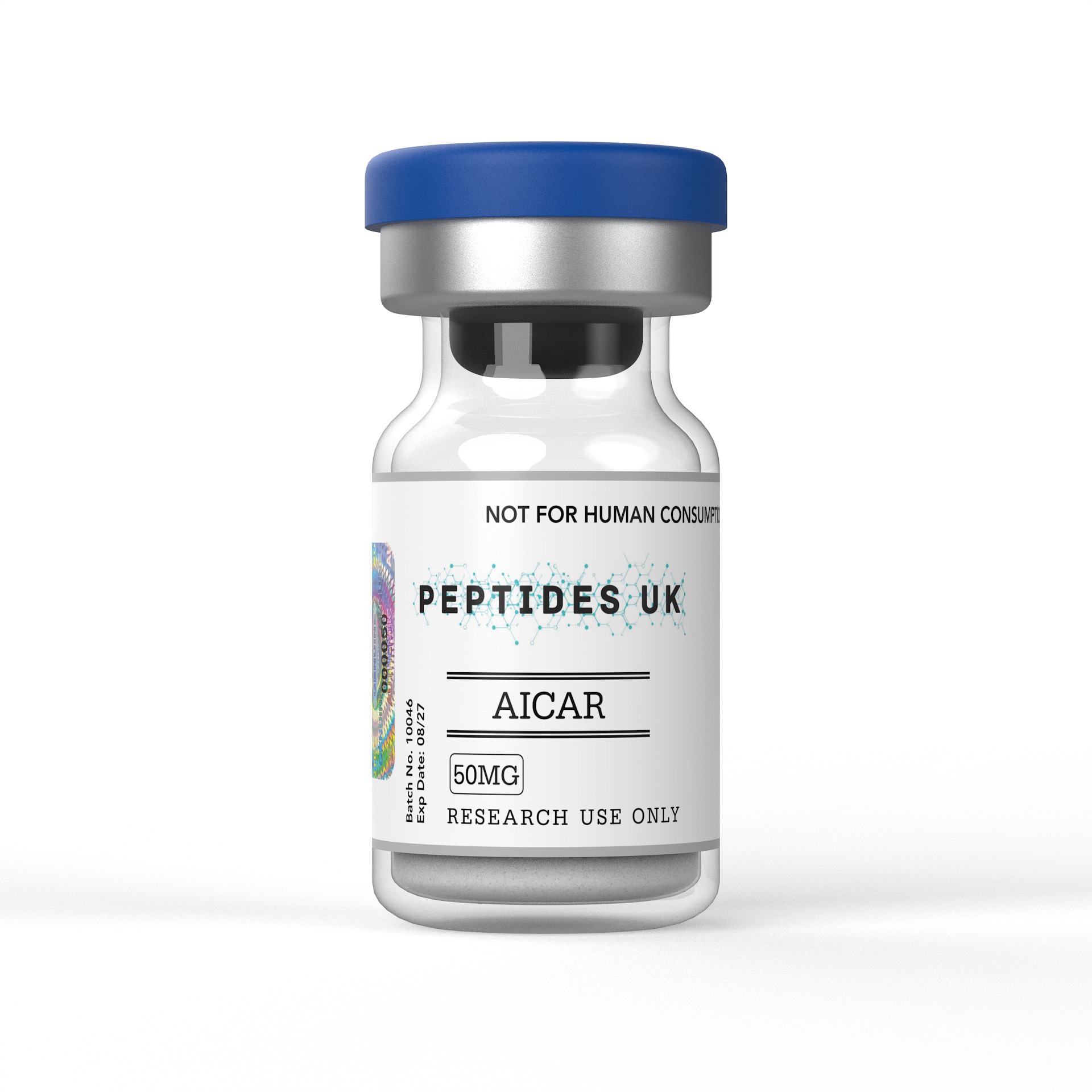
AICAR Ireland – Buy Online | In Stock & Ready to Ship
Buy AICAR in Ireland with fast shipping and guaranteed ≥99% purity — verified with COA and HPLC documentation. A trusted choice for peptides Ireland research teams rely on, with no customs delays or international wait times. Whether you’re searching for AICAR Ireland suppliers or looking to buy peptides Ireland-wide, we have you covered. Irish research teams can count on consistent stock, rapid fulfilment and full batch documentation every time.
For research use only. Not intended for human or veterinary use.


AICAR (5-Aminoimidazole-4-carboxamide ribonucleotide) is a naturally occurring nucleotide analogue and one of the most extensively studied and mechanistically precise AMPK-activating research compounds available to laboratories in Ireland — a cell-permeable adenosine monophosphate mimetic that is phosphorylated intracellularly to its active monophosphate form AICA ribonucleotide monophosphate (ZMP), which activates AMP-activated protein kinase by mimicking the allosteric effect of AMP accumulation that signals cellular energy deficit, making it a uniquely powerful research tool for studying AMPK signalling biology, cellular energy sensing mechanisms, mitochondrial biogenesis, glucose and fatty acid metabolism regulation, mTOR pathway interactions, inflammatory signalling, and the extraordinarily broad downstream biology of the master metabolic sensor whose activation coordinates cellular responses to energetic stress across virtually every metabolically active tissue in the body. Researchers and institutions across Ireland can source verified, research-grade AICAR directly from our Irish supply, with domestic-speed dispatch and complete batch documentation.
✅ ≥99% Purity — HPLC & Mass Spectrometry Verified
✅ Batch-Specific Certificate of Analysis (CoA) Included
✅ Lyophilised Powder | GMP Manufactured
✅ Fast Dispatch to Ireland | Peptides Ireland Stock
AICAR — 5-Aminoimidazole-4-carboxamide-1-β-D-ribofuranoside — is a naturally occurring intermediate in the de novo purine biosynthesis pathway that has become one of the most widely used pharmacological tools in cellular metabolism research through its capacity to activate AMP-activated protein kinase (AMPK) with high selectivity and reproducibility. AICAR is a nucleoside — the ribonucleoside form of the purine biosynthesis intermediate AICA ribonucleotide — that enters cells through adenosine transporters and is phosphorylated intracellularly by adenosine kinase to produce AICA ribonucleotide monophosphate, designated ZMP. ZMP is a structural analogue of AMP — mimicking the adenine nucleotide structure sufficiently to bind the regulatory γ-subunit of AMPK at the AMP-binding sites that normally detect cellular energy deficit through rising AMP/ATP ratios, allosterically activating AMPK in a manner that closely recapitulates the physiological activation of AMPK by genuine AMP accumulation during metabolic stress.
AMPK — the AMP-activated protein kinase — is the master energy sensor of eukaryotic cells, a serine/threonine kinase that monitors the cellular AMP/ADP/ATP ratio as an indicator of energy status and coordinates a comprehensive metabolic response to energy deficit aimed at restoring energy balance through simultaneous suppression of ATP-consuming anabolic processes and activation of ATP-generating catabolic processes. The structural basis of AMPK’s energy sensing is the allosteric regulation of its hetrotrimeric complex — comprising catalytic α-subunit, regulatory β-subunit, and adenine nucleotide-binding γ-subunit — where AMP binding to the γ-subunit produces multiple activating effects including allosteric kinase activation, promotion of activating phosphorylation at Thr172 on the α-subunit by upstream kinases LKB1 and CaMKKβ, and inhibition of Thr172 dephosphorylation by protein phosphatases.
The breadth of AMPK’s downstream biology is extraordinary — upon activation, AMPK phosphorylates hundreds of substrate proteins to coordinately suppress anabolic processes including protein synthesis through mTORC1 inhibition, fatty acid synthesis through ACC1 phosphorylation, cholesterol synthesis through HMGCR phosphorylation, and gluconeogenesis through CRTC2 phosphorylation, while simultaneously activating catabolic processes including glucose uptake through GLUT4 translocation, glycolysis through PFK2 phosphorylation, fatty acid oxidation through ACC2 phosphorylation and malonyl-CoA reduction, and mitochondrial biogenesis through PGC-1alpha activation. This comprehensive metabolic reprogramming — anabolism suppressed, catabolism activated, mitochondrial capacity expanded — represents the cell’s molecular response to energy stress and is the full landscape of biology that AICAR-mediated AMPK activation allows researchers to study pharmacologically.
AICAR’s value as a research tool lies in this capacity to activate AMPK without requiring genuine cellular energy depletion — allowing researchers to study AMPK-dependent biology under controlled conditions, in specific cell types, at defined doses, and with reproducibility that physiological energy stress manipulations cannot achieve. The compound has been used in fundamental AMPK biology research, metabolic disease pre-clinical models, exercise biology, anti-inflammatory research, mTOR pathway studies, and across a remarkably broad range of cellular and systems biology investigations — making it one of the most versatile and widely used small molecule research tools in metabolic biology.
In controlled laboratory and pre-clinical settings, AICAR is studied across a vast range of AMPK signalling biology, metabolic regulation, mitochondrial function, inflammatory signalling, and systems physiology research applications:
AMPK Signalling Biology Research — AICAR’s foundational research application is as a pharmacological AMPK activator — enabling direct study of AMPK signalling cascades, substrate phosphorylation events, and downstream pathway activation in cell-based and pre-clinical in vivo research systems. Studies have used AICAR to characterise the full landscape of AMPK substrate phosphorylation events using phosphoproteomic approaches, examine how AMPK activation influences specific downstream pathways in different cellular contexts, and establish the dose-response relationships between AICAR concentration, ZMP accumulation, AMPK activation magnitude, and downstream biological consequences. These AMPK signalling studies have contributed foundationally to understanding of the molecular organisation and biological reach of the AMPK signalling network.
Glucose Metabolism and Insulin Sensitisation Research — AICAR-mediated AMPK activation drives glucose uptake through GLUT4 translocation to the plasma membrane through a mechanism that parallels the insulin-independent glucose uptake stimulated by muscle contraction during exercise — making AICAR one of the primary research tools for studying insulin-independent glucose transport mechanisms and their potential relevance to insulin resistance biology. Research has used AICAR to examine how AMPK-driven GLUT4 translocation differs mechanistically from insulin receptor-driven translocation, how AMPK activation influences hepatic gluconeogenesis through CRTC2 and FOXO1 phosphorylation, and how AICAR treatment influences glucose homeostasis parameters in pre-clinical insulin resistance and type 2 diabetes models.
Fatty Acid Oxidation and Lipid Metabolism Research — AMPK’s phosphorylation of Acetyl-CoA carboxylase 2 (ACC2) reduces malonyl-CoA production — releasing the inhibition of carnitine palmitoyltransferase 1 (CPT1) that gates mitochondrial fatty acid import for beta-oxidation. AICAR-mediated AMPK activation therefore directly promotes mitochondrial fatty acid oxidation through this ACC2/malonyl-CoA/CPT1 mechanism — making AICAR a research tool for studying how AMPK activation switches cellular metabolism from fatty acid synthesis toward fatty acid oxidation. Research has used AICAR to examine lipid metabolism regulation, hepatic steatosis biology in fatty liver models, and the AMPK-dependent metabolic flexibility that allows cells to utilise fatty acids as fuel under energetic stress.
Mitochondrial Biogenesis Research — AICAR-driven AMPK activation promotes mitochondrial biogenesis through multiple downstream mechanisms — including direct phosphorylation of PGC-1alpha that activates its transcriptional co-activator function driving mitochondrial biogenesis gene programmes, and phosphorylation of HDAC5 that relieves transcriptional repression of mitochondrial genes. Research has used AICAR to study the AMPK/PGC-1alpha axis in mitochondrial biogenesis biology — examining how AMPK activation drives mitochondrial content expansion, influences respiratory chain composition, and promotes the metabolic shift toward oxidative capacity that characterises the adaptive response to endurance exercise and caloric restriction.
mTOR Pathway and Autophagy Research — AMPK negatively regulates mTORC1 through two complementary mechanisms — direct phosphorylation of the mTORC1 component Raptor at Ser722/792, and phosphorylation and activation of the TSC1/TSC2 complex that inhibits the Rheb GTPase required for mTORC1 activity. AICAR is one of the most widely used tools for studying AMPK-mediated mTORC1 suppression — enabling researchers to examine how AMPK-driven mTORC1 inhibition influences protein synthesis, cell growth, autophagy induction, and the coordination between energy status and anabolic signalling in diverse cellular contexts. Autophagy research has particularly benefited from AICAR as a tool for studying AMPK-dependent autophagy induction through both mTORC1 suppression and direct ULK1 phosphorylation by AMPK.
Exercise Biology and Muscle Metabolism Research — AICAR’s capacity to activate AMPK in skeletal muscle — the same AMPK-activating signal generated during exercise through AMP accumulation — has made it one of the primary research tools for studying exercise-mimetic biology in muscle. Research has used AICAR to examine how AMPK activation in skeletal muscle drives exercise-associated adaptations including GLUT4 upregulation, mitochondrial biogenesis, fibre type shifts, and metabolic gene expression programmes — contributing to fundamental understanding of the molecular basis of exercise adaptation and enabling study of these adaptations in experimental contexts where exercise cannot be applied. These exercise biology studies established the concept of AICAR as an exercise mimetic compound of research interest.
Anti-Inflammatory Biology Research — AMPK activation through AICAR has been extensively characterised as producing significant anti-inflammatory effects — with research documenting AICAR-associated suppression of NF-kB-driven inflammatory gene expression, reductions in pro-inflammatory cytokine production in macrophages and other immune cells, attenuation of NLRP3 inflammasome activation, and anti-inflammatory effects in multiple inflammatory disease pre-clinical models. The mechanistic basis of AMPK’s anti-inflammatory activity involves multiple downstream targets including direct inhibition of IKK-mediated IkB phosphorylation, SIRT1 activation through NAD+ effects, and suppression of mTORC1-dependent inflammatory signalling — making AICAR a research tool for studying the metabolic-inflammatory interface that connects energy status to inflammatory pathway regulation.
Cancer Biology and mTOR Research — AICAR’s suppression of mTORC1 through AMPK activation has made it a widely used research tool in cancer biology — with studies examining how AMPK-mediated mTORC1 inhibition influences cancer cell proliferation, metabolic reprogramming, autophagy, and sensitivity to nutrient stress. Research has used AICAR to study the LKB1/AMPK tumour suppressor pathway — LKB1 is the primary upstream kinase activating AMPK and is one of the most commonly mutated genes in human cancer — and to examine how AMPK activation influences cancer cell behaviour in contexts of altered LKB1 activity. These cancer biology studies have contributed to understanding of how the AMPK energy sensing pathway functions as a tumour suppressor and how its disruption contributes to cancer metabolic reprogramming.
Cardiac Metabolism and Ischaemia Research — AMPK is highly expressed in cardiac tissue and is activated during cardiac ischaemia as ATP is consumed and AMP/ADP ratios rise — with cardiac AMPK activation promoting glucose uptake and glycolysis as emergency energy sources during ischaemic ATP depletion. AICAR has been used to study cardiac AMPK biology — examining how AMPK activation influences cardiac metabolism, ischaemia-reperfusion injury parameters, cardiomyocyte survival signalling, and the metabolic adaptations that protect cardiac function during energy stress. These cardiac metabolism studies have contributed to understanding of how the energy sensing machinery coordinates cardiac metabolic responses to ischaemic stress.
Neuroprotection and Brain Metabolism Research — AMPK activation in neuronal tissue has been examined using AICAR — with studies characterising how AMPK activity influences neuronal energy metabolism, autophagy in neurons, inflammatory signalling in microglia, and neuroprotective responses in ischaemic and neurodegenerative injury models. Research has documented both neuroprotective and potentially detrimental AMPK activation effects in different neuronal contexts — contributing to understanding of the context-dependent nature of AMPK biology in the brain and the importance of cell type and metabolic state in determining the consequences of AMPK activation in neural tissue.
AICAR has accumulated one of the most extensive research literatures of any pharmacological research tool in metabolic biology — spanning fundamental AMPK biochemistry, exercise biology, metabolic disease, cancer, inflammation, and systems physiology across decades of investigation.
AICAR as Standard AMPK Activation Tool Established — Foundational research establishing AICAR as a pharmacological AMPK activator characterised the intracellular conversion of AICAR to ZMP, confirmed ZMP’s allosteric activation of AMPK through γ-subunit AMP-binding site engagement, and established the dose-response relationship between AICAR concentration, ZMP accumulation, AMPK Thr172 phosphorylation, and downstream substrate phosphorylation. These foundational mechanistic studies established AICAR as the standard pharmacological tool for AMPK activation research — validated through comparison with physiological AMPK activation by exercise and metabolic stress — and have been cited in thousands of subsequent studies as the basis for using AICAR to study AMPK-dependent biology.
Exercise-Mimetic Effects in Skeletal Muscle Documented — Research has documented AICAR’s capacity to reproduce key exercise-associated molecular adaptations in skeletal muscle — including GLUT4 upregulation, increased glucose uptake, enhanced fatty acid oxidation, PGC-1alpha activation, and mitochondrial biogenesis — through AMPK activation that parallels the AMP accumulation produced by muscle contraction. Landmark studies demonstrated that AICAR treatment in sedentary pre-clinical models produced skeletal muscle molecular adaptations resembling those of endurance exercise — establishing the exercise-mimetic research concept that motivated extensive subsequent investigation into AICAR’s metabolic biology and contributed to understanding of the AMPK pathway as the primary molecular mediator of exercise adaptation in skeletal muscle.
Anti-Diabetic Effects in Pre-Clinical Models Documented — Research has comprehensively documented AICAR’s anti-diabetic effects in pre-clinical insulin resistance and type 2 diabetes models — with studies characterising reductions in fasting glucose, improvements in insulin sensitivity, normalisation of hepatic glucose production, reductions in hepatic steatosis, and improvements in metabolic syndrome parameters following AICAR treatment in relevant pre-clinical models. These metabolic disease research findings have established AICAR as a reference compound for studying AMPK-mediated metabolic improvements and have contributed to understanding of how AMPK activation addresses multiple components of the metabolic syndrome through coordinate regulation of glucose, lipid, and energy metabolism.
Mitochondrial Biogenesis Through PGC-1alpha Axis Established — Research has established the AICAR/AMPK/PGC-1alpha mitochondrial biogenesis axis as one of the most important pathways for studying exercise-driven and pharmacologically-induced mitochondrial capacity expansion — with studies characterising AICAR-driven PGC-1alpha phosphorylation and activation, downstream mitochondrial transcription factor upregulation, and quantitative increases in mitochondrial content and oxidative capacity following AICAR treatment in muscle and other tissues. These mitochondrial biogenesis findings have been foundational for understanding how AMPK activation coordinates the long-term adaptive response to energy stress through expanding mitochondrial capacity.
Anti-Inflammatory Effects Broadly Documented — AICAR’s anti-inflammatory effects through AMPK activation have been documented across multiple inflammatory biology research contexts — including LPS-stimulated macrophage models, inflammatory bowel disease pre-clinical models, arthritis models, neuroinflammation, and sepsis models. Studies have characterised AICAR-associated reductions in NF-kB-driven inflammatory gene expression, decreases in TNF-alpha, IL-1beta, IL-6, and other pro-inflammatory cytokines, and improvements in inflammatory disease parameters — establishing AMPK activation as an anti-inflammatory pathway with broad research relevance across inflammatory disease biology.
mTOR Suppression and Autophagy Induction Characterised — Research has extensively characterised AICAR-mediated mTORC1 suppression through AMPK activation — documenting Raptor phosphorylation, 4E-BP1 and S6K1 dephosphorylation consistent with mTORC1 inhibition, downstream autophagy induction through ULK1 activation, and the consequences of AMPK-driven mTOR suppression for protein synthesis, cell growth, and autophagic flux in multiple cell type research models. These mTOR and autophagy research findings have established AICAR as a standard positive control tool for AMPK-mediated mTOR suppression and have contributed to understanding of the metabolic checkpoint through which energy status regulates anabolic signalling.
LKB1/AMPK Tumour Suppressor Pathway Research Contributions — Research examining AICAR in cancer biology contexts has contributed to understanding of the LKB1/AMPK tumour suppressor pathway — documenting how AICAR-mediated AMPK activation suppresses cancer cell proliferation in LKB1-expressing cells, how loss of LKB1 renders cancer cells insensitive to AICAR-mediated growth suppression, and how the AMPK pathway integrates with oncogenic signalling networks including PI3K/mTOR and RAS/MAPK. These cancer biology findings have contributed to mechanistic understanding of how LKB1/AMPK pathway disruption contributes to cancer metabolic reprogramming and how pharmacological AMPK activation might influence cancer cell biology in LKB1-intact versus LKB1-deficient contexts.
AICAR vs Metformin Comparative AMPK Research — Research comparing AICAR and metformin — the most widely prescribed type 2 diabetes medication whose primary cellular mechanism involves mitochondrial Complex I inhibition leading to indirect AMPK activation — has contributed to understanding of how direct AMPK activation by AICAR differs from indirect AMPK activation by metformin in terms of signalling dynamics, downstream pathway activation profiles, and metabolic biology outcomes. These comparative studies have been important for distinguishing AMPK-dependent from AMPK-independent effects of metformin and have established AICAR as the reference direct AMPK activator against which other AMPK-activating compounds are characterised.
| Feature | AICAR | Metformin | A-769662 | Compound 991 | Resveratrol |
|---|---|---|---|---|---|
| Type | Nucleoside — AMP mimetic prodrug | Biguanide — Complex I inhibitor | Synthetic thienopyridone | Synthetic indazole | Polyphenol — indirect AMPK activator |
| AMPK Activation Mechanism | Direct — ZMP allosteric γ-subunit activation | Indirect — Complex I inhibition → AMP/ATP ratio rise | Direct — β-subunit allosteric activation | Direct — α/β interface activation | Indirect — SIRT1/CaMKK pathway |
| AMPK Activation Selectivity | High — ZMP mimics AMP at γ-subunit | Moderate — multiple targets beyond AMPK | High — β-subunit specific | High — distinct allosteric site | Low — multiple pathway targets |
| Intracellular Conversion Required | Yes — AICAR → ZMP via adenosine kinase | No | No | No | No |
| Cell Permeability | Good — adenosine transporter uptake | Good | Moderate | Good | Good |
| mTOR Suppression | Strong — through AMPK/TSC2/Raptor | Moderate | Strong | Strong | Moderate |
| Glucose Uptake Stimulation | Strong — GLUT4 translocation | Strong — hepatic primarily | Strong | Strong | Moderate |
| Mitochondrial Biogenesis | Strong — PGC-1alpha | Moderate | Strong | Strong | Moderate — SIRT1 |
| Anti-inflammatory Activity | Well-documented | Well-documented | Documented | Growing | Well-documented |
| Research Profile | Extensively studied — reference standard | Extensively studied | Well-documented | Growing | Extensively studied |
| Parameter | Detail |
|---|---|
| Name | AICAR (5-Aminoimidazole-4-carboxamide ribonucleotide) |
| Also Known As | AICA Riboside / Acadesine / NSC 105823 |
| Type | Nucleoside — AMP Mimetic / AMPK Activator |
| Molecular Formula | C₉H₁₄N₄O₅ |
| Molecular Weight | 258.23 Da |
| Active Intracellular Metabolite | ZMP (AICA ribonucleotide monophosphate) |
| Mechanism | ZMP allosteric AMPK γ-subunit activation — AMP mimetic |
| Primary Target | AMPK (AMP-activated protein kinase) — γ-subunit |
| Key Downstream Biology | mTOR suppression / GLUT4 / PGC-1alpha / ACC2 / fatty acid oxidation / autophagy |
| Research Profile | Reference standard AMPK activator — extensively validated |
| Purity | ≥99% HPLC & MS Verified |
| Form | Lyophilised Powder |
| Solubility | Sterile water or PBS — high aqueous solubility |
| Storage (Powder) | -20°C, protect from light and moisture |
| Storage (Reconstituted) | 2–8°C — use within 14 days or aliquot at -80°C |
| Stability | Good aqueous stability — avoid strongly acidic or basic conditions |
| Manufacturing | GMP Manufactured |
| Intended Use | Research use only |
AICAR has excellent aqueous solubility and reconstitutes readily in sterile water or PBS without requiring organic solvent or acidified water. Allow the vial to reach room temperature before opening. Add sterile water or PBS slowly and swirl gently — AICAR dissolves quickly and completely at research-relevant concentrations without requiring vortexing or heating. Prepare a concentrated stock solution — 10–100 mM in sterile water or PBS is typical for research stock preparations — and dilute to working concentration in cell culture media or appropriate experimental buffer. AICAR is stable in aqueous solution at neutral to slightly acidic pH — avoid strongly basic conditions that may promote degradation. Store reconstituted stock at 2–8°C for short-term use within 14 days, or aliquot into single-use volumes and store at -80°C for longer-term preservation. Avoid repeated freeze-thaw cycles. Note that at very high AICAR concentrations, ZMP accumulation in cells may produce effects beyond AMPK activation including interference with purine biosynthesis pathway intermediates — research design should account for concentration-dependent specificity when interpreting experimental results.
Every order of AICAR in Ireland includes:
✅ Batch-Specific Certificate of Analysis (CoA)
✅ HPLC Chromatogram
✅ Mass Spectrometry Confirmation
✅ Purity & Identity Verification Report
✅ Reconstitution and Stability Protocol
✅ Technical Research Support
Yes — we supply research-grade AICAR to researchers and institutions across Ireland with fast dispatch and full batch documentation. This compound is supplied strictly for laboratory research purposes only.
AMPK — AMP-activated protein kinase — is the master energy sensor of eukaryotic cells, a hetrotrimeric serine/threonine kinase whose activity is allosterically regulated by the ratio of AMP and ADP to ATP in the cellular adenine nucleotide pool — making it a direct molecular detector of the cellular energy status. When cellular energy demand exceeds supply — during exercise, hypoxia, glucose deprivation, or any metabolic stress consuming ATP faster than it can be regenerated — AMP and ADP concentrations rise relative to ATP, activating AMPK to coordinate a comprehensive metabolic response aimed at restoring energy balance. AMPK’s central position as the energy sensor that links metabolic status to virtually every major anabolic and catabolic pathway makes it one of the most important research targets in metabolic biology — and AICAR, as the standard pharmacological tool for directly activating AMPK without requiring genuine energy depletion, is correspondingly one of the most widely used research compounds in the field. The breadth of AMPK’s downstream biology — spanning mTOR suppression, mitochondrial biogenesis, glucose uptake, fatty acid oxidation, inflammatory pathway regulation, autophagy, and hundreds of phosphorylation substrate events — makes AICAR-mediated AMPK activation a research tool of relevance to virtually every area of cellular metabolism, metabolic disease, cancer biology, and ageing research.
AICAR activates AMPK through a prodrug mechanism — after entering cells via adenosine transporters, AICAR is phosphorylated by adenosine kinase to produce ZMP, the monophosphate form that is a structural analogue of AMP. ZMP binds to the regulatory γ-subunit of AMPK at the same adenine nucleotide-binding CBS domain sites where physiological AMP binds during genuine energy deficit — producing the same allosteric activation of AMPK kinase activity, the same promotion of activating Thr172 phosphorylation by upstream kinases LKB1 and CaMKKβ, and the same inhibition of Thr172 dephosphorylation that physiological AMP elevation produces. Critically, ZMP accumulates in cells without affecting the actual ATP/AMP/ADP ratios that reflect genuine energy status — it is an artificial AMP signal that activates the energy sensing machinery without the genuine energetic compromise that physiological AMPK activation involves. This capacity to produce the molecular signal of energy deficit without actually depleting cellular energy is AICAR’s fundamental research value — it allows AMPK-dependent biology to be studied in controlled, reproducible conditions without the confounding metabolic changes associated with genuine energy stress.
The connection between AICAR and exercise biology research is direct and mechanistic — AMPK is activated in skeletal muscle during exercise through AMP accumulation driven by the high ATP consumption rate of contracting muscle, and this exercise-induced AMPK activation drives many of the molecular adaptations that underlie fitness improvements including GLUT4 upregulation, mitochondrial biogenesis, fibre type transitions, and metabolic enzyme expression changes. AICAR, by activating AMPK through ZMP without requiring actual muscle contraction, reproduces this exercise-associated AMPK signal pharmacologically — making it a research tool for studying exercise adaptation biology in experimental contexts where exercise cannot be applied, for isolating AMPK-dependent from AMPK-independent components of exercise adaptation, and for examining how AMPK activation magnitude and duration influences the downstream adaptive response. Pre-clinical studies documenting that AICAR treatment in sedentary animals produces skeletal muscle molecular adaptations resembling endurance training — including mitochondrial biogenesis and metabolic gene expression changes — established the exercise-mimetic research concept associated with AICAR and motivated extensive investigation into whether AMPK activation could pharmacologically reproduce exercise benefits in contexts of metabolic disease or physical incapacity.
AICAR-mediated AMPK activation suppresses mTORC1 through two complementary mechanisms that together constitute one of the most important metabolic checkpoints in cellular biology — the energy-sensing brake on anabolic signalling that prevents cells from executing energy-expensive growth and protein synthesis programmes when energy is limiting. The first mechanism is AMPK-mediated phosphorylation of TSC2 at Ser1387, activating the TSC1/TSC2 complex that acts as a GTPase-activating protein for Rheb — converting active GTP-bound Rheb to inactive GDP-bound Rheb and thereby suppressing the Rheb-dependent mTORC1 activation required for its kinase activity. The second mechanism is direct AMPK phosphorylation of the mTORC1 component Raptor at Ser722 and Ser792 — creating 14-3-3 binding sites that allosterically inhibit mTORC1 complex activity independently of TSC1/TSC2. Together these mechanisms produce robust mTORC1 suppression following AICAR treatment — reducing phosphorylation of mTORC1 substrates 4E-BP1 and S6K1 that drive cap-dependent mRNA translation and ribosome biogenesis. The research importance of this AICAR/AMPK/mTOR connection is enormous — it links energy status to protein synthesis capacity, tumour suppressor biology, autophagy regulation, and ageing pathways in ways that make AICAR one of the most widely used tools for studying metabolic regulation of mTOR signalling.
AICAR and metformin are both widely used AMPK-activating research compounds but differ fundamentally in their mechanisms — making them complementary rather than equivalent research tools. AICAR activates AMPK directly through ZMP’s allosteric engagement of the γ-subunit AMP-binding sites — producing AMPK activation with high mechanistic specificity that is attributable to direct enzyme activation. Metformin activates AMPK indirectly — its primary cellular mechanism is inhibition of mitochondrial Complex I of the respiratory chain, which reduces ATP synthesis efficiency and raises cellular AMP/ADP/ATP ratios, activating AMPK through the physiological energy deficit sensing mechanism. This mechanistic distinction has important research implications — AICAR-mediated AMPK activation is more direct and interpretable, while metformin-mediated AMPK activation is secondary to mitochondrial Complex I inhibition that produces additional AMPK-independent effects on cellular metabolism. Research designs seeking to establish AMPK-specific biology use AICAR to achieve direct, controlled AMPK activation — while metformin comparison studies are valuable for distinguishing AMPK-dependent from AMPK-independent effects of Complex I inhibition. Additionally, metformin acts primarily in liver and intestine at clinically relevant concentrations, while AICAR’s cellular uptake through adenosine transporters allows AMPK activation research in a broader range of cell types including muscle, immune cells, and cancer cell lines.
While AICAR is a well-validated AMPK activator, research design should account for potential off-target effects that become relevant at high concentrations or in specific experimental contexts. ZMP accumulation can interfere with purine biosynthesis pathway enzymes beyond AMPK — including inhibition of adenylosuccinate lyase and ATIC (the bifunctional enzyme that immediately follows AICAR in the de novo purine synthesis pathway) — potentially affecting purine nucleotide pools at very high AICAR concentrations. ZMP can also activate other AMP-regulated enzymes including fructose-1,6-bisphosphatase and glycogen phosphorylase whose activities are regulated by AMP. These off-target considerations are concentration-dependent — the standard research approach uses the minimum AICAR concentration producing reproducible AMPK activation in the target cell type, confirmed through AMPK substrate phosphorylation markers, and includes appropriate controls including AMPK-specific inhibitors or knockout comparisons to confirm that observed biological effects are AMPK-dependent. At concentrations used in well-designed research protocols — typically 0.1–1 mM in cell culture systems — AICAR’s primary biological effect is AMPK activation through ZMP, with off-target effects becoming more relevant at higher concentrations that should be avoided in mechanistically rigorous research designs.
≥99% purity is strongly recommended for AMPK signalling research, metabolic biology assays, mTOR pathway studies, exercise biology research, inflammatory signalling experiments, cancer biology studies, and pre-clinical in vivo metabolic models — where compound purity directly determines the reliability of AMPK activation measurements, downstream signalling characterisation, and metabolic biology outcomes. Given AICAR’s mechanism requiring intracellular conversion to ZMP by adenosine kinase, nucleoside analogue impurities could potentially compete for adenosine kinase phosphorylation or produce confounding intracellular metabolite effects in sensitive metabolic assays — making high purity verification by both HPLC and mass spectrometry important for research reproducibility. All AICAR Ireland stock is independently verified to ≥99% purity by HPLC and mass spectrometry with identity confirmation.
AICAR has excellent aqueous solubility and reconstitutes readily without organic solvent. Allow the vial to reach room temperature before opening. Add sterile water or PBS slowly and swirl gently — AICAR dissolves quickly at research-relevant concentrations. Prepare a concentrated stock solution at 10–100 mM in sterile water or PBS and dilute to working concentration in cell culture media or experimental buffer. Store reconstituted stock at 2–8°C for up to 14 days, or aliquot into single-use volumes and store at -80°C for longer-term preservation. Avoid repeated freeze-thaw cycles and strongly basic pH conditions. Working concentrations for cell culture AMPK activation research are typically in the 0.1–1 mM range — confirm AMPK activation in your specific cell type through phospho-AMPK Thr172 and phospho-ACC Ser79 immunoblotting before proceeding to downstream biological endpoint measurements.
AICAR is supplied exclusively for legitimate scientific research purposes conducted within licensed laboratory environments. This product is not intended for human consumption, self-administration, or any therapeutic application. It must be handled by qualified researchers in compliance with applicable Irish and EU regulations and institutional ethics guidelines. By purchasing, you confirm that this compound will be used solely for approved in vitro or pre-clinical research purposes.

WhatsApp us
Receive News
