PRODUCTS SOLD ON PEPTIDESLABIRELAND.COM ARE FOR RESEARCH PURPOSES ONLY AND ARE NOT FOR HUMAN OR VETERINARY USE.
Fast Ireland delivery — dispatched to Dublin, Cork, Galway, Limerick and nationwide.
€107.50 Original price was: €107.50.€80.00Current price is: €80.00.
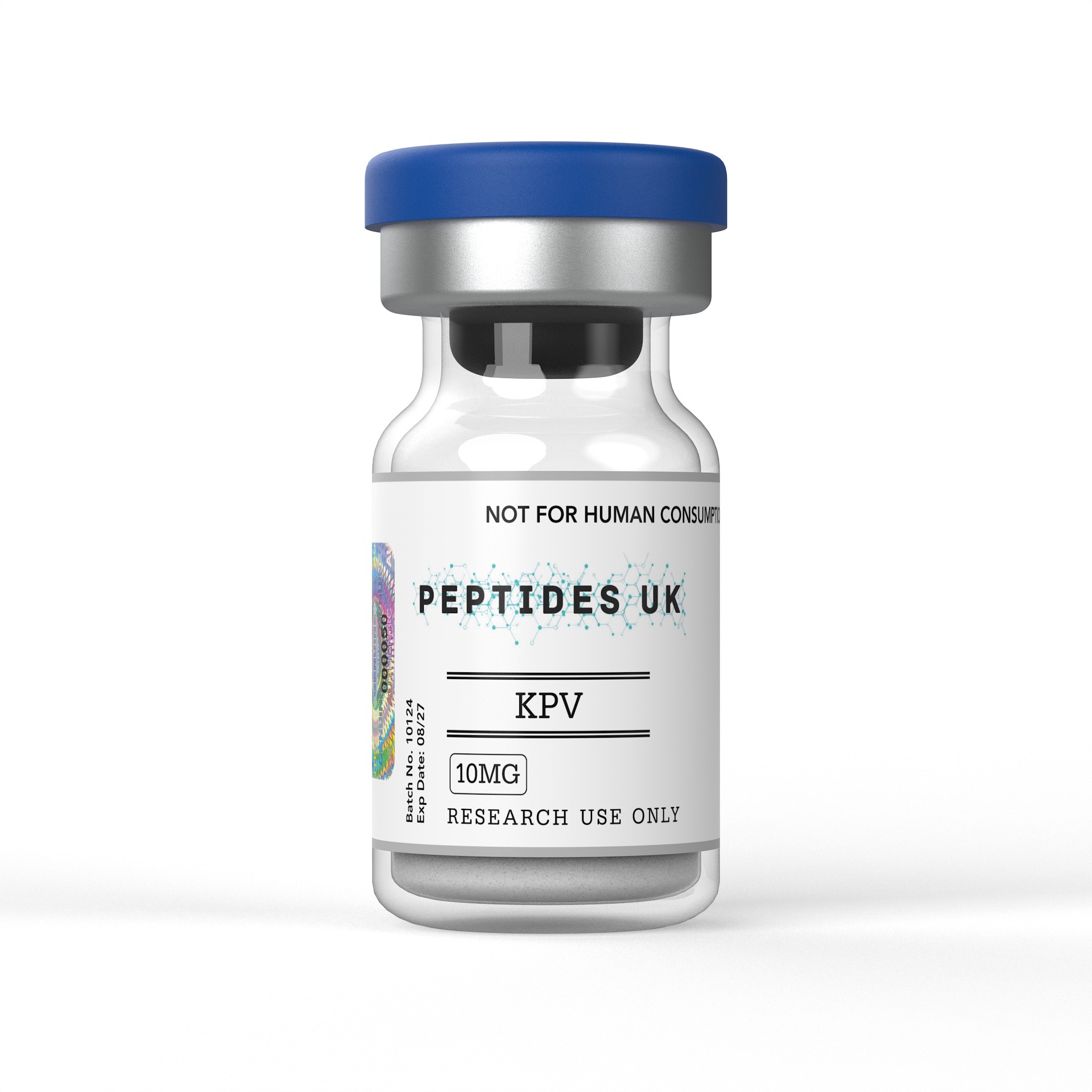
KPV (Lys-Pro-Val) — anti-inflammatory tripeptide C-terminal fragment of alpha-MSH studied in immunomodulation and gastrointestinal inflammation research. HPLC-verified ≥99% purity, per-batch COA. Fast Ireland delivery.
For laboratory research use only. Not for human or veterinary use.

KPV is a naturally derived tripeptide fragment of the hormone alpha-MSH (alpha-melanocyte-stimulating hormone) and one of the most studied compounds in inflammation, gut biology, and wound healing research, Available to buy in Ireland with fast dispatch and full batch documentation included.
KPV (Lysine-Proline-Valine) is a three-amino acid C-terminal fragment of α-MSH that retains the anti-inflammatory and antimicrobial properties of its parent hormone in a significantly smaller and more stable form. Research has documented KPV’s ability to suppress inflammatory signalling, modulate immune responses, support gut barrier integrity, and accelerate wound healing across many pre-clinical and cell-based models, Researchers and institutions across Ireland can source verified, research-grade KPV directly from our Irish peptide supply, with domestic-speed dispatch and complete batch documentation.
✅ ≥99% Purity . HPLC & Mass Spectrometry Verified
✅ Batch-Specific Certificate of Analysis (CoA) Included
✅ Sterile Lyophilised Powder | GMP Manufactured
✅ Fast Dispatch to Ireland | Peptides Ireland Stock
KPV is a tripeptide . Just three amino acids: Lysine-Proline-Valine — derived from the C-terminal end of alpha-melanocyte-stimulating hormone (α-MSH), a naturally occurring neuropeptide and hormone produced primarily in the pituitary gland. α-MSH is well established in research for its anti-inflammatory, immunomodulatory, and melanogenic properties, and KPV represents its biologically active C-terminal core , the portion of the molecule responsible for much of α-MSH’s anti-inflammatory activity.
What makes KPV especially significant as a research tool is that it retains potent anti-inflammatory properties despite being only three amino acids long and meaning it’s far smaller, more stable, and easier to work with in laboratory settings than the full α-MSH peptide. KPV exerts its effects mainly by acting directly within cells to inhibit NF-κB . The master transcription factor that drives the expression of pro-inflammatory cytokines and inflammatory mediators , through both receptor-dependent and receptor-independent pathways, giving it a broad and direct mechanism of action in inflamed tissue environments.
KPV has attracted particular research interest in gut biology, where its small size allows it to penetrate intestinal epithelial cells and act locally within the gut wall , suppressing mucosal inflammation, supporting epithelial barrier function, and modulating the gut immune environment in ways that have made it one of the most actively studied peptides in inflammatory bowel disease and gut biology research.
In controlled laboratory and pre-clinical settings, KPV is studied across a broad range of inflammation, gut biology, immunology, and wound healing research applications:
NF-κB Inhibition and Inflammatory Signalling Research , KPV’s primary and most studied mechanism is the inhibition of NF-κB and the central transcription factor controlling the expression of pro-inflammatory cytokines including TNF-α, IL-6, and IL-1β. Studies have examined how KPV enters cells and suppresses NF-κB activation through both melanocortin receptor-dependent and receptor-independent pathways, establishing direct intracellular anti-inflammatory signalling as the defining mechanistic feature of KPV research.
Inflammatory Bowel Disease and Gut Inflammation Research , KPV has been studied extensively in pre-clinical models of intestinal inflammation . Including colitis models , with research examining how it suppresses mucosal inflammatory signalling, reduces cytokine production in intestinal tissue, and improves histological and clinical markers of intestinal inflammation. Its small tripeptide size is particularly relevant here, as it allows direct penetration into intestinal epithelial cells for local mucosal action.
Gut Epithelial Barrier Research , Studies have examined KPV’s effects on intestinal epithelial barrier integrity , including tight junction protein expression and epithelial permeability . In inflammatory cell culture and pre-clinical models. Research has documented improvements in barrier function markers following KPV treatment, positioning it as a research tool for studying the relationship between inflammatory signalling and gut barrier disruption.
Wound Healing Research , KPV has been studied for its effects on skin wound healing in pre-clinical models and with research examining how its anti-inflammatory and potentially pro-regenerative properties influence wound closure rates, inflammatory cell infiltration, and tissue repair quality. Its α-MSH-derived biology connects it to the well-documented role of melanocortin peptides in skin biology and wound response.
Antimicrobial Research KPV has been studied for direct antimicrobial activity against a range of bacterial pathogens in cell and laboratory models , with research examining its ability to inhibit bacterial growth and reduce infection-related inflammatory responses, contributing to research on host defence peptides and the interface between antimicrobial and anti-inflammatory biology.
Skin Inflammation and Dermatology Research , Beyond wound healing, KPV has been studied in the context of inflammatory skin conditions in pre-clinical models , with research examining its topical and systemic anti-inflammatory effects on skin tissue, cytokine profiles in inflamed skin, and the relevance of melanocortin biology to dermatological inflammatory research.
Cytokine Modulation Research . Studies have characterised KPV’s effects on the production and release of specific pro-inflammatory cytokines and including TNF-α, IL-6, IL-1β, and IL-8 . In stimulated immune cells and tissue models, providing detailed mechanistic insight into which inflammatory pathways KPV most potently suppresses and how this profile compares to other anti-inflammatory research compounds.
Oral and Gut-Targeted Peptide Delivery Research . KPV’s stability as a tripeptide and its ability to act locally within gut tissue has made it a research subject in oral peptide delivery biology and with studies examining how KPV survives gastrointestinal transit, penetrates intestinal epithelium, and maintains biological activity when delivered orally in pre-clinical models. This positions KPV as a model compound for gut-targeted peptide therapy research.
Macrophage and Immune Cell Biology Research . KPV has been studied for its direct effects on macrophage activation and polarisation and cells that play a central role in driving and resolving tissue inflammation. Research has examined how KPV shifts macrophage behaviour in inflammatory environments, contributing to the understanding of how melanocortin-derived peptides modulate innate immune cell function.
KPV has a well-documented and growing pre-clinical research profile, particularly in gut biology and inflammation science:
Potent NF-κB Suppression Confirmed , Cell-based studies have consistently confirmed that KPV suppresses NF-κB activation in stimulated immune cells and epithelial cells and reducing downstream expression of TNF-α, IL-6, IL-1β, and other pro-inflammatory mediators. This NF-κB inhibitory activity has been documented through both melanocortin receptor-mediated and direct intracellular pathways, establishing KPV as one of the most mechanistically well-characterised anti-inflammatory tripeptides in research.
Significant Effects in Pre-Clinical Colitis Models . Pre-clinical studies using standard colitis induction models have reported that KPV treatment significantly reduces markers of intestinal inflammation , including mucosal cytokine levels, histological damage scores, and disease activity indices , supporting its relevance to gut inflammation and inflammatory bowel disease biology research.
Gut Barrier Protection Documented and Studies have reported improvements in intestinal epithelial barrier function markers , including tight junction protein expression , in inflammatory models treated with KPV, supporting the proposed role of KPV in protecting and restoring gut barrier integrity during inflammatory challenge.
Oral Bioavailability in Pre-Clinical Models and Research has demonstrated that KPV retains biological activity following oral administration in pre-clinical models and with studies examining its stability through gastrointestinal transit and its ability to reach and act on intestinal tissue following oral delivery, a finding that has significant implications for gut-targeted research applications.
Wound Healing Acceleration . Pre-clinical wound healing studies have reported faster wound closure and improved tissue repair quality in KPV-treated models . With histological data showing reduced inflammatory infiltration and improved regenerative tissue architecture in treated wounds compared to controls.
Antimicrobial Activity in Laboratory Models . Studies have documented direct antimicrobial activity for KPV against bacterial species including Staphylococcus aureus and other pathogens in laboratory models , supporting a dual anti-inflammatory and antimicrobial research profile and connecting KPV to the broader field of host defence peptide research.
Well-Tolerated Profile in Pre-Clinical Studies . Pre-clinical studies have usually reported a favourable tolerability profile for KPV across the dose ranges studied, with research not documenting significant adverse effects in standard pre-clinical models , though full safety characterisation remains an ongoing area of research.
| Feature | KPV | BPC-157 | Thymosin Beta-4 | LL-37 |
|---|---|---|---|---|
| Origin | α-MSH C-terminal fragment | Gastric protein fragment | Thymic peptide | Cathelicidin antimicrobial peptide |
| Size | Tripeptide (3 amino acids) | 15 amino acids | 43 amino acids | 37 amino acids |
| Primary Mechanism | NF-κB inhibition / melanocortin signalling | Angiogenesis / cytoprotection / tissue repair | Actin sequestration / angiogenesis / tissue repair | Antimicrobial / immune modulation |
| Key Research Area | Gut inflammation / wound healing / skin | Regenerative biology / gut / musculoskeletal | Wound healing / cardiac / connective tissue | Antimicrobial / innate immunity |
| Gut Biology Relevance | Very high and direct mucosal action | High . Gut protective in colitis models | Moderate | Moderate |
| Oral Delivery Research | Yes . Pre-clinical oral bioavailability data | Limited | Limited | Limited |
KPV is distinctive for its exceptionally small size, direct intracellular NF-κB inhibitory mechanism, well-documented gut biology research profile, and pre-clinical evidence for oral bioavailability and making it a uniquely practical and mechanistically well-defined anti-inflammatory research tool.
| Parameter | Detail |
|---|---|
| Name | KPV |
| Sequence | Lys-Pro-Val |
| Length | 3 amino acids (tripeptide) |
| Origin | C-terminal fragment of α-MSH |
| Primary Mechanism | NF-κB inhibition / anti-inflammatory / antimicrobial |
| Purity | ≥99% HPLC & MS Verified |
| Form | Sterile Lyophilised Powder |
| Solubility | Sterile water, bacteriostatic water, PBS |
| Storage (Powder) | -20°C, protect from light |
| Storage (Reconstituted) | 2–8°C, use promptly |
| Manufacturing | GMP Manufactured |
Every order of KPV in Ireland includes:
✅ Batch-Specific Certificate of Analysis (CoA)
✅ HPLC Chromatogram
✅ Mass Spectrometry Confirmation
✅ Sterility & Endotoxin Testing Report
✅ Reconstitution Protocol
✅ Technical Research Support
Can I buy KPV in Ireland? Yes , we supply research-grade KPV to researchers and institutions across Ireland with fast dispatch and full batch documentation. This compound is supplied strictly for laboratory research purposes only.
What is KPV and where does it come from? KPV is a tripeptide and Lysine-Proline-Valine . Derived from the C-terminal end of alpha-melanocyte-stimulating hormone (α-MSH), a naturally occurring hormone produced in the pituitary gland. It retains the core anti-inflammatory activity of the full α-MSH peptide in a much smaller, more stable three-amino acid form, making it a highly practical research tool for studying melanocortin-derived anti-inflammatory biology.
How does KPV reduce inflammation in research models? KPV’s primary anti-inflammatory mechanism involves the inhibition of NF-κB . The master transcription factor that drives production of pro-inflammatory cytokines like TNF-α, IL-6, and IL-1β. Uniquely, KPV can act through both cell surface melanocortin receptors and through direct intracellular entry . Allowing it to suppress inflammatory signalling even in cells with low or absent melanocortin receptor expression, giving it a broad and direct mechanism of anti-inflammatory action in research models.
Why is KPV particularly relevant to gut biology research? KPV’s tripeptide size allows it to directly penetrate intestinal epithelial cells and act locally within the gut mucosal environment , suppressing NF-κB-driven inflammatory signalling directly at the site of intestinal inflammation. Pre-clinical colitis studies have documented significant reductions in mucosal inflammation and improvements in barrier function, and oral bioavailability data suggests KPV retains activity following oral delivery in pre-clinical models . Making it one of the most practically relevant peptides for gut inflammation biology research.
Is KPV the same as α-MSH? No and KPV is a fragment of α-MSH, not the full peptide. It consists only of the three C-terminal amino acids of α-MSH (Lysine-Proline-Valine) and is smaller than the full 13-amino acid α-MSH peptide. While it shares anti-inflammatory properties with α-MSH, it lacks the melanogenic (skin pigmentation) activity of the full hormone and has a distinct receptor interaction profile , making it a more targeted research tool for anti-inflammatory biology specifically.
What purity is recommended for KPV research? ≥99% purity is strongly recommended for NF-κB inhibition assays, cytokine suppression studies, gut inflammation models, and in vivo pre-clinical research where compound quality directly affects biological activity and reproducibility. All KPV Ireland stock is independently verified to ≥99%.
How do I reconstitute KPV for laboratory use? Allow the vial to reach room temperature before opening. Reconstitute in sterile water or bacteriostatic water by adding solvent slowly down the inside wall of the vial and swirling gently . Don’t shake. Use promptly after reconstitution, or aliquot and store at -80°C to preserve peptide stability and biological activity across multiple experimental uses.
KPV is supplied exclusively for legitimate scientific research purposes conducted within licensed laboratory environments. This product isn’t intended for human consumption, self-administration, or any therapeutic application. It must be handled by qualified researchers in compliance with applicable Irish and EU regulations and institutional ethics guidelines. By purchasing, you confirm that this compound will be used solely for approved in-vitro or pre-clinical research purposes.
KPV isn’t authorised as a medicine by the HPRA. It’s legal to buy, hold and use as a research chemical for in-vitro laboratory work, and that’s the only use we supply it for. If you want the full regulatory picture, see our Irish researcher’s guide to peptide legality.
Every vial ships with an HPLC purity trace (often ≥99%), mass-spec identity confirmation, and endotoxin/heavy-metal screening on the batch. The full per-batch Certificate of Analysis is available on request from research@peptideslabireland.com. Our quality system is ISO 9001 certified and third-party testing runs through a UKAS-accredited lab.
Standard protocol: let the KPV vial and your bacteriostatic water come to room temperature, wipe both stoppers with a 70% isopropyl swab, then inject the water slowly down the side wall of the peptide vial. Don’t stream directly onto the powder cake. Swirl gently, don’t shake, and give it five to ten minutes to fully dissolve. Label the vial with compound, concentration and reconstitution date, store at 2–8°C between assays.
Same-day dispatch on orders placed before 2pm on a working day. Delivery is 24–48 hours to any Irish county via An Post Express or DPD. Cold chain is preserved with insulated wrap plus gel pack. No customs step, no border delays , because it never leaves Ireland.
In the Irish research space KPV tends to appear in collagen synthesis, dermal fibroblast and skin-barrier research. It’s often paired with GHK-Cu or Argireline when researchers are studying combined mechanisms rather than the compound alone.
Lyophilised KPV is stable at ≤-20°C long-term. Once reconstituted, keep it refrigerated at 2–8°C and use within the working shelf life described on the CoA. Freeze/thaw cycles degrade peptides, so aliquot the reconstituted solution if you plan to run assays over several weeks.

Receive News