PRODUCTS SOLD ON PEPTIDESLABIRELAND.COM ARE FOR RESEARCH PURPOSES ONLY AND ARE NOT FOR HUMAN OR VETERINARY USE.
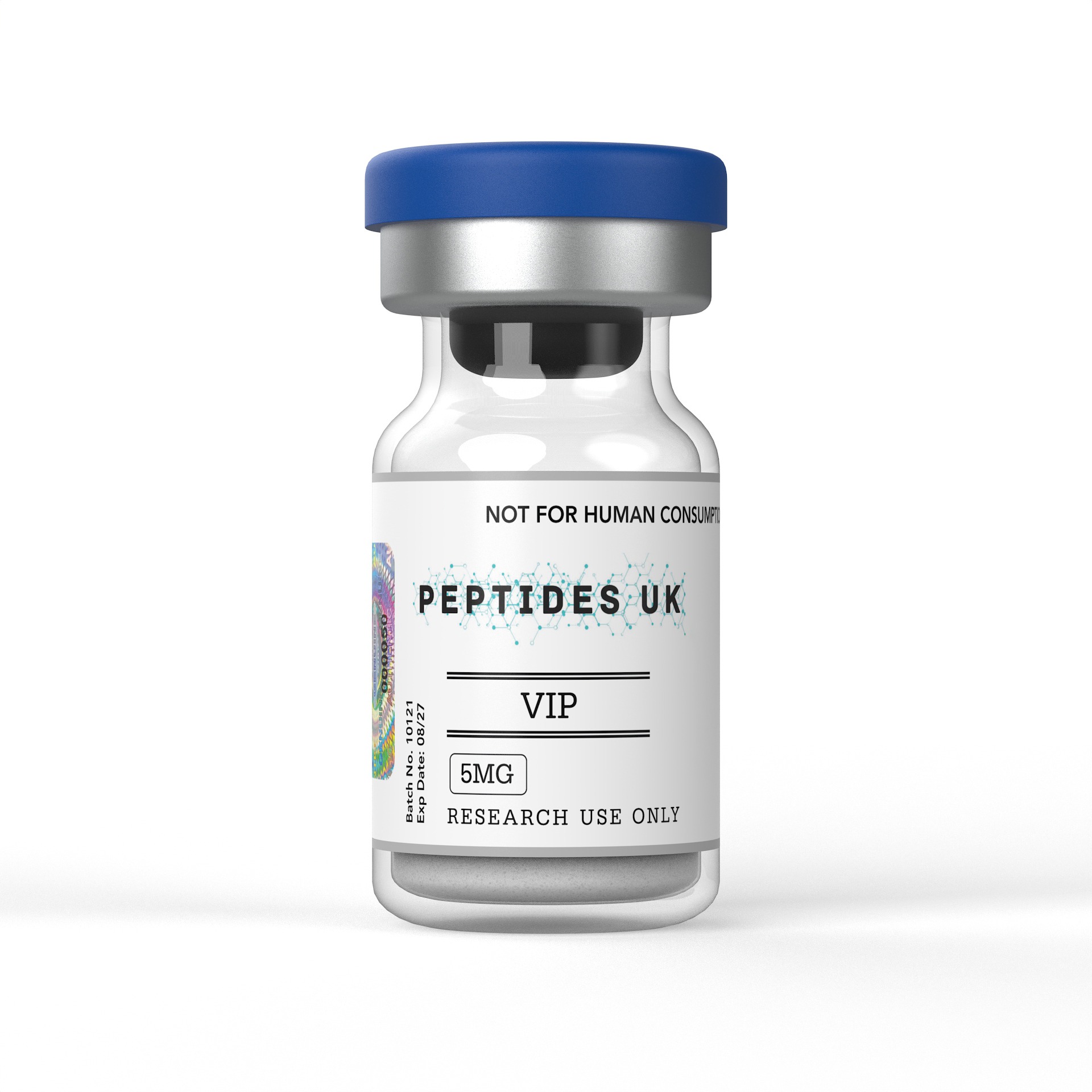
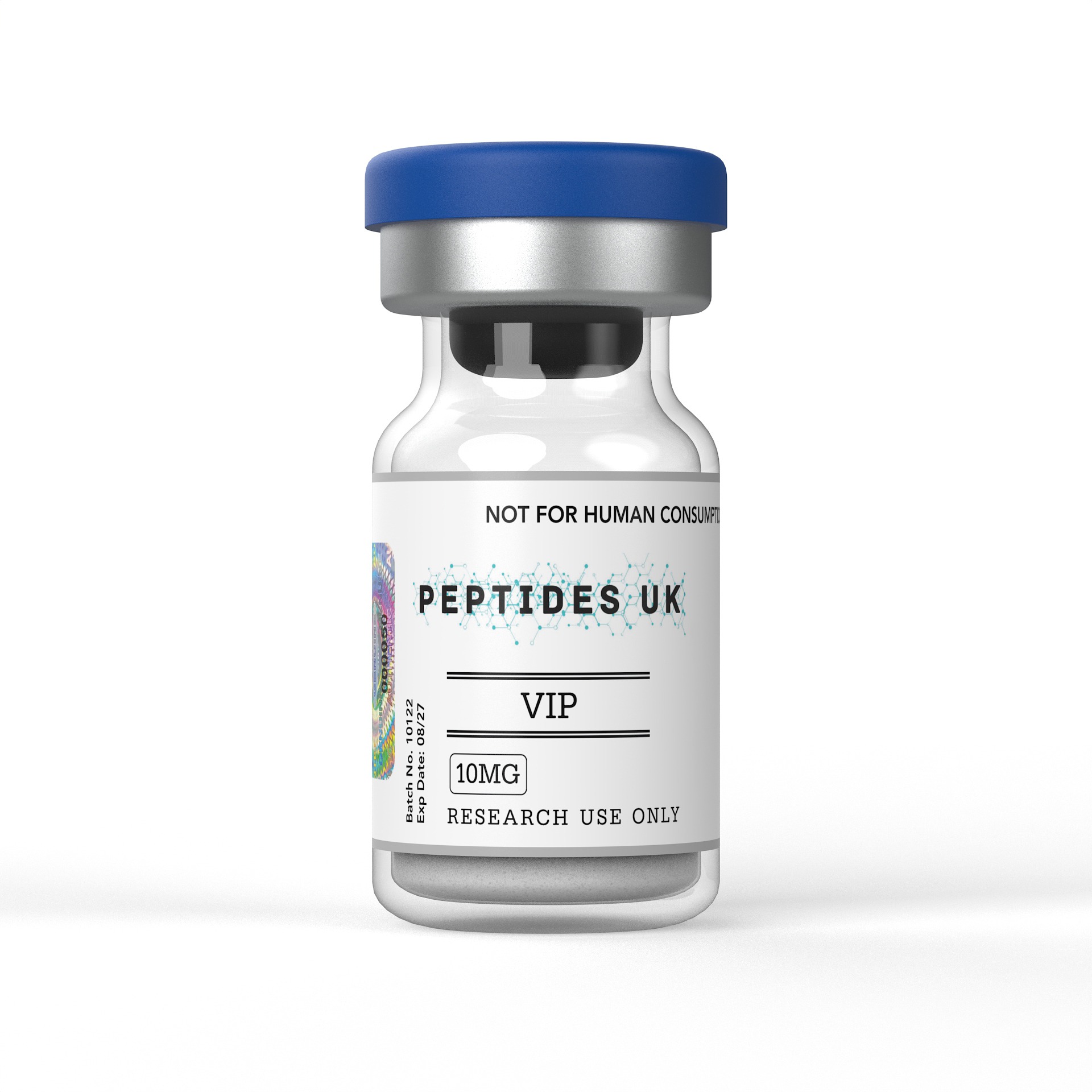
€77.50 – €148.50Price range: €77.50 through €148.50
VIP (Vasoactive Intestinal Peptide) is a widely researched peptide known for its role in neuroprotective and immune regulatory studies. Each batch is independently verified at ≥99% purity and comes with a full Certificate of Analysis (COA) and HPLC testing documentation — giving UAE research teams the confidence they need when sourcing peptides for serious work.
For research use only. Not intended for human or veterinary use.

VIP (Vasoactive Intestinal Peptide) is a naturally occurring 28-amino acid neuropeptide with one of the broadest and most diverse biological profiles of any peptide in the human body — spanning immune modulation, neurological function, cardiovascular regulation, and gut biology research — available to buy in Ireland with fast dispatch and full batch documentation included.
VIP is produced throughout the nervous system and gastrointestinal tract and acts on VPAC1 and VPAC2 receptors across virtually every major organ system — functioning simultaneously as a neurotransmitter, vasodilator, immunomodulator, and gut hormone. Its extraordinary breadth of biological activity has made it one of the most studied neuropeptides in biomedical research across multiple disciplines. Researchers and institutions across Ireland can source verified, research-grade VIP directly from our Irish peptide supply, with domestic-speed dispatch and complete batch documentation.
✅ ≥99% Purity — HPLC & Mass Spectrometry Verified
✅ Batch-Specific Certificate of Analysis (CoA) Included
✅ Sterile Lyophilised Powder | GMP Manufactured
✅ Fast Dispatch to Ireland | Peptides Ireland Stock
VIP — Vasoactive Intestinal Peptide — is a 28-amino acid neuropeptide and peptide hormone first isolated from porcine intestinal tissue in 1970 by Said and Mutt, originally identified for its potent vasodilatory properties. Subsequent decades of research have revealed VIP to be far more than a vasodilator — it is now recognised as one of the most pleiotropic signalling peptides in mammalian biology, with documented roles across the immune system, central and peripheral nervous system, cardiovascular system, respiratory system, gastrointestinal tract, and reproductive biology.
VIP belongs to the glucagon/secretin superfamily of peptides — a group that includes PACAP (pituitary adenylate cyclase-activating polypeptide), glucagon, GLP-1, GIP, and secretin — sharing structural homology and overlapping receptor pharmacology with several family members. Its primary receptors are VPAC1 and VPAC2 — G-protein coupled receptors that signal predominantly through cAMP — with VPAC1 expressed broadly across immune cells, lung, liver, and gut epithelium, and VPAC2 expressed more selectively in smooth muscle, brain, and pancreas.
What makes VIP particularly significant as a research tool is the combination of its broad tissue distribution, its dual role as both a neurotransmitter in the nervous system and a hormone in peripheral tissues, and its potent anti-inflammatory and immunomodulatory properties — which have attracted increasing research interest in the context of autoimmune disease biology, neuroinflammation, and inflammatory disease research.
In controlled laboratory and pre-clinical settings, VIP is studied across an exceptionally wide range of research disciplines:
Immunomodulation and Anti-Inflammatory Research — VIP is one of the most potent endogenous anti-inflammatory neuropeptides identified in mammalian biology. Studies have examined how VIP suppresses the production of pro-inflammatory cytokines — including TNF-α, IL-6, IL-12, and IL-1β — in activated macrophages, dendritic cells, and T cells through VPAC1-mediated cAMP signalling, and how it simultaneously promotes the production of anti-inflammatory mediators including IL-10. This bidirectional cytokine modulation makes VIP a central research tool in neuroimmunology and inflammatory disease biology.
Autoimmune Disease Research — VIP has been studied extensively in pre-clinical models of autoimmune conditions — including rheumatoid arthritis, inflammatory bowel disease, multiple sclerosis, and lupus models — with research examining how VIP’s T cell-modulating and cytokine-suppressing properties affect disease progression, inflammatory pathology, and immune cell composition in inflamed tissues. VIP promotes regulatory T cell (Treg) differentiation and suppresses Th1 and Th17 inflammatory responses — a profile highly relevant to autoimmune disease research.
Neuroprotection and Neurological Research — VIP is widely expressed in the central nervous system — particularly in cortical interneurons, hypothalamic nuclei, and autonomic ganglia — and has been studied for neuroprotective effects in models of neurodegeneration, brain injury, and neuroinflammation. Research has examined VIP’s ability to protect neurons from excitotoxic, oxidative, and inflammatory injury — and its roles in regulating neuronal survival, synaptic plasticity, and brain inflammation through both direct neuroprotective mechanisms and indirect effects on neuroinflammatory cell populations.
Circadian Rhythm and Sleep Research — VIP is a critical signalling molecule in the suprachiasmatic nucleus (SCN) — the brain’s master circadian clock — where it coordinates the synchronisation of circadian rhythms between individual SCN neurons. Research has examined VIP’s role in maintaining robust circadian oscillation, its involvement in light-entrainment of the circadian clock, and what VIP signalling disruption reveals about the biology of circadian rhythm disorders and sleep regulation.
Pulmonary and Respiratory Research — VIP is abundantly expressed in the lungs and has potent bronchodilatory and pulmonary vasodilatory properties. Studies have examined VIP’s effects on airway smooth muscle tone, pulmonary vascular resistance, airway inflammation, and mucus secretion in pre-clinical respiratory models — contributing to research on asthma, pulmonary hypertension, and inflammatory lung disease biology.
Cardiovascular Research — VIP’s original characterisation as a vasoactive peptide reflects its potent vasodilatory activity — relaxing vascular smooth muscle through cAMP-mediated mechanisms across multiple vascular beds. Studies have examined VIP’s effects on blood pressure, cardiac contractility, coronary blood flow, and vascular tone regulation — as well as its cardioprotective properties in ischaemia-reperfusion injury models.
Gastrointestinal Biology Research — As a gut neuropeptide, VIP regulates a wide range of gastrointestinal functions — including intestinal smooth muscle relaxation, gut motility, intestinal secretion, and mucosal immune function. Studies have examined VIP’s role in regulating gut motility patterns, its effects on intestinal epithelial barrier function, and its immunomodulatory effects on gut-associated lymphoid tissue — making it a research tool spanning both enteric neuroscience and gut immunology.
Pancreatic Biology Research — VIP stimulates insulin and glucagon secretion from pancreatic islets through VPAC receptors, and has been studied for its role in regulating pancreatic exocrine secretion, islet cell biology, and the neuroendocrine control of pancreatic function — contributing to research on the neural regulation of glucose metabolism and pancreatic endocrinology.
Reproductive and Endocrine Research — VIP is expressed in the hypothalamus and pituitary and plays roles in regulating prolactin secretion, gonadotropin release, and reproductive neuroendocrinology. Studies have examined VIP’s effects on the hypothalamic-pituitary axis and its involvement in the neuroendocrine regulation of reproductive function.
Mast Cell and Allergy Research — VIP modulates mast cell activity and has been studied in the context of allergic and hypersensitivity responses — with research examining how VPAC receptor activation on mast cells affects degranulation, mediator release, and the neuroimmune interactions that regulate allergic inflammation.
Ocular Biology Research — VIP is expressed in ocular tissues and has been studied for roles in intraocular pressure regulation, retinal neurobiology, and ocular inflammatory responses — contributing to research on glaucoma biology and neuro-ophthalmic disease.
Sepsis and Critical Illness Research — VIP’s potent anti-inflammatory properties have made it a subject of research in sepsis and systemic inflammatory response models — with studies examining whether VIP’s cytokine-suppressing and vasodilatory properties affect survival, organ function, and inflammatory pathology in pre-clinical critical illness models.
VIP has one of the most extensive and long-standing research bibliographies of any neuropeptide in biomedical science:
Potent Anti-Inflammatory Activity Consistently Documented — Decades of cell-based and pre-clinical research have consistently confirmed VIP’s ability to suppress pro-inflammatory cytokine production in activated immune cells — with studies across macrophages, dendritic cells, T cells, and microglial cells documenting significant reductions in TNF-α, IL-6, IL-12, and IL-1β alongside increases in anti-inflammatory IL-10 following VIP treatment through VPAC1-mediated cAMP signalling.
Significant Effects in Autoimmune Pre-Clinical Models — Pre-clinical studies in rheumatoid arthritis, colitis, and multiple sclerosis models have reported that VIP treatment reduces disease severity, inflammatory pathology, and pro-inflammatory immune cell infiltration — with research documenting improvements in histological disease scores, inflammatory cytokine profiles, and clinical disease indices across multiple autoimmune model systems.
Regulatory T Cell Promotion Confirmed — Studies have documented that VIP promotes the differentiation and function of regulatory T cells (Tregs) — the immune cells responsible for suppressing excessive immune responses and maintaining immune tolerance — while simultaneously suppressing Th1 and Th17 pro-inflammatory T cell populations. This Treg-promoting, Th17-suppressing profile is one of the most immunologically significant findings in the VIP research literature.
Neuroprotection in Pre-Clinical Models — Pre-clinical neurological studies have reported neuroprotective effects of VIP in models of excitotoxicity, oxidative stress, and neuroinflammation — with research documenting improved neuronal survival, reduced inflammatory markers in brain tissue, and preserved cognitive function in VIP-treated animals compared to controls in various neurotoxic challenge models.
Circadian Clock Role Established — Research has firmly established VIP as an essential signalling molecule for SCN circadian clock function — with studies showing that VIP-deficient models exhibit severely disrupted circadian rhythms and impaired synchronisation of individual clock neurons, confirming VIP’s non-redundant role in the biology of the master circadian oscillator.
Bronchodilatory and Pulmonary Effects Documented — Pre-clinical respiratory studies have confirmed VIP’s bronchodilatory and pulmonary vasodilatory properties — with research documenting relaxation of airway smooth muscle, reduction of pulmonary vascular resistance, and anti-inflammatory effects in lung tissue following VIP treatment in respiratory challenge models.
Cardioprotective Effects in Ischaemia Models — Pre-clinical cardiac studies have reported cardioprotective effects of VIP in ischaemia-reperfusion injury models — with research documenting reduced infarct size, improved cardiac function, and reduced inflammatory infiltration in VIP-treated hearts following ischaemic challenge, linked to both vasodilatory and direct cardioprotective mechanisms.
| Feature | VIP | PACAP | Substance P | NPY |
|---|---|---|---|---|
| Family | Glucagon/secretin superfamily | Glucagon/secretin superfamily | Tachykinin family | PP-fold family |
| Size | 28 amino acids | 27 or 38 amino acids | 11 amino acids | 36 amino acids |
| Primary Receptors | VPAC1, VPAC2 | PAC1, VPAC1, VPAC2 | NK1, NK2, NK3 | Y1, Y2, Y4, Y5 |
| Signalling | cAMP (Gs) | cAMP / PKC (Gs/Gq) | Gq / PKC | Gi (inhibitory) |
| Anti-Inflammatory Profile | Very high — broad cytokine suppression | High — overlapping with VIP | Pro-inflammatory in many contexts | Context-dependent |
| Circadian Role | Essential — SCN synchronisation | Moderate | None established | Modulatory |
| Key Research Area | Neuroimmunology / autoimmune / circadian / gut | Neuroprotection / stress / inflammation | Pain / neurogenic inflammation | Appetite / energy balance / anxiety |
VIP is distinctive for the extraordinary breadth of its biological activity — spanning immunology, neuroscience, circadian biology, cardiovascular physiology, and gastroenterology — making it one of the most versatile and widely applicable neuropeptide research tools across multiple research disciplines simultaneously.
| Parameter | Detail |
|---|---|
| Name | VIP (Vasoactive Intestinal Peptide) |
| Length | 28 amino acids |
| Family | Glucagon/secretin superfamily |
| Primary Receptors | VPAC1, VPAC2 |
| Signalling Mechanism | cAMP via Gs-coupled VPAC receptors |
| Key Research Areas | Neuroimmunology / autoimmune / circadian / pulmonary / cardiovascular / gut |
| Purity | ≥99% HPLC & MS Verified |
| Form | Sterile Lyophilised Powder |
| Solubility | Sterile water, bacteriostatic water, PBS |
| Storage (Powder) | -20°C, protect from light |
| Storage (Reconstituted) | 2–8°C, use promptly |
| Manufacturing | GMP Manufactured |
Every order of VIP peptide in Ireland includes:
✅ Batch-Specific Certificate of Analysis (CoA)
✅ HPLC Chromatogram
✅ Mass Spectrometry Confirmation
✅ Sterility & Endotoxin Testing Report
✅ Reconstitution Protocol
✅ Technical Research Support
Can I buy VIP peptide in Ireland? Yes — we supply research-grade VIP peptide to researchers and institutions across Ireland with fast dispatch and full batch documentation. This compound is supplied strictly for laboratory research purposes only.
What is VIP peptide and what does it do? VIP — Vasoactive Intestinal Peptide — is a naturally occurring 28-amino acid neuropeptide produced throughout the nervous system and gastrointestinal tract. It acts on VPAC1 and VPAC2 receptors across virtually every major organ system — functioning as a vasodilator, immunomodulator, neurotransmitter, bronchodilator, and gut hormone simultaneously. Its extraordinary biological breadth has made it one of the most studied neuropeptides across multiple research disciplines including neuroimmunology, circadian biology, autoimmune disease research, and cardiovascular physiology.
Why is VIP important in immune and autoimmune research? VIP is one of the most potent endogenous anti-inflammatory neuropeptides in mammalian biology. It suppresses pro-inflammatory cytokines including TNF-α, IL-6, and IL-12 while promoting anti-inflammatory IL-10 and regulatory T cell differentiation — and simultaneously suppresses the Th1 and Th17 inflammatory T cell responses that drive many autoimmune conditions. This combination of cytokine suppression, Treg promotion, and Th17 inhibition makes VIP a uniquely relevant research tool for studying the neuroimmune regulation of autoimmune and inflammatory disease biology.
What is VIP’s role in circadian rhythm research? VIP is an essential signalling molecule within the suprachiasmatic nucleus — the brain’s master circadian clock — where it coordinates the synchronisation of individual clock neurons to maintain robust circadian rhythmicity. Pre-clinical studies have shown that loss of VIP signalling leads to severely disrupted circadian rhythms and desynchronisation of the SCN neuronal network. This makes VIP one of the most important research tools for studying the cellular and molecular biology of the circadian clock and its disorders.
How does VIP relate to PACAP in research? VIP and PACAP (pituitary adenylate cyclase-activating polypeptide) share significant structural homology and both activate VPAC1 and VPAC2 receptors — making their pharmacology partially overlapping. However, PACAP additionally activates PAC1 receptors with high selectivity, has greater neuroprotective potency in many models, and plays distinct roles in stress response biology. VIP is more selectively studied for its immunomodulatory, gut, and circadian biology, while PACAP research is more focused on neuroprotection and neuroendocrine stress responses — though both remain important and complementary tools in neuropeptide research.
What purity is recommended for VIP research? ≥99% purity is strongly recommended for receptor binding assays, cytokine suppression studies, circadian biology experiments, and in vivo pre-clinical models where compound quality directly affects receptor activation potency and biological reproducibility. All VIP peptide Ireland stock is independently verified to ≥99%.
How do I reconstitute VIP peptide for laboratory use? Allow the vial to reach room temperature before opening. Reconstitute in sterile water or bacteriostatic water by adding solvent slowly down the inside wall of the vial and swirling gently — do not shake. VIP is generally water-soluble at research concentrations. Use promptly after reconstitution or aliquot and store at -80°C to preserve peptide stability and biological activity. Avoid repeated freeze-thaw cycles and handle with care as VIP can adsorb to some plastic surfaces — consider using low-binding tubes for dilute working solutions.
VIP (Vasoactive Intestinal Peptide) is supplied exclusively for legitimate scientific research purposes conducted within licensed laboratory environments. This product is not intended for human consumption, self-administration, or any therapeutic application. It must be handled by qualified researchers in compliance with applicable Irish and EU regulations and institutional ethics guidelines. By purchasing, you confirm that this compound will be used solely for approved in-vitro or pre-clinical research purposes.


WhatsApp us
Receive News
