PRODUCTS SOLD ON PEPTIDESLABIRELAND.COM ARE FOR RESEARCH PURPOSES ONLY AND ARE NOT FOR HUMAN OR VETERINARY USE.
€23.50
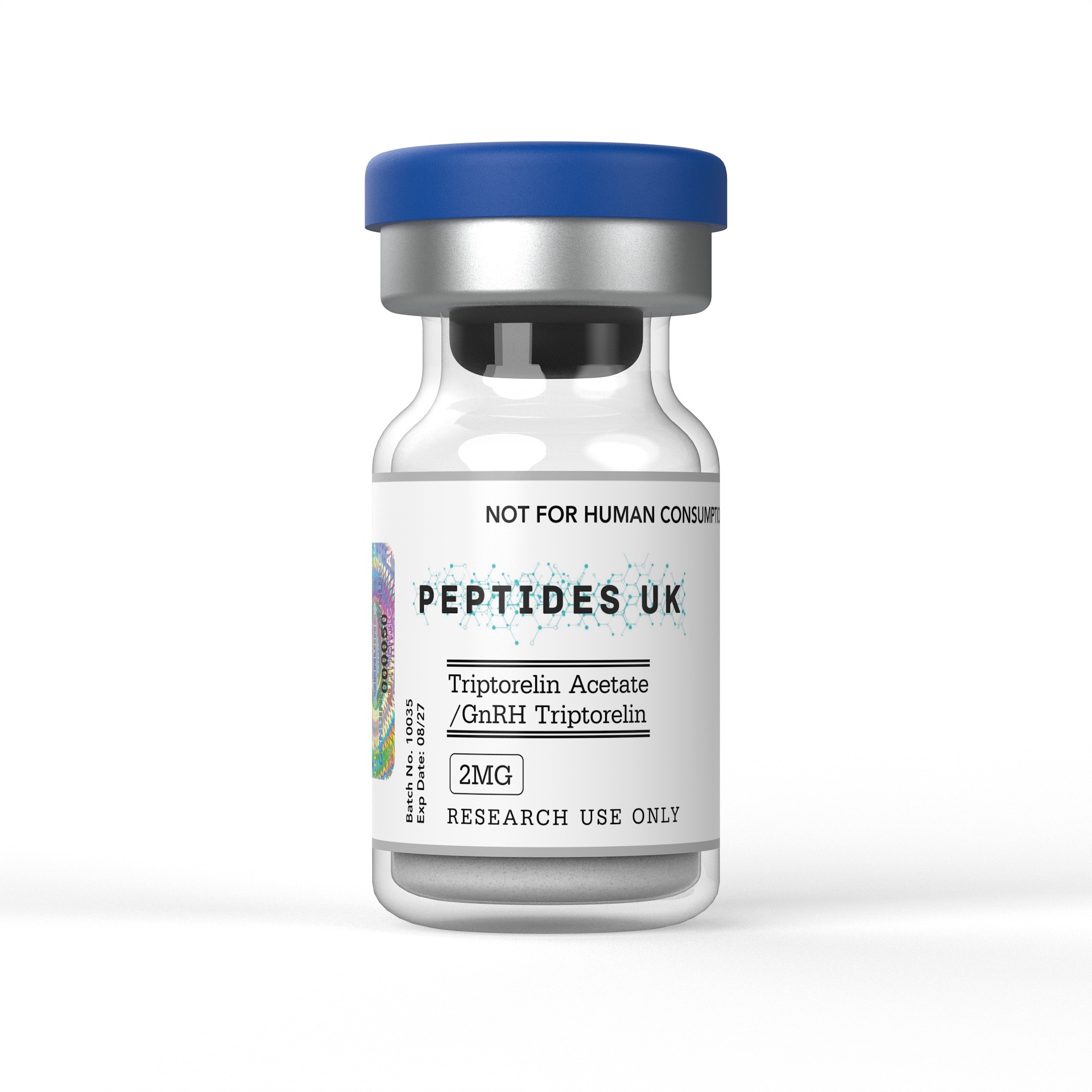
Triptorelin Ireland – Buy Online | In Stock & Ready to Ship
Buy Triptorelin in Ireland with fast shipping and guaranteed ≥99% purity — verified with COA and HPLC documentation. A trusted choice for peptides Ireland research teams rely on, with no customs delays or international wait times. Whether you’re searching for Triptorelin Ireland suppliers or looking to buy peptides Ireland-wide, we have you covered. Irish research teams can count on consistent stock, rapid fulfilment and full batch documentation every time.
For research use only. Not intended for human or veterinary use.



Triptorelin is a synthetic decapeptide analogue of gonadotropin-releasing hormone and one of the most potent and extensively characterised GnRH receptor agonist research peptides available to laboratories in Ireland — a ten amino acid superagonist of the hypothalamic neuropeptide GnRH/LHRH that binds the pituitary GnRH receptor with dramatically greater affinity and prolonged receptor occupancy compared to the native decapeptide, initially producing a transient surge in luteinising hormone and follicle-stimulating hormone secretion before driving sustained GnRH receptor downregulation and desensitisation that suppresses pituitary gonadotropin release and consequently ablates gonadal sex steroid production, making it a uniquely powerful research tool for studying GnRH receptor pharmacology, hypothalamic-pituitary-gonadal axis biology, sex steroid suppression mechanisms, gonadotropin secretion dynamics, reproductive endocrinology, and the receptor desensitisation and downregulation biology of G-protein coupled receptor systems more broadly. Researchers and institutions across Ireland can source verified, research-grade Triptorelin directly from our Irish peptide supply, with domestic-speed dispatch and complete batch documentation.
✅ ≥99% Purity — HPLC & Mass Spectrometry Verified
✅ Batch-Specific Certificate of Analysis (CoA) Included
✅ Sterile Lyophilised Powder | GMP Manufactured
✅ Fast Dispatch to Ireland | Peptides Ireland Stock
Triptorelin — [D-Trp⁶]-LHRH, formally designated as 5-oxo-L-prolyl-L-histidyl-L-tryptophyl-L-seryl-L-tyrosyl-D-tryptophyl-L-leucyl-L-arginyl-L-prolyl-glycinamide — is a synthetic analogue of gonadotropin-releasing hormone (GnRH, also designated luteinising hormone-releasing hormone, LHRH) in which the naturally occurring L-glycine at position 6 of the native GnRH decapeptide sequence has been substituted with D-tryptophan. This single D-amino acid substitution at position 6 — the critical modification that transforms native GnRH into a superagonist — confers dramatically enhanced metabolic stability against the endopeptidases that rapidly cleave native GnRH between positions 5-6 and 9-10, produces a conformational change in the peptide backbone that dramatically increases GnRH receptor binding affinity relative to the native sequence, and extends receptor occupancy duration from the seconds-to-minutes timescale of native GnRH to hours — transforming the natural pulsatile hypothalamic signal into a sustained, high-affinity receptor occupancy that the pituitary GnRH receptor system cannot physiologically accommodate.
To understand triptorelin’s research mechanism and its biological consequences, the normal physiology of the hypothalamic-pituitary-gonadal (HPG) axis must be understood. GnRH is produced in hypothalamic neurons and released in precise pulses into the hypothalamo-hypophyseal portal blood system — with the pulsatile pattern of GnRH release being absolutely essential for normal gonadotropin secretion. Each GnRH pulse — occurring approximately every 60–120 minutes in adult humans — stimulates gonadotrope cells of the anterior pituitary to release LH and FSH pulses through GnRH receptor-coupled Gq protein activation, IP3-mediated intracellular calcium mobilisation, and regulated exocytosis of LH and FSH from secretory granules. This pulsatile LH and FSH secretion drives gonadal steroidogenesis and gametogenesis — LH stimulating Leydig cell testosterone production in males and theca cell androgen production and ovulation in females, FSH driving Sertoli cell-dependent spermatogenesis in males and granulosa cell-dependent folliculogenesis in females.
The fundamental paradox of GnRH superagonist pharmacology — and the most scientifically important property of triptorelin as a research tool — is that sustained, continuous GnRH receptor stimulation produces the opposite gonadotropin response to pulsatile stimulation. When triptorelin occupies GnRH receptors continuously rather than in pulses, gonadotrope cells initially respond with an acute LH and FSH surge — the flare effect reflecting the cell’s initial response to receptor activation — but then undergo a complex receptor desensitisation and downregulation process characterised by GnRH receptor uncoupling from Gq signalling, receptor internalisation and lysosomal degradation, reduction in GnRH receptor gene expression, and post-receptor signalling desensitisation that collectively suppress pituitary responsiveness to GnRH stimulation. The net biological consequence is paradoxical pharmacological castration through overstimulation — sustained triptorelin receptor occupancy produces profound suppression of LH and FSH secretion and consequent ablation of gonadal sex steroid production, despite triptorelin being a receptor agonist rather than antagonist.
This receptor biology — the GnRH receptor’s absolute dependence on pulsatile stimulation for sustained gonadotropin secretion, and the desensitisation and downregulation triggered by continuous stimulation — is one of the most important and extensively studied phenomena in G-protein coupled receptor pharmacology, and triptorelin provides the research tool for studying this biology with greater potency, stability, and receptor affinity than native GnRH allows.
In controlled laboratory and pre-clinical settings, triptorelin is studied across a range of GnRH receptor pharmacology, HPG axis biology, reproductive endocrinology, sex steroid suppression, and GPCR desensitisation research applications:
GnRH Receptor Pharmacology Research — Triptorelin’s primary research application is as a high-affinity GnRH receptor agonist for studying GnRH receptor biology — with research examining binding kinetics and affinity at the GnRH receptor, the conformational changes induced by superagonist versus native GnRH binding, the downstream Gq/IP3/calcium signalling cascade activated by GnRH receptor engagement, and the structural determinants of the GnRH receptor-ligand interaction that distinguish superagonist from native peptide pharmacology. These receptor pharmacology studies have contributed to fundamental understanding of GnRH receptor structure-function relationships and the molecular basis of superagonist activity at peptide GPCRs.
HPG Axis Biology and Gonadotropin Secretion Research — Triptorelin provides a pharmacological tool for studying the hypothalamic-pituitary-gonadal axis at the pituitary level — enabling researchers to examine how sustained versus pulsatile GnRH receptor stimulation produces distinct gonadotropin secretion patterns, how LH and FSH secretion dynamics respond to different GnRH receptor occupancy profiles, and how HPG axis feedback regulation by gonadal steroids interacts with GnRH receptor-level pharmacology. These HPG axis biology studies have contributed to fundamental understanding of the neuroendocrine regulation of reproductive function.
GnRH Receptor Desensitisation and Downregulation Research — The paradoxical suppression of gonadotropin secretion by sustained GnRH receptor stimulation — through receptor uncoupling, internalisation, and downregulation — is one of the most important phenomena in GPCR pharmacology, and triptorelin’s sustained receptor occupancy makes it the primary research tool for studying this biology. Research has characterised the molecular mechanisms of GnRH receptor desensitisation — the temporal sequence of Gq uncoupling, receptor phosphorylation, beta-arrestin recruitment, receptor internalisation through clathrin-coated pits, endosomal sorting, and receptor downregulation — contributing to both specific understanding of GnRH receptor biology and general understanding of GPCR desensitisation mechanisms.
Flare Effect and Initial Gonadotropin Surge Research — The initial LH and FSH surge — the flare effect — produced by triptorelin before desensitisation is established has been studied as a research model for acute GnRH receptor-driven gonadotropin secretion. Research has characterised the amplitude, duration, and hormonal consequences of the triptorelin-induced flare — documenting the transient testosterone surge in males and oestradiol surge in females that accompanies the initial LH surge — and has examined the gonadotrope cell biology underlying the transition from initial stimulation to subsequent desensitisation. These flare effect studies have contributed to understanding of how gonadotrope cells respond to high-affinity sustained GnRH receptor activation before desensitisation is established.
Sex Steroid Suppression Biology Research — Triptorelin-driven castrate-level sex steroid suppression through HPG axis desensitisation provides a research model for studying the biology of profound gonadal steroid deprivation — enabling research into how testosterone and oestrogen withdrawal influences androgen receptor and oestrogen receptor biology, gene expression programmes dependent on sex steroid signalling, and tissue-level responses to sex steroid deprivation across multiple tissues including prostate, breast, bone, muscle, adipose, and brain. These sex steroid suppression studies have contributed to understanding of how gonadal steroids maintain tissue function and what biological consequences their withdrawal produces.
Testosterone Suppression and Androgen Deprivation Research — Triptorelin’s capacity to suppress testosterone to castrate levels in male pre-clinical models makes it a research tool for studying androgen deprivation biology — including the molecular and cellular responses of androgen receptor-expressing tissues to testosterone withdrawal, the adaptation of prostate cancer cells to androgen deprivation through androgen receptor splice variant upregulation and ligand-independent AR activation, and the systemic consequences of testosterone deprivation on muscle mass, bone density, metabolic parameters, and cardiovascular biology. These androgen deprivation biology studies have contributed to understanding of testosterone’s physiological roles across multiple tissue types.
Prostate Biology and Castration Research Models — Triptorelin is used to create castrate testosterone levels in prostate biology research — providing a pharmacological alternative to surgical castration for establishing androgen deprivation conditions in pre-clinical prostate biology models. Research has used triptorelin-induced testosterone suppression to study prostate gland biology under androgen deprivation, prostate cancer cell behaviour in low-androgen environments, and the molecular mechanisms of castration-resistant adaptation that cancer cells develop during prolonged androgen deprivation. These prostate biology studies have contributed to fundamental understanding of androgen-dependent prostate biology and the biology of castration resistance.
Reproductive Endocrinology and Ovarian Biology Research — Triptorelin’s effects on the female HPG axis have been studied in reproductive endocrinology research — with studies examining how GnRH receptor desensitisation suppresses FSH-driven folliculogenesis and LH-driven ovulation, how ovarian oestradiol and progesterone production responds to gonadotropin suppression, and how the ovarian cycle is regulated through GnRH receptor pharmacology. These reproductive endocrinology studies have contributed to understanding of how pulsatile GnRH signalling maintains ovarian cyclicity and the consequences of converting pulsatile to continuous GnRH receptor occupancy for female reproductive biology.
Precocious Puberty Biology Research — Triptorelin’s suppression of HPG axis activity has been studied in research contexts relevant to understanding puberty timing biology — with pre-clinical studies examining how GnRH receptor superagonist treatment during pre-pubertal development suppresses the pubertal HPG axis activation, influences gonadal development, and affects the maturation of sex steroid-dependent physiological processes. These puberty biology studies have contributed to understanding of how GnRH pulse frequency regulation gates pubertal onset and the consequences of pharmacological HPG axis suppression during developmental windows.
GPCR Biology and Signal Transduction Research — Beyond its specific GnRH receptor biology, triptorelin serves as a research tool for studying broader GPCR signal transduction mechanisms — with studies using the GnRH receptor system as a model for examining Gq-coupled receptor signalling, IP3-mediated calcium mobilisation, protein kinase C activation, GPCR phosphorylation by GRKs, beta-arrestin recruitment and signalling, and the cellular mechanisms of GPCR homologous desensitisation that operate across the broader GPCR superfamily. The GnRH receptor system has been particularly valuable for these GPCR biology studies because of its dramatic and reproducible desensitisation phenotype upon superagonist treatment.
Triptorelin has generated one of the most extensive research literatures of any GnRH analogue — spanning fundamental GnRH receptor pharmacology, HPG axis biology, reproductive endocrinology, androgen deprivation biology, and GPCR signal transduction research across decades of investigation.
Superagonist Mechanism Comprehensively Characterised — Research has comprehensively characterised triptorelin’s superagonist mechanism — documenting the dramatically enhanced GnRH receptor binding affinity conferred by the D-Trp⁶ substitution, the extended receptor occupancy relative to native GnRH, the initial stimulatory flare effect producing LH and FSH surges, and the subsequent desensitisation and downregulation of pituitary GnRH responsiveness that produces paradoxical gonadotropin suppression. Structural biology studies have characterised the receptor-bound conformation of triptorelin — establishing how the D-Trp⁶ modification influences peptide backbone conformation and receptor contact geometry — contributing to fundamental understanding of the structural basis of superagonist activity at GnRH receptors.
GnRH Receptor Desensitisation Mechanisms Established — Research using triptorelin as the primary pharmacological tool has comprehensively established the cellular mechanisms of GnRH receptor desensitisation — characterising the temporal sequence of receptor uncoupling from Gq signalling, GRK-mediated receptor phosphorylation, beta-arrestin-2 recruitment, receptor internalisation through clathrin-mediated endocytosis, endosomal sorting, and lysosomal degradation that collectively reduce pituitary GnRH responsiveness during sustained superagonist exposure. These desensitisation mechanism studies have contributed not only to specific understanding of GnRH receptor biology but to general mechanistic understanding of how Gq-coupled GPCRs undergo homologous desensitisation — establishing the GnRH receptor as a model system for GPCR desensitisation research.
HPG Axis Suppression Dose-Response Characterised — Research has characterised the dose-response relationship for triptorelin-mediated HPG axis suppression — documenting how different triptorelin doses and administration frequencies influence the magnitude and kinetics of LH, FSH, testosterone, and oestradiol suppression in pre-clinical and research models. These dose-response characterisation studies have established the pharmacological parameters required for sustained HPG axis suppression versus incomplete suppression — contributing to understanding of how GnRH receptor occupancy duration and magnitude determine the desensitisation response.
Castration-Level Testosterone Suppression Documented — Research has comprehensively documented triptorelin’s capacity to suppress testosterone to castrate levels through HPG axis desensitisation — confirming that sustained triptorelin administration produces profound testosterone suppression equivalent to surgical castration in pre-clinical models, with associated reductions in prostate gland size, seminal vesicle weight, and other androgen-dependent tissue parameters. These testosterone suppression findings have validated triptorelin as a pharmacological castration research tool and established the biological equivalence between surgical and GnRH superagonist-mediated testosterone suppression for pre-clinical research purposes.
Direct Extrapituitary GnRH Receptor Effects Characterised — Research has established that GnRH receptors are expressed not only in pituitary gonadotropes but in multiple extrapituitary tissues — including prostate epithelium, breast epithelium, ovarian granulosa cells, endometrial cells, and various cancer cell types — and that triptorelin can produce direct extrapituitary biological effects through these receptor populations independently of HPG axis-mediated sex steroid suppression. Studies have characterised direct pro-apoptotic and anti-proliferative effects of triptorelin in GnRH receptor-expressing cancer cell lines — contributing to understanding of extrapituitary GnRH receptor biology and the potential for direct receptor-mediated tissue effects distinct from indirect sex steroid suppression effects.
Pulsatile vs Continuous GnRH Signalling Biology Established — Research using triptorelin alongside pulsatile native GnRH administration has established the fundamental biological importance of GnRH pulse frequency for gonadotropin secretion — documenting that pulsatile GnRH receptor stimulation maintains LH and FSH secretion while continuous stimulation with triptorelin suppresses it, and characterising the intracellular signalling events that distinguish the gonadotrope cell response to pulsatile versus sustained receptor occupancy. These pulsatile signalling biology studies have been foundational for understanding how the hypothalamus uses pulse frequency modulation to encode different reproductive signals and how the pituitary decodes this frequency information through GPCR desensitisation biology.
Bone Biology Effects Under Sex Steroid Suppression Characterised — Research has examined the bone biology consequences of triptorelin-induced sex steroid suppression — documenting bone mineral density changes, alterations in bone turnover markers, and skeletal microarchitecture effects in pre-clinical models of prolonged HPG axis suppression. These bone biology studies have contributed to understanding of how sex steroids — particularly oestradiol in both sexes — maintain bone homeostasis, and how sex steroid deprivation through GnRH superagonist-mediated HPG axis suppression drives bone loss through uncoupled bone resorption and formation.
| Feature | Triptorelin | Leuprolide | Buserelin | Cetrorelix | Degarelix |
|---|---|---|---|---|---|
| Type | GnRH superagonist — D-Trp⁶ decapeptide | GnRH superagonist — D-Leu⁶ nonapeptide | GnRH superagonist — D-Ser(tBu)⁶ nonapeptide | GnRH antagonist — synthetic decapeptide | GnRH antagonist — synthetic decapeptide |
| Modification vs GnRH | D-Trp⁶ substitution | D-Leu⁶ + des-Gly¹⁰-NH-Et | D-Ser(tBu)⁶ + des-Gly¹⁰-NH-Et | Multiple D-amino acid substitutions | Multiple D-amino acid substitutions |
| Mechanism | GnRH receptor superagonist — initial stimulation then desensitisation | GnRH receptor superagonist — same mechanism | GnRH receptor superagonist — same mechanism | GnRH receptor competitive antagonist — no stimulation | GnRH receptor competitive antagonist — no stimulation |
| Initial Flare Effect | Yes — LH/FSH/testosterone surge before suppression | Yes | Yes | No — immediate suppression | No — immediate suppression |
| Testosterone Suppression | Castrate levels — after flare | Castrate levels — after flare | Castrate levels — after flare | Castrate levels — immediate | Castrate levels — immediate |
| GnRH Receptor Affinity | Very high — D-Trp⁶ | Very high | Very high | Very high — antagonist binding | Very high — antagonist binding |
| Research Application | GnRH receptor biology / HPG axis / desensitisation | HPG axis / testosterone suppression | HPG axis / testosterone suppression | GnRH receptor antagonism / immediate suppression | GnRH receptor antagonism / immediate suppression |
| Research Profile | Extensively studied | Extensively studied | Well-documented | Well-documented | Well-documented |
| Parameter | Detail |
|---|---|
| Name | Triptorelin |
| Formal Designation | [D-Trp⁶]-LHRH / [D-Trp⁶]-GnRH |
| Type | Synthetic GnRH Decapeptide Superagonist |
| Sequence | pGlu-His-Trp-Ser-Tyr-D-Trp-Leu-Arg-Pro-Gly-NH₂ |
| Key Modification | D-Tryptophan at position 6 — replaces native L-Glycine |
| Molecular Weight | 1311.5 Da |
| Receptor Target | GnRH receptor (GnRHR) — pituitary gonadotropes and extrapituitary |
| Mechanism | High-affinity GnRH receptor superagonist — initial stimulation then desensitisation/downregulation |
| HPG Axis Effect | Flare then sustained LH/FSH suppression → castrate sex steroids |
| Key Research Distinction | Most studied D-Trp⁶ GnRH superagonist — reference standard for HPG axis suppression research |
| Purity | ≥99% HPLC & MS Verified |
| Form | Sterile Lyophilised Powder |
| Solubility | Sterile water or bacteriostatic water — see reconstitution note |
| Storage (Powder) | -20°C, protect from light and moisture |
| Storage (Reconstituted) | 2–8°C — use within 14 days or aliquot at -80°C |
| Manufacturing | GMP Manufactured |
| Intended Use | Research use only |
Triptorelin reconstitutes readily in sterile water or bacteriostatic water. Bacteriostatic water is preferred when the reconstituted stock will be used across multiple experimental sessions — the benzyl alcohol preservative maintains sterility over the extended use period appropriate for pre-clinical research protocols examining sustained HPG axis suppression. Allow the vial to reach room temperature before opening. Add sterile or bacteriostatic water slowly down the inside wall of the vial and swirl gently — do not inject directly onto the lyophilised powder and do not vortex or shake vigorously. Triptorelin dissolves readily at research-relevant concentrations without requiring organic solvent or acidified water. Prepare a concentrated stock solution and dilute to working concentration in PBS or appropriate buffer as required by your research protocol. For in vivo pre-clinical HPG axis suppression research, preparation in bacteriostatic water at a concentration allowing accurate dosing volume is recommended. Store reconstituted stock in bacteriostatic water at 2–8°C for up to 14 days, or aliquot into single-use volumes in sterile water and store at -80°C for longer-term preservation. Avoid repeated freeze-thaw cycles to maintain peptide structural integrity and GnRH receptor binding activity across experimental sessions.
Every order of Triptorelin in Ireland includes:
✅ Batch-Specific Certificate of Analysis (CoA)
✅ HPLC Chromatogram
✅ Mass Spectrometry Confirmation
✅ Sterility & Endotoxin Testing Report
✅ Reconstitution Protocol
✅ Technical Research Support
Yes — we supply research-grade Triptorelin to researchers and institutions across Ireland with fast dispatch and full batch documentation. This compound is supplied strictly for laboratory research purposes only.
GnRH — gonadotropin-releasing hormone — is a decapeptide synthesised and secreted by specialised hypothalamic neurons in precisely timed pulses into the hypothalamo-hypophyseal portal circulation, where it acts on GnRH receptors expressed on anterior pituitary gonadotrope cells to stimulate the pulsatile secretion of luteinising hormone and follicle-stimulating hormone that drives gonadal sex steroid production and gametogenesis. The GnRH receptor is a Gq-coupled GPCR that is unique among GPCRs in lacking a cytoplasmic C-terminal tail — a structural feature with important implications for its desensitisation behaviour — and whose responsiveness to GnRH is absolutely dependent on the pulsatile rather than continuous nature of the hypothalamic signal. Triptorelin’s research significance is inseparable from GnRH receptor biology — it is the high-affinity, metabolically stable superagonist ligand that allows researchers to study GnRH receptor pharmacology, gonadotrope cell biology, and HPG axis regulation with greater precision and experimental control than native GnRH allows. The GnRH receptor’s dramatic and mechanistically well-characterised desensitisation response to superagonist treatment has made the triptorelin/GnRH receptor system one of the most studied GPCR desensitisation models in pharmacology.
The paradox of GnRH superagonist-mediated gonadotropin suppression — a receptor agonist producing biological suppression rather than stimulation — is the most scientifically important and counterintuitive aspect of triptorelin’s pharmacology, and understanding it requires appreciation of the GnRH receptor’s absolute dependence on pulsatile stimulation. Under physiological conditions, GnRH is released in discrete pulses every 60–120 minutes — each pulse briefly activates pituitary GnRH receptors and produces an LH and FSH secretory pulse before GnRH is cleared and receptors reset for the next pulse. This pulsatile pattern allows continuous gonadotropin secretion because receptors recover between pulses. When triptorelin occupies GnRH receptors continuously — due to its high affinity and resistance to proteolytic degradation — gonadotrope cells experience uninterrupted receptor stimulation that they cannot accommodate through normal pulsatile secretion biology. The initial response is the flare — an LH and FSH surge reflecting the cell’s initial response to high-affinity receptor activation. But sustained occupation triggers a cascade of desensitisation events — GRK-mediated receptor phosphorylation, beta-arrestin recruitment, receptor uncoupling from Gq signalling, receptor internalisation and lysosomal downregulation, and post-receptor signalling desensitisation — that collectively render gonadotrope cells unresponsive to GnRH stimulation. The net result is profound LH and FSH suppression and consequent castrate-level sex steroid suppression — paradoxical pharmacological castration achieved through receptor overstimulation rather than blockade.
The flare effect is the transient initial surge in LH, FSH, and gonadal sex steroids that occurs in the first days following triptorelin administration — before GnRH receptor desensitisation is established — reflecting the initial stimulatory response of gonadotrope cells to high-affinity GnRH receptor occupancy before the sustained stimulation drives desensitisation. In males, the flare produces a transient testosterone surge that can reach supraphysiological levels before castrate suppression is established over the following weeks. In females, the flare produces an oestradiol surge and can trigger ovulation. Research has studied the flare effect to characterise the initial stimulatory pharmacology of GnRH superagonists — examining the amplitude and duration of the LH and FSH surge, the gonadal steroid response to the gonadotropin flare, and the transition from initial stimulation to established desensitisation at the cellular and systems biology levels. The flare effect has been an important research model for studying acute GnRH receptor-driven gonadotropin secretion biology separately from the desensitisation biology that follows — and the temporal separation between flare and suppression provides a natural experimental window for examining both stimulatory and inhibitory GnRH receptor pharmacology within the same experimental protocol.
Triptorelin and GnRH antagonists such as cetrorelix and degarelix both ultimately suppress gonadotropin secretion and sex steroid production — but through mechanistically opposite pharmacological approaches that produce distinct temporal profiles and make them complementary rather than equivalent research tools. Triptorelin is a GnRH receptor agonist — it activates the receptor with high affinity, producing the initial stimulatory flare before desensitisation-mediated suppression is established over days to weeks. The suppression produced by triptorelin is indirect — a consequence of receptor desensitisation and downregulation driven by sustained receptor activation rather than receptor blockade. GnRH antagonists are competitive receptor blockers — they occupy the GnRH receptor without activating it, immediately preventing endogenous GnRH from binding and producing immediate gonadotropin and sex steroid suppression without any preceding flare. In research terms, this distinction is pharmacologically significant — triptorelin research addresses desensitisation biology, flare pharmacology, and the consequences of sustained receptor activation, while GnRH antagonist research addresses competitive receptor blockade biology and immediate suppression without desensitisation mechanisms. The two compound classes provide complementary tools for studying different aspects of GnRH receptor pharmacology and HPG axis biology.
GnRH receptors are expressed not only in pituitary gonadotropes but in a growing number of extrapituitary tissues — including prostate gland epithelium, breast ductal epithelium, ovarian granulosa and theca cells, endometrial epithelium, placenta, and various tumour cell types derived from GnRH receptor-expressing tissues. These extrapituitary GnRH receptors are thought to mediate direct autocrine and paracrine GnRH signalling in peripheral tissues — with locally produced GnRH acting on tissue GnRH receptors to regulate cell proliferation, apoptosis, and differentiation through signalling pathways that may differ from the Gq/IP3/calcium cascade that drives pituitary gonadotropin secretion. Research has documented direct anti-proliferative and pro-apoptotic effects of triptorelin in prostate cancer, breast cancer, and ovarian cancer cell lines through extrapituitary GnRH receptor activation — effects that are independent of HPG axis-mediated sex steroid suppression and represent direct receptor-mediated tissue biology. These extrapituitary receptor effects have expanded the research significance of triptorelin beyond HPG axis biology — establishing it as a research tool for studying direct GnRH receptor biology in peripheral tissues and cancer cell lines and contributing to understanding of how GnRH receptor signalling operates differently in pituitary and extrapituitary contexts.
Pre-clinical HPG axis suppression research using triptorelin typically employs either single dose or depot-mimicking repeated administration protocols designed to achieve and maintain castrate sex steroid levels in the research model for the duration of the experimental protocol. Research designs characterise the dose and administration frequency required to establish sustained LH, FSH, and sex steroid suppression in the specific pre-clinical model being used — with testosterone or oestradiol measurements confirming castrate-level suppression before downstream biology endpoints are examined. For androgen deprivation biology research, researchers document the time course of testosterone suppression following triptorelin administration, confirm castrate level achievement, and then examine androgen-dependent tissue biology parameters including prostate gland weight, seminal vesicle weight, androgen receptor expression and activity, and androgen-dependent gene expression changes that validate the androgenic suppression achieved. For reproductive endocrinology research, protocols may examine the effects of HPG axis suppression on ovarian, uterine, and gonadotrope biology across defined suppression periods. Research comparing triptorelin-induced pharmacological HPG axis suppression with surgical castration — as a pharmacological versus surgical testosterone deprivation comparison — has validated triptorelin as producing equivalent biological suppression, confirming its utility as a reversible pharmacological alternative to surgical castration in pre-clinical research contexts.
≥99% purity is strongly recommended for GnRH receptor pharmacology studies, HPG axis suppression research, gonadotropin secretion biology, GPCR desensitisation research, sex steroid suppression models, androgen deprivation biology, and in vivo pre-clinical reproductive endocrinology experiments — where compound purity directly determines the reliability of receptor binding measurements, gonadotropin suppression kinetics, and downstream sex steroid biology outcomes. Given triptorelin’s mechanism through specific high-affinity GnRH receptor interaction, peptide impurities could introduce confounding receptor binding signals in sensitive GnRH receptor pharmacology assays and influence the reproducibility of HPG axis suppression in pre-clinical in vivo models. All Triptorelin Ireland stock is independently verified to ≥99% purity by HPLC and mass spectrometry with identity confirmation.
Allow the vial to reach room temperature before opening. Add sterile water or bacteriostatic water slowly down the inside wall of the vial and swirl gently — do not inject directly onto the lyophilised powder and do not vortex or shake vigorously. Triptorelin dissolves readily at research-relevant concentrations. For multi-session research protocols examining sustained HPG axis suppression, bacteriostatic water is recommended to maintain sterility across the use period — store reconstituted bacteriostatic water stock at 2–8°C for up to 14 days. For single-session use or long-term storage, reconstitute in sterile water, aliquot into single-use volumes, and store at -80°C to preserve peptide structural integrity and GnRH receptor binding activity between experimental sessions. Prepare working dilutions in PBS or appropriate buffer as required by your research protocol. Avoid repeated freeze-thaw cycles and exposure to elevated temperatures to maintain consistent GnRH receptor binding activity and biological potency across experimental replicates.
Triptorelin is supplied exclusively for legitimate scientific research purposes conducted within licensed laboratory environments. This product is not intended for human consumption, self-administration, or any therapeutic application. It must be handled by qualified researchers in compliance with applicable Irish and EU regulations and institutional ethics guidelines. By purchasing, you confirm that this compound will be used solely for approved in vitro or pre-clinical research purposes.

WhatsApp us
Receive News
