PRODUCTS SOLD ON PEPTIDESLABIRELAND.COM ARE FOR RESEARCH PURPOSES ONLY AND ARE NOT FOR HUMAN OR VETERINARY USE.
€54.50
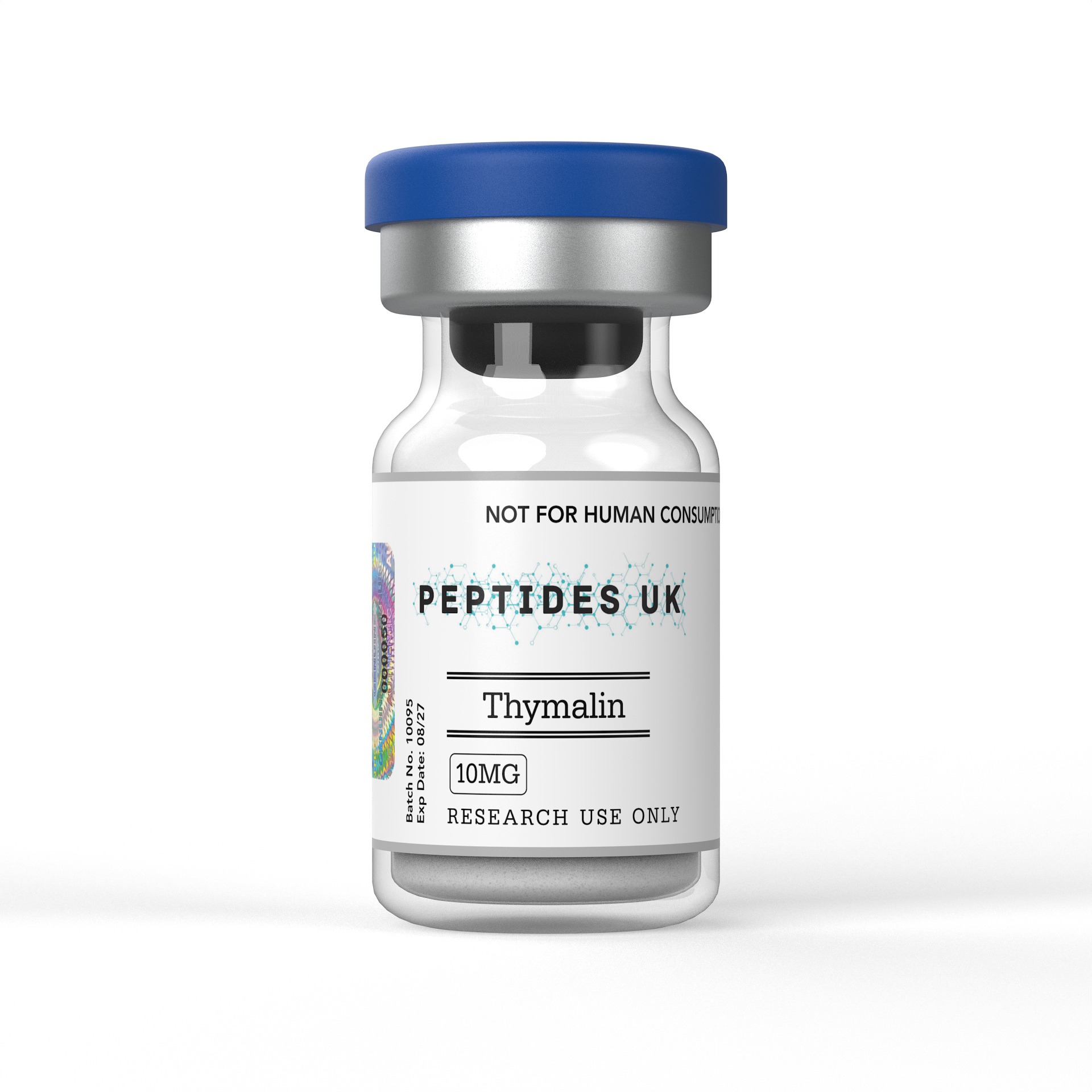
Thymalin Ireland – Buy Online | In Stock & Ready to Ship
Buy Thymalin in Ireland with fast shipping and guaranteed ≥99% purity — verified with COA and HPLC documentation. A trusted choice for peptides Ireland research teams rely on, with no customs delays or international wait times. Whether you’re searching for Thymalin Ireland suppliers or looking to buy peptides Ireland-wide, we have you covered. Irish research teams can count on consistent stock, rapid fulfilment and full batch documentation every time.
For research use only. Not intended for human or veterinary use.

Thymalin is a naturally derived thymic peptide preparation — one of the most extensively studied immunomodulatory and bioregulatory compounds in Eastern European gerontology and immunology research, with decades of pre-clinical and clinical data documenting immune restoration, thymic bioregulation, and longevity-relevant biological activity — available to buy in Ireland with fast dispatch and full batch documentation included.
Thymalin is a standardised polypeptide extract derived from the thymus glands of young calves — containing a defined mixture of low-molecular-weight thymic peptides that collectively restore and regulate immune function, promote T cell maturation, and modulate the broad biological programme of thymic bioregulation across immune, endocrine, and cellular homeostasis research contexts. Alongside Epithalon, Thymalin represents one of the two foundational compounds of Professor Vladimir Khavinson’s peptide bioregulator research programme — the most extensive systematic investigation of tissue-derived short peptides in longevity and healthy ageing science. Researchers and institutions across Ireland can source verified, research-grade Thymalin directly from our Irish peptide supply, with domestic-speed dispatch and complete batch documentation.
✅ ≥99% Purity — HPLC & Mass Spectrometry Verified
✅ Batch-Specific Certificate of Analysis (CoA) Included
✅ Sterile Lyophilised Powder | GMP Manufactured
✅ Fast Dispatch to Ireland | Peptides Ireland Stock
Thymalin is a standardised polypeptide preparation extracted from the thymus glands of young calves through a controlled extraction and purification process that yields a mixture of low-molecular-weight peptide fractions — all below 10,000 daltons — collectively representing the bioactive thymic peptide content responsible for the thymus gland’s immune regulatory and bioregulatory functions. It was developed as part of the systematic peptide bioregulator research programme initiated by Professor Vladimir Khavinson and colleagues at the St. Petersburg Institute of Bioregulation and Gerontology — the same research programme that produced Epithalon from pineal gland extract and a series of other organ-specific peptide bioregulators from thyroid, bone marrow, brain, and other tissues.
The fundamental scientific concept behind Thymalin and the broader peptide bioregulator framework is that organs and tissues produce short peptide signals — typically two to four amino acids in length — that regulate the gene expression and functional activity of the cells within those tissues and in related downstream target tissues. These peptide bioregulators are proposed to function as a tissue-specific regulatory language — maintaining cellular homeostasis, supporting organ function, and declining with age in ways that contribute to the progressive deterioration of tissue function associated with biological ageing. By restoring these peptide signals through exogenous administration, Thymalin and related bioregulators are studied for their ability to restore organ function, improve immune competence, and modify the trajectory of biological ageing in pre-clinical and clinical research models.
The thymus gland has particular significance in this bioregulator framework because of its central role in T cell maturation and the well-documented progressive involution of thymic tissue with age — a process that begins in early adulthood and results in a dramatic reduction in functional thymic tissue and T cell output by middle age, contributing substantially to the immunosenescence that characterises ageing immune biology. Thymalin’s thymus-derived peptide content is studied for its ability to restore and support thymic function — promoting T cell maturation, immune competence, and the broader bioregulatory role of the thymus in maintaining immune homeostasis across the lifespan.
In controlled laboratory, pre-clinical, and clinical research settings, Thymalin is studied across a broad range of immunology, ageing biology, endocrinology, and cellular bioregulation research applications:
Thymic Bioregulation Research — Thymalin’s most fundamental research application is the study of thymic bioregulation — how thymus-derived peptide signals regulate T cell maturation, thymic microenvironment biology, and the broader homeostatic functions of the thymus gland. Studies have examined how Thymalin affects thymic epithelial cell function, thymocyte development and selection, and the output of mature T cell populations from the thymus — establishing thymic biology as the foundational mechanistic framework of Thymalin research.
T Cell Maturation and Differentiation Research — Thymalin promotes T cell maturation from immature thymocyte precursors to functionally competent peripheral T cells — a process that is progressively impaired as thymic tissue involutes with age. Studies have examined how Thymalin supplementation affects the differentiation of T cell subsets — including CD4⁺ helper T cells, CD8⁺ cytotoxic T cells, and regulatory T cells — and how thymic peptide restoration affects the functional competence and repertoire diversity of peripheral T cell populations in pre-clinical immune biology models.
Immunosenescence and Immune Ageing Research — The age-related involution of the thymus — and the resulting decline in T cell output, T cell repertoire diversity, and adaptive immune competence that constitutes immunosenescence — is one of the most biologically significant aspects of immune ageing. Thymalin is studied as a research tool for investigating immunosenescence biology — examining how thymic peptide restoration affects the markers of immune ageing, including naive T cell numbers, T cell proliferative capacity, cytokine production profiles, and resistance to infection in aged pre-clinical models.
Immune Restoration Research — Studies have examined Thymalin’s ability to restore immune function in models of immune deficiency and suppression — including age-related immune decline, chemotherapy-induced immunosuppression, radiation-induced immune damage, and secondary immunodeficiency states. Research has documented improvements in T cell populations, lymphocyte functional responses, natural killer cell activity, and overall immune competence markers following Thymalin treatment in immunocompromised pre-clinical models.
Longevity and Lifespan Research — Thymalin has been studied in formal longevity research programmes — with long-term pre-clinical studies examining whether thymic peptide bioregulator treatment affects lifespan, age-related pathology burden, and biological age markers in treated versus control animals. This longevity research represents one of the most scientifically significant aspects of the Thymalin research literature — particularly studies examining Thymalin in combination with Epithalon and other peptide bioregulators in comprehensive anti-ageing research protocols.
Neuroendocrine Regulation Research — The thymus gland participates in a complex bidirectional communication with the neuroendocrine system — with thymic peptides affecting hypothalamic-pituitary axis function and neuroendocrine hormones in turn regulating thymic biology. Thymalin is used to study the thymic contribution to neuroendocrine regulation — examining how thymic peptide restoration affects hormone levels, hypothalamic function, and the neuroimmune interactions that connect immune and endocrine biology in pre-clinical models.
Antioxidant and Oxidative Stress Research — Studies have examined Thymalin’s effects on antioxidant defence systems in aged pre-clinical models — with research documenting improvements in antioxidant enzyme activity and reductions in oxidative stress markers following Thymalin treatment, contributing to the understanding of how thymic bioregulation connects to the oxidative stress biology that drives cellular ageing.
Tumour Biology and Cancer Immunosurveillance Research — Thymalin has been studied in pre-clinical cancer models — examining how restoration of immune competence through thymic peptide bioregulation affects tumour immunosurveillance, anti-tumour immune responses, and the incidence and progression of spontaneous tumours in aged pre-clinical models. This cancer immunosurveillance research reflects the fundamental connection between thymic function, T cell-mediated immunity, and the immune system’s ability to detect and eliminate abnormal cells.
Bone Marrow and Haematopoiesis Research — The thymus works in close coordination with bone marrow — receiving immature T cell precursors from bone marrow for thymic education and maturation. Studies have examined how Thymalin affects bone marrow output of T cell precursors, the coordination of thymic and bone marrow function in immune cell production, and the consequences of thymic peptide restoration for overall haematopoietic biology in pre-clinical models.
Peptide Bioregulator Combination Research — Thymalin is frequently studied in combination with other peptide bioregulators — particularly Epithalon — as part of comprehensive multi-organ bioregulator research protocols. Studies have examined how thymic and pineal peptide bioregulators interact in regulating immune function, neuroendocrine biology, and the biological ageing programme when administered together — contributing to the understanding of how organ-specific peptide signals cooperate in maintaining systemic homeostasis.
Metabolic and Endocrine Research — Studies have examined Thymalin’s effects on metabolic parameters and endocrine function in aged pre-clinical models — with research documenting influences on glucose metabolism, lipid profiles, and hormone levels — reflecting the broad systemic consequences of thymic bioregulation on the interconnected endocrine and metabolic systems that decline with age.
Infectious Disease Resistance Research — Pre-clinical studies have examined how Thymalin-driven immune restoration affects resistance to infectious challenge — with research examining whether improved T cell function and immune competence following Thymalin treatment translates into enhanced resistance to bacterial, viral, and fungal infection in immunocompromised pre-clinical models.
Thymalin has a substantial and long-standing research profile — concentrated in the Russian and Eastern European biogerontology literature — spanning pre-clinical mechanistic studies, animal longevity data, and clinical research programmes:
T Cell Restoration Consistently Documented — Pre-clinical and clinical studies have consistently documented Thymalin’s ability to restore T cell populations and improve T cell functional parameters — with research reporting increases in peripheral T cell numbers, improvements in T cell subset ratios, enhanced lymphocyte proliferative responses, and improved cytokine production profiles following Thymalin treatment in aged and immunocompromised research subjects.
Thymic Peptide Bioregulator Activity Confirmed — Research has confirmed that Thymalin’s low-molecular-weight peptide fractions exert direct regulatory effects on thymocyte development and thymic epithelial cell function — with studies examining gene expression changes, cell surface marker expression, and functional maturation of thymic cell populations following Thymalin treatment, establishing the molecular basis for its thymic bioregulation research profile.
Extended Lifespan in Pre-Clinical Longevity Studies — Long-term pre-clinical studies — particularly those conducted within the Khavinson group’s systematic bioregulator research programme — have reported increases in mean and maximum lifespan in Thymalin-treated animals compared to controls, with accompanying improvements in immune parameters, reductions in age-related pathology burden, and preservation of physiological function in treated animals. These lifespan findings are among the most cited results in the Thymalin research literature.
Enhanced Longevity Effects in Combination with Epithalon — Studies examining Thymalin in combination with Epithalon — the pineal peptide bioregulator — have reported greater improvements in longevity and biological age parameters than either compound alone — suggesting complementary and potentially synergistic effects of thymic and pineal bioregulation on the multiple biological processes that collectively determine the rate of biological ageing in pre-clinical models.
Reduced Tumour Incidence in Aged Models — Pre-clinical studies in aged rodent models with high spontaneous tumour rates have reported lower tumour incidence and delayed tumour onset in Thymalin-treated animals — consistent with restoration of anti-tumour immune competence through improved T cell function and natural killer cell activity — a finding that parallels similar data from Epithalon studies and reflects the immune surveillance contribution to cancer protection in aged organisms.
Clinical Research in Aged Patient Populations — Clinical studies examining Thymalin in aged patient populations have reported improvements in immune parameters — including T cell subset composition, lymphocyte functional responses, and markers of immune competence — alongside improvements in general health parameters and reductions in age-related disease incidence in treated cohorts compared to control groups, providing clinical translational context for the pre-clinical immunorestoration data.
Antioxidant Improvements in Aged Models — Studies have reported significant improvements in antioxidant enzyme activity and reductions in oxidative damage markers in aged pre-clinical models following Thymalin treatment — consistent with the proposed role of thymic bioregulation in modulating the oxidative stress biology that contributes to cellular ageing across multiple tissue types.
Neuroendocrine Restoration Documented — Research has documented Thymalin’s effects on neuroendocrine parameters in aged pre-clinical models — including improvements in hypothalamic function, pituitary hormone levels, and the neuroimmune signalling that connects thymic biology to broader hormonal regulation — supporting the proposed role of thymic peptides in maintaining neuroendocrine homeostasis through the ageing process.
| Feature | Thymalin | Thymosin Alpha-1 | Thymosin Beta-4 / TB-500 | Epithalon |
|---|---|---|---|---|
| Origin | Calf thymus polypeptide extract | Synthetic thymic peptide — prothymosin alpha fragment | Synthetic actin-sequestering peptide — ubiquitous | Synthetic pineal peptide — Epithalamin analogue |
| Type | Standardised polypeptide mixture | Single defined synthetic peptide | Single defined synthetic peptide | Single defined synthetic tetrapeptide |
| Primary Mechanism | Thymic bioregulation / T cell maturation / immune restoration | TLR2/9 / T cell and dendritic cell activation | Actin regulation / cell migration / tissue repair | Telomerase activation / pineal bioregulation |
| Immune Focus | Very High — thymic restoration primary | Very High — immune activation primary | Low — anti-inflammatory / repair focused | Moderate — immune modulation secondary |
| Longevity Research | Very High — formal lifespan studies | Moderate | Low | Very High — formal lifespan studies |
| Clinical Approval | Approved in Russia and Eastern Europe | Approved in 35+ countries (Thymalfasin) | No | No |
| Peptide Bioregulator Framework | Yes — foundational compound | No — single peptide pharmacology | No | Yes — foundational compound |
| Best Used For | Thymic bioregulation / immune ageing / longevity | Antiviral / cancer immunology / vaccine adjuvant | Tissue repair / angiogenesis / musculoskeletal | Telomere biology / pineal / cellular ageing |
| Combination Research | Yes — particularly with Epithalon | Limited combination data | Yes — repair peptide combinations | Yes — particularly with Thymalin |
Thymalin occupies a unique and irreplaceable position in immunological ageing research as the only thymus-derived polypeptide bioregulator with formal lifespan data, clinical approval in multiple countries, and an extensive research history within the systematic peptide bioregulator framework — providing a research tool that combines thymic immune restoration with the broader anti-ageing biology of organ-specific peptide bioregulation.
| Parameter | Detail |
|---|---|
| Name | Thymalin |
| Type | Standardised calf thymus polypeptide extract |
| Active Fraction | Low-molecular-weight thymic peptides (<10,000 Da) |
| Origin | Calf thymus gland — controlled extraction and purification |
| Supplied As | Sterile lyophilised powder — research grade |
| Primary Mechanism | Thymic bioregulation / T cell maturation / immune restoration |
| Key Research Areas | Immunology / immune ageing / longevity / thymic biology / neuroendocrine regulation |
| Clinical Status | Approved in Russia and Eastern Europe for clinical use |
| Purity | ≥99% HPLC & MS Verified |
| Form | Sterile Lyophilised Powder |
| Solubility | Sterile water, bacteriostatic water, PBS |
| Storage (Powder) | -20°C, protect from light |
| Storage (Reconstituted) | 2–8°C, use promptly or aliquot at -80°C |
| Manufacturing | GMP Manufactured |
Every order of Thymalin in Ireland includes:
✅ Batch-Specific Certificate of Analysis (CoA)
✅ HPLC Chromatogram
✅ Mass Spectrometry Confirmation
✅ Sterility & Endotoxin Testing Report
✅ Reconstitution Protocol
✅ Technical Research Support
Can I buy Thymalin in Ireland? Yes — we supply research-grade Thymalin to researchers and institutions across Ireland with fast dispatch and full batch documentation. This compound is supplied strictly for laboratory research purposes only.
What is Thymalin and how is it different from Thymosin Alpha-1? Thymalin is a standardised polypeptide extract from calf thymus glands — containing a mixture of low-molecular-weight thymic peptides that collectively exert thymic bioregulatory effects. Thymosin Alpha-1 is a single defined synthetic peptide — a specific 28-amino acid sequence derived from prothymosin alpha — with a precisely characterised mechanism of action through TLR2/TLR9 signalling and T cell activation. The key distinction is that Thymalin represents the broader thymic peptide bioregulator approach — providing the full spectrum of thymic peptide signals in a standardised mixture — while Thymosin Alpha-1 provides pharmacologically clean single-peptide immunostimulation through a defined receptor mechanism. Both target thymic immune biology but through different research paradigms — Thymalin within the peptide bioregulator framework, Thymosin Alpha-1 within single-peptide receptor pharmacology.
What is the peptide bioregulator research framework and how does Thymalin fit within it? The peptide bioregulator framework — developed primarily by Professor Vladimir Khavinson and colleagues at the St. Petersburg Institute of Bioregulation and Gerontology — proposes that organs and tissues produce short regulatory peptides that maintain cellular homeostasis and organ function, and that the age-related decline in these peptide signals contributes to progressive organ dysfunction and biological ageing. Thymalin represents the thymus component of this framework — providing the thymic peptide signals that support T cell maturation and immune function, which decline as the thymus involutes with age. Alongside Epithalon (pineal bioregulator) and other organ-specific preparations, Thymalin is studied as part of a systematic approach to restoring the peptide signalling environment of aged tissues towards that of younger biology.
Why is thymic involution significant in ageing and immune research? The thymus undergoes progressive structural and functional decline beginning in early adulthood — a process called thymic involution — in which functional thymic tissue is gradually replaced by fat and connective tissue, reducing the thymus’s capacity to mature and export new T cells into the peripheral immune compartment. By middle age, most individuals have lost the majority of their functional thymic tissue, and this reduced T cell output contributes directly to the decline in adaptive immune competence — reduced T cell repertoire diversity, impaired responses to new antigens, and greater susceptibility to infection and cancer — that characterises immune ageing. Thymalin is studied as a thymic bioregulator that supports residual thymic function and promotes T cell maturation in the context of this age-related involution process.
Has Thymalin been studied alongside Epithalon in research? Yes — one of the most significant aspects of the Thymalin research literature is its study in combination with Epithalon — the pineal peptide bioregulator. Studies examining combined thymic and pineal bioregulation have reported greater improvements in longevity, immune parameters, and biological age markers than either compound alone — suggesting complementary effects of thymic immune restoration and pineal melatonin-regulatory activity on the multiple biological pathways that collectively determine the rate of biological ageing. This combination research positions Thymalin and Epithalon as the two foundational compounds in the peptide bioregulator longevity research programme.
What clinical approval status does Thymalin have? Thymalin has received regulatory approval for clinical use in Russia and several Eastern European countries — where it has been used clinically for immune restoration, support in infectious disease, and as an adjunct in cancer treatment programmes. This clinical approval reflects decades of safety and efficacy data accumulated within the Russian and Eastern European medical research system and provides translational context for laboratory and pre-clinical research conducted with Thymalin, though the regulatory framework differs from Western European and Irish medical approval processes.
What purity is recommended for Thymalin research? ≥99% purity with confirmed thymic peptide content is strongly recommended for T cell biology studies, immunosenescence research, longevity models, and in vivo pre-clinical immunology research where compound quality and batch consistency directly affect biological activity and reproducibility. All Thymalin Ireland stock is independently verified to ≥99% with full batch documentation.
How do I reconstitute Thymalin for laboratory use? Allow the vial to reach room temperature before opening. Reconstitute in sterile water or bacteriostatic water by adding solvent slowly down the inside wall of the vial and swirling gently — do not shake. Thymalin’s low-molecular-weight peptide components dissolve readily in aqueous solution. Use promptly after reconstitution for cell-based and in vitro assays, or aliquot into single-use volumes and store at -80°C to preserve peptide stability and biological activity across multiple experimental uses. Avoid repeated freeze-thaw cycles.
Thymalin is supplied exclusively for legitimate scientific research purposes conducted within licensed laboratory environments. This product is not intended for human consumption, self-administration, or any therapeutic application. It must be handled by qualified researchers in compliance with applicable Irish and EU regulations and institutional ethics guidelines. By purchasing, you confirm that this compound will be used solely for approved in-vitro or pre-clinical research purposes.


WhatsApp us
Receive News
