
PRODUCTS SOLD ON PEPTIDESLABIRELAND.COM ARE FOR RESEARCH PURPOSES ONLY AND ARE NOT FOR HUMAN OR VETERINARY USE.
€113.00 – €343.50Price range: €113.00 through €343.50
SS-31 Ireland – Buy Online | In Stock & Ready to Ship
Buy SS-31 in Ireland with fast shipping and guaranteed ≥99% purity — verified with COA and HPLC documentation. A trusted choice for peptides Ireland research teams rely on, with no customs delays or international wait times. Whether you’re searching for SS-31 Ireland suppliers or looking to buy peptides Ireland-wide, we have you covered. Irish research teams can count on consistent stock, rapid fulfilment and full batch documentation every time.
For research use only. Not intended for human or veterinary use.


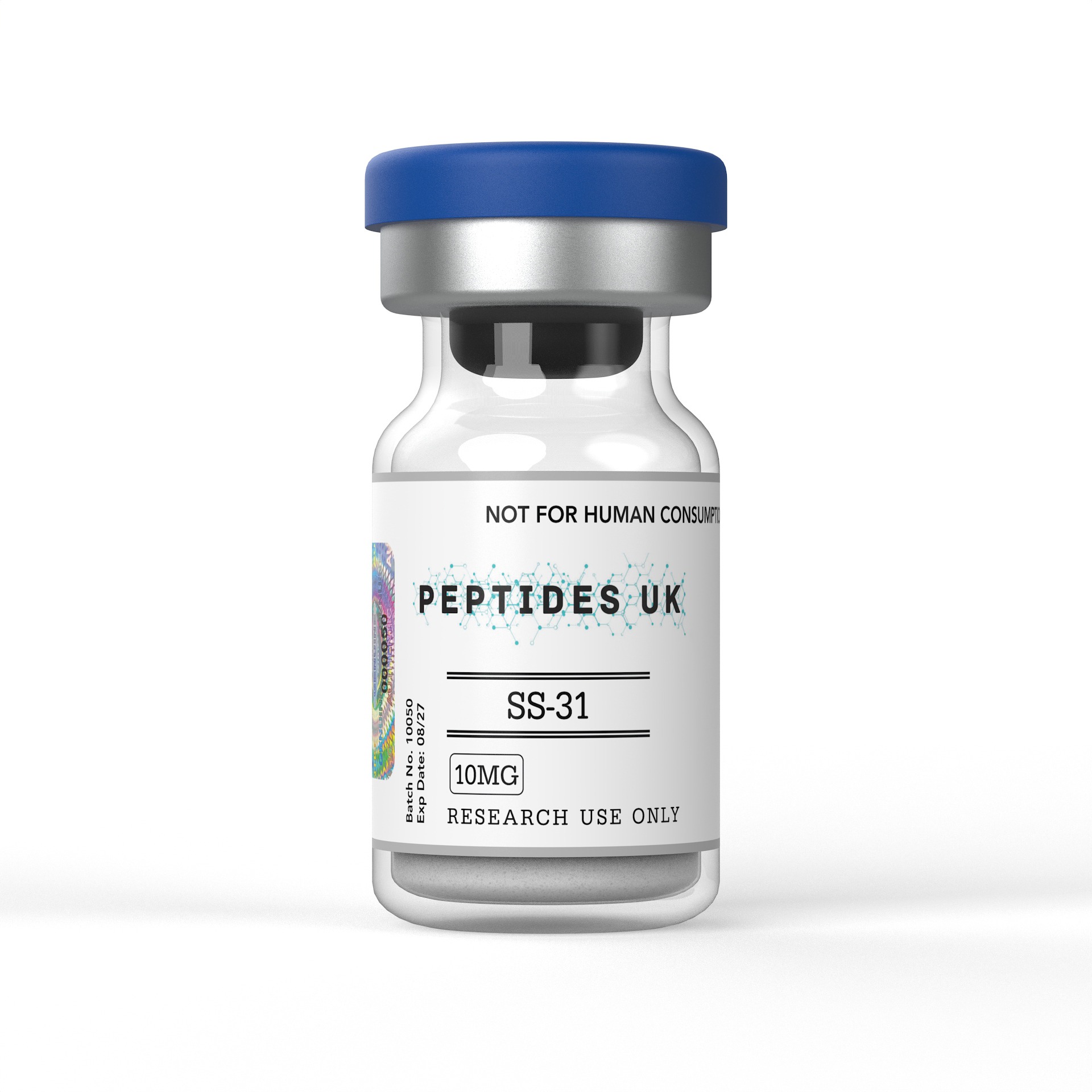
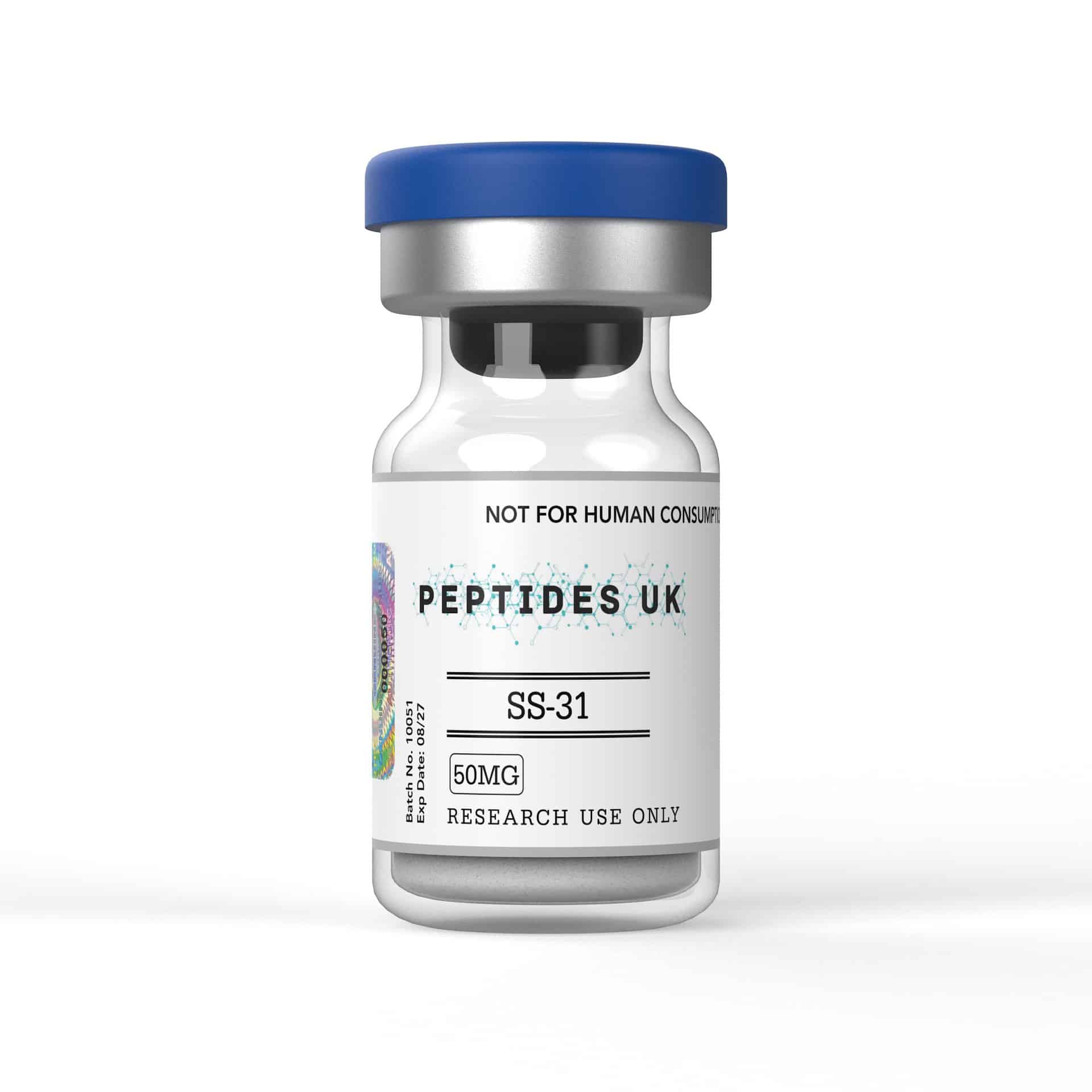
SS-31 — also designated Elamipretide, MTP-131, and Bendavia — is a synthetic tetrapeptide mitochondria-targeting peptide and one of the most mechanistically distinctive and extensively studied mitochondrial biology research compounds available to laboratories in Ireland — a cell-permeable aromatic-cationic tetrapeptide that selectively concentrates in the inner mitochondrial membrane through electrostatic and hydrophobic interactions with cardiolipin, stabilising cardiolipin-cytochrome c interactions, preserving electron transport chain integrity, reducing mitochondrial reactive oxygen species production, and maintaining mitochondrial membrane potential and ATP synthesis capacity under conditions of oxidative stress, ischaemia-reperfusion injury, and mitochondrial dysfunction, making it an indispensable research tool for studying cardiolipin biology and inner mitochondrial membrane organisation, electron transport chain complex assembly and supercomplex formation, mitochondrial reactive oxygen species generation and redox biology, ischaemia-reperfusion injury mechanisms and cardioprotection, mitochondrial dysfunction in ageing, heart failure, neurodegenerative disease, skeletal muscle wasting, and metabolic disease, and the emerging research biology of targeted mitochondrial membrane stabilisation as a strategy for protecting against diverse pathologies driven by mitochondrial dysfunction. Researchers and institutions across Ireland can source verified, research-grade SS-31 directly from our Irish peptide supply, with domestic-speed dispatch and complete batch documentation.
✅ ≥99% Purity — HPLC & Mass Spectrometry Verified
✅ Batch-Specific Certificate of Analysis (CoA) Included
✅ Sterile Lyophilised Powder | GMP Manufactured
✅ Fast Dispatch to Ireland | Peptides Ireland Stock
SS-31 — D-Arg-Dmt-Lys-Phe-NH2, where Dmt denotes 2′,6′-dimethyltyrosine — is a synthetic aromatic-cationic tetrapeptide developed by Hazel Szeto and Peter Schiller through the systematic characterisation of a class of alternating aromatic-cationic peptides that spontaneously accumulate in the inner mitochondrial membrane driven by the large negative mitochondrial membrane potential, achieving mitochondrial matrix-facing inner membrane concentrations several hundredfold greater than cytoplasmic concentrations without requiring a mitochondria-targeting sequence or active transport mechanism. The SS peptide class — Szeto-Schiller peptides — was identified through the observation that alternating aromatic and cationic amino acid residues produce amphipathic peptides with a unique capacity to penetrate cell membranes and concentrate selectively at the inner mitochondrial membrane — a property whose molecular basis involves electrostatic attraction of the cationic peptide to the highly negatively charged inner mitochondrial membrane combined with hydrophobic interaction of the aromatic residues with the lipid bilayer.
SS-31’s primary molecular target — cardiolipin — is a unique dimeric phospholipid exclusively synthesised in and confined to the inner mitochondrial membrane, where it plays essential structural and functional roles in organising electron transport chain complexes into higher-order supercomplexes, anchoring cytochrome c to the inner membrane surface, maintaining cristae curvature, supporting ATP synthase oligomerisation, and regulating the permeability transition pore. Cardiolipin is acutely sensitive to oxidative damage — its four polyunsaturated acyl chains make it the primary phospholipid peroxidation target in mitochondria under oxidative stress conditions — and cardiolipin oxidation produces a cascade of mitochondrial dysfunction including electron transport chain complex dissociation, cytochrome c release from the inner membrane into the intermembrane space, reduced ATP synthesis, increased superoxide generation, and ultimately mitochondrial outer membrane permeabilisation and apoptotic signalling. SS-31 binds cardiolipin through its aromatic Dmt and Phe residues interacting with the lipid acyl chains and its cationic D-Arg and Lys residues interacting with the phosphate headgroups — stabilising cardiolipin structure, protecting against cardiolipin peroxidation, maintaining cytochrome c-cardiolipin interaction, and preserving the structural organisation of electron transport chain supercomplexes under oxidative stress conditions.
The D-Arg residue at the N-terminus of SS-31 confers resistance to aminopeptidase degradation — D-amino acids are not substrates for mammalian aminopeptidases — while the overall tetrapeptide length and alternating aromatic-cationic sequence are critical determinants of membrane permeability, inner mitochondrial membrane targeting, and cardiolipin binding selectivity. The 2′,6′-dimethyltyrosine (Dmt) residue — a non-standard tyrosine analogue with methyl groups at the 2′ and 6′ positions of the phenolic ring — provides enhanced aromatic stacking interactions with cardiolipin acyl chains, greater metabolic stability than natural tyrosine, and antioxidant activity through electron donation from the phenolic hydroxyl group that directly scavenges reactive oxygen species at the inner mitochondrial membrane surface.
In controlled laboratory and pre-clinical settings, SS-31 is studied across cardiolipin biology, electron transport chain research, ischaemia-reperfusion injury, heart failure, ageing biology, neurodegenerative disease, skeletal muscle research, and mitochondrial dysfunction disease model applications:
SS-31 is the primary research tool for studying cardiolipin-dependent inner mitochondrial membrane biology — enabling pharmacological manipulation of cardiolipin interactions with cytochrome c, electron transport chain complexes, and ATP synthase to characterise how cardiolipin structural integrity governs mitochondrial function. Research has used SS-31 to examine how cardiolipin peroxidation disrupts electron transport chain supercomplex assembly — characterising the structural and functional consequences of cardiolipin oxidation on Complex I-III-IV supercomplex formation and how SS-31’s cardiolipin-stabilising activity restores supercomplex integrity. Studies have examined SS-31’s effects on cristae morphology — the inner membrane invaginations whose curvature is cardiolipin-dependent and whose disruption impairs electron transport chain efficiency — contributing to understanding of how cardiolipin biology governs mitochondrial ultrastructure.
SS-31’s stabilisation of cardiolipin-electron transport chain complex interactions produces measurable improvements in electron transport chain efficiency — with research characterising increased Complex I, II, III, and IV activities, improved electron flux through the respiratory chain, enhanced mitochondrial membrane potential, and increased ATP synthesis rates in SS-31-treated mitochondria under oxidative stress conditions. Studies have used SS-31 to characterise how cardiolipin-dependent electron transport chain supercomplex assembly contributes to respiratory efficiency — examining whether SS-31-induced supercomplex stabilisation reduces electron leak, decreases superoxide generation at Complex I and III, and improves the thermodynamic efficiency of oxidative phosphorylation. These bioenergetics studies have established SS-31 as a research tool for studying the relationship between inner mitochondrial membrane lipid composition and electron transport chain function.
SS-31’s reduction of mitochondrial ROS production operates through two complementary mechanisms — prevention of cardiolipin peroxidation that would otherwise generate lipid peroxide radicals serving as substrates for further ROS amplification, and direct antioxidant activity of the Dmt residue’s phenolic hydroxyl group at the inner membrane surface. Research has characterised SS-31’s effects on mitochondrial superoxide generation, hydrogen peroxide production, and lipid peroxidation in isolated mitochondria and intact cell models — examining how cardiolipin stabilisation reduces electron leak at Complex I and III that is the primary source of mitochondrial superoxide. These redox biology studies have established SS-31 as a research tool for studying the relationship between cardiolipin integrity, electron transport chain electron leak, and mitochondrial ROS generation.
Cardiac ischaemia-reperfusion injury is characterised by a burst of mitochondrial ROS generation and cardiolipin peroxidation at the moment of reperfusion — producing rapid electron transport chain dysfunction, mitochondrial permeability transition pore opening, cytochrome c release, and cardiomyocyte death. SS-31’s cardiolipin-stabilising and ROS-scavenging activity makes it a research tool for studying the mitochondrial mechanisms of ischaemia-reperfusion injury and cardioprotection — with research documenting SS-31’s reduction of infarct size, preservation of mitochondrial function, inhibition of permeability transition pore opening, and improvement of post-ischaemic cardiac functional recovery in rodent and large animal cardiac ischaemia-reperfusion models. These cardioprotection studies have established SS-31 as the reference mitochondria-targeted cardioprotective peptide and contributed to understanding of cardiolipin peroxidation as a primary pathological event in reperfusion injury.
Chronic heart failure is associated with progressive mitochondrial dysfunction — characterised by reduced electron transport chain complex activities, impaired ATP synthesis, increased mitochondrial ROS production, and cardiolipin remodelling — that contributes to the energetic insufficiency and oxidative stress driving cardiomyocyte dysfunction and death. Research has used SS-31 in pressure overload, myocardial infarction, and volume overload heart failure models to characterise how mitochondrial cardiolipin stabilisation influences the progression of cardiac dysfunction — examining improvements in cardiac energetics, reduction of oxidative stress markers, preservation of mitochondrial ultrastructure, and attenuation of cardiac remodelling in SS-31-treated heart failure animals. These heart failure studies have established SS-31 as a research tool for studying the mitochondrial biology of heart failure progression and the therapeutic potential of mitochondrial membrane stabilisation.
Mitochondrial dysfunction — characterised by accumulated cardiolipin oxidation, electron transport chain complex activity decline, increased ROS generation, and impaired ATP synthesis — is a fundamental feature of biological ageing across multiple tissues. Research has used SS-31 in aged animal models to characterise the contribution of cardiolipin oxidation to age-associated mitochondrial dysfunction — examining whether SS-31’s cardiolipin-stabilising activity reverses or attenuates the mitochondrial functional decline associated with normal ageing in heart, skeletal muscle, kidney, and brain. Studies have examined SS-31’s effects on lifespan and healthspan endpoints in aged rodent models — contributing to understanding of whether mitochondrial membrane stabilisation can modify the trajectory of age-associated organ dysfunction.
Mitochondrial dysfunction and cardiolipin peroxidation have been characterised as early and potentially causative events in multiple neurodegenerative diseases — including Alzheimer’s disease, Parkinson’s disease, and ALS — where neuronal energy demand is high and neurons are particularly vulnerable to mitochondrial dysfunction. Research has used SS-31 in neurodegenerative disease models — examining neuroprotection in rotenone and MPTP Parkinson’s models, amyloid beta and tau-induced mitochondrial dysfunction in Alzheimer’s models, and motor neuron mitochondrial biology in ALS models. Studies have characterised SS-31’s effects on neuronal mitochondrial function, oxidative stress, and survival — establishing mitochondrial membrane stabilisation as a neuroprotective strategy relevant to multiple neurodegenerative disease contexts.
Skeletal muscle atrophy — whether from ageing, disuse, denervation, or cachexia — is associated with mitochondrial dysfunction including reduced oxidative phosphorylation capacity, increased mitochondrial ROS, and impaired mitochondrial biogenesis. Research has used SS-31 in skeletal muscle atrophy models to characterise the contribution of mitochondrial dysfunction to muscle wasting biology — examining whether SS-31’s mitochondrial protective effects attenuate atrophy, preserve muscle fibre oxidative capacity, and reduce mitochondrial ROS-driven protein degradation. These studies have established SS-31 as a research tool for studying the mitochondrial biology of muscle wasting and the potential of mitochondrial membrane stabilisation for preserving muscle mass and function.
The kidney is highly dependent on mitochondrial oxidative phosphorylation for its energetic demands — making renal tubular cells particularly vulnerable to mitochondrial dysfunction during ischaemia, nephrotoxin exposure, and sepsis. Research has used SS-31 in acute kidney injury models — including renal ischaemia-reperfusion, cisplatin nephrotoxicity, and sepsis-associated kidney injury — characterising mitochondrial protective effects, reduction of tubular cell death, preservation of renal function, and attenuation of inflammatory responses in SS-31-treated animals. These renal biology studies have established SS-31 as a research tool for studying mitochondrial mechanisms of acute kidney injury across multiple aetiologies.
Research has characterised SS-31’s selective accumulation at the inner mitochondrial membrane — documenting hundredfold concentration ratios between inner mitochondrial membrane and cytoplasmic compartments, establishing the electrostatic and hydrophobic mechanisms governing inner membrane targeting, and confirming cardiolipin as the primary molecular interaction partner through lipid binding assays and competitive displacement studies. These membrane targeting studies established the mechanistic basis for SS-31’s mitochondria-selective biology and provided the foundation for understanding why a cell-permeable tetrapeptide produces organelle-specific effects.
Research has documented SS-31’s stabilisation of cardiolipin-cytochrome c interactions — characterising reduced cytochrome c release from cardiolipin under oxidative stress conditions, preserved peroxidase activity inhibition, and maintained electron transport chain electron transfer from Complex III to Complex IV through cardiolipin-anchored cytochrome c in SS-31-treated mitochondria. These cardiolipin biology studies established the primary molecular mechanism through which SS-31 preserves electron transport chain function.
Research has documented SS-31’s preservation of electron transport chain supercomplex integrity under oxidative stress — using blue native PAGE and electron microscopy to characterise maintained Complex I-III-IV supercomplex assembly in SS-31-treated mitochondria following oxidative challenge, compared with supercomplex dissociation in untreated controls. These supercomplex studies established cardiolipin stabilisation as a mechanism for preserving the structural organisation of the electron transport chain that is essential for efficient oxidative phosphorylation.
Research has documented significant infarct size reductions — typically 30–50% — following SS-31 administration in rodent and large animal cardiac ischaemia-reperfusion models, with studies characterising improved post-ischaemic left ventricular function, reduced cardiomyocyte death, and preserved mitochondrial ultrastructure in SS-31-treated hearts. These cardioprotection studies established SS-31 as one of the most effective mitochondria-targeted cardioprotective compounds in pre-clinical research.
Research has documented SS-31’s attenuation of age-associated mitochondrial dysfunction in multiple tissues — characterising improved electron transport chain complex activities, reduced mitochondrial ROS, preserved cardiolipin content, and improved mitochondrial morphology in aged animal tissues following SS-31 treatment. These ageing biology studies established that cardiolipin oxidation is a reversible contributor to age-associated mitochondrial decline and that mitochondrial membrane stabilisation can improve mitochondrial function in aged tissues.
Research has documented SS-31’s improvement of skeletal muscle mitochondrial function and exercise capacity in aged and disease model animals — characterising increased mitochondrial respiration, improved exercise tolerance, and reduced fatigue in SS-31-treated animals relative to untreated controls. These skeletal muscle studies established the translational potential of mitochondrial cardiolipin stabilisation for age-associated and disease-associated muscle functional decline.
Clinical research has examined SS-31 (Elamipretide) in cardiac surgery, heart failure, and renal ischaemia contexts — with studies documenting mitochondrial biomarker improvements and functional endpoints in human subjects. These clinical studies provided translational validation of SS-31’s mitochondrial protective biology in humans and established Elamipretide as a clinically investigated mitochondria-targeted compound with a characterised human safety and pharmacodynamic profile.
| Feature | SS-31 (Elamipretide) | MitoQ | SkQ1 | Cyclosporin A | SS-20 |
|---|---|---|---|---|---|
| Type | Aromatic-cationic tetrapeptide — cardiolipin-targeted | Mitochondria-targeted ubiquinone — TPP+ conjugate | Mitochondria-targeted plastoquinone — TPP+ conjugate | Cyclic undecapeptide — cyclophilin D inhibitor | Aromatic-cationic tetrapeptide — SS peptide family member |
| Mitochondrial Targeting Mechanism | Electrostatic + hydrophobic — inner membrane cardiolipin binding | Triphenylphosphonium cation — membrane potential-driven accumulation | Triphenylphosphonium cation — membrane potential-driven | Cyclophilin D binding — matrix protein | Electrostatic + hydrophobic — inner membrane targeting |
| Primary Molecular Target | Cardiolipin — inner mitochondrial membrane phospholipid | Ubiquinone redox cycling — electron transport chain | Plastoquinone redox cycling | Cyclophilin D — permeability transition pore regulator | Inner mitochondrial membrane — cardiolipin interaction |
| Primary Mechanism | Cardiolipin stabilisation → electron transport chain supercomplex preservation → reduced ROS + preserved ATP synthesis | Antioxidant electron cycling at Complex I/III — reduces superoxide | Antioxidant electron cycling — plastoquinone | mPTP opening inhibition through cyclophilin D inhibition | Inner membrane antioxidant — less cardiolipin-specific than SS-31 |
| ROS Reduction | Yes — cardiolipin peroxidation prevention + Dmt direct antioxidant | Yes — ubiquinone redox antioxidant | Yes — plastoquinone antioxidant | Limited direct ROS reduction | Yes |
| mPTP Inhibition | Yes — indirect through cardiolipin stabilisation | Limited | Limited | Yes — primary mechanism | Yes — indirect |
| Membrane Potential Dependence | Partial — electrostatic targeting partially membrane potential dependent | High — TPP+ accumulation fully membrane potential driven | High — TPP+ driven | None — matrix protein target | Partial |
| Cardiolipin Specificity | High — primary molecular interaction | Low — ubiquinone not cardiolipin specific | Low | None | Moderate |
| Research Profile | Extensively studied — reference cardiolipin-targeted peptide | Extensively studied — reference mitochondria-targeted antioxidant | Well-documented | Extensively studied | Well-documented |
| Parameter | Detail |
|---|---|
| Name | SS-31 |
| Also Designated | Elamipretide / MTP-131 / Bendavia / D-Arg-Dmt-Lys-Phe-NH2 |
| Type | Synthetic Aromatic-Cationic Tetrapeptide — Mitochondria-Targeted Cardiolipin Stabiliser — Research Grade |
| Sequence | D-Arg-Dmt-Lys-Phe-NH2 — where Dmt = 2′,6′-dimethyltyrosine |
| Molecular Weight | 639.8 Da |
| Mechanism | Cell-permeable inner mitochondrial membrane accumulation via electrostatic and hydrophobic interactions → cardiolipin binding and stabilisation → cytochrome c-cardiolipin interaction preservation → electron transport chain supercomplex maintenance → reduced mitochondrial ROS + preserved membrane potential + maintained ATP synthesis |
| Primary Molecular Target | Cardiolipin — inner mitochondrial membrane — stabilises cardiolipin-cytochrome c interaction and ETC supercomplex assembly |
| Key Research Distinction | Only peptide research compound targeting cardiolipin directly at the inner mitochondrial membrane — reference compound for cardiolipin biology, mitochondrial membrane organisation, and ETC supercomplex research |
| Primary Research Areas | Cardiolipin biology / ETC supercomplex research / mitochondrial ROS and redox biology / ischaemia-reperfusion cardioprotection / heart failure / ageing mitochondrial biology / neurodegeneration / skeletal muscle atrophy / acute kidney injury |
| D-Arg Residue | N-terminal D-amino acid — aminopeptidase resistance |
| Dmt Residue | 2′,6′-dimethyltyrosine — enhanced cardiolipin aromatic stacking + direct antioxidant activity |
| Cell Permeability | High — cell-permeable without requiring transporter or receptor |
| Mitochondrial Accumulation | Selective inner mitochondrial membrane — hundredfold concentration relative to cytoplasm |
| Purity | ≥99% HPLC & MS Verified |
| Form | Sterile Lyophilised Powder |
| Solubility | Sterile water or sterile saline — readily water soluble |
| Storage (Powder) | -20°C, protect from light and moisture |
| Storage (Reconstituted) | -80°C in aliquots — minimise freeze-thaw cycles |
| Manufacturing | GMP Manufactured |
| Intended Use | Research use only |
SS-31 is a hydrophilic aromatic-cationic tetrapeptide with excellent aqueous solubility — reconstitute by adding sterile water or sterile physiological saline slowly to the lyophilised powder and swirling gently until fully dissolved. SS-31 dissolves readily without requiring acidified aqueous solution, organic solvents, or sonication at research-relevant concentrations. Neutral aqueous conditions are appropriate — avoid strongly alkaline pH that can compromise the Dmt phenolic hydroxyl antioxidant activity and potentially affect peptide stability. Avoid strongly oxidising conditions that could oxidise the Dmt residue and reduce antioxidant activity. Prepare single-use aliquots and store at -80°C. For isolated mitochondria studies, dilute into mitochondrial respiration buffer immediately before addition — SS-31’s rapid inner mitochondrial membrane accumulation means that pre-incubation times before functional measurements should be standardised across experimental groups. For cell-based studies, add SS-31 to culture media directly — cell permeability is rapid and does not require special delivery vehicles. For in vivo ischaemia-reperfusion studies, the timing of SS-31 administration relative to ischaemia onset and reperfusion is critical — consult established pre-clinical protocols for validated administration windows. Use low-binding tubes at working concentrations.
Every order of SS-31 in Ireland includes:
✅ Batch-Specific Certificate of Analysis (CoA)
✅ HPLC Chromatogram
✅ Mass Spectrometry Confirmation
✅ Sterility & Endotoxin Testing Report
✅ Reconstitution Protocol — including Dmt residue stability and mitochondrial uptake guidance
✅ Technical Research Support
Yes — we supply research-grade SS-31 to researchers and institutions across Ireland with fast dispatch and full batch documentation. Supplied strictly for laboratory research purposes only.
Cardiolipin is a unique dimeric phospholipid exclusively synthesised in the inner mitochondrial membrane — essential for electron transport chain supercomplex assembly, cytochrome c anchoring, cristae morphology, ATP synthase oligomerisation, and permeability transition pore regulation. Its four polyunsaturated acyl chains make it the primary target for mitochondrial lipid peroxidation under oxidative stress. Cardiolipin oxidation disrupts all these functions simultaneously — producing the cascade of mitochondrial dysfunction that SS-31 is designed to prevent through direct cardiolipin binding and stabilisation.
SS-31’s alternating cationic (D-Arg, Lys) and aromatic (Dmt, Phe) residues produce an amphipathic peptide that penetrates cell membranes readily and concentrates at the inner mitochondrial membrane through electrostatic attraction of the cationic residues to the highly negatively charged inner membrane surface combined with hydrophobic insertion of the aromatic residues into the lipid bilayer. This targeting mechanism operates independently of the mitochondrial membrane potential — unlike TPP+-conjugated compounds whose accumulation is strictly membrane potential-dependent and collapses when membrane potential is lost during injury.
2′,6′-dimethyltyrosine is a non-standard tyrosine analogue with two methyl groups on the phenolic ring — conferring enhanced aromatic stacking interactions with cardiolipin acyl chains relative to native tyrosine, greater metabolic stability against tyrosine hydroxylase metabolism, and potent direct antioxidant activity through the phenolic hydroxyl group’s electron donation capacity for ROS scavenging at the inner mitochondrial membrane surface. The Dmt residue contributes both the structural cardiolipin binding and the direct antioxidant activity that collectively produce SS-31’s mitochondrial protective effects.
MitoQ uses a triphenylphosphonium cation linked to ubiquinone to drive mitochondrial accumulation through membrane potential — targeting the matrix side for antioxidant electron cycling. SS-31 uses alternating aromatic-cationic peptide chemistry to target the inner membrane surface specifically through cardiolipin binding — stabilising membrane structure rather than acting as a redox antioxidant. SS-31 preserves electron transport chain supercomplex integrity through cardiolipin stabilisation; MitoQ reduces ROS through ubiquinone redox cycling. SS-31’s inner membrane targeting is partially independent of membrane potential; MitoQ accumulation collapses when membrane potential is lost. The two compounds are complementary rather than equivalent research tools.
Vehicle controls matched to reconstitution solvent are essential. Scrambled sequence control peptides — with the same amino acid composition as SS-31 but in a sequence that does not produce inner mitochondrial membrane targeting — confirm that observed effects require the specific aromatic-cationic sequence and targeting rather than non-specific peptide effects. For cardiolipin mechanism studies, cardiolipin-depleted mitochondrial preparations confirm cardiolipin dependence of SS-31’s protective effects. Membrane potential uncoupler controls — FCCP at concentrations collapsing membrane potential — characterise the membrane potential dependence of SS-31 accumulation relative to TPP+-conjugated comparators. For ischaemia-reperfusion studies, timing controls examining SS-31 administration at different pre-ischaemic, ischaemic, and reperfusion timepoints characterise the administration window for cardioprotective efficacy.
≥99% purity is essential for cardiolipin binding studies, electron transport chain functional assays, mitochondrial ROS measurements, ischaemia-reperfusion models, and all mechanistic mitochondrial biology research. The Dmt residue is pharmacologically critical — impurities containing Tyr instead of Dmt, or oxidised Dmt species, would show substantially reduced cardiolipin binding affinity and antioxidant activity, confounding dose-response characterisation. Identity confirmation including Dmt residue verification is a critical purity specification. All SS-31 Ireland stock is verified to ≥99% purity by HPLC and mass spectrometry with Dmt residue identity confirmation.
Cardiac ischaemia-reperfusion injury and heart failure are the most extensively studied contexts — with large pre-clinical datasets across multiple species and clinical trial data from cardiac surgery and heart failure populations. Acute kidney injury models including renal ischaemia-reperfusion and cisplatin nephrotoxicity have been extensively characterised. Ageing biology models examining mitochondrial decline across heart, skeletal muscle, and kidney have been studied in multiple rodent ageing cohorts. Neurodegenerative disease models including Parkinson’s, Alzheimer’s, and ALS have been examined. Skeletal muscle atrophy and metabolic disease models represent growing research areas with established pre-clinical data.
SS-31 is supplied exclusively for legitimate scientific research purposes conducted within licensed laboratory environments. This product is not intended for human consumption, self-administration, or any therapeutic application. It must be handled by qualified researchers in compliance with applicable Irish and EU regulations and institutional ethics guidelines. By purchasing, you confirm that this compound will be used solely for approved in vitro or pre-clinical research purposes.

WhatsApp us
Receive News
