
PRODUCTS SOLD ON PEPTIDESLABIRELAND.COM ARE FOR RESEARCH PURPOSES ONLY AND ARE NOT FOR HUMAN OR VETERINARY USE.
€137.00
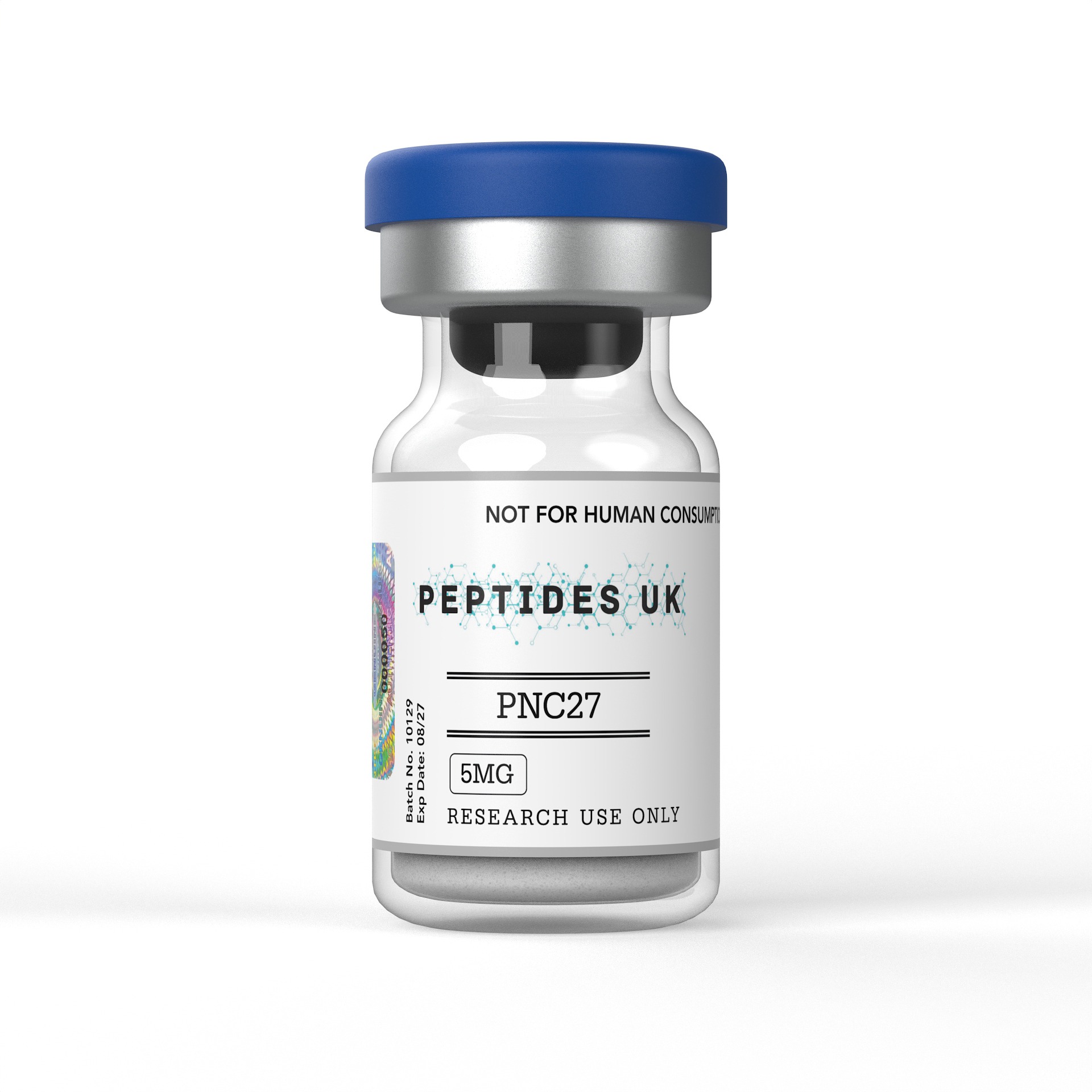
PNC-27 Ireland – Buy Online | In Stock & Ready to Ship
Buy PNC-27 in Ireland with fast shipping and guaranteed ≥99% purity — verified with COA and HPLC documentation. A trusted choice for peptides Ireland research teams rely on, with no customs delays or international wait times. Whether you’re searching for PNC-27 Ireland suppliers or looking to buy peptides Ireland-wide, we have you covered. Irish research teams can count on consistent stock, rapid fulfilment and full batch documentation every time.
For research use only. Not intended for human or veterinary use.
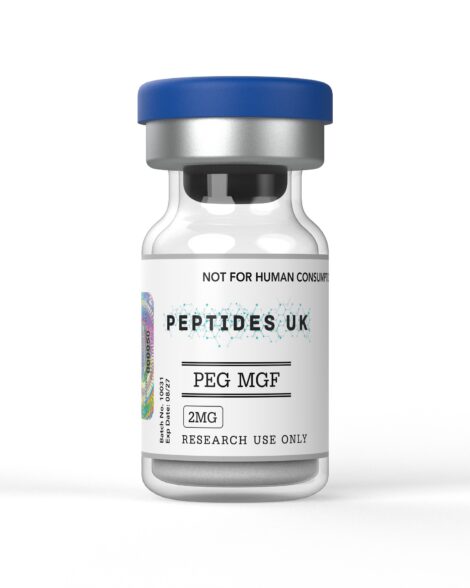



PNC-27 is a synthetic membranotropic peptide and one of the most mechanistically distinctive cancer cell-selective research compounds available to laboratories in Ireland — a chimeric peptide combining the MDM2-binding domain of p53 with a transmembrane-penetrating leader sequence that selectively induces membrane disruption and necrotic cell death in cancer cells expressing HDM2 at the plasma membrane while leaving normal cells unaffected, making it a uniquely targeted research tool for studying HDM2 membrane biology in cancer cells, p53-HDM2 protein-protein interaction pharmacology, cancer cell-selective membrane disruption mechanisms, tumour suppressor peptide biology, and the emerging field of membranotropic anticancer peptide research that exploits differential HDM2 expression at the plasma membrane of cancer versus normal cells as a cancer-selective molecular target. Researchers and institutions across Ireland can source verified, research-grade PNC-27 directly from our Irish peptide supply, with domestic-speed dispatch and complete batch documentation.
✅ ≥99% Purity — HPLC & Mass Spectrometry Verified
✅ Batch-Specific Certificate of Analysis (CoA) Included
✅ Sterile Lyophilised Powder | GMP Manufactured
✅ Fast Dispatch to Ireland | Peptides Ireland Stock
PNC-27 is a synthetic chimeric peptide — constructed by fusing the MDM2-binding domain of the p53 tumour suppressor protein with a transmembrane-penetrating leader sequence derived from the signal peptide of human papillomavirus E2 protein — that was designed and characterised by the laboratory of Matthew Pincus at the State University of New York Downstate Medical Center as a cancer cell-selective membranotropic agent exploiting the differential expression of HDM2 (the human homologue of MDM2) at the plasma membrane of cancer cells versus normal cells. The designation PNC reflects the Pincus laboratory origin, with the number indicating its position in the systematic series of p53-derived peptides characterised through this research programme.
The biological rationale for PNC-27’s design is grounded in a critical distinction between cancer cell and normal cell HDM2/MDM2 biology that provides the cancer selectivity essential to any meaningful anticancer research tool. MDM2 — and its human homologue HDM2 — is the primary negative regulator of p53 tumour suppressor function, an E3 ubiquitin ligase that binds p53 through a well-characterised protein-protein interaction involving the N-terminal hydrophobic cleft of MDM2 engaging a short helical region of p53’s transactivation domain containing the critical residues Phe19, Trp23, and Leu26. This MDM2-p53 interaction targets p53 for proteasomal degradation and directly inhibits p53 transactivation — making MDM2 the master negative regulator of p53 whose overexpression in cancer cells is one of the most common mechanisms of p53 pathway inactivation in human tumours even in the absence of p53 mutation.
The cancer-selective aspect of PNC-27’s mechanism depends on a body of research — primarily from the Pincus laboratory and collaborators — demonstrating that HDM2 is expressed not only in the nucleus and cytoplasm of cancer cells, where it executes its p53 regulatory function, but also at the plasma membrane of cancer cells, where it is not detected in normal non-transformed cells. This differential plasma membrane localisation of HDM2 in cancer cells versus its absence from the plasma membrane of normal cells is the molecular basis for PNC-27’s cancer selectivity — PNC-27 binds HDM2 at the cancer cell plasma membrane through its p53 MDM2-binding domain sequence, and this binding interaction, combined with the membrane-inserting activity of the transmembrane leader sequence, drives membrane disruption and pore formation that kills cancer cells through a necrotic mechanism while normal cells, lacking plasma membrane HDM2, are not targeted.
PNC-27’s chimeric architecture — p53 MDM2-binding domain sequence fused to a transmembrane leader — represents a rational design strategy for targeting the p53-MDM2 interaction at an unconventional cellular location — the cancer cell plasma membrane rather than the intranuclear or cytoplasmic location where p53-MDM2 interaction normally occurs. The membranotropic activity conferred by the transmembrane leader sequence, combined with the cancer cell plasma membrane HDM2 targeting conferred by the p53 MDM2-binding domain, produces a compound whose cancer selectivity emerges from the convergence of membrane disruption activity and cancer cell-specific target expression — a mechanistic design that has attracted considerable research interest in the membranotropic anticancer peptide field.
In controlled laboratory and pre-clinical settings, PNC-27 is studied across a range of HDM2 membrane biology, cancer cell-selective membrane disruption, p53-MDM2 interaction pharmacology, membranotropic peptide research, and tumour cell death mechanism research applications:
HDM2 Plasma Membrane Biology Research — PNC-27’s most scientifically distinctive research application is the study of HDM2 expression at the plasma membrane of cancer cells — a biology whose existence and biological significance has been characterised through PNC-27-based research. Studies have examined the evidence for HDM2 plasma membrane localisation in cancer cells, the mechanisms through which HDM2 reaches the cancer cell plasma membrane, whether plasma membrane HDM2 serves functional roles beyond serving as a PNC-27 interaction partner, and how HDM2 plasma membrane expression varies across cancer cell types and correlates with PNC-27 sensitivity. These HDM2 membrane biology studies have contributed to a novel and poorly understood dimension of HDM2 cell biology that extends beyond its canonical nuclear p53-regulatory function.
Cancer Cell-Selective Membrane Disruption Research — PNC-27’s selective induction of membrane disruption in cancer cells while sparing normal cells has been studied as a model for cancer-selective membranotropic activity — with research characterising the morphological and biophysical features of PNC-27-induced membrane disruption, the kinetics of membrane permeabilisation, the relationship between HDM2 plasma membrane expression level and PNC-27 membrane disruption sensitivity, and the cancer cell types most sensitive to PNC-27-induced membrane disruption. These cancer-selective membrane disruption studies have contributed to understanding of how differential target protein expression at the plasma membrane can be exploited for cancer-selective membrane-active compound design.
p53-MDM2 Protein-Protein Interaction Research — PNC-27’s p53 MDM2-binding domain sequence provides a tool for studying the p53-HDM2 protein-protein interaction at the plasma membrane — complementing the extensive research on intranuclear and cytoplasmic p53-MDM2 interaction biology by examining whether the same interaction occurs in the plasma membrane context and how the lipid bilayer environment influences p53-HDM2 interaction pharmacology. Research has used PNC-27 to study the specificity of p53 MDM2-binding domain interaction with plasma membrane HDM2 — examining whether PNC-27’s cancer cell selectivity is genuinely HDM2-dependent through competition experiments and HDM2 expression modulation studies.
Membranotropic Anticancer Peptide Biology Research — PNC-27 has been studied within the broader context of membranotropic anticancer peptide research — a growing field examining how peptides with membrane-disrupting activity can be targeted to cancer cells through incorporation of cancer cell-selective binding domains. Research has used PNC-27 as a model compound for studying how the fusion of a transmembrane leader sequence with a cancer cell surface receptor-binding domain produces cancer-selective membranotropic activity — contributing to understanding of the design principles for targeted membranotropic peptides and the mechanisms through which membrane disruption produces cancer cell death.
Necrotic Cell Death Mechanism Research — PNC-27 has been characterised as inducing cell death through a predominantly necrotic rather than apoptotic mechanism in sensitive cancer cells — with research examining the morphological features of PNC-27-induced death including rapid membrane disruption, cellular swelling, and loss of membrane integrity that distinguish necrotic from apoptotic cell death. Studies have characterised how the direct membrane disruption mechanism of PNC-27 bypasses the intracellular signalling cascades required for apoptosis — contributing to understanding of how membranotropic peptides produce necrotic cell death through physical membrane disruption rather than receptor-mediated apoptotic signalling.
Cancer Selectivity Mechanism Research — The molecular basis of PNC-27’s cancer versus normal cell selectivity has been studied — with research examining the correlation between HDM2 plasma membrane expression and PNC-27 sensitivity across multiple cancer and normal cell type comparisons, testing whether HDM2 knockdown or antibody blockade of plasma membrane HDM2 reduces PNC-27 cancer cell killing, and characterising what determines whether a given cancer cell type expresses plasma membrane HDM2 and is therefore susceptible to PNC-27-mediated membrane disruption. These cancer selectivity mechanism studies have been central to validating and characterising the HDM2 plasma membrane targeting hypothesis for PNC-27’s cancer selectivity.
MDM2 Overexpression Cancer Biology Research — PNC-27’s mechanism targeting HDM2-expressing cancer cells makes it a research tool relevant to the significant subset of human cancers that overexpress MDM2/HDM2 — including sarcomas, liposarcomas, and a range of carcinomas with MDM2 gene amplification or overexpression. Research has examined how MDM2 expression level in cancer cells correlates with PNC-27 sensitivity — contributing to understanding of whether MDM2 overexpression, beyond providing a p53-inactivation mechanism in cancer cells, also increases plasma membrane HDM2 expression in ways that increase susceptibility to HDM2-targeted membranotropic peptides.
Comparative Cancer Cell Death Mechanism Research — PNC-27 has been used in comparative cancer cell death mechanism research alongside conventional cytotoxic compounds, apoptosis-inducing agents, and other membranotropic peptides — examining how the direct membrane disruption necrotic mechanism of PNC-27 compares with apoptotic and other cell death mechanisms in terms of cancer cell killing selectivity, resistance mechanisms, and combination effects with other research compounds. These comparative cell death studies have contributed to understanding of how membrane disruption-based cancer cell killing provides mechanistic advantages over receptor-mediated apoptotic cell death in research contexts involving apoptosis-resistant cancer cells.
Pancreatic Cancer Biology Research — Pancreatic cancer — characterised by extremely poor prognosis, high rates of p53 pathway dysregulation, and frequent MDM2 overexpression — has been one of the primary cancer types examined in PNC-27 research. Studies have documented PNC-27 activity against pancreatic cancer cell lines and examined the relationship between MDM2 expression, plasma membrane HDM2 localisation, and PNC-27 sensitivity in pancreatic cancer cell biology — establishing pancreatic cancer as an important research model for PNC-27’s membranotropic mechanism and contributing to understanding of how MDM2 overexpression biology in this cancer type relates to plasma membrane HDM2 expression.
Leukaemia and Haematological Cancer Research — PNC-27’s effects in leukaemia and other haematological cancer models have been examined — with studies documenting PNC-27 activity against leukaemia cell lines and characterising how MDM2 expression and plasma membrane HDM2 localisation in haematological cancer cells determines their sensitivity to PNC-27-induced membrane disruption. These haematological cancer biology studies have extended PNC-27 research beyond solid tumour models and contributed to understanding of how the plasma membrane HDM2 targeting mechanism operates across different cancer cell types and lineages.
PNC-27 has generated a focused but scientifically distinctive research literature — centred on the Pincus laboratory’s foundational characterisation of its cancer-selective membrane disruption mechanism and expanded through subsequent research examining its biology across multiple cancer cell types and investigating the HDM2 plasma membrane biology that underlies its cancer selectivity.
Cancer Cell-Selective Killing Documented Across Multiple Cancer Cell Types — Foundational research from the Pincus laboratory documented PNC-27’s selective killing of cancer cells across multiple cancer cell lines — including pancreatic, breast, leukaemia, and other cancer types — while demonstrating minimal cytotoxicity toward matched normal cell types at equivalent concentrations. These cancer selectivity findings established PNC-27 as a cancer-selective membranotropic peptide and provided the primary evidence for the HDM2 plasma membrane targeting hypothesis — showing that cancer cells expressing plasma membrane HDM2 are killed while normal cells lacking plasma membrane HDM2 are spared.
HDM2 Plasma Membrane Localisation in Cancer Cells Characterised — Research has characterised the plasma membrane localisation of HDM2 in cancer cells — documenting HDM2 immunostaining at the plasma membrane of multiple cancer cell types using confocal microscopy, surface biotinylation, and plasma membrane fractionation approaches. These HDM2 plasma membrane localisation studies have provided the primary mechanistic evidence for the cancer cell-specific target that underlies PNC-27’s selectivity — establishing that the differential plasma membrane HDM2 expression between cancer and normal cells is a genuine and characterisable biological phenomenon rather than a theoretical hypothesis.
Membrane Disruption and Pore Formation Mechanism Characterised — Research has characterised the biophysical mechanism of PNC-27-induced cancer cell killing — documenting rapid membrane permeabilisation, pore-like membrane disruption morphology by electron microscopy, and the necrotic rather than apoptotic features of PNC-27-induced cell death including rapid membrane integrity loss, cellular swelling, and absence of apoptotic DNA laddering. These membrane disruption characterisation studies have established the physical mechanism through which PNC-27 kills cancer cells — direct membranolytic activity dependent on plasma membrane HDM2 binding — distinguishing it from apoptosis-inducing p53-MDM2 interaction disruptors that act intracellularly.
HDM2 Dependence of Cancer Selectivity Tested — Research has examined the HDM2-dependence of PNC-27’s cancer cell killing — with studies using anti-HDM2 antibodies to block plasma membrane HDM2 before PNC-27 treatment, examining whether HDM2 knockdown reduces cancer cell susceptibility to PNC-27, and characterising the correlation between HDM2 expression levels and PNC-27 sensitivity across cancer cell panels. These HDM2 dependence studies have provided important mechanistic validation of the plasma membrane HDM2 targeting hypothesis — supporting the model that PNC-27’s cancer selectivity is genuinely dependent on HDM2 plasma membrane expression rather than reflecting non-specific differences between cancer and normal cell membrane properties.
Pancreatic Cancer Cell Biology Studies — Research examining PNC-27 in pancreatic cancer cell line models has documented cancer cell killing activity and characterised the relationship between MDM2 expression, plasma membrane HDM2 localisation, and PNC-27 sensitivity in this cancer type. Pancreatic cancer studies have been among the most extensively reported in the PNC-27 literature — contributing to establishing pancreatic cancer as a model system for PNC-27 research and providing pre-clinical cell biology evidence for the membranotropic mechanism in a cancer type characterised by high rates of MDM2 pathway dysregulation.
Structure-Activity Relationships Within the PNC Peptide Series — The Pincus laboratory research programme characterised structure-activity relationships within the broader PNC peptide series — examining how modifications to the p53 MDM2-binding domain sequence, the transmembrane leader sequence, and the junction between these two functional domains influence cancer cell killing potency, HDM2 binding affinity, membrane insertion activity, and cancer versus normal cell selectivity. These SAR studies within the PNC series have contributed to understanding of the structural requirements for cancer-selective membranotropic activity and have established PNC-27 as the lead compound within this series based on its cancer cell killing potency and selectivity profile.
Necrotic Cell Death Confirmed as Primary Mechanism — Research has confirmed that PNC-27-induced cancer cell death proceeds primarily through necrotic rather than apoptotic mechanisms — with studies documenting the absence of apoptotic markers including caspase activation, cytochrome c release, and DNA fragmentation in PNC-27-treated cancer cells, alongside positive evidence for necrotic membrane disruption as the primary cell death mechanism. These cell death mechanism studies have established the mechanistic distinction between PNC-27’s membranotropic necrotic mechanism and the apoptotic mechanisms of intracellular p53-MDM2 interaction disruptors — characterising PNC-27 as a fundamentally different type of MDM2-targeting research compound acting through a distinct biological mechanism.
| Feature | PNC-27 | Nutlin-3 | RITA | Stapled p53 Peptides | AMG-232 |
|---|---|---|---|---|---|
| Type | Chimeric membranotropic peptide — p53 domain + transmembrane leader | Small molecule MDM2 inhibitor | Small molecule — p53 binder | Hydrocarbon-stapled p53 helix peptides | Small molecule piperidinone MDM2 inhibitor |
| Mechanism | Plasma membrane HDM2 binding → membrane disruption → necrosis | Intracellular MDM2 hydrophobic cleft occupation → p53 release | p53 N-terminal binding → conformational change → MDM2 displacement | Intracellular MDM2 binding → p53 activation | Intracellular MDM2 hydrophobic cleft occupation → p53 release |
| Target Location | Cancer cell plasma membrane — HDM2 | Intracellular / nuclear — MDM2 | Intracellular — p53 | Intracellular / nuclear — MDM2 | Intracellular / nuclear — MDM2 |
| Cell Death Mechanism | Necrosis — direct membrane disruption | Apoptosis — p53 reactivation | Apoptosis — p53 stabilisation | Apoptosis — p53 reactivation | Apoptosis — p53 reactivation |
| Cancer Selectivity Basis | Plasma membrane HDM2 expression — cancer specific | MDM2 overexpression — indirect via p53 | p53 wild-type expression | MDM2 overexpression | MDM2 overexpression |
| p53 Status Dependence | Potentially p53-independent — membrane mechanism | p53 wild-type required | p53 wild-type required | p53 wild-type required | p53 wild-type required |
| Normal Cell Toxicity | Low — plasma membrane HDM2 absent | Low-moderate | Moderate | Moderate | Low-moderate |
| Research Profile | Growing — mechanistically distinctive | Extensively studied — reference MDM2 inhibitor | Well-documented | Well-documented | Well-documented |
| Parameter | Detail |
|---|---|
| Name | PNC-27 |
| Type | Chimeric Membranotropic Anticancer Research Peptide |
| Design | p53 MDM2-binding domain + HPV E2 transmembrane leader sequence |
| Mechanism | Plasma membrane HDM2 binding → membrane pore formation → necrotic cancer cell death |
| Cancer Selectivity Basis | HDM2 plasma membrane expression — cancer cells only |
| Cell Death Type | Necrotic — direct membrane disruption |
| Key Research Distinction | Only membranotropic peptide exploiting plasma membrane HDM2 as cancer-selective target |
| Primary Research Areas | HDM2 membrane biology / membranotropic peptide pharmacology / cancer cell-selective killing |
| p53 Status Independence | Potentially p53-independent — membrane mechanism distinct from intranuclear p53 reactivation |
| Purity | ≥99% HPLC & MS Verified |
| Form | Sterile Lyophilised Powder |
| Solubility | Sterile water or DMSO — see reconstitution note |
| Storage (Powder) | -20°C, protect from light and moisture |
| Storage (Reconstituted) | -80°C in aliquots — minimise freeze-thaw cycles |
| Manufacturing | GMP Manufactured |
| Intended Use | Research use only |
PNC-27 is a chimeric peptide containing a transmembrane leader sequence with hydrophobic membrane-inserting properties — its solubility profile reflects this amphipathic character and requires careful reconstitution to maintain peptide integrity and prevent aggregation. For aqueous reconstitution, add sterile water slowly to the lyophilised powder and swirl gently — PNC-27 may require brief sonication in a bath sonicator at room temperature to achieve complete dissolution at higher concentrations. If aqueous solubility is limiting for a specific research protocol, prepare a concentrated DMSO stock solution — typically 10–20 mM — and dilute into aqueous experimental buffer or cell culture media to a final DMSO concentration of ≤0.1% to minimise DMSO-mediated membrane effects that could confound membrane disruption assays. Because PNC-27’s biological mechanism involves membrane interaction, careful attention to the vehicle and solvent used is essential for experimental validity — DMSO at concentrations above 0.1% can independently perturb membrane biology and should be strictly controlled in cancer cell membrane disruption assays. Prepare single-use aliquots and store at -80°C — avoid repeated freeze-thaw cycles that may promote peptide aggregation and reduce membranotropic activity. Use low-binding tubes throughout to minimise surface adsorption of the amphipathic peptide at working concentrations.
Every order of PNC-27 in Ireland includes:
✅ Batch-Specific Certificate of Analysis (CoA)
✅ HPLC Chromatogram
✅ Mass Spectrometry Confirmation
✅ Sterility & Endotoxin Testing Report
✅ Reconstitution Protocol — including solubility and DMSO guidance
✅ Technical Research Support
Yes — we supply research-grade PNC-27 to researchers and institutions across Ireland with fast dispatch and full batch documentation. This compound is supplied strictly for laboratory research purposes only.
HDM2 — the human homologue of the murine MDM2 oncoprotein — is the primary negative regulator of p53 tumour suppressor function, an E3 ubiquitin ligase that maintains p53 at low levels in unstressed cells through a direct protein-protein interaction that targets p53 for proteasomal degradation and inhibits its transcriptional activity. In canonical HDM2 biology, this regulatory interaction occurs in the nucleus and cytoplasm — with HDM2 binding the N-terminal transactivation domain of p53 through its own N-terminal hydrophobic cleft to suppress p53 activity. What makes HDM2 central to PNC-27 research is the additional, non-canonical finding — characterised primarily through the Pincus laboratory research programme — that HDM2 is expressed at the plasma membrane of cancer cells while being absent from or undetectable at the plasma membrane of normal non-transformed cells. This differential plasma membrane localisation is the entire basis for PNC-27’s cancer selectivity — the p53 MDM2-binding domain in PNC-27 targets plasma membrane HDM2, and the transmembrane leader sequence then drives membrane disruption at the site of HDM2 binding, killing HDM2-plasma membrane-expressing cancer cells while sparing normal cells that lack this surface target. Understanding whether and how HDM2 reaches the cancer cell plasma membrane, what functional role it might serve there, and how its plasma membrane expression correlates with cancer cell sensitivity to PNC-27 are among the central questions driving ongoing PNC-27-related research.
PNC-27’s cancer-selective membrane disruption activity emerges from the functional synergy between its two structural domains — the p53 MDM2-binding domain that provides cancer cell plasma membrane HDM2 targeting, and the transmembrane leader sequence that provides membrane insertion and disruption activity. Neither domain alone produces the same cancer-selective effect — the p53 MDM2-binding domain sequence alone lacks membrane-disrupting activity, and the transmembrane leader sequence alone lacks cancer cell selectivity, potentially disrupting the membranes of both cancer and normal cells. It is the combination — HDM2 targeting bringing the membrane-disrupting transmembrane sequence specifically to cancer cell plasma membranes through HDM2 binding interaction — that produces the cancer selectivity. At the molecular level, the proposed mechanism involves PNC-27 binding HDM2 at the cancer cell plasma membrane through the p53 MDM2-binding domain, with the transmembrane leader sequence inserting into the lipid bilayer at the site of HDM2 engagement and oligomerising with additional PNC-27 molecules to form membrane pores or disruption complexes that compromise membrane integrity and produce necrotic cell death. The cancer selectivity is therefore not an intrinsic property of either domain alone but an emergent property of the chimeric design — requiring both the cancer cell surface HDM2 target and the membrane-disrupting leader to be present in the same molecule.
One of the most scientifically significant research observations about PNC-27 is the suggestion that its activity may not be limited to p53 wild-type cancer cells — a potential advantage over conventional intracellular p53-MDM2 interaction disruptors such as Nutlin-3 that require wild-type p53 to produce their anti-proliferative effects through p53 reactivation. The mechanistic rationale for PNC-27’s potential p53-independence is that its cancer cell killing mechanism operates at the plasma membrane through direct membrane disruption rather than through intracellular p53 reactivation — meaning that the presence or functional status of intracellular p53 is not theoretically required for PNC-27 to bind plasma membrane HDM2 and disrupt cancer cell membranes. If plasma membrane HDM2 expression in cancer cells is independent of p53 mutational status — and if p53-mutant cancer cells retain plasma membrane HDM2 expression — then PNC-27 should retain activity against p53-mutant cancer cells through its membrane disruption mechanism. Research examining this p53-independence question has been an important aspect of PNC-27 biology characterisation — with studies examining PNC-27 activity in isogenic p53 wild-type versus p53-null or p53-mutant cancer cell pairs to determine whether p53 status influences PNC-27 sensitivity. This potential p53-independence would represent a significant research advantage for studying cancer cells with the most common tumour suppressor mutation in human cancer.
PNC-27 and Nutlin-3 both target the p53-MDM2 interaction but through mechanistically and locationally distinct approaches that make them complementary rather than equivalent research tools for MDM2-related cancer biology. Nutlin-3 is a small molecule that occupies the N-terminal hydrophobic cleft of intracellular MDM2 — mimicking the Phe19, Trp23, and Leu26 residues of p53’s MDM2-binding helix — and thereby prevents intranuclear p53-MDM2 interaction, protecting p53 from MDM2-mediated degradation and allowing p53 to accumulate and activate its transcriptional target genes. Nutlin-3’s mechanism produces cancer cell killing through p53 reactivation — cell cycle arrest and apoptosis driven by p53 transcriptional programmes — requiring wild-type functional p53 and operating entirely through intracellular p53 biology. PNC-27 acts at the plasma membrane — binding HDM2 at the cancer cell surface through its p53 MDM2-binding domain sequence and driving direct membrane disruption and necrotic death through its transmembrane leader sequence — operating independently of intranuclear p53 biology and producing necrotic rather than apoptotic cell death. For research purposes, Nutlin-3 is the reference tool for studying intracellular p53-MDM2 interaction disruption and p53 reactivation biology, while PNC-27 is the tool for studying plasma membrane HDM2 biology, membranotropic cancer cell killing, and cancer-selective membrane disruption mechanisms.
PNC-27 has been examined across multiple cancer cell type models in the published research literature — with the primary focus concentrated in several cancer types that have been particularly well-characterised in the PNC-27 research programme. Pancreatic cancer has been the most extensively studied cancer type — reflecting both the high rates of MDM2 pathway dysregulation in pancreatic cancer and the Pincus laboratory’s particular research focus on this cancer type. Studies have documented PNC-27 activity against multiple pancreatic cancer cell lines and characterised HDM2 plasma membrane expression in this cancer context. Leukaemia and haematological cancer cell lines have also been well-studied — with research documenting PNC-27 activity against leukaemia cell lines and characterising the relationship between HDM2 expression and PNC-27 sensitivity in haematological cancer models. Breast cancer cell lines have been examined in comparative studies — with research characterising PNC-27 activity across breast cancer lines with different MDM2 expression and p53 mutation profiles. Melanoma, lung cancer, and other carcinoma cell lines have been examined in PNC-27 screening studies — collectively establishing that PNC-27’s cancer-selective membrane disruption activity is not limited to specific cancer lineages but depends on whether individual cancer cell lines express plasma membrane HDM2 at sufficient levels to support PNC-27 binding and membrane disruption.
Several controls are particularly important for rigorously interpreting PNC-27 biology research — given the membranotropic mechanism and the cancer selectivity hypothesis being tested. Normal cell comparisons — examining PNC-27 cytotoxicity in matched normal cell types alongside cancer cell lines — are essential for confirming the cancer selectivity that is central to PNC-27’s research significance. HDM2 expression characterisation — confirming plasma membrane HDM2 expression in PNC-27-sensitive cancer cell lines and its absence in PNC-27-resistant normal and cancer cell lines — is important for mechanistically linking observed cytotoxicity to the HDM2 plasma membrane targeting hypothesis. Vehicle controls — particularly careful DMSO controls at concentrations matched to experimental wells when DMSO stocks are used — are essential because PNC-27’s endpoint is membrane disruption and DMSO itself can perturb membrane integrity at higher concentrations. Scrambled or inactive control peptides — PNC-27 analogues with scrambled sequences or point mutations disrupting MDM2 binding — are important for distinguishing HDM2-binding-dependent membrane disruption from non-specific amphipathic peptide membrane activity. These controls collectively ensure that PNC-27 biology research can be mechanistically interpreted in terms of the HDM2 plasma membrane targeting hypothesis rather than non-specific membrane effects.
≥99% purity is strongly recommended for cancer cell-selective killing assays, HDM2 plasma membrane binding studies, membrane disruption mechanism research, comparative cancer cell death studies, and pre-clinical cancer biology models — where compound purity directly determines the reliability of cancer selectivity measurements, membrane disruption potency characterisation, and mechanistic attribution. Given PNC-27’s amphipathic chimeric architecture, peptide impurities with membrane-active properties could introduce non-specific membranolytic signals in sensitive cancer cell killing assays — making high purity verification particularly important for research designs where cancer selectivity and HDM2-dependence are the primary endpoints being characterised. All PNC-27 Ireland stock is independently verified to ≥99% purity by HPLC and mass spectrometry with identity confirmation.
Allow the vial to reach room temperature before opening. For aqueous reconstitution, add sterile water slowly down the inside wall of the vial and swirl gently — brief bath sonication may assist complete dissolution at higher concentrations given PNC-27’s amphipathic character. For protocols requiring higher stock concentrations, prepare a concentrated DMSO stock at 10–20 mM and dilute into aqueous experimental buffer or cell culture media to ≤0.1% final DMSO — carefully controlling the DMSO concentration is essential in membrane disruption assays. Prepare single-use aliquots immediately after reconstitution and store at -80°C to minimise aggregation and maintain membranotropic activity. Use low-binding tubes to reduce surface adsorption losses at working concentrations. Because PNC-27’s mechanism involves membrane interaction, prepare working solutions immediately before experimental use and maintain on ice during handling to preserve peptide structural integrity and consistent biological activity across experimental replicates.
PNC-27 is supplied exclusively for legitimate scientific research purposes conducted within licensed laboratory environments. This product is not intended for human consumption, self-administration, or any therapeutic application. It must be handled by qualified researchers in compliance with applicable Irish and EU regulations and institutional ethics guidelines. By purchasing, you confirm that this compound will be used solely for approved in vitro or pre-clinical research purposes.
WhatsApp us
Receive News
