PRODUCTS SOLD ON PEPTIDESLABIRELAND.COM ARE FOR RESEARCH PURPOSES ONLY AND ARE NOT FOR HUMAN OR VETERINARY USE.
€80.00
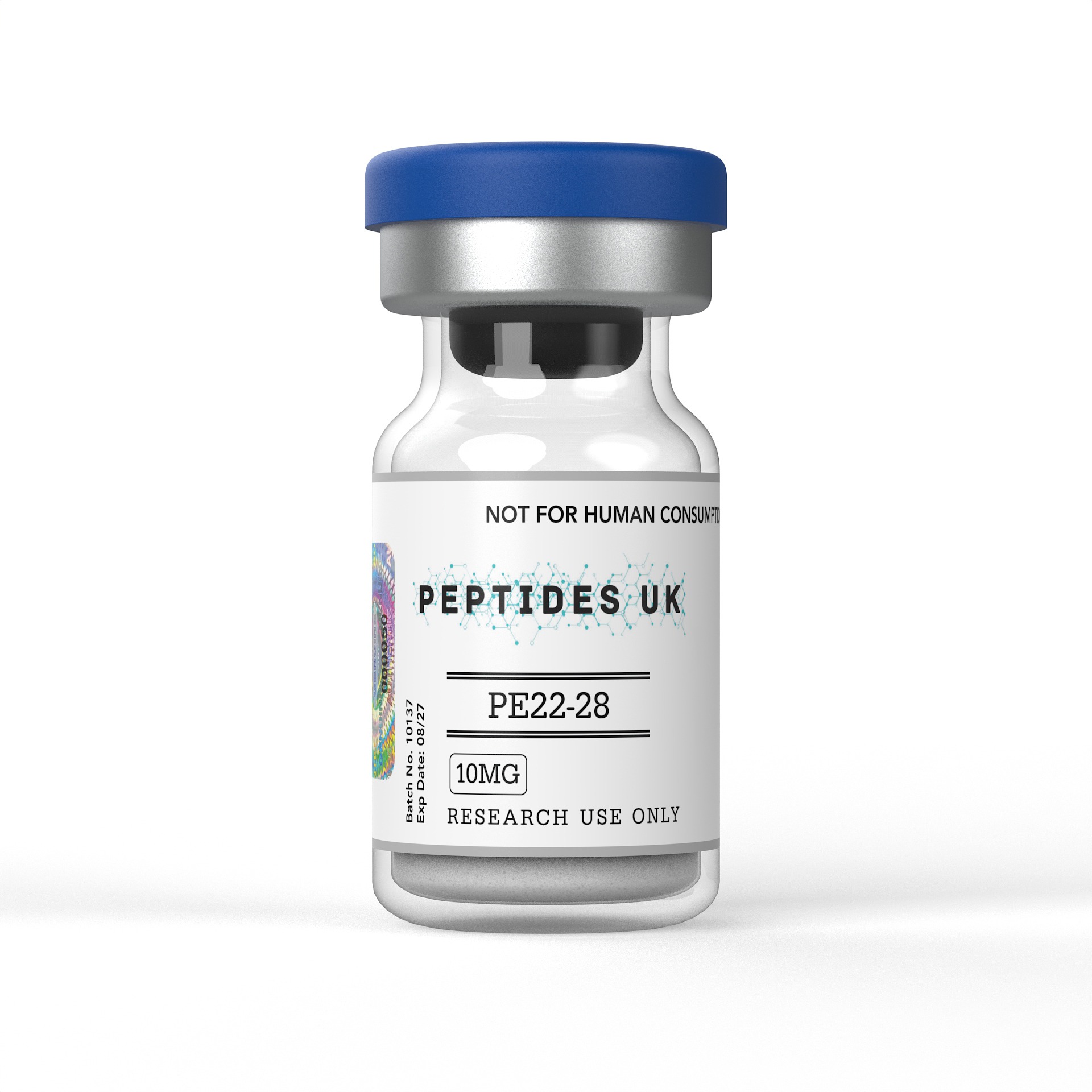
PE22-28 Ireland – Buy Online | In Stock & Ready to Ship
Buy PE22-28 in Ireland with fast shipping and guaranteed ≥99% purity — verified with COA and HPLC documentation. A trusted choice for peptides Ireland research teams rely on, with no customs delays or international wait times. Whether you’re searching for PE22-28 Ireland suppliers or looking to buy peptides Ireland-wide, we have you covered. Irish research teams can count on consistent stock, rapid fulfilment and full batch documentation every time.
For research use only. Not intended for human or veterinary use.

PE22-28 is a synthetic heptapeptide analogue of spadin and one of the most mechanistically targeted antidepressant research peptides available to laboratories in Ireland — a seven amino acid peptide derived from the propeptide region of the sortilin precursor protein that acts as a selective blocker of TREK-1 (TWIK-Related potassium channel 1), a two-pore domain background potassium channel whose overactivity has been characterised as a primary contributor to depression-like biology in pre-clinical models, making PE22-28 a uniquely precise research tool for studying TREK-1 channel pharmacology, two-pore domain potassium channel biology, antidepressant mechanism research, neuroplasticity regulation, and the emerging TREK-1 hypothesis of depression that positions background potassium channel dysregulation as a key molecular driver of depressive pathophysiology. Researchers and institutions across Ireland can source verified, research-grade PE22-28 directly from our Irish peptide supply, with domestic-speed dispatch and complete batch documentation.
✅ ≥99% Purity — HPLC & Mass Spectrometry Verified
✅ Batch-Specific Certificate of Analysis (CoA) Included
✅ Sterile Lyophilised Powder | GMP Manufactured
✅ Fast Dispatch to Ireland | Peptides Ireland Stock
PE22-28 is a synthetic heptapeptide — representing amino acids 22 through 28 of spadin, the naturally occurring propeptide released from the luminal domain of sortilin during its maturation processing — that was identified through systematic truncation and structure-activity relationship research as the minimal active sequence of spadin retaining full TREK-1 blocking activity while providing improved metabolic stability and research practicality compared to the full-length spadin peptide. The designation PE22-28 reflects the peptide’s origin as residues 22–28 of the spadin sequence — a naming convention that situates it within the broader spadin/sortilin research literature from which its biology emerges.
To understand PE22-28’s research significance, the biology of TREK-1 and its role in depression must be understood. TREK-1 is a member of the two-pore domain (K2P) potassium channel family — a class of leak potassium channels that are constitutively active under resting conditions and set the background potassium conductance that determines neuronal resting membrane potential and excitability threshold. Unlike voltage-gated potassium channels that open in response to membrane depolarisation, K2P channels including TREK-1 are tonically active and their activity level determines how close a neuron sits to its action potential firing threshold — with high TREK-1 activity hyperpolarising neurons and reducing excitability, and low TREK-1 activity allowing membrane potential to approach firing threshold and increasing neuronal responsiveness to excitatory inputs.
TREK-1’s specific relevance to depression biology emerged from landmark research demonstrating that TREK-1 knockout mice exhibit a depression-resistant phenotype — showing reduced immobility in forced swim and tail suspension tests, enhanced serotonergic and noradrenergic neurotransmission, and resistance to the depressogenic effects of chronic stress exposure compared to wild-type controls. These TREK-1 knockout findings established that TREK-1 overactivity contributes to depression-like biology by suppressing the monoaminergic neurotransmitter system activity that conventional antidepressants seek to enhance — and conversely that TREK-1 blockade produces antidepressant-like effects through mechanisms that converge on the same monoaminergic neurotransmitter systems targeted by classical antidepressants but through an upstream ion channel mechanism rather than direct transporter or receptor modulation.
Spadin — the natural propeptide released from sortilin during its maturation in the trans-Golgi network — was identified as an endogenous TREK-1 blocker through research characterising the biological activity of sortilin-derived peptides. PE22-28 was subsequently developed through systematic truncation of spadin to identify the minimal active sequence — resulting in a heptapeptide that blocks TREK-1 with potency comparable to full-length spadin while providing improved resistance to serum protease degradation that makes it more suitable for sustained pre-clinical research protocols. PE22-28’s improved stability profile — achieved through the truncation to the minimal active sequence and potential amino acid modifications — makes it the preferred spadin-derived research tool for pre-clinical TREK-1 biology research compared to the full-length parent peptide.
In controlled laboratory and pre-clinical settings, PE22-28 is studied across a range of TREK-1 channel biology, antidepressant mechanism research, neuroplasticity, and K2P channel pharmacology applications:
TREK-1 Channel Pharmacology Research — PE22-28’s primary research application is as a selective TREK-1 blocker — with studies examining its binding site on the TREK-1 channel, the mechanism of channel blockade, dose-response relationships for TREK-1 current inhibition in patch-clamp electrophysiology, and the selectivity profile of PE22-28 across K2P channel family members. Research has used PE22-28 to characterise TREK-1’s biophysical properties, the consequences of selective TREK-1 blockade on neuronal excitability parameters, and the downstream neurobiological effects of removing TREK-1’s background hyperpolarising influence from neurons in brain regions relevant to mood regulation.
Depression Biology and Antidepressant Mechanism Research — PE22-28 provides a pharmacological tool for studying the TREK-1 hypothesis of depression — the model proposing that TREK-1 overactivity in hippocampal, prefrontal cortical, and raphe nucleus neurons contributes to the monoaminergic neurotransmitter deficits characteristic of depression. Research has examined how PE22-28-mediated TREK-1 blockade influences monoamine release dynamics, serotonergic and noradrenergic neurotransmission, and depression-related behavioural parameters in pre-clinical models — contributing to evidence for TREK-1 as a pharmacological target in antidepressant biology research.
Serotonergic System Research — TREK-1 channels expressed in serotonergic raphe nucleus neurons play a role in regulating the firing rate and serotonin release capacity of these neurons — with TREK-1 activity contributing to the resting hyperpolarisation that determines raphe neuron firing threshold. Research has used PE22-28 to examine how TREK-1 blockade in serotonergic neurons influences raphe neuron excitability, serotonin release in terminal fields including hippocampus and prefrontal cortex, and downstream serotonin receptor-mediated signalling — contributing to understanding of the ion channel-level regulation of serotonergic neurotransmission.
Hippocampal Neuroplasticity and BDNF Research — The relationship between TREK-1 channel activity, hippocampal neuroplasticity, and BDNF expression has been examined using PE22-28 — with research characterising how TREK-1 blockade influences hippocampal BDNF levels, synaptic plasticity parameters including long-term potentiation, and adult neurogenesis in the dentate gyrus. These neuroplasticity studies have contributed to understanding of how TREK-1 channel activity gates the hippocampal plasticity mechanisms that are impaired in depression and restored by effective antidepressant treatments — connecting TREK-1 pharmacology to the neurotrophin and neuroplasticity biology central to contemporary depression neuroscience.
Comparison with Classical Antidepressant Mechanisms — PE22-28 has been used in comparative antidepressant mechanism research — examined alongside SSRIs, SNRIs, and other antidepressant classes in pre-clinical depression models to characterise how TREK-1 blockade-driven antidepressant effects differ from and potentially complement monoamine transporter-based antidepressant mechanisms. Research has examined onset kinetics of PE22-28-mediated antidepressant-like effects compared to classical antidepressants — with studies suggesting faster-onset behavioural effects consistent with the upstream ion channel mechanism bypassing the delayed receptor adaptation processes required for classical antidepressant efficacy.
K2P Channel Family Biology Research — PE22-28’s selectivity within the K2P channel family has made it a tool for studying how TREK-1-specific blockade produces distinct neurobiological effects compared to blockade of related K2P channels including TREK-2 and TRAAK — contributing to understanding of the functional specialisation of different K2P channel family members in neuronal excitability regulation and the biological consequences of selective versus non-selective K2P channel modulation.
Rapid Antidepressant Response Research — One of the most significant research questions in contemporary antidepressant pharmacology is the mechanism underlying rapid-onset antidepressant effects — with ketamine’s NMDA receptor antagonism producing antidepressant effects within hours rather than the weeks required for classical monoamine reuptake inhibitors. PE22-28’s upstream ion channel mechanism — directly modulating neuronal excitability rather than requiring downstream receptor adaptation — has been examined in rapid antidepressant response research, with studies characterising the onset kinetics of PE22-28-mediated behavioural effects and comparing them with both classical and rapid-acting antidepressant mechanisms.
Stress Neurobiology and HPA Axis Research — TREK-1 expression in hypothalamic and limbic system neurons involved in stress response regulation has made PE22-28 a research tool for studying how TREK-1 channel activity influences HPA axis regulation, stress resilience, and the neurobiological consequences of chronic stress exposure. Research has examined how PE22-28-mediated TREK-1 blockade influences hypothalamic CRH neuron activity, HPA axis responsivity, and the stress-induced neurobiological changes associated with depression-like behaviour in chronic stress pre-clinical models.
Neuroprotection and Ischaemia Research — TREK-1’s role in neuroprotection has been examined using PE22-28 — with research noting the complex relationship between TREK-1 activity and neuronal survival in ischaemic contexts, where TREK-1’s background hyperpolarising influence can be both protective (reducing excitotoxic firing) and potentially detrimental (reducing neuronal excitability needed for recovery). These neuroprotection studies have contributed to understanding of the context-dependent dual role of TREK-1 in neuronal biology — establishing TREK-1 as a research target whose pharmacological modulation requires consideration of tissue context and injury state.
Sortilin Biology and Propeptide Research — PE22-28’s origin as a spadin-derived peptide places it within the broader research context of sortilin biology — with research examining how sortilin maturation and propeptide release generates endogenous TREK-1 regulatory peptides, how sortilin expression levels influence endogenous spadin/PE22-28 equivalent availability, and how the sortilin-spadin-TREK-1 biological axis operates as an endogenous regulatory system for background potassium conductance in neurons. These sortilin biology studies have contributed to understanding of the physiological context within which PE22-28’s pharmacology operates.
PE22-28 has generated a growing and scientifically significant research literature — building on the foundational TREK-1 knockout and spadin research that established the biological rationale for TREK-1 blockade as an antidepressant research strategy.
TREK-1 Knockout Depression-Resistant Phenotype Established — Foundational research establishing the TREK-1 hypothesis of depression documented that TREK-1 knockout mice exhibit robust depression-resistant behavioural phenotypes — including reduced immobility in forced swim and tail suspension tests, enhanced sucrose preference consistent with preserved hedonic function, and resistance to chronic mild stress-induced depression-like behaviour. Studies characterised the neurobiological basis of this phenotype as enhanced serotonergic and noradrenergic neurotransmission in TREK-1 knockout brains — establishing the mechanistic link between TREK-1 channel activity, monoaminergic neurotransmitter tone, and depression-like biology that provides the foundational rationale for PE22-28 research. This TREK-1 knockout phenotype research has been one of the most influential findings in the ion channel neuroscience of depression.
Spadin Antidepressant-Like Effects Documented — Research characterising spadin — the parent peptide from which PE22-28 is derived — documented antidepressant-like effects in pre-clinical depression models consistent with TREK-1 blockade. Studies reported reduced immobility in forced swim and tail suspension tests, effects on serotonergic neurotransmission parameters, and improved outcomes in chronic stress models following spadin administration — establishing proof-of-concept for the antidepressant research potential of the TREK-1 blocking peptide approach and motivating the subsequent development of PE22-28 as an optimised minimal active sequence analogue.
PE22-28 Identified as Minimal Active Spadin Sequence — Structure-activity relationship research examining systematic truncations of spadin identified PE22-28 as the minimal active sequence retaining full TREK-1 blocking activity — with studies comparing the TREK-1 channel inhibition and antidepressant-like behavioural effects of different spadin fragments to map the critical residues required for TREK-1 interaction. The identification of PE22-28 as the minimal active sequence provided a shorter, more metabolically stable research compound than full-length spadin — validated through direct comparison of electrophysiological TREK-1 blocking potency and pre-clinical antidepressant-like behavioural effects between PE22-28 and parent spadin.
Antidepressant-Like Behavioural Effects in Pre-Clinical Models Documented — Research has documented PE22-28-associated antidepressant-like effects in standard pre-clinical depression models — including reduced immobility in forced swim and tail suspension tests, improvements in chronic unpredictable mild stress models, and effects on sucrose preference consistent with attenuation of anhedonia-like behaviour. Studies have characterised the dose-response relationship for PE22-28’s behavioural effects and examined the onset kinetics — with research suggesting faster-onset effects than classical SSRIs in some pre-clinical paradigms, consistent with the upstream ion channel mechanism hypothesis.
BDNF and Neuroplasticity Effects Characterised — Research has documented PE22-28-associated increases in hippocampal BDNF expression in pre-clinical models — consistent with the well-established connection between antidepressant treatment, BDNF upregulation, and hippocampal neuroplasticity restoration. Studies have examined how PE22-28-mediated TREK-1 blockade influences hippocampal BDNF levels, dendritic spine density, and long-term potentiation parameters — contributing to understanding of how upstream TREK-1 channel modulation connects to the downstream neuroplasticity biology that conventional antidepressants restore through monoamine-dependent mechanisms.
Faster Onset Compared to Classical Antidepressants Suggested — Pre-clinical research has examined the onset kinetics of PE22-28’s antidepressant-like effects in comparison with classical antidepressants — with studies suggesting that PE22-28’s behavioural effects in some pre-clinical paradigms emerge more rapidly than those of fluoxetine and other SSRIs. This faster onset observation has been interpreted as consistent with PE22-28’s upstream neuronal excitability mechanism — directly modulating serotonergic neuron firing capacity rather than requiring the prolonged receptor adaptation and downstream neuroplasticity changes that classical antidepressants depend upon for full efficacy. These onset kinetics findings have positioned PE22-28 within the growing research interest in rapid-acting antidepressant mechanisms alongside ketamine and related compounds.
Improved Stability vs Full-Length Spadin Confirmed — Research comparing the metabolic stability of PE22-28 and full-length spadin in biological systems has documented PE22-28’s improved resistance to serum protease degradation — consistent with the rational design rationale for truncation to the minimal active sequence. This stability characterisation has established PE22-28 as a more practical research tool than full-length spadin for pre-clinical studies requiring sustained peptide activity — validating the structure-activity optimisation approach that produced PE22-28 from the parent spadin sequence.
| Feature | PE22-28 | Spadin | Fluoxetine | Ketamine | SSRI Class |
|---|---|---|---|---|---|
| Type | Synthetic heptapeptide — spadin analogue | Natural sortilin propeptide — 17aa | Small molecule SSRI | NMDA receptor antagonist | Small molecule monoamine reuptake inhibitors |
| Primary Mechanism | TREK-1 K2P channel blockade | TREK-1 K2P channel blockade | Serotonin transporter inhibition | NMDA receptor antagonism | Monoamine transporter inhibition |
| Target | TREK-1 two-pore domain K+ channel | TREK-1 | SERT | NMDAR | SERT / NET / DAT |
| Mechanism Level | Upstream — neuronal excitability | Upstream — neuronal excitability | Downstream — synaptic monoamine | Glutamatergic — synaptic | Synaptic monoamine |
| Onset in Pre-Clinical Models | Faster than SSRI — suggested | Moderate | Slow — weeks | Very fast — hours | Slow — weeks |
| Neuroplasticity Effects | BDNF upregulation, LTP | BDNF upregulation | BDNF upregulation — delayed | Rapid synaptogenesis | BDNF upregulation — delayed |
| TREK-1 Selectivity | High — primary mechanism | High — primary mechanism | None | None | None |
| Metabolic Stability | Improved vs spadin | Limited — rapid degradation | High — small molecule | High — small molecule | High — small molecule |
| Research Profile | Growing — active field | Well-documented | Extensively studied | Extensively studied | Extensively studied |
| Parameter | Detail |
|---|---|
| Name | PE22-28 |
| Type | Synthetic Heptapeptide — Spadin Analogue |
| Origin | Spadin residues 22–28 — sortilin propeptide derived |
| Molecular Weight | ~850 Da |
| Mechanism | Selective TREK-1 (K2P channel) blockade |
| Target | TREK-1 two-pore domain background potassium channel |
| Parent Peptide | Spadin — sortilin N-terminal propeptide |
| Key Advantage | Minimal active spadin sequence — improved stability vs full-length spadin |
| Research Context | TREK-1 depression hypothesis / antidepressant mechanism / K2P channel biology |
| Purity | ≥99% HPLC & MS Verified |
| Form | Sterile Lyophilised Powder |
| Solubility | Sterile water or suitable laboratory buffer |
| Storage (Powder) | -20°C, protect from light and moisture |
| Storage (Reconstituted) | 2–8°C — use within 7 days or aliquot at -80°C |
| Manufacturing | GMP Manufactured |
| Intended Use | Research use only |
PE22-28 reconstitutes readily in sterile water or appropriate laboratory buffer. Allow the vial to reach room temperature before opening. Add sterile water or PBS slowly down the inside wall of the vial and swirl gently — do not inject directly onto the lyophilised powder and do not vortex or shake vigorously. Prepare a concentrated stock solution and dilute to working concentration as required by your research protocol. For electrophysiology research applications examining TREK-1 channel blockade in patch-clamp systems, prepare working solutions in appropriate physiological saline compatible with patch-clamp bath solution requirements. Store reconstituted stock at 2–8°C for short-term use within 7 days, or aliquot into single-use volumes and store at -80°C for longer-term preservation. Avoid repeated freeze-thaw cycles and exposure to elevated temperatures to maintain peptide structural integrity and TREK-1 blocking activity across experimental sessions.
Every order of PE22-28 in Ireland includes:
✅ Batch-Specific Certificate of Analysis (CoA)
✅ HPLC Chromatogram
✅ Mass Spectrometry Confirmation
✅ Sterility & Endotoxin Testing Report
✅ Reconstitution Protocol
✅ Technical Research Support
Yes — we supply research-grade PE22-28 to researchers and institutions across Ireland with fast dispatch and full batch documentation. This compound is supplied strictly for laboratory research purposes only.
TREK-1 is a two-pore domain (K2P) background potassium channel — a member of the TREK subfamily of K2P channels that includes TREK-2 and TRAAK — that is constitutively active at resting membrane potentials and sets the background potassium conductance determining neuronal resting membrane potential and excitability threshold in the brain regions it is expressed in. Unlike gated ion channels that open in response to specific stimuli, TREK-1 is tonically active and its activity level continuously shapes neuronal excitability — with high TREK-1 activity hyperpolarising neurons below their firing threshold and low activity allowing neurons to approach their action potential initiation threshold more readily. TREK-1’s significance in depression research was established through knockout mouse studies demonstrating that genetic elimination of TREK-1 produces a robust depression-resistant phenotype associated with enhanced serotonergic and noradrenergic neurotransmission — establishing that TREK-1 channel activity normally suppresses the monoaminergic tone whose deficiency characterises depression, and that TREK-1 blockade can restore monoaminergic activity through an upstream neuronal excitability mechanism distinct from classical antidepressant transporter inhibition.
Spadin is a naturally occurring 17 amino acid peptide produced during the maturation processing of sortilin — a multi-ligand sorting receptor processed in the trans-Golgi network by furin-mediated cleavage that releases the N-terminal propeptide as spadin into the extracellular space. Spadin was identified as an endogenous TREK-1 blocker through research characterising the biological activity of sortilin-derived propeptide fragments — establishing a physiological TREK-1 regulatory system in which sortilin maturation generates an endogenous peptide inhibitor of TREK-1 channel activity. PE22-28 was developed from spadin through systematic truncation analysis identifying residues 22–28 as the minimal active sequence retaining full TREK-1 blocking potency — producing a shorter, more metabolically stable research compound that captures the TREK-1 blocking biology of spadin in a form better suited to pre-clinical research protocols requiring sustained activity in biological systems.
The mechanistic chain connecting TREK-1 blockade to antidepressant-like biology runs through TREK-1’s hyperpolarising influence on the serotonergic and noradrenergic neurons whose activity determines monoaminergic neurotransmitter tone. TREK-1 channels expressed in serotonergic dorsal raphe nucleus neurons and noradrenergic locus coeruleus neurons contribute to the resting membrane hyperpolarisation that sets these neurons’ distance from their action potential firing threshold — with high TREK-1 activity keeping raphe and locus coeruleus neurons hyperpolarised and reducing their spontaneous firing rate and monoamine release capacity. PE22-28-mediated TREK-1 blockade removes this hyperpolarising influence — allowing raphe serotonergic and locus coeruleus noradrenergic neurons to approach their firing threshold more readily, increasing their spontaneous firing rate and monoamine release in terminal projection fields including hippocampus and prefrontal cortex. The net result is enhanced serotonergic and noradrenergic neurotransmission in mood-regulating brain circuits — the same monoaminergic enhancement that classical antidepressants achieve through transporter inhibition, but accomplished through the upstream neuronal excitability mechanism of K2P channel blockade.
Classical SSRI and SNRI antidepressants inhibit serotonin and noradrenaline reuptake transporters — immediately elevating synaptic monoamine concentrations. However, their clinical antidepressant effects are paradoxically delayed by weeks due to autoreceptor-mediated feedback mechanisms — where acutely elevated serotonin activates inhibitory somatodendritic 5-HT1A autoreceptors on raphe neurons, initially reducing raphe neuron firing and offsetting the reuptake blockade-driven synaptic serotonin elevation until these autoreceptors desensitise after 2–4 weeks of sustained treatment. PE22-28’s mechanism — acting upstream at the ion channel level to directly increase raphe neuron firing capacity rather than modulating synaptic monoamine levels — theoretically bypasses this autoreceptor-mediated feedback delay, potentially producing more immediate monoaminergic enhancement without the initial firing rate suppression that delays classical antidepressant onset. Pre-clinical research has reported faster-onset behavioural effects consistent with this mechanistic prediction — though the translation of this onset advantage to full mechanistic characterisation remains an active area of research.
PE22-28 and ketamine both represent departures from classical monoamine transporter-based antidepressant mechanisms — each targeting upstream neurobiological processes whose modulation produces downstream monoaminergic and neuroplasticity effects with potentially faster onset than SSRIs. Ketamine acts as an NMDA receptor antagonist — producing rapid glutamate signalling changes and rapid synaptogenesis through BDNF/TrkB pathway activation that has been documented to produce antidepressant effects within hours in both pre-clinical models and human research. PE22-28 acts through TREK-1 K2P channel blockade — a potassium channel-level neuronal excitability mechanism that influences monoaminergic neuron firing capacity and downstream BDNF expression. The two compounds represent distinct upstream intervention points in depression neurobiology — ketamine at the glutamatergic synapse and PE22-28 at the background potassium conductance level — making them complementary research tools for studying how different aspects of neuronal excitability regulation contribute to antidepressant biology and whether their mechanisms of action interact or converge in producing antidepressant-like outcomes.
≥99% purity is strongly recommended for TREK-1 channel electrophysiology studies, antidepressant mechanism pre-clinical models, BDNF and neuroplasticity research, serotonergic neurotransmission studies, and behavioural pharmacology experiments — where compound purity directly determines the reliability of channel blockade measurements, behavioural outcomes, and mechanistic attribution. Given PE22-28’s mechanism through specific peptide-channel interaction, impurities could introduce non-specific electrophysiological or biological signals that confound interpretation of TREK-1 pharmacology research. All PE22-28 Ireland stock is independently verified to ≥99% purity by HPLC and mass spectrometry.
Allow the vial to reach room temperature before opening. Add sterile water or appropriate laboratory buffer slowly down the inside wall of the vial and swirl gently — do not inject directly onto the lyophilised powder and do not vortex or shake vigorously. Prepare a concentrated stock solution and dilute to working concentration in PBS or appropriate experimental buffer. For patch-clamp electrophysiology experiments, dilute to working concentration in physiological saline compatible with your recording bath solution. Store reconstituted stock at 2–8°C for short-term use within 7 days, or aliquot into single-use volumes and store at -80°C for longer-term preservation. Avoid repeated freeze-thaw cycles and exposure to elevated temperatures to preserve TREK-1 channel blocking activity and peptide structural integrity across experimental sessions.
PE22-28 is supplied exclusively for legitimate scientific research purposes conducted within licensed laboratory environments. This product is not intended for human consumption, self-administration, or any therapeutic application. It must be handled by qualified researchers in compliance with applicable Irish and EU regulations and institutional ethics guidelines. By purchasing, you confirm that this compound will be used solely for approved in vitro or pre-clinical research purposes.

WhatsApp us
Receive News
