
PRODUCTS SOLD ON PEPTIDESLABIRELAND.COM ARE FOR RESEARCH PURPOSES ONLY AND ARE NOT FOR HUMAN OR VETERINARY USE.
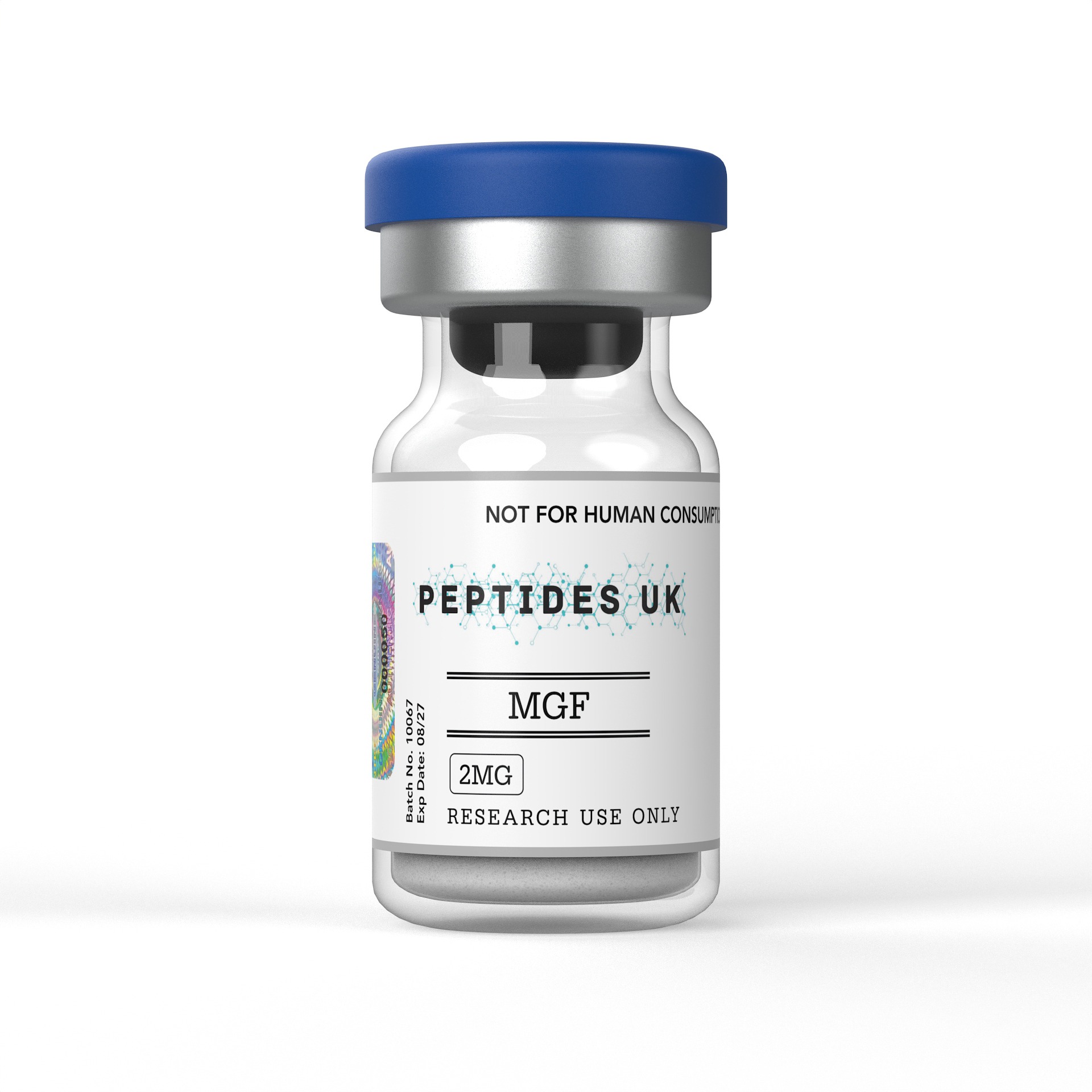
€32.50
MGF Ireland – Buy Online | In Stock & Ready to Ship
Buy MGF in Ireland with fast shipping and guaranteed ≥99% purity — verified with COA and HPLC documentation. A trusted choice for peptides Ireland research teams rely on, with no customs delays or international wait times. Whether you’re searching for MGF Ireland suppliers or looking to buy peptides Ireland-wide, we have you covered. Irish research teams can count on consistent stock, rapid fulfilment and full batch documentation every time.
For research use only. Not intended for human or veterinary use.



MGF (Mechano Growth Factor) is a naturally occurring splice variant of the IGF-1 gene and one of the most mechanistically distinctive local tissue repair peptides available to laboratories in Ireland — a C-terminal E-domain peptide produced endogenously in skeletal muscle, cardiac muscle, bone, and other mechanosensitive tissues in response to mechanical loading, damage, and hypoxia that acts through a receptor system distinct from the classical IGF-1 receptor to drive satellite cell activation and initiate the acute phase of muscle repair, making it a uniquely targeted research tool for studying mechanosensitive IGF-1 splice variant biology, satellite cell activation mechanisms, local versus systemic growth factor signalling, muscle repair and regeneration biology, and the coordinated tissue response to mechanical stress that distinguishes locally acting paracrine IGF-1 signals from the systemic endocrine IGF-1 biology of liver-derived growth factor. Researchers and institutions across Ireland can source verified, research-grade MGF directly from our Irish peptide supply, with domestic-speed dispatch and complete batch documentation.
✅ ≥99% Purity — HPLC & Mass Spectrometry Verified
✅ Batch-Specific Certificate of Analysis (CoA) Included
✅ Sterile Lyophilised Powder | GMP Manufactured
✅ Fast Dispatch to Ireland | Peptides Ireland Stock
MGF — Mechano Growth Factor — is the C-terminal E-domain peptide of the IGF-1Ec splice variant, one of several alternatively spliced mRNA products of the IGF-1 gene that are produced in a tissue-specific and stimulus-specific pattern in mechanosensitive tissues. The IGF-1 gene does not produce a single growth factor but rather a family of related peptides through alternative mRNA splicing — with the liver primarily producing the systemic IGF-1Ea splice variant that constitutes circulating endocrine IGF-1, while skeletal muscle, cardiac muscle, bone, and tendon produce the IGF-1Eb and IGF-1Ec splice variants in response to mechanical loading and tissue damage. IGF-1Ec is the human form of MGF — the designation reflecting that its E-domain extension contains the unique C-terminal sequence that distinguishes it from systemic IGF-1 and confers its distinct biological properties as a local mechanosensitive repair signal.
The biological distinctiveness of MGF from systemic IGF-1 operates at multiple levels. At the gene expression level, MGF is produced acutely and locally at the site of mechanical stress or damage — appearing in mechanically loaded muscle within hours of loading while systemic liver-derived IGF-1 elevation is slower and reflects systemic GH axis activation. At the molecular level, MGF’s C-terminal E-domain sequence — the unique peptide extension that distinguishes the IGF-1Ec splice variant product from systemic IGF-1 — acts through a receptor mechanism that has been characterised as distinct from the classical IGF-1 receptor, engaging binding sites on satellite cells and muscle precursor cells through interactions that are not competed by IGF-1 and that produce a distinct biological response of satellite cell activation and proliferation rather than the differentiation and protein synthesis signalling driven by IGF-1R activation. At the physiological level, MGF functions as a local paracrine and autocrine signal — acting in the immediate tissue microenvironment where it is produced, at the site of mechanical loading or damage, rather than as a circulating hormone reaching distant tissues through the bloodstream.
The research significance of this local, mechanosensitive biology is profound — MGF has been characterised as the initiating signal in the satellite cell activation cascade that underlies skeletal muscle repair and adaptation, appearing acutely at damage sites to activate satellite cells from quiescence before the subsequent systemic IGF-1 signalling drives the differentiation and maturation phases of repair. Professor Geoffrey Goldspink’s research group at University College London was foundational in characterising MGF biology — identifying IGF-1 splice variant expression patterns in mechanically loaded muscle, establishing the distinct biological properties of the MGF E-domain peptide, and proposing the model of sequential local MGF and systemic IGF-1 signalling that coordinates the complete muscle repair response.
As a research compound, native MGF peptide — representing the C-terminal E-domain sequence in its natural L-amino acid form — provides direct access to MGF receptor biology and allows study of the acute, local mechanosensitive repair signal in in vitro and short-duration pre-clinical research models. Its natural short half-life in biological systems — rapidly degraded by serum proteases reflecting its physiological role as a locally acting transient paracrine factor — requires appropriate research design consideration when selecting between native MGF and the extended-stability PEG MGF form depending on whether acute local or sustained systemic MGF biology is the experimental objective.
In controlled laboratory and pre-clinical settings, MGF is studied across a range of satellite cell biology, muscle repair mechanisms, IGF-1 splice variant pharmacology, mechanosensitive signalling, and local tissue growth factor research applications:
Satellite Cell Activation Research — MGF’s primary and most scientifically significant research application is the study of satellite cell activation from quiescence — the critical first step in skeletal muscle repair following damage. Research has characterised how the MGF E-domain peptide drives quiescent satellite cells into the cell cycle, examining the receptor mechanism through which MGF activates satellite cells independently of IGF-1R, the intracellular signalling cascades linking MGF receptor engagement to satellite cell cycle entry, and the temporal dynamics of satellite cell activation in response to acute MGF signalling. These satellite cell activation studies have contributed to fundamental understanding of how local IGF-1 splice variant signalling initiates muscle repair biology.
MGF Receptor Biology Research — MGF’s distinct receptor mechanism — engaging binding sites on satellite cells and muscle precursor cells through interactions not competed by systemic IGF-1 — has been studied in receptor pharmacology research examining the molecular identity of MGF’s receptor, the structural determinants of MGF E-domain peptide binding, and how MGF receptor engagement produces distinct downstream signalling relative to IGF-1R activation in the same cell populations. These receptor biology studies have contributed to characterising the MGF receptor system as a distinct biological entity from the classical IGF-1 receptor axis.
IGF-1 Splice Variant Biology and Comparative Research — MGF provides the defining research tool for studying the IGF-1Ec splice variant biology that distinguishes locally acting mechanosensitive IGF-1 signalling from systemic endocrine IGF-1. Studies have used MGF alongside systemic IGF-1 and other splice variants to characterise how alternative IGF-1 mRNA splicing generates growth factors with distinct receptor specificities, tissue distributions, and biological functions — contributing to fundamental understanding of how the IGF-1 gene produces a family of locally and systemically acting signals with coordinated and complementary roles in tissue growth and repair.
Mechanical Loading Response Research — MGF’s expression as the acute mechanosensitive IGF-1 splice variant makes it a research tool for studying how skeletal and cardiac muscle responds to mechanical loading at the molecular level — with studies examining how different loading parameters influence MGF splice variant expression, how rapidly MGF appears in mechanically stimulated tissue, and how the temporal and spatial pattern of MGF expression at loading sites correlates with satellite cell activation and downstream repair biology. These mechanosensitive expression studies have contributed to understanding of how mechanical signals are transduced into molecular growth factor responses.
Local vs Systemic IGF-1 Signalling Research — MGF provides a tool for directly contrasting local paracrine IGF-1 splice variant signalling with systemic endocrine IGF-1 biology in the same experimental systems — examining how MGF’s local receptor biology produces distinct cellular responses from systemic IGF-1R activation in muscle, how the temporal sequence of local MGF and systemic IGF-1 signalling coordinates the complete repair response, and how the balance between local and systemic IGF-1 pathway activation determines repair outcomes in different injury and loading contexts.
Muscle Hyperplasia Research — MGF’s role in satellite cell activation has positioned it as a key research tool in the study of muscle fibre hyperplasia — the generation of new muscle fibres through satellite cell-derived myoblast fusion — as distinct from hypertrophy involving enlargement of existing fibres. Research has examined whether MGF-driven satellite cell activation can initiate hyperplastic muscle fibre formation in pre-clinical models and how local MGF signalling contributes to the satellite cell biology underlying any hyperplastic responses — contributing to one of the most debated and scientifically significant questions in muscle biology research.
Myoblast Proliferation and Differentiation Research — Research has examined how MGF influences myoblast behaviour — the proliferating muscle precursor cells derived from activated satellite cells that form the regenerating myofibre pool following muscle damage. Studies have characterised MGF’s effects on myoblast proliferation dynamics, how MGF receptor signalling interacts with the differentiation signals that subsequently drive myoblast fusion and myofibre formation, and how the transition from MGF-driven proliferative expansion to IGF-1R-driven differentiation is temporally regulated in muscle repair biology.
Cardiac Muscle MGF Biology Research — MGF expression has been documented in cardiac muscle in response to mechanical stress and ischaemic injury — with research examining how cardiac MGF splice variant production contributes to cardiomyocyte protection and repair responses following ischaemic damage. Studies have characterised MGF expression dynamics in cardiac ischaemia models and examined how local cardiac MGF signalling influences cardiomyocyte survival, cardiac progenitor cell biology, and the healing response following cardiac injury — establishing cardiac biology as an important secondary research dimension for MGF alongside its primary skeletal muscle context.
Ageing and Sarcopenia Research — Research has documented age-associated decline in MGF expression in response to mechanical loading — with studies characterising reduced MGF splice variant production in aged muscle following equivalent loading stimuli compared to young muscle, and examining how this reduced local IGF-1 splice variant response contributes to the impaired satellite cell activation and muscle repair capacity that characterises sarcopenic muscle. These ageing biology studies have positioned MGF as a mechanistic contributor to age-related muscle loss and a research tool relevant to studying the biology of sarcopenia.
Neuroprotection and CNS MGF Research — MGF expression has been identified in neuronal tissue — with research characterising MGF production in the brain and spinal cord in response to injury and examining how local MGF signalling influences neuronal survival and neuroprotective responses. Studies have documented neuroprotective effects of MGF E-domain peptide in neuronal injury models — establishing a CNS research dimension for MGF biology beyond its primary musculoskeletal research context and contributing to understanding of how IGF-1 splice variant biology operates in the distinct low-IGFBP environment of the central nervous system.
Native MGF vs PEG MGF Comparative Research — The contrast between native MGF’s short half-life and local activity profile versus PEG MGF’s extended stability and systemic distribution makes comparative research between the two forms a natural research application — examining how the pharmacokinetic properties of each form influence the temporal and spatial pattern of MGF receptor biology, satellite cell activation dynamics, and downstream muscle repair outcomes. These comparative studies contribute to understanding of whether the acute, transient local signal of native MGF is biologically equivalent to the sustained systemic MGF receptor engagement achievable with PEG MGF and what the biological implications of this distinction are for satellite cell and tissue repair biology.
MGF has accumulated a well-established and scientifically distinctive research literature — centred on the foundational research establishing IGF-1 splice variant biology, satellite cell activation mechanisms, and the mechanical loading response, with a growing body of subsequent work examining MGF biology across multiple tissue contexts.
IGF-1 Splice Variant Biology Established by Goldspink Group — The foundational research characterising MGF as a distinct IGF-1 splice variant with unique local mechanosensitive biology was established through the work of Professor Geoffrey Goldspink and colleagues at University College London — documenting differential expression of IGF-1 splice variants in mechanically loaded versus unloaded muscle, establishing the acute temporal expression pattern of the IGF-1Ec splice variant in response to mechanical stimulation, and characterising the distinct biological properties of the MGF E-domain peptide compared to systemic IGF-1. This foundational work established the conceptual framework — sequential local MGF and systemic IGF-1 signalling coordinating complete muscle repair — that has guided MGF research and motivated the development of MGF as a research tool for studying local mechanosensitive growth factor biology.
Satellite Cell Activation Documented — Research has documented MGF’s capacity to activate satellite cells from quiescence in pre-clinical muscle biology studies — with studies reporting increased satellite cell proliferation markers, elevated MyoD expression consistent with satellite cell cell cycle entry, and enhanced myoblast generation following MGF administration in muscle injury and loading models. These satellite cell activation findings have provided functional evidence for MGF’s proposed role as the initiating signal of the satellite cell-mediated muscle repair cascade — establishing the biological relevance of the MGF E-domain peptide’s distinct receptor mechanism in driving the satellite cell response that underlies muscle regeneration.
MGF Receptor Mechanism Distinct from IGF-1R Characterised — Research has characterised MGF’s cellular effects through receptor mechanisms not competed by systemic IGF-1 — with competitive binding studies and downstream signalling analyses documenting that MGF E-domain peptide produces satellite cell activation responses through interactions distinct from IGF-1R engagement. Studies have characterised how MGF and IGF-1 produce complementary rather than redundant biological responses in satellite cell populations — with MGF driving the proliferative activation phase and IGF-1R signalling driving subsequent differentiation — contributing to mechanistic understanding of how the two signals coordinate sequential phases of the muscle repair response.
Age-Related MGF Expression Decline Documented — Research has comprehensively documented the decline in MGF splice variant expression with ageing — with studies characterising reduced MGF mRNA expression in aged muscle following mechanical loading compared to young muscle, and correlating this reduced mechanosensitive MGF response with impaired satellite cell activation and muscle regenerative capacity in aged pre-clinical models. These ageing biology findings have been important for establishing the mechanistic basis of sarcopenia-associated repair impairment and have positioned the MGF/satellite cell axis as a research target for understanding age-related muscle biology.
Cardiac MGF Expression and Cardioprotection Characterised — Research has documented MGF expression in mechanically stressed and ischaemically injured cardiac muscle — with studies characterising the temporal pattern of cardiac MGF splice variant production following injury and examining how MGF E-domain peptide influences cardiomyocyte survival parameters in cardiac injury models. These cardiac biology findings have extended MGF’s research significance beyond skeletal muscle — establishing cardiac IGF-1 splice variant biology as a dimension of the endogenous cardiac stress response with mechanistic connections to the satellite cell activation biology characterised in skeletal muscle research.
Neuroprotective Effects in CNS Injury Models Documented — Research has documented neuroprotective effects of MGF E-domain peptide in pre-clinical neuronal injury models — with studies reporting reduced neuronal apoptosis markers, improved neuronal survival parameters, and attenuation of injury-associated neurodegeneration following MGF treatment in relevant CNS injury paradigms. These neuroprotection findings have established a neurobiological research dimension for MGF beyond its primary musculoskeletal context — contributing to understanding of how IGF-1 splice variant biology operates in neuronal tissue and motivating research into MGF’s role as a locally acting neuroprotective signal.
Native MGF vs PEG MGF Pharmacokinetic Distinction Established — Research has characterised the pharmacokinetic contrast between native MGF and pegylated MGF — documenting the rapid degradation of native MGF in serum consistent with its short half-life as a locally acting paracrine factor, and establishing that PEGylation dramatically extends circulating stability to enable systemic pre-clinical research applications. These pharmacokinetic characterisation studies have provided important guidance for research design — establishing native MGF as the appropriate tool for studying the acute, local biology of mechanosensitive MGF signalling in short-duration in vitro and local tissue administration paradigms, while PEG MGF is appropriate when sustained systemic MGF receptor engagement is required.
| Feature | MGF (Native) | PEG MGF | IGF-1 LR3 | IGF-DES | Systemic IGF-1 |
|---|---|---|---|---|---|
| Type | Natural IGF-1Ec C-terminal E-domain peptide | Pegylated MGF — stability-extended form | Engineered long-acting IGF-1 analogue | Naturally truncated IGF-1 variant | Endogenous 70aa growth factor |
| Origin | IGF-1 gene alternative splicing — mechanical stimulus | Synthetic PEGylated MGF | Synthetic N-terminal extension + Arg³ substitution | Natural proteolytic truncation — colostrum/brain | IGF-1 gene — liver primary source |
| Half-Life | Minutes — local paracrine | Days — PEG-extended | ~20–30 hours | Short — local acting | ~10–12 minutes free |
| Receptor | MGF receptor — distinct from IGF-1R | MGF receptor — same as native | IGF-1R — full agonist | IGF-1R — full agonist | IGF-1R — reference |
| IGFBP Binding | Low — E-domain reduces binding | Low — same as native | Very low — ~1000-fold reduced | Very low — ~100-fold reduced | High — reference |
| Primary Muscle Biology | Satellite cell activation — proliferation | Satellite cell activation — systemic | Hypertrophy — mTOR/protein synthesis | Satellite cell / hyperplasia — local | Differentiation / maturation |
| Research Paradigm | Acute local — in vitro, short protocols | Systemic sustained — in vivo models | Systemic anabolic — in vivo models | Local tissue — autocrine/paracrine | Reference endocrine IGF-1 |
| Natural Occurrence | Yes — mechanically loaded muscle/heart/bone | No — synthetic modification | No — engineered | Yes — colostrum/brain | Yes — primary circulating form |
| Research Profile | Well-documented | Well-documented | Extensively studied | Well-documented | Extensively studied |
| Parameter | Detail |
|---|---|
| Name | MGF (Mechano Growth Factor) |
| Full Designation | IGF-1Ec C-terminal E-domain peptide |
| Type | Natural IGF-1 Gene Splice Variant Peptide |
| Biological Origin | Mechanosensitive tissues — skeletal/cardiac muscle, bone, tendon |
| Expression Stimulus | Mechanical loading, tissue damage, hypoxia |
| Receptor | MGF receptor — distinct from IGF-1R |
| Primary Biological Role | Satellite cell activation — initiating local muscle repair response |
| Signalling Context | Local autocrine/paracrine — mechanosensitive tissue microenvironment |
| IGFBP Binding | Low — E-domain reduces IGF-binding protein affinity |
| Half-Life | Short — minutes in biological systems |
| Key Research Distinction | Only naturally occurring mechanosensitive IGF-1 splice variant — acute local repair signal |
| Research Design Note | Short half-life suited to in vitro and local administration paradigms — use PEG MGF for systemic in vivo protocols |
| Purity | ≥99% HPLC & MS Verified |
| Form | Sterile Lyophilised Powder |
| Solubility | Sterile water or 0.1% acetic acid water — see reconstitution note |
| Storage (Powder) | -20°C, protect from light and moisture |
| Storage (Reconstituted) | 2–8°C — use within 7 days or aliquot at -80°C |
| Manufacturing | GMP Manufactured |
| Intended Use | Research use only |
MGF is best reconstituted in 0.1% acetic acid water — consistent with the reconstitution requirements of IGF family peptides that are prone to aggregation at neutral pH — rather than plain sterile water. Add the acetic acid water slowly down the inside wall of the vial and swirl gently without shaking. Prepare a concentrated stock solution in acetic acid water and dilute to working concentration in PBS or cell culture media as required by your research protocol — the acetic acid becomes negligible at working dilutions. Store the acetic acid water stock at 2–8°C for short-term use within 7 days, or aliquot into single-use volumes and store at -80°C for longer-term preservation. Use low-binding tubes where possible — IGF family peptides including MGF can adsorb to standard plastic surfaces at low concentrations. Avoid repeated freeze-thaw cycles. Given MGF’s short half-life in biological systems, prepare working solutions immediately before use and design research protocols that account for rapid degradation when planning experimental timecourses.
Acetic Acid Water for MGF reconstitution is available separately in our Ireland research solvent range.
Every order of MGF in Ireland includes:
✅ Batch-Specific Certificate of Analysis (CoA)
✅ HPLC Chromatogram
✅ Mass Spectrometry Confirmation
✅ Sterility & Endotoxin Testing Report
✅ Reconstitution Protocol — including acetic acid water guidance
✅ Technical Research Support
Yes — we supply research-grade MGF to researchers and institutions across Ireland with fast dispatch and full batch documentation. This compound is supplied strictly for laboratory research purposes only.
MGF and systemic IGF-1 are both products of the same IGF-1 gene but represent fundamentally different biological signals with distinct receptor systems, expression patterns, and biological roles. Systemic IGF-1 is produced primarily in the liver in response to growth hormone stimulation — secreted into circulation as a 70 amino acid growth factor that reaches tissues throughout the body as an endocrine hormone, engaging the IGF-1 receptor to drive protein synthesis, cell survival, and differentiation through PI3K/Akt/mTOR and MAPK/ERK signalling. MGF is produced locally in mechanosensitive tissues — particularly skeletal and cardiac muscle — in response to mechanical loading and damage, acting as a local paracrine and autocrine signal through a receptor system distinct from IGF-1R to drive the satellite cell activation that initiates muscle repair. The biological relationship between the two signals is sequential and complementary rather than redundant — MGF appears acutely at damage sites to activate satellite cells and initiate the repair response, while systemic IGF-1 drives the subsequent differentiation and maturation phases. In research terms, MGF is the tool for studying local mechanosensitive IGF-1 splice variant biology and satellite cell activation, while systemic IGF-1 and its long-acting analogues are the tools for studying endocrine growth factor biology and IGF-1R-dependent anabolic and differentiation signalling.
Satellite cells are the resident stem cells of skeletal muscle — small mononuclear cells that reside in a quiescent state in specialised niches between the sarcolemma and basal lamina of mature muscle fibres, maintained in quiescence by Notch signalling and other niche factors until muscle damage activates them from this resting state. Upon activation, satellite cells re-enter the cell cycle, proliferate to generate a pool of myoblasts, and subsequently differentiate and fuse to repair damaged fibres or form new muscle tissue — representing the essential cellular mechanism underlying adult skeletal muscle’s remarkable regenerative capacity. MGF has been characterised as one of the primary signals driving satellite cell activation from quiescence following mechanical damage — the rate-limiting first step that determines how effectively and rapidly the muscle repair response is initiated. The significance of this satellite cell activating role for muscle biology research is substantial — satellite cell number and activation efficiency determine muscle regenerative capacity across the lifespan, decline with ageing in ways that contribute to sarcopenia, and are relevant to understanding muscle adaptation to exercise loading, muscle disease biology, and the regenerative potential of muscle stem cell populations.
MGF’s short half-life in biological systems — rapidly degraded by serum proteases within minutes — is not a pharmacological limitation to be overcome but a reflection of its physiological role as a locally acting paracrine factor. Biology designed MGF to act transiently at the site of mechanical damage — activating satellite cells acutely and locally without producing sustained systemic effects — and the rapid protease degradation that limits its circulating life is the mechanism ensuring this local, transient action. For research design, this short half-life means native MGF is well-suited to in vitro studies where it can be added directly to cell culture systems without serum protease degradation concern, to ex vivo tissue studies with direct tissue application, and to in vivo studies using local tissue administration approaches where rapid local activity is the research objective. For systemic in vivo research requiring sustained MGF receptor engagement across multiple tissues, PEG MGF — whose polyethylene glycol modification protects against serum protease degradation — is the appropriate research tool. Selecting between native MGF and PEG MGF is therefore a research design question about whether the acute local transient signal of native MGF biology or the sustained systemic activity of PEG MGF is more relevant to the experimental question being addressed.
MGF and PEG MGF represent two complementary research tools for studying different aspects of the same biological system — native MGF for the acute, local, transient mechanosensitive signal that MGF physiologically represents, and PEG MGF for sustained systemic MGF receptor engagement that allows in vivo pre-clinical research designs. Native MGF is the appropriate choice for in vitro satellite cell activation studies, receptor binding and signalling characterisation experiments, mechanosensitive gene expression research, local tissue administration paradigms, and any research context where the acute biology of the natural MGF signal is the focus. PEG MGF is the appropriate choice for in vivo pre-clinical research examining satellite cell activation, muscle repair biology, neuroprotection, or cardiac biology in systemic models where MGF needs to reach target tissues through the circulation and maintain receptor engagement across the experimental timeframe. The choice between them is not about potency or receptor pharmacology — both engage the same MGF receptor — but about which pharmacokinetic profile is appropriate for the research question and experimental design.
The distinction between MGF’s receptor mechanism and the classical IGF-1 receptor is one of the most scientifically significant aspects of MGF biology — establishing that the IGF-1 gene produces not only systemic IGF-1 acting through IGF-1R but also a locally acting splice variant peptide that engages a distinct receptor system producing different biological outcomes in the same cell populations. The MGF receptor has been characterised functionally through experiments demonstrating that MGF E-domain peptide produces satellite cell activation responses that are not blocked by IGF-1R antagonists or antibodies, not competed by systemic IGF-1 at the receptor binding level, and associated with downstream signalling patterns distinct from classical IGF-1R activation. While the precise molecular identity of the MGF receptor continues to be an active area of research — with candidates including a distinct membrane receptor, a co-receptor complex, or a novel binding protein — the functional evidence for receptor distinctiveness from IGF-1R has been established through multiple experimental approaches. This receptor distinction is important for research design — it means that MGF and systemic IGF-1 produce complementary rather than redundant signals in satellite cells, and that studying MGF biology requires attention to its distinct receptor mechanism rather than assuming IGF-1R mediates all IGF-1 gene product activities.
Yes — while skeletal muscle is the primary and most extensively studied tissue in MGF research, MGF splice variant expression and biological activity have been characterised in several additional tissue contexts. Cardiac muscle research has documented MGF expression in mechanically stressed and ischaemically injured heart tissue — with studies examining MGF’s role in cardiomyocyte protection and cardiac repair responses following ischaemic injury, and characterising how cardiac IGF-1 splice variant biology parallels the satellite cell activation function in skeletal muscle through effects on cardiac progenitor cell populations. Bone biology research has examined MGF expression in mechanically loaded osteoblasts — with studies documenting mechanoresponsive IGF-1 splice variant production in bone tissue and characterising its potential contribution to mechanosensitive bone formation responses. Neuronal research has identified MGF expression in the brain and spinal cord following injury, with studies reporting neuroprotective effects of MGF E-domain peptide in CNS injury models and establishing IGF-1 splice variant biology as a component of the endogenous neuronal stress response. Together these non-skeletal muscle research areas have established MGF as a broadly expressed mechanosensitive repair signal whose biology extends across multiple tissue types responding to mechanical stress and damage.
≥99% purity is strongly recommended for satellite cell activation assays, MGF receptor binding studies, mechanosensitive signalling research, muscle repair biology experiments, and in vitro or pre-clinical in vivo research models — where compound purity directly determines the reliability of receptor activation measurements, satellite cell biology outcomes, and signalling characterisation. Given MGF’s mechanism through specific peptide-receptor interaction in sensitive satellite cell biology assays, impurities could introduce confounding signals that compromise the selectivity of observed biological responses. All MGF Ireland stock is independently verified to ≥99% purity by HPLC and mass spectrometry with identity confirmation.
Allow the vial to reach room temperature before opening. Add 0.1% acetic acid water slowly down the inside wall of the vial — do not inject directly onto the lyophilised powder and do not shake. Swirl gently until fully dissolved. Prepare a concentrated stock solution in acetic acid water and dilute to working concentration in PBS or cell culture media as required — the acetic acid becomes negligible at working dilutions. Store the acetic acid water stock at 2–8°C for short-term use within 7 days, or aliquot into single-use volumes and store at -80°C for longer-term preservation. Use low-binding tubes where possible — IGF family peptides including MGF can adsorb to standard plastic surfaces at low concentrations. Avoid repeated freeze-thaw cycles. Prepare working solutions immediately before experimental use to account for MGF’s rapid degradation in biological systems and ensure consistent MGF concentrations across experimental replicates.
MGF is supplied exclusively for legitimate scientific research purposes conducted within licensed laboratory environments. This product is not intended for human consumption, self-administration, or any therapeutic application. It must be handled by qualified researchers in compliance with applicable Irish and EU regulations and institutional ethics guidelines. By purchasing, you confirm that this compound will be used solely for approved in vitro or pre-clinical research purposes.



WhatsApp us
Receive News
