PRODUCTS SOLD ON PEPTIDESLABIRELAND.COM ARE FOR RESEARCH PURPOSES ONLY AND ARE NOT FOR HUMAN OR VETERINARY USE.
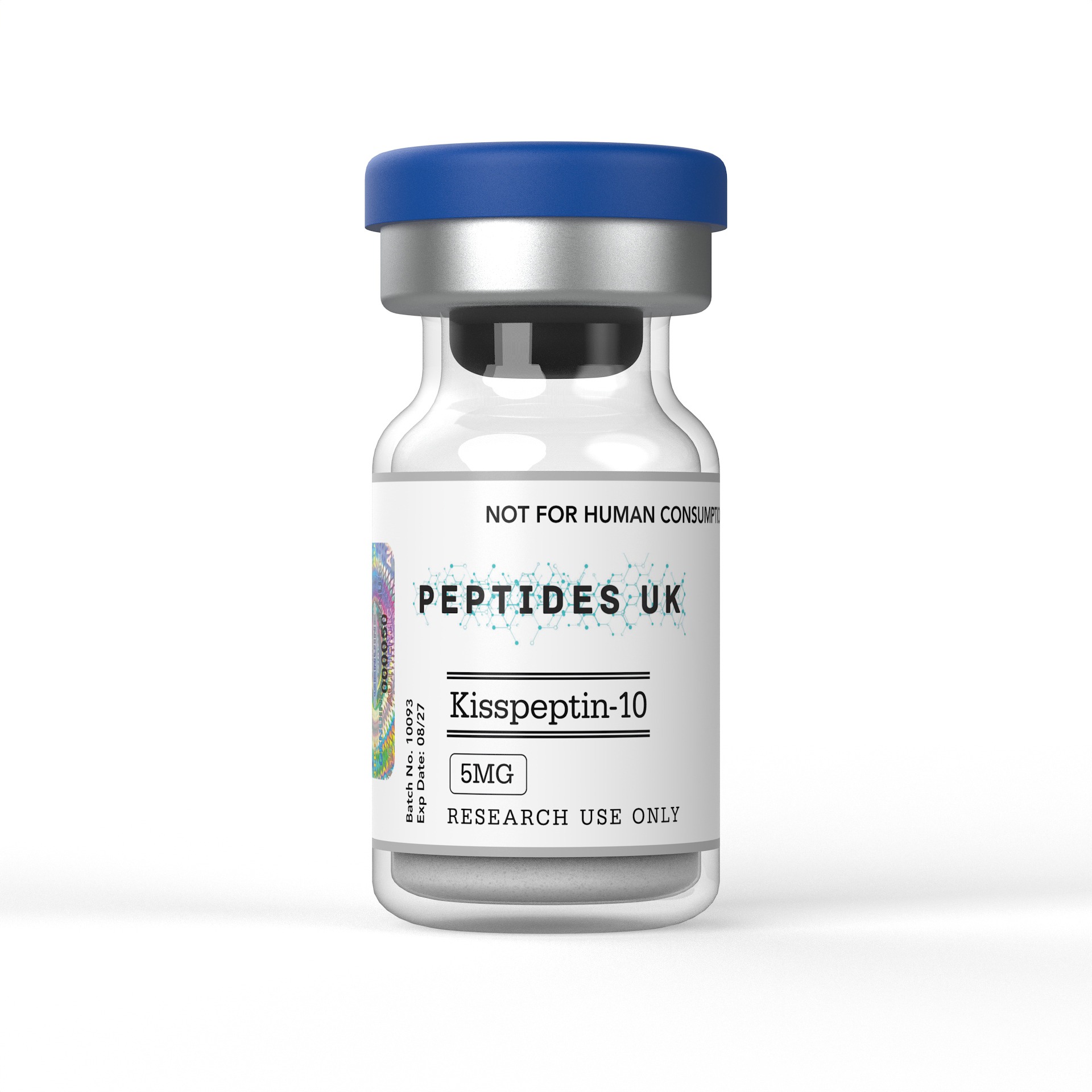
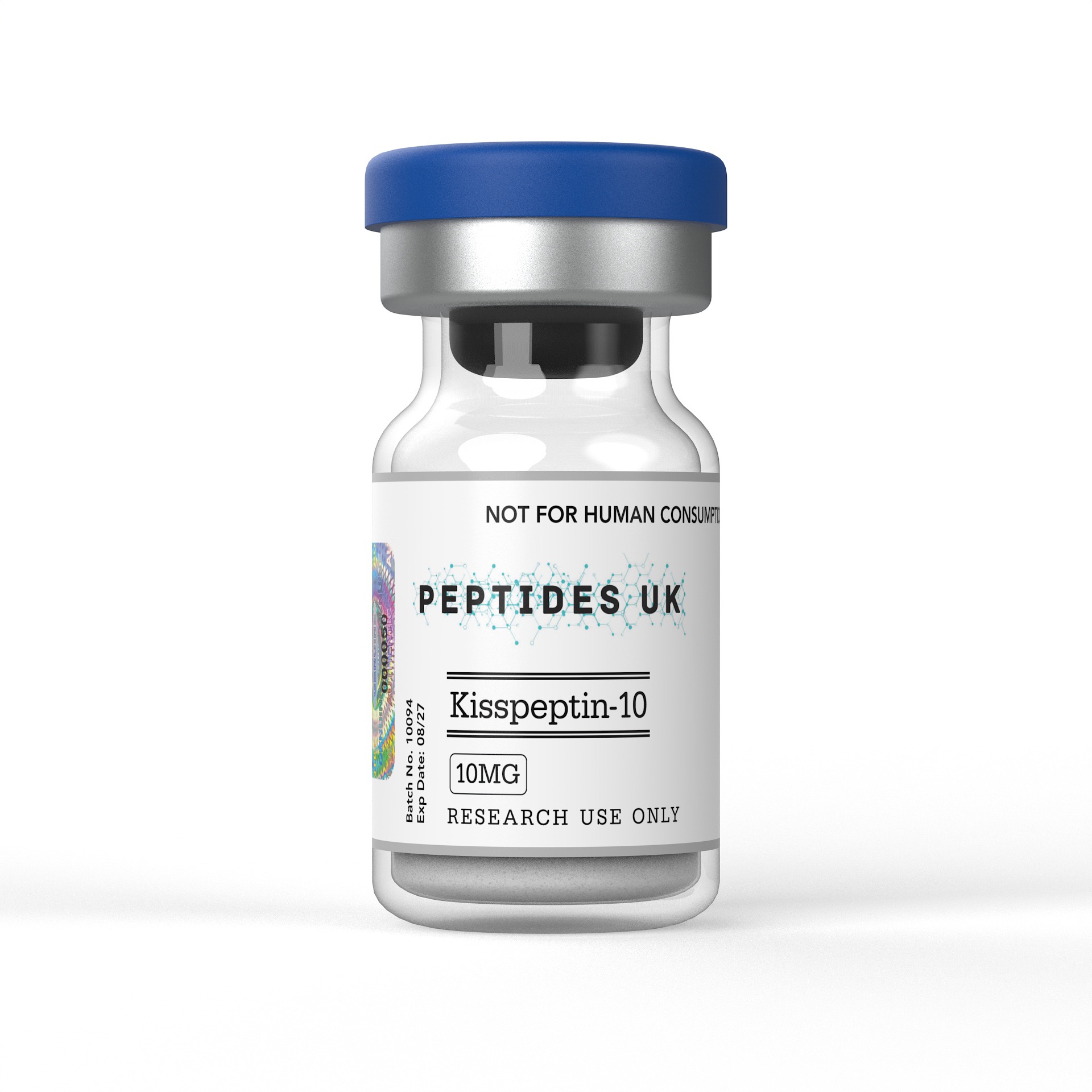
€23.50 – €43.00Price range: €23.50 through €43.00
Kisspeptin-10 Ireland – Buy Online | In Stock & Ready to Ship
Buy Kisspeptin-10 in Ireland with fast shipping and guaranteed ≥99% purity — verified with COA and HPLC documentation. A trusted choice for peptides Ireland research teams rely on, with no customs delays or international wait times. Whether you’re searching for Kisspeptin-10 Ireland suppliers or looking to buy peptides Ireland-wide, we have you covered. Irish research teams can count on consistent stock, rapid fulfilment and full batch documentation every time.
For research use only. Not intended for human or veterinary use.



Kisspeptin-10 is a synthetic decapeptide and one of the most significant hypothalamic neuropeptide research compounds available to laboratories in Ireland — the biologically active C-terminal fragment of the kisspeptin family of neuropeptides encoded by the KISS1 gene, acting as the most potent endogenous activator of GnRH neurone firing and the master upstream regulator of the hypothalamic-pituitary-gonadal axis, making it an indispensable research tool for studying KISS1R receptor pharmacology and signal transduction, hypothalamic GnRH neurone regulation and HPG axis gating, puberty onset and reproductive neuroendocrinology, the feedback regulation of gonadal steroids on hypothalamic kisspeptin neurones, metabolic regulation of reproductive function through kisspeptin signalling, kisspeptin’s roles outside the reproductive axis including glucose homeostasis and cardiovascular biology, and the emerging research biology of kisspeptin system dysregulation in hypogonadotropic hypogonadism, polycystic ovary syndrome, hypothalamic amenorrhoea, and other reproductive disorders. Researchers and institutions across Ireland can source verified, research-grade Kisspeptin-10 directly from our Irish peptide supply, with domestic-speed dispatch and complete batch documentation.
✅ ≥99% Purity — HPLC & Mass Spectrometry Verified
✅ Batch-Specific Certificate of Analysis (CoA) Included
✅ Sterile Lyophilised Powder | GMP Manufactured
✅ Fast Dispatch to Ireland | Peptides Ireland Stock
Kisspeptin-10 — the decapeptide Tyr-Asn-Trp-Asn-Ser-Phe-Gly-Leu-Arg-Phe-NH2 representing the biologically active C-terminal ten amino acids shared across all kisspeptin isoforms — is the shortest and most pharmacologically studied fragment of the kisspeptin family, which also includes kisspeptin-54, kisspeptin-14, and kisspeptin-13, all processed from the 145-amino acid KISS1 gene product and all converging on the same C-terminal decapeptide sequence for KISS1R receptor binding and activation. The kisspeptin system was identified through two converging lines of research in 2003 — the characterisation of inactivating mutations in KISS1R (then designated GPR54) as the cause of idiopathic hypogonadotropic hypogonadism in humans and mice, and the identification of kisspeptin as the endogenous KISS1R ligand — discoveries that established kisspeptin signalling as an essential and previously unrecognised gating mechanism for reproductive function and transformed understanding of HPG axis regulation.
Kisspeptin-10’s biological significance rests on its position as the proximate hypothalamic activator of GnRH neurone firing — with kisspeptin neurones in the arcuate nucleus and anteroventral periventricular nucleus providing the principal excitatory drive to GnRH neurones through KISS1R expressed on GnRH neurone cell bodies and dendrites, translating gonadal steroid feedback signals, metabolic status, circadian timing, and stress inputs into modulation of GnRH pulse frequency and amplitude that governs downstream pituitary gonadotropin secretion. Kisspeptin-10 activates KISS1R — a Gq/11-coupled GPCR — with equivalent potency to the larger kisspeptin isoforms, making it the preferred research tool due to its smaller size, lower synthesis cost, and established pharmacological characterisation as a full KISS1R agonist. Synthetic Kisspeptin-10 administered exogenously produces potent GnRH and LH secretion in pre-clinical and human research — providing a pharmacological tool for studying the kisspeptin-GnRH axis and its regulation with a temporal resolution and dose controllability that characterisation of endogenous kisspeptin release cannot achieve.
In controlled laboratory and pre-clinical settings, Kisspeptin-10 is studied across a range of KISS1R pharmacology, HPG axis regulation, reproductive neuroendocrinology, metabolic biology, and clinical translational research applications:
Kisspeptin-10 is the primary reference agonist for KISS1R pharmacology — examining Gq/11-mediated phospholipase C activation, IP3-mediated calcium mobilisation, PKC activation, ERK phosphorylation, and the downstream transcriptional regulation of GnRH neurone excitability. Research has used Kisspeptin-10 to characterise KISS1R binding kinetics, receptor internalisation and desensitisation, and how sustained versus pulsatile KISS1R activation influences downstream GnRH neurone firing patterns. These signal transduction studies have established the molecular basis for kisspeptin’s potent and rapid GnRH-stimulating activity.
Kisspeptin-10 provides direct experimental control over GnRH neurone activation — enabling characterisation of how KISS1R activation on GnRH neurone cell bodies and dendrites translates into action potential firing, GnRH peptide release, and downstream LH and FSH secretion. Research has used Kisspeptin-10 in hypothalamic slice preparations and in vivo models to characterise the electrophysiological responses of GnRH neurones to kisspeptin stimulation, the anatomical sites of KISS1R expression on the GnRH neurone, and the ionic mechanisms through which KISS1R activation depolarises GnRH neurones. These studies have established Kisspeptin-10 as the essential tool for studying the proximate control of GnRH neurone activity.
Kisspeptin neurones are the primary hypothalamic site for integration of gonadal steroid negative and positive feedback onto the HPG axis — with oestrogen and testosterone acting on kisspeptin neurones expressing oestrogen receptor alpha and androgen receptor to modulate kisspeptin expression and release. Research has used Kisspeptin-10 to examine how gonadal steroid feedback regulates KISS1R sensitivity in GnRH neurones, to characterise the kisspeptin neurone populations mediating negative versus positive oestrogen feedback, and to study the neuroendocrine basis for the LH surge through kisspeptin-mediated mechanisms in female rodent models.
The kisspeptin system is a critical regulator of puberty onset — with increasing kisspeptin signalling in the peripubertal period providing the escalating GnRH stimulatory drive that initiates puberty. Research has used Kisspeptin-10 to study the developmental changes in KISS1R sensitivity and GnRH neurone responsiveness across prepubertal and pubertal periods, to examine how metabolic signals and body weight changes influence kisspeptin-driven puberty onset, and to characterise the neuroendocrine changes that gate the pubertal transition. These studies have established kisspeptin as the molecular switch linking somatic maturation to reproductive axis activation.
Kisspeptin neurones integrate metabolic signals — including leptin, insulin, and energy balance indicators — to gate reproductive function according to nutritional status, providing the neuroendocrine basis for the suppression of fertility during energy deficit. Research has used Kisspeptin-10 to examine whether GnRH neurone responsiveness to kisspeptin is maintained during energy restriction and fasting — establishing whether the reproductive axis suppression observed during negative energy balance reflects impaired kisspeptin signalling, reduced kisspeptin release, or downstream GnRH neurone insensitivity.
Loss-of-function mutations in KISS1R or KISS1 produce idiopathic hypogonadotropic hypogonadism — establishing the kisspeptin pathway as essential for HPG axis function and positioning Kisspeptin-10 as a diagnostic and research tool for characterising HPG axis integrity. Research has used Kisspeptin-10 administration as a pharmacological challenge to assess GnRH neurone responsiveness in animal models of reproductive dysfunction — characterising the kisspeptin pathway integrity in PCOS, hypothalamic amenorrhoea, and ageing-associated reproductive decline models.
KISS1R is expressed outside the hypothalamus — in pancreatic beta cells, liver, cardiovascular tissue, and peripheral reproductive organs — and research has characterised kisspeptin signalling in these extrahypothalamic contexts. Studies have used Kisspeptin-10 to examine direct effects on pancreatic insulin secretion, hepatic glucose metabolism, vascular tone, and gonadal cell biology — establishing that kisspeptin’s biological significance extends beyond HPG axis regulation to encompass metabolic and cardiovascular biology.
Research has documented Kisspeptin-10’s capacity to produce rapid and robust LH secretion in rodents, sheep, non-human primates, and humans following peripheral and central administration — establishing kisspeptin as the most potent known endogenous stimulator of GnRH and LH release. These studies characterised dose-dependent LH responses to Kisspeptin-10 and established the pharmacodynamic parameters for kisspeptin-induced HPG axis activation across multiple species.
Research characterising inactivating KISS1R mutations in patients with idiopathic hypogonadotropic hypogonadism — producing failure of puberty and infertility reversed by exogenous GnRH pulsatile administration — established the essential non-redundant role of kisspeptin signalling in human reproductive function. These human genetic studies provided the foundational validation of the kisspeptin pathway as the primary gating mechanism for HPG axis activation.
Research has distinguished two kisspeptin neurone populations with opposing roles in steroid feedback — arcuate nucleus kisspeptin neurones mediating negative feedback and anteroventral periventricular nucleus kisspeptin neurones mediating positive feedback and the LH surge in rodents. These population-specific characterisation studies established the neuroanatomical framework for understanding how the hypothalamus integrates opposing steroid feedback signals through distinct kisspeptin neurone populations.
Research using hypothalamic slice electrophysiology has documented direct depolarisation and action potential firing in GnRH neurones following Kisspeptin-10 application — characterising the ionic mechanisms including inhibition of potassium channels and activation of non-selective cation currents that mediate kisspeptin-induced GnRH neurone excitation. These electrophysiology studies established the cellular mechanisms of kisspeptin’s potent GnRH-stimulating activity.
Clinical research has confirmed Kisspeptin-10’s robust LH-stimulating effects in human subjects — with studies in healthy men and women, patients with hypothalamic amenorrhoea, and women undergoing assisted reproduction documenting dose-dependent LH responses. These clinical studies validated kisspeptin as a pharmacological tool for HPG axis stimulation in humans and characterised the translational pharmacodynamics of Kisspeptin-10 administration.
Research has documented direct effects of Kisspeptin-10 on pancreatic beta cell insulin secretion — with studies characterising KISS1R expression in beta cells and Kisspeptin-10-stimulated insulin release in isolated islets and in vivo glucose challenge models. These studies established the metabolic biology of kisspeptin signalling beyond the HPG axis.
| Feature | Kisspeptin-10 | Kisspeptin-54 | GnRH | Triptorelin | Senktide |
|---|---|---|---|---|---|
| Type | Endogenous decapeptide — KISS1 C-terminal fragment | Full-length kisspeptin isoform — 54 amino acids | Endogenous GnRH decapeptide | Synthetic GnRH agonist — D-Trp6 analogue | Selective NK3 receptor agonist — NKB analogue |
| Primary Target | KISS1R — Gq/11-coupled GPCR | KISS1R | GnRH receptor | GnRH receptor | NK3 receptor on kisspeptin neurones |
| Site of Action | GnRH neurones — KISS1R on cell bodies and dendrites | GnRH neurones | Pituitary gonadotrophs | Pituitary gonadotrophs | Arcuate kisspeptin neurones — upstream of GnRH |
| Effect on LH | Rapid stimulation — GnRH-dependent | Rapid stimulation | Stimulation (pulsatile) or suppression (continuous) | Stimulation then suppression — biphasic | Stimulation — via kisspeptin release |
| HPG Axis Level | Hypothalamic — upstream of GnRH | Hypothalamic | Pituitary | Pituitary | Hypothalamic — upstream of kisspeptin |
| Research Application | KISS1R pharmacology / GnRH neurone biology / steroid feedback / puberty / reproductive disorders | Kisspeptin isoform comparison / longer duration studies | GnRH receptor pharmacology / pituitary biology | GnRH receptor desensitisation / HPG suppression | NKB-kisspeptin-dynorphin (KNDy) neurone biology |
| Research Profile | Extensively studied — reference kisspeptin agonist | Well-documented | Extensively studied | Extensively studied | Well-documented |
| Parameter | Detail |
|---|---|
| Name | Kisspeptin-10 |
| Also Designated | KP-10 / metastin(45-54) |
| Sequence | Tyr-Asn-Trp-Asn-Ser-Phe-Gly-Leu-Arg-Phe-NH2 |
| Type | Synthetic Decapeptide Neuropeptide — Research Grade |
| Molecular Weight | 1302.5 Da |
| Mechanism | KISS1R (GPR54) agonism — Gq/11-coupled → PLC activation → IP3/calcium mobilisation → PKC/ERK activation → GnRH neurone depolarisation → GnRH release → LH/FSH secretion |
| Primary Receptor | KISS1R (GPR54) — Gq/11-coupled GPCR |
| Key Research Distinction | Most potent endogenous activator of GnRH neurone firing — reference agonist for KISS1R pharmacology and HPG axis upstream regulation research |
| Primary Research Areas | KISS1R pharmacology / HPG axis regulation / GnRH neurone biology / puberty / steroid feedback / reproductive disorders / metabolic regulation of fertility / extrahypothalamic kisspeptin biology |
| C-terminal Amidation | Yes — Phe-NH2 C-terminal amide essential for full KISS1R binding affinity |
| Purity | ≥99% HPLC & MS Verified |
| Form | Sterile Lyophilised Powder |
| Solubility | Sterile water or 0.1% acetic acid aqueous solution |
| Storage (Powder) | -20°C, protect from light and moisture |
| Storage (Reconstituted) | -80°C in aliquots — minimise freeze-thaw cycles |
| Manufacturing | GMP Manufactured |
| Intended Use | Research use only |
Kisspeptin-10 is a hydrophilic decapeptide with good aqueous solubility — reconstitute by adding sterile water or 0.1% acetic acid in sterile water slowly to the lyophilised powder and swirling gently. The C-terminal amide group is essential for full KISS1R binding affinity — avoid strongly alkaline or oxidising conditions that can degrade the amide. Avoid reducing agents and prolonged exposure to elevated temperatures. Prepare single-use aliquots and store at -80°C. Use low-binding tubes throughout. For in vivo HPG axis studies, prepare fresh working solutions in sterile saline immediately before administration and maintain on ice. For hypothalamic slice electrophysiology studies, dilute into oxygenated artificial cerebrospinal fluid at the time of application.
Every order of Kisspeptin-10 in Ireland includes:
✅ Batch-Specific Certificate of Analysis (CoA)
✅ HPLC Chromatogram
✅ Mass Spectrometry Confirmation
✅ Sterility & Endotoxin Testing Report
✅ Reconstitution Protocol — including C-terminal amide stability guidance
✅ Technical Research Support
Yes — we supply research-grade Kisspeptin-10 to researchers and institutions across Ireland with fast dispatch and full batch documentation. Supplied strictly for laboratory research purposes only.
KISS1R — also designated GPR54 — is a Gq/11-coupled GPCR expressed on GnRH neurones, pituitary gonadotrophs, and multiple extrahypothalamic tissues. It is the sole identified receptor for kisspeptin peptides and the essential gating receptor for HPG axis activation — loss-of-function mutations in KISS1R cause complete failure of puberty and reproductive function in humans and mice, establishing it as non-redundant for reproductive neuroendocrinology.
Both isoforms activate KISS1R through the same C-terminal decapeptide sequence and produce equivalent receptor pharmacology. Kisspeptin-54 has a longer plasma half-life due to its larger size, while Kisspeptin-10 is more practical for research due to lower synthesis cost and well-established pharmacological characterisation. For most receptor binding, cell signalling, and acute in vivo HPG axis studies, Kisspeptin-10 is the standard research tool.
Kisspeptin-10 binds KISS1R on GnRH neurone cell bodies and dendrites, activating Gq/11-PLC-IP3 signalling that depolarises GnRH neurones through potassium channel inhibition and non-selective cation channel activation — driving GnRH action potential firing, GnRH peptide release into the portal circulation, and subsequent pituitary LH and FSH secretion. The entire response occurs within minutes of Kisspeptin-10 administration.
The Phe-NH2 C-terminal amide is critical for full KISS1R binding affinity — the free acid analogue without C-terminal amidation shows substantially reduced receptor binding and potency. Research designs must use properly amidated Kisspeptin-10 and avoid reconstitution or storage conditions that promote amide hydrolysis, particularly strongly alkaline pH above 9 or prolonged incubation at elevated temperatures.
Rising kisspeptin neurone activity during the peripubertal period provides the escalating GnRH stimulatory drive that initiates the pubertal increase in LH pulsatility, gonadal steroidogenesis, and the cascade of somatic and reproductive changes characterising puberty. Kisspeptin-10 is used in research to examine GnRH neurone responsiveness at different developmental stages and to characterise the metabolic and hormonal signals that regulate the peripubertal kisspeptin increase.
Vehicle controls matched to the reconstitution solvent are essential. KISS1R antagonist controls — using peptide KISS1R antagonists such as p234 or kisspeptin analogue antagonists — confirm receptor-mediated specificity of observed LH responses. GnRH receptor antagonist controls — such as cetrorelix — confirm that Kisspeptin-10’s LH-stimulating effects are GnRH-dependent rather than involving direct pituitary kisspeptin receptor activation. For steroid feedback studies, gonadectomised and gonadally intact comparator groups are required.
≥99% purity is essential — particularly because degradation products lacking the intact C-terminal Phe-NH2 show dramatically reduced KISS1R activity and could confound dose-response characterisation and HPG axis stimulation studies. High purity with confirmed C-terminal amide integrity is the minimum standard for in vivo HPG axis and electrophysiology research. All Kisspeptin-10 Ireland stock is verified to ≥99% purity by HPLC and mass spectrometry.
Kisspeptin-10 is supplied exclusively for legitimate scientific research purposes conducted within licensed laboratory environments. This product is not intended for human consumption, self-administration, or any therapeutic application. It must be handled by qualified researchers in compliance with applicable Irish and EU regulations and institutional ethics guidelines. By purchasing, you confirm that this compound will be used solely for approved in vitro or pre-clinical research purposes.
WhatsApp us
Receive News
