PRODUCTS SOLD ON PEPTIDESLABIRELAND.COM ARE FOR RESEARCH PURPOSES ONLY AND ARE NOT FOR HUMAN OR VETERINARY USE.
€68.00
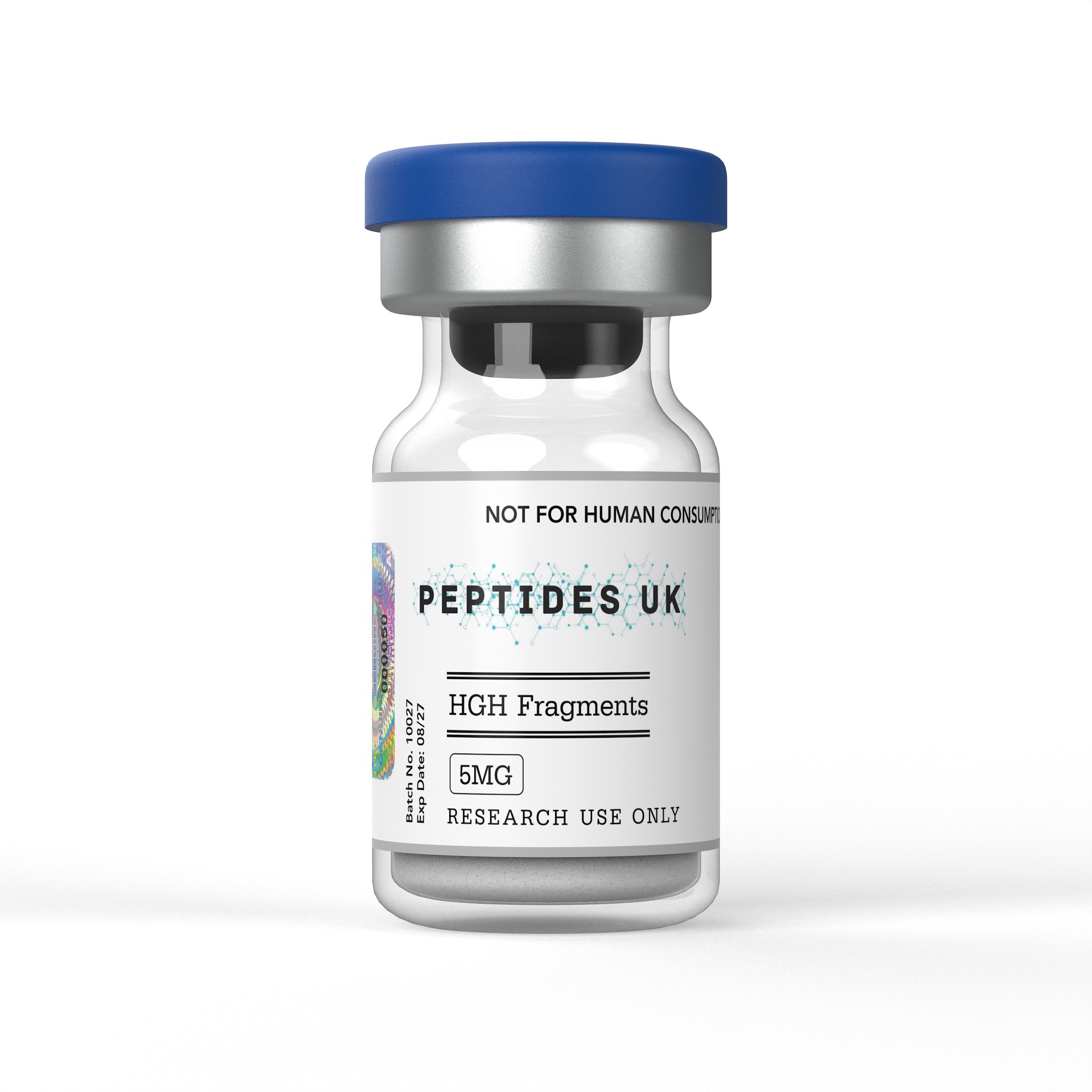
HGH Fragment Ireland – Buy Online | In Stock & Ready to Ship
Buy HGH Fragment in Ireland with fast shipping and guaranteed ≥99% purity — verified with COA and HPLC documentation. A trusted choice for peptides Ireland research teams rely on, with no customs delays or international wait times. Whether you’re searching for HGH Fragment Ireland suppliers or looking to buy peptides Ireland-wide, we have you covered. Irish research teams can count on consistent stock, rapid fulfilment and full batch documentation every time.
For research use only. Not intended for human or veterinary use.


HGH Fragment 176-191 — the C-terminal lipolytic domain of human growth hormone — is a synthetic 16-amino acid peptide fragment and one of the most precisely characterised growth hormone-derived lipolytic research compounds available to laboratories in Ireland — a Tyr-Leu-Arg-Ile-Val-Gln-Cys-Arg-Ser-Val-Glu-Gly-Ser-Cys-Gly-Phe peptide corresponding to residues 176–191 of the native hGH sequence that selectively recapitulates the lipolytic biological activity of full-length growth hormone without engaging the GH receptor or producing the insulin-desensitising, IGF-1-mediated anabolic effects of intact GH — making it an indispensable research tool for studying the dissociated lipolytic biology of the GH molecule, the mechanism of GH-induced fat mobilisation at the adipocyte level, the pharmacology of GH-derived fragments as selective lipolytic agents, the structure-activity relationships of the hGH C-terminal lipolytic domain, and the comparative lipid mobilisation biology of full-length GH versus its isolated lipolytic domain peptide in the research context of adipose tissue metabolism and energy substrate regulation. Researchers and institutions across Ireland can source verified, research-grade HGH Fragment 176-191 directly from our Irish peptide supply, with domestic-speed dispatch and complete batch documentation.
✅ ≥99% Purity — HPLC & Mass Spectrometry Verified
✅ Batch-Specific Certificate of Analysis (CoA) Included
✅ Sterile Lyophilised Powder | GMP Manufactured
✅ Fast Dispatch to Ireland | Peptides Ireland Stock
HGH Fragment 176-191 — residues 176–191 of human growth hormone, Tyr-Leu-Arg-Ile-Val-Gln-Cys-Arg-Ser-Val-Glu-Gly-Ser-Cys-Gly-Phe — is a synthetic 16-amino acid peptide corresponding to the C-terminal helical domain of the native 191-residue hGH molecule that was identified through systematic domain-mapping studies as the minimal structural region of full-length GH responsible for its lipolytic and anti-lipogenic biological activities. The lipolytic biology of full-length growth hormone had been characterised through decades of endocrinology research documenting GH-induced fat mobilisation — the increase in circulating free fatty acids, triglyceride lipolysis in adipose tissue, and the anti-lipogenic suppression of fat storage — as a major physiological action of GH distinct from and partially opposite to its IGF-1-mediated anabolic and growth-promoting effects. Domain-mapping studies subsequently established that the 176–191 C-terminal region of hGH contains the lipolytic pharmacophore sufficient to recapitulate fat mobilisation biology independently of the N-terminal receptor-binding domains responsible for GH receptor engagement, IGF-1 axis stimulation, and insulin-desensitising metabolic effects.
The structural basis of HGH Fragment 176-191’s selective lipolytic activity resides in the peptide’s partial α-helical conformation — stabilised by the disulphide bridge between Cys182 and Cys189 — and its ability to interact with adipocyte membrane targets responsible for lipolysis activation without engaging the canonical GH receptor dimerisation interface through which full-length hGH produces its growth-promoting and IGF-1-stimulating biology. This structural dissociation between the lipolytic domain and the GH receptor-binding domains of the native hGH molecule is the pharmacological basis for HGH Fragment 176-191’s research interest — the peptide provides a tool for studying GH-mediated fat mobilisation biology with the confounding variables of GH receptor activation, IGF-1 induction, and insulin resistance pharmacologically eliminated.
The lipolytic mechanism of HGH Fragment 176-191 in adipocytes involves beta-3 adrenergic receptor sensitisation and direct adipocyte beta receptor signalling pathway modulation — activating hormone-sensitive lipase-mediated triglyceride hydrolysis and increasing fatty acid mobilisation from adipose tissue through cAMP-dependent mechanisms. Research has characterised HGH Fragment 176-191 as also producing anti-lipogenic effects — suppressing fatty acid uptake and de novo lipogenesis in adipocytes in addition to stimulating triglyceride lipolysis — establishing the C-terminal GH domain as a dual-action lipolytic/anti-lipogenic pharmacophore whose biology maps specifically to adipose tissue metabolism without the systemic anabolic, mitogenic, and insulin-antagonising consequences of intact GH signalling.
In controlled laboratory and pre-clinical settings, HGH Fragment 176-191 is studied across adipose tissue lipolysis biology, GH domain pharmacology, anti-lipogenic mechanisms, metabolic substrate regulation, and comparative GH biology applications:
HGH Fragment 176-191 is the primary research tool for studying the GH-derived lipolytic pharmacophore in adipocyte biology — used to characterise triglyceride hydrolysis activation, hormone-sensitive lipase stimulation, free fatty acid mobilisation, and glycerol release in isolated adipocyte models and adipose tissue preparations. Research has employed HGH Fragment 176-191 to dissect the adipocyte signalling pathways downstream of the C-terminal GH lipolytic domain — examining beta-3 adrenergic receptor interaction, cAMP elevation, protein kinase A activation, and hormone-sensitive lipase phosphorylation as components of the lipolytic cascade activated by the 176–191 domain. These lipolysis biology studies have established HGH Fragment 176-191 as a selective pharmacological tool for studying GH-mediated fat mobilisation at the adipocyte level independently of GH receptor-mediated systemic effects.
Beyond stimulating lipolysis, HGH Fragment 176-191 produces anti-lipogenic effects in adipocytes — suppressing fatty acid uptake, inhibiting de novo lipogenesis pathways, and reducing triglyceride re-esterification. Research has characterised HGH Fragment 176-191’s anti-lipogenic biology in adipocyte cell models — examining inhibition of acetyl-CoA carboxylase and fatty acid synthase activity, suppression of VLDL-derived fatty acid uptake, and modulation of the transcriptional regulators of lipid storage including PPAR-gamma and SREBP-1c. These anti-lipogenic studies have characterised the 176–191 domain as a dual-action adipose tissue metabolic modulator whose combined lipolytic and anti-lipogenic biology produces net fat mobilisation without the insulin resistance and mitogenic consequences of full-length GH.
HGH Fragment 176-191 is studied as a defined structural sub-domain of full-length hGH to characterise the structure-activity relationships governing the lipolytic pharmacophore of the GH molecule — examining how the α-helical conformation stabilised by the Cys182–Cys189 disulphide bridge contributes to lipolytic potency, which residues within the 176–191 sequence are critical for adipocyte target engagement, and how truncation or substitution mutants modify lipolytic activity. Research has used reduced and alkylated analogues, alanine-scanning substitution studies, and N- and C-terminal truncation variants of HGH Fragment 176-191 to map the pharmacophore requirements for lipolytic activity within the 16-residue sequence — establishing the structural determinants of GH domain-selective lipolytic biology.
HGH Fragment 176-191 is the primary research tool for pharmacologically dissociating the lipolytic biological actions of GH from its IGF-1-mediated anabolic, growth-promoting, and insulin-desensitising effects — enabling studies that examine fat mobilisation biology in isolation from the systemic consequences of full-length GH receptor activation. Research has used parallel HGH Fragment 176-191 and full-length hGH treatments in adipose tissue and whole-animal models to characterise which aspects of GH’s metabolic biology are attributable to the C-terminal lipolytic domain versus GH receptor-mediated IGF-1 axis activation — establishing which components of GH metabolic pharmacology are domain-separable and which require intact receptor engagement. These dissociation studies have contributed to understanding of GH’s pleiotropic metabolic biology and the physiological significance of the C-terminal lipolytic domain.
Research has characterised HGH Fragment 176-191’s interaction with beta-3 adrenergic receptor-mediated signalling in adipocytes — examining sensitisation of beta-3 adrenergic receptor responses, cAMP pathway amplification, and synergistic lipolytic effects when HGH Fragment 176-191 is combined with beta-3 adrenergic receptor agonists or catecholamine stimulation. These receptor interaction studies have characterised the adipocyte signalling context within which the GH lipolytic domain operates — establishing whether HGH Fragment 176-191 acts as a direct beta-3 adrenergic receptor ligand, an allosteric sensitiser, or a parallel cAMP pathway activator in its adipocyte lipolytic mechanism.
HGH Fragment 176-191 is studied in comparative paradigms alongside full-length hGH — characterising the extent to which the isolated 176–191 domain recapitulates, exceeds, or differs from intact GH’s lipolytic biology, and identifying metabolic effects of full-length GH that are absent from the isolated fragment due to the absence of GH receptor engagement. These comparative studies examine lipolysis magnitude, selectivity for adipose versus other tissue targets, insulin sensitivity effects, IGF-1 induction, and systemic metabolic consequences — establishing the pharmacological boundary between GH domain biology and full-length receptor-mediated GH biology.
Research has examined HGH Fragment 176-191’s lipolytic effects across different adipose tissue depots — characterising whether visceral, subcutaneous, and other fat depot adipocytes show differential sensitivity to the C-terminal GH lipolytic domain, which would reflect depot-specific differences in the adipocyte targets mediating 176–191 lipolytic biology. These depot-specific studies address the pharmacological basis of GH’s well-documented preferential effect on visceral adipose mobilisation — examining whether the 176–191 domain recapitulates the depot-selective lipolytic biology of full-length GH or loses depot specificity in the absence of systemic GH receptor-mediated metabolic context.
Research has documented HGH Fragment 176-191’s selective lipolytic activity in adipocyte models and rodent pre-clinical studies — characterising triglyceride hydrolysis stimulation, free fatty acid mobilisation, and fat mass reduction without detectable GH receptor activation, IGF-1 elevation, or insulin resistance induction. These selectivity studies established that the C-terminal 176–191 domain is both necessary and sufficient for the lipolytic biology of full-length GH and pharmacologically separable from GH receptor-mediated anabolic and mitogenic effects.
Research has documented HGH Fragment 176-191’s dual lipolytic and anti-lipogenic biology in adipocyte studies — characterising suppression of fatty acid uptake and de novo lipogenesis alongside stimulation of triglyceride hydrolysis. These dual-action studies established that the 176–191 domain encodes both the lipolytic and anti-lipogenic components of GH’s adipose tissue metabolic biology and that both activities are domain-separable from GH receptor-mediated systemic effects.
Rodent pre-clinical research has documented HGH Fragment 176-191-induced fat mass reduction — characterising reduced adipose tissue mass in obese models over treatment periods — without the insulin resistance, hyperglycaemia, or IGF-1 elevation associated with equivalent fat-mobilising doses of full-length hGH. These in vivo studies established the pharmacological dissociation of GH’s lipolytic and insulin-antagonising biology at the whole-animal level and validated the domain-selective lipolytic pharmacology observed in isolated adipocyte studies.
Structure-activity research has established that the Cys182–Cys189 disulphide bridge in HGH Fragment 176-191 is required for full lipolytic potency — with reduced (free thiol) forms showing substantially attenuated lipolytic activity in adipocyte assays. These structure-activity studies established that the α-helical conformation stabilised by the disulphide bridge is necessary for the pharmacophore geometry required for adipocyte target engagement and validated the structural basis of domain-selective GH lipolytic activity.
Research has characterised HGH Fragment 176-191’s interaction with beta-3 adrenergic receptor signalling in adipocytes — documenting cAMP elevation, hormone-sensitive lipase activation, and synergistic lipolytic effects with beta-3 adrenergic agonism. These mechanism studies established that the GH C-terminal lipolytic domain engages adrenergic signalling pathways in adipocytes and provided the molecular basis for understanding how the 176–191 domain drives cAMP-dependent triglyceride mobilisation.
Research has confirmed that HGH Fragment 176-191 produces no detectable GH receptor activation, IGF-1 axis stimulation, mitogenic signalling, or insulin-desensitising metabolic effects at lipolytically active concentrations — establishing pharmacological separation from intact hGH’s growth-promoting biology. These negative pharmacology studies are essential for validating HGH Fragment 176-191 as a selective lipolytic domain research tool and establishing the boundaries of domain-selective GH biology.
| Feature | HGH Fragment 176-191 | Full-Length hGH | GHRP-6 | GHRP-2 Acetate | Ipamorelin |
|---|---|---|---|---|---|
| Type | Synthetic GH C-terminal domain peptide — 16 amino acids | Full 191-residue hGH protein | Synthetic hexapeptide — first generation GHS | Synthetic hexapeptide — second generation GHS | Synthetic pentapeptide — selective second generation GHS |
| Primary Mechanism | Direct adipocyte lipolytic/anti-lipogenic activity — GH receptor-independent | GH receptor dimerisation → JAK2-STAT5 → IGF-1 axis + lipolytic domain biology | GHS-R1a agonism → GH release | GHS-R1a agonism → enhanced GH release | GHS-R1a agonism → selective GH release |
| GH Release | None — fragment only, no GHS-R1a activity | N/A — is GH | Potent GH release | Enhanced GH release | Selective GH release |
| IGF-1 Stimulation | None | Yes — primary anabolic mechanism | Indirect via GH | Indirect via GH | Indirect via GH |
| Lipolytic Activity | Direct — primary research application | Yes — includes 176–191 domain biology | Indirect via GH-mediated mechanisms | Indirect via GH-mediated mechanisms | Indirect via GH-mediated mechanisms |
| Insulin Sensitivity Effects | None documented | Insulin resistance at high doses | Indirect via GH | Indirect via GH | Minimal |
| Anabolic / Mitogenic Biology | None documented | Yes — IGF-1 mediated | Indirect via GH | Indirect via GH | Indirect via GH |
| Key Research Distinction | Selective GH lipolytic domain — dissociates fat mobilisation from receptor-mediated GH biology | Complete GH biology reference — receptor activation, IGF-1, lipolysis | Reference first generation GHS — foundational GHS-R1a pharmacology | Enhanced-potency non-selective second generation GHS | Selective GH release without prolactin/cortisol |
| Research Profile | Extensively studied in adipose biology and GH domain pharmacology | Extensively studied — reference GH compound | Extensively studied | Extensively studied | Extensively studied |
| Parameter | Detail |
|---|---|
| Name | HGH Fragment 176-191 |
| Also Designated | Human Growth Hormone Fragment 176-191 / GH Fragment 176-191 / AOD-9604 analogue precursor / Tyr-Leu-Arg-Ile-Val-Gln-Cys-Arg-Ser-Val-Glu-Gly-Ser-Cys-Gly-Phe |
| Sequence | Tyr176-Leu-Arg-Ile-Val-Gln-Cys-Arg-Ser-Val-Glu-Gly-Ser-Cys-Gly-Phe191 |
| Type | Synthetic 16-Amino Acid GH C-Terminal Domain Peptide — Selective Lipolytic Research Compound — Research Grade |
| Molecular Weight | 1817.1 Da |
| Disulphide Bridge | Cys182–Cys189 — required for α-helical pharmacophore conformation and full lipolytic potency |
| Mechanism | Direct adipocyte beta-3 adrenergic receptor sensitisation → cAMP elevation → PKA activation → hormone-sensitive lipase phosphorylation → triglyceride hydrolysis + fatty acid uptake inhibition + anti-lipogenic signalling — GH receptor-independent |
| GH Receptor Engagement | None — pharmacologically dissociated from GH receptor-binding N-terminal domains |
| IGF-1 Induction | None documented |
| Primary Research Areas | Adipocyte lipolysis biology / anti-lipogenic mechanisms / GH domain structure-activity relationships / dissociation of GH lipolytic vs anabolic biology / beta-3 adrenergic adipocyte signalling / comparative GH fragment pharmacology |
| Key Research Distinction | Only research tool for studying GH-derived lipolytic domain biology in isolation from GH receptor-mediated anabolic, mitogenic, and insulin-desensitising effects |
| Purity | ≥99% HPLC & MS Verified |
| Form | Sterile Lyophilised Powder |
| Solubility | Sterile water or 0.1% acetic acid aqueous solution — disulphide bridge intact form only |
| Storage (Powder) | -20°C, protect from light and moisture — avoid reducing agents |
| Storage (Reconstituted) | -80°C in aliquots — minimise freeze-thaw cycles — avoid DTT or beta-mercaptoethanol in reconstitution buffer |
| Manufacturing | GMP Manufactured |
| Intended Use | Research use only |
HGH Fragment 176-191 requires careful reconstitution to preserve the Cys182–Cys189 disulphide bridge that is essential for full lipolytic potency. Reconstitute by adding sterile water or 0.1% acetic acid in sterile water slowly to the lyophilised powder and swirling gently until dissolved — do not vortex vigorously as mechanical disruption can promote disulphide bond reduction or aggregation. Critically, reconstitution buffers must not contain reducing agents — DTT, beta-mercaptoethanol, TCEP, or other thiols will reduce the Cys182–Cys189 disulphide bridge and produce the substantially less potent free-thiol form of the peptide. Verify that all buffers and diluents used in downstream assays are free of reducing agents. Tyr176 is susceptible to mild oxidation under prolonged storage in reconstituted form — prepare single-use aliquots and store at -80°C in the dark. For adipocyte lipolysis assays, dilute into serum-free assay buffer at 37°C immediately before addition to cells. For comparative studies with full-length hGH, prepare matched vehicle controls to ensure that differences in biological activity reflect compound pharmacology rather than formulation differences. For structure-activity studies with reduced (free-thiol) forms, reduce lyophilised peptide with TCEP immediately before use and confirm disulphide status by Ellman’s assay.
Every order of HGH Fragment 176-191 in Ireland includes:
✅ Batch-Specific Certificate of Analysis (CoA)
✅ HPLC Chromatogram
✅ Mass Spectrometry Confirmation
✅ Disulphide Bridge Integrity Verification
✅ Sterility & Endotoxin Testing Report
✅ Reconstitution Protocol — including disulphide bridge preservation, reducing agent exclusion, and Tyr176 oxidation guidance
✅ Technical Research Support
Yes — research-grade HGH Fragment 176-191 is available to researchers and institutions across Ireland with fast dispatch and full batch documentation. Supplied strictly for laboratory research purposes only.
HGH Fragment 176-191 is the isolated 16-residue C-terminal lipolytic domain of full-length 191-residue human growth hormone. It retains the fat-mobilising biology of intact GH — stimulating lipolysis and inhibiting lipogenesis in adipocytes — without engaging the GH receptor or producing IGF-1 stimulation, anabolic effects, or insulin resistance.
The Cys182–Cys189 disulphide bridge stabilises the α-helical pharmacophore conformation required for the peptide’s lipolytic activity. Reduced (free-thiol) forms show substantially attenuated lipolytic potency. All reconstitution buffers must be free of reducing agents (DTT, TCEP, beta-mercaptoethanol) to preserve disulphide integrity.
The 176–191 domain engages beta-3 adrenergic receptor signalling pathways in adipocytes — elevating cAMP, activating PKA, and phosphorylating hormone-sensitive lipase to drive triglyceride hydrolysis — through a mechanism distinct from and independent of GH receptor dimerisation and the JAK2-STAT5 signalling cascade engaged by full-length hGH.
Vehicle controls matched to reconstitution buffer, reduced (free-thiol) fragment as a low-activity structural control, beta-3 adrenergic receptor antagonist controls to confirm adrenergic pathway involvement, and full-length hGH as a comparative reference for establishing which GH metabolic effects are domain-separable. GH receptor antagonist controls confirm the absence of GH receptor engagement.
No — research has confirmed that HGH Fragment 176-191 produces no detectable GH receptor activation, IGF-1 elevation, mitogenic signalling, or anabolic biology at lipolytically active concentrations. This pharmacological selectivity is the defining research utility of the compound and has been validated in both in vitro and pre-clinical in vivo models.
≥99% purity is essential — impurities including oxidised Tyr or Met variants, reduced (free-thiol) disulphide forms, or truncated fragments lacking key pharmacophore residues would show altered lipolytic potency and confound dose-response studies. Disulphide bridge integrity verification is a critical specification beyond standard HPLC purity. All HGH Fragment 176-191 Ireland stock is verified to ≥99% purity with disulphide status confirmed.
HGH Fragment 176-191 is supplied exclusively for legitimate scientific research purposes conducted within licensed laboratory environments. This product is not intended for human consumption, self-administration, or any therapeutic application. It must be handled by qualified researchers in compliance with applicable Irish and EU regulations and institutional ethics guidelines. By purchasing, you confirm that this compound will be used solely for approved in vitro or pre-clinical research purposes.
WhatsApp us
Receive News
