PRODUCTS SOLD ON PEPTIDESLABIRELAND.COM ARE FOR RESEARCH PURPOSES ONLY AND ARE NOT FOR HUMAN OR VETERINARY USE.
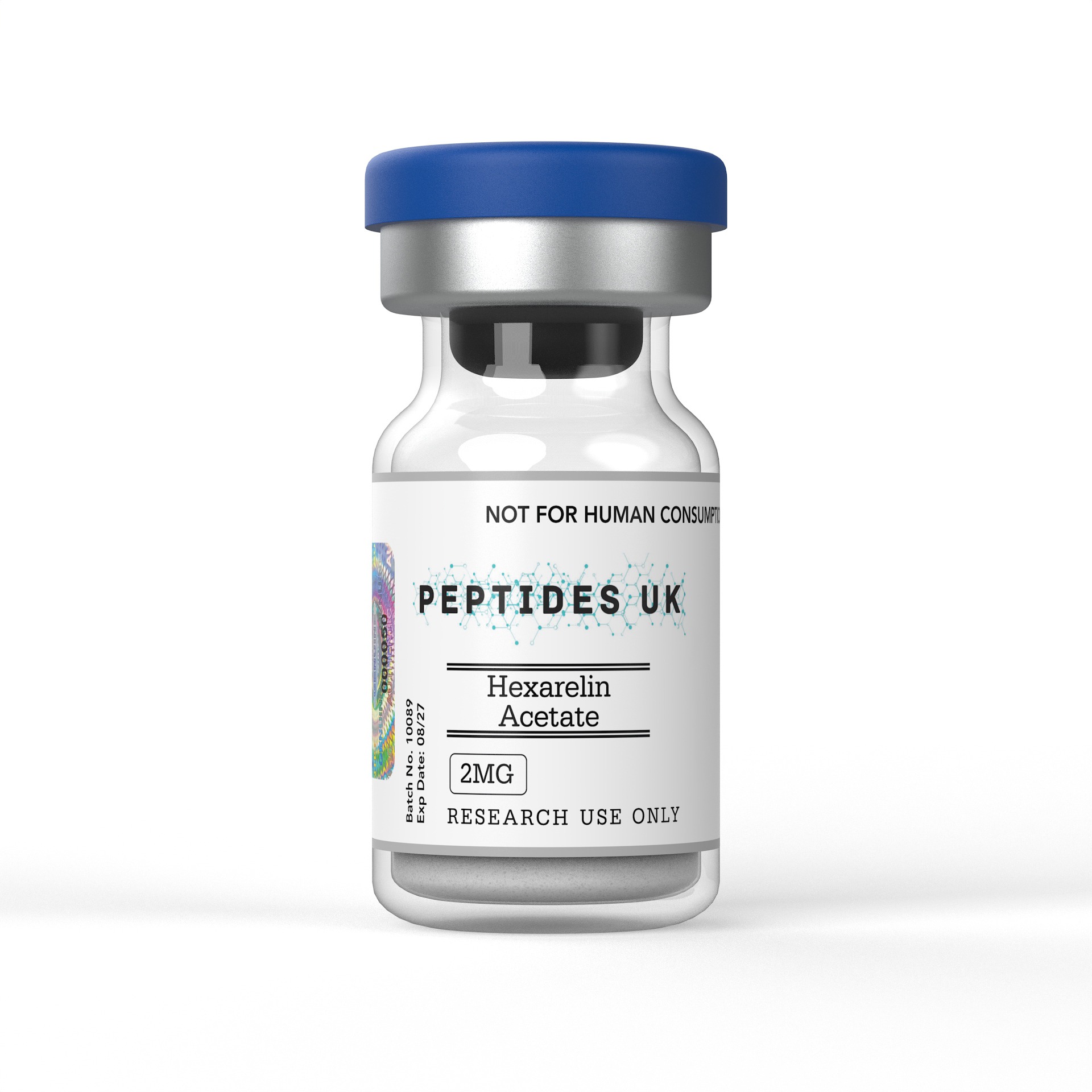
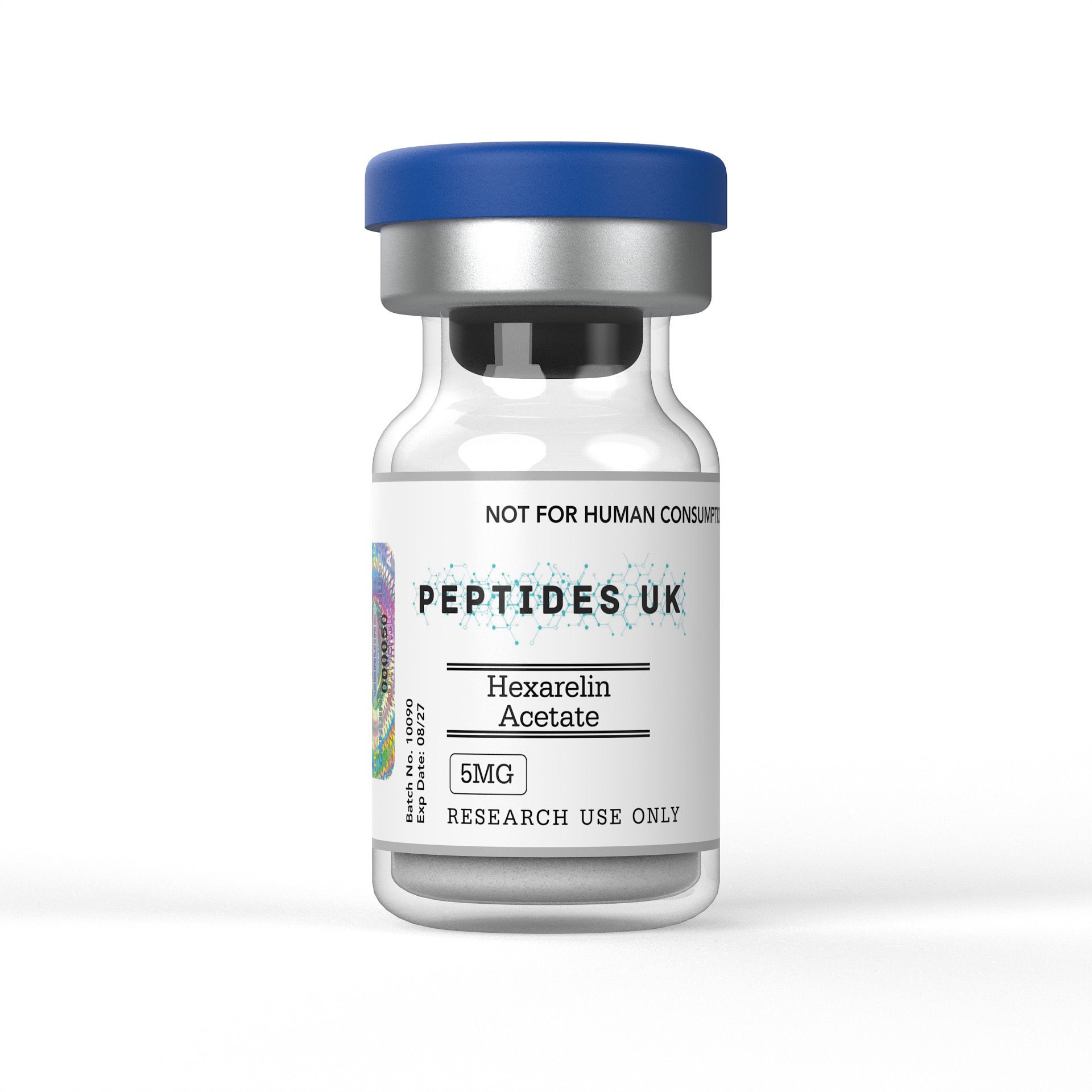
€29.00 – €55.50Price range: €29.00 through €55.50
Hexarelin Acetate Ireland – Buy Online | In Stock & Ready to Ship
Buy Hexarelin Acetate in Ireland with fast shipping and guaranteed ≥99% purity — verified with COA and HPLC documentation. A trusted choice for peptides Ireland research teams rely on, with no customs delays or international wait times. Whether you’re searching for Hexarelin Acetate Ireland suppliers or looking to buy peptides Ireland-wide, we have you covered. Irish research teams can count on consistent stock, rapid fulfilment and full batch documentation every time.
For research use only. Not intended for human or veterinary use.


Hexarelin Acetate is a synthetic hexapeptide growth hormone secretagogue and one of the most potent GHS-R1a agonists available to laboratories in Ireland — a six amino acid synthetic peptide that produces among the strongest growth hormone release responses of any compound in the secretagogue class while simultaneously engaging CD36 scavenger receptor biology in cardiac and vascular tissue, making it a uniquely dual-action research tool for studying both GH axis pharmacology at its upper stimulatory limits and the GH-independent cardioprotective and anti-fibrotic mechanisms mediated through CD36 receptor engagement. Researchers and institutions across Ireland can source verified, research-grade Hexarelin Acetate directly from our Irish peptide supply, with domestic-speed dispatch and complete batch documentation.
✅ ≥99% Purity — HPLC & Mass Spectrometry Verified
✅ Batch-Specific Certificate of Analysis (CoA) Included
✅ Sterile Lyophilised Powder | GMP Manufactured
✅ Fast Dispatch to Ireland | Peptides Ireland Stock
Hexarelin Acetate is the acetate salt form of Hexarelin — formally designated His-D-2-MeTrp-Ala-Trp-D-Phe-Lys-NH2 — a synthetic hexapeptide belonging to the growth hormone releasing peptide family, structurally related to GHRP-6 but incorporating a 2-methyltryptophan residue at position two that significantly enhances GHS-R1a binding affinity and produces a more potent GH-releasing response than any other synthetic hexapeptide secretagogue. The acetate salt designation reflects the counterion pairing used in the final pharmaceutical-grade formulation — a standard approach for improving the handling, solubility, and stability characteristics of basic peptides for research use, with the acetate counterion having no biological activity of its own.
Hexarelin was developed as part of the systematic structure-activity relationship programme that produced the GHRP family — the same research programme that ultimately led to the discovery of ghrelin as the endogenous ligand for GHS-R1a. Among the synthetic hexapeptide secretagogues produced through this programme — GHRP-6, GHRP-2, and Hexarelin being the principal members — Hexarelin emerged as the most potent GHS-R1a agonist in the series, with its 2-methyltryptophan modification providing enhanced receptor binding geometry that drives GH release to a greater magnitude than its structural relatives at equivalent molar doses. This potency distinction has made Hexarelin the reference compound for maximum GHS-R1a-driven GH axis stimulation in pre-clinical research designs requiring the strongest possible secretagogue-induced GH response.
What fundamentally distinguishes Hexarelin from all other synthetic growth hormone secretagogues — and what has made it an object of sustained and growing research interest beyond GH axis pharmacology — is its documented engagement of CD36, a class B scavenger receptor expressed in cardiac muscle, vascular endothelium, macrophages, and adipose tissue that plays central roles in fatty acid uptake, oxidised LDL recognition, and critically, in cardiac biology and protection against pathological cardiac remodelling. Hexarelin’s CD36 binding was identified through research characterising the cardiac effects of Hexarelin that persisted in growth hormone-deficient and GH receptor-knockout animal models — establishing that Hexarelin produces direct cardiac biological effects through a mechanism entirely independent of its GH-releasing activity. This GH-independent CD36-mediated cardioprotective biology has established Hexarelin as a uniquely dual-mechanism research compound — simultaneously the most potent synthetic GHS-R1a agonist for GH axis research and a pharmacological probe for CD36 receptor biology in cardiac and vascular tissue.
In controlled laboratory and pre-clinical settings, Hexarelin Acetate is studied across a range of GH axis pharmacology, cardiac biology, CD36 receptor research, and vascular biology applications:
Maximum GHS-R1a Stimulation Research — Hexarelin’s position as the most potent synthetic GHS-R1a agonist makes it the reference compound for studies requiring maximal GH axis stimulation — with research examining peak GH secretory capacity, somatotroph cell maximal response biology, and the upper limits of GHS-R1a-driven GH release. Studies have used Hexarelin to establish GH axis stimulatory ceilings in pre-clinical models and to characterise how the somatotroph cell responds to maximal receptor occupancy — providing fundamental insights into GH secretion biology that lower-potency secretagogues cannot access.
GHS-R1a Receptor Pharmacology Research — Hexarelin’s high GHS-R1a binding affinity has made it a valuable pharmacological tool for characterising GHS-R1a receptor biology — with studies examining receptor binding kinetics, receptor internalisation and desensitisation following maximal stimulation, GHS-R1a expression regulation, and the downstream intracellular signalling cascades linking GHS-R1a activation to somatotroph GH secretion. The compound’s potency makes it particularly useful for receptor saturation studies and for examining GH axis pharmacology at maximal stimulation conditions.
CD36 Receptor Biology and Cardiac Research — The most scientifically distinctive aspect of Hexarelin’s research profile is its CD36 receptor engagement — with studies characterising Hexarelin binding to CD36 in cardiac tissue, vascular endothelium, and macrophages, and documenting the biological consequences of CD36 activation in these tissue contexts. Research has established Hexarelin as the primary pharmacological probe for studying CD36-mediated cardiac biology — enabling investigation of CD36’s roles in cardiac protection, pathological cardiac remodelling, fibrosis regulation, and vascular biology in pre-clinical models.
GH-Independent Cardioprotection Research — Studies examining Hexarelin’s cardiac effects in GH-deficient and GH receptor-knockout models have documented cardioprotective effects that persist in the complete absence of GH signalling — establishing a GH-independent cardioprotective mechanism attributable to direct CD36 engagement in cardiac tissue. Research has characterised Hexarelin-associated improvements in cardiac contractile function, reductions in cardiac fibrosis markers, protection against ischaemia-reperfusion injury, and preservation of myocardial structure in pre-clinical cardiac models — effects occurring through direct cardiac CD36 receptor activation rather than systemic GH biology.
Cardiac Fibrosis and Remodelling Research — One of the most significant applications of Hexarelin in cardiac biology research is the study of pathological cardiac fibrosis and remodelling — with studies examining Hexarelin’s effects on cardiac fibroblast activity, collagen deposition, and the molecular pathways driving maladaptive cardiac remodelling following injury or chronic pressure overload. CD36’s role in regulating cardiac fibroblast biology and TGF-beta signalling has made Hexarelin a key research tool for studying how CD36 receptor activation influences the fibrotic remodelling response in cardiac tissue.
Vascular Biology and Atherosclerosis Research — CD36 expression in vascular endothelium and macrophages — where it mediates oxidised LDL uptake and foam cell formation — has made Hexarelin a research tool of interest in vascular biology and atherosclerosis research. Studies have examined how Hexarelin’s CD36 engagement influences macrophage lipid handling, endothelial function, and vascular inflammatory responses — contributing to understanding of how CD36 receptor pharmacology intersects with the biology of atherosclerotic plaque formation and vascular inflammation.
GHRH Synergy and GH Axis Combination Research — Like all GHS-R1a agonists, Hexarelin produces synergistic GH release when combined with GHRH — with studies characterising how maximum GHS-R1a stimulation by Hexarelin interacts with GHRH receptor activation to produce GH release substantially greater than either compound alone. Hexarelin’s maximal GHS-R1a potency makes this synergistic combination particularly relevant for research designs examining the absolute upper limits of GH axis stimulatory capacity.
GH Axis Desensitisation Research — Hexarelin’s high potency has made it a particularly relevant research tool for studying GHS-R1a desensitisation and GH axis adaptation to repeated strong stimulation — with studies characterising how repeated maximal GHS-R1a activation influences receptor expression, somatostatin tone, and the capacity of the GH axis to sustain responses to ongoing secretagogue stimulation. These desensitisation studies have provided important insights into GH axis regulatory biology and the homeostatic mechanisms that limit sustained GH secretory responses.
Comparative GHS Pharmacology Research — Hexarelin is a standard reference compound in comparative growth hormone secretagogue research — used alongside GHRP-6, GHRP-2, Ipamorelin, and other secretagogues to establish potency rankings, characterise receptor selectivity profiles, and examine how structural differences between synthetic GHS compounds determine their distinct pharmacological properties. Its position as the most potent synthetic hexapeptide GHS makes it an important anchor point for comparative pharmacology studies in the secretagogue research field.
IGF-1 Axis and Downstream GH Biology Research — Studies have characterised the downstream IGF-1 axis consequences of Hexarelin-driven maximal GH release — examining how peak GH elevation driven by the most potent synthetic secretagogue translates to hepatic IGF-1 production, circulating IGF-1 levels, and tissue-level IGF-1 signalling. These downstream biology studies have provided important pre-clinical context for understanding the relationship between maximal GHS-R1a-driven GH secretion and IGF-1 axis activation.
Hexarelin has accumulated a substantial and scientifically significant research literature — uniquely spanning both GH axis pharmacology, where it represents the potency ceiling of the synthetic secretagogue class, and CD36 receptor biology, where it has opened an entirely new and GH-independent research dimension for growth hormone secretagogue compounds.
Maximum GH Release Potency Established — Studies have consistently documented Hexarelin as producing the greatest GH release response of the synthetic hexapeptide secretagogue series — with direct potency comparison research establishing Hexarelin’s superiority over GHRP-6 and GHRP-2 at equivalent molar doses in multiple pre-clinical models. Research has attributed this potency advantage to the 2-methyltryptophan modification at position two of the hexapeptide sequence — with structural biology studies characterising how this modified amino acid enhances GHS-R1a binding geometry and receptor activation efficacy compared to the unmodified tryptophan present in GHRP-6. This established potency superiority has cemented Hexarelin’s position as the reference compound for maximum GHS-R1a-driven GH axis stimulation research.
GH-Independent Cardiac Effects Confirmed in Knockout Models — The most scientifically significant finding in the Hexarelin research literature has been the confirmation of GH-independent cardiac effects in animal models where GH signalling is absent. Studies using hypophysectomised animals — which lack pituitary GH production — and GH receptor knockout models have documented Hexarelin’s capacity to improve cardiac contractile function, reduce cardiac fibrosis, and protect against cardiac injury through mechanisms that cannot be attributed to GH release. These knockout model findings established the existence of a direct cardiac receptor for Hexarelin independent of GHS-R1a — ultimately identified as CD36 — and transformed the understanding of growth hormone secretagogue biology beyond the pituitary.
CD36 as Hexarelin’s Cardiac Receptor Identified — Landmark research characterised CD36 as the receptor mediating Hexarelin’s GH-independent cardiac effects — with studies demonstrating Hexarelin binding to recombinant CD36, competitive displacement of Hexarelin binding by CD36 ligands, and the loss of Hexarelin’s cardiac effects in CD36-knockout models. This identification of CD36 as a functional receptor for a synthetic growth hormone secretagogue was an unexpected and highly significant finding — establishing that Hexarelin has a dual receptor biology and that GHS compounds can engage receptor systems entirely outside the classical GHS-R1a/pituitary axis. The CD36-Hexarelin interaction has since become a significant research area in its own right, with implications for cardiac biology, atherosclerosis research, and the broader understanding of scavenger receptor pharmacology.
Cardiac Fibrosis Reduction Documented — Pre-clinical studies have documented Hexarelin-associated reductions in cardiac fibrosis markers — including reduced collagen deposition, attenuated TGF-beta signalling, and preserved myocardial architecture in cardiac injury and pressure overload models. Research has characterised CD36-mediated modulation of cardiac fibroblast biology as a mechanism contributing to these anti-fibrotic effects — establishing Hexarelin as a research tool for studying how CD36 receptor engagement influences the fibrotic remodelling response in cardiac tissue and providing pre-clinical evidence for CD36 as a potential target in cardiac fibrosis biology research.
Ischaemia-Reperfusion Cardioprotection Characterised — Studies have documented Hexarelin’s protective effects in cardiac ischaemia-reperfusion injury models — with research reporting reduced cardiomyocyte death markers, improved post-ischaemic cardiac function recovery, and activation of cardioprotective signalling pathways including PI3K/Akt in Hexarelin-treated pre-clinical cardiac injury models. Importantly, these cardioprotective effects have been documented in both GH-intact and GH-deficient models — confirming the GH-independent nature of Hexarelin’s cardiac protection and attributing it to direct CD36 engagement in cardiac tissue.
GHS-R1a Desensitisation with Repeated Administration Characterised — Research examining repeated Hexarelin administration in pre-clinical models has documented progressive attenuation of GH release responses — with studies characterising GHS-R1a desensitisation, increased somatostatin tone, and reduced somatotroph responsiveness following sustained high-potency secretagogue stimulation. These desensitisation findings are scientifically important for understanding GH axis homeostatic regulation — establishing that the axis actively adapts to sustained maximal stimulation through receptor-level and hypothalamic feedback mechanisms. This desensitisation profile distinguishes Hexarelin from lower-potency secretagogues and has important implications for the design of GH axis research protocols using repeated Hexarelin administration.
Vascular and Atherosclerosis Biology Research Initiated — Studies examining Hexarelin’s effects in vascular biology contexts have documented CD36-mediated effects on macrophage lipid handling and vascular inflammatory parameters — opening research into how Hexarelin’s CD36 pharmacology intersects with atherosclerotic plaque biology. Research has characterised CD36’s role in macrophage oxidised LDL uptake and foam cell formation as a context in which Hexarelin’s CD36 engagement produces biologically relevant vascular effects — establishing vascular biology as a growing secondary research dimension for Hexarelin alongside its primary GH axis and cardiac research applications.
| Feature | Hexarelin Acetate | GHRP-6 | GHRP-2 | Ipamorelin | CJC-1295 with DAC |
|---|---|---|---|---|---|
| Peptide Class | Synthetic hexapeptide GHS | Synthetic hexapeptide GHS | Synthetic hexapeptide GHS | Synthetic pentapeptide GHS | Long-acting GHRH analogue |
| GHS-R1a Affinity | Highest in hexapeptide series | High | Very high | High — selective | N/A — GHRH-R target |
| GH Release Potency | Strongest — hexapeptide ceiling | Strong | Very strong | Moderate — selective | Sustained elevation |
| Receptor Selectivity | GHS-R1a + CD36 | GHS-R1a + broader profile | GHS-R1a — cleaner | GHS-R1a — most selective | GHRH receptor |
| CD36 Engagement | Yes — defining feature | No | No | No | No |
| GH-Independent Cardiac Biology | Yes — confirmed in knockout models | Limited | Limited | Not documented | Not documented |
| Cardiac Fibrosis Research | Directly relevant — CD36 mechanism | Indirect via GH | Not primary focus | Not documented | Not documented |
| GH Axis Desensitisation | Pronounced — high potency | Moderate | Moderate | Minimal | GHRH receptor dynamics |
| GHRH Synergy | Yes — strong | Yes — strong | Yes — strong | Yes — moderate | N/A — is GHRH analogue |
| Half-Life | ~15–60 minutes | ~15–60 minutes | ~15–60 minutes | ~2 hours | ~6–8 days |
| Research Profile | Well-documented | Extensively studied | Extensively studied | Well-documented | Well-documented |
| Parameter | Detail |
|---|---|
| Name | Hexarelin Acetate |
| Full Designation | His-D-2-MeTrp-Ala-Trp-D-Phe-Lys-NH2 acetate salt |
| Peptide Class | Synthetic Hexapeptide Growth Hormone Secretagogue |
| Molecular Weight | 887.1 Da (free base) |
| Key Structural Feature | 2-methyltryptophan at position 2 — enhanced GHS-R1a binding |
| Primary Receptor | GHS-R1a — highest affinity in hexapeptide series |
| Secondary Receptor | CD36 — GH-independent cardiac and vascular biology |
| GH Release Potency | Strongest synthetic hexapeptide secretagogue |
| Key Research Distinction | Only synthetic GHS with confirmed dual GHS-R1a + CD36 receptor biology |
| Purity | ≥99% HPLC & MS Verified |
| Form | Sterile Lyophilised Powder |
| Solubility | Sterile water or suitable laboratory buffer |
| Storage (Powder) | -20°C, protect from light |
| Storage (Reconstituted) | 2–8°C, use within 7 days or aliquot at -80°C |
| Manufacturing | GMP Manufactured |
| Intended Use | Research use only |
Every order of Hexarelin Acetate in Ireland includes:
✅ Batch-Specific Certificate of Analysis (CoA)
✅ HPLC Chromatogram
✅ Mass Spectrometry Confirmation
✅ Sterility & Endotoxin Testing Report
✅ Reconstitution Protocol
✅ Technical Research Support
Yes — we supply research-grade Hexarelin Acetate to researchers and institutions across Ireland with fast dispatch and full batch documentation. This compound is supplied strictly for laboratory research purposes only.
Hexarelin’s superior GH-releasing potency within the synthetic hexapeptide secretagogue series is directly attributable to its 2-methyltryptophan modification at position two of the peptide sequence. Structural biology research has characterised how this methylated tryptophan residue — absent in GHRP-6, which uses unmodified tryptophan at the equivalent position, and in GHRP-2, which uses a 2-naphthylalanine residue — produces enhanced geometric complementarity with the GHS-R1a binding pocket, increasing receptor binding affinity and activation efficacy compared to the other synthetic hexapeptides. This single amino acid difference translates to measurably greater GH release at equivalent molar doses in pre-clinical models — establishing Hexarelin as the potency ceiling of the synthetic hexapeptide secretagogue class and making it the reference compound for maximum GHS-R1a-driven GH stimulation research.
CD36 is a class B scavenger receptor — a multifunctional membrane glycoprotein expressed in cardiac muscle, vascular endothelium, macrophages, platelets, and adipose tissue — with established roles in long-chain fatty acid uptake, oxidised LDL recognition and internalisation, thrombospondin signalling, and critically, in cardiac biology and protection against pathological cardiac remodelling. CD36’s expression in cardiac tissue and its involvement in cardiac fatty acid metabolism and fibrotic remodelling pathways make it a receptor of significant research interest in cardiovascular biology. Hexarelin’s engagement of CD36 — confirmed through binding studies and knockout model experiments — provides a pharmacological tool for studying CD36 receptor biology in cardiac and vascular tissue that is unique in the growth hormone secretagogue class. No other synthetic GHS compound has confirmed CD36 binding activity — making Hexarelin irreplaceable as a research tool for studying the intersection of secretagogue pharmacology and CD36-mediated cardiac biology.
The discovery of Hexarelin’s GH-independent cardiac effects emerged from research designed to characterise Hexarelin’s cardiovascular biology using animal models in which GH signalling could be experimentally eliminated. Studies examining Hexarelin’s cardiac effects in hypophysectomised animals — which lack pituitary GH production and therefore cannot produce GH in response to secretagogue stimulation — observed that Hexarelin continued to produce measurable improvements in cardiac function and reductions in cardiac pathology markers in the complete absence of circulating GH. Further studies in GH receptor knockout models confirmed that these cardiac effects persisted even when GH signalling was genetically ablated — definitively establishing that Hexarelin’s cardiac biology was independent of its GH-releasing mechanism. This unexpected finding prompted the search for a direct cardiac receptor for Hexarelin — ultimately leading to the identification of CD36 as the mediating receptor — and fundamentally expanded the scientific understanding of growth hormone secretagogue biology beyond the pituitary GHS-R1a axis.
Hexarelin and Ipamorelin represent opposite ends of the GH secretagogue spectrum in terms of potency and selectivity — making them complementary rather than interchangeable research tools. Hexarelin is the most potent synthetic GHS-R1a agonist in the hexapeptide series — producing the strongest GH release with broader receptor engagement including CD36 and some off-target receptor activity that may confound mechanistic interpretation in selectivity-sensitive research designs. Ipamorelin is the most GHS-R1a-selective synthetic secretagogue — producing moderate GH release with minimal off-target receptor activity and no documented cortisol, prolactin, or appetite effects — making it the preferred tool when isolated, clean GHS-R1a biology is the research objective. Hexarelin is chosen when maximum GH axis stimulation is required or when studying CD36 biology, while Ipamorelin is chosen when receptor selectivity and clean mechanistic attribution are the priority. Together they bracket the potency-selectivity spectrum of synthetic GHS research tools.
Hexarelin’s pronounced GH axis desensitisation following repeated administration is scientifically significant for two reasons — it provides important insights into GH axis homeostatic regulation, and it has direct implications for the design of pre-clinical research protocols using Hexarelin. Studies have characterised the mechanisms underlying desensitisation — including GHS-R1a internalisation and downregulation at the pituitary level, increased hypothalamic somatostatin tone as a feedback response to repeated strong GH stimulation, and reduced somatotroph sensitivity to ongoing secretagogue input. Understanding these desensitisation mechanisms has contributed substantially to knowledge of how the GH axis regulates itself against sustained stimulation — with implications for the broader biology of GH secretion regulation. For research protocol design, Hexarelin’s desensitisation profile means that repeated administration studies must account for progressive attenuation of GH responses — a consideration that distinguishes Hexarelin from lower-potency secretagogues with less pronounced desensitisation characteristics.
≥99% purity is strongly recommended for GHS-R1a receptor pharmacology studies, CD36 binding research, cardiac biology experiments, GH axis stimulation protocols, and pre-clinical in vivo models — where compound purity directly determines the reliability of GH release measurements, receptor binding data, and cardiac biology outcomes. Given Hexarelin’s potency and its dual receptor biology, impurities could introduce confounding signals particularly in sensitive receptor binding assays and cardiac functional studies. All Hexarelin Acetate Ireland stock is independently verified to ≥99% purity by HPLC and mass spectrometry.
Allow the vial to reach room temperature before opening. Add sterile water or appropriate laboratory buffer slowly down the inside wall of the vial and swirl gently — do not inject directly onto the lyophilised powder and do not vortex or shake vigorously. Prepare a concentrated stock solution at your required research concentration. Store reconstituted stock at 2–8°C for short-term use within 7 days, or aliquot into single-use volumes and store at -80°C for longer-term preservation. Avoid repeated freeze-thaw cycles and exposure to elevated temperatures. Handle with standard peptide protocols to maintain GHS-R1a binding activity and CD36 receptor engagement capacity across experimental sessions.
Hexarelin Acetate is supplied exclusively for legitimate scientific research purposes conducted within licensed laboratory environments. This product is not intended for human consumption, self-administration, or any therapeutic application. It must be handled by qualified researchers in compliance with applicable Irish and EU regulations and institutional ethics guidelines. By purchasing, you confirm that this compound will be used solely for approved in vitro or pre-clinical research purposes.
WhatsApp us
Receive News
