PRODUCTS SOLD ON PEPTIDESLABIRELAND.COM ARE FOR RESEARCH PURPOSES ONLY AND ARE NOT FOR HUMAN OR VETERINARY USE.
€49.50
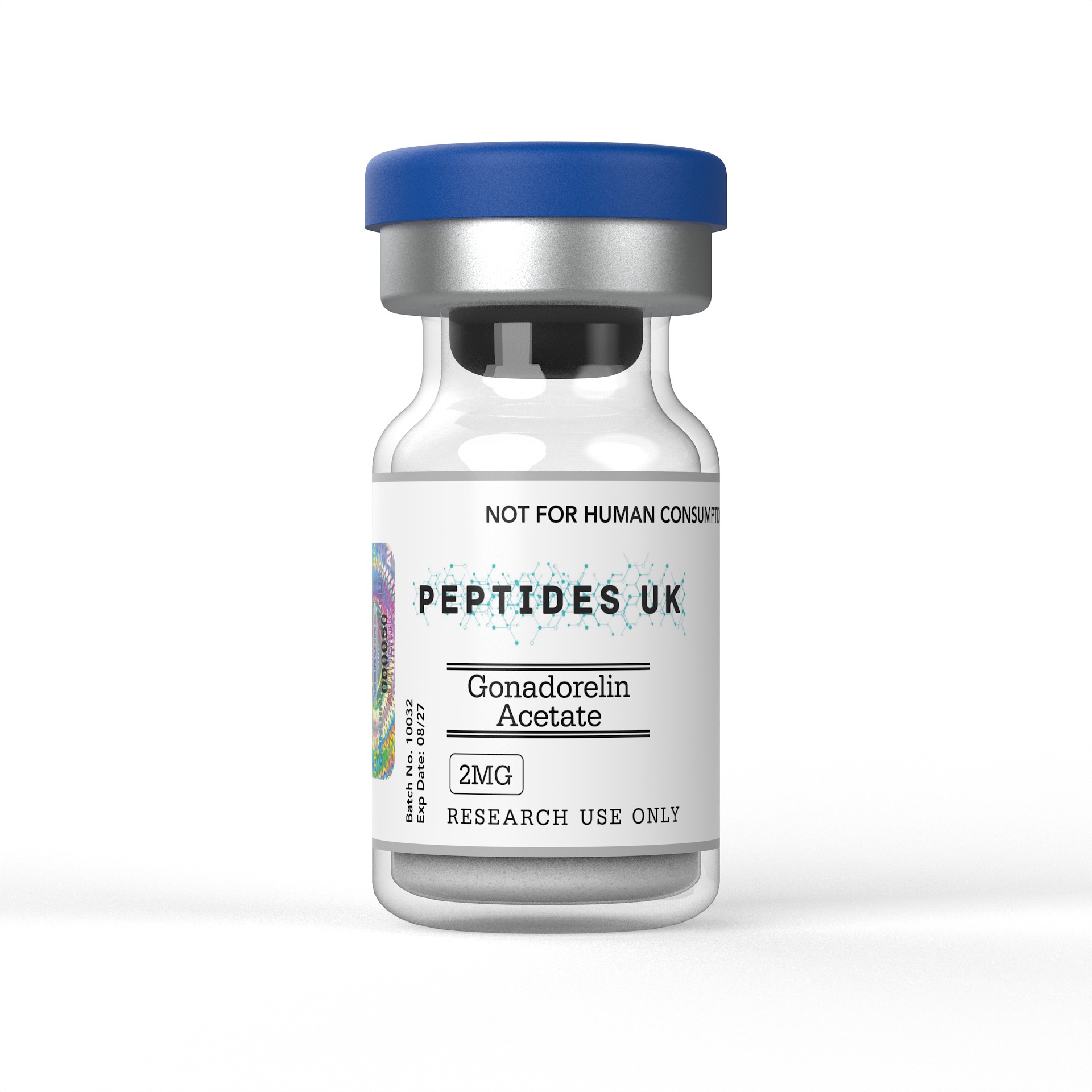
Gonadorelin Acetate Ireland – Buy Online | In Stock & Ready to Ship
Buy Gonadorelin Acetate in Ireland with fast shipping and guaranteed ≥99% purity — verified with COA and HPLC documentation. A trusted choice for peptides Ireland research teams rely on, with no customs delays or international wait times. Whether you’re searching for Gonadorelin Acetate Ireland suppliers or looking to buy peptides Ireland-wide, we have you covered. Irish research teams can count on consistent stock, rapid fulfilment and full batch documentation every time.
For research use only. Not intended for human or veterinary use.

Gonadorelin Acetate is a synthetic decapeptide identical in sequence to endogenous gonadotropin-releasing hormone (GnRH) and one of the most fundamental hypothalamic-pituitary axis research compounds available to laboratories in Ireland — the native GnRH sequence pGlu-His-Trp-Ser-Tyr-Gly-Leu-Arg-Pro-Gly-NH2 in acetate salt form, acting through pituitary gonadotroph GnRH receptors to stimulate LH and FSH synthesis and secretion in a strictly pulsatile pattern-dependent manner, making it an indispensable research tool for studying GnRH receptor pharmacology and pituitary gonadotroph biology, hypothalamic-pituitary-gonadal axis regulation, the physiological basis of pulsatile versus continuous GnRH signalling, GnRH receptor structure-activity relationships as the native sequence reference compound, gonadotropin secretion dynamics and pituitary responsiveness testing, and the comparative pharmacology of native GnRH against synthetic GnRH analogues including agonists and antagonists that have been developed using Gonadorelin as the structural and pharmacological reference point. Researchers and institutions across Ireland can source verified, research-grade Gonadorelin Acetate directly from our Irish peptide supply, with domestic-speed dispatch and complete batch documentation.
✅ ≥99% Purity — HPLC & Mass Spectrometry Verified
✅ Batch-Specific Certificate of Analysis (CoA) Included
✅ Sterile Lyophilised Powder | GMP Manufactured
✅ Fast Dispatch to Ireland | Peptides Ireland Stock
Gonadorelin Acetate is the acetate salt of synthetic gonadotropin-releasing hormone — the endogenous hypothalamic decapeptide pGlu-His-Trp-Ser-Tyr-Gly-Leu-Arg-Pro-Gly-NH2, where pGlu denotes pyroglutamic acid at the N-terminus and Gly-NH2 denotes C-terminal glycine amide — chemically identical to the native hormone produced by hypothalamic GnRH neurones and released in discrete pulses into the hypothalamic-pituitary portal circulation to drive gonadotroph LH and FSH secretion. The compound designation Gonadorelin distinguishes the native GnRH sequence from synthetic analogues including Triptorelin, Leuprolide, and Goserelin that incorporate amino acid substitutions to alter receptor binding affinity, proteolytic stability, and pharmacokinetic profile — making Gonadorelin the pharmacological reference point against which all GnRH analogue structure-activity relationships are defined.
The biological and research significance of the native GnRH sequence — as represented by Gonadorelin Acetate — lies in its dual pharmacological capacity that no synthetic analogue fully recapitulates: administered in pulses mimicking physiological hypothalamic release, Gonadorelin stimulates and maintains normal pituitary gonadotropin secretion and HPG axis function; administered continuously or at high frequency, it produces receptor desensitisation and HPG axis suppression through the same GPCR downregulation mechanisms that underlie the pharmacology of long-acting GnRH agonists. This pharmacological duality makes Gonadorelin uniquely valuable for research examining the molecular basis of pulse frequency-dependent GnRH receptor signalling — the fundamental neuroendocrine principle through which the hypothalamus encodes reproductive status information in the frequency and amplitude of GnRH pulses rather than in hormone concentration alone.
The native sequence’s position 6 glycine — replaced by D-amino acids in all major synthetic GnRH agonists to confer proteolytic resistance — is the primary structural determinant of Gonadorelin’s short plasma half-life of two to four minutes, reflecting rapid endoprotease cleavage at the Tyr5-Gly6 bond that limits sustained receptor occupancy and necessitates pulsatile administration for maintained HPG axis stimulation. This pharmacokinetic vulnerability, while a limitation for therapeutic applications, is a research advantage for studies examining the acute GnRH receptor activation biology that occurs during physiological GnRH pulses — enabling precise experimental control over receptor occupancy duration that synthetic long-acting analogues cannot provide.
In controlled laboratory and pre-clinical settings, Gonadorelin Acetate is studied across a range of GnRH receptor pharmacology, pituitary gonadotroph biology, HPG axis regulation, pulsatile signalling, and comparative analogue pharmacology research applications:
Gonadorelin is the native sequence reference agonist for GnRH receptor pharmacology — used to characterise baseline receptor binding affinity, Gq/11-mediated signalling, receptor internalisation kinetics, and downstream gonadotropin subunit gene transcription against which all synthetic analogue pharmacology is compared. Research uses Gonadorelin to establish the reference pharmacodynamic profile for GnRH receptor activation — defining the concentration-response relationships, signalling kinetics, and receptor occupancy-response coupling that serve as the benchmark for evaluating potency ratios and mechanistic differences of synthetic GnRH agonists and antagonists.
Gonadorelin’s short half-life makes it the optimal research tool for studying pulse frequency-dependent GnRH receptor signalling — the fundamental neuroendocrine biology through which GnRH pulse frequency encodes differential LH versus FSH secretion ratios and gonadotropin subunit gene expression patterns. Research has used pulsatile Gonadorelin administration at defined frequencies to characterise how GnRH receptor occupancy pattern — rather than cumulative receptor activation — determines pituitary gonadotroph transcriptional and secretory output, examining how high-frequency pulses favour LH beta subunit expression and low-frequency pulses favour FSH beta subunit expression through distinct downstream signalling dynamics.
Gonadorelin is used as the activating stimulus in pituitary gonadotroph cell biology research — examining GnRH receptor-mediated calcium signalling, PKC activation, ERK phosphorylation, and the transcriptional regulation of LH beta, FSH beta, and common alpha subunit genes in gonadotroph cell models. Studies characterise the molecular biology of gonadotropin synthesis and secretion using Gonadorelin as the physiological reference stimulus — examining how gonadotroph responses to native GnRH are modulated by gonadal steroid feedback, activin, inhibin, and other regulatory inputs.
Gonadorelin is used in HPG axis stimulation protocols to characterise pituitary GnRH receptor responsiveness — measuring LH and FSH secretory responses to defined Gonadorelin challenges as a readout of gonadotroph reserve and GnRH receptor sensitivity. Research uses Gonadorelin stimulation tests to examine pituitary responsiveness in models of HPG axis suppression, hypogonadotropic hypogonadism, chronic GnRH agonist desensitisation, and recovery of gonadotroph function following interventions — providing a functional assessment of pituitary GnRH receptor biology complementary to molecular characterisation.
Gonadorelin provides experimental control over GnRH receptor desensitisation biology — enabling comparison of acute pulsatile and sustained continuous receptor stimulation paradigms in the same compound without the confounds of altered receptor binding affinity introduced by synthetic analogues. Research uses Gonadorelin in desensitisation studies to characterise the kinetics of receptor downregulation, beta-arrestin recruitment, receptor internalisation, and recovery of receptor responsiveness following removal of continuous stimulation — providing mechanistic data on native GnRH receptor dynamics in the absence of the enhanced receptor occupancy introduced by position 6 D-amino acid substitutions.
Gonadorelin serves as the essential pharmacological reference in comparative GnRH analogue research — enabling potency ratio determinations, efficacy comparisons, and mechanistic distinctions between native GnRH and synthetic agonists including Triptorelin, Leuprolide, and Buserelin, as well as antagonists including Cetrorelix and Ganirelix. These comparative studies use Gonadorelin as the 100% reference agonist — characterising how structural modifications at specific positions alter receptor binding geometry, signalling pathway activation, receptor internalisation rate, and downstream gonadotropin secretion biology.
Gonadorelin is used in reproductive biology research to examine GnRH-dependent gonadal function — studying how pulsatile GnRH stimulation drives testicular steroidogenesis and spermatogenesis in male models and ovarian folliculogenesis, luteinisation, and ovulation in female models through gonadotropin-mediated mechanisms. Research uses Gonadorelin pulsatile replacement protocols in GnRH-deficient animal models to restore HPG axis function experimentally — enabling mechanistic dissection of the gonadotropin-dependent aspects of gonadal biology by controlling GnRH pulse frequency and amplitude independently.
GnRH receptors are expressed in extrapituitary tissues including gonads, placenta, breast, prostate, and endometrium — and research uses Gonadorelin to characterise direct GnRH receptor-mediated effects in these tissues independently of pituitary gonadotropin release. Studies examine antiproliferative, pro-apoptotic, and differentiation-regulating effects of GnRH receptor activation in cancer cell lines expressing functional GnRH receptors — characterising how the native sequence compares with synthetic analogues in producing direct extrapituitary receptor effects.
Research has established that pulsatile Gonadorelin administration at physiologically representative frequencies fully restores LH and FSH secretion, gonadal steroidogenesis, and reproductive function in GnRH-deficient animal models — establishing the sufficiency of pulsatile native GnRH signal for complete HPG axis maintenance and providing the experimental basis for pulse frequency-dependent gonadotropin secretion biology.
Research using pulsatile Gonadorelin administration at varying frequencies has established the molecular basis for differential gonadotropin secretion — documenting that high-frequency GnRH pulses preferentially drive LH beta subunit transcription while low-frequency pulses preferentially drive FSH beta subunit transcription through frequency-dependent activation of distinct downstream signalling pathways including differential ERK and calcineurin-NFAT pathway engagement.
Research has comprehensively characterised Gonadorelin’s GnRH receptor pharmacology — documenting receptor binding kinetics, Gq/11-PLC-IP3 signal transduction, calcium mobilisation kinetics, PKC activation, and downstream gonadotropin subunit gene transcription. These studies provide the reference signalling dataset against which all synthetic GnRH analogue pharmacology is evaluated.
Research has confirmed Gonadorelin’s two-to-four minute plasma half-life as reflecting endoprotease cleavage at the Tyr5-Gly6 and Pro9-Gly10 bonds — establishing the structural basis for the short duration of action that necessitates pulsatile administration and distinguishes native GnRH from position 6 D-amino acid-substituted synthetic agonists with proteolytic stability.
Research comparing pulsatile and continuous Gonadorelin administration has characterised the kinetics of GnRH receptor desensitisation — documenting the transition from sustained gonadotropin stimulation to progressive suppression with continuous exposure and establishing the receptor internalisation and downregulation mechanisms through which this desensitisation proceeds.
Research has documented direct GnRH receptor-mediated antiproliferative effects of Gonadorelin in cancer cell lines expressing functional GnRH receptors — characterising Gαi-mediated anti-mitogenic signalling in prostate, breast, and endometrial cancer cell models and comparing the extrapituitary receptor pharmacology of native GnRH with synthetic analogues.
| Feature | Gonadorelin Acetate | Triptorelin Acetate | Buserelin | Cetrorelix | Kisspeptin-10 |
|---|---|---|---|---|---|
| Type | Native GnRH sequence — acetate salt | Synthetic GnRH agonist — D-Trp6 substitution | Synthetic GnRH agonist — D-Ser(tBu)6 substitution | Synthetic GnRH antagonist — multiple D-amino acid substitutions | Endogenous KISS1R agonist — upstream GnRH activator |
| Receptor Target | GnRH receptor | GnRH receptor | GnRH receptor | GnRH receptor — competitive antagonist | KISS1R on GnRH neurones |
| Half-Life | 2–4 minutes — rapid endoprotease cleavage at Gly6 | Hours — D-Trp6 confers proteolytic resistance | Hours | Intermediate | Minutes |
| Pulsatile Effect | Stimulates LH/FSH — physiological | Initial stimulation — flare before desensitisation | Initial stimulation — flare before desensitisation | Immediate suppression — no flare | Stimulates GnRH neurone firing |
| Continuous Effect | Receptor desensitisation — HPG suppression | Sustained HPG suppression — clinical desensitisation | Sustained HPG suppression | Sustained suppression | Not applicable — upstream |
| Position 6 Residue | Gly — proteolytically susceptible | D-Trp — proteolytically resistant | D-Ser(tBu) — proteolytically resistant | Multiple D-residues | Not applicable |
| Key Research Use | Native sequence reference / pulsatile signalling biology / desensitisation kinetics | Long-acting HPG suppression / prostate and breast cancer models | Long-acting HPG suppression | Immediate HPG suppression without flare | Upstream HPG gating / KISS1R pharmacology |
| Research Profile | Extensively studied — fundamental reference compound | Extensively studied | Well-documented | Well-documented | Extensively studied |
| Parameter | Detail |
|---|---|
| Name | Gonadorelin Acetate |
| Also Designated | GnRH acetate / LHRH acetate / native GnRH |
| Sequence | pGlu-His-Trp-Ser-Tyr-Gly-Leu-Arg-Pro-Gly-NH2 |
| Type | Synthetic Native GnRH Decapeptide — Acetate Salt — Research Grade |
| Molecular Weight | 1182.3 Da (free base) |
| Mechanism | GnRH receptor agonism — Gq/11-coupled GPCR → PLC activation → IP3/calcium mobilisation → PKC/ERK activation → LH and FSH subunit gene transcription and secretion — pulsatile stimulation maintains HPG axis; continuous administration produces desensitisation and suppression |
| Primary Receptor | GnRH receptor (GnRHR) — Gq/11-coupled GPCR on pituitary gonadotrophs and extrapituitary tissues |
| Key Research Distinction | Native sequence reference compound for GnRH receptor pharmacology — uniquely suited for pulsatile signalling biology studies due to short half-life matching physiological GnRH pulse duration |
| Primary Research Areas | GnRH receptor pharmacology / pulsatile signalling biology / pituitary gonadotroph biology / HPG axis regulation / comparative GnRH analogue pharmacology / reproductive biology / extrapituitary GnRH receptor biology |
| Half-Life | 2–4 minutes — endoprotease cleavage at Tyr5-Gly6 and Pro9-Gly10 |
| N-terminus | Pyroglutamic acid (pGlu) — cyclised glutamic acid; protects against aminopeptidase cleavage |
| C-terminus | Gly-NH2 — C-terminal amide essential for full GnRH receptor binding affinity |
| Purity | ≥99% HPLC & MS Verified |
| Form | Sterile Lyophilised Powder |
| Solubility | Sterile water or 0.1% acetic acid aqueous solution |
| Storage (Powder) | -20°C, protect from light and moisture |
| Storage (Reconstituted) | -80°C in aliquots — minimise freeze-thaw cycles |
| Manufacturing | GMP Manufactured |
| Intended Use | Research use only |
Gonadorelin Acetate is a hydrophilic decapeptide with good aqueous solubility — reconstitute by adding sterile water or 0.1% acetic acid in sterile water slowly to the lyophilised powder and swirling gently. The pyroglutamic acid N-terminus and C-terminal Gly-NH2 amide are both essential structural features — avoid strongly alkaline conditions above pH 8 that promote amide hydrolysis and pyroglutamic acid ring opening. Avoid oxidising conditions that can modify the Trp3 residue. Prepare single-use aliquots and store at -80°C. For pulsatile administration studies in vivo, prepare working solutions in sterile saline immediately before use and administer via pump or manual injection at defined intervals — the short half-life means that pulsatile delivery intervals must be precise for physiologically representative stimulation paradigms. For cell-based GnRH receptor studies, dilute into serum-free or low-serum media immediately before addition to gonadotroph cells.
Every order of Gonadorelin Acetate in Ireland includes:
✅ Batch-Specific Certificate of Analysis (CoA)
✅ HPLC Chromatogram
✅ Mass Spectrometry Confirmation
✅ Sterility & Endotoxin Testing Report
✅ Reconstitution Protocol — including pulsatile administration and stability guidance
✅ Technical Research Support
Yes — we supply research-grade Gonadorelin Acetate to researchers and institutions across Ireland with fast dispatch and full batch documentation. Supplied strictly for laboratory research purposes only.
Gonadorelin is the native GnRH sequence — short-acting with a two-to-four minute half-life due to proteolytic susceptibility at position 6 glycine. Synthetic agonists like Triptorelin substitute a D-amino acid at position 6, conferring proteolytic resistance and extending half-life to hours — producing sustained receptor occupancy that drives pituitary desensitisation and HPG suppression. Gonadorelin is used when short-duration pulsatile receptor activation matching physiological GnRH biology is required; synthetic agonists are used when sustained receptor engagement and HPG suppression are the research objective.
Continuous GnRH receptor stimulation — even with the short-acting native sequence — produces receptor desensitisation and gonadotropin suppression. Physiological GnRH is released in discrete pulses at 60–120 minute intervals, and this pulsatile pattern is required to maintain GnRH receptor expression and gonadotroph responsiveness. Pulsatile Gonadorelin administration in research must replicate this intermittent pattern to maintain HPG axis stimulation rather than produce the paradoxical suppression that results from continuous exposure.
The N-terminal pyroglutamic acid — a cyclised form of glutamic acid — protects Gonadorelin against aminopeptidase attack from the N-terminus, directing proteolytic degradation to the internal Tyr5-Gly6 and C-terminal Pro9-Gly10 bonds instead. It is also directly involved in GnRH receptor binding geometry — substitution of the N-terminal pyroglutamic acid substantially reduces receptor binding affinity, making it a critical structural requirement for full agonist activity.
Gonadorelin Acetate is simply the acetate salt form of synthetic Gonadorelin — the acetate counterion improves lyophilisation stability and solubility characteristics without altering the peptide’s pharmacological activity. Receptor binding affinity, signal transduction, and biological potency are identical between Gonadorelin free base and Gonadorelin Acetate. When preparing working concentrations, account for the molecular weight difference if dosing by molar concentration.
Vehicle controls matched to the reconstitution solvent are essential. GnRH receptor antagonist controls — Cetrorelix or Ganirelix — confirm receptor specificity of observed gonadotropin responses. For pulsatile studies, continuous infusion comparator groups at equivalent total dose establish the pulse frequency-dependence of observed HPG stimulatory effects. For desensitisation studies, recovery time point groups following Gonadorelin withdrawal characterise the reversibility of receptor downregulation.
≥99% purity is essential — particularly for GnRH receptor pharmacology reference studies and comparative analogue research where Gonadorelin serves as the 100% reference agonist. Degradation products including the des-Gly10 and des-pGlu1 fragments show substantially reduced receptor binding affinity and would confound potency ratio determinations and dose-response characterisation. All Gonadorelin Acetate Ireland stock is verified to ≥99% purity by HPLC and mass spectrometry with identity confirmation.
Kisspeptin-10 acts upstream of GnRH — stimulating GnRH neurone firing through KISS1R to drive endogenous GnRH release. Gonadorelin acts at the pituitary level — directly engaging GnRH receptors on gonadotrophs to drive LH and FSH secretion. For studying hypothalamic GnRH neurone regulation and upstream HPG gating, Kisspeptin-10 is the appropriate tool. For studying pituitary GnRH receptor pharmacology, gonadotroph biology, and direct gonadotropin secretion responses to controlled GnRH stimulation, Gonadorelin is the reference compound.
Gonadorelin Acetate is supplied exclusively for legitimate scientific research purposes conducted within licensed laboratory environments. This product is not intended for human consumption, self-administration, or any therapeutic application. It must be handled by qualified researchers in compliance with applicable Irish and EU regulations and institutional ethics guidelines. By purchasing, you confirm that this compound will be used solely for approved in vitro or pre-clinical research purposes.


WhatsApp us
Receive News
