PRODUCTS SOLD ON PEPTIDESLABIRELAND.COM ARE FOR RESEARCH PURPOSES ONLY AND ARE NOT FOR HUMAN OR VETERINARY USE.
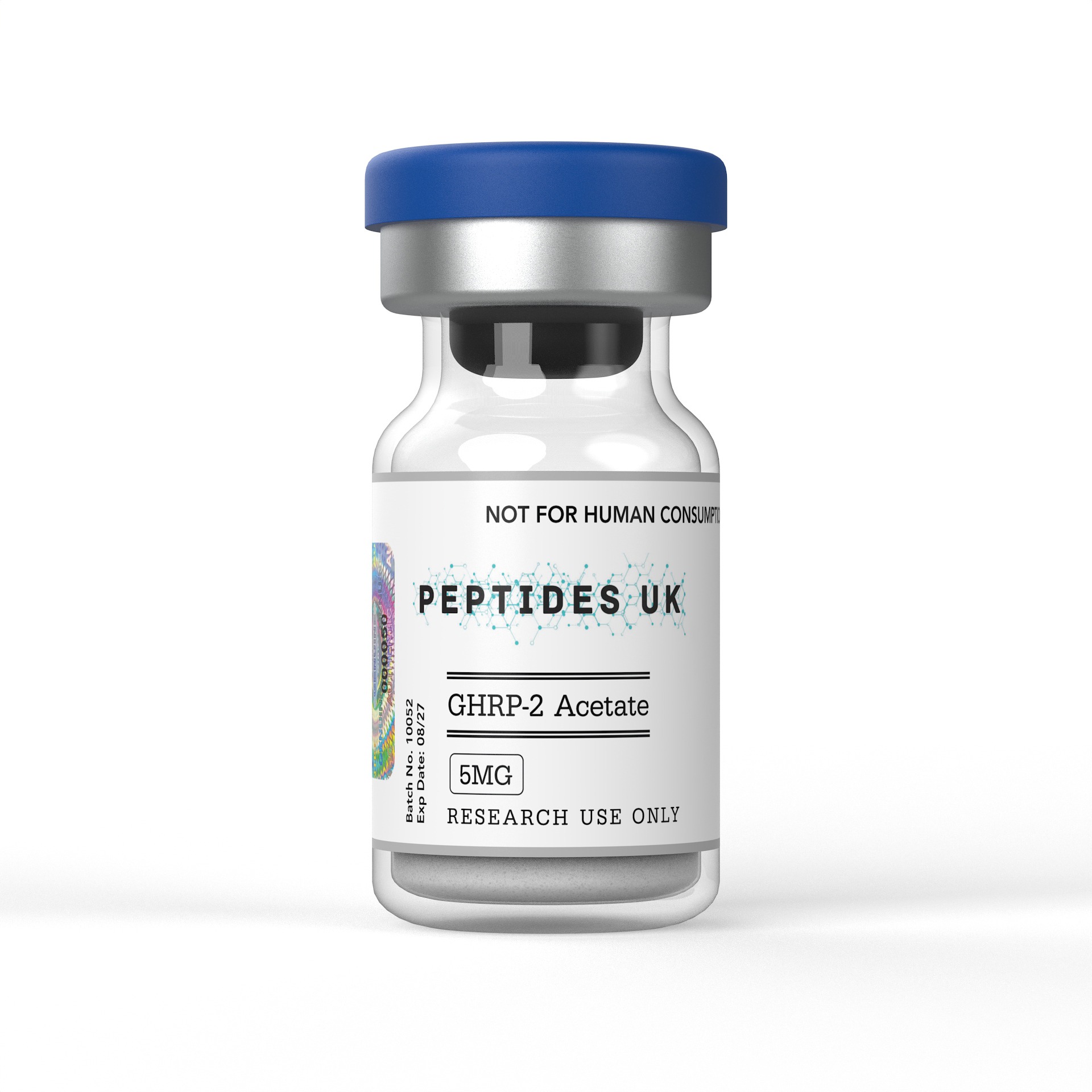
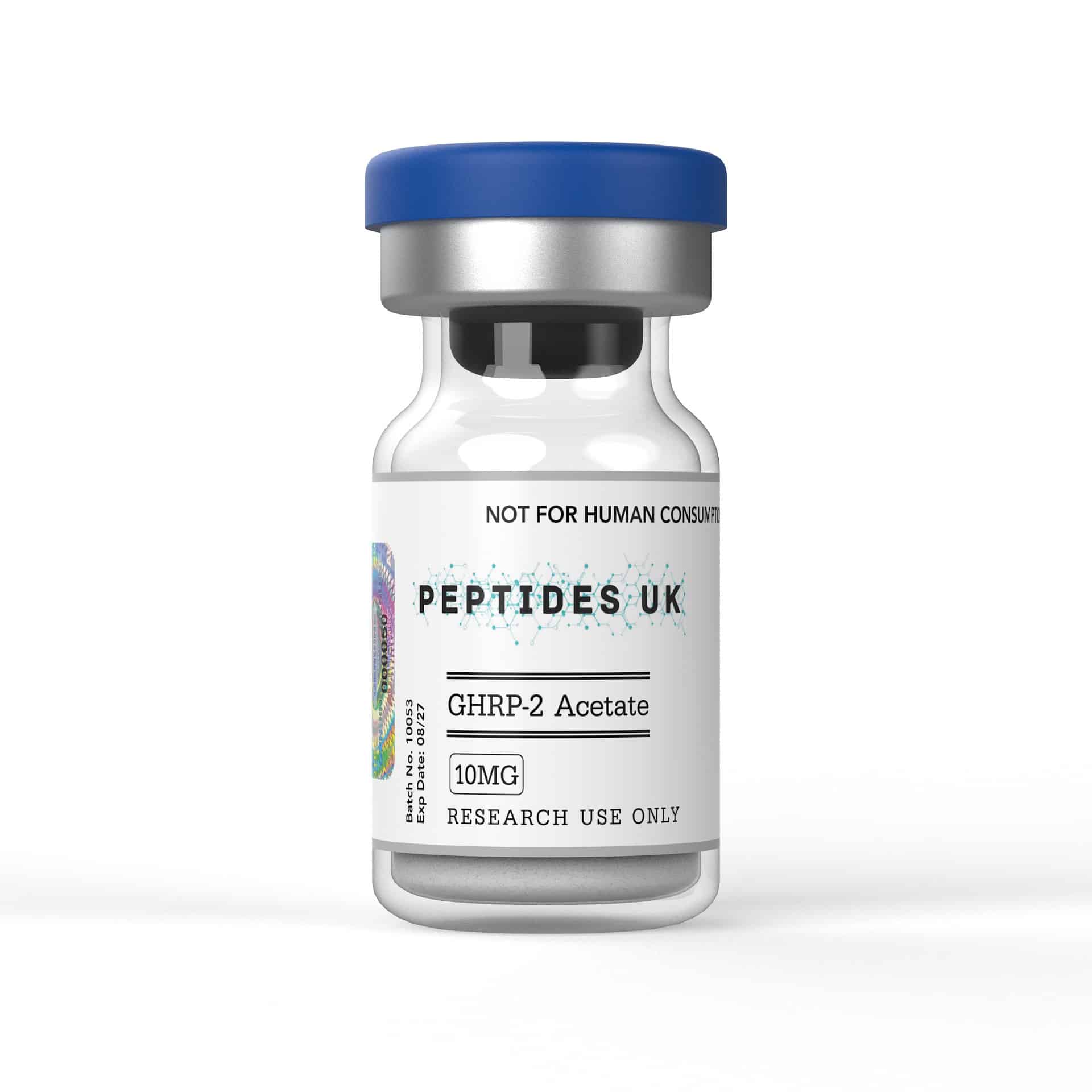
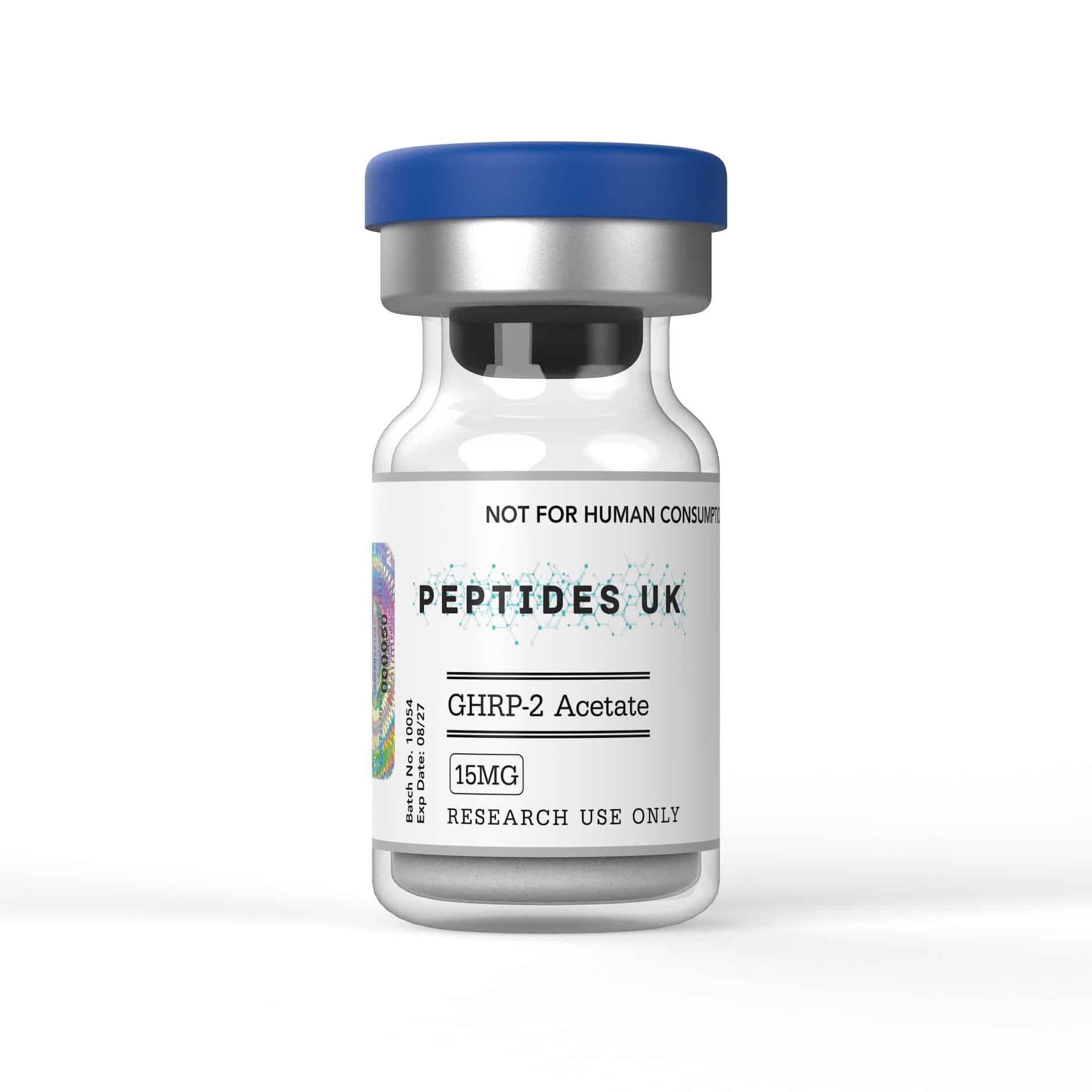
€35.00 – €91.50Price range: €35.00 through €91.50
GHRP-2 Acetate Ireland – Buy Online | In Stock & Ready to Ship
Buy GHRP-2 Acetate in Ireland with fast shipping and guaranteed ≥99% purity — verified with COA and HPLC documentation. A trusted choice for peptides Ireland research teams rely on, with no customs delays or international wait times. Whether you’re searching for GHRP-2 Acetate Ireland suppliers or looking to buy peptides Ireland-wide, we have you covered. Irish research teams can count on consistent stock, rapid fulfilment and full batch documentation every time.
For research use only. Not intended for human or veterinary use.



GHRP-2 Acetate — Growth Hormone Releasing Peptide-2 Acetate — is a synthetic hexapeptide ghrelin receptor agonist and one of the most extensively characterised second-generation growth hormone secretagogue research compounds available to laboratories in Ireland — a D-Ala-D-β-Nal-Ala-Trp-D-Phe-Lys-NH2 hexapeptide that potently activates the growth hormone secretagogue receptor (GHS-R1a) in pituitary somatotroph cells and hypothalamic arcuate nucleus neurones to drive growth hormone release with enhanced potency relative to the first-generation reference compound GHRP-6, making it an indispensable research tool for studying GHS-R1a receptor pharmacology and signal transduction, the ghrelin axis and growth hormone secretagogue biology, pituitary somatotroph cell biology and GH synthesis and secretion, the complementary and synergistic regulation of GH release by GHRH and ghrelin receptor agonists, IGF-1 axis downstream biology, ghrelin receptor-mediated appetite and energy balance regulation, the cytoprotective and anti-inflammatory biology of ghrelin receptor activation beyond GH secretion, and the comparative pharmacology of first, second, and third generation growth hormone secretagogues in the research context of the ghrelin axis. Researchers and institutions across Ireland can source verified, research-grade GHRP-2 Acetate directly from our Irish peptide supply, with domestic-speed dispatch and complete batch documentation.
✅ ≥99% Purity — HPLC & Mass Spectrometry Verified
✅ Batch-Specific Certificate of Analysis (CoA) Included
✅ Sterile Lyophilised Powder | GMP Manufactured
✅ Fast Dispatch to Ireland | Peptides Ireland Stock
GHRP-2 Acetate — D-Ala-D-β-Nal-Ala-Trp-D-Phe-Lys-NH2, acetate salt — is a synthetic hexapeptide growth hormone secretagogue developed through the second-generation structure-activity relationship programme that succeeded the foundational work of Cyril Bowers’ laboratory at Tulane University — the research programme that established the pharmacophore requirements for synthetic GH secretagogue activity beginning with met-enkephalin-derived peptides in the 1970s and 1980s and culminating in the characterisation of the GHS-R1a receptor and the subsequent discovery of ghrelin as its endogenous ligand. GHRP-2 emerged from the second-generation optimisation programme as a structurally refined successor to GHRP-6 — incorporating D-Ala at position 1, the unnatural β-naphthylalanine residue (D-β-Nal) at position 2, and retaining the D-Phe5 and C-terminal Lys-NH2 of the GHRP-6 pharmacophore — modifications that substantially enhanced GHS-R1a binding affinity and GH release potency relative to the first-generation reference compound. The acetate salt form provides enhanced aqueous solubility and lyophilisation stability compared to the free base.
The GHS-R1a receptor — the growth hormone secretagogue receptor subtype 1a — is a Gq/11-coupled GPCR expressed at highest density in pituitary somatotroph cells and hypothalamic arcuate nucleus neurones, with expression also characterised in peripheral tissues including stomach, heart, liver, adipose tissue, and immune cells. Its endogenous ligand ghrelin — an acylated 28 amino acid peptide produced primarily in gastric X/A-like cells — was identified in 1999 by Kojima and colleagues as the natural GHS-R1a agonist, establishing that the ghrelin axis represents a physiological GH regulatory system operating in parallel with and synergistically to the classical GHRH-somatostatin axis. GHRP-2’s GHS-R1a agonism recapitulates and quantitatively exceeds the GH-releasing effects of GHRP-6 — making it a pharmacologically tractable research tool for studying GHS-R1a biology at higher GH secretory amplitudes, with the β-naphthylalanine substitution at position 2 providing enhanced receptor contact relative to GHRP-6’s D-Trp2 residue.
GHRP-2’s GH-releasing mechanism is mechanistically identical to GHRP-6 — acting through GHS-R1a-Gq/11-PLC-IP3-calcium signalling to produce a GH secretory stimulus that is mechanistically distinct from and synergistic with GHRH’s Gs-coupled cAMP-PKA pathway. When GHRP-2 and GHRH are co-administered, the combined GH secretory response substantially exceeds the sum of individual responses through complementary signal transduction pathway interactions in somatotrophs — making GHRP-2 an essential research tool for studying GH axis synergy at enhanced GHS-R1a agonist potency. Like GHRP-6, GHRP-2 retains the first-generation off-target profile of prolactin and cortisol co-secretion alongside GH release — establishing both compounds as pharmacologically comparable in selectivity terms while differing substantially in GHS-R1a agonist potency, and making GHRP-2 a key reference point in the pharmacological evolution from GHRP-6 toward the highly selective second-generation GHS Ipamorelin.
In controlled laboratory and pre-clinical settings, GHRP-2 Acetate is studied across GHS-R1a receptor pharmacology, GH secretion biology, ghrelin axis research, appetite regulation, cytoprotection, comparative growth hormone secretagogue applications, and potency-benchmarking studies where enhanced GHS-R1a agonist activity is required:
GHRP-2 is the primary reference second-generation agonist for GHS-R1a receptor pharmacology — used to characterise enhanced binding kinetics, Gq/11-PLC-IP3 calcium mobilisation, PKC activation, and downstream GH secretory responses relative to GHRP-6 in pituitary somatotroph cell models. Research uses GHRP-2 to establish enhanced pharmacodynamic profiles for GHS-R1a activation — characterising concentration-response relationships, receptor internalisation kinetics, desensitisation dynamics, and the signal transduction cascade linking GHS-R1a engagement to GH granule exocytosis at the heightened potency level conferred by the D-β-Nal2 substitution. These signal transduction studies provide a reference dataset for second-generation GHS-R1a pharmacology that distinguishes GHRP-2’s receptor engagement profile from both the first-generation GHRP-6 and the highly selective Ipamorelin.
GHRP-2 drives potent and dose-dependent GH release from pituitary somatotroph cells with greater potency than GHRP-6 — making it a research tool for studying the cellular biology of GH synthesis, storage, and secretion at maximally stimulated GHS-R1a activation levels. Research has characterised GHRP-2-induced GH secretion kinetics in isolated somatotroph cells and anterior pituitary preparations — examining calcium-dependent GH granule exocytosis, GH gene transcription regulation, somatotroph cell calcium dynamics following high-affinity GHS-R1a activation, and how GHS-R1a signalling at enhanced potency integrates with somatostatin-mediated inhibition and GHRH-mediated stimulation to determine net somatotroph secretory output. These somatotroph biology studies have positioned GHRP-2 as the reference high-potency peptide GH secretagogue for studies requiring maximal GHS-R1a-driven GH release amplitudes.
GHRP-2 and GHRH produce synergistic GH release when administered together — with the combined response exceeding the sum of individual responses through complementary Gq/11 and Gs signalling pathway interactions in somatotrophs, and with the elevated GHS-R1a potency of GHRP-2 producing correspondingly greater combined GH amplitudes than equivalent GHRP-6 and GHRH co-administration. Research has used GHRP-2 in combination with GHRH to characterise the molecular basis of GH axis synergy — examining how GHS-R1a-driven calcium mobilisation potentiates GHRH-induced cAMP-PKA signalling at enhanced agonist potency, how the two pathways converge on GH granule exocytosis machinery, and what the physiological and pharmacological implications of high-potency ghrelin receptor agonist-GHRH synergy are for GH pulse generation and amplitude modulation. These synergy studies have established GHRP-2 as the reference high-potency peptide GHS for studying integrated GH axis regulation at maximum GHS-R1a stimulation.
GHRP-2 serves alongside GHRP-6 as a pharmacological surrogate for ghrelin in GHS-R1a biology research — with the enhanced potency of GHRP-2 enabling controlled receptor activation studies at GHS-R1a occupancy levels not achievable with equivalent concentrations of GHRP-6. Research has used GHRP-2 to examine GHS-R1a biology in tissues and experimental contexts requiring high-affinity agonist stimulation — characterising receptor activation kinetics, downstream signalling amplitude dependence, and the extent to which enhanced GHS-R1a agonist affinity translates into proportionally amplified downstream biological responses in GH secretion, appetite stimulation, and cytoprotective signalling. These studies characterise GHRP-2 as occupying a defined pharmacological position between GHRP-6 and the highly selective Ipamorelin in the evolution of synthetic GHS-R1a agonist pharmacology.
GHS-R1a activation by GHRP-2 produces robust appetite stimulation — through hypothalamic arcuate nucleus NPY/AgRP neurone activation and vagal afferent signalling comparable to GHRP-6 — making GHRP-2 a research tool for studying the ghrelin receptor’s role in appetite and energy balance regulation at high GHS-R1a agonist potency. Research has characterised GHRP-2-induced food intake increases in rodent feeding paradigms — examining the hypothalamic neurochemical changes including NPY and AgRP upregulation, the orexigenic signalling pathways downstream of GHS-R1a activation in arcuate nucleus neurones, and how ghrelin receptor-mediated appetite stimulation at enhanced agonist activity levels interacts with leptin, insulin, and other metabolic hormone signals in the hypothalamic energy balance circuit. These feeding biology studies have established GHRP-2 as a research tool for studying the orexigenic biology of GHS-R1a at enhanced potency relative to GHRP-6.
GHS-R1a activation produces cytoprotective effects in cardiac, hepatic, and other tissue contexts — independently of GH secretion — through direct tissue GHS-R1a-mediated anti-apoptotic, anti-inflammatory, and pro-survival signalling. Research has used GHRP-2 to characterise cardioprotective effects in cardiac ischaemia-reperfusion injury models — documenting reduced infarct size, improved post-ischaemic cardiac function, reduced cardiomyocyte apoptosis, and attenuation of inflammatory responses in GHRP-2-treated hearts. Studies have characterised the GHS-R1a-mediated cardioprotective signalling mechanisms using GHRP-2 — examining PI3K-Akt pro-survival pathway activation, NF-κB anti-inflammatory signalling, and mitochondrial protection as components of GHS-R1a cytoprotective biology operating independently of pituitary GH secretion, and comparing the cardioprotective biology profile of GHRP-2 against the pronounced cardioprotective effects documented for Hexarelin.
GHS-R1a is expressed on macrophages, neutrophils, and other immune cells — and GHRP-2’s GHS-R1a agonism produces anti-inflammatory effects in these cell types through cAMP and PI3K-Akt-mediated suppression of pro-inflammatory cytokine production. Research has examined GHRP-2’s anti-inflammatory biology in macrophage models — characterising reduced TNF-alpha, IL-1beta, and IL-6 production, inhibition of NF-κB activation, and modulation of macrophage polarisation state following GHS-R1a activation. These immune biology studies have positioned GHRP-2 as a reference high-potency GHS-R1a agonist for studying ghrelin receptor-mediated immune modulation, with the enhanced receptor affinity of GHRP-2 enabling characterisation of anti-inflammatory biology at GHS-R1a occupancy levels requiring high-affinity agonism.
GHRP-2 occupies a pharmacologically significant position in the comparative GH secretagogue research landscape — representing the high-potency, non-selective first-to-second generation intermediate between the foundational GHRP-6 reference compound and the highly receptor-selective second-generation compound Ipamorelin. Comparative studies examine GHRP-2 alongside GHRP-6, Ipamorelin, Hexarelin, and the third-generation non-peptide secretagogue MK-677 — characterising how the D-β-Nal2 structural modification relative to GHRP-6 modifies GHS-R1a binding affinity, GH release potency, appetite stimulation amplitude, prolactin and cortisol co-secretion magnitude, and cytoprotective biology. These comparative studies use GHRP-2 as the reference enhanced-potency non-selective peptide GHS against which Ipamorelin’s selective biology is benchmarked — establishing potency ratios, receptor selectivity profiles, and GH-specific versus co-secretion-dependent biological effect comparisons across the second-generation GH secretagogue class.
Research has documented GHRP-2’s enhanced GH release potency relative to GHRP-6 in rodents, dogs, non-human primates, and humans — characterising greater GH pulse amplitudes, superior concentration-response relationships, and enhanced GH secretory kinetics consistent with higher GHS-R1a binding affinity from the D-β-Nal2 substitution. These multi-species comparative GH secretion studies established GHRP-2 as the highest-potency standard peptide GHS-R1a agonist among non-Hexarelin hexapeptide secretagogues and provided the translational foundation for comparative human GH secretagogue pharmacology research.
Research has documented the synergistic GH release produced by GHRP-2 and GHRH co-administration — characterising combined responses exceeding individual responses by 3–10 fold across multiple species, consistent with the GHRP-6 synergy profile but at quantitatively higher combined GH amplitudes commensurate with GHRP-2’s enhanced GHS-R1a potency. These synergy studies validated GHRP-2 as a pharmacological tool for studying GH axis synergy at maximal peptide GHS-R1a agonist stimulation and established that the synergistic mechanism is conserved between first and second generation hexapeptide GH secretagogues.
Research has documented significant cardioprotective effects of GHRP-2 in rodent cardiac ischaemia-reperfusion models — characterising reductions in infarct size, improved left ventricular function recovery, reduced cardiomyocyte apoptosis, and attenuated inflammatory infiltration through GH-independent direct tissue GHS-R1a-mediated mechanisms. These cardioprotection studies established that the cytoprotective biology of GHS-R1a agonism is preserved in the second-generation structural modification of GHRP-2 relative to GHRP-6 and contributed to comparative characterisation of cytoprotective GHS-R1a biology across the hexapeptide secretagogue class.
Research has documented GHRP-2’s robust appetite stimulation in rodent feeding paradigms — characterising significant food intake increases, NPY and AgRP upregulation in arcuate nucleus neurones, and hypothalamic orexigenic signalling pathway activation following GHRP-2 administration consistent with GHS-R1a-mediated orexigenic biology. These feeding biology studies established that the orexigenic biology of GHS-R1a agonism is maintained across the structural modification from GHRP-6 to GHRP-2 and characterised the hypothalamic neurochemical mechanisms through which second-generation ghrelin receptor agonism drives food intake.
Research has characterised GHRP-2’s stimulation of prolactin and cortisol secretion alongside GH release — confirming that the off-target co-secretion profile of first-generation GHS is retained in the second-generation GHRP-2 structural modification despite the enhanced GHS-R1a potency conferred by D-β-Nal2. Comparative studies have used GHRP-2’s prolactin and cortisol co-secretion profile alongside GHRP-6 as a dual reference benchmark against which the dramatically reduced co-secretion of Ipamorelin is evaluated — establishing that the structural determinants of GHS-R1a selectivity eliminating prolactin and cortisol co-stimulation were distinct from those governing GH release potency in the evolution toward second-generation selective secretagogues.
Research has confirmed GHRP-2’s anti-inflammatory effects in macrophage and immune cell models — characterising reduced pro-inflammatory cytokine production, NF-κB pathway suppression, and modulation of macrophage activation state through GHS-R1a-mediated signalling at the enhanced agonist potency level of GHRP-2. These immune biology studies established that GHS-R1a’s anti-inflammatory biology scales with agonist affinity and contributed to understanding of the ghrelin receptor as a pleiotropic immune-regulatory target whose anti-inflammatory biology is preserved and potentially amplified by the second-generation hexapeptide structural refinements incorporated in GHRP-2.
Research has established GHRP-2’s pharmacological position as the high-potency non-selective reference compound between GHRP-6 and Ipamorelin in comparative GH secretagogue studies — documenting greater GH release potency than GHRP-6, comparable GH release potency to Ipamorelin, and substantially greater prolactin and cortisol co-secretion than Ipamorelin. These comparative pharmacology studies established GHRP-2 as an essential reference compound for characterising the structural determinants of GHS-R1a subtype selectivity and GH release potency as independent pharmacological dimensions in the second-generation GH secretagogue class.
| Feature | GHRP-2 Acetate | GHRP-6 | Ipamorelin | Hexarelin | MK-677 (Ibutamoren) |
|---|---|---|---|---|---|
| Type | Synthetic hexapeptide — second generation GHS | Synthetic hexapeptide — first generation GHS | Synthetic pentapeptide — second generation selective GHS | Synthetic hexapeptide — first/second generation GHS | Non-peptide small molecule — third generation GHS |
| GHS-R1a Affinity | Higher than GHRP-6 — enhanced by D-β-Nal2 | High — reference first generation | High — selective | High — highest GH release potency in class | High — orally bioavailable |
| GH Release Potency | Higher than GHRP-6 — second generation reference | High | High — selective | Highest peptide GHS | High — oral dosing |
| Prolactin Co-secretion | Yes — off-target retained from first generation | Yes — off-target | Minimal — key selectivity advantage | Yes — pronounced | Minimal |
| Cortisol Co-secretion | Yes — off-target retained from first generation | Yes — off-target | Minimal | Yes — pronounced | Minimal |
| Appetite Stimulation | Pronounced — NPY/AgRP | Pronounced — NPY/AgRP | Moderate | Moderate | Pronounced |
| Cardioprotection | Yes — documented | Yes — documented | Limited data | Yes — pronounced | Limited direct data |
| Half-Life | ~15–60 minutes | ~15–60 minutes | ~2 hours | ~15–60 minutes | ~24 hours — oral |
| Key Research Distinction | Enhanced-potency non-selective second generation GHS — bridges GHRP-6 and Ipamorelin pharmacologically | Reference first generation GHS — foundational GHS-R1a pharmacology and synergy research | Selective GH release without prolactin/cortisol — selectivity reference | Highest GH amplitude — cardioprotection biology | Oral GHS — chronic GH axis stimulation research |
| Research Profile | Extensively studied | Extensively studied — foundational GHS compound | Extensively studied | Extensively studied | Extensively studied |
| Parameter | Detail |
|---|---|
| Name | GHRP-2 Acetate |
| Also Designated | Growth Hormone Releasing Peptide-2 Acetate / D-Ala-D-β-Nal-Ala-Trp-D-Phe-Lys-NH2 acetate salt |
| Sequence | D-Ala-D-β-Nal-Ala-Trp-D-Phe-Lys-NH2 |
| Type | Synthetic Hexapeptide GHS-R1a Agonist — Second Generation Growth Hormone Secretagogue — Research Grade — Acetate Salt |
| Molecular Weight | 817.9 Da (free base) / approx. 877.9 Da (monoacetate) |
| Mechanism | GHS-R1a agonism — Gq/11-PLC-IP3 → calcium mobilisation → PKC activation → GH granule exocytosis from somatotrophs + hypothalamic arcuate NPY/AgRP activation → appetite stimulation + peripheral GHS-R1a cytoprotective and anti-inflammatory signalling — enhanced potency relative to GHRP-6 conferred by D-β-Nal2 substitution |
| Primary Receptor | GHS-R1a — Gq/11-coupled GPCR — pituitary somatotrophs / hypothalamic arcuate nucleus / peripheral tissues |
| Key Research Distinction | Enhanced-potency second-generation GHS-R1a agonist — reference compound bridging GHRP-6 and Ipamorelin in comparative GH secretagogue pharmacology — highest-potency non-selective standard peptide secretagogue |
| Primary Research Areas | GHS-R1a pharmacology / GH secretion and somatotroph biology / GHRH-GHRP synergy / ghrelin axis research / appetite and energy balance / cardioprotection / anti-inflammatory biology / comparative GH secretagogue research |
| D-amino Acids | D-Ala1, D-β-Nal2, D-Phe5 — endopeptidase resistance, enhanced GHS-R1a affinity, and pharmacophore stabilisation |
| Salt Form | Acetate — enhanced aqueous solubility and lyophilisation stability |
| Prolactin / Cortisol Co-secretion | Yes — off-target profile retained from first-generation hexapeptide GHS structural class |
| Purity | ≥99% HPLC & MS Verified |
| Form | Sterile Lyophilised Powder |
| Solubility | Sterile water or 0.1% acetic acid aqueous solution |
| Storage (Powder) | -20°C, protect from light and moisture |
| Storage (Reconstituted) | -80°C in aliquots — minimise freeze-thaw cycles |
| Manufacturing | GMP Manufactured |
| Intended Use | Research use only |
GHRP-2 Acetate is a hydrophilic hexapeptide with good aqueous solubility due to the acetate salt form — reconstitute by adding sterile water or 0.1% acetic acid in sterile water slowly to the lyophilised powder and swirling gently until dissolved. The acetate counterion contributes to enhanced aqueous solubility relative to the free base form; reconstitution in sterile water alone is generally sufficient. The Trp4 residue is light-sensitive — protect reconstituted solutions from direct light exposure and prepare working solutions in amber or foil-wrapped tubes where possible. The D-β-Nal2 residue is stable under standard aqueous reconstitution conditions but may show increased sensitivity to strongly oxidising conditions — avoid hydrogen peroxide and strong oxidants. Avoid strongly alkaline conditions that can compromise the C-terminal amide. Prepare single-use aliquots and store at -80°C. For GH secretion studies in isolated pituitary preparations, dilute into physiological buffer at 37°C immediately before addition. For in vivo GH secretion studies, prepare fresh working solutions in sterile saline at the time of administration and administer via intravenous or subcutaneous routes according to established GH secretagogue protocols. For GHRH synergy studies, prepare GHRP-2 Acetate and GHRH separately in matched vehicles and administer simultaneously or in defined sequence according to the experimental protocol.
Every order of GHRP-2 Acetate in Ireland includes:
✅ Batch-Specific Certificate of Analysis (CoA)
✅ HPLC Chromatogram
✅ Mass Spectrometry Confirmation
✅ Sterility & Endotoxin Testing Report
✅ Reconstitution Protocol — including acetate salt solubility, D-β-Nal2 stability, and Trp4 light sensitivity guidance
✅ Technical Research Support
Yes — we supply research-grade GHRP-2 Acetate to researchers and institutions across Ireland with fast dispatch and full batch documentation. Supplied strictly for laboratory research purposes only.
GHRP-2 is classified as a second-generation GH secretagogue based on structural refinements relative to the first-generation GHRP-6 reference compound — specifically the incorporation of D-Ala at position 1 and the unnatural D-β-naphthylalanine residue at position 2 in place of GHRP-6’s D-Trp2. The D-β-Nal2 modification provides enhanced hydrophobic contact with GHS-R1a’s transmembrane binding pocket relative to the indole side chain of D-Trp2 — increasing binding affinity and GH release potency. However, GHRP-2 retains the non-selective off-target prolactin and cortisol co-secretion profile of GHRP-6, distinguishing it from the truly selective second-generation compound Ipamorelin which eliminates co-secretion while maintaining GH release potency through a different structural strategy.
GHRP-2 Acetate and GHRP-6 share identical GHS-R1a-Gq/11-PLC-IP3 calcium mobilisation mechanisms — the structural differences at positions 1 and 2 do not alter the downstream signal transduction cascade engaged following GHS-R1a binding but quantitatively enhance GHS-R1a affinity and therefore the magnitude of GH secretory responses at equivalent molar concentrations. The acetate salt form of GHRP-2 is pharmacologically equivalent to the free base at the receptor level and simply provides improved solubility and formulation characteristics. In practical research terms, GHRP-2 Acetate produces greater GH release than GHRP-6 at equivalent doses while producing comparable prolactin and cortisol co-secretion — making it the preferred compound when maximal GHS-R1a-driven GH amplitude is the research objective.
The D-β-Nal2 structural modification in GHRP-2 enhances GHS-R1a binding affinity through improved hydrophobic contact but does not alter the receptor subtype selectivity profile responsible for prolactin and cortisol co-secretion. These off-target secretory effects in GHRP-6 and GHRP-2 reflect either GHS-R1a activation of pituitary lactotrophs and corticotrophs — which express GHS-R1a — or engagement of additional receptor subtypes distinct from GHS-R1a. The structural determinants of GHS-R1a subtype selectivity that eliminate prolactin and cortisol co-stimulation were not modified by the GHRP-6-to-GHRP-2 structural refinement but were achieved by Ipamorelin’s distinct pentapeptide pharmacophore design. This makes GHRP-2 an important reference point in comparative research: when GHRP-2 and Ipamorelin produce equivalent GH release but Ipamorelin produces no prolactin or cortisol co-secretion, the structural basis for selectivity without potency loss is established.
The D-β-naphthylalanine residue at position 2 in GHRP-2 — substituting for D-Trp2 in GHRP-6 — provides an extended bicyclic aromatic side chain that makes enhanced hydrophobic and aromatic contacts with the GHS-R1a transmembrane binding pocket relative to the single-ring indole of D-Trp2. This enhanced receptor contact is the structural basis for GHRP-2’s higher GHS-R1a binding affinity and GH release potency relative to GHRP-6. The D-β-Nal substitution also provides enhanced proteolytic stability in the N-terminal region of the hexapeptide. In research terms, the D-β-Nal2 substitution makes GHRP-2 the most pharmacologically potent standard non-Hexarelin hexapeptide GHS-R1a agonist and establishes the aromatic/hydrophobic pharmacophore requirement at position 2 as a key determinant of GHS-R1a binding potency — a structure-activity relationship finding with implications for the rational design of subsequent GH secretagogue generations.
Vehicle controls matched to the acetate salt reconstitution buffer are essential. GHS-R1a antagonist controls — [D-Lys3]-GHRP-6 is the standard GHS-R1a antagonist reference — confirm receptor specificity of GH secretion, appetite, and cytoprotective effects. GHRH receptor antagonist controls distinguish GHRP-2-specific from GHRH pathway-mediated GH secretion components. For comparative pharmacology studies, GHRP-6 should be included as a first-generation reference at equivalent molar concentrations to characterise the potency differential conferred by D-β-Nal2. For GH-independent cytoprotective studies, GH receptor antagonist controls or hypophysectomised animal models confirm that observed cardioprotective effects are direct tissue GHS-R1a-mediated rather than secondary to GH release. For prolactin and cortisol co-secretion studies, Ipamorelin should be included as a selectivity reference to establish the co-secretion differential between non-selective and selective second-generation GHS compounds.
≥99% purity is essential for GHS-R1a receptor pharmacology, GH secretion studies, GHRH synergy research, and comparative GH secretagogue pharmacology — where impurities including des-D-Ala1 fragments, oxidised Trp species, D-β-Nal oxidation products, or D-to-L amino acid epimerisation products would show substantially altered GHS-R1a binding affinity and confound dose-response characterisation and potency comparisons. D-amino acid configuration verification at Ala1, β-Nal2, and Phe5 positions is a critical purity specification. All GHRP-2 Acetate Ireland stock is verified to ≥99% purity by HPLC and mass spectrometry with D-amino acid configuration confirmation.
GHRP-2 Acetate is supplied exclusively for legitimate scientific research purposes conducted within licensed laboratory environments. This product is not intended for human consumption, self-administration, or any therapeutic application. It must be handled by qualified researchers in compliance with applicable Irish and EU regulations and institutional ethics guidelines. By purchasing, you confirm that this compound will be used solely for approved in vitro or pre-clinical research purposes.
WhatsApp us
Receive News
