PRODUCTS SOLD ON PEPTIDESLABIRELAND.COM ARE FOR RESEARCH PURPOSES ONLY AND ARE NOT FOR HUMAN OR VETERINARY USE.
€224.50
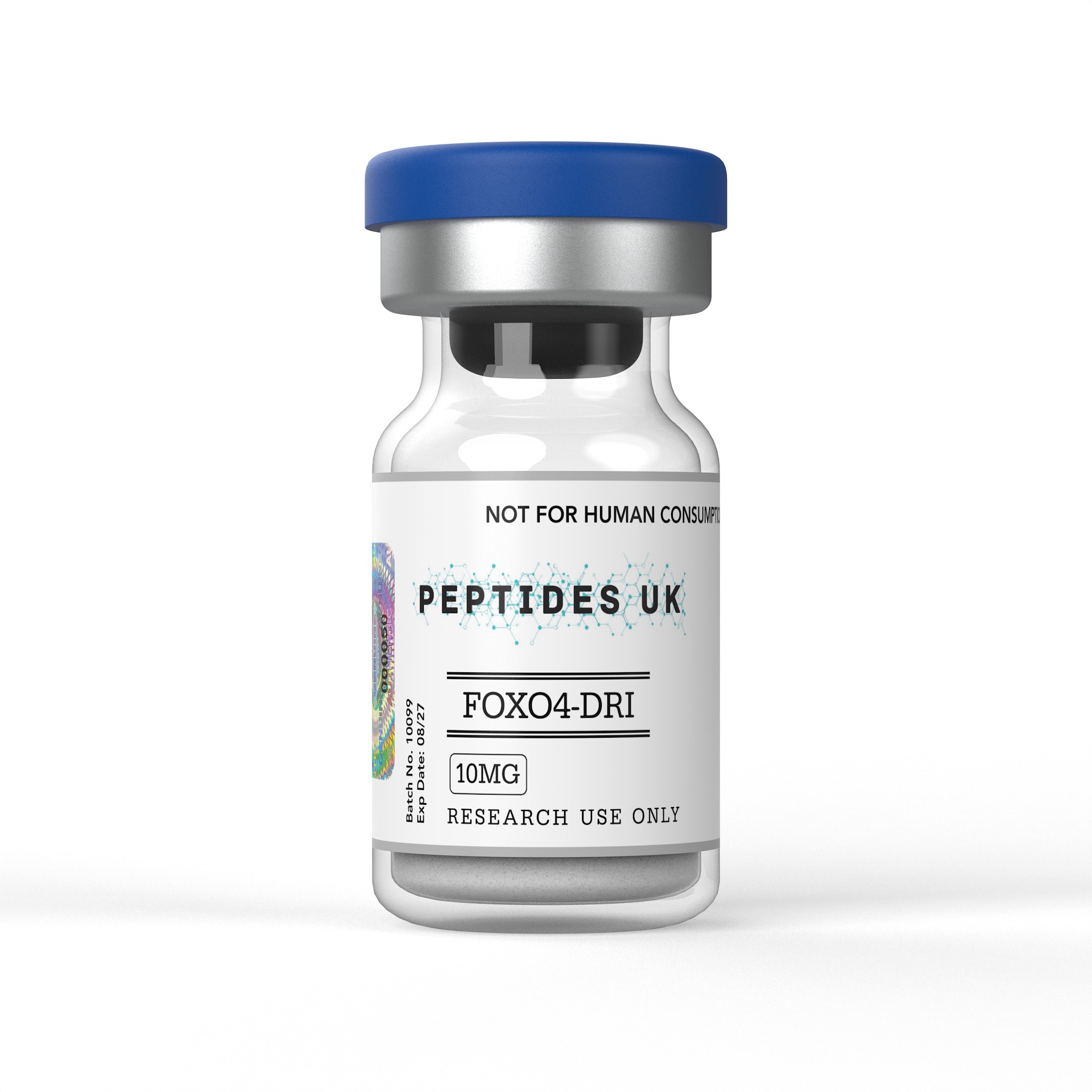
FOXO4-DRI Ireland – Buy Online | In Stock & Ready to Ship
Buy FOXO4-DRI in Ireland with fast shipping and guaranteed ≥99% purity — verified with COA and HPLC documentation. A trusted choice for peptides Ireland research teams rely on, with no customs delays or international wait times. Whether you’re searching for FOXO4-DRI Ireland suppliers or looking to buy peptides Ireland-wide, we have you covered. Irish research teams can count on consistent stock, rapid fulfilment and full batch documentation every time.
For research use only. Not intended for human or veterinary use.



FOXO4-DRI is a synthetic D-amino acid retro-inverso peptide and one of the most mechanistically precise senolytic research compounds available to laboratories in Ireland — a rationally designed peptide that selectively disrupts the interaction between the FOXO4 transcription factor and p53 in senescent cells, triggering apoptosis specifically in cells that have undergone irreversible cell cycle arrest while leaving healthy proliferating and quiescent cells unaffected, making it a uniquely targeted research tool for studying cellular senescence biology, senescent cell clearance mechanisms, the senescence-associated secretory phenotype, and the contribution of senescent cell accumulation to ageing biology and age-related pathology. Researchers and institutions across Ireland can source verified, research-grade FOXO4-DRI directly from our Irish peptide supply, with domestic-speed dispatch and complete batch documentation.
✅ ≥99% Purity — HPLC & Mass Spectrometry Verified
✅ Batch-Specific Certificate of Analysis (CoA) Included
✅ Sterile Lyophilised Powder | GMP Manufactured
✅ Fast Dispatch to Ireland | Peptides Ireland Stock
FOXO4-DRI is a D-amino acid retro-inverso peptide — a synthetic mirror-image version of a naturally occurring peptide sequence derived from the FOXO4 transcription factor — designed through rational structure-based drug design to penetrate cells and specifically interfere with the FOXO4-p53 protein-protein interaction that senescent cells depend upon for their survival. The DRI designation reflects the compound’s construction as a D-amino acid retro-inverso peptide — meaning it is composed entirely of D-amino acids (the stereoisomeric mirror images of the L-amino acids found in natural proteins) arranged in the reverse sequence order of the parent peptide — a design strategy that produces a compound whose three-dimensional side chain geometry closely mimics the natural peptide’s bioactive conformation while conferring near-complete resistance to proteolytic degradation by cellular and serum proteases that would rapidly degrade an equivalent L-amino acid peptide.
To understand FOXO4-DRI’s mechanism, the biology of cellular senescence must first be understood. Cellular senescence is a state of permanent, irreversible cell cycle arrest entered by cells in response to DNA damage, telomere shortening, oncogene activation, oxidative stress, or other stressors that threaten genomic integrity — representing a fundamental tumour suppression mechanism that prevents potentially damaged cells from continuing to proliferate. The p53 tumour suppressor protein is the master regulator of the senescence programme — activated by DNA damage signalling and driving transcription of cell cycle arrest genes including p21. In senescent cells, p53 is constitutively activated and drives sustained cell cycle arrest — but crucially, senescent cells have also developed mechanisms to resist the apoptosis that p53 activation would normally trigger in a cell with persistent DNA damage. One of these survival mechanisms — identified by research from the group of Peter de Keizer at Utrecht University as central to senescent cell survival — is the nuclear sequestration of p53 by FOXO4, a forkhead transcription factor that in senescent cells relocates to the nucleus and forms a protein-protein interaction with p53 that prevents p53 from executing its pro-apoptotic transcriptional programme and instead redirects p53 activity toward cell cycle arrest maintenance.
FOXO4-DRI was designed to disrupt this FOXO4-p53 interaction — entering the cell nucleus and competitively displacing FOXO4 from p53, thereby releasing p53 from FOXO4-mediated apoptosis suppression and allowing p53 to execute its pro-apoptotic programme in senescent cells. Because this FOXO4-p53 interaction is specifically upregulated in senescent cells — representing a survival mechanism unique to the senescent state — FOXO4-DRI’s disruption of this interaction preferentially triggers apoptosis in senescent cells while leaving non-senescent cells, which do not depend on FOXO4-mediated p53 sequestration for survival, largely unaffected. This mechanistic selectivity for senescent cells — apoptosis induction specifically in the cells that have undergone irreversible arrest — is the defining and most scientifically significant property of FOXO4-DRI as a senolytic research tool.
The broader context for FOXO4-DRI research is the senescence field’s central hypothesis — supported by a growing body of experimental evidence — that accumulation of senescent cells in tissues over time is a primary driver of ageing biology and multiple age-related pathologies through the chronic, low-grade inflammatory environment created by the senescence-associated secretory phenotype (SASP). If senescent cell accumulation contributes causally to ageing phenotypes, then selective clearance of senescent cells — senolysis — should attenuate those phenotypes, and FOXO4-DRI provides a mechanistically precise tool for testing this hypothesis in pre-clinical research models.
In controlled laboratory and pre-clinical settings, FOXO4-DRI is studied across a range of cellular senescence biology, senolytic pharmacology, ageing research, and SASP-related pathology research applications:
Senescent Cell Selective Apoptosis Research — FOXO4-DRI’s primary research application is the induction of selective apoptosis in senescent cells through FOXO4-p53 interaction disruption — with studies examining the specificity of senescent cell killing, the molecular pathway from FOXO4-DRI treatment to p53 nuclear release and pro-apoptotic gene activation, and the selectivity of apoptosis induction between senescent and non-senescent cell populations in co-culture and in vivo models. Research has characterised the dose-response relationship for senescent cell apoptosis induction and the temporal dynamics of senescent cell clearance following FOXO4-DRI treatment.
FOXO4-p53 Protein-Protein Interaction Research — FOXO4-DRI provides a pharmacological tool for studying the FOXO4-p53 protein-protein interaction in senescent cell biology — with research examining the structural basis of FOXO4-p53 binding, the specific domains mediating their interaction, and how competitive disruption of this interaction by FOXO4-DRI influences p53 transcriptional programme selection between cell cycle arrest and apoptosis. These protein-protein interaction studies have contributed to fundamental understanding of how senescent cells redirect p53 activity from apoptosis to arrest maintenance.
Senescence-Associated Secretory Phenotype Research — FOXO4-DRI-mediated clearance of senescent cells provides a tool for studying the SASP — the pro-inflammatory secretome produced by senescent cells comprising cytokines, chemokines, matrix metalloproteinases, and growth factors that remodel the tissue microenvironment and drive chronic sterile inflammation. Research has examined how FOXO4-DRI-driven senescent cell clearance influences SASP factor levels in tissues and biological fluids — characterising which aspects of tissue and organismal phenotype are attributable to ongoing SASP production versus permanent consequences of prior senescent cell accumulation.
Ageing Biology and Physical Function Research — Pre-clinical studies have used FOXO4-DRI to examine whether senescent cell clearance attenuates age-related phenotypes in aged animal models — with research characterising effects on physical fitness parameters, fur density and appearance, renal function markers, and tissue histology following FOXO4-DRI-driven senescent cell clearance in naturally aged pre-clinical models. These ageing biology studies have provided important pre-clinical evidence for the contribution of senescent cell accumulation to ageing phenotypes.
Chemotherapy-Induced Senescence Research — An important application of FOXO4-DRI in pre-clinical cancer biology research is the study of chemotherapy-induced senescence — the phenomenon whereby cancer chemotherapy drives both cancer cells and healthy bystander cells into senescence, with the resulting SASP from chemotherapy-induced senescent cells potentially contributing to long-term side effects and possibly to cancer recurrence through SASP-driven pro-tumorigenic microenvironment effects. Research has examined FOXO4-DRI as a tool for clearing chemotherapy-induced senescent cells — studying whether senolysis following chemotherapy can reduce SASP-associated toxicity and tissue damage while sparing the anti-tumour effects of the treatment.
D-Amino Acid Retro-Inverso Peptide Pharmacology Research — FOXO4-DRI’s construction as a D-amino acid retro-inverso peptide makes it a research tool of interest in peptide medicinal chemistry — with studies examining how the DRI modification strategy influences cell penetration, proteolytic stability, nuclear localisation, and intracellular target engagement. Research characterising FOXO4-DRI’s pharmacokinetics and intracellular distribution has contributed to the broader understanding of how DRI peptide design can be applied to develop cell-penetrating, proteolytically stable peptide inhibitors of intracellular protein-protein interactions.
Tissue-Specific Senescence Biology Research — FOXO4-DRI has been used to examine senescence biology in specific tissue contexts — including liver, kidney, skin, and adipose tissue — where senescent cell accumulation has been implicated in tissue dysfunction and age-related pathology. Research has characterised how senescent cell clearance in specific tissue contexts influences local SASP production, inflammatory cell infiltration, tissue function parameters, and the regenerative capacity of tissue-resident stem and progenitor cell populations that are suppressed by SASP-driven paracrine senescence signalling.
Oncogene-Induced Senescence Research — Beyond replicative and stress-induced senescence, FOXO4-DRI has been studied in the context of oncogene-induced senescence — the senescence programme activated in cells experiencing aberrant oncogene activation as a tumour suppression mechanism. Research has examined how FOXO4-DRI interacts with oncogene-induced senescent cells — characterising whether the FOXO4-p53 survival mechanism is similarly engaged in this form of senescence and whether FOXO4-DRI can selectively clear oncogene-induced senescent cells in relevant pre-clinical models.
Comparative Senolytic Research — FOXO4-DRI is used alongside other senolytic compounds — including navitoclax (ABT-263), dasatinib, quercetin, and ABT-737 — in comparative senolytic pharmacology research examining how different senolytic mechanisms produce distinct senescent cell clearance profiles across different senescent cell types and tissue contexts. These comparative studies have contributed to understanding of which senolytic mechanisms are most effective in different biological contexts and have established FOXO4-DRI’s position within the broader senolytic research toolkit.
p53 Biology and Apoptosis Pathway Research — FOXO4-DRI provides a tool for studying p53 apoptotic programme regulation through protein-protein interaction modulation — with research examining how FOXO4 displacement from p53 influences p53’s transcriptional target selection, nuclear localisation, and pro-apoptotic versus cell cycle arrest programme activation. These p53 biology studies have contributed to fundamental understanding of how p53 transcriptional activity is directed toward different biological outcomes by interaction with regulatory proteins in different cellular contexts.
FOXO4-DRI has generated a focused but scientifically landmark research literature — with the foundational 2017 Nature Medicine publication from de Keizer and colleagues establishing proof-of-concept for the compound’s senolytic mechanism and stimulating a growing body of subsequent research characterising its biology across multiple senescence contexts.
Foundational Nature Medicine Study Established Senolytic Mechanism and In Vivo Efficacy — The landmark 2017 study by Baar, Brandt, Putavet, Klein and colleagues in Nature Medicine established FOXO4-DRI’s senolytic mechanism and demonstrated pre-clinical efficacy across multiple ageing-related endpoints. The study documented that FOXO4-DRI selectively induced apoptosis in senescent cells while leaving non-senescent cells unaffected — confirming the mechanistic hypothesis that FOXO4-p53 interaction disruption preferentially triggers apoptosis in cells dependent on this interaction for survival. In vivo studies in naturally aged mice documented improvements in physical fitness parameters, fur density restoration, and renal function markers following FOXO4-DRI treatment — providing pre-clinical evidence that senescent cell clearance through this mechanism could attenuate multiple age-related phenotypes simultaneously. This foundational study established FOXO4-DRI as a validated senolytic research tool and catalysed the broader field’s interest in targeted protein-protein interaction disruption as a senolytic strategy.
Selectivity for Senescent Cells Confirmed — Research has confirmed FOXO4-DRI’s selective toxicity toward senescent versus non-senescent cells across multiple cell type comparisons — with studies documenting dose-dependent apoptosis in senescent fibroblasts, endothelial cells, and cancer cells with minimal toxicity to matched non-senescent populations at equivalent doses. This selectivity confirmation has been important for establishing FOXO4-DRI as a senolytic rather than a broadly cytotoxic compound — validating that its mechanism of action through FOXO4-p53 interaction disruption produces cell-type selectivity dependent on the senescent state rather than non-specific cytotoxicity.
Chemotherapy-Induced Senescence Clearance Documented — Research has examined FOXO4-DRI in the context of chemotherapy-induced senescence — with studies documenting selective clearance of chemotherapy-induced senescent cells and associated reductions in SASP factor production in pre-clinical models. These chemotherapy-senescence studies have provided pre-clinical evidence for the potential utility of senolytic approaches following cancer chemotherapy — establishing a research rationale for examining whether SASP-associated toxicity of cancer treatment can be reduced through targeted senescent cell clearance while preserving anti-tumour treatment effects.
SASP Reduction Following Senescent Cell Clearance Characterised — Research has documented reductions in SASP-associated inflammatory markers following FOXO4-DRI-driven senescent cell clearance — with studies characterising decreases in pro-inflammatory cytokines including IL-6, IL-8, and MCP-1, reductions in matrix metalloproteinase expression, and attenuation of tissue inflammatory infiltration in FOXO4-DRI-treated pre-clinical models. These SASP reduction findings have been important for establishing the biological mechanism through which senescent cell clearance produces tissue-level and systemic effects in ageing models — attributing observed phenotypic improvements to SASP elimination rather than to other potential effects of senescent cell removal.
DRI Peptide Design Validated for Intracellular Target Engagement — Research has confirmed that FOXO4-DRI’s D-amino acid retro-inverso design successfully enables cell penetration, nuclear localisation, and intracellular FOXO4-p53 interaction disruption — validating the DRI peptide strategy as an effective approach for delivering competitive peptide inhibitors to intracellular protein-protein interaction targets. Studies examining FOXO4-DRI’s intracellular distribution have documented nuclear accumulation consistent with its designed mechanism of action — and proteolytic stability assays have confirmed the dramatically extended stability of the D-amino acid peptide compared to an equivalent L-amino acid control peptide. These pharmacological characterisation findings have contributed to the broader understanding of DRI peptide design as a strategy for intracellular protein-protein interaction research tools.
Physical Fitness and Ageing Phenotype Improvements in Aged Models — Pre-clinical studies have documented improvements in physical fitness parameters — including grip strength, treadmill endurance, and activity metrics — in naturally aged animals following FOXO4-DRI treatment, consistent with attenuation of age-related physical decline through senescent cell clearance. These physical function findings have been among the most compelling pre-clinical evidence for the causal contribution of senescent cell accumulation to functional ageing phenotypes — establishing that selective removal of senescent cells through a defined molecular mechanism can produce measurable improvements in age-related functional decline parameters.
Liver and Kidney Biology Effects Characterised — Research has examined FOXO4-DRI’s effects in liver and kidney tissue contexts — with studies documenting reductions in senescence markers, attenuated inflammatory infiltration, and improvements in tissue architecture and functional parameters in hepatic and renal tissue of aged and disease-model animals following FOXO4-DRI treatment. These organ-specific studies have contributed to understanding of how senescent cell accumulation contributes to age-related organ dysfunction and have provided pre-clinical evidence for the tissue-specific consequences of senolytic intervention.
| Feature | FOXO4-DRI | Navitoclax (ABT-263) | Dasatinib + Quercetin | ABT-737 | Piperlongumine |
|---|---|---|---|---|---|
| Class | D-amino acid retro-inverso peptide | BCL-2/BCL-xL inhibitor | Tyrosine kinase inhibitor + flavonoid | BCL-2 family inhibitor | Natural alkaloid |
| Senolytic Mechanism | FOXO4-p53 interaction disruption — p53 pro-apoptotic release | BCL-2/BCL-xL anti-apoptotic protein inhibition | Multiple — src kinase + quercetin SASP/survival | BCL-2/BCL-xL inhibition | ROS amplification |
| Selectivity for Senescent Cells | High — FOXO4-p53 dependency specific to senescent state | Moderate — also depletes platelets | Moderate — cell-type dependent | Moderate — platelet toxicity | Moderate |
| Primary Senescent Cell Target | Senescent cells with FOXO4-p53 co-dependency | BCL-xL-dependent senescent cells | Broad — multiple senescent cell types | BCL-2/BCL-xL-dependent senescent cells | Stress-induced senescent cells |
| Cell Penetration | Yes — designed cell-penetrating DRI peptide | Yes — small molecule | Yes — small molecules | Limited | Yes — small molecule |
| Proteolytic Stability | Very high — D-amino acid composition | N/A — small molecule | N/A — small molecules | N/A — small molecule | N/A — small molecule |
| Off-Target Toxicity | Low — mechanism-specific | Thrombocytopenia — platelet BCL-xL | Depends on dose | Thrombocytopenia | Moderate — ROS non-specific |
| SASP Reduction | Yes — via senescent cell clearance | Yes — via senescent cell clearance | Yes — direct + via clearance | Yes — via senescent cell clearance | Moderate |
| Research Profile | Well-documented — landmark 2017 study | Extensively studied | Extensively studied | Well-documented | Growing |
| Parameter | Detail |
|---|---|
| Name | FOXO4-DRI |
| Type | D-Amino Acid Retro-Inverso Senolytic Peptide |
| Design Strategy | Retro-inverso of FOXO4 interaction domain — D-amino acids throughout |
| Mechanism | FOXO4-p53 protein-protein interaction disruption — senescent cell apoptosis |
| Target Interaction | FOXO4-p53 nuclear complex — senescent cell survival mechanism |
| Selectivity | Preferential apoptosis induction in senescent cells |
| Key Research Distinction | Only peptide-based senolytic with confirmed selective FOXO4-p53 disruption mechanism |
| Proteolytic Stability | Very high — D-amino acid composition resists all L-amino acid-specific proteases |
| Cell Penetration | Yes — designed cell-penetrating properties |
| Purity | ≥99% HPLC & MS Verified |
| Form | Sterile Lyophilised Powder |
| Solubility | Sterile water, PBS, or DMSO — see reconstitution note |
| Storage (Powder) | -20°C, protect from light and moisture |
| Storage (Reconstituted) | 2–8°C — use within 7 days or aliquot at -80°C |
| Manufacturing | GMP Manufactured |
| Intended Use | Research use only |
FOXO4-DRI can be reconstituted in sterile water, PBS, or DMSO depending on the research application. For aqueous reconstitution, add sterile water or PBS slowly down the inside wall of the vial and swirl gently — do not inject directly onto the lyophilised powder and do not vortex vigorously. For applications requiring higher concentration stock solutions, DMSO reconstitution may be appropriate — prepare DMSO stocks at a concentration that allows subsequent dilution to ≤0.1% DMSO final concentration in biological assay systems to avoid DMSO-related cytotoxicity confounds in senescence and apoptosis assays. FOXO4-DRI’s D-amino acid composition confers very high proteolytic stability in biological systems — however standard peptide handling protocols should be followed to preserve the structural integrity of the retro-inverso peptide and its intracellular target engagement capacity. Aliquot and store at -80°C to minimise freeze-thaw degradation between experimental sessions. Use low-binding tubes to minimise surface adsorption at working concentrations.
Every order of FOXO4-DRI in Ireland includes:
✅ Batch-Specific Certificate of Analysis (CoA)
✅ HPLC Chromatogram
✅ Mass Spectrometry Confirmation
✅ Sterility & Endotoxin Testing Report
✅ Reconstitution Protocol
✅ Technical Research Support
Yes — we supply research-grade FOXO4-DRI to researchers and institutions across Ireland with fast dispatch and full batch documentation. This compound is supplied strictly for laboratory research purposes only.
Cellular senescence is a state of permanent, irreversible cell cycle arrest that cells enter in response to DNA damage, telomere shortening, oncogene activation, or other stressors threatening genomic integrity — representing an evolutionarily conserved tumour suppression mechanism that prevents potentially damaged cells from proliferating. While senescence serves important protective functions in tumour suppression and wound healing, senescent cells are not simply neutral bystanders once they have arrested — they adopt the senescence-associated secretory phenotype, producing and secreting a chronic pro-inflammatory cocktail of cytokines, chemokines, matrix metalloproteinases, and growth factors that remodel the tissue microenvironment, drive sterile inflammation, suppress local stem cell activity, and can spread senescence to neighbouring cells through paracrine signalling. The central hypothesis of the senescence ageing field — supported by extensive pre-clinical evidence — is that progressive accumulation of senescent cells in tissues over time drives ageing biology and multiple age-related pathologies through this chronic SASP-mediated inflammation. FOXO4-DRI provides a mechanistically precise tool for testing this hypothesis by enabling selective, targeted clearance of senescent cells in pre-clinical research models.
The retro-inverso (DRI) peptide design strategy addresses a fundamental challenge in developing peptide-based inhibitors of intracellular protein-protein interactions — the rapid degradation of natural L-amino acid peptides by the proteolytic enzymes present throughout the cytoplasm, nucleus, and biological fluids. A retro-inverso peptide is constructed by taking the target peptide sequence, reversing the amino acid order, and replacing all L-amino acids with their D-amino acid stereoisomers. The result is a peptide with mirror-image three-dimensional side chain geometry that closely mimics the bioactive conformation of the parent sequence — preserving the spatial arrangement of side chain pharmacophores required for target binding — while being composed entirely of D-amino acids that proteolytic enzymes evolved to cleave L-amino acid substrates cannot efficiently recognise or degrade. For FOXO4-DRI, this design strategy is essential — the peptide must survive intracellular delivery, transit to the nucleus, and maintain structural integrity long enough to competitively displace FOXO4 from its p53 interaction, all in the protease-rich intracellular environment where an equivalent L-amino acid peptide would be degraded within minutes.
FOXO4-DRI’s selectivity for senescent cells is mechanistically grounded in the senescent cell-specific upregulation of the FOXO4-p53 nuclear interaction that the compound disrupts. In non-senescent cells — whether proliferating or quiescent — FOXO4 does not form the nuclear complex with p53 that characterises senescent cell survival biology, meaning that FOXO4-DRI has no relevant intracellular target to engage in non-senescent cells. When FOXO4-DRI enters a senescent cell and displaces FOXO4 from p53, it releases p53 from FOXO4-mediated apoptosis suppression — allowing p53 to activate its pro-apoptotic transcriptional programme and drive apoptosis through PUMA-mediated mitochondrial apoptosis pathway activation. In a non-senescent cell, where p53 is not sequestered by FOXO4 in this manner, FOXO4-DRI does not create the same apoptotic signal — resulting in the observed preferential toxicity toward senescent cells. This mechanism-based selectivity — dependent on a molecular interaction specifically upregulated in senescent cells — is what distinguishes FOXO4-DRI from broadly cytotoxic compounds and establishes it as a senolytic rather than simply a cytotoxic research tool.
The senescence-associated secretory phenotype (SASP) is the pro-inflammatory secretome adopted by senescent cells — comprising a diverse mixture of cytokines including IL-6, IL-8, and IL-1beta, chemokines including MCP-1 and GRO-alpha, matrix metalloproteinases, growth factors, and other bioactive molecules that senescent cells constitutively produce and secrete into the surrounding tissue environment. The SASP is the primary mechanism through which localised senescent cells produce systemic effects — creating a chronic, low-grade inflammatory tissue microenvironment that suppresses local stem cell proliferation through paracrine signalling, attracts immune cells, remodels extracellular matrix, and can spread senescence to neighbouring cells. Research has established the SASP as a major driver of the tissue dysfunction, chronic inflammation, and regenerative decline associated with ageing biology — and studies using FOXO4-DRI to clear senescent cells have contributed to quantifying the contribution of ongoing SASP production to ageing phenotypes by demonstrating that SASP marker levels and associated tissue inflammatory phenotypes are attenuated following senolytic clearance.
FOXO4-DRI, dasatinib plus quercetin, and navitoclax represent the three most studied senolytic approaches in the pre-clinical literature — each with distinct mechanisms, selectivity profiles, and research strengths. FOXO4-DRI acts through a defined single molecular mechanism — FOXO4-p53 protein-protein interaction disruption — providing the most mechanistically precise and interpretable senolytic tool for research designs where understanding the specific molecular basis of senescent cell killing is important. Dasatinib plus quercetin acts through multiple mechanisms — dasatinib as a tyrosine kinase inhibitor and quercetin as a flavonoid with multiple cellular effects — providing broader senolytic coverage across different senescent cell types but with more complex mechanistic interpretation. Navitoclax targets BCL-2 and BCL-xL anti-apoptotic proteins that multiple cell types, not only senescent cells, depend on for survival — producing senolytic effects alongside thrombocytopenia from platelet BCL-xL inhibition that limits its research utility in some in vivo contexts. For mechanistic research into FOXO4-p53 biology, senescent cell survival mechanisms, and the specific consequences of targeted protein-protein interaction disruption, FOXO4-DRI is the research tool of choice — while the small molecule senolytics are preferred for broader senescent cell clearance research where mechanism specificity is less critical than coverage breadth.
≥99% purity is strongly recommended for senescent cell apoptosis assays, FOXO4-p53 protein-protein interaction studies, SASP biology research, in vivo senolytic experiments, and ageing biology pre-clinical models — where compound purity directly determines the reliability of selectivity assessments, apoptosis measurements, and mechanistic attribution. Given FOXO4-DRI’s mechanism through intracellular protein-protein interaction disruption, peptide impurities could introduce confounding signals in sensitive apoptosis and senescence marker assays — making high purity essential for research reproducibility. All FOXO4-DRI Ireland stock is independently verified to ≥99% purity by HPLC and mass spectrometry.
Allow the vial to reach room temperature before opening. Add sterile water, PBS, or DMSO slowly down the inside wall of the vial and swirl gently — do not inject directly onto the lyophilised powder and do not vortex vigorously. For aqueous stock preparations, reconstitute at a concentration that provides working dilutions in the appropriate range for your assay system. For DMSO stocks, prepare at a concentration allowing ≤0.1% final DMSO in biological assays to avoid cytotoxicity confounds in apoptosis and senescence assays where DMSO effects could be misinterpreted as compound activity. Store reconstituted aliquots at -80°C in single-use volumes to preserve structural integrity between experimental sessions. FOXO4-DRI’s D-amino acid composition provides excellent proteolytic stability in biological systems — however repeated freeze-thaw cycles should be avoided to maintain consistent experimental results.
FOXO4-DRI is supplied exclusively for legitimate scientific research purposes conducted within licensed laboratory environments. This product is not intended for human consumption, self-administration, or any therapeutic application. It must be handled by qualified researchers in compliance with applicable Irish and EU regulations and institutional ethics guidelines. By purchasing, you confirm that this compound will be used solely for approved in vitro or pre-clinical research purposes.
WhatsApp us
Receive News
