PRODUCTS SOLD ON PEPTIDESLABIRELAND.COM ARE FOR RESEARCH PURPOSES ONLY AND ARE NOT FOR HUMAN OR VETERINARY USE.
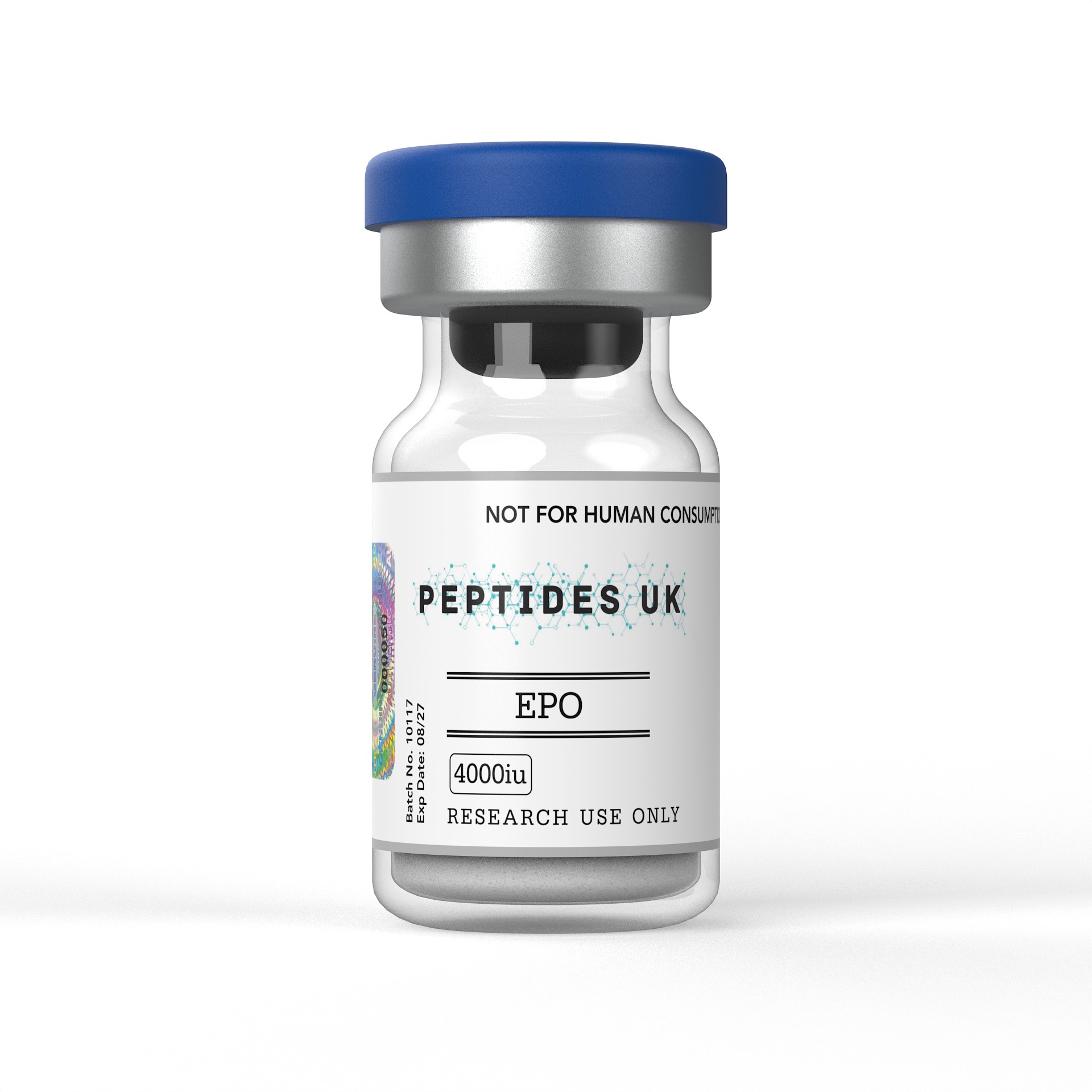
€113.00
EPO 4000iu Ireland – Buy Online | In Stock & Ready to Ship
Buy EPO 4000iu in Ireland with fast shipping and guaranteed ≥99% purity — verified with COA and HPLC documentation. A trusted choice for peptides Ireland research teams rely on, with no customs delays or international wait times. Whether you’re searching for EPO 4000iu Ireland suppliers or looking to buy peptides Ireland-wide, we have you covered. Irish research teams can count on consistent stock, rapid fulfilment and full batch documentation every time.
For research use only. Not intended for human or veterinary use.


EPO 4000IU — Recombinant Human Erythropoietin, 4000 International Units — is a recombinant glycoprotein hormone and one of the most extensively characterised erythropoiesis-regulating research compounds available to laboratories in Ireland — a 165-amino acid glycoprotein cytokine that potently activates the erythropoietin receptor (EPOR) on erythroid progenitor cells in bone marrow to drive red blood cell production through mechanisms central to the physiological regulation of erythropoiesis, oxygen-sensing biology, and haematopoietic stem cell differentiation, making it an indispensable research tool for studying EPOR signal transduction and JAK2-STAT5 pathway biology, erythroid progenitor cell differentiation and erythropoiesis regulation, hypoxia-inducible factor (HIF) pathway biology and oxygen homeostasis, anaemia pathophysiology and erythropoiesis-stimulating agent pharmacology, non-haematopoietic EPOR biology in neural, cardiac, and endothelial tissue, the cytoprotective and anti-apoptotic biology of erythropoietin receptor activation beyond erythropoiesis, and the comparative pharmacology of erythropoiesis-stimulating agents across recombinant EPO formulations. Researchers and institutions across Ireland can source verified, research-grade EPO 4000IU directly from our Irish peptide and protein supply, with domestic-speed dispatch and complete batch documentation.
✅ 4000 IU per Vial — Activity Verified Against International Standard
✅ Batch-Specific Certificate of Analysis (CoA) Included
✅ Sterile Lyophilised Powder | GMP Manufactured
✅ Fast Dispatch to Ireland | Peptides Ireland Stock
Erythropoietin — EPO — is a 165-amino acid glycoprotein hormone produced primarily by peritubular interstitial fibroblasts in the renal cortex in response to hypoxia, with secondary production in hepatocytes and astrocytes, that serves as the principal physiological regulator of erythropoiesis — driving the proliferation, survival, and terminal differentiation of erythroid progenitor cells in bone marrow to produce mature red blood cells. Endogenous EPO production is regulated by the hypoxia-inducible factor (HIF) transcriptional axis — with HIF-1α and HIF-2α stabilisation under hypoxic conditions driving EPO gene transcription in renal and hepatic cells, and oxygen-dependent prolyl hydroxylase domain (PHD) enzyme activity targeting HIF-α subunits for proteasomal degradation under normoxic conditions to suppress EPO production. Recombinant human erythropoietin — rhEPO — is produced in Chinese hamster ovary (CHO) cell expression systems and replicates the glycoprotein structure and biological activity of endogenous EPO with high fidelity, providing a pharmacologically validated research tool for studying EPOR biology and erythropoiesis regulation.
The erythropoietin receptor — EPOR — is a type I cytokine receptor expressed at highest density on burst-forming unit-erythroid (BFU-E) and colony-forming unit-erythroid (CFU-E) progenitors in bone marrow, with expression progressively downregulated through terminal erythroid differentiation. EPOR signals as a homodimer through the JAK2-STAT5 canonical pathway — with EPO binding inducing receptor dimerisation, JAK2 transphosphorylation, STAT5 phosphorylation and nuclear translocation, and downstream transcription of anti-apoptotic genes including Bcl-xL that prevent erythroid progenitor apoptosis and permit terminal differentiation to reticulocytes and mature erythrocytes. Secondary EPOR signalling through PI3K-Akt and MAPK-ERK pathways contributes to erythroid progenitor proliferation and survival downstream of EPO stimulation.
The research significance of recombinant EPO extends substantially beyond its canonical erythropoiesis biology — EPOR expression has been characterised in non-haematopoietic tissues including neurons, cardiomyocytes, endothelial cells, and smooth muscle cells, and EPO activation of EPOR in these tissues produces cytoprotective, anti-apoptotic, and anti-inflammatory effects that have established erythropoietin as a pleiotropic tissue-protective cytokine. This non-haematopoietic EPOR biology — mediated through a proposed heterodimeric tissue-protective EPOR complex incorporating the common beta receptor subunit (CD131) distinct from the homodimeric haematopoietic EPOR — has generated substantial research interest in the neuroprotective, cardioprotective, and vascular biology of erythropoietin signalling independent of its erythropoietic effects.
In controlled laboratory and pre-clinical settings, EPO 4000IU is studied across erythroid progenitor biology, EPOR signal transduction, HIF pathway research, anaemia pharmacology, neuroprotection, cardioprotection, and comparative erythropoiesis-stimulating agent applications:
EPO is the primary reference agonist for EPOR signal transduction research — used to characterise receptor dimerisation kinetics, JAK2 transphosphorylation, STAT5 phosphorylation and nuclear translocation, and downstream anti-apoptotic gene transcription in erythroid progenitor cell models including TF-1, UT-7, and primary BFU-E and CFU-E cultures. Research uses EPO to establish reference pharmacodynamic profiles for EPOR activation — characterising concentration-response relationships, receptor internalisation kinetics, JAK2 inhibitor sensitivity, STAT5 target gene transcription including Bcl-xL and PIM kinases, and the signal transduction cascade linking EPOR engagement to erythroid progenitor survival and differentiation commitment. These signal transduction studies provide the reference dataset against which EPOR antagonists, JAK2 inhibitors, and biosimilar EPO formulations are evaluated.
EPO drives the proliferation and terminal differentiation of erythroid progenitor cells — making it the essential research tool for studying erythropoiesis in vitro and ex vivo. Research has characterised EPO-induced erythroid differentiation in primary bone marrow cultures and cord blood-derived progenitor systems — examining BFU-E to CFU-E commitment, CFU-E terminal differentiation through proerythroblast, basophilic, polychromatic, and orthochromatic erythroblast stages, reticulocyte enucleation, haemoglobin synthesis induction including globin gene transcription, and the transcription factor network including GATA-1, KLF1, and FOG-1 governing EPO-driven erythropoiesis. These differentiation biology studies have established EPO as the reference erythropoietic cytokine for studying haematopoietic stem cell lineage commitment to the erythroid fate.
EPO production is regulated by the HIF transcriptional axis — making EPO expression a functional readout for HIF pathway activity in oxygen-sensing and hypoxia response research. Research has used EPO gene expression and secretion as a sentinel HIF-2α target to characterise HIF pathway activation under hypoxia, PHD inhibitor treatment, and VHL loss-of-function conditions — establishing EPO as a functional biomarker for HIF axis biology in renal, hepatic, and engineered cell systems. Studies have also used recombinant EPO to study feedback regulation of erythropoiesis downstream of HIF-driven EPO production — examining how exogenous EPO supplementation modulates endogenous EPO production through erythropoiesis-driven reduction in circulating EPO consumption and iron-regulatory feedback.
EPO is the pharmacological reference compound for erythropoiesis-stimulating agent (ESA) research — used to study the cellular and molecular basis of anaemia of chronic kidney disease, anaemia of chronic inflammation, chemotherapy-induced anaemia, and other EPO-deficiency or EPO-resistance states. Research employs EPO in erythroid progenitor culture systems derived from anaemic patient samples — characterising EPO hyporesponsiveness mechanisms including iron restriction, inflammatory cytokine suppression (TNF-alpha, IL-13, hepcidin-mediated iron sequestration), and EPOR signalling pathway defects. These anaemia pathophysiology studies have established EPO 4000IU as the reference ESA concentration for characterising erythroid progenitor sensitivity and resistance in disease-relevant research contexts.
EPOR expression in neurons and astrocytes — and EPO activation of neuroprotective signalling through JAK2-STAT5, PI3K-Akt, and MAPK-ERK pathways in neural tissue — has established erythropoietin as a significant neuroprotective research target. Research has examined EPO’s neuroprotective biology in models of ischaemic stroke, traumatic brain injury, spinal cord injury, and neurodegenerative conditions — characterising reduced neuronal apoptosis, enhanced axonal regeneration, anti-inflammatory microglial modulation, and improved functional outcomes following EPO treatment in neural injury models. These neuroprotection studies have established the tissue-protective EPOR heterodimer as a pharmacologically distinct target from the haematopoietic EPOR homodimer and characterised the neuroprotective biology of erythropoietin signalling in the absence of erythropoietic effects.
EPOR expression in cardiomyocytes and cardiac endothelial cells — and EPO-mediated cardioprotective signalling through PI3K-Akt and eNOS pathways — has established erythropoietin as a cardioprotective research compound for studying ischaemia-reperfusion injury, myocardial infarction biology, and cardiac cell survival signalling. Research has characterised EPO’s cardioprotective effects in rodent cardiac ischaemia-reperfusion models — documenting reduced cardiomyocyte apoptosis, decreased infarct size, preserved left ventricular function, and anti-inflammatory effects through GH-independent direct EPOR-mediated tissue mechanisms. These cardioprotection studies have contributed to understanding of erythropoietin as a pleiotropic cytokine whose cardiovascular biology extends beyond haematocrit elevation-mediated oxygen delivery improvements.
EPOR expression on endothelial cells mediates EPO-driven angiogenic responses — including endothelial cell proliferation, migration, tube formation, and VEGF production — making erythropoietin a research tool for studying the intersection of erythropoiesis regulation and vascular biology. Research has characterised EPO’s pro-angiogenic biology in endothelial cell models and in vivo angiogenesis assays — examining eNOS activation, nitric oxide production, endothelial progenitor cell mobilisation from bone marrow, and the contribution of EPO-driven angiogenesis to tissue repair and tumour vascularisation contexts. These vascular biology studies have characterised EPOR as a pharmacologically significant endothelial target with implications for both physiological and pathological angiogenesis research.
Research has comprehensively characterised EPO-driven EPOR-JAK2-STAT5 signal transduction — documenting receptor dimerisation kinetics, JAK2 activation thresholds, STAT5 phosphorylation dose-response relationships, and downstream anti-apoptotic target gene transcription including Bcl-xL and PIM-1 in erythroid progenitor cell models. These signal transduction studies established EPO as the reference agonist for EPOR pathway research and provided the mechanistic foundation for understanding how EPO translates oxygen-sensing signals into quantitative erythropoiesis regulation.
Research has fully characterised EPO-driven erythroid differentiation — from BFU-E commitment through CFU-E expansion, proerythroblast formation, terminal haemoglobin synthesis, and reticulocyte enucleation — in primary bone marrow and cord blood progenitor systems. These differentiation biology studies established the GATA-1-KLF1-EPO signalling axis as the central transcriptional and cytokine regulatory framework governing erythropoiesis and positioned EPO as the essential survival and differentiation signal at the CFU-E stage of erythroid lineage commitment.
Research has documented significant EPO neuroprotection in rodent ischaemic stroke, traumatic brain injury, and spinal cord injury models — characterising reduced neuronal apoptosis, attenuated inflammatory responses, enhanced neural progenitor survival, and improved functional recovery following EPO treatment. These neuroprotection studies established the tissue-protective biology of EPOR signalling beyond erythropoiesis and contributed to characterisation of the proposed tissue-protective EPOR heterodimer as a distinct signalling complex from the haematopoietic homodimeric receptor.
Research has confirmed EPO’s cardioprotective biology in cardiac ischaemia-reperfusion models — characterising reduced infarct size, preserved left ventricular ejection fraction, reduced cardiomyocyte apoptosis, and attenuated neutrophil infiltration in EPO-treated hearts. These cardioprotection studies established that EPO’s cardiovascular biology includes direct EPOR-mediated tissue-protective effects in cardiomyocytes independent of haematocrit elevation and systemic oxygen-carrying capacity improvements.
Research has characterised the molecular mechanisms of erythroid progenitor EPO hyporesponsiveness in inflammatory anaemia, iron-deficient erythropoiesis, and renal anaemia contexts — documenting TNF-alpha and IL-13-mediated EPOR signalling suppression, hepcidin-driven iron restriction limiting haemoglobin synthesis despite EPO stimulation, and intrinsic erythroid progenitor signalling defects. These anaemia pathophysiology studies established EPO as a research tool for characterising erythropoiesis-stimulating agent resistance mechanisms with direct implications for anaemia biology.
Research has documented EPO’s pro-angiogenic biology in endothelial cell models and in vivo angiogenesis assays — characterising eNOS-mediated nitric oxide production, endothelial cell proliferation and migration responses, and endothelial progenitor cell mobilisation following EPO stimulation. These vascular biology studies established EPOR as a pharmacologically significant endothelial target and characterised the intersection of EPO’s erythropoietic and angiogenic biology in tissue repair and vascular remodelling research contexts.
| Feature | EPO 4000IU (rhEPO) | Darbepoetin Alfa | CERA (Methoxy-PEG-EPO) | HIF-PHD Inhibitors | Stem Cell Factor (SCF) |
|---|---|---|---|---|---|
| Type | Recombinant glycoprotein — 165 aa — reference ESA | Hyperglycosylated EPO analogue — 5 additional N-glycan chains | PEGylated EPO — continuous ESA | Small molecule HIF stabilisers — indirect EPO upregulation | Haematopoietic cytokine — c-Kit ligand |
| Mechanism | EPOR homodimer agonism → JAK2-STAT5 → erythroid survival and differentiation | EPOR agonism — lower affinity, longer half-life | EPOR agonism — extended half-life via PEGylation | PHD inhibition → HIF-α stabilisation → endogenous EPO transcription | c-Kit activation → BFU-E proliferation and survival |
| Half-Life | ~6–8 hours (IV) / ~24 hours (SC) | ~25 hours (IV) / ~49 hours (SC) | ~130 hours | Varies by compound | ~2 hours |
| EPOR Binding Affinity | Reference — highest | Lower than rhEPO | Lower than rhEPO | Indirect — no EPOR binding | None — parallel pathway |
| Erythropoietic Potency | Reference | Comparable at adjusted dose | Comparable at adjusted dose | Indirect via endogenous EPO | Synergistic with EPO — BFU-E stage |
| Neuroprotective Biology | Documented | Reduced vs rhEPO | Reduced vs rhEPO | Indirect — HIF-mediated | Not characterised |
| Research Application | Reference EPOR agonist — all EPOR biology applications | Long-acting ESA comparative pharmacology | Extended-release ESA research | HIF pathway and indirect erythropoiesis research | Early erythroid progenitor biology |
| Key Research Distinction | Reference recombinant EPO — complete EPOR biology, neuroprotection, and ESA reference standard | Half-life extension via glycoengineering — reduced EPOR affinity trade-off | Maximum half-life extension via PEGylation | Endogenous EPO induction — HIF biology | Upstream erythropoiesis — EPO-independent BFU-E stage |
| Parameter | Detail |
|---|---|
| Name | Erythropoietin — rhEPO |
| Also Designated | Recombinant Human Erythropoietin / EPO / Epoetin / rHuEPO |
| Type | Recombinant Glycoprotein Cytokine — 165 Amino Acids — Erythropoiesis-Stimulating Agent — Research Grade |
| Activity | 4000 IU per vial — activity verified against WHO International Standard for Erythropoietin |
| Molecular Weight | ~30,400 Da (glycosylated) / ~18,400 Da (peptide backbone) — glycosylation accounts for ~40% of molecular weight |
| Glycosylation | 3 N-linked glycan chains (Asn24, Asn38, Asn83) + 1 O-linked glycan (Ser126) — essential for in vivo half-life and bioactivity |
| Mechanism | EPOR homodimer agonism → JAK2 transphosphorylation → STAT5 phosphorylation → Bcl-xL / PIM-1 transcription → erythroid progenitor survival + PI3K-Akt and MAPK-ERK proliferation signalling + tissue-protective EPOR heterodimer neuroprotective/cardioprotective signalling |
| Primary Receptor | EPOR — type I cytokine receptor — haematopoietic homodimer (erythropoiesis) + proposed tissue-protective heterodimer with CD131 (neuroprotection/cardioprotection) |
| Expression System | Chinese Hamster Ovary (CHO) cells — recombinant expression |
| Key Research Distinction | Reference recombinant erythropoietin — complete EPOR pharmacology, erythroid differentiation biology, HIF axis functional readout, neuroprotection, cardioprotection, and ESA comparative pharmacology reference standard |
| Primary Research Areas | EPOR signal transduction / erythroid differentiation / HIF pathway biology / anaemia pathophysiology / ESA pharmacology / neuroprotection / cardioprotection / endothelial and angiogenesis biology |
| Purity | ≥99% SDS-PAGE & RP-HPLC Verified |
| Form | Sterile Lyophilised Powder |
| Solubility | Sterile PBS (pH 7.4) with 0.1% BSA carrier protein recommended for research applications |
| Storage (Powder) | -20°C, protect from light — do not freeze-thaw repeatedly |
| Storage (Reconstituted) | 4°C for short-term use (up to 7 days) / -80°C aliquots for longer storage — BSA carrier essential for stability |
| Manufacturing | GMP Manufactured — CHO cell expression |
| Intended Use | Research use only |
Recombinant human EPO is a glycoprotein requiring careful reconstitution to maintain biological activity — glycoproteins are susceptible to adsorption to container surfaces and to aggregation under suboptimal buffer conditions. Reconstitute by adding sterile PBS (pH 7.4) slowly to the lyophilised powder and swirling gently until fully dissolved — do not vortex as shear forces promote glycoprotein aggregation and loss of biological activity. Carrier protein supplementation is essential for maintaining EPO activity at low working concentrations — add BSA (0.1–0.5% final concentration) or HSA to the reconstitution buffer to prevent adsorption to polypropylene and glass surfaces and stabilise the glycoprotein in solution. Do not reconstitute in pure water as this promotes aggregation; PBS pH 7.4 is the recommended reconstitution buffer. Avoid repeated freeze-thaw cycles — glycoprotein denaturation and activity loss accumulate with each cycle; prepare single-use aliquots at working concentration and store at -80°C. For in vitro erythroid differentiation assays, prepare working dilutions in serum-containing erythroid culture medium immediately before addition. For EPOR signal transduction studies in serum-starved cell models, prepare working dilutions in serum-free medium supplemented with 0.1% BSA. Verify biological activity in TF-1 cell proliferation assays against the 4000IU specification before use in critical research experiments.
Every order of EPO 4000IU in Ireland includes:
✅ Batch-Specific Certificate of Analysis (CoA)
✅ SDS-PAGE Purity Verification
✅ RP-HPLC Chromatogram
✅ Biological Activity Report — IU verified against WHO International Standard
✅ Glycosylation Profile Documentation
✅ Sterility & Endotoxin Testing Report
✅ Reconstitution Protocol — including BSA carrier requirement and glycoprotein stability guidance
✅ Technical Research Support
Yes — research-grade recombinant human EPO 4000IU is available to researchers and institutions across Ireland with fast dispatch and full batch documentation. Supplied strictly for laboratory research purposes only.
4000 International Units is the biological activity of the vial contents verified against the WHO International Standard for Erythropoietin — reflecting the quantity of EPO required to produce a defined erythropoietic response in the standardised bioassay. IU-based dosing is the standard for EPO research and allows cross-comparison between batches and formulations regardless of mass concentration.
EPO’s three N-linked and one O-linked glycan chains are essential for in vivo half-life — protecting against proteolytic degradation and renal clearance — and contribute to receptor binding and signal transduction. Deglycosylated EPO retains in vitro EPOR binding activity but shows dramatically reduced in vivo potency. CHO-expressed rhEPO closely replicates the glycosylation profile of endogenous renal EPO.
The classical haematopoietic EPOR is a homodimer signalling through JAK2-STAT5 to drive erythroid progenitor survival and differentiation. The proposed tissue-protective receptor is a heterodimer incorporating the common beta receptor subunit (CD131) that mediates neuroprotective and cardioprotective EPO biology in non-haematopoietic tissues. These two receptor complexes show different EPO concentration sensitivities and may be pharmacologically separable.
Heat-inactivated EPO controls confirm that biological effects are activity-dependent. EPOR-blocking antibodies or soluble EPOR decoy confirm receptor specificity. JAK2 inhibitor controls (ruxolitinib) confirm JAK2-STAT5 pathway involvement. For neuroprotection studies, EPOR-negative cell lines serve as negative controls confirming receptor-mediated biology.
BSA at 0.1–0.5% is required to prevent EPO adsorption to surfaces and maintain activity at low working concentrations — it does not interfere with EPOR binding or downstream signalling at these concentrations. Matched BSA vehicle controls should be included in all assays to confirm that observed biological effects are EPO-mediated rather than carrier-dependent.
≥99% purity by SDS-PAGE and RP-HPLC is required — aggregated EPO species, deamidated variants, and host cell protein impurities from CHO expression can produce artefactual EPOR signalling, inflammatory responses in primary cell cultures, and confounded dose-response relationships. Biological activity verification against the WHO International Standard is an additional essential specification beyond chromatographic purity.
EPO 4000IU is supplied exclusively for legitimate scientific research purposes conducted within licensed laboratory environments. This product is not intended for human consumption, self-administration, or any therapeutic application. It must be handled by qualified researchers in compliance with applicable Irish and EU regulations and institutional ethics guidelines. By purchasing, you confirm that this compound will be used solely for approved in vitro or pre-clinical research purposes.

WhatsApp us
Receive News
