
PRODUCTS SOLD ON PEPTIDESLABIRELAND.COM ARE FOR RESEARCH PURPOSES ONLY AND ARE NOT FOR HUMAN OR VETERINARY USE.
€68.00
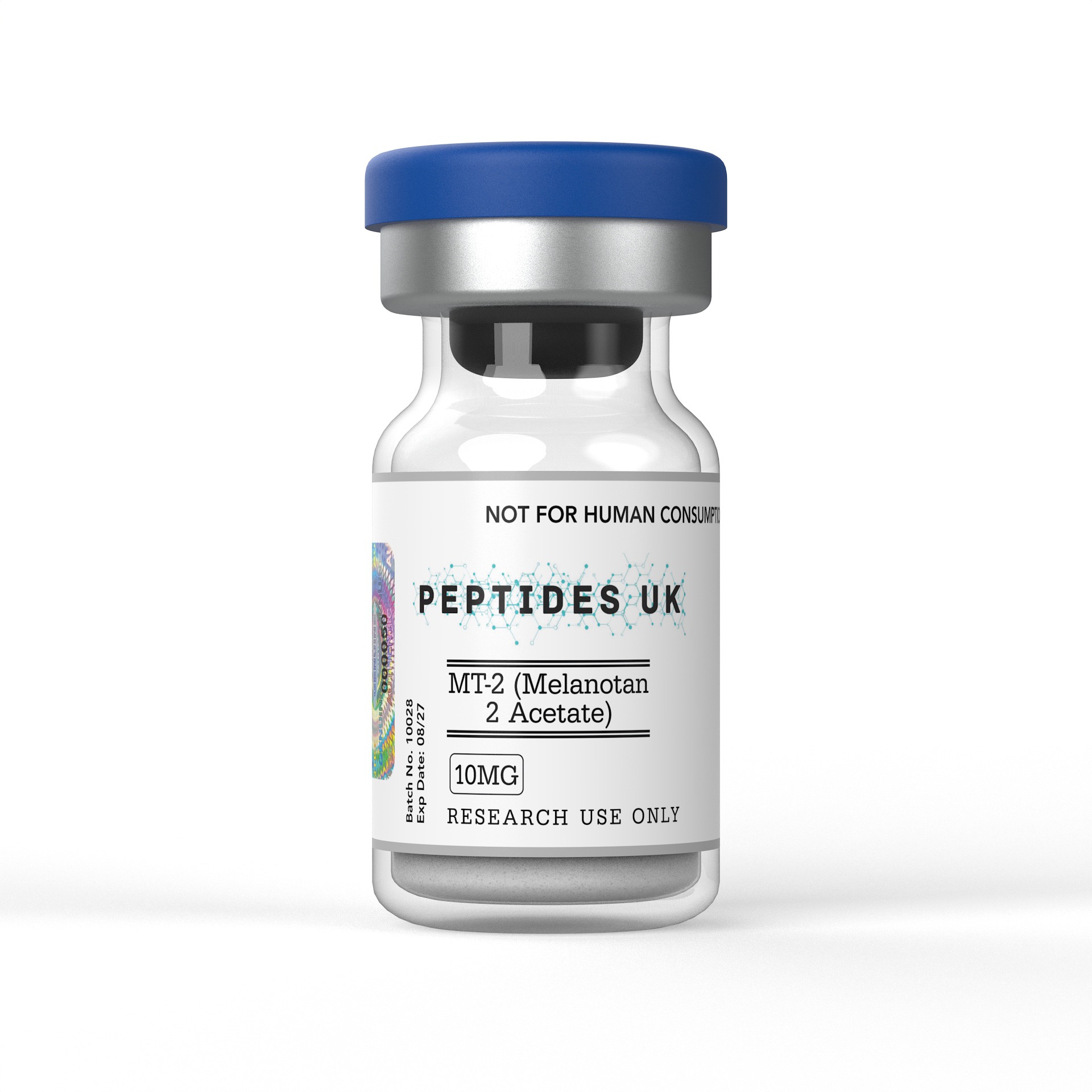
MT-2 (Melanotan 2 Acetate) Ireland – Buy Online | In Stock & Ready to Ship
Buy MT-2 (Melanotan 2 Acetate) in Ireland with fast shipping and guaranteed ≥99% purity — verified with COA and HPLC documentation. A trusted choice for peptides Ireland research teams rely on, with no customs delays or international wait times. Whether you’re searching for Melanotan 2 Ireland suppliers or looking to buy peptides Ireland-wide, we have you covered. Irish research teams can count on consistent stock, rapid fulfilment and full batch documentation every time.
For research use only. Not intended for human or veterinary use.



Melanotan 2 Acetate — MT-II — is a synthetic cyclic heptapeptide melanocortin receptor agonist and one of the most broadly active and extensively studied melanocortin research compounds available to laboratories in Ireland — a lactam-cyclised, metabolically stabilised analogue of alpha-melanocyte-stimulating hormone incorporating Nle4 and D-Phe7 substitutions within a cyclic backbone that confers potent and non-selective activation across MC1R, MC3R, and MC4R receptor subtypes, producing simultaneous melanogenesis, pro-sexual and pro-erectile effects, anorexia, and central autonomic changes through peripheral and central melanocortin receptor activation, making it an indispensable research tool for studying broad-spectrum melanocortin receptor pharmacology and the comparative biology of MC1R versus MC3R versus MC4R receptor activation, the relationship between melanocortin receptor agonism and pigmentation versus sexual function versus energy homeostasis biological outputs, the structural basis of melanocortin receptor subtype selectivity through comparison with the more MC1R-selective MT-1 and the more MC3R/MC4R-selective PT-141, hypothalamic melanocortin circuit biology, melanocortin-dopamine and melanocortin-oxytocin pathway interactions, and the structure-activity relationship programme within the melanocortin peptide family that has established MT-II as the prototype broad-spectrum melanocortin agonist reference compound. Researchers and institutions across Ireland can source verified, research-grade MT-2 Acetate directly from our Irish peptide supply, with domestic-speed dispatch and complete batch documentation.
✅ ≥99% Purity — HPLC & Mass Spectrometry Verified
✅ Batch-Specific Certificate of Analysis (CoA) Included
✅ Sterile Lyophilised Powder | GMP Manufactured
✅ Fast Dispatch to Ireland | Peptides Ireland Stock
Melanotan 2 Acetate — MT-II — is the acetate salt of a synthetic cyclic heptapeptide with the sequence cyclo-(Ac-Nle4-cyclo[Asp5-His6-D-Phe7-Arg8-Trp9-Lys10])-NH2, representing a conformationally constrained, metabolically stabilised derivative of the α-MSH(4-10) pharmacophore core in which the Asp5 and Lys10 side chains are bridged by a lactam bond to form the cyclic backbone, Nle4 replaces methionine to prevent oxidative inactivation, and D-Phe7 replaces native phenylalanine to confer endopeptidase resistance and stabilise the receptor-binding pharmacophore conformation. MT-II was designed and characterised through the systematic melanocortin peptide structure-activity relationship programme in Victor Hruby’s laboratory at the University of Arizona — the same programme that produced MT-1 — with the cyclisation strategy introduced to further constrain the pharmacophore into a receptor-binding conformation that simultaneously increases potency, metabolic stability, and the receptor subtype selectivity profile that distinguishes MT-II from the linear tridecapeptide MT-1.
MT-II’s research significance derives from its position as the prototype broad-spectrum melanocortin receptor agonist — activating MC1R, MC3R, and MC4R with high potency and producing the full spectrum of biological outputs associated with melanocortin receptor activation across peripheral and central target tissues simultaneously. Unlike MT-1 whose linear backbone and tridecapeptide length confer preferential MC1R activity, MT-II’s cyclic heptapeptide structure produces a more compact, conformationally rigid pharmacophore with enhanced affinity at the centrally expressed MC3R and MC4R subtypes alongside maintained MC1R activity — generating the distinctive multi-system pharmacological profile that encompasses skin pigmentation through MC1R, pro-sexual and pro-erectile effects through hypothalamic and limbic MC3R/MC4R activation, and anorexia and energy balance modulation through hypothalamic MC3R/MC4R. This simultaneous engagement of peripheral pigmentary and central behavioural melanocortin receptor biology in a single compound makes MT-II uniquely valuable for research examining the mechanistic relationships between melanocortin receptor subtypes and the distinct biological systems they govern.
PT-141 — Bremelanotide — was derived directly from MT-II through C-terminal amide hydrolysis, producing a compound that retains the cyclic heptapeptide structure and MC3R/MC4R pro-sexual activity while reducing MC1R-mediated tanning. This structural and pharmacological relationship between MT-II and PT-141 makes them directly comparable research tools for dissecting the contributions of MC1R activation to MT-II’s biological profile — with PT-141 functioning as an MT-II analogue from which the tanning biology has been partially removed while preserving central melanocortin receptor activity.
In controlled laboratory and pre-clinical settings, MT-2 Acetate is studied across broad-spectrum melanocortin receptor pharmacology, pigmentation biology, sexual behaviour neuroscience, energy homeostasis, comparative receptor selectivity research, and melanocortin circuit biology applications:
MT-II is the primary reference broad-spectrum melanocortin agonist for comparative receptor pharmacology — used to characterise simultaneous MC1R, MC3R, and MC4R binding affinities, Gs-coupled cAMP signalling across all three receptor subtypes, receptor internalisation kinetics, and the integrated downstream biological outputs produced by non-selective melanocortin receptor activation. Research uses MT-II alongside subtype-selective agonists and antagonists to establish how the combined activation of multiple melanocortin receptor subtypes simultaneously produces a different biological profile than selective activation of any single subtype — characterising the synergistic, additive, or redundant relationships between MC1R, MC3R, and MC4R-mediated biology.
MT-II’s high-affinity MC1R activation drives potent melanogenesis — with research characterising cAMP elevation, MITF nuclear translocation, tyrosinase upregulation, and eumelanin synthesis in melanocyte models following MT-II treatment. Studies have examined the dose-response relationships for MC1R-mediated melanogenesis with MT-II — comparing potency with MT-1 and native α-MSH to establish the structure-activity contribution of cyclisation to MC1R agonist potency — and have characterised the kinetics of tyrosinase upregulation, melanosome distribution, and melanin transfer to keratinocytes downstream of MT-II-induced MC1R activation. These melanogenesis studies have used MT-II as a high-potency reference agonist for establishing the upper limits of pharmacologically achievable melanogenesis through MC1R activation.
MT-II’s potent MC3R and MC4R activation in hypothalamic and limbic circuits produces robust and dose-dependent pro-sexual behaviour — making it a primary research tool for studying central melanocortin circuit regulation of sexual motivation and behaviour. Research has used MT-II in male and female rodent sexual behaviour paradigms — characterising MT-II-induced increases in mount frequency, reduction of inter-mount interval, enhanced solicitation behaviour, and increased sexual motivation — alongside electrophysiological and neurochemical studies examining the hypothalamic nuclei through which MC3R/MC4R activation drives sexual behaviour outputs. Studies have compared MT-II with PT-141 and MC4R-selective agonists to dissect MC3R versus MC4R contributions to pro-sexual effects and to characterise the role of MC1R activation in modifying central sexual behaviour biology.
MT-II produces potent and reliable penile erections in rodent models through central MC3R/MC4R activation — making it the most widely used melanocortin agonist in pre-clinical erectile function research. Research has characterised the central neural circuits mediating MT-II-induced erections — examining MC4R activation in the paraventricular nucleus driving oxytocinergic neurone firing and downstream spinal pro-erectile autonomic outflow, the role of dopamine release in the nucleus accumbens in the motivational component of MT-II-induced sexual arousal, and how spinal oxytocin receptor activation translates central melanocortin receptor signalling into peripheral parasympathetic pro-erectile output. These erectile function studies have established MT-II as the prototype centrally acting pro-erectile melanocortin agonist and provided the mechanistic framework for understanding how central MC4R activation produces peripheral erectile responses.
MT-II’s MC3R and MC4R activation in hypothalamic energy balance circuits produces significant and dose-dependent food intake reductions — making it a research tool for studying melanocortin pathway contributions to appetite regulation and energy homeostasis. Research has characterised MT-II-induced anorexia in rodent feeding paradigms — examining food intake suppression kinetics, meal pattern changes, body weight effects with repeated administration, and the hypothalamic neurochemical changes including NPY/AgRP suppression and melanocortin pathway activation markers accompanying MT-II-induced anorexia. Studies have used MT-II alongside MC4R-selective agonists and MC4R knockout models to attribute the anorectic component of MT-II’s biology specifically to MC4R rather than MC3R activation — establishing the MC4R-centric nature of melanocortin-driven anorexia.
MT-II’s activation of MC3R and MC4R in mesolimbic dopamine circuits — including the ventral tegmental area and nucleus accumbens — modulates dopamine release and dopamine receptor signalling in reward and motivation circuits. Research has used MT-II to characterise the interaction between melanocortin and dopamine systems — examining MT-II-induced dopamine release in the nucleus accumbens by in vivo microdialysis, studying how MC4R activation in the VTA alters dopamine neurone firing and downstream reward behaviour, and examining whether dopamine receptor antagonists attenuate the motivational components of MT-II’s pro-sexual and appetitive effects. These melanocortin-dopamine interaction studies have contributed to understanding of how melanocortin signalling modulates the mesolimbic reward system underlying motivated behaviour.
MT-II-induced pro-erectile and pro-social effects are substantially mediated through MC4R activation of oxytocinergic neurones in the paraventricular nucleus — and research has used MT-II to characterise the melanocortin-oxytocin pathway axis. Studies have examined MT-II-induced oxytocin release from PVN neurones, the downstream spinal and peripheral mechanisms through which centrally released oxytocin drives pro-erectile autonomic outflow, and whether central oxytocin receptor antagonists attenuate MT-II-induced sexual behaviour and erections. These studies have established MT-II as a research tool for studying how melanocortin receptor activation engages the oxytocinergic system as a downstream effector pathway.
MT-II occupies a central position in the melanocortin peptide SAR landscape — as the cyclic heptapeptide prototype from which PT-141 was derived and alongside which MT-1 provides the linear tridecapeptide comparator — making it an essential reference compound for comparative melanocortin analogue pharmacology research. Studies have used MT-II in direct comparison with MT-1 to characterise how cyclisation of the α-MSH pharmacophore core changes receptor subtype selectivity — establishing that constraining the heptapeptide into a cyclic conformation shifts selectivity toward MC3R/MC4R relative to the linear tridecapeptide that preferentially activates MC1R. These SAR studies have contributed foundational understanding of the conformational determinants of melanocortin receptor subtype selectivity.
Research has documented MT-II’s potent, dose-dependent pro-erectile effects in rodent, rabbit, and non-human primate models — with studies characterising ex copula erection frequency, latency to erection, and duration of response following MT-II administration at doses producing reliable and reproducible pro-erectile responses. These studies established MT-II as the most pharmacologically validated centrally acting pro-erectile melanocortin agonist in pre-clinical research and provided the foundational data that led to the development of PT-141 as a more selective pro-sexual research compound.
Research using MC4R knockout mice and selective MC4R antagonists has established MC4R as the primary receptor mediating MT-II’s pro-erectile and pro-sexual effects — with MC4R-null mice showing substantially reduced or absent MT-II-induced erections and sexual behaviour, and MC4R-selective antagonists blocking these responses at doses not affecting MT-II’s melanogenic activity. These receptor attribution studies established the MC4R-centric nature of central melanocortin sexual function biology.
Research has confirmed that MT-II’s melanogenic and pro-sexual effects are mediated through mechanistically and anatomically distinct receptor populations — MC1R in peripheral melanocytes driving melanogenesis, and central MC3R/MC4R in hypothalamic and limbic circuits driving sexual behaviour — by demonstrating that peripheral MC1R antagonist administration blocks tanning without affecting pro-sexual behaviour, and central MC4R antagonist administration blocks pro-sexual effects without affecting melanogenesis. This mechanistic dissection established the receptor subtype basis for MT-II’s simultaneous multi-system pharmacological profile.
Research has characterised MT-II’s anorectic effects as MC4R-mediated through hypothalamic PVN and arcuate nucleus mechanisms — documenting food intake suppression kinetics, NPY/AgRP pathway suppression, and melanocortin pathway activation markers in hypothalamic tissue following MT-II treatment. MC4R knockout studies have confirmed MC4R dependence of the anorectic component while establishing that MC3R plays a modulatory rather than primary role in MT-II-induced anorexia.
Research has characterised MT-II’s transient blood pressure and heart rate changes — documenting central autonomic melanocortin receptor-mediated cardiovascular effects following MT-II administration through hypothalamic MC4R activation of sympathoadrenal outflow. These cardiovascular characterisation studies established that MT-II’s haemodynamic effects are mechanistically related to its central MC3R/MC4R activation rather than to peripheral melanocortin receptor engagement.
Research has characterised PT-141 as a direct MT-II derivative produced by C-terminal amide hydrolysis — documenting preserved cyclic heptapeptide structure, maintained MC3R/MC4R pro-sexual activity, and reduced MC1R-mediated pigmentation activity relative to MT-II. These comparative studies established the structural and pharmacological relationship between MT-II and PT-141 and provided the mechanistic basis for PT-141’s development as a more selective pro-sexual research compound.
Research comparing MT-II with MT-1 and native α-MSH has established that cyclic lactam backbone constraint shifts melanocortin receptor subtype selectivity toward MC3R and MC4R relative to linear peptide analogues — with MT-II showing substantially enhanced potency at MC3R and MC4R relative to its potency ratio at MC1R compared with the linear MT-1. These SAR studies established the conformational basis for melanocortin receptor subtype selectivity and the design principle that cyclisation of the α-MSH pharmacophore core produces central melanocortin receptor-preferential biology.
| Feature | MT-2 (Melanotan 2) | MT-1 (Melanotan 1) | PT-141 (Bremelanotide) | Native α-MSH | SHU9119 |
|---|---|---|---|---|---|
| Type | Cyclic heptapeptide — Nle4/D-Phe7 — lactam bridge | Linear tridecapeptide — Nle4/D-Phe7 | Cyclic heptapeptide — MT-II C-terminal amide hydrolysis product | Endogenous linear tridecapeptide | Cyclic heptapeptide — MC3R/MC4R antagonist |
| Receptor Profile | MC1R / MC3R / MC4R — broad non-selective agonism | MC1R preferential — reduced central MC3R/MC4R activity | MC3R / MC4R primary — reduced MC1R activity vs MT-II | MC1R / MC3R / MC4R / MC5R — full endogenous profile | MC3R / MC4R antagonist — MC1R partial agonist |
| Melanogenesis | Pronounced — MC1R agonism | Pronounced — primary biology | Minimal | Yes — short duration | Blocks tanning |
| Pro-Sexual Effect | Yes — significant MC3R/MC4R central activation | Minimal at MC1R-selective doses | Yes — primary effect | Minimal | Blocks pro-sexual effects |
| Anorexia | Yes — MC4R hypothalamic activation | Minimal | Yes — MC4R | Minimal | Blocks anorexia |
| Central vs Peripheral | Both — peripheral MC1R tanning + central MC3R/MC4R | Predominantly peripheral | Predominantly central | Both | Central antagonist |
| Metabolic Stability | High — cyclic structure + Nle4/D-Phe7 | High — Nle4/D-Phe7 linear | High — cyclic structure | Low — rapid degradation | High — cyclic |
| Key Research Use | Broad-spectrum melanocortin agonism / comparative receptor subtype biology / SAR reference | MC1R pharmacology / melanogenesis / photoprotection | Central sexual function / MC3R/MC4R pharmacology | Native sequence reference | MC3R/MC4R antagonist reference |
| Research Profile | Extensively studied — prototype broad-spectrum melanocortin agonist | Extensively studied — clinical stage MC1R agonist | Extensively studied | Extensively studied | Well-documented |
| Parameter | Detail |
|---|---|
| Name | MT-2 (Melanotan 2 Acetate) |
| Also Designated | Melanotan II / MT-II / cyclo-(Ac-Nle4-cyclo[Asp5-His6-D-Phe7-Arg8-Trp9-Lys10])-NH2 acetate salt |
| Type | Synthetic Cyclic Heptapeptide Melanocortin Receptor Agonist — Acetate Salt — Research Grade |
| Molecular Weight | 1024.2 Da (free base) |
| Mechanism | MC1R agonism → Gs-cAMP-PKA-MITF → melanogenesis / MC3R and MC4R agonism → hypothalamic and limbic Gs-cAMP signalling → PVN oxytocin neurone activation + mesolimbic dopamine release → pro-sexual behaviour + pro-erectile autonomic output + anorexia |
| Primary Receptor Targets | MC1R / MC3R / MC4R — high affinity non-selective broad-spectrum agonism |
| Key Research Distinction | Prototype broad-spectrum melanocortin agonist — simultaneous MC1R peripheral pigmentation and central MC3R/MC4R sexual function and energy balance biology in single compound; reference for comparative melanocortin receptor subtype selectivity SAR research |
| Primary Research Areas | Broad-spectrum melanocortin pharmacology / pigmentation and melanogenesis / pro-sexual and pro-erectile neuroscience / hypothalamic energy balance / melanocortin-dopamine interaction / melanocortin-oxytocin pathway / comparative SAR with MT-1 and PT-141 |
| Structural Features | Lactam cyclisation Asp5-Lys10 / Nle4 prevents oxidation / D-Phe7 endopeptidase resistance / C-terminal amide |
| Purity | ≥99% HPLC & MS Verified |
| Form | Sterile Lyophilised Powder |
| Solubility | Sterile water or 0.1% acetic acid aqueous solution |
| Storage (Powder) | -20°C, protect from light and moisture |
| Storage (Reconstituted) | -80°C in aliquots — minimise freeze-thaw cycles |
| Manufacturing | GMP Manufactured |
| Intended Use | Research use only |
MT-2 Acetate is a cyclic heptapeptide with good aqueous solubility — reconstitute by adding sterile water or 0.1% acetic acid in sterile water slowly to the lyophilised powder and swirling gently until dissolved. The cyclic lactam bridge provides structural stability across a broad pH range — avoid strongly alkaline conditions above pH 9 that can promote lactam hydrolysis over extended incubation, and avoid oxidising conditions that could modify the Trp9 residue. Prepare single-use aliquots and store at -80°C. For melanocyte biology studies, dilute into serum-free media immediately before use. For in vivo sexual behaviour or feeding studies, prepare fresh working solutions in sterile saline at the time of administration. For comparative pharmacology studies requiring simultaneous MT-1 and MT-II treatment groups, prepare each peptide separately in matched vehicles and handle identically to ensure comparability. Use low-binding tubes throughout.
Every order of MT-2 Acetate in Ireland includes:
✅ Batch-Specific Certificate of Analysis (CoA)
✅ HPLC Chromatogram
✅ Mass Spectrometry Confirmation
✅ Sterility & Endotoxin Testing Report
✅ Reconstitution Protocol — including cyclic peptide lactam stability guidance
✅ Technical Research Support
Yes — we supply research-grade MT-2 Acetate to researchers and institutions across Ireland with fast dispatch and full batch documentation. Supplied strictly for laboratory research purposes only.
MT-1 is a linear tridecapeptide preferentially activating MC1R — producing predominantly peripheral pigmentation and photoprotection biology with minimal central melanocortin receptor effects at research doses. MT-II is a cyclic heptapeptide broadly activating MC1R, MC3R, and MC4R — simultaneously producing melanogenesis alongside central pro-sexual, pro-erectile, and anorectic effects through hypothalamic MC3R/MC4R activation. Cyclisation of the α-MSH pharmacophore core is the primary structural determinant of this receptor subtype selectivity shift.
PT-141 was derived directly from MT-II by hydrolysis of the C-terminal amide — producing a compound with the same cyclic heptapeptide backbone but a free C-terminal carboxylate instead of the amide. This modification reduces MC1R activity relative to MT-II while preserving MC3R/MC4R pro-sexual and pro-erectile activity — making PT-141 a more selective central melanocortin research tool. MT-II is used when simultaneous MC1R tanning and central MC3R/MC4R activation are both research objectives; PT-141 is used when central melanocortin biology without significant tanning is required.
These effects are mediated through entirely distinct receptor populations — MC1R on peripheral melanocytes drives melanogenesis, while MC3R/MC4R on hypothalamic PVN and limbic neurons drives pro-erectile oxytocinergic and dopaminergic signalling. MT-II’s broad receptor subtype activity activates both populations simultaneously. Research confirming this mechanistic dissection uses peripheral MC1R antagonists to block tanning without affecting erections, and central MC4R antagonists to block erections without affecting tanning.
Vehicle controls matched to reconstitution solvent are essential. For receptor attribution studies: MC1R-selective antagonists to isolate melanogenesis biology, MC4R-selective antagonists to isolate pro-sexual and anorectic biology, and MT-1 parallel groups to characterise the additional central effects produced by cyclisation. For pro-erectile studies: oxytocin receptor antagonists to confirm oxytocinergic mechanism, and dopamine receptor antagonists to characterise motivational components. For comparative SAR studies: identical experimental conditions across MT-1, MT-II, and PT-141 treatment groups are essential for valid potency ratio determinations.
The lactam bridge between Asp5 and Lys10 side chains cyclises the heptapeptide backbone — constraining it into a compact, conformationally rigid structure that stabilises the receptor-binding pharmacophore conformation required for high-affinity MC3R and MC4R engagement. This conformational constraint simultaneously increases metabolic stability by reducing the accessible surface area for protease attack and shifts receptor subtype selectivity toward the centrally expressed MC3R and MC4R subtypes relative to the uncyclised linear peptide. The lactam bridge is therefore both a pharmacokinetic stabilisation strategy and a receptor subtype selectivity determinant.
≥99% purity is essential for all melanocortin receptor pharmacology studies, comparative SAR research, pro-sexual behaviour paradigms, and melanogenesis biology — where impurities including the linear uncyclised peptide, partially oxidised species, or C-terminal amide hydrolysis product (PT-141) would show altered receptor subtype selectivity and confound mechanistic attribution. The specific importance of confirmed cyclic structure integrity — distinguishing MT-II from its PT-141 hydrolysis product — makes mass spectrometry confirmation of the intact cyclic structure with amide C-terminus a critical purity specification. All MT-2 Acetate Ireland stock is verified to ≥99% purity by HPLC and mass spectrometry with cyclic structure and C-terminal amide confirmation.
MT-2 Acetate is supplied exclusively for legitimate scientific research purposes conducted within licensed laboratory environments. This product is not intended for human consumption, self-administration, or any therapeutic application. It must be handled by qualified researchers in compliance with applicable Irish and EU regulations and institutional ethics guidelines. By purchasing, you confirm that this compound will be used solely for approved in vitro or pre-clinical research purposes.


WhatsApp us
Receive News
