PRODUCTS SOLD ON PEPTIDESLABIRELAND.COM ARE FOR RESEARCH PURPOSES ONLY AND ARE NOT FOR HUMAN OR VETERINARY USE.
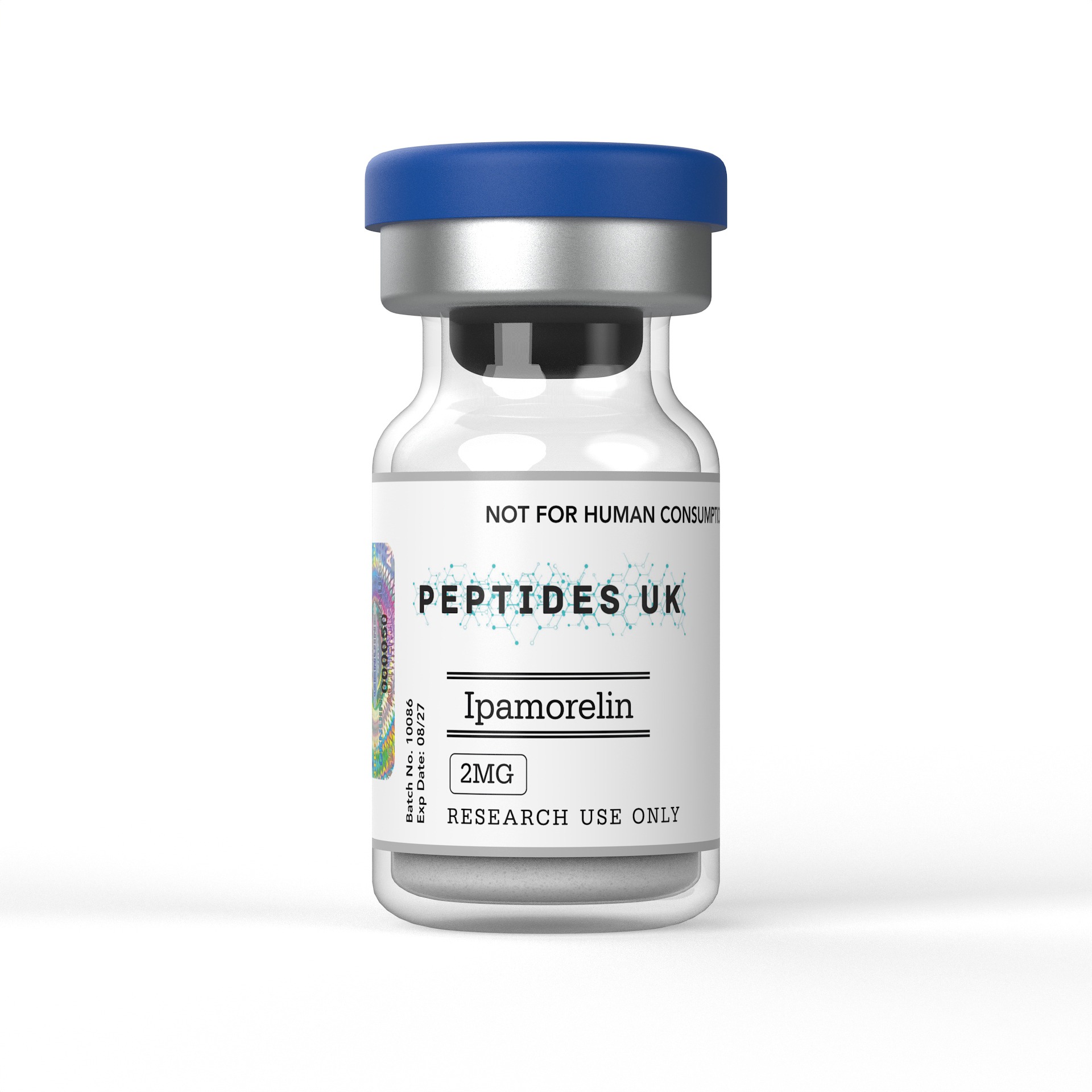
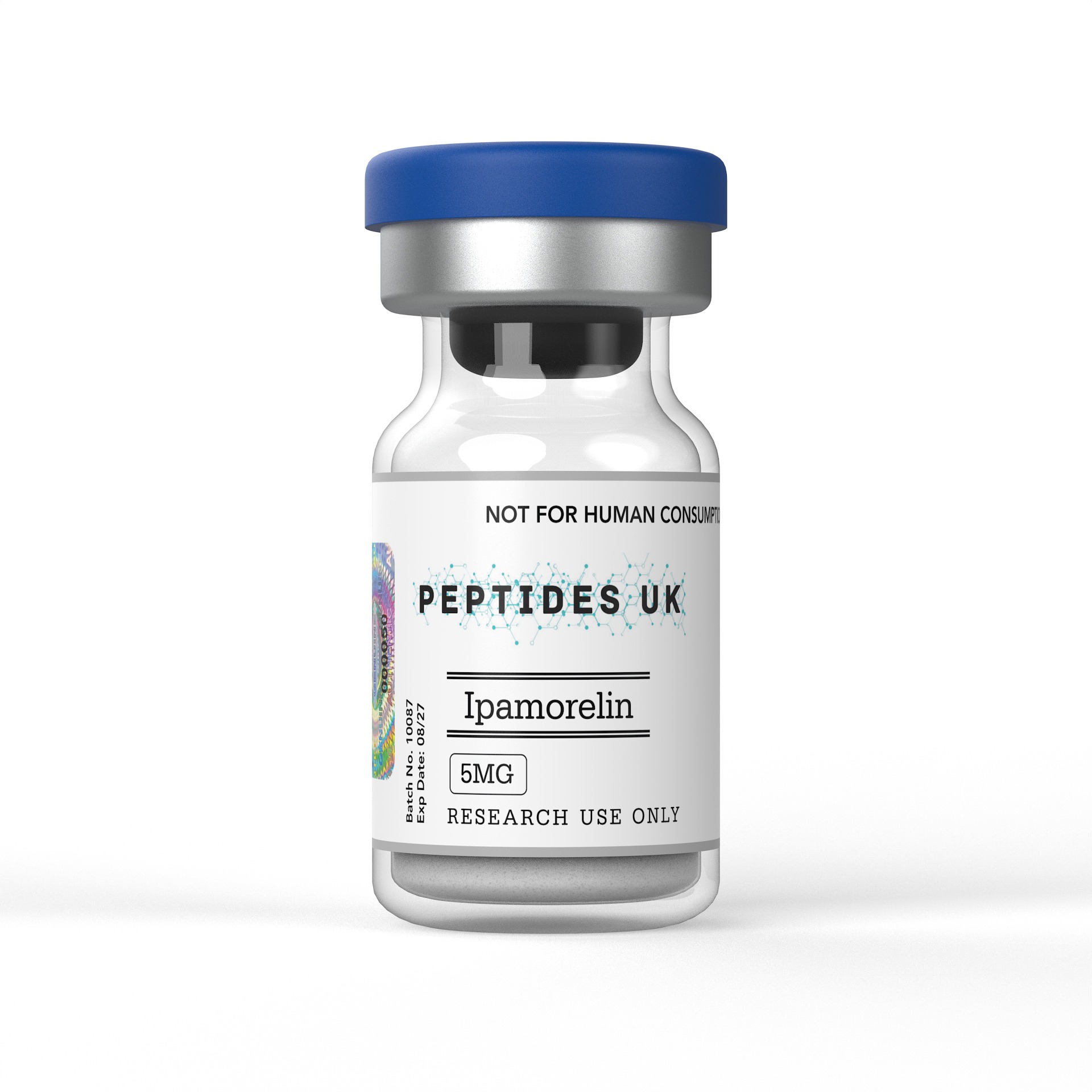
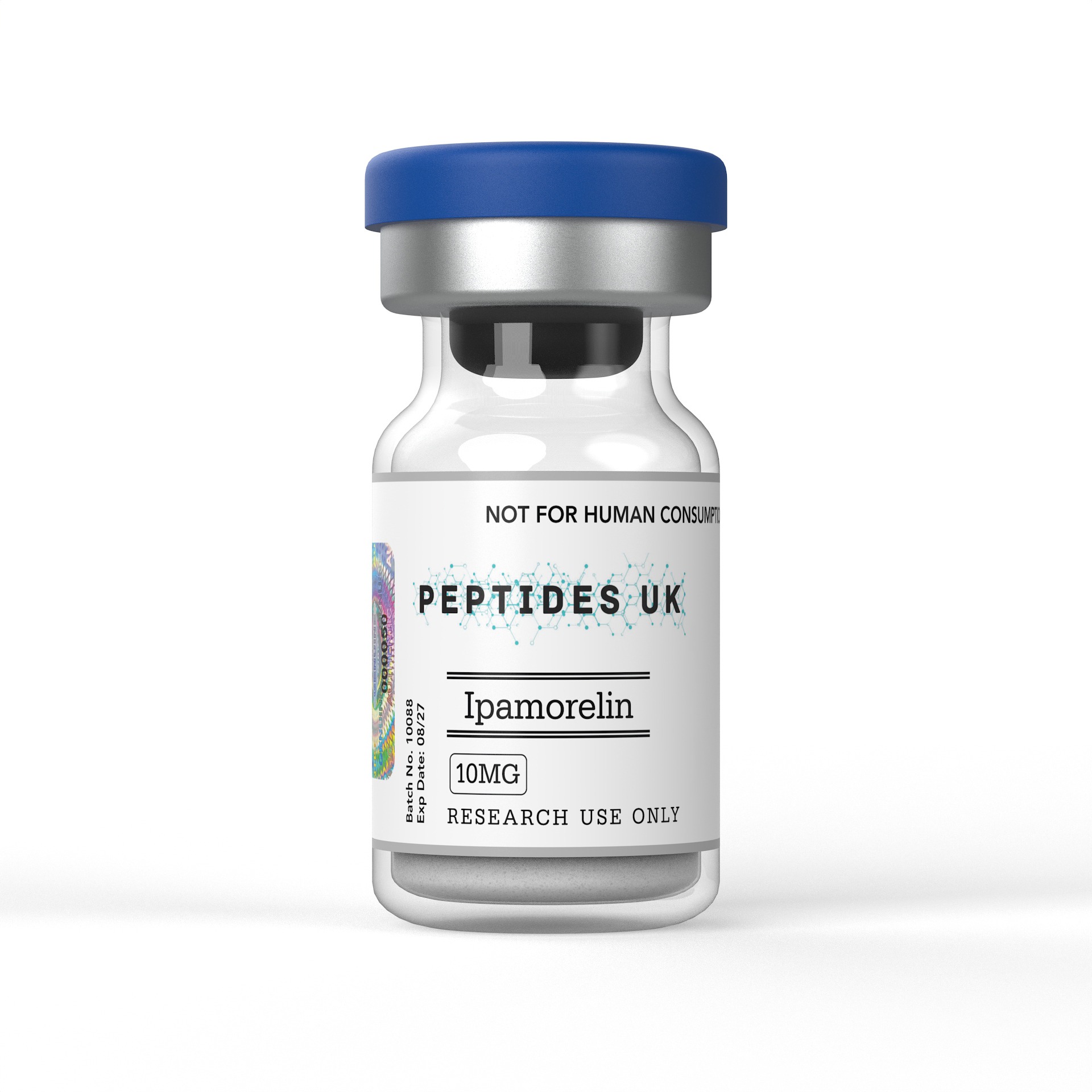
€25.50 – €92.00Price range: €25.50 through €92.00
Ipamorelin Ireland – Buy Online | In Stock & Ready to Ship
Buy Ipamorelin in Ireland with fast shipping and guaranteed ≥99% purity — verified with COA and HPLC documentation. A trusted choice for peptides Ireland research teams rely on, with no customs delays or international wait times. Whether you’re searching for Ipamorelin Ireland suppliers or looking to buy peptides Ireland-wide, we have you covered. Irish research teams can count on consistent stock, rapid fulfilment and full batch documentation every time.
For research use only. Not intended for human or veterinary use.


Ipamorelin — a synthetic pentapeptide ghrelin receptor agonist and the defining second-generation selective growth hormone secretagogue — is one of the most extensively characterised and pharmacologically precise GHS-R1a agonist research compounds available to laboratories in Ireland — an Aib-His-D-2-Nal-D-Phe-Lys-NH2 pentapeptide that potently and selectively activates the growth hormone secretagogue receptor (GHS-R1a) in pituitary somatotroph cells to drive growth hormone release with a receptor selectivity profile that eliminates the prolactin and cortisol co-secretion characteristic of first-generation GH secretagogues including GHRP-6 and GHRP-2 — making it an indispensable research tool for studying GHS-R1a receptor pharmacology and Gq/11-calcium signal transduction, the structural determinants of GHS-R1a subtype selectivity separating GH release from prolactin and cortisol co-stimulation, pituitary somatotroph cell biology and selective GH secretory mechanisms, the complementary and synergistic regulation of GH release by GHRH and selective GHS-R1a agonists, IGF-1 axis downstream biology under selective GH stimulation, the comparative pharmacology of selective versus non-selective growth hormone secretagogues across the GHS-R1a agonist class, and the ghrelin axis biology of selective receptor engagement without the endocrine co-secretion confounds of first-generation GH secretagogue research. Researchers and institutions across Ireland can source verified, research-grade Ipamorelin directly from our Irish peptide supply, with domestic-speed dispatch and complete batch documentation.
✅ ≥99% Purity — HPLC & Mass Spectrometry Verified
✅ Batch-Specific Certificate of Analysis (CoA) Included
✅ Sterile Lyophilised Powder | GMP Manufactured
✅ Fast Dispatch to Ireland | Peptides Ireland Stock
Ipamorelin — Aib-His-D-2-Nal-D-Phe-Lys-NH2 — is a synthetic pentapeptide growth hormone secretagogue developed at Novo Nordisk through a systematic structure-activity relationship programme directed at identifying GHS-R1a agonists with selective GH-releasing activity free from the prolactin and cortisol co-secretion that characterised first-generation hexapeptide GH secretagogues including GHRP-6 and GHRP-2. Ipamorelin emerged from this programme as the first truly selective GHS-R1a agonist — a pentapeptide incorporating alpha-aminoisobutyric acid (Aib) at position 1, His at position 2, the unnatural D-2-naphthylalanine residue at position 3, D-Phe at position 4, and C-terminal Lys-NH2 — a structural solution that achieves high-affinity GHS-R1a binding and potent GH release while eliminating the receptor interactions responsible for prolactin and cortisol co-stimulation in non-selective first-generation GH secretagogues. The pentapeptide architecture of Ipamorelin — one residue shorter than the hexapeptide GHRP-6 and GHRP-2 — and its distinctive N-terminal Aib residue and D-2-Nal3 substitution represent the structural basis for the selectivity pharmacology that defines Ipamorelin’s research significance.
The GHS-R1a receptor — the growth hormone secretagogue receptor subtype 1a — is a Gq/11-coupled GPCR expressed at highest density in pituitary somatotroph cells and hypothalamic arcuate nucleus neurones, with peripheral expression in stomach, heart, liver, adipose tissue, and immune cells. Ipamorelin’s selective GHS-R1a agonism drives GH granule exocytosis from somatotrophs through Gq/11-PLC-IP3-calcium mobilisation — the identical intracellular signalling cascade engaged by non-selective first-generation GH secretagogues — but does so without producing the off-target receptor engagement at pituitary lactotrophs and corticotrophs that drives prolactin and cortisol co-secretion following GHRP-6 and GHRP-2 administration. This selectivity — mechanistically equivalent GH release with pharmacologically eliminated prolactin and cortisol co-stimulation — establishes Ipamorelin as the reference selective GHS-R1a agonist and the essential comparative control compound for all research seeking to distinguish GH-specific from co-secretion-dependent biological effects in the GH secretagogue pharmacology literature.
Ipamorelin’s approximately 2-hour half-life — substantially longer than the 15–60 minute half-life of first-generation hexapeptide GH secretagogues — reflects the proteolytic stability conferred by the Aib1 N-terminal residue and the D-amino acid substitutions at positions 3 and 4, providing an intermediate pharmacokinetic profile between short-acting first-generation GH secretagogues and the long-acting GHRH analogue CJC-1295 With DAC. This extended half-life combined with receptor selectivity makes Ipamorelin the preferred GHS-R1a agonist for research protocols requiring sustained selective GH stimulation over multi-hour experimental windows without prolactin or cortisol confounds.
In controlled laboratory and pre-clinical settings, Ipamorelin is studied across GHS-R1a selectivity pharmacology, selective GH secretion biology, GHRH synergy research, ghrelin axis biology, comparative GH secretagogue pharmacology, and any research context where GH-specific effects must be isolated from prolactin and cortisol co-secretion confounds:
Ipamorelin is the reference selective GHS-R1a agonist for receptor selectivity pharmacology — used to characterise the structural determinants of GHS-R1a subtype selectivity by comparing Ipamorelin’s receptor engagement profile against non-selective first-generation GH secretagogues in pituitary somatotroph, lactotroph, and corticotroph cell models. Research uses Ipamorelin to establish the selectivity benchmark for GHS-R1a agonist pharmacology — characterising the Gq/11-PLC-IP3 calcium mobilisation and PKC activation pathway in somatotrophs in the presence of confirmed prolactin and cortisol non-stimulation at lactotrophs and corticotrophs. These selectivity pharmacology studies have established Ipamorelin’s pentapeptide structure as the reference pharmacophore solution for achieving GHS-R1a-selective GH release and provided the comparative dataset against which all subsequent selective GH secretagogue compounds are evaluated.
Ipamorelin drives potent and dose-dependent GH release from pituitary somatotroph cells with selectivity equivalent to the most refined second-generation GH secretagogues — making it the primary research tool for studying GHS-R1a-mediated somatotroph biology where GH-specific downstream effects must be studied free from prolactin and cortisol co-secretion confounds. Research has characterised Ipamorelin-induced GH secretion kinetics in isolated somatotroph cells, anterior pituitary preparations, and in vivo rodent and primate models — examining calcium-dependent GH granule exocytosis, GH pulse amplitude and duration, somatotroph calcium dynamics following selective GHS-R1a activation, and how selective GHS-R1a signalling integrates with somatostatin inhibitory tone and GHRH stimulation to determine net somatotroph secretory output without the endocrine complexity introduced by prolactin and cortisol co-stimulation. These somatotroph biology studies have established Ipamorelin as the definitive selective GH secretagogue for studying pituitary somatotroph biology in pharmacologically clean experimental conditions.
Ipamorelin and GHRH produce synergistic GH release when co-administered — with the combined response substantially exceeding the sum of individual responses through complementary Gq/11 and Gs signalling pathway interactions in somatotrophs, identical in mechanism to the GHRH-GHRP-6 and GHRH-GHRP-2 synergy documented for non-selective GH secretagogues but without prolactin and cortisol co-stimulation confounding the combined endocrine response. Research has used Ipamorelin combined with GHRH to characterise GH axis synergy biology in pharmacologically clean conditions — examining how GHS-R1a-driven calcium mobilisation potentiates GHRH-induced cAMP-PKA signalling exclusively in somatotrophs without off-target lactotroph and corticotroph co-stimulation, enabling attribution of all observed downstream biological effects to the GH secretory response rather than to co-secreted prolactin or cortisol. These clean synergy studies have established Ipamorelin as the reference GHS-R1a agonist for studying integrated GH axis regulation in research designs requiring mechanistic purity.
Ipamorelin is the essential reference selective compound in comparative GH secretagogue pharmacology — enabling research that directly contrasts Ipamorelin’s selective GH-only profile against the GH-plus-prolactin-plus-cortisol profile of GHRP-6 and GHRP-2 to identify which biological effects of GH secretagogue administration are attributable specifically to GH and which reflect prolactin or cortisol co-secretion. Research has used Ipamorelin versus GHRP-6 and GHRP-2 comparative designs in a wide range of downstream biology contexts — examining metabolic, anabolic, lipolytic, immunological, and tissue repair outcomes following selective versus non-selective GHS-R1a agonist administration to dissect the GH-specific from co-secretion-dependent components of GH secretagogue biology. These comparative studies represent the defining research application of Ipamorelin’s selectivity and have produced the core literature establishing which GH secretagogue biological effects are GH-dependent versus prolactin or cortisol-mediated.
Ipamorelin-induced GH release drives hepatic IGF-1 production and IGF-1 axis activation through the same GH-IGF-1 axis biology engaged by non-selective GH secretagogues — but does so without prolactin-mediated IGF-1 production confounds that arise from GHRP-6 and GHRP-2’s co-stimulation of pituitary prolactin. Research has used Ipamorelin to characterise IGF-1 axis biology — examining hepatic GH receptor signalling, IGF-1 and IGFBP-3 production kinetics, tissue-level IGF-1 receptor signalling in muscle, bone, and adipose tissue, and downstream anabolic and metabolic biology — in the clean research context of selective GH stimulation uncontaminated by prolactin co-elevation. These IGF-1 axis studies have established Ipamorelin as the reference GHS-R1a agonist for studying GH-driven IGF-1 biology in research protocols where prolactin’s independent IGF-1-stimulating biology in liver and peripheral tissues would otherwise confound interpretation.
Ipamorelin’s high-affinity selective GHS-R1a agonism makes it a research tool for studying ghrelin receptor biology in experimental contexts where selectivity for the GHS-R1a versus other ghrelin pathway receptors and downstream targets is required. Research has used Ipamorelin to characterise GHS-R1a receptor expression, signalling, and regulatory biology in pituitary and peripheral tissue contexts — examining GHS-R1a constitutive activity, receptor desensitisation and resensitisation kinetics, and the pharmacological consequences of selective GHS-R1a activation in peripheral tissues including cardiac, hepatic, and immune cell models where distinguishing GHS-R1a-specific from prolactin and cortisol-mediated biology is critical for mechanistic interpretation. These ghrelin axis biology studies have positioned Ipamorelin as the preferred selective GHS-R1a agonist for peripheral tissue receptor pharmacology research.
Ipamorelin’s selective GH stimulation without cortisol co-elevation makes it the preferred GH secretagogue for bone biology research — enabling studies of GH-driven osteoblast activation, bone formation, IGF-1-mediated skeletal anabolic biology, and growth plate biology without the cortisol-mediated catabolic bone effects that complicate GHRP-6 and GHRP-2 bone biology research. Research has examined Ipamorelin’s effects on bone mineral density, osteocalcin and bone-specific alkaline phosphatase markers, and growth plate chondrocyte biology in rodent models — characterising GH-specific skeletal anabolic responses in the absence of glucocorticoid-mediated bone resorption confounds introduced by non-selective GH secretagogue cortisol co-secretion.
Research has definitively established Ipamorelin’s selective GH release profile — documenting potent dose-dependent GH secretion in rodents, pigs, non-human primates, and humans without detectable prolactin or cortisol co-elevation at any GH-releasing dose. These selectivity studies, published by the Novo Nordisk programme and subsequent independent groups, established Ipamorelin as the first and defining selective GHS-R1a agonist and produced the reference dataset against which all subsequent selective GH secretagogue compounds are benchmarked.
Research has documented Ipamorelin’s GH release potency as comparable to GHRP-2 and substantially greater than GHRP-6 on a molar basis in rodent and primate GH secretion studies — establishing that the selectivity pharmacology of Ipamorelin’s pentapeptide structure does not compromise GH release potency relative to non-selective first-generation GH secretagogues. These potency comparison studies established that GHS-R1a selectivity and GH release potency are pharmacologically separable properties and that Ipamorelin achieves both simultaneously.
Research has documented GHRH-Ipamorelin synergistic GH release — characterising combined responses exceeding individual responses at magnitudes comparable to GHRH-GHRP-6 and GHRH-GHRP-2 synergy — confirming that Ipamorelin’s selective GHS-R1a pharmacology preserves the synergistic GH axis interaction with GHRH through complementary Gq/11 and Gs signalling mechanisms. These synergy studies validated Ipamorelin as a full functional substitute for non-selective GH secretagogues in GHRH synergy research with the additional advantage of selectivity-enabled mechanistic clean interpretation.
Research has documented Ipamorelin’s approximately 2-hour half-life — substantially longer than GHRP-6 and GHRP-2’s 15–60 minute half-lives — attributable to the proteolytic stability conferred by the N-terminal Aib residue and D-amino acid substitutions. These pharmacokinetic studies established Ipamorelin’s intermediate half-life profile and positioned it as the preferred GHS-R1a agonist for multi-hour experimental protocols requiring sustained selective somatotroph stimulation.
Research has documented Ipamorelin-induced bone anabolic effects in rodent models — characterising increased bone mineral density, enhanced osteocalcin production, and improved skeletal parameters — without the cortisol co-elevation-associated catabolic bone effects that confound non-selective GH secretagogue bone biology studies. These bone biology studies established Ipamorelin as the reference GH secretagogue for studying GH-specific skeletal anabolic biology and demonstrated the research value of selectivity in contexts where cortisol’s bone catabolic biology would otherwise obscure GH-specific effects.
Research has established Ipamorelin’s appetite-stimulating effects as moderate relative to the pronounced orexigenic biology of GHRP-6 and GHRP-2 — characterising reduced NPY/AgRP upregulation and attenuated food intake responses following Ipamorelin versus non-selective GH secretagogue administration. These appetite biology studies established that Ipamorelin’s selectivity extends to partial attenuation of hypothalamic orexigenic GHS-R1a biology relative to first-generation GH secretagogues and contributed to understanding of the structural determinants of GHS-R1a-mediated appetite stimulation.
| Feature | Ipamorelin | GHRP-6 | GHRP-2 Acetate | Hexarelin | MK-677 | CJC-1295 With DAC |
|---|---|---|---|---|---|---|
| Type | Synthetic pentapeptide — selective second generation GHS | Synthetic hexapeptide — first generation GHS | Synthetic hexapeptide — second generation GHS | Synthetic hexapeptide — first/second generation GHS | Non-peptide small molecule — third generation GHS | Tetrasubstituted GHRH(1-29) analogue + DAC |
| Receptor | GHS-R1a — selective | GHS-R1a — non-selective | GHS-R1a — non-selective | GHS-R1a — non-selective | GHS-R1a — non-selective | GHRHR — Gs-coupled |
| Mechanism | GHS-R1a Gq/11-calcium → selective somatotroph GH release | GHS-R1a Gq/11-calcium → GH + prolactin + cortisol | GHS-R1a Gq/11-calcium → GH + prolactin + cortisol | GHS-R1a Gq/11-calcium → GH + prolactin + cortisol pronounced | GHS-R1a Gq/11-calcium → GH + minimal co-secretion | GHRHR Gs-cAMP-PKA → sustained GH release |
| GH Release Potency | High — comparable to GHRP-2 | High — reference | Higher than GHRP-6 | Highest peptide GHS | High — oral | Sustained multi-day |
| Prolactin Co-secretion | Minimal — defining selectivity | Yes — off-target | Yes — off-target | Yes — pronounced | Minimal | None — GHRH mechanism |
| Cortisol Co-secretion | Minimal — defining selectivity | Yes — off-target | Yes — off-target | Yes — pronounced | Minimal | None — GHRH mechanism |
| Appetite Stimulation | Moderate | Pronounced | Pronounced | Moderate | Pronounced | Minimal direct |
| Half-Life | ~2 hours | ~15–60 minutes | ~15–60 minutes | ~15–60 minutes | ~24 hours — oral | ~6–8 days — DAC |
| Bone Biology Research | Reference — no cortisol confound | Confounded by cortisol co-secretion | Confounded by cortisol co-secretion | Confounded by pronounced cortisol | Minimal cortisol confound | Indirect via sustained GH |
| Key Research Distinction | Defining selective GHS-R1a reference — eliminates prolactin and cortisol confounds — essential comparative control | Reference first generation non-selective GHS | Enhanced potency non-selective second generation GHS | Highest GH amplitude — pronounced co-secretion | Oral long-acting GHS — minimal co-secretion | Only long-acting GHRH analogue — multi-day GH axis |
| Parameter | Detail |
|---|---|
| Name | Ipamorelin |
| Also Designated | NNC 26-0161 / Selective GHS-R1a Pentapeptide |
| Sequence | Aib-His-D-2-Nal-D-Phe-Lys-NH2 |
| Type | Synthetic Pentapeptide GHS-R1a Agonist — Selective Second Generation Growth Hormone Secretagogue — Research Grade |
| Molecular Weight | 711.9 Da |
| Structural Features | Aib1 — N-terminal alpha-aminoisobutyric acid — proteolytic stability and selectivity pharmacophore / D-2-Nal3 — unnatural naphthylalanine — GHS-R1a affinity / D-Phe4 — proteolytic resistance / C-terminal Lys-NH2 — pharmacophore completion |
| Mechanism | GHS-R1a Gq/11-PLC-IP3 → calcium mobilisation → PKC activation → GH granule exocytosis from somatotrophs — without prolactin or cortisol co-stimulation |
| Primary Receptor | GHS-R1a — Gq/11-coupled GPCR — pituitary somatotrophs |
| Selectivity Profile | GH release — potent / Prolactin — minimal / Cortisol — minimal / Appetite — moderate |
| Half-Life | ~2 hours |
| Key Research Distinction | Defining selective GHS-R1a agonist — reference compound for GHS-R1a selectivity pharmacology, GH-specific biology isolation, comparative selective versus non-selective GH secretagogue research, bone biology, and all research contexts requiring elimination of prolactin and cortisol co-secretion confounds |
| Primary Research Areas | GHS-R1a selectivity pharmacology / selective GH secretion / GHRH-Ipamorelin synergy / comparative GH secretagogue research / IGF-1 axis selective biology / ghrelin receptor research / bone anabolic biology / clean GH axis research |
| D-amino Acids | D-2-Nal3 and D-Phe4 — proteolytic resistance and pharmacophore geometry |
| Non-Standard Residues | Aib1 — alpha-aminoisobutyric acid — N-terminal selectivity and stability determinant |
| Prolactin / Cortisol Co-secretion | Minimal — defining selectivity advantage versus first-generation non-selective GH secretagogues |
| Purity | ≥99% HPLC & MS Verified |
| Form | Sterile Lyophilised Powder |
| Solubility | Sterile water or 0.1% acetic acid aqueous solution |
| Storage (Powder) | -20°C, protect from light and moisture |
| Storage (Reconstituted) | -80°C in single-use aliquots — minimise freeze-thaw cycles |
| Manufacturing | GMP Manufactured |
| Intended Use | Research use only |
Ipamorelin is a hydrophilic pentapeptide with good aqueous solubility — reconstitute by adding sterile water or 0.1% acetic acid in sterile water slowly to the lyophilised powder and swirling gently until fully dissolved. The Aib1 residue provides enhanced N-terminal proteolytic stability relative to first-generation hexapeptide GH secretagogues — Ipamorelin reconstituted solutions are more stable in biological matrices than GHRP-6 or GHRP-2 but should still be prepared as single-use aliquots and stored at -80°C to preserve full biological activity. The D-2-Nal3 residue is stable under standard aqueous reconstitution conditions — avoid strongly oxidising conditions that could affect the naphthylalanine aromatic system. Avoid strongly alkaline conditions that can compromise the C-terminal amide. For GH secretion studies in isolated pituitary preparations, dilute into physiological buffer at 37°C immediately before addition. For comparative selectivity studies with GHRP-6 or GHRP-2, prepare all compounds in matched vehicles at equivalent molar concentrations and include prolactin and cortisol measurement endpoints alongside GH to confirm the selectivity differential. For GHRH synergy studies, prepare Ipamorelin and GHRH separately in matched vehicles and administer simultaneously or in defined sequence. For bone biology studies requiring absence of cortisol confounds, verify cortisol non-elevation at the experimental dose in the species and model used before attributing skeletal outcomes to GH-specific mechanisms.
Every order of Ipamorelin in Ireland includes:
✅ Batch-Specific Certificate of Analysis (CoA)
✅ HPLC Chromatogram
✅ Mass Spectrometry Confirmation
✅ Sterility & Endotoxin Testing Report
✅ Reconstitution Protocol — including Aib1 stability notes, selectivity assay guidance, and comparative study design recommendations
✅ Technical Research Support
Yes — research-grade Ipamorelin is available to researchers and institutions across Ireland with fast dispatch and full batch documentation. Supplied strictly for laboratory research purposes only.
Ipamorelin’s pentapeptide structure — particularly the N-terminal Aib residue and D-2-Nal3 substitution — achieves high-affinity GHS-R1a binding and potent GH release while eliminating the receptor interactions at pituitary lactotrophs and corticotrophs responsible for prolactin and cortisol co-secretion in first-generation hexapeptide GH secretagogues. Selectivity and GH release potency are pharmacologically separable — Ipamorelin achieves both simultaneously.
Prolactin and cortisol both produce independent biological effects in muscle, bone, immune, and metabolic tissues — making their co-elevation by non-selective GH secretagogues a significant confound in research attributing outcomes to GH. Ipamorelin eliminates these confounds, enabling clean attribution of all observed downstream biology to GH-specific mechanisms and serving as the essential selective control in comparative GH secretagogue study designs.
Ipamorelin acts through GHS-R1a Gq/11-calcium signalling to produce episodic GH pulses lasting hours, while CJC-1295 With DAC acts through GHRHR Gs-cAMP-PKA signalling to produce sustained multi-day GH elevation via albumin-bound depot. They engage distinct receptors through complementary mechanisms and produce synergistic GH responses when combined — making them pharmacologically complementary rather than interchangeable research tools.
Vehicle controls in matched buffer, GHRP-6 or GHRP-2 as non-selective GHS reference compounds at equivalent molar concentrations, GHS-R1a antagonist [D-Lys3]-GHRP-6 confirming receptor specificity, and concurrent prolactin and cortisol measurement endpoints confirming selectivity in the specific model and species used. For bone biology studies, glucocorticoid receptor antagonist controls distinguish GH-specific from residual cortisol-mediated skeletal effects.
Ipamorelin produces moderate appetite stimulation — substantially less pronounced than the robust orexigenic responses driven by GHRP-6 and GHRP-2 through hypothalamic NPY/AgRP activation. This attenuated orexigenic profile reflects Ipamorelin’s selectivity extending partially to hypothalamic GHS-R1a biology and makes it the preferred GH secretagogue for research where appetite stimulation is an unwanted confounding variable.
≥99% purity by HPLC and mass spectrometry is essential — des-Aib1 fragments, Aib-to-Ala substitution impurities, and D-to-L epimerisation products at positions 3 and 4 would show substantially altered GHS-R1a binding affinity and selectivity profiles, confounding dose-response characterisation and the selectivity comparisons that are central to Ipamorelin’s research value. Non-standard residue verification of the Aib1 and D-2-Nal3 positions is a critical purity specification. All Ipamorelin Ireland stock is verified to ≥99% purity with non-standard residue configuration confirmed.
Ipamorelin is supplied exclusively for legitimate scientific research purposes conducted within licensed laboratory environments. This product is not intended for human consumption, self-administration, or any therapeutic application. It must be handled by qualified researchers in compliance with applicable Irish and EU regulations and institutional ethics guidelines. By purchasing, you confirm that this compound will be used solely for approved in vitro or pre-clinical research purposes.
WhatsApp us
Receive News
