PRODUCTS SOLD ON PEPTIDESLABIRELAND.COM ARE FOR RESEARCH PURPOSES ONLY AND ARE NOT FOR HUMAN OR VETERINARY USE.
€150.00 Original price was: €150.00.€102.50Current price is: €102.50.
Buy Glow Stack Peptide Blend in UAE – In Stock & Ready to Ship
Glow Stack is a widely researched peptide blend known for its role in skin health, collagen synthesis and cellular renewal studies. Each batch is independently verified at ≥99% purity and comes with a full Certificate of Analysis (COA) and HPLC testing documentation — giving UAE research teams the confidence they need when sourcing peptides for serious work. Available in multiple formats to suit varying research requirements.
For research use only. Not intended for human or veterinary use.


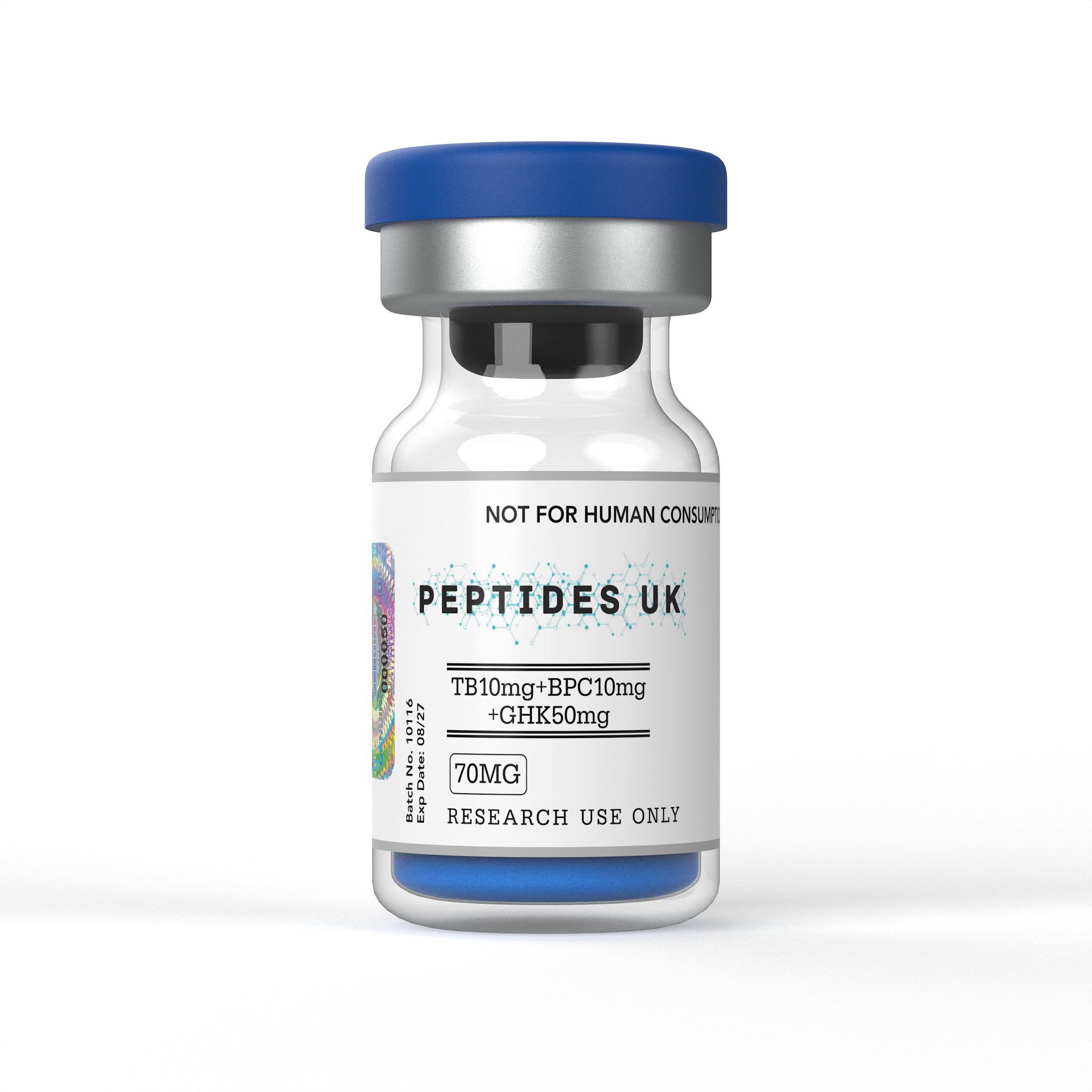
The Glow Stack — combining TB-500 (10mg), BPC-157 (10mg), and GHK-Cu (50mg) — is a precisely dosed three-compound research combination bringing together the most extensively studied peptides in tissue repair, regenerative biology, and skin science research — available to buy in Ireland with fast dispatch and full batch documentation included.
The Glow Stack pairs the systemic tissue repair and angiogenic properties of TB-500 and BPC-157 with the collagen-stimulating, antioxidant, and skin biology activity of GHK-Cu — creating a multi-mechanism research combination that spans wound healing, extracellular matrix remodelling, vascular biology, anti-inflammatory signalling, and skin regeneration research in a single conveniently dosed stack. Researchers and institutions across Ireland can source the verified, research-grade Glow Stack directly from our Irish peptide supply, with domestic-speed dispatch and complete batch documentation for each compound.
✅ ≥99% Purity — HPLC & Mass Spectrometry Verified
✅ Batch-Specific Certificate of Analysis (CoA) Included per Compound
✅ Sterile Lyophilised Powder | GMP Manufactured
✅ Fast Dispatch to Ireland | Peptides Ireland Stock
The Glow Stack is a fixed-dose three-peptide research combination formulated to provide complementary and mechanistically distinct coverage across the major biological pathways involved in tissue repair, regeneration, and skin biology research:
TB-500 (Thymosin Beta-4 Fragment, 10mg) is a synthetic analogue of the most biologically active region of Thymosin Beta-4 — a naturally occurring 43-amino acid peptide produced in virtually all nucleated cells and one of the most comprehensively studied tissue repair peptides in regenerative biology. TB-500 centres on the actin-binding tetrapeptide sequence LKKTETQ — the core of Thymosin Beta-4’s biological activity — which promotes cell migration, angiogenesis, tissue repair, and anti-inflammatory signalling across a wide range of tissue types. Its primary mechanism involves upregulation of actin polymerisation dynamics, promotion of endothelial and progenitor cell migration, and stimulation of new blood vessel formation — making it the most studied peptide for systemic tissue repair and angiogenic research.
BPC-157 (Body Protection Compound-157, 10mg) is a synthetic 15-amino acid peptide derived from a partial sequence of human gastric juice protein BPC — Body Protection Compound. Originally studied for its gastric mucosal protective properties, BPC-157 has since been documented across an extraordinarily wide range of tissue types and repair contexts — including tendon, ligament, muscle, bone, gut, and nervous system — through mechanisms involving angiogenesis promotion, growth factor receptor upregulation, nitric oxide signalling, and cytoprotective pathway activation. It is one of the most broadly applicable and mechanistically versatile tissue repair peptides in pre-clinical research.
GHK-Cu (Copper Peptide GHK-Cu, 50mg) is a naturally occurring copper-binding tripeptide — Glycine-Histidine-Lysine complexed with copper (Cu²⁺) — first isolated from human plasma by Loren Pickart in 1973. GHK-Cu is one of the most studied compounds in skin biology, wound healing, and anti-ageing research — with documented roles in collagen and elastin synthesis stimulation, matrix metalloproteinase regulation, antioxidant defence, angiogenesis, and the broad activation of tissue remodelling and regenerative gene programmes. Circulating GHK-Cu levels decline significantly with age — falling from approximately 200ng/ml in young adults to around 80ng/ml by age 60 — making it one of the most biologically relevant age-associated peptides in skin and regenerative research.
Together the three compounds in the Glow Stack provide complementary research coverage across angiogenesis, cell migration, tissue repair signalling, extracellular matrix biology, collagen synthesis, antioxidant defence, and skin regeneration — with each peptide contributing a distinct and non-overlapping mechanistic layer to the combined research profile.
Actin Regulation and Cell Migration Research — TB-500’s LKKTETQ sequence binds G-actin and regulates actin polymerisation dynamics — promoting cell migration in endothelial cells, keratinocytes, and progenitor cell populations. Studies have examined how TB-500 accelerates the migration of repair-relevant cell types into sites of tissue injury, establishing cell migration promotion as the fundamental mechanistic basis of TB-500’s tissue repair activity.
Angiogenesis Research — TB-500 is one of the most potent pro-angiogenic peptides studied in pre-clinical research — promoting new blood vessel formation through upregulation of angiogenic growth factors and endothelial cell migration. Studies have documented TB-500-driven angiogenesis in wound healing, cardiac, and musculoskeletal repair models — with new vessel formation representing a critical step in tissue repair that TB-500 accelerates across multiple tissue contexts.
Musculoskeletal Repair Research — Pre-clinical studies have examined TB-500’s effects on tendon, ligament, and muscle repair — documenting accelerated healing, improved tissue organisation, and enhanced biomechanical properties in treated tissues compared to controls. This musculoskeletal repair research profile represents one of the most active areas of TB-500 pre-clinical investigation.
Cardiac and Neural Repair Research — TB-500 has been studied in cardiac ischaemia and neural injury models — with research examining its effects on cardiomyocyte survival, cardiac progenitor cell activation, and neurological recovery following ischaemic and traumatic injury, reflecting its broad systemic tissue repair research applicability beyond musculoskeletal biology.
Anti-Inflammatory Research — TB-500 modulates inflammatory signalling in injured tissues — with studies documenting reductions in pro-inflammatory cytokine levels and inflammatory cell infiltration in TB-500-treated injury models, contributing to the understanding of how Thymosin Beta-4 biology connects tissue repair promotion to inflammatory resolution.
Tendon and Ligament Repair Research — BPC-157 is among the most extensively studied peptides for tendon and ligament healing in pre-clinical research — with studies documenting accelerated tendon-to-bone healing, improved collagen organisation, and enhanced biomechanical recovery in treated models. Research has identified upregulation of growth factor receptors including VEGFR2 and FGFR2 as key mechanisms driving BPC-157’s connective tissue repair activity.
Gut and Mucosal Protection Research — BPC-157’s original and most established research application is gastrointestinal cytoprotection — with decades of pre-clinical research documenting protective effects on gastric mucosa, intestinal epithelium, and gut barrier integrity in ulcer, colitis, and intestinal injury models. This gut biology research profile remains one of the broadest and most mechanistically characterised aspects of BPC-157 research.
Angiogenesis and VEGF Research — BPC-157 promotes angiogenesis through upregulation of VEGF and its receptors — with studies documenting new vessel formation in healing tissues following BPC-157 treatment. This angiogenic activity complements TB-500’s pro-angiogenic mechanism and contributes to the combined vascular biology research profile of the Glow Stack.
Nitric Oxide Signalling Research — BPC-157 modulates nitric oxide (NO) signalling pathways — with studies examining how NO pathway interactions contribute to BPC-157’s vasodilatory, cytoprotective, and tissue repair-promoting properties across gastrointestinal, vascular, and musculoskeletal tissue models.
Neuroprotection and Neural Repair Research — Pre-clinical studies have examined BPC-157’s neuroprotective effects in models of brain injury, spinal cord trauma, and peripheral nerve damage — with research documenting improved neurological recovery, reduced neural tissue damage, and enhanced nerve regeneration in BPC-157-treated models compared to controls.
Bone Healing Research — Studies have examined BPC-157’s effects on bone repair and fracture healing — documenting accelerated mineralisation, improved callus formation, and enhanced biomechanical bone strength in treated pre-clinical fracture models — extending its repair research profile into the skeletal biology domain.
Collagen and Elastin Synthesis Research — GHK-Cu is one of the most potent stimulators of collagen and elastin synthesis studied in skin biology research — with cell-based and pre-clinical studies documenting significant upregulation of collagen type I, III, and IV synthesis alongside elastin production in fibroblasts and skin tissue treated with GHK-Cu. This collagen-stimulating activity represents the most clinically relevant and extensively documented property of GHK-Cu in skin research.
Matrix Metalloproteinase Regulation Research — GHK-Cu regulates matrix metalloproteinases (MMPs) — the enzymes responsible for extracellular matrix degradation and remodelling — in a biologically sophisticated pattern: stimulating MMPs involved in clearing damaged matrix while simultaneously upregulating TIMP (tissue inhibitor of metalloproteinases) activity to prevent excessive degradation. This balanced MMP regulation contributes to orderly tissue remodelling rather than simple matrix degradation or accumulation.
Wound Healing Research — GHK-Cu has been studied extensively in wound healing models — with pre-clinical research documenting accelerated wound closure, improved granulation tissue formation, enhanced angiogenesis, and superior collagen deposition quality in GHK-Cu-treated wounds. Its wound healing research profile spans skin, corneal, and mucosal tissue models.
Gene Expression and Tissue Remodelling Research — Microarray and gene expression studies have revealed that GHK-Cu activates an extraordinarily broad transcriptional programme — with research documenting modulation of over 4,000 genes in human fibroblasts, including upregulation of genes related to tissue repair, antioxidant defence, mitochondrial function, and anti-inflammatory signalling. This broad gene regulatory activity has been described as a biological reset towards a more regenerative cellular phenotype.
Antioxidant Research — The copper component of GHK-Cu participates in antioxidant defence — with studies documenting superoxide dismutase-like activity and reductions in oxidative stress markers in GHK-Cu-treated cells and tissues. This antioxidant research dimension complements the structural and regenerative aspects of GHK-Cu’s biology.
Skin Ageing and Anti-Ageing Biology Research — GHK-Cu’s age-related decline in plasma levels — and its documented effects on collagen synthesis, skin thickness, elasticity, and wound healing — have made it a central research tool in skin ageing biology. Studies have examined how GHK-Cu affects the molecular and structural markers of skin ageing in pre-clinical and cell-based models, contributing to the fundamental biology of cutaneous ageing research.
Hair Follicle Biology Research — Pre-clinical studies have examined GHK-Cu’s effects on hair follicle biology — documenting influences on follicle size, hair growth cycle, and dermal papilla cell activity — extending its research profile into hair biology and follicular regeneration research.
TB-500 — Established Pre-Clinical Repair Profile — Pre-clinical studies have consistently documented TB-500’s tissue repair-promoting, pro-angiogenic, and anti-inflammatory effects across cardiac, musculoskeletal, dermal, and neural injury models — with research confirming the LKKTETQ sequence as the active core driving cell migration and repair responses. Cardiac studies have reported improved heart function and cardiomyocyte survival following ischaemic injury in TB-500-treated models, while musculoskeletal studies have documented accelerated tendon and muscle repair with improved tissue architecture.
BPC-157 — One of the Broadest Pre-Clinical Repair Profiles Available — BPC-157 has accumulated one of the most extensive pre-clinical repair research bibliographies of any peptide — with studies spanning gastrointestinal, musculoskeletal, neural, vascular, and bone repair contexts consistently documenting accelerated healing, cytoprotection, and improved recovery parameters. Its stability in biological environments — including oral bioavailability in pre-clinical models — and its multi-tissue applicability have made it one of the most versatile and widely referenced repair peptides in pre-clinical research.
GHK-Cu — Decades of Skin and Wound Biology Research — GHK-Cu has a research history spanning over 50 years — from its initial isolation in 1973 to comprehensive modern gene expression studies documenting its broad transcriptional activity. The combination of collagen stimulation, MMP regulation, wound healing acceleration, and antioxidant activity is consistently documented across cell-based and pre-clinical skin models, while population-level observations of age-related GHK-Cu decline have contributed to its relevance in skin ageing and regenerative biology research.
Complementary Mechanisms Across All Three Components — Research supports the rationale for combining TB-500, BPC-157, and GHK-Cu — with each compound contributing mechanistically distinct activity: TB-500 driving systemic angiogenesis and cell migration through actin regulation, BPC-157 providing multi-tissue cytoprotection and growth factor receptor upregulation, and GHK-Cu delivering targeted collagen synthesis stimulation, MMP regulation, and the broad gene expression remodelling programme that characterises its unique biology.
| Feature | Glow Stack | TB-500 Alone | BPC-157 Alone | GHK-Cu Alone |
|---|---|---|---|---|
| Angiogenesis Coverage | Very High — TB-500 + BPC-157 dual mechanism | High | Moderate–High | Moderate |
| Collagen / ECM Research | Very High — GHK-Cu primary + BPC-157 support | Low | Moderate | Very High |
| Gut Biology Research | Moderate — BPC-157 contribution | Low | Very High | Low |
| Skin Ageing Research | Very High — GHK-Cu primary + TB-500/BPC-157 support | Moderate | Moderate | Very High |
| Musculoskeletal Repair | Very High — TB-500 + BPC-157 combined | High | Very High | Low |
| Gene Expression Breadth | Exceptional — GHK-Cu 4000+ genes + peptide contributions | Moderate | Moderate | Very High |
| Research Versatility | Maximum — three complementary mechanisms | High | Very High | High |
| Parameter | Detail |
|---|---|
| Name | TB-500 (Thymosin Beta-4 Fragment) |
| Active Sequence | LKKTETQ |
| Dose per Vial | 10mg |
| Purity | ≥99% HPLC & MS Verified |
| Form | Sterile Lyophilised Powder |
| Storage | -20°C, protect from light |
| Parameter | Detail |
|---|---|
| Name | BPC-157 (Body Protection Compound-157) |
| Length | 15 amino acids |
| Dose per Vial | 10mg |
| Purity | ≥99% HPLC & MS Verified |
| Form | Sterile Lyophilised Powder |
| Storage | -20°C, protect from light |
| Parameter | Detail |
|---|---|
| Name | GHK-Cu (Copper Peptide) |
| Composition | Glycine-Histidine-Lysine + Cu²⁺ |
| Dose per Vial | 50mg |
| Purity | ≥99% HPLC & MS Verified |
| Form | Sterile Lyophilised Powder |
| Storage | -20°C, protect from light |
Every Glow Stack order includes full documentation for all three compounds:
✅ Batch-Specific Certificate of Analysis (CoA) — TB-500, BPC-157, GHK-Cu
✅ HPLC Chromatogram — all three compounds
✅ Mass Spectrometry Confirmation — all three compounds
✅ Sterility & Endotoxin Testing Report
✅ Reconstitution Protocol for each peptide
✅ Technical Research Support
Can I buy the Glow Stack in Ireland? Yes — we supply the research-grade Glow Stack to researchers and institutions across Ireland with fast dispatch and full batch documentation for all three compounds. This stack is supplied strictly for laboratory research purposes only.
What is the Glow Stack and why combine these three peptides? The Glow Stack combines TB-500, BPC-157, and GHK-Cu to provide complementary and non-overlapping mechanistic coverage across the major biological pathways involved in tissue repair, regeneration, and skin biology research. TB-500 drives angiogenesis and cell migration through actin regulation, BPC-157 provides multi-tissue cytoprotection and growth factor signalling, and GHK-Cu delivers collagen synthesis stimulation, MMP regulation, and a broad regenerative gene expression programme — creating a research combination with greater mechanistic depth than any single compound alone.
How does TB-500 differ from BPC-157 in research? TB-500 and BPC-157 are both studied for tissue repair but through different mechanisms and with different tissue emphasis. TB-500 works primarily through actin regulation and promotion of endothelial cell migration — driving angiogenesis and systemic tissue repair — and has a particularly strong cardiac and systemic repair research profile. BPC-157 works through growth factor receptor upregulation, nitric oxide signalling, and VEGF-driven angiogenesis — with its most established research profile in gastrointestinal and musculoskeletal repair contexts. The two compounds are mechanistically complementary rather than redundant, which is the rationale for including both in the Glow Stack.
What makes GHK-Cu particularly relevant to skin biology research? GHK-Cu is the most comprehensively studied copper peptide in skin biology research — with documented effects on collagen and elastin synthesis, matrix metalloproteinase regulation, wound healing, and a remarkably broad gene expression programme activating over 4,000 genes in human fibroblast studies. Its natural age-related decline in plasma levels — from approximately 200ng/ml in young adults to around 80ng/ml by age 60 — gives it particular relevance to skin ageing research and makes it one of the most biologically grounded compounds in the anti-ageing research peptide literature.
Why is GHK-Cu dosed higher than TB-500 and BPC-157 in the Glow Stack? The 50mg dose of GHK-Cu reflects the different pharmacological characteristics of a copper-binding tripeptide compared to the larger TB-500 and BPC-157 peptides. GHK-Cu’s smaller molecular size, its role in broad extracellular and gene expression biology, and its research application in skin and wound healing models support a higher mass dose relative to the larger peptides — and this dosing reflects standard pre-clinical and cell-based research use patterns for each compound.
What purity is recommended for Glow Stack research? ≥99% purity is strongly recommended for all three compounds — particularly for wound healing assays, collagen synthesis studies, angiogenesis models, and in vivo pre-clinical research where compound quality directly affects biological activity and reproducibility. All Glow Stack compounds are independently verified to ≥99%.
How do I reconstitute the Glow Stack peptides for laboratory use? Allow each vial to reach room temperature before opening. TB-500 and BPC-157 reconstitute readily in sterile water or bacteriostatic water — add solvent slowly down the inside wall of the vial and swirl gently without shaking. GHK-Cu also reconstitutes in sterile water or bacteriostatic water and should be handled similarly — the blue-green colour of the copper complex is normal and expected. Prepare each compound as a separate stock solution. Use promptly after reconstitution or aliquot and store at -80°C to preserve stability and biological activity across multiple experimental uses.
TB-500, BPC-157, and GHK-Cu are supplied exclusively for legitimate scientific research purposes conducted within licensed laboratory environments. These products are not intended for human consumption, self-administration, or any therapeutic application. They must be handled by qualified researchers in compliance with applicable Irish and EU regulations and institutional ethics guidelines. By purchasing, you confirm that these compounds will be used solely for approved in-vitro or pre-clinical research purposes.



WhatsApp us
Receive News
