PRODUCTS SOLD ON PEPTIDESLABIRELAND.COM ARE FOR RESEARCH PURPOSES ONLY AND ARE NOT FOR HUMAN OR VETERINARY USE.
€194.50 Original price was: €194.50.€137.00Current price is: €137.00.
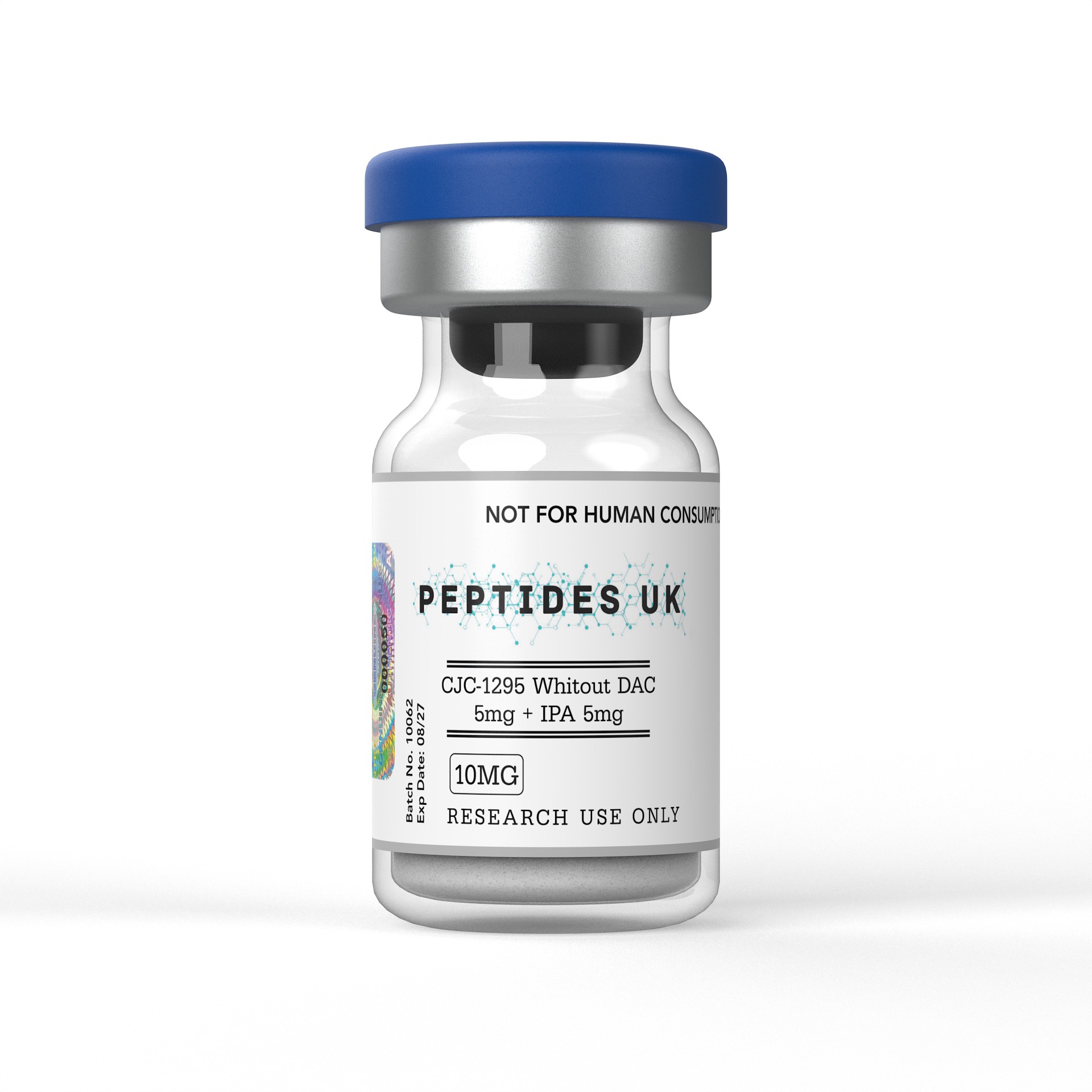
CJC-1295 Without DAC + Ipamorelin Ireland – Buy Online | In Stock & Ready to Ship
Buy CJC-1295 Without DAC + Ipamorelin in Ireland with fast shipping and guaranteed ≥99% purity — verified with COA and HPLC documentation. A trusted choice for peptides Ireland research teams rely on, with no customs delays or international wait times. Whether you’re searching for CJC-1295 + Ipamorelin Ireland suppliers or looking to buy peptides Ireland-wide, we have you covered. Irish research teams can count on consistent stock, rapid fulfilment and full batch documentation every time.
For research use only. Not intended for human or veterinary use.

CJC-1295 Without DAC combined with Ipamorelin represents the most extensively researched and precisely characterised dual-mechanism growth hormone axis stimulation pairing available to laboratories in Ireland — combining a stabilised GHRH(1-29) analogue that primes the pituitary somatotroph through the cAMP-dependent GHRH receptor pathway with the most GHS-R1a-selective synthetic secretagogue identified, producing synergistic pulsatile growth hormone release that is substantially greater than either compound alone while maintaining the clean receptor selectivity profile that makes this combination the preferred research tool for studying GH axis biology without the confounding off-target receptor effects associated with broader-acting secretagogue pairings. Researchers and institutions across Ireland can source verified, research-grade CJC-1295 Without DAC and Ipamorelin — individually or as a combined research preparation — directly from our Irish peptide supply, with domestic-speed dispatch and complete batch documentation.
✅ ≥99% Purity — HPLC & Mass Spectrometry Verified
✅ Batch-Specific Certificate of Analysis (CoA) Included
✅ Sterile Lyophilised Powder | GMP Manufactured
✅ Fast Dispatch to Ireland | Peptides Ireland Stock
CJC-1295 Without DAC — also designated Modified GRF(1-29) or Mod GRF — is a synthetically stabilised analogue of growth hormone releasing hormone comprising the biologically active N-terminal 29 amino acid fragment of native GHRH, incorporating four strategic amino acid substitutions that address the primary vulnerabilities of the native GHRH(1-29) sequence to enzymatic degradation. Native GHRH(1-29) has a circulating half-life of only a few minutes — rapidly cleaved by dipeptidyl peptidase IV (DPP-IV) at the His-Ala N-terminus, and further degraded by other serum proteases — limiting its research utility to acute, short-duration experimental paradigms where its rapid inactivation precludes sustained pituitary GHRH receptor engagement.
The four amino acid substitutions in CJC-1295 Without DAC address these stability vulnerabilities systematically — with substitution at position two replacing the DPP-IV-vulnerable alanine with D-alanine to confer DPP-IV resistance, substitution at position eight replacing glutamine with alanine to prevent asparagine deamidation, substitution at position fifteen replacing aspartic acid with glutamic acid to improve resistance to hydrolysis, and substitution at position twenty-seven replacing methionine with leucine to prevent oxidative methionine degradation. The combined effect of these four substitutions is a GHRH(1-29) analogue with a half-life of approximately 30 minutes — dramatically extended compared to the minutes of native GHRH — while retaining full GHRH receptor binding affinity and the capacity to drive pituitary somatotroph GH secretion through the cAMP-dependent intracellular pathway that native GHRH uses.
Without the albumin-binding Drug Affinity Complex present in CJC-1295 with DAC, this compound produces a defined, relatively short-duration pulse of GHRH receptor stimulation — enabling pulsatile GH release research paradigms that more closely model the episodic, pulse-based pattern of endogenous GHRH signalling than the continuous, days-long elevation produced by the DAC-modified version. This pulsatile GHRH stimulation profile is biologically important — endogenous GH secretion is inherently pulsatile, and the pulsatile pattern of GH signalling has been established as physiologically distinct from tonic GH elevation in terms of GH receptor regulation, hepatic IGF-1 production dynamics, and tissue-level GH biology. CJC-1295 Without DAC preserves this pulsatile biology while extending the duration of each GHRH receptor stimulation pulse to a research-practical timeframe.
Ipamorelin is a synthetic pentapeptide growth hormone secretagogue — Aib-His-D-2-Nal-D-Phe-Lys-NH2 — and the most GHS-R1a-selective synthetic secretagogue identified in the research literature, representing the product of systematic structure-activity relationship research within the growth hormone releasing peptide class that prioritised receptor selectivity over raw potency to produce a compound that engages GHS-R1a with minimal activity at any other receptor system. This selectivity profile is Ipamorelin’s defining and most significant pharmacological property — distinguishing it fundamentally from the broader-acting GHS compounds in the research toolkit.
The GHS-R1a receptor is expressed in the anterior pituitary, hypothalamic arcuate nucleus, and peripheral tissues including the heart, stomach, and adipose tissue — with activation producing growth hormone release from pituitary somatotrophs as its primary biological consequence alongside the peripheral ghrelin pathway biology of appetite regulation, metabolic signalling, and tissue protection. Less selective GHS compounds — particularly GHRP-6 and to a lesser extent GHRP-2 — engage receptors beyond GHS-R1a that drive cortisol and prolactin release, appetite stimulation, and other off-target biological effects that complicate mechanistic interpretation in research designs aimed at studying isolated GH axis biology. Ipamorelin produces GH release without meaningful cortisol elevation, without prolactin stimulation, and without the appetite-stimulating effects of broader ghrelin pathway activation — providing a uniquely clean GH axis research tool whose observed biological effects can be attributed specifically to GHS-R1a pharmacology and the consequences of GH elevation.
Structurally, Ipamorelin’s pentapeptide backbone — shorter than the hexapeptide GHRP compounds — and its Aib (alpha-aminoisobutyric acid) N-terminal residue are key determinants of its selectivity profile. The Aib modification confers conformational constraint that biases Ipamorelin’s receptor engagement geometry toward GHS-R1a with reduced complementarity at off-target receptors — a structural basis for selectivity that has been characterised through comparative pharmacology research examining the receptor engagement profiles of synthetic GHS compounds across the secretagogue series.
The research rationale for combining CJC-1295 Without DAC with Ipamorelin is built on the dual-pathway GH axis synergy that has been one of the most consistently documented and pharmacologically exploited phenomena in GH secretagogue research. The two compounds stimulate GH release through completely distinct and complementary intracellular signalling pathways — CJC-1295 Without DAC activating the adenylyl cyclase/cAMP/PKA pathway through GHRH receptor engagement, and Ipamorelin activating the phospholipase C/IP3/calcium mobilisation pathway through GHS-R1a engagement. Because these pathways converge on somatotroph GH secretion through different molecular mechanisms, their simultaneous activation produces synergistic GH release that substantially exceeds the additive sum of each compound’s individual effect.
In laboratory settings, the combination is studied across a range of GH axis biology, somatotroph cell pharmacology, and downstream growth factor signalling research applications:
Dual-Pathway GH Axis Synergy Research — The core research application of this combination is the characterisation and exploitation of GHRH receptor/GHS-R1a dual-pathway synergy — with studies examining how simultaneous cAMP and calcium mobilisation pathway activation in somatotroph cells produces GH release that exceeds additive expectations. Research has characterised the molecular basis of this synergy, the optimal timing and dosing ratios between GHRH and GHS components for maximal GH release, and how the synergistic interaction is influenced by somatostatin tone — providing fundamental insights into GH axis pharmacology that cannot be accessed with either compound class alone.
Clean GH Axis Stimulation with Minimal Off-Target Biology — The specific combination of CJC-1295 Without DAC with Ipamorelin — rather than with broader-acting GHS compounds like GHRP-6 — is chosen in research designs that require strong, synergistic GH axis stimulation with the cleanest possible receptor selectivity profile. Ipamorelin’s minimal off-target receptor activity means that biological effects observed in combination research models can be attributed to the consequences of GH axis stimulation and GHRH/GHS-R1a dual-pathway pharmacology — without confounding cortisol, prolactin, or appetite biology that would accompany the use of less selective GHS compounds in the same combination paradigm.
Pulsatile GH Release Biology Research — The combination of CJC-1295 Without DAC’s 30-minute half-life with Ipamorelin’s approximately 2-hour half-life produces a defined, pulsatile GH release event rather than the sustained elevation associated with DAC-modified long-acting GHRH analogues — making this combination appropriate for research examining pulsatile GH secretion biology, GH pulse amplitude and frequency regulation, and how pulsatile GH release patterns influence downstream GH receptor signalling and IGF-1 production dynamics.
IGF-1 Axis Biology Research — Studies have characterised the downstream IGF-1 axis consequences of synergistic GH release produced by CJC-1295 Without DAC plus Ipamorelin — examining how the amplitude and duration of GH pulses produced by dual-pathway stimulation translate to hepatic IGF-1 production, circulating IGF-1 levels, and tissue-level IGF-1 receptor signalling. These downstream biology studies have contributed to understanding of the quantitative relationship between GH pulse characteristics and IGF-1 axis activation magnitude.
Somatotroph Cell Biology and Secretory Capacity Research — The combination has been used to study the secretory capacity and regulatory biology of anterior pituitary somatotroph cells — with research examining how dual-pathway stimulation influences somatotroph GH secretory granule dynamics, calcium signalling, and the limits of GH secretory output in response to maximally synergistic receptor co-stimulation. These somatotroph cell biology studies have provided insights into the cellular mechanisms of GH secretion that single-pathway stimulation cannot fully reveal.
GH Axis Regulation and Somatostatin Interaction Research — Studies have examined how the combination’s dual-pathway GH-releasing stimulus interacts with inhibitory somatostatin tone — characterising how prevailing somatostatin activity modulates the synergistic GH release produced by GHRH/GHS-R1a co-stimulation and how the combination can be used as a pharmacological probe to study the balance between stimulatory and inhibitory GH axis regulation.
Body Composition and Metabolic Biology Research — The downstream metabolic and body composition consequences of synergistic GH and IGF-1 elevation produced by this combination have been examined in pre-clinical models — with studies characterising effects on fat metabolism, lean tissue parameters, and metabolic markers associated with GH axis activation. These studies have contributed to understanding of how the magnitude and pattern of GH axis stimulation influences metabolic biology outcomes.
GH Deficiency Model Research — The combination has been studied in GH-deficient pre-clinical models — examining whether dual-pathway GH axis stimulation can restore GH and IGF-1 levels and reverse the biological consequences of GH deficiency — contributing to research into the pharmacology of GH axis restoration and the biology of GH deficiency states.
The research literature on this combination spans both the individual compounds and the combination paradigm — with an extensive body of foundational work on GHRH/GHS dual-pathway synergy providing the mechanistic context within which the specific CJC-1295 Without DAC plus Ipamorelin combination is understood.
Dual-Pathway GHRH/GHS Synergy Extensively Documented — The synergistic interaction between GHRH receptor activation and GHS-R1a activation in driving GH release is one of the most consistently replicated findings in GH axis pharmacology — with studies across multiple pre-clinical models and diverse GHRH and GHS compound pairings establishing that co-administration produces GH release substantially greater than the sum of individual compound effects. Research has characterised the intracellular signalling basis of this synergy — establishing how cAMP and calcium mobilisation pathway co-activation in somatotroph cells produces synergistic GH secretory responses through convergent regulation of GH secretory vesicle exocytosis machinery. This extensive foundational literature provides strong mechanistic justification for the CJC-1295 Without DAC plus Ipamorelin combination paradigm.
Ipamorelin Selectivity Profile Confirmed — Comparative pharmacology research has confirmed Ipamorelin’s exceptional GHS-R1a selectivity through head-to-head studies with GHRP-6 and GHRP-2 — documenting equivalent or greater GH release potency with significantly reduced cortisol, prolactin, and appetite-stimulating effects at GH-releasing doses. Studies have characterised the absence of meaningful cortisol and ACTH elevation following Ipamorelin administration — in direct contrast to GHRP-6 — establishing Ipamorelin as the preferred GHS component when clean GH axis stimulation without HPA axis activation is the research objective. This selectivity confirmation has been foundational to Ipamorelin’s adoption as the reference selective GHS compound in combination GH axis research.
CJC-1295 Without DAC Stability and Pharmacokinetics Characterised — Research has characterised the half-life extension and DPP-IV resistance conferred by CJC-1295 Without DAC’s amino acid substitutions — confirming approximately 30-minute half-life versus minutes for native GHRH(1-29) and documenting the sustained pituitary GHRH receptor engagement this stability enables. Studies have established that the four amino acid substitutions preserve full GHRH receptor binding affinity while dramatically improving metabolic stability — validating CJC-1295 Without DAC as a practical research tool that captures the full GHRH receptor biology of native GHRH in a form suitable for systematic pre-clinical research protocols.
Combination GH Release Superior to Individual Components Confirmed — Studies directly comparing the GH release produced by CJC-1295 Without DAC alone, Ipamorelin alone, and the combination have documented that co-administration produces significantly greater GH release than either compound administered individually — confirming the dual-pathway synergy predicted from the mechanistic literature and establishing the combination as the appropriate research paradigm when maximal clean GH axis stimulation is the experimental objective. The consistency of this synergistic finding across different pre-clinical models has established the GHRH/selective GHS combination as a standard paradigm in GH axis stimulation research.
IGF-1 Elevation Following Combination Documented — Studies have documented downstream IGF-1 elevation following dual-pathway GH axis stimulation by GHRH/GHS combinations — characterising the amplitude and duration of IGF-1 axis responses to synergistic GH release pulses and establishing the quantitative relationship between combination-driven GH release and downstream IGF-1 production. These IGF-1 axis characterisation studies have provided important pre-clinical context for understanding how dual-pathway GH axis stimulation translates to downstream growth factor biology.
Somatostatin Modulation of Combination Response Characterised — Research has examined how somatostatin tone influences the synergistic GH release produced by GHRH/GHS combinations — with studies documenting that the combination response is attenuated under high somatostatin conditions and amplified when somatostatin inhibitory tone is reduced. This somatostatin interaction research has contributed important insights into how the balance between GH-stimulating and GH-inhibiting hypothalamic signals determines the magnitude of pharmacologically driven GH release — providing mechanistic context for interpreting inter-individual and inter-model variability in GH axis stimulation research outcomes.
| Feature | CJC-1295 w/o DAC + Ipamorelin | CJC-1295 w/o DAC + GHRP-6 | CJC-1295 with DAC + Ipamorelin | Ipamorelin Alone | CJC-1295 w/o DAC Alone |
|---|---|---|---|---|---|
| GH Release Magnitude | Strong — synergistic | Strong — synergistic | Very strong — sustained | Moderate | Moderate |
| GH Release Profile | Pulsatile — defined pulse | Pulsatile — defined pulse | Sustained — days-long | Pulsatile | Pulsatile |
| Receptor Selectivity | Highest — both components selective | Moderate — GHRP-6 broader profile | High — Ipamorelin selective | Very high | High — GHRH-R only |
| Off-Target Effects | Minimal — no cortisol/prolactin/appetite | Moderate — GHRP-6 cortisol/appetite | Minimal | Minimal | None beyond GHRH-R |
| Research Attribution | Clean — GH axis specific | Confounded by GHRP-6 off-targets | Clean but sustained | Clean but single pathway | Single pathway only |
| Cortisol/HPA Axis Effect | None significant | Moderate via GHRP-6 | None significant | None significant | None |
| IGF-1 Elevation | Pulsatile-driven transient elevation | Pulsatile-driven transient elevation | Sustained elevation | Transient | Transient |
| Best Research Use | Clean dual-pathway GH axis research | Maximum GH + ghrelin pathway | Chronic clean GH axis research | Isolated GHS-R1a biology | Isolated GHRH-R biology |
| Research Profile | Extensively studied | Well-documented | Well-documented | Well-documented | Well-documented |
| Parameter | CJC-1295 Without DAC | Ipamorelin |
|---|---|---|
| Type | Stabilised GHRH(1-29) analogue | Synthetic pentapeptide GHS |
| Sequence | Modified GHRH(1-29) — 4 substitutions | Aib-His-D-2-Nal-D-Phe-Lys-NH2 |
| Molecular Weight | ~3367 Da | ~711.9 Da |
| Receptor Target | GHRH receptor — pituitary somatotrophs | GHS-R1a — highly selective |
| Pathway Activated | cAMP/PKA — adenylyl cyclase | PLC/IP3 — calcium mobilisation |
| Half-Life | ~30 minutes | ~2 hours |
| Key Advantage | DPP-IV resistant GHRH — pulsatile stimulation | Most selective GHS — no cortisol/prolactin |
| Combination Rationale | Dual-pathway synergy — greater than additive GH release | |
| Purity | ≥99% HPLC & MS Verified | ≥99% HPLC & MS Verified |
| Form | Sterile Lyophilised Powder | Sterile Lyophilised Powder |
| Solubility | Sterile water or suitable laboratory buffer | Sterile water or suitable laboratory buffer |
| Storage (Powder) | -20°C, protect from light | -20°C, protect from light |
| Storage (Reconstituted) | 2–8°C — use within 7 days or aliquot at -80°C | 2–8°C — use within 7 days or aliquot at -80°C |
| Manufacturing | GMP Manufactured | GMP Manufactured |
| Intended Use | Research use only | Research use only |
Both CJC-1295 Without DAC and Ipamorelin reconstitute readily in sterile water or appropriate laboratory buffer. Allow each vial to reach room temperature before opening. Add diluent slowly down the inside wall of the vial and swirl gently — do not inject directly onto the lyophilised powder and do not vortex or shake vigorously. Prepare concentrated stock solutions for each compound individually before combining at working concentrations — do not co-reconstitute in the same vial unless your research protocol specifically requires pre-mixed preparation, as maintaining separate stocks allows flexible dosing ratio adjustment across experimental sessions. Store reconstituted stocks at 2–8°C for short-term use within 7 days, or aliquot into single-use volumes and store at -80°C for longer-term preservation. Avoid repeated freeze-thaw cycles and exposure to elevated temperatures.
Every order in Ireland includes:
✅ Batch-Specific Certificate of Analysis (CoA) — both compounds
✅ HPLC Chromatogram — both compounds
✅ Mass Spectrometry Confirmation — both compounds
✅ Sterility & Endotoxin Testing Reports
✅ Reconstitution Protocol — individual and combination guidance
✅ Technical Research Support
Yes — we supply research-grade CJC-1295 Without DAC and Ipamorelin to researchers and institutions across Ireland with fast dispatch and full batch documentation. Both compounds are available individually or as a combined research preparation. This compound is supplied strictly for laboratory research purposes only.
Ipamorelin’s GHS-R1a selectivity is the product of systematic structure-activity relationship research that progressively refined the synthetic GHS scaffold to maximise GHS-R1a engagement while minimising activity at other receptor systems. The key structural features contributing to Ipamorelin’s selectivity are its pentapeptide length — shorter than the hexapeptide GHRP compounds — and its N-terminal Aib (alpha-aminoisobutyric acid) residue, which introduces conformational constraint that biases the peptide’s three-dimensional geometry toward GHS-R1a complementarity with reduced fit at the corticotroph receptors that mediate cortisol release and the prolactin-stimulating receptors engaged by less selective GHS compounds. Comparative pharmacology studies have confirmed that Ipamorelin produces GH release equivalent to GHRP-6 and GHRP-2 without meaningful cortisol, ACTH, or prolactin elevation — establishing its selectivity profile empirically across multiple biological systems. This confirmed selectivity makes Ipamorelin the preferred GHS component in research designs where clean GH axis stimulation without HPA axis or lactotroph confounds is essential for mechanistic interpretation.
The synergy between CJC-1295 Without DAC and Ipamorelin is mechanistically grounded in the complementary intracellular signalling pathways through which the two compounds stimulate GH secretion from anterior pituitary somatotroph cells. CJC-1295 Without DAC activates the GHRH receptor — a Gs-coupled GPCR — driving adenylyl cyclase activation, cAMP elevation, and PKA-mediated phosphorylation of downstream targets that regulate GH secretory vesicle exocytosis. Ipamorelin activates GHS-R1a — a Gq-coupled GPCR — driving phospholipase C activation, IP3 production, and calcium release from intracellular stores that provides the calcium signalling required for vesicle fusion and GH release. Because these two signalling cascades — cAMP/PKA and calcium mobilisation — converge on GH vesicle exocytosis through molecularly distinct mechanisms, their simultaneous activation produces greater GH release than either pathway alone can achieve — a synergistic response that reflects the cooperative biology of dual calcium and cAMP pathway co-activation in the same secretory cell.
CJC-1295 Without DAC and CJC-1295 With DAC share the same four-substitution stabilised GHRH(1-29) backbone but differ fundamentally in their pharmacokinetic profiles — and therefore in the type of GH axis research they enable. Without DAC, the compound has a half-life of approximately 30 minutes — producing defined, pulsatile GHRH receptor stimulation events that generate discrete GH release pulses compatible with the pulsatile GH secretion biology of endogenous physiology. With DAC, the albumin-binding maleimide linker extends half-life to approximately 6–8 days — producing sustained, tonic GHRH receptor stimulation and days-long GH axis elevation from a single administration. The choice between them is a research design question — CJC-1295 Without DAC is chosen when studying pulsatile GH axis biology, acute GHRH pharmacology, or combination synergy with GHS compounds in pulsatile paradigms, while CJC-1295 With DAC is chosen when studying chronic GH axis activation, sustained IGF-1 elevation, or the biological consequences of tonic versus pulsatile GH stimulation.
The preference for Ipamorelin over GHRP-6 as the GHS component in clean GH axis combination research comes down to receptor selectivity and mechanistic interpretability. Both combinations produce strong, synergistic GH release through dual-pathway GHRH/GHS-R1a co-stimulation. However, GHRP-6’s broader receptor engagement profile — producing cortisol and ACTH elevation through corticotroph receptor activation, appetite stimulation through peripheral ghrelin pathway agonism, and other off-target biological effects — introduces confounding variables into research models where the goal is to study GH axis-specific biology. Ipamorelin’s minimal off-target activity means that biological effects observed in CJC-1295 Without DAC plus Ipamorelin combination research can be attributed specifically to dual-pathway GH axis stimulation and the consequences of GH and IGF-1 elevation — without cortisol biology, appetite effects, or other confounds complicating interpretation. For mechanistically clean GH axis research, the Ipamorelin combination is therefore the scientifically preferred paradigm.
Somatostatin — produced in the hypothalamic periventricular nucleus and released into the portal circulation to suppress pituitary GH secretion — is the primary inhibitory modulator of GH release and a critical variable in GH axis research. The synergistic GH release produced by CJC-1295 Without DAC plus Ipamorelin is subject to somatostatin modulation — with prevailing somatostatin tone attenuating the combination’s GH-releasing effects when inhibitory tone is high, and amplifying them when somatostatin withdrawal allows maximal somatotroph responsiveness. Research examining the timing of combination administration relative to somatostatin pulse timing has demonstrated that GH release responses are greatest during somatostatin trough periods — establishing the importance of accounting for endogenous somatostatin rhythms in the design of GH axis combination research protocols. This somatostatin interaction provides an important mechanistic variable for researchers using this combination to study GH axis regulation.
≥99% purity is strongly recommended for both compounds in GH release assays, receptor pharmacology studies, somatotroph cell biology experiments, IGF-1 axis research, and pre-clinical in vivo GH axis models — where compound purity directly determines the reliability and reproducibility of GH secretion measurements and downstream biology outcomes. Both compounds are supplied as independently verified ≥99% pure preparations by HPLC and mass spectrometry.
Allow each vial to reach room temperature before opening. Add sterile water or appropriate laboratory buffer slowly down the inside wall of each vial individually and swirl gently — do not inject directly onto the lyophilised powder and do not vortex. Prepare separate concentrated stock solutions for each compound. For combination research protocols, dilute each stock to the required working concentration separately before combining in the experimental system — maintaining separate stocks preserves dosing flexibility across the protocol. Store reconstituted stocks at 2–8°C for short-term use within 7 days, or aliquot into single-use volumes and store at -80°C. Avoid repeated freeze-thaw cycles.
CJC-1295 Without DAC and Ipamorelin are supplied exclusively for legitimate scientific research purposes conducted within licensed laboratory environments. These products are not intended for human consumption, self-administration, or any therapeutic application. They must be handled by qualified researchers in compliance with applicable Irish and EU regulations and institutional ethics guidelines. By purchasing, you confirm that these compounds will be used solely for approved in vitro or pre-clinical research purposes.


WhatsApp us
Receive News
