How GHK-Cu compares to related compounds
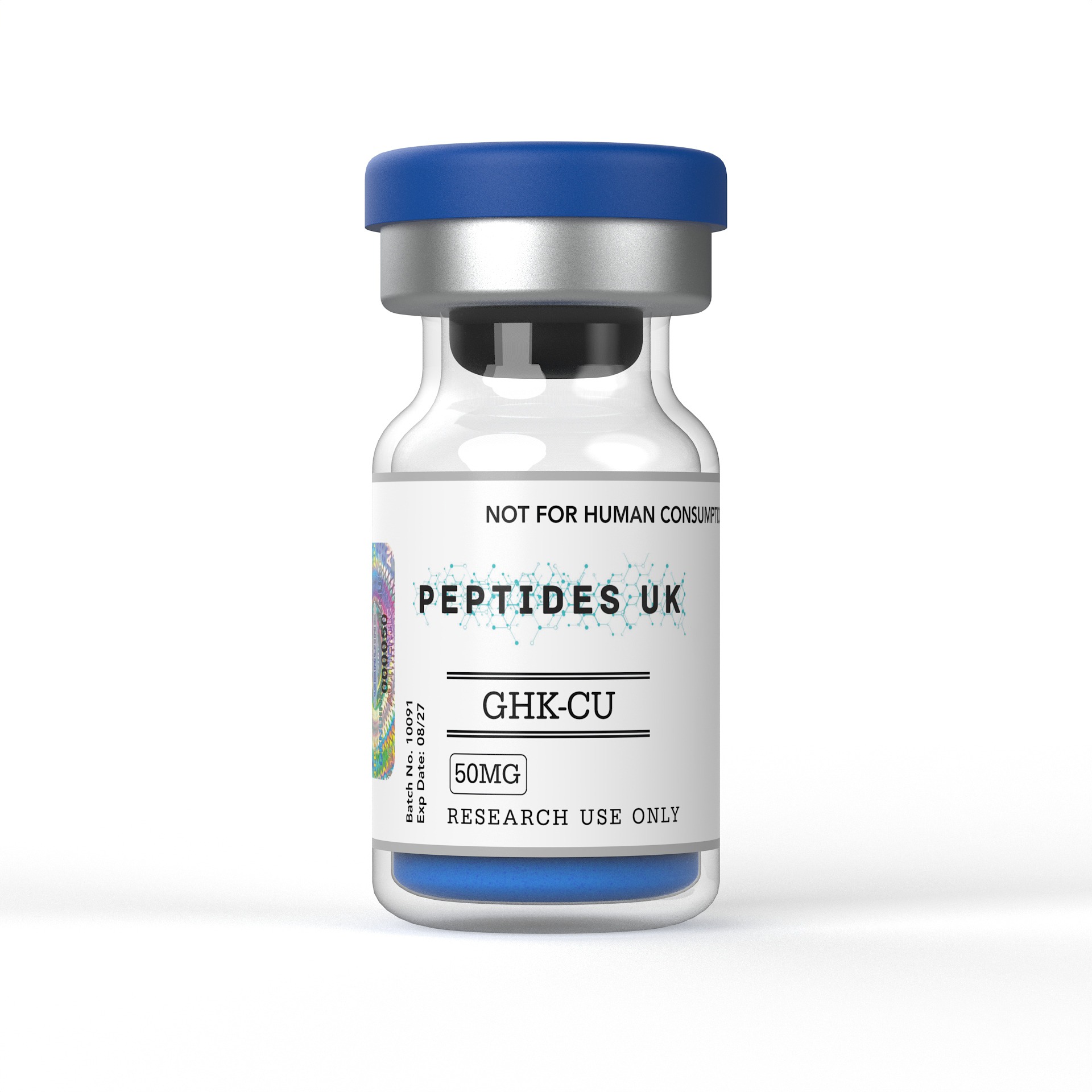
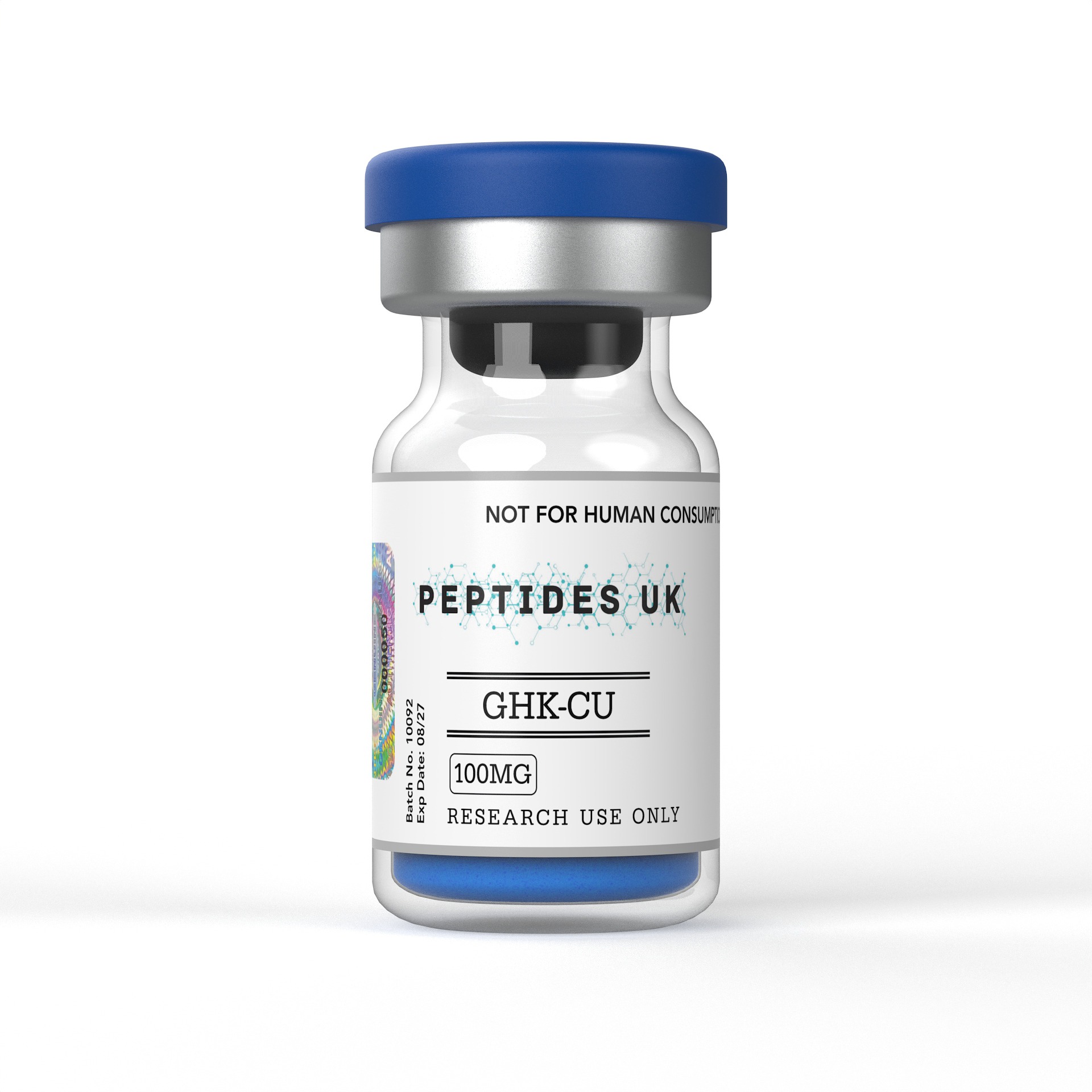
GHK-Cu . The copper-binding tripeptide Glycyl-L-histidyl-L-lysine (GHK) complexed with a copper(II) ion . Is one of the most extensively characterised research peptides in skin biology, wound healing, extracellular matrix remodelling and copper-dependent enzyme research. Peptides Lab Ireland supplies HPLC-verified GHK-Cu to Irish universities, dermatology research groups, cosmetic science labs and independent researchers with per-batch Certificates of Analysis.
What is GHK-Cu?
GHK is a naturally-occurring tripeptide (sequence: Gly-His-Lys) present in human plasma at low physiological concentrations. It has a high affinity for divalent copper ions and forms the biologically-active GHK-Cu complex used across research applications. The complex functions as a copper carrier and modulator of copper-dependent enzymatic activity.
What is GHK-Cu used for in research?
The GHK-Cu research literature is one of the deepest in peptide biology, spanning several decades of published in-vitro and animal-model studies. Documented research applications include:
- Skin regeneration and wound healing and collagen synthesis, dermal fibroblast activity, glycosaminoglycan production, and re-epithelialisation research models
- Extracellular matrix remodelling , MMP (matrix metalloproteinase) and TIMP (tissue inhibitor of metalloproteinases) balance research
- Antioxidant and anti-inflammatory pathways . SOD (superoxide dismutase) modulation, NF-κB pathway research
- Hair follicle biology . Dermal papilla cell research and hair growth cycle studies
- Angiogenesis , VEGF induction and vascular endothelial research
- Gene expression modulation , GHK-Cu has been reported to modulate the expression of hundreds of human genes in transcriptomic research
- Cosmetic science , one of the most heavily formulated actives in professional dermatology research
GHK-Cu is used in preclinical research contexts. It isn’t approved as a medicinal product for human therapeutic use in Ireland, the EU or any major jurisdiction.
GHK-Cu Product Specifications
- Compound: GHK-Cu (Copper Peptide, Glycyl-L-histidyl-L-lysine copper complex)
- Sequence: Gly-His-Lys (GHK) + Cu²⁺
- CAS number: 89030-95-5 (GHK-Cu complex)
- Molecular weight: ≈ 402.9 Da (Cu complex)
- Purity: ≥ 99% (HPLC-verified per batch)
- Presentation: Lyophilised powder, blue-tinged (copper coordination signature)
- Storage: Store at −20 °C before reconstitution. Reconstituted solutions refrigerated 2–8 °C, protected from light, used within stability window on the batch COA
- Third-party testing: Independently verified by Optima Labs (COA per batch)
GHK-Cu Reconstitution Guidance
Reconstitute lyophilised GHK-Cu with sterile bacteriostatic water (0.9% benzyl alcohol) for research protocols requiring extended storage stability. For pH-sensitive protocols, use the reconstitution buffer specified in your research protocol. Copper coordination is pH-dependent , avoid strongly acidic reconstitution buffers as they can disrupt the copper–peptide complex.
What research groups look at with GHK-Cu
- HPLC-verified ≥99% purity , every batch independently tested by Optima Labs (independent third party)
- Certificate of Analysis with every order and batch-specific traceability
- Copper coordination integrity and supplied as the complexed GHK-Cu form, not GHK alone
- Fast Ireland delivery . Dispatched to Dublin, Cork, Galway, Limerick and nationwide from EU fulfilment
Frequently asked questions and GHK-Cu Ireland
Is GHK-Cu legal to buy in Ireland? GHK-Cu isn’t approved as a medicine in Ireland or the EU. It is supplied by Peptides Lab Ireland strictly for in-vitro research and educational use.
What’s the difference between GHK and GHK-Cu? GHK is the tripeptide itself. GHK-Cu is the biologically-active form where GHK is complexed with a copper(II) ion. Most modern skin-biology research uses the GHK-Cu form because of its enhanced stability and functional profile.
Do you also stock GHK-Cu blends? Yes and GHK-Cu is a component of our Glow Stack (BPC-157 + TB-500 + GHK-Cu) pre-formulated blend, used by regenerative-research groups running combined tissue-repair protocols.
Research use only
All compounds sold on peptideslabireland.com are supplied strictly for in-vitro laboratory research and educational purposes. Not intended for human, veterinary or therapeutic use.
What Irish researchers commonly ask about GHK-Cu
Is GHK-Cu legal in Ireland?
GHK-Cu isn’t authorised as a medicine by the HPRA. It’s legal to buy, hold and use as a research chemical for in-vitro laboratory work, and that’s the only use we supply it for. If you want the full regulatory picture, see our Irish researcher’s guide to peptide legality.
Cad atá sa vials agus cad a chlúdaíonn an CoA?
Every vial ships with an HPLC purity trace (often ≥99%), mass-spec identity confirmation, and endotoxin/heavy-metal screening on the batch. The full per-batch Certificate of Analysis is available on request from research@peptideslabireland.com. Our quality system is ISO 9001 certified and third-party testing runs through a UKAS-accredited lab.
How researchers reconstitute GHK-Cu
Standard protocol: let the GHK-Cu vial and your bacteriostatic water come to room temperature, wipe both stoppers with a 70% isopropyl swab, then inject the water slowly down the side wall of the peptide vial. Don’t stream directly onto the powder cake. Swirl gently, don’t shake, and give it five to ten minutes to fully dissolve. Label the vial with compound, concentration and reconstitution date, store at 2–8°C between assays.
How fast does GHK-Cu ship inside Ireland?
Seoladh ar an lá céanna le haghaidh orduithe a chuirtear roimh 2pm ar lá oibre. Déantar seachadadh laistigh de 24–48 uair an chloig chuig aon chontae in Éirinn trí An Post Express nó DPD. Coinnítear an slabhra fuar le fillteán inslithe móide pacáiste glóthaí. Gan chéim chustaim, gan mhoill teorann. Toisc nach bhfágann sé Éire riamh.
What’s GHK-Cu typically studied with?
In the Irish research space GHK-Cu tends to appear in the pathways described above. It’s often paired with related research compounds when researchers are studying combined mechanisms rather than the compound alone.
How should GHK-Cu be stored?
Lyophilised GHK-Cu is stable at ≤-20°C long-term. Once reconstituted, keep it refrigerated at 2–8°C and use within the working shelf life described on the CoA. Freeze/thaw cycles degrade peptides, so aliquot the reconstituted solution if you plan to run assays over several weeks.