PRODUCTS SOLD ON PEPTIDESLABIRELAND.COM ARE FOR RESEARCH PURPOSES ONLY AND ARE NOT FOR HUMAN OR VETERINARY USE.
Fast Ireland delivery — dispatched to Dublin, Cork, Galway, Limerick and nationwide.
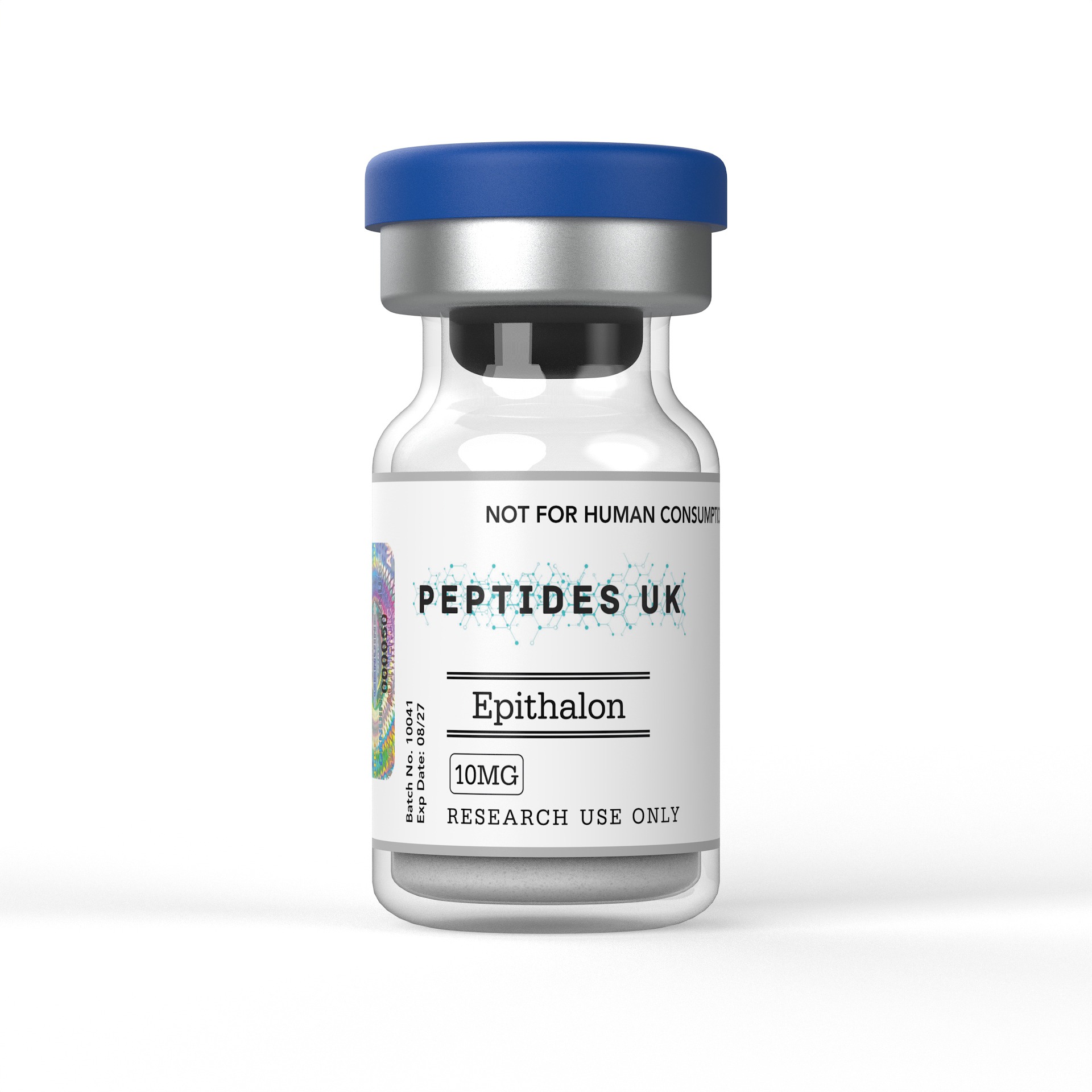
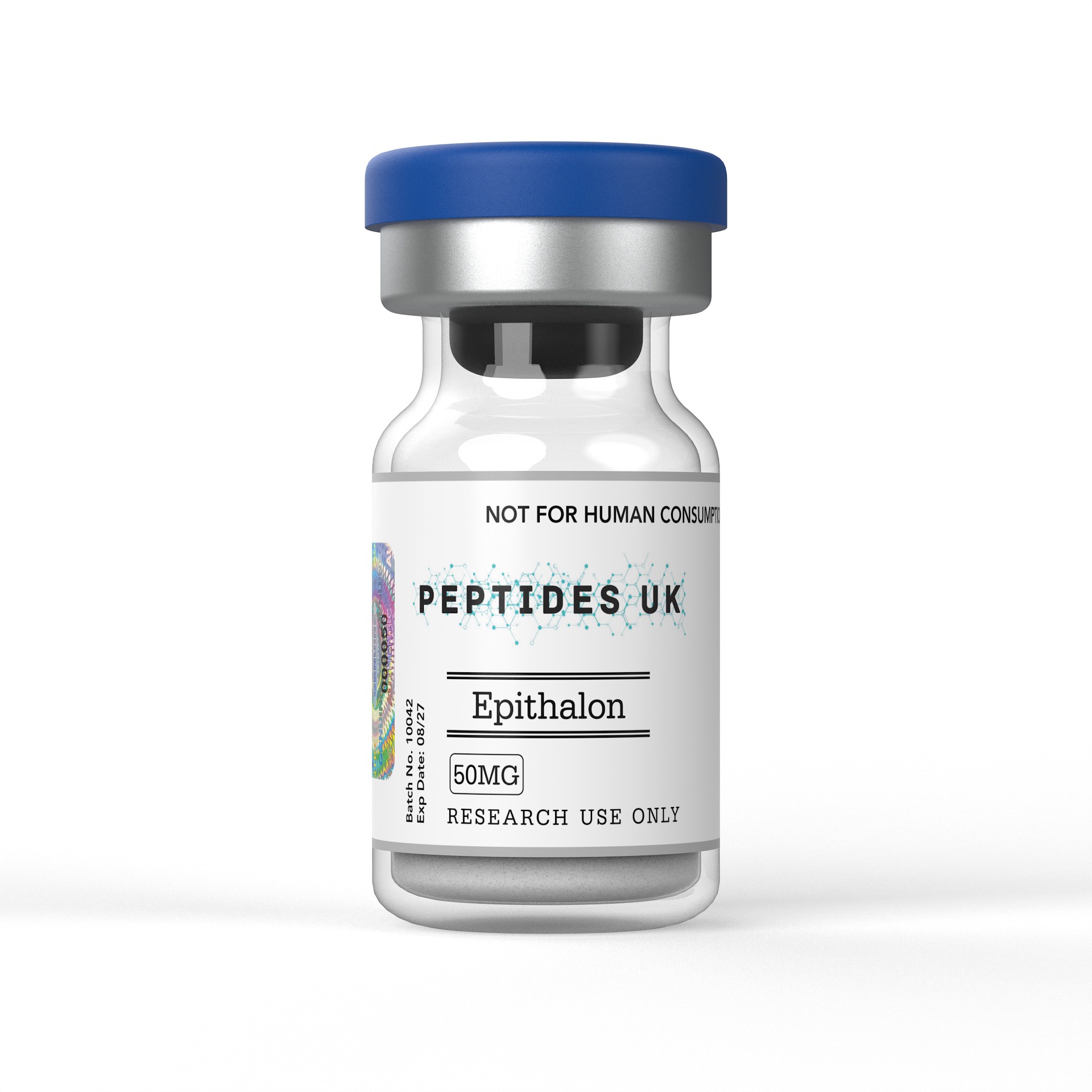
€49.50 – €148.50Price range: €49.50 through €148.50
Epithalon — synthetic tetrapeptide (Ala-Glu-Asp-Gly) studied in telomerase activity, pineal biology and longevity research. HPLC-verified ≥99% purity, per-batch COA. Fast Ireland delivery.
For laboratory research use only. Not for human or veterinary use.


Epithalon is a synthetic tetrapeptide derived from the naturally occurring pineal gland peptide Epithalamin , one of the most extensively researched compounds in telomere biology, cellular ageing, and longevity science , available to buy in Ireland with fast dispatch and full batch documentation included.
Epithalon (Ala-Glu-Asp-Gly) is a four-amino acid peptide that has been studied for decades and mainly through Russian research programmes , for its ability to activate telomerase, lengthen telomeres, regulate pineal gland function, and modulate a broad range of biological processes linked to cellular ageing and longevity, Researchers and institutions across Ireland can source verified, research-grade Epithalon directly from our Irish peptide supply, with domestic-speed dispatch and complete batch documentation.
✅ ≥99% Purity . HPLC & Mass Spectrometry Verified
✅ Batch-Specific Certificate of Analysis (CoA) Included
✅ Sterile Lyophilised Powder | GMP Manufactured
✅ Fast Dispatch to Ireland | Peptides Ireland Stock
Epithalon (also written as Epitalon or Epitalone) is a synthetic tetrapeptide , just four amino acids in sequence: Alanine-Glutamic Acid-Aspartic Acid-Glycine (Ala-Glu-Asp-Gly). It is the synthetic analogue of Epithalamin, a naturally occurring peptide extract isolated from the pineal gland, which was first identified and studied by Russian gerontologist Professor Vladimir Khavinson and his team at the St. Petersburg Institute of Bioregulation and Gerontology beginning in the 1980s.
The research rationale behind Epithalon centres on telomere biology. Telomeres are the protective caps at the ends of chromosomes that shorten with each cell division . This progressive shortening is one of the most well-established biological markers of cellular ageing. Telomerase is the enzyme responsible for rebuilding and maintaining telomere length, but its activity declines much with age in most somatic cells. Epithalon has been studied extensively for its ability to activate telomerase in pre-clinical and cell-based models , potentially allowing cells to maintain or restore telomere length and continue dividing rather than entering senescence.
Beyond telomerase activation, Epithalon has been studied for its effects on pineal gland function and melatonin regulation, antioxidant defence, immune modulation, and gene expression regulation . Establishing it as one of the most multi-faceted and extensively studied peptides in longevity and bioregulation research.
In controlled laboratory and pre-clinical settings, Epithalon is studied across a broad range of ageing, longevity, and cellular biology research areas:
Telomerase Activation Research . Epithalon’s most studied and defining research property is its ability to activate telomerase , the enzyme that maintains and restores telomere length. Studies have examined how Epithalon induces telomerase expression in somatic cells that normally have low or absent telomerase activity, and what this means for cellular replicative capacity, senescence, and the biology of cellular ageing. This makes it the most pharmacologically relevant research tool available for studying telomerase activation in the context of longevity biology.
Telomere Length Research . Building on telomerase activation, research has examined whether Epithalon treatment is associated with measurable changes in telomere length in cell-based and pre-clinical models , with studies exploring the relationship between Epithalon-induced telomerase activity and actual telomere maintenance as a marker of biological age in treated cells and tissues.
Pineal Gland and Melatonin Research , Epithalon is derived from the pineal gland peptide Epithalamin, and research has extensively studied its effects on pineal gland function , particularly melatonin synthesis and secretion. Studies have examined how Epithalon restores age-related decline in melatonin production in aged pre-clinical models, contributing to research on circadian biology, sleep regulation, and the role of the pineal gland in ageing.
Cellular Senescence Research and Epithalon has been studied as a tool for investigating cellular senescence and the state in which cells permanently stop dividing, accumulate, and contribute to tissue ageing and dysfunction. Research has examined whether Epithalon’s telomerase-activating properties can delay or modulate the onset of replicative senescence in cell culture models.
Antioxidant and Oxidative Stress Research and Studies have examined Epithalon’s effects on antioxidant defence systems , including superoxide dismutase (SOD) and other oxidative stress markers . In aged pre-clinical models. Research has documented improvements in antioxidant capacity following Epithalon treatment, contributing to the understanding of how pineal-derived peptides modulate oxidative stress biology in ageing tissues.
Immune Function Research . Epithalon has been studied for its effects on immune system parameters in aged pre-clinical models . With research examining how it modulates T-cell activity, natural killer cell function, and broader immune competence in the context of immunosenescence (age-related immune decline). This positions Epithalon as a research tool for studying the interface between pineal gland biology, ageing, and immune function.
Gene Expression and Epigenetic Research , Epithalon has been shown to modulate gene expression in pre-clinical models — with studies examining its effects on the expression of genes associated with cell cycle regulation, apoptosis, antioxidant defence, and ageing-related pathways. Research has also explored potential epigenetic mechanisms through which Epithalon may influence chromatin structure and gene accessibility.
Cancer Biology Research and A significant area of Epithalon research involves its effects on tumour biology in pre-clinical models . With studies examining how Epithalon affects the development and progression of spontaneous tumours in aged rodent models, and how its immune-modulating and gene-regulatory properties interact with cancer biology. This research is exploratory and pre-clinical in nature.
Longevity and Lifespan Research and Long-term pre-clinical studies have examined whether Epithalon treatment is associated with extended lifespan in rodent models and with research documenting increased mean and maximum lifespan in treated animals alongside improvements in multiple biomarkers of biological age, making it one of the very few research peptides with formal long-term lifespan data from controlled pre-clinical studies.
Retinal Biology Research , Emerging research has examined Epithalon’s effects on retinal cell biology in aged pre-clinical models , with studies suggesting potential protective effects on photoreceptor cells and retinal function in the context of age-related retinal degeneration, reflecting the broad tissue-level reach of Epithalon’s bioregulatory research profile.
Epithalon has one of the longest and most extensive research histories of any longevity-focused peptide, with the majority of foundational work emerging from Russian biogerontology institutes:
Telomerase Activation Confirmed in Cell Studies , Cell-based studies have demonstrated that Epithalon induces telomerase activity in human somatic cells , including fetal fibroblasts and other cell types that normally have very low telomerase expression , with research confirming upregulation of the hTERT catalytic subunit of telomerase as a key mechanism. This is the most mechanistically significant finding in the Epithalon research literature.
Telomere Elongation in Pre-Clinical Models , Studies have reported measurable telomere lengthening in association with Epithalon-induced telomerase activation in pre-clinical cell and tissue models and providing functional evidence that telomerase activation by Epithalon translates into actual changes in telomere biology rather than just enzymatic activity alone.
Melatonin Restoration in Aged Models — Pre-clinical studies in aged rodents have documented that Epithalon treatment restores melatonin secretion towards levels more typical of younger animals , supporting its role as a pineal gland bioregulator and contributing research evidence for the connection between pineal peptide activity, melatonin biology, and the ageing process.
Extended Lifespan in Rodent Studies , Long-term rodent studies have reported increases in both mean and maximum lifespan in Epithalon-treated animals compared to controls , with improvements in physical condition, reduction in age-related pathology, and preservation of multiple physiological parameters documented alongside the lifespan data. These are among the most cited findings in the Epithalon literature.
Reduced Tumour Incidence in Aged Models , Pre-clinical studies in aged rodents with high spontaneous tumour rates have reported lower tumour incidence and delayed tumour onset in Epithalon-treated groups compared to controls . A finding linked to Epithalon’s immune-modulating, gene-regulatory, and antioxidant properties in the research literature, though mechanism remains an active area of investigation.
Antioxidant Improvements Documented and Studies in aged pre-clinical models have reported significant improvements in antioxidant enzyme activity and including SOD and catalase , following Epithalon treatment, alongside reductions in markers of oxidative damage, supporting its role as a modulator of the oxidative stress biology that contributes to ageing.
Long Research History from Russian Biogerontology and Unlike many research peptides with only a few years of pre-clinical data, Epithalon has a research history spanning several decades . With Professor Khavinson’s group and associated institutes generating a substantial body of peer-reviewed publications across cell biology, animal longevity, immune function, and pineal biology, giving it one of the deepest research bibliographies of any peptide in the longevity space.
| Feature | Epithalon | MOTS-c | Humanin | Selank |
|---|---|---|---|---|
| Origin | Synthetic pineal gland tetrapeptide | Mitochondrial genome peptide | Mitochondrial genome peptide | Synthetic tuftsin analogue |
| Primary Mechanism | Telomerase activation / pineal bioregulation | AMPK activation / metabolic stress signalling | Cytoprotection / neuroprotection | Anxiolytic / immune modulation |
| Key Research Area | Telomere biology / cellular ageing / longevity | Metabolic disease / exercise biology | Neuroprotection / metabolic protection | Anxiety / stress / cognition |
| Longevity Data | Formal lifespan studies in rodents | Age-related decline documented | Longevity-associated biology | Limited longevity data |
| Research History | Decades . Extensive Russian biogerontology literature | Emerging , growing rapidly | Growing | Moderate |
| Best For | Telomere / senescence / pineal / ageing biology | Metabolic / AMPK / exercise research | Neuroprotection / cytoprotection research | Neurological / anxiety research |
Epithalon is unique in being the only peptide with formal long-term lifespan data from controlled pre-clinical studies alongside direct telomerase activation evidence . Making it the foundational research compound in peptide-based longevity biology.
| Parameter | Detail |
|---|---|
| Name | Epithalon (also: Epitalon, Epitalone) |
| Sequence | Ala-Glu-Asp-Gly (AEDG) |
| Length | 4 amino acids (tetrapeptide) |
| Origin | Synthetic analogue of pineal peptide Epithalamin |
| Primary Mechanism | Telomerase activation / pineal bioregulation |
| Purity | ≥99% HPLC & MS Verified |
| Form | Sterile Lyophilised Powder |
| Solubility | Sterile water, bacteriostatic water, PBS |
| Storage (Powder) | -20°C, protect from light |
| Storage (Reconstituted) | 2–8°C, use promptly |
| Manufacturing | GMP Manufactured |
Every order of Epithalon in Ireland includes:
✅ Batch-Specific Certificate of Analysis (CoA)
✅ HPLC Chromatogram
✅ Mass Spectrometry Confirmation
✅ Sterility & Endotoxin Testing Report
✅ Reconstitution Protocol
✅ Technical Research Support
Can I buy Epithalon in Ireland? Yes and we supply research-grade Epithalon to researchers and institutions across Ireland with fast dispatch and full batch documentation. This compound is supplied strictly for laboratory research purposes only.
What is Epithalon and where does it come from? Epithalon is a synthetic tetrapeptide (four amino acids: Ala-Glu-Asp-Gly) developed as the synthetic analogue of Epithalamin , a peptide extract naturally derived from the pineal gland. It was first developed and studied by Professor Vladimir Khavinson and colleagues at the St. Petersburg Institute of Bioregulation and Gerontology, and has since accumulated one of the largest research bibliographies of any longevity-focused peptide.
What is the connection between Epithalon and telomeres? Telomeres are the protective end-caps on chromosomes that shorten as cells divide , their progressive shortening is a core biological mechanism of cellular ageing. Telomerase is the enzyme that can rebuild and maintain telomere length, but its activity declines with age in most cells. Epithalon has been studied for its ability to activate telomerase in pre-clinical and cell-based models, making it a key research tool for studying whether telomerase activation can influence cellular senescence, replicative capacity, and biological markers of ageing.
How does Epithalon relate to the pineal gland? Epithalon is derived from Epithalamin and a peptide naturally produced by the pineal gland. Research has examined how Epithalon modulates pineal gland activity, especially melatonin synthesis and secretion, which declines with age. This positions Epithalon as a research tool for studying how pineal bioregulation connects to broader ageing biology, circadian function, and the systemic effects of age-related melatonin decline.
Does Epithalon have formal lifespan data? Yes , long-term pre-clinical studies in rodent models have reported increases in mean and maximum lifespan in Epithalon-treated animals alongside reductions in age-related pathology. This makes Epithalon one of the very few research peptides with formal controlled lifespan study data , a significant point of distinction within the longevity research peptide literature.
What purity is recommended for Epithalon research? ≥99% purity is strongly recommended for telomerase activation assays, cell senescence studies, in vivo pre-clinical longevity models, and any research where compound integrity directly affects biological activity measurements. All Epithalon Ireland stock is independently verified to ≥99%.
How do I reconstitute Epithalon for laboratory use? Allow the vial to reach room temperature before opening. Reconstitute in sterile water or bacteriostatic water by adding solvent slowly down the inside of the vial wall and swirling gently and don’t shake. Use promptly after reconstitution, or aliquot and store at -80°C to preserve peptide stability and biological activity across multiple experimental uses.
Epithalon is supplied exclusively for legitimate scientific research purposes conducted within licensed laboratory environments. This product isn’t intended for human consumption, self-administration, or any therapeutic application. It must be handled by qualified researchers in compliance with applicable Irish and EU regulations and institutional ethics guidelines. By purchasing, you confirm that this compound will be used solely for approved in-vitro or pre-clinical research purposes.
Epithalon | High Purity Research Peptide isn’t authorised as a medicine by the HPRA. It’s legal to buy, hold and use as a research chemical for in-vitro laboratory work, and that’s the only use we supply it for. If you want the full regulatory picture, see our Irish researcher’s guide to peptide legality.
Every vial ships with an HPLC purity trace (often ≥99%), mass-spec identity confirmation, and endotoxin/heavy-metal screening on the batch. The full per-batch Certificate of Analysis is available on request from research@peptideslabireland.com. Our quality system is ISO 9001 certified and third-party testing runs through a UKAS-accredited lab.
Standard protocol: let the Epithalon | High Purity Research Peptide vial and your bacteriostatic water come to room temperature, wipe both stoppers with a 70% isopropyl swab, then inject the water slowly down the side wall of the peptide vial. Don’t stream directly onto the powder cake. Swirl gently, don’t shake, and give it five to ten minutes to fully dissolve. Label the vial with compound, concentration and reconstitution date, store at 2–8°C between assays.
Same-day dispatch on orders placed before 2pm on a working day. Delivery is 24–48 hours to any Irish county via An Post Express or DPD. Cold chain is preserved with insulated wrap plus gel pack. No customs step, no border delays , because it never leaves Ireland.
In the Irish research space Epithalon | High Purity Research Peptide tends to appear in collagen synthesis, dermal fibroblast and skin-barrier research. It’s often paired with GHK-Cu or Argireline when researchers are studying combined mechanisms rather than the compound alone.
Lyophilised Epithalon | High Purity Research Peptide is stable at ≤-20°C long-term. Once reconstituted, keep it refrigerated at 2–8°C and use within the working shelf life described on the CoA. Freeze/thaw cycles degrade peptides, so aliquot the reconstituted solution if you plan to run assays over several weeks.
Receive News