PRODUCTS SOLD ON PEPTIDESLABIRELAND.COM ARE FOR RESEARCH PURPOSES ONLY AND ARE NOT FOR HUMAN OR VETERINARY USE.
Fast Ireland delivery — dispatched to Dublin, Cork, Galway, Limerick and nationwide.
€78.00 – €102.50Price range: €78.00 through €102.50
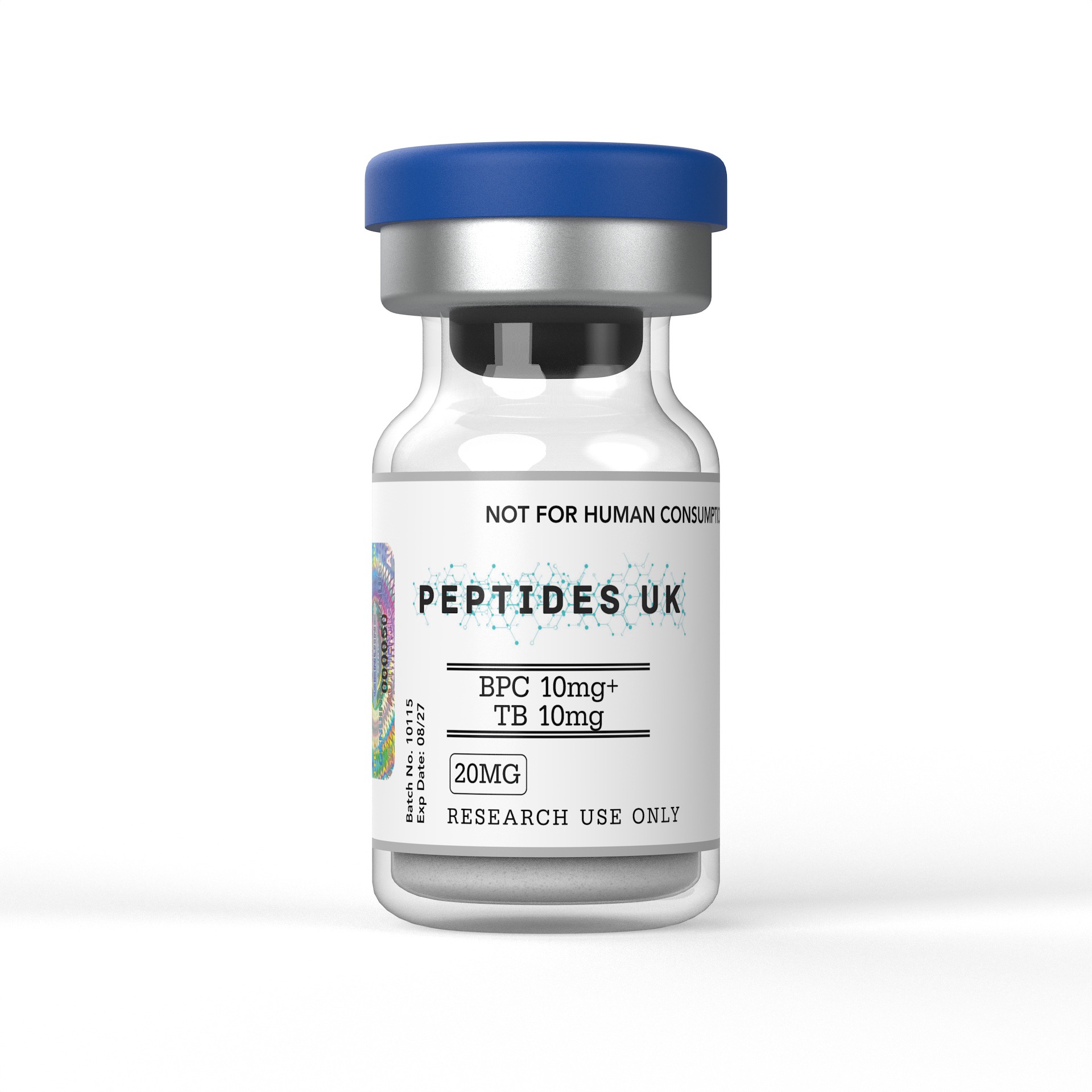
Wolverine Stack — BPC-157 5mg + TB-500 5mg pre-formulated tissue-repair research blend. HPLC-verified purity on the finished blend, per-batch COA. Fast Ireland delivery.
For laboratory research use only. Not for human or veterinary use.



The Wolverine Stack . Combining BPC-157, TB-500, and Pentadecapeptide , is a precisely formulated three-compound research combination built around the most extensively studied peptides in tissue repair, regenerative biology, and musculoskeletal healing research , available to buy in Ireland with fast dispatch and full batch documentation included.
The Wolverine Stack brings together the complementary and mechanistically distinct repair biology of BPC-157’s multi-tissue cytoprotection, TB-500’s systemic angiogenesis and cell migration promotion, and Pentadecapeptide’s connective tissue and collagen repair activity , creating a research combination that provides broader and deeper mechanistic coverage of the tissue repair cascade than any single compound alone, Researchers and institutions across Ireland can source the verified, research-grade Wolverine Stack directly from our Irish peptide supply, with domestic-speed dispatch and complete batch documentation for each compound.
✅ ≥99% Purity , HPLC & Mass Spectrometry Verified
✅ Batch-Specific Certificate of Analysis (CoA) Included per Compound
✅ Sterile Lyophilised Powder | GMP Manufactured
✅ Fast Dispatch to Ireland | Peptides Ireland Stock
The Wolverine Stack is a three-peptide research combination formulated to provide comprehensive mechanistic coverage across the major biological pathways involved in tissue repair, musculoskeletal healing, and regenerative biology research . Named for the rapid, multi-tissue repair profile its component peptides collectively represent in pre-clinical research literature.
BPC-157 (Body Protection Compound-157) is a synthetic 15-amino acid peptide derived from a partial sequence of human gastric juice protein and Body Protection Compound, One of the most versatile and extensively studied tissue repair peptides in pre-clinical research, BPC-157 has been documented across an extraordinary range of tissue types — tendon, ligament, muscle, bone, gut, nervous system, and vascular tissue and through mechanisms involving angiogenesis promotion via VEGF upregulation, growth factor receptor sensitisation, nitric oxide signalling modulation, and direct cytoprotective pathway activation. Its breadth of pre-clinical repair documentation across tissue types is unmatched among research peptides.
TB-500 (Thymosin Beta-4 Fragment) is a synthetic analogue of the most biologically active region of Thymosin Beta-4 . Centred on the actin-binding tetrapeptide sequence LKKTETQ. TB-500 promotes tissue repair through a mechanistically distinct pathway from BPC-157 , driving endothelial and progenitor cell migration through actin polymerisation regulation, stimulating new blood vessel formation, and modulating inflammatory signalling in healing tissues. Its systemic pro-angiogenic and cell migration-promoting activity complements BPC-157’s local cytoprotective and growth factor signalling mechanisms and providing additive coverage of the repair cascade.
Pentadecapeptide . Also referred to in research as a stabilised pentadecapeptide sequence , contributes targeted connective tissue repair biology to the stack, with pre-clinical research documenting specific activity in collagen synthesis stimulation, tendon and ligament healing, and extracellular matrix remodelling , extending the Wolverine Stack’s connective tissue repair research profile beyond the established BPC-157 and TB-500 literature into the specialised domain of structural tissue biology.
Together the three compounds provide a research combination spanning angiogenesis, cell migration, cytoprotection, growth factor signalling, collagen synthesis, extracellular matrix remodelling, and inflammatory resolution and the key biological processes that collectively constitute the tissue repair cascade in pre-clinical research models.
Tendon and Ligament Repair Research . BPC-157 is among the most extensively studied peptides for tendon and ligament healing in pre-clinical research . With studies documenting accelerated tendon-to-bone healing, improved collagen fibril organisation, enhanced biomechanical recovery, and upregulation of growth factor receptors including VEGFR2 and FGFR2 in treated connective tissue models. Tendon repair represents the most consistently documented musculoskeletal research application in the BPC-157 literature.
Muscle Repair Research . Studies have examined BPC-157’s effects on skeletal muscle injury healing , documenting accelerated muscle fibre regeneration, reduced inflammatory infiltration, and improved functional recovery in muscle crush and laceration models. Research has examined the role of nitric oxide signalling and growth factor receptor upregulation in BPC-157’s muscle repair activity.
Bone Healing Research . Pre-clinical fracture studies have examined BPC-157’s effects on bone repair — documenting accelerated callus formation, improved mineralisation, and enhanced biomechanical bone strength in treated fracture models , extending its repair research profile into the skeletal biology domain and contributing to the Wolverine Stack’s comprehensive musculoskeletal coverage.
Angiogenesis and VEGF Research and BPC-157 promotes new blood vessel formation through VEGF upregulation and VEGFR2 sensitisation , with studies documenting angiogenic activity in healing tissues that contributes to the restored vascular supply essential for tissue repair. This pro-angiogenic mechanism operates in parallel with TB-500’s actin-driven endothelial cell migration approach and providing complementary vascular biology coverage.
Gut and Mucosal Protection Research , BPC-157’s most established and longest-studied research application is gastrointestinal cytoprotection , with decades of pre-clinical data documenting protective effects on gastric mucosa, intestinal epithelium, and gut barrier integrity across ulcer, colitis, NSAID-injury, and surgical anastomosis models. This gut biology research profile is the most mechanistically characterised aspect of BPC-157’s biology.
Neuroprotection Research . Pre-clinical studies have examined BPC-157 in models of brain injury, spinal cord trauma, and peripheral nerve damage . Documenting improved neurological recovery, reduced neural tissue damage markers, and enhanced nerve regeneration in treated models, reflecting the broad systemic repair applicability of BPC-157 beyond musculoskeletal and gastrointestinal tissue contexts.
Nitric Oxide Signalling Research , BPC-157 modulates nitric oxide (NO) pathway activity , with studies examining how NO signalling contributes to its vasodilatory, cytoprotective, and repair-promoting properties, and how BPC-157 affects eNOS expression and NO production in vascular and tissue repair models.
Actin Regulation and Cell Migration Research , TB-500’s LKKTETQ actin-binding sequence promotes cell migration by modulating actin polymerisation dynamics in endothelial cells, keratinocytes, and progenitor cell populations and accelerating the migration of repair-relevant cells into injury sites. This actin-regulation mechanism is mechanistically distinct from BPC-157’s growth factor receptor approach and provides complementary coverage of the cellular recruitment phase of tissue repair.
Pro-Angiogenic Research and TB-500 is one of the most potent pro-angiogenic research peptides studied pre-clinically . Driving new blood vessel formation through endothelial cell migration and proliferation promotion. Studies have documented angiogenic activity across wound healing, cardiac, and musculoskeletal repair models , establishing vascular biology as a central and consistent feature of TB-500’s repair research profile alongside BPC-157’s complementary VEGF-driven angiogenic activity.
Cardiac Repair Research and TB-500 has a well-documented cardiac repair research profile — with pre-clinical studies examining its effects in myocardial infarction and cardiac ischaemia models, documenting improved cardiac function parameters, enhanced cardiomyocyte survival, activation of cardiac progenitor cells, and reduced infarct size in treated animals. This cardiac biology emphasis distinguishes TB-500’s research profile from BPC-157 and extends the Wolverine Stack’s repair coverage into cardiac tissue.
Musculoskeletal Repair Research and Pre-clinical musculoskeletal studies have examined TB-500’s effects on tendon, ligament, and muscle repair , documenting accelerated healing, improved tissue organisation, and enhanced biomechanical properties in treated models, complementing and extending BPC-157’s musculoskeletal repair research profile through a distinct cell migration and angiogenesis mechanism.
Anti-Inflammatory Research , TB-500 modulates inflammatory signalling in healing tissues , with studies documenting reductions in pro-inflammatory cytokine levels and inflammatory cell infiltration in treated injury models, contributing to the inflammatory resolution phase of tissue repair that’s essential for organised regenerative healing rather than fibrotic scar formation.
Neural Repair Research , Studies have examined TB-500 in neural injury models with research documenting neuroprotective and neuroregenerative effects including improved recovery in spinal cord and peripheral nerve injury models, contributing to the Wolverine Stack’s neural repair research dimension alongside BPC-157’s documented neuroprotective activity.
Collagen Synthesis and Organisation Research and Pentadecapeptide contributes targeted collagen synthesis stimulation to the Wolverine Stack , with pre-clinical research documenting effects on collagen production, fibril organisation, and extracellular matrix composition in connective tissue healing models. This collagen biology activity provides structural repair depth to the stack’s overall connective tissue research profile.
Tendon and Ligament Biology Research , Pre-clinical studies have examined Pentadecapeptide’s specific activity in tendon and ligament repair and documenting improvements in healing quality, collagen architecture, and mechanical properties in treated connective tissue models, contributing specialised connective tissue repair research coverage that complements BPC-157’s and TB-500’s broader multi-tissue repair profiles.
Extracellular Matrix Remodelling Research , Pentadecapeptide has been studied for effects on extracellular matrix biology and including the regulation of matrix metalloproteinases and matrix protein synthesis , contributing to research on the remodelling phase of connective tissue healing that determines the long-term structural and functional quality of repaired tissue.
Fibroblast Biology Research , Studies have examined Pentadecapeptide’s effects on fibroblast activity , the primary cell type responsible for collagen production and connective tissue repair and documenting influences on fibroblast proliferation, migration, and collagen synthetic activity in cell-based and pre-clinical tissue repair models.
BPC-157 . The Broadest Pre-Clinical Repair Profile of Any Research Peptide and BPC-157 has accumulated one of the most extensive pre-clinical repair research bibliographies of any peptide in the literature . With peer-reviewed studies spanning gastrointestinal, musculoskeletal, neural, vascular, and bone repair contexts consistently documenting accelerated healing, cytoprotection, and improved recovery parameters across an unmatched range of tissue types. Its stability in biological environments , including documented oral bioavailability in pre-clinical models and and multi-tissue applicability have made it the most broadly referenced repair peptide in pre-clinical regenerative research.
TB-500 and Established Cardiac and Systemic Repair Profile and Pre-clinical studies have consistently documented TB-500’s tissue repair-promoting, pro-angiogenic, and anti-inflammatory effects across cardiac, musculoskeletal, dermal, and neural injury models , with cardiac studies reporting improved heart function, cardiomyocyte survival, and reduced infarct size following ischaemic injury in TB-500-treated models. The LKKTETQ actin-binding mechanism has been confirmed as the active core of Thymosin Beta-4’s biological activity, and TB-500’s effects in multiple tissue repair contexts are well-supported by pre-clinical evidence.
Complementary and Non-Overlapping Mechanisms . Research supports the mechanistic rationale for combining BPC-157, TB-500, and Pentadecapeptide in the Wolverine Stack and with each compound contributing through distinct and non-redundant pathways: BPC-157 through growth factor receptor upregulation, VEGF signalling, and nitric oxide modulation; TB-500 through actin-driven cell migration and endothelial proliferation; and Pentadecapeptide through targeted collagen synthesis and extracellular matrix biology. The combination provides mechanistic depth across the full tissue repair cascade that no single compound alone achieves.
| Feature | Wolverine Stack | BPC-157 Alone | TB-500 Alone | Glow Stack |
|---|---|---|---|---|
| Angiogenesis Coverage | Maximum , BPC-157 VEGF + TB-500 actin/endothelial | High , VEGF driven | High , actin/endothelial driven | High . TB-500 + BPC-157 |
| Musculoskeletal Repair | Maximum , three complementary mechanisms | Very High | High | High |
| Collagen / ECM Research | Very High , Pentadecapeptide primary + BPC support | Moderate | Low | Very High , GHK-Cu primary |
| Cardiac Repair Research | High , TB-500 primary | Moderate | Very High | Moderate |
| Gut Biology Research | High , BPC-157 primary | Very High | Low | Moderate |
| Neural Repair Research | Very High , BPC-157 + TB-500 combined | High | Moderate | Moderate |
| Skin / Ageing Research | Moderate | Moderate | Moderate | Very High and GHK-Cu primary |
| Research Focus | Maximum musculoskeletal / systemic repair | Broadest single-compound repair tool | Cardiac / angiogenic / systemic repair | Regenerative / skin / collagen biology |
| Parameter | Detail |
|---|---|
| Name | BPC-157 (Body Protection Compound-157) |
| Length | 15 amino acids |
| Mechanism | VEGF upregulation / growth factor receptor sensitisation / NO signalling / cytoprotection |
| Purity | ≥99% HPLC & MS Verified |
| Form | Sterile Lyophilised Powder |
| Storage | -20°C, protect from light |
| Parameter | Detail |
|---|---|
| Name | TB-500 (Thymosin Beta-4 Fragment) |
| Active Sequence | LKKTETQ |
| Mechanism | Actin regulation / cell migration / angiogenesis / anti-inflammatory |
| Purity | ≥99% HPLC & MS Verified |
| Form | Sterile Lyophilised Powder |
| Storage | -20°C, protect from light |
| Parameter | Detail |
|---|---|
| Name | Pentadecapeptide |
| Length | 15 amino acids |
| Mechanism | Collagen synthesis / connective tissue repair / ECM remodelling |
| Purity | ≥99% HPLC & MS Verified |
| Form | Sterile Lyophilised Powder |
| Storage | -20°C, protect from light |
Every Wolverine Stack order includes full documentation for all three compounds:
✅ Batch-Specific Certificate of Analysis (CoA) . BPC-157, TB-500, Pentadecapeptide
✅ HPLC Chromatogram , all three compounds
✅ Mass Spectrometry Confirmation . All three compounds
✅ Sterility & Endotoxin Testing Report
✅ Reconstitution Protocol for each peptide
✅ Technical Research Support
Can I buy the Wolverine Stack in Ireland? Yes , we supply the research-grade Wolverine Stack to researchers and institutions across Ireland with fast dispatch and full batch documentation for all three compounds. This stack is supplied strictly for laboratory research purposes only.
What is the Wolverine Stack and why combine these three peptides? The Wolverine Stack combines BPC-157, TB-500, and Pentadecapeptide to provide comprehensive mechanistic coverage across the major biological pathways of tissue repair research and angiogenesis, cell migration, cytoprotection, growth factor signalling, collagen synthesis, and extracellular matrix remodelling. Each compound contributes a distinct and non-overlapping mechanism, creating a research combination with greater depth and breadth than any single repair peptide alone. The stack is specifically oriented towards musculoskeletal, connective tissue, and systemic repair biology research.
How does the Wolverine Stack differ from the Glow Stack? Both stacks include BPC-157 and TB-500, but differ in their third component and overall research orientation. The Wolverine Stack replaces GHK-Cu with Pentadecapeptide . Shifting the emphasis from skin biology, collagen stimulation, and anti-ageing research towards musculoskeletal repair, connective tissue healing, and structural tissue regeneration research. The Glow Stack is oriented towards skin biology, wound healing, and regenerative aesthetics research, while the Wolverine Stack is oriented towards comprehensive musculoskeletal and systemic tissue repair research.
What makes BPC-157 and TB-500 complementary rather than redundant? BPC-157 and TB-500 both promote tissue repair and angiogenesis but through entirely different mechanisms. BPC-157 works primarily through growth factor receptor upregulation . Sensitising cells to VEGF, FGF, and EGF and alongside nitric oxide signalling modulation and direct cytoprotective pathway activation. TB-500 works through actin regulation , binding G-actin and promoting endothelial and progenitor cell migration through cytoskeletal dynamics, driving cell recruitment into repair sites through a pathway completely independent of growth factor receptor signalling. This mechanistic independence is the basis for their complementarity and the rationale for including both in the Wolverine Stack.
What does Pentadecapeptide add to the stack that BPC-157 and TB-500 don’t provide? Pentadecapeptide contributes targeted connective tissue biology , specifically collagen synthesis stimulation, extracellular matrix remodelling, and fibroblast activation , that represents a specialised repair dimension not primarily covered by BPC-157’s cytoprotective and growth factor signalling profile or TB-500’s angiogenesis and cell migration biology. For research specifically examining connective tissue structural repair quality , including collagen architecture, ECM composition, and the biomechanical properties of healed tissue — Pentadecapeptide extends the stack’s mechanistic coverage into the structural biology of the repair process.
What purity is recommended for Wolverine Stack research? ≥99% purity is strongly recommended for all three compounds , especially for tissue repair assays, angiogenesis models, collagen synthesis studies, and in vivo pre-clinical musculoskeletal research where compound quality directly affects biological activity measurements and experimental reproducibility. All Wolverine Stack compounds are independently verified to ≥99%.
How do I reconstitute the Wolverine Stack peptides for laboratory use? Allow each vial to reach room temperature before opening. BPC-157, TB-500, and Pentadecapeptide all reconstitute in sterile water or bacteriostatic water , add solvent slowly down the inside wall of each vial and swirl gently without shaking. Prepare each compound as a separate stock solution and combine at working concentration as specified by your research protocol. Use promptly after reconstitution or aliquot and store at -80°C to preserve peptide integrity and biological activity across multiple experimental uses.
BPC-157, TB-500, and Pentadecapeptide are supplied exclusively for legitimate scientific research purposes conducted within licensed laboratory environments. These products aren’t intended for human consumption, self-administration, or any therapeutic application. They must be handled by qualified researchers in compliance with applicable Irish and EU regulations and institutional ethics guidelines. By purchasing, you confirm that these compounds will be used solely for approved in-vitro or pre-clinical research purposes.
Wolverine Stack isn’t authorised as a medicine by the HPRA. It’s legal to buy, hold and use as a research chemical for in-vitro laboratory work, and that’s the only use we supply it for. If you want the full regulatory picture, see our Irish researcher’s guide to peptide legality.
Every vial ships with an HPLC purity trace (often ≥99%), mass-spec identity confirmation, and endotoxin/heavy-metal screening on the batch. The full per-batch Certificate of Analysis is available on request from research@peptideslabireland.com. Our quality system is ISO 9001 certified and third-party testing runs through a UKAS-accredited lab.
Standard protocol: let the Wolverine Stack vial and your bacteriostatic water come to room temperature, wipe both stoppers with a 70% isopropyl swab, then inject the water slowly down the side wall of the peptide vial. Don’t stream directly onto the powder cake. Swirl gently, don’t shake, and give it five to ten minutes to fully dissolve. Label the vial with compound, concentration and reconstitution date, store at 2–8°C between assays.
Same-day dispatch on orders placed before 2pm on a working day. Delivery is 24–48 hours to any Irish county via An Post Express or DPD. Cold chain is preserved with insulated wrap plus gel pack. No customs step, no border delays , because it never leaves Ireland.
In the Irish research space Wolverine Stack tends to appear in muscle-cell hypertrophy and satellite-cell activation research. It’s often paired with IGF-1 or CJC-1295 when researchers are studying combined mechanisms rather than the compound alone.
Lyophilised Wolverine Stack is stable at ≤-20°C long-term. Once reconstituted, keep it refrigerated at 2–8°C and use within the working shelf life described on the CoA. Freeze/thaw cycles degrade peptides, so aliquot the reconstituted solution if you plan to run assays over several weeks.


Receive News