PRODUCTS SOLD ON PEPTIDESLABIRELAND.COM ARE FOR RESEARCH PURPOSES ONLY AND ARE NOT FOR HUMAN OR VETERINARY USE.
Fast Ireland delivery — dispatched to Dublin, Cork, Galway, Limerick and nationwide.
€150.00
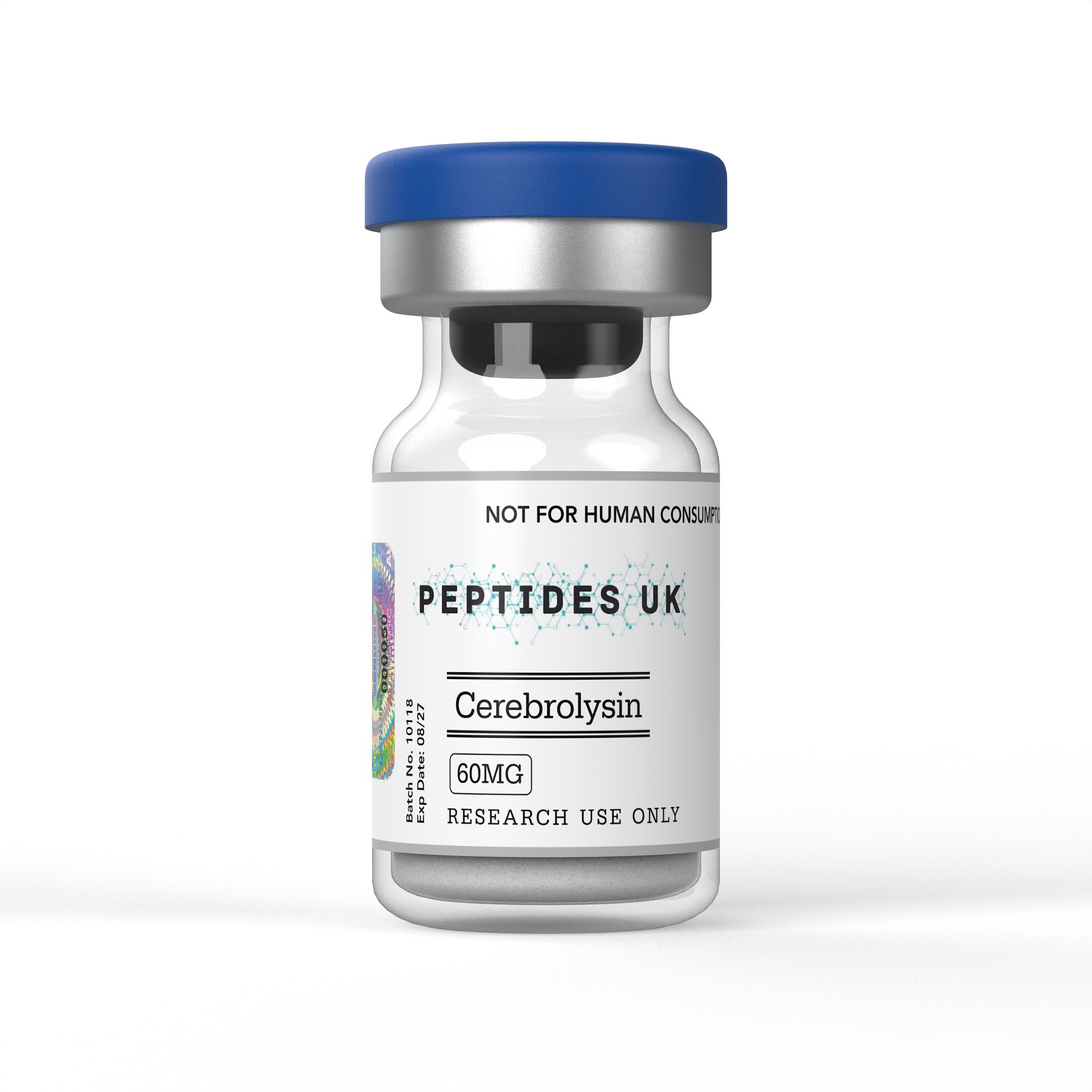
Cerebrolysin — porcine-derived neurotrophic peptide complex studied in neuroscience and neuroprotection research. HPLC-verified per-batch COA. Fast Ireland delivery.
For laboratory research use only. Not for human or veterinary use.

Cerebrolysin is a standardised, porcine brain-derived peptide mixture containing low-molecular-weight neuropeptides and amino acids that mimic the action of endogenous neurotrophic factors , one of the most clinically studied and longest-established compounds in neuroprotection, neuroregeneration, and cognitive research , available to buy in Ireland with fast dispatch and full batch documentation included.
Cerebrolysin is a uniquely positioned neuroscience research compound and not a single synthetic peptide but a highly standardised biological preparation containing a defined mixture of small peptide fragments and free amino acids derived from purified porcine brain protein, with decades of clinical and pre-clinical research documenting neurotrophic, neuroprotective, neuroplastic, and cognitive-enhancing biological activity across many neurological research contexts, Researchers and institutions across Ireland can source verified, research-grade Cerebrolysin directly from our Irish supply, with domestic-speed dispatch and complete batch documentation.
✅ Standardised Biological Preparation and Batch Consistency Verified
✅ Batch-Specific Certificate of Analysis (CoA) Included
✅ Sterile Solution | GMP Manufactured
✅ Fast Dispatch to Ireland | Peptides Ireland Stock
Cerebrolysin is a standardised aqueous solution of low-molecular-weight peptides and free amino acids produced through controlled enzymatic hydrolysis of purified porcine brain proteins. Approximately 25% of its composition by dry weight consists of active low-molecular-weight peptide fragments and all below 10,000 daltons and the majority below 1,000 daltons . With the remaining 75% comprising free amino acids released during the hydrolysis process. This small peptide and amino acid composition is critical to Cerebrolysin’s biological profile: the low molecular weight of its active components allows them to cross the blood-brain barrier and reach central nervous system tissue following systemic administration, a property that distinguishes Cerebrolysin from intact neurotrophic proteins such as NGF, BDNF, or CNTF which can’t efficiently cross the BBB when administered peripherally.
Cerebrolysin’s biological activity closely parallels that of endogenous neurotrophic factors , the family of proteins that support neuronal survival, differentiation, axonal growth, synaptic plasticity, and cognitive function. Research has documented that Cerebrolysin activates signalling pathways associated with BDNF, NGF, VEGF, and other neurotrophic factors and without being any single one of these proteins, but rather a complex mixture whose collective activity produces a neurotrophic-like biological effect through multiple simultaneous pathway engagements.
The compound has been manufactured and clinically studied for over five decades . Predominantly through European and Asian research programmes , generating one of the largest bodies of clinical neurological research data of any neuropeptide preparation, spanning stroke, traumatic brain injury, Alzheimer’s disease, vascular dementia, and cognitive impairment research. This clinical research depth, combined with extensive pre-clinical mechanistic data, gives Cerebrolysin a uniquely substantiated research profile compared to most single-compound neuropeptide research tools.
In controlled laboratory, pre-clinical, and clinical research settings, Cerebrolysin is studied across an exceptionally wide range of neurological, cognitive, and neuroprotective research applications:
Neurotrophic Factor Mimicry Research , Cerebrolysin’s defining research property is its ability to activate neurotrophic factor signalling pathways , including BDNF/TrkB, NGF/TrkA, and related receptor tyrosine kinase pathways and despite not being a single defined neurotrophic protein. Studies have examined which specific peptide components of the Cerebrolysin mixture are responsible for neurotrophic pathway activation, how the collective peptide mixture compares to individual recombinant neurotrophic factors in biological activity assays, and what mechanisms underlie the neurotrophic-like effects of the complex mixture . Establishing neurotrophic factor mimicry as the central mechanistic framework for Cerebrolysin research.
Neuroprotection Research . Cerebrolysin has been studied extensively for neuroprotective effects across many cell-based and pre-clinical injury models , including excitotoxicity, oxidative stress, ischaemia-reperfusion, and traumatic injury models. Studies have documented protection of neuronal populations from cell death following various insults, examined the signalling mechanisms underlying neuroprotection, and explored how neurotrophic pathway activation by Cerebrolysin translates into improved neuronal survival in challenged conditions.
Stroke and Cerebral Ischaemia Research , Stroke is the most extensively studied clinical indication in the Cerebrolysin research literature and with a large body of pre-clinical and clinical studies examining Cerebrolysin’s effects on infarct size, neurological deficit, functional recovery, and neuroplasticity following ischaemic brain injury. Pre-clinical stroke studies have documented reduced infarct volumes, improved neurological scores, and enhanced post-stroke neuroregeneration in Cerebrolysin-treated models , and this pre-clinical data has supported multiple clinical trial programmes in ischaemic stroke recovery research.
Alzheimer’s Disease Research , Cerebrolysin has been studied in Alzheimer’s disease pre-clinical models and clinical trials , examining effects on amyloid precursor protein processing, tau phosphorylation, neuroinflammation, synaptic density, and cognitive performance. Pre-clinical Alzheimer’s model research has documented reductions in amyloid plaque burden, decreased tau pathology markers, and improved cognitive performance in Cerebrolysin-treated animals and alongside clinical trial data examining cognitive and functional outcomes in Alzheimer’s disease patient research programmes.
Traumatic Brain Injury Research , Pre-clinical and clinical studies have examined Cerebrolysin in traumatic brain injury models and patient populations . With research documenting effects on neuronal survival, axonal regeneration, neuroinflammatory responses, and functional recovery following traumatic brain injury, reflecting the neurotrophic and neuroprotective biological profile that makes Cerebrolysin relevant across multiple acute brain injury research contexts.
Neuroplasticity and Synaptic Research . Studies have examined Cerebrolysin’s effects on synaptic density, dendritic branching, long-term potentiation, and the structural and functional markers of neuroplasticity in pre-clinical models , with research documenting increases in synaptic protein expression, dendritic complexity, and synaptic plasticity markers in Cerebrolysin-treated brain tissue, contributing to the understanding of how neurotrophic factor-like signalling drives structural neuroplasticity.
Adult Neurogenesis Research and Cerebrolysin has been studied for effects on adult neurogenesis and particularly hippocampal neurogenesis and in pre-clinical models, with research examining neural progenitor cell proliferation, new neuron survival, and neurogenic zone activity following Cerebrolysin treatment. This neurogenesis-promoting research profile connects Cerebrolysin to the broader literature on neurotrophic support of adult brain plasticity.
Cognitive Function Research , Pre-clinical and clinical studies have examined Cerebrolysin’s effects on cognitive performance . Including memory, learning, attention, and executive function , across both healthy and cognitively impaired research models. Pre-clinical studies have documented improvements in spatial memory and learning task performance, while clinical research has examined cognitive endpoints in Alzheimer’s disease, vascular dementia, and age-associated cognitive impairment research programmes.
Vascular Dementia Research and Beyond Alzheimer’s disease, Cerebrolysin has been studied in the context of vascular dementia . Examining effects on cerebrovascular biology, white matter integrity, cognitive function, and the pathological consequences of chronic cerebral hypoperfusion in pre-clinical and clinical vascular dementia research models.
Neuroinflammation Research , Studies have examined Cerebrolysin’s modulation of neuroinflammatory pathways , including microglial activation, pro-inflammatory cytokine production in brain tissue, and the neuroinflammatory response to injury and disease , contributing to research on how neurotrophic factor signalling intersects with neuroinflammation biology in acute and chronic neurological disease models.
Axonal Regeneration and Neural Repair Research . Pre-clinical studies have examined Cerebrolysin’s effects on axonal sprouting, nerve fibre regeneration, and structural neural repair following injury . With research documenting enhanced axonal growth, improved myelination markers, and better anatomical recovery in Cerebrolysin-treated injury models, reflecting its neurotrophic support of the structural repair processes that underlie functional neurological recovery.
Parkinson’s Disease Research , Pre-clinical Parkinson’s disease models have been used to examine Cerebrolysin’s effects on dopaminergic neuron survival, neuroinflammatory pathology, and motor function . With research examining whether neurotrophic pathway activation by Cerebrolysin can protect dopaminergic neuronal populations from toxic insult in models relevant to Parkinson’s disease pathology.
Cerebrolysin has one of the most extensive research bibliographies of any neuropeptide preparation . Spanning pre-clinical mechanistic studies, animal model data, and a substantial body of human clinical trial research:
Neurotrophic Pathway Activation Confirmed , Biochemical and cell-based studies have confirmed that Cerebrolysin activates BDNF/TrkB and NGF/TrkA signalling pathways in neuronal cell models , with research documenting TrkB phosphorylation, downstream MAPK and PI3K/Akt pathway activation, and upregulation of neurotrophic target genes following Cerebrolysin treatment, providing the molecular basis for its neurotrophic-like biological activity.
Neuroprotection in Multiple Pre-Clinical Models , Pre-clinical research has consistently documented neuroprotective effects of Cerebrolysin across excitotoxicity, oxidative stress, ischaemia, and traumatic injury models . With studies reporting improved neuronal survival, reduced cell death markers, and enhanced recovery parameters in treated models. This multi-model neuroprotection profile is one of the most consistently replicated findings in the Cerebrolysin pre-clinical literature.
Significant Effects in Stroke Pre-Clinical Research and Pre-clinical stroke studies have reported reduced infarct volumes, improved neurological deficit scores, and enhanced post-stroke neuroplasticity in Cerebrolysin-treated animals and with mechanistic research examining how neurotrophic pathway activation, anti-apoptotic signalling, and neurogenesis stimulation contribute to the observed neuroprotective and recovery-promoting effects in ischaemic injury models.
Clinical Trial Data in Stroke Recovery . Multiple randomised controlled trials have examined Cerebrolysin in ischaemic stroke recovery , with a body of clinical research reporting improvements in neurological and functional outcome measures in Cerebrolysin-treated stroke patients compared to controls in several trial programmes, generating a clinical evidence base that’s larger than that of virtually any other neuropeptide research preparation.
Alzheimer’s Disease Clinical and Pre-Clinical Data and Clinical trials in Alzheimer’s disease have reported improvements in cognitive and global clinical assessment measures in Cerebrolysin-treated patients in several studies and alongside pre-clinical data documenting effects on amyloid pathology, tau phosphorylation, and synaptic density in Alzheimer’s model animals . Creating a translational research profile that spans from molecular mechanism to clinical outcome measurement.
Cognitive Enhancement in Pre-Clinical Models , Pre-clinical studies have consistently reported improvements in spatial memory, working memory, and learning performance in Cerebrolysin-treated rodent models and with improvements documented in both healthy animals and models of cognitive impairment, contributing to the research basis for Cerebrolysin’s relevance in cognitive biology research.
Blood-Brain Barrier Penetration Documented , Research has confirmed that Cerebrolysin’s low-molecular-weight peptide components cross the blood-brain barrier following systemic administration . With studies documenting CNS tissue distribution of labelled Cerebrolysin components and central biological activity following peripheral administration in pre-clinical models, validating the pharmacokinetic basis for its central neurobiological effects.
Safety Profile in Clinical Research and The extensive clinical trial database for Cerebrolysin , accumulated across stroke, dementia, and TBI research programmes over decades . Provides a tolerability and safety profile dataset that’s substantially larger than that available for most single neuropeptide research compounds, with trials generally reporting a favourable safety profile across the studied patient populations.
| Feature | Cerebrolysin | P21 | Semax | Dihexa |
|---|---|---|---|---|
| Type | Standardised porcine brain peptide mixture | Synthetic CNTF fragment | Synthetic ACTH fragment | Synthetic angiotensin IV analogue |
| Composition | Complex mixture , low MW peptides + amino acids | Single defined peptide | Single defined peptide | Single defined synthetic compound |
| Neurotrophic Mechanism | Multi-pathway . BDNF/TrkB, NGF/TrkA, VEGF mimicry | JAK-STAT3 / BDNF upregulation | BDNF upregulation / melanocortin | HGF/MET pathway / synaptogenesis |
| Clinical Research Data | Extensive , decades of stroke / dementia / TBI trials | Pre-clinical only | Pre-clinical / limited clinical | Pre-clinical only |
| Neurogenesis Research | High . Hippocampal neurogenesis documented | Very High . Primary research focus | Moderate | Moderate |
| Stroke / Injury Research | Very High . Most studied indication | Limited | Moderate | Limited |
| Alzheimer’s Research | Very High , clinical and pre-clinical data | High . Pre-clinical model data | Moderate | Moderate |
| Cognitive Research | Very High, Clinical and pre-clinical | Very High , pre-clinical | Very High , pre-clinical | Very High , pre-clinical |
| Key Distinction | Only neuropeptide preparation with extensive clinical trial database | Only CNTF-derived BBB-penetrant peptide | Most studied ACTH nootropic peptide | Most potent synaptogenic research compound |
Cerebrolysin occupies a unique position in neuropeptide research as the only preparation combining a complex multi-pathway neurotrophic activity profile with an extensive human clinical trial research database . Giving it translational research depth that no single synthetic neuropeptide currently matches.
| Parameter | Detail |
|---|---|
| Name | Cerebrolysin |
| Type | Standardised porcine brain-derived peptide mixture |
| Active Fraction | ~25% low-molecular-weight peptides (<10,000 Da) |
| Remaining Fraction | ~75% free amino acids |
| Mechanism | Multi-pathway neurotrophic factor mimicry . BDNF/TrkB, NGF/TrkA, VEGF signalling |
| Key Research Areas | Neuroprotection / stroke / Alzheimer’s / TBI / cognitive biology / neurogenesis |
| Blood-Brain Barrier | Penetrant , low MW peptide components confirmed |
| Form | Sterile aqueous solution |
| Storage | 2–8°C, protect from light and freezing |
| Manufacturing | GMP Manufactured |
Every order of Cerebrolysin in Ireland includes:
✅ Batch-Specific Certificate of Analysis (CoA)
✅ Standardisation and Composition Verification
✅ Sterility Testing Report
✅ Endotoxin Testing Report
✅ Usage and Handling Protocol
✅ Technical Research Support
Can I buy Cerebrolysin in Ireland? Yes , we supply research-grade Cerebrolysin to researchers and institutions across Ireland with fast dispatch and full batch documentation. This compound is supplied strictly for laboratory research purposes only.
What is Cerebrolysin and how is it different from single peptide research compounds? Cerebrolysin is a standardised biological preparation , not a single defined synthetic peptide, Produced by enzymatic hydrolysis of purified porcine brain proteins. It contains a complex mixture of low-molecular-weight peptides and free amino acids whose collective biological activity mimics multiple endogenous neurotrophic factors simultaneously. Unlike single peptide research tools that engage one specific receptor or pathway, Cerebrolysin activates multiple neurotrophic signalling pathways concurrently and giving it a broader and more complex neurobiological profile, alongside an extensive clinical research database that no single synthetic neuropeptide currently possesses.
Why does Cerebrolysin cross the blood-brain barrier when larger neurotrophic proteins can’t? Full-length neurotrophic proteins such as BDNF, NGF, and CNTF are large molecules that can’t efficiently cross the blood-brain barrier when administered systemically limiting their utility as CNS research tools via peripheral administration routes. Cerebrolysin’s active peptide components are all below 10,000 daltons . With the majority below 1,000 daltons , small enough to utilise peptide transport mechanisms at the blood-brain barrier and reach central nervous system tissue following systemic administration. This BBB penetrance is the pharmacokinetic basis for Cerebrolysin’s central neurobiological activity and is a key property confirmed in pre-clinical distribution studies.
What is the significance of Cerebrolysin’s clinical trial database for research? Cerebrolysin has been studied in human clinical trials across stroke recovery, Alzheimer’s disease, traumatic brain injury, and vascular dementia research programmes . Accumulating a clinical research database spanning decades and multiple countries that’s substantially larger than that of virtually any other neuropeptide preparation. This clinical data provides translational context for pre-clinical mechanistic research . Allowing laboratory findings to be interpreted against a background of human biological activity data and and gives Cerebrolysin a level of translational research validation that single synthetic neuropeptides studied only in pre-clinical models can’t currently match.
How does Cerebrolysin compare to P21 for neurogenesis and cognitive research? P21 and Cerebrolysin both promote hippocampal neurogenesis and upregulate BDNF signalling in pre-clinical models, but through different mechanistic approaches and with different research profiles. P21 acts through a single defined mechanism and CNTF receptor-mediated JAK-STAT3 activation , providing mechanistic clarity and a precisely defined pharmacological tool for studying CNTF-type neurotrophic biology. Cerebrolysin acts through multiple simultaneous neurotrophic pathways , providing broader neurobiological coverage and the translational weight of clinical trial data, but with greater mechanistic complexity. The two compounds are complementary research tools for different research questions in the neurogenesis and cognitive biology space.
How should Cerebrolysin be stored and handled? Cerebrolysin is supplied as a sterile aqueous solution , unlike lyophilised peptides it does not require reconstitution. It should be stored at 2–8°C protected from light and must not be frozen, as freezing can damage the biological activity of the peptide components. Don’t use if the solution appears cloudy, discoloured, or contains visible particles, Allow to reach room temperature before use in assay systems where temperature is relevant, and handle under sterile conditions to maintain solution integrity throughout the research programme.
What purity and standardisation verification is provided with Cerebrolysin orders? Every Cerebrolysin order includes batch-specific documentation confirming standardised peptide composition, sterility testing, and endotoxin testing , ensuring that each batch meets the research-grade quality standards required for reproducible neurobiological research. The standardisation of Cerebrolysin’s peptide profile across batches is a critical quality parameter that distinguishes research-grade supply from non-standardised preparations, and all Ireland stock is batch-verified before dispatch.
Cerebrolysin is supplied exclusively for legitimate scientific research purposes conducted within licensed laboratory environments. This product isn’t intended for human consumption, self-administration, or any therapeutic application. It must be handled by qualified researchers in compliance with applicable Irish and EU regulations and institutional ethics guidelines. By purchasing, you confirm that this compound will be used solely for approved in-vitro or pre-clinical research purposes.
Cerebrolysin isn’t authorised as a medicine by the HPRA. It’s legal to buy, hold and use as a research chemical for in-vitro laboratory work, and that’s the only use we supply it for. If you want the full regulatory picture, see our Irish researcher’s guide to peptide legality.
Every vial ships with an HPLC purity trace (typically ≥99%), mass-spec identity confirmation, and endotoxin/heavy-metal screening on the batch. The full per-batch Certificate of Analysis is available on request from research@peptideslabireland.com. Our quality system is ISO 9001 certified and third-party testing runs through a UKAS-accredited lab.
Standard protocol: let the Cerebrolysin vial and your bacteriostatic water come to room temperature, wipe both stoppers with a 70% isopropyl swab, then inject the water slowly down the side wall of the peptide vial. Don’t stream directly onto the powder cake. Swirl gently, don’t shake, and give it five to ten minutes to fully dissolve. Label the vial with compound, concentration and reconstitution date, store at 2–8°C between assays.
Same-day dispatch on orders placed before 2pm on a working day. Delivery is 24–48 hours to any Irish county via An Post Express or DPD. Cold chain is preserved with insulated wrap plus gel pack. No customs step, no border delays . Because it never leaves Ireland.
In the Irish research space Cerebrolysin tends to appear in neuroprotection, cognitive-pathway and neurotransmission research. It’s often paired with Semax or Selank when researchers are studying combined mechanisms rather than the compound alone.
Lyophilised Cerebrolysin is stable at ≤-20°C long-term, dessicated. Once reconstituted, keep it refrigerated at 2–8°C and use within the working shelf life described on the CoA. Freeze/thaw cycles degrade peptides, so aliquot the reconstituted solution if you plan to run assays over several weeks.

Receive News