PRODUCTS SOLD ON PEPTIDESLABIRELAND.COM ARE FOR RESEARCH PURPOSES ONLY AND ARE NOT FOR HUMAN OR VETERINARY USE.
Fast Ireland delivery — dispatched to Dublin, Cork, Galway, Limerick and nationwide.
€49.00
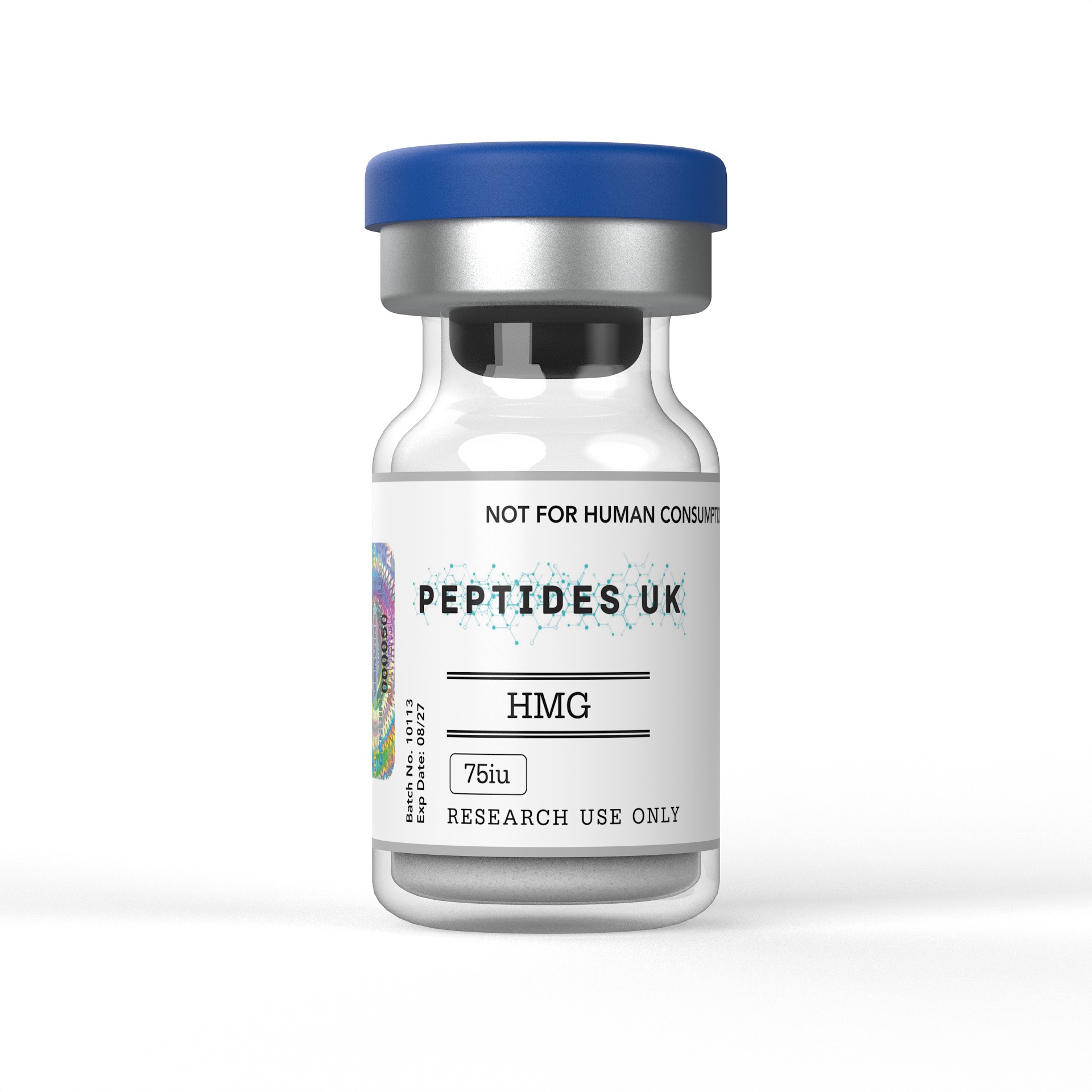
HMG (Human Menopausal Gonadotrophin) — glycoprotein research reference with FSH and LH activity. Studied in reproductive endocrinology and HPG-axis research. Per-batch COA. Fast Ireland delivery.
For laboratory research use only. Not for human or veterinary use.

HMG (Human Menopausal Gonadotropin) is a naturally derived gonadotropin preparation containing both FSH (Follicle-Stimulating Hormone) and LH (Luteinising Hormone) activity , one of the most extensively studied hormonal compounds in reproductive biology, fertility research, and gonadal function science, Available to buy in Ireland with fast dispatch and full batch documentation included.
HMG provides dual FSH and LH receptor stimulation in a single preparation , activating the two primary gonadotropin signalling pathways that collectively regulate follicular development, ovarian steroidogenesis, spermatogenesis, and the hormonal biology of the hypothalamic-pituitary-gonadal axis . Making it the most physiologically complete gonadotropin research tool available for studying the full spectrum of gonadal stimulation biology in pre-clinical and laboratory research settings, Researchers and institutions across Ireland can source verified, research-grade HMG directly from our Irish peptide supply, with domestic-speed dispatch and complete batch documentation.
✅ ≥99% Purity , HPLC & Mass Spectrometry Verified
✅ Batch-Specific Certificate of Analysis (CoA) Included
✅ Sterile Lyophilised Powder | GMP Manufactured
✅ Fast Dispatch to Ireland | Peptides Ireland Stock
HMG . Human Menopausal Gonadotropin and is a gonadotropin preparation originally derived from the urine of post-menopausal women, in whom the loss of negative feedback from declining ovarian oestrogen and inhibin causes a dramatic rise in pituitary FSH and LH secretion , resulting in markedly elevated gonadotropin concentrations in the urine that can be extracted, purified, and standardised for research and clinical use. Research-grade HMG is characterised by its combined FSH and LH biological activity , traditionally supplied in around equal FSH to LH activity ratios and providing simultaneous stimulation of both gonadotropin receptor systems in a single preparation.
FSH (Follicle-Stimulating Hormone) is a glycoprotein hormone produced by the anterior pituitary that acts on FSH receptors in the gonads and stimulating follicular development and granulosa cell function in the ovary, and supporting Sertoli cell function and spermatogenesis in the testis. FSH is the primary driver of folliculogenesis in females and an essential support hormone for sperm production in males.
LH (Luteinising Hormone) is a glycoprotein hormone produced by the anterior pituitary that acts on LH receptors in the gonads , stimulating theca cell androgen production and the LH surge-triggered ovulation in females, and driving Leydig cell testosterone synthesis in males. LH provides the steroidogenic stimulus that FSH alone can’t . Particularly the androgen and testosterone production that’s essential for complete gonadal function in both sexes.
Together, FSH and LH act in a coordinated and interdependent manner across the full biological programme of gonadal function , follicular development requires both FSH-driven granulosa cell activity and LH-driven theca cell androgen provision for aromatisation, while male reproductive function requires both FSH’s Sertoli cell support and LH’s Leydig cell testosterone stimulation. HMG’s combined FSH and LH activity makes it the most physiologically complete gonadotropin research tool for studying this coordinated biology.
In controlled laboratory and pre-clinical settings, HMG is studied across a broad range of reproductive biology, endocrinology, and gonadal function research applications:
Gonadotropin Receptor Pharmacology Research . HMG provides simultaneous FSH receptor and LH receptor stimulation . Making it a research tool for studying the combined pharmacology of dual gonadotropin receptor activation, comparing the downstream signalling consequences of FSH and LH co-stimulation versus selective receptor activation, and examining how the two receptor systems interact in coordinating gonadal cell biology. Studies have characterised cAMP-mediated signalling, steroidogenic enzyme induction, and gene expression changes driven by combined FSH and LH receptor stimulation in gonadal cell models.
Folliculogenesis and Ovarian Biology Research . HMG is one of the primary research tools for studying follicular development , the process by which primordial follicles are recruited, develop through primary and secondary stages, and mature into pre-ovulatory follicles capable of ovulation. Studies have examined how combined FSH and LH stimulation drives granulosa cell proliferation, theca cell androgen production, follicular fluid accumulation, and the sequential hormonal events of folliculogenesis in pre-clinical ovarian biology models.
Ovarian Steroidogenesis Research , The two-cell, two-gonadotropin model of ovarian steroidogenesis , in which LH drives theca cell androgen production and FSH drives granulosa cell aromatisation of androgens to oestrogens , is one of the most fundamental models in reproductive endocrinology, and HMG is the primary research tool for studying this coordinated steroidogenic biology. Studies have examined how combined gonadotropin stimulation affects oestradiol production, progesterone synthesis, and the hormonal output of follicular and luteal phase ovarian tissue.
Spermatogenesis and Male Reproductive Biology Research , HMG provides both the FSH signal for Sertoli cell function and the LH signal for Leydig cell testosterone production that together support complete spermatogenesis. Studies have used HMG to examine how combined gonadotropin stimulation affects testicular function and including Sertoli cell support of germ cell development, Leydig cell steroidogenesis, and the hormonal milieu of the testis required for complete sperm production in pre-clinical male reproductive biology models.
Hypothalamic-Pituitary-Gonadal Axis Research , HMG is used as a research tool for studying the hypothalamic-pituitary-gonadal (HPG) axis , the hormonal feedback system that regulates reproductive function through interactions between GnRH, gonadotropins, and gonadal sex steroids. Studies have examined how exogenous gonadotropin stimulation via HMG affects HPG axis feedback regulation, pituitary gonadotropin secretion patterns, and the neuroendocrine control of gonadal function in pre-clinical HPG axis research models.
Superovulation Research . HMG is used in pre-clinical superovulation protocols and stimulating multiple follicular development and ovulation in research animal models and for studies examining oocyte biology, embryo development, reproductive technology research, and the biological consequences of supraphysiological gonadotropin stimulation on ovarian function and oocyte quality.
Oocyte Biology and Maturation Research , Studies have examined how HMG-driven gonadotropin stimulation affects oocyte developmental competence, nuclear and cytoplasmic maturation, fertilisation capacity, and early embryo development , contributing to the fundamental understanding of how gonadotropin signalling quality affects oocyte biology in pre-clinical reproductive research models.
Granulosa Cell and Theca Cell Biology Research , HMG provides the primary hormonal stimuli for both the granulosa cell (FSH) and theca cell (LH) compartments of the ovarian follicle , making it a research tool for studying the biology of both cell types and their interactions in coordinating follicular development and steroidogenesis. Studies have used HMG to examine granulosa cell gene expression, luteinisation, and progesterone production alongside theca cell androgen synthesis and its regulation by LH signalling.
Leydig Cell Biology and Testosterone Research and The LH component of HMG is the primary stimulus for Leydig cell steroidogenesis , driving testosterone synthesis through cAMP-mediated activation of steroidogenic acute regulatory protein (StAR) and steroidogenic enzyme expression. Studies have examined how LH receptor signalling from HMG affects Leydig cell testosterone production, steroidogenic pathway regulation, and the hormonal consequences of Leydig cell stimulation in pre-clinical male endocrinology research.
Hypogonadism and Gonadal Insufficiency Research . HMG has been studied in the context of hypogonadotropic hypogonadism . A condition in which insufficient gonadotropin secretion leads to impaired gonadal function , with pre-clinical and clinical research examining how exogenous gonadotropin replacement with HMG restores gonadal steroidogenesis, gametogenesis, and reproductive function in gonadotropin-deficient models.
Polycystic Ovary Syndrome (PCOS) Research , HMG is used in pre-clinical PCOS research models and examining how altered gonadotropin sensitivity, follicular development abnormalities, and steroidogenic dysfunction in PCOS-relevant biological contexts respond to gonadotropin stimulation, contributing to the understanding of gonadotropin-related reproductive pathology in ovarian dysfunction research.
Ovarian Reserve and Ageing Research . Studies have examined how ovarian response to gonadotropin stimulation with HMG changes with reproductive ageing and documenting the decline in follicular response, oocyte quality, and steroidogenic capacity with age in pre-clinical models and contributing to research on ovarian reserve biology and the hormonal mechanisms underlying age-related reproductive decline.
HMG has one of the most extensive research and clinical application histories of any gonadotropin preparation in reproductive biology:
Dual Gonadotropin Activity Confirmed and Standardised . Decades of pharmacological research have confirmed and standardised HMG’s combined FSH and LH biological activity , with international unit (IU) standardisation against reference preparations enabling reproducible dosing across research programmes. Studies have characterised the receptor binding properties, downstream signalling profiles, and gonadal biological activity of both the FSH and LH components in standardised HMG preparations.
Folliculogenesis and Steroidogenesis Extensively Characterised , Pre-clinical research has characterised how HMG stimulation drives follicular development and ovarian steroidogenesis and documenting the sequential cellular events of folliculogenesis, the two-cell steroidogenic mechanism, and the hormonal output profile of gonadotropin-stimulated ovarian tissue across multiple pre-clinical species and model systems. This follicular biology research represents the most extensively characterised aspect of HMG’s pre-clinical research profile.
Spermatogenesis Restoration in Hypogonadal Models and Pre-clinical and clinical studies have documented HMG’s ability to restore spermatogenesis in gonadotropin-deficient models . With research reporting recovery of testicular function, Leydig cell steroidogenesis, and sperm production following HMG treatment in hypogonadotropic hypogonadism models, establishing the gonadotropin replacement rationale for combined FSH and LH activity in male reproductive biology research.
Superovulation Protocols Validated and Pre-clinical research has extensively validated HMG-based superovulation protocols across multiple research animal species . Documenting dose-response relationships, timing parameters, and biological outcomes of gonadotropin-driven multiple follicular development and ovulation, establishing HMG as a foundational tool in reproductive technology and oocyte biology research.
HPG Axis Feedback Characterised . Research has characterised how exogenous HMG administration affects HPG axis feedback and documenting suppression of endogenous gonadotropin secretion through steroid feedback, the consequences of gonadotropin stimulation on hypothalamic GnRH pulse patterns, and the neuroendocrine adaptations to exogenous gonadotropin exposure in pre-clinical HPG axis research models.
Clinical Fertility Research Database . HMG has been used in clinical fertility research programmes for decades and with a substantial body of clinical data examining its effects on ovarian stimulation, oocyte yield, fertilisation rates, and reproductive outcomes in clinical research contexts and providing translational research context that extends from pre-clinical mechanistic studies through to human reproductive biology data.
| Feature | HMG | Recombinant FSH (r-FSH) | Recombinant LH (r-LH) | hCG |
|---|---|---|---|---|
| Composition | FSH + LH combined | FSH only | LH only | LH receptor agonist — structurally distinct |
| Receptor Coverage | Dual , FSH-R + LH-R | FSH-R only | LH-R only | LH-R only (high affinity) |
| Steroidogenesis | Complete , theca + granulosa cell activation | Incomplete , granulosa only | Incomplete and theca / Leydig only | High , strong LH-R steroidogenic drive |
| Spermatogenesis | Complete support and FSH (Sertoli) + LH (Leydig) | Partial and Sertoli cell support only | Partial , Leydig cell support only | Leydig cell support only |
| Physiological Completeness | Highest , mirrors pituitary gonadotropin output | Partial | Partial | Partial , LH-type only |
| Research Application | Complete gonadal stimulation / HPG axis / reproductive biology | Isolated FSH biology / folliculogenesis | Isolated LH biology / steroidogenesis | Luteal support / Leydig stimulation / ovulation trigger |
| Key Research Distinction | Only preparation providing physiologically complete dual gonadotropin stimulation | Purest FSH research tool | Purest LH research tool | Longest-acting LH receptor agonist |
HMG is irreplaceable as a research tool for studying the coordinated biology of FSH and LH co-stimulation . The physiologically authentic gonadotropin signal that drives complete gonadal function . In ways that selective single-hormone preparations can’t replicate.
| Parameter | Detail |
|---|---|
| Name | HMG (Human Menopausal Gonadotropin) |
| Composition | FSH + LH combined biological activity |
| Activity Ratio | Approximately 1:1 FSH to LH activity (IU) |
| Receptor Targets | FSH receptor (FSH-R) + LH receptor (LH-R) |
| Primary Mechanism | Dual gonadotropin receptor activation and gonadal steroidogenesis and gametogenesis |
| Key Research Areas | Reproductive biology / folliculogenesis / steroidogenesis / spermatogenesis / HPG axis |
| Purity | ≥99% HPLC & MS Verified |
| Form | Sterile Lyophilised Powder |
| Solubility | Sterile water, bacteriostatic water |
| Storage (Powder) | 2–8°C or -20°C, protect from light |
| Storage (Reconstituted) | 2–8°C, use promptly |
| Manufacturing | GMP Manufactured |
Every order of HMG in Ireland includes:
✅ Batch-Specific Certificate of Analysis (CoA)
✅ HPLC Chromatogram
✅ Mass Spectrometry Confirmation
✅ Biological Activity Standardisation Report
✅ Sterility & Endotoxin Testing Report
✅ Reconstitution Protocol
✅ Technical Research Support
Can I buy HMG in Ireland? Yes . We supply research-grade HMG to researchers and institutions across Ireland with fast dispatch and full batch documentation. This compound is supplied strictly for laboratory research purposes only.
What is HMG and how does it differ from recombinant FSH or LH? HMG is a gonadotropin preparation containing both FSH and LH biological activity , derived originally from post-menopausal urine where elevated gonadotropin concentrations make extraction and purification practical. Unlike recombinant FSH or recombinant LH and which provide isolated single-hormone stimulation of one receptor type , HMG provides simultaneous stimulation of both FSH receptors and LH receptors, reproducing the physiologically authentic dual gonadotropin signal that the pituitary gland delivers to the gonads. This physiological completeness makes HMG the most relevant research tool for studying coordinated gonadal biology that depends on both receptor systems acting together.
What is the two-cell, two-gonadotropin model and why is HMG relevant to it? The two-cell, two-gonadotropin model is a foundational concept in ovarian biology describing how oestrogen biosynthesis in the ovarian follicle requires coordinated activity of two cell types responding to two different gonadotropins. LH acts on theca cells to stimulate androgen production , mainly androstenedione and testosterone . Which are then transferred to adjacent granulosa cells where FSH-driven aromatase activity converts them to oestrogens. Neither cell type alone can produce oestrogen . Both gonadotropin signals and both cell populations are required. HMG provides both the FSH and LH signals simultaneously, making it the natural research tool for studying this coordinated steroidogenic biology in its physiologically complete form.
Why does post-menopausal urine contain elevated gonadotropins? After the menopause, ovarian follicular activity ceases and oestrogen and inhibin production from the ovaries falls dramatically. In the normal reproductive years, oestrogen and inhibin suppress pituitary FSH and LH secretion through negative feedback and keeping gonadotropin levels in check. When this negative feedback is removed at menopause, the pituitary responds by dramatically increasing FSH and LH secretion in an attempt to stimulate gonadal activity . Resulting in markedly elevated circulating and urinary gonadotropin concentrations. Post-menopausal urine therefore provides a practical and abundant biological source of both FSH and LH for extraction and purification into standardised HMG preparations.
What is the difference between HMG and hCG in reproductive research? HMG provides both FSH and LH biological activity , stimulating both receptor types to support the full programme of follicular development, steroidogenesis, and gametogenesis. hCG (human Chorionic Gonadotropin) is structurally related to LH and acts selectively on LH receptors , with higher binding affinity and longer biological half-life than LH itself, making it useful as an ovulation trigger or sustained LH receptor agonist but providing no FSH receptor activity. In research contexts, HMG is used when complete dual gonadotropin stimulation is required, while hCG is used when prolonged or high-magnitude LH receptor activation alone is the research objective.
What purity is recommended for HMG research? ≥99% purity with confirmed FSH and LH biological activity standardisation is strongly recommended for gonadotropin receptor pharmacology, folliculogenesis studies, steroidogenesis assays, spermatogenesis research, and in vivo pre-clinical reproductive biology models where compound quality and activity consistency directly affect biological responses and experimental reproducibility. All HMG Ireland stock is independently verified to ≥99% with biological activity documentation.
How do I reconstitute HMG for laboratory use? Allow the vial to reach room temperature before opening. Reconstitute HMG in sterile water or bacteriostatic water by adding solvent slowly down the inside wall of the vial and swirling gently , don’t shake or vortex as this can denature the glycoprotein hormone components. HMG dissolves readily in aqueous solution. Use promptly after reconstitution, or store at 2–8°C for short-term use within 24–48 hours. For longer-term storage of reconstituted HMG, aliquot into single-use volumes and store at -20°C and avoid repeated freeze-thaw cycles which can reduce biological activity of the glycoprotein hormone components.
HMG (Human Menopausal Gonadotropin) is supplied exclusively for legitimate scientific research purposes conducted within licensed laboratory environments. This product isn’t intended for human consumption, self-administration, or any therapeutic application. It must be handled by qualified researchers in compliance with applicable Irish and EU regulations and institutional ethics guidelines. By purchasing, you confirm that this compound will be used solely for approved in-vitro or pre-clinical research purposes.
HMG isn’t authorised as a medicine by the HPRA. It’s legal to buy, hold and use as a research chemical for in-vitro laboratory work, and that’s the only use we supply it for. If you want the full regulatory picture, see our Irish researcher’s guide to peptide legality.
Every vial ships with an HPLC purity trace (often ≥99%), mass-spec identity confirmation, and endotoxin/heavy-metal screening on the batch. The full per-batch Certificate of Analysis is available on request from research@peptideslabuk.com. Our quality system is ISO 9001 certified and third-party testing runs through a UKAS-accredited lab.
Standard protocol: let the HMG vial and your bacteriostatic water come to room temperature, wipe both stoppers with a 70% isopropyl swab, then inject the water slowly down the side wall of the peptide vial. Don’t stream directly onto the powder cake. Swirl gently, don’t shake, and give it five to ten minutes to fully dissolve. Label the vial with compound, concentration and reconstitution date, store at 2–8°C between assays.
Same-day dispatch on orders placed before 2pm on a working day. Delivery is 24–48 hours to any Irish county via An Post Express or DPD. Cold chain is preserved with insulated wrap plus gel pack. No customs step, no border delays and because it never leaves Ireland.
In the Irish research space HMG tends to appear in growth-hormone axis and hypothalamic-pituitary signalling research. It’s often paired with Ipamorelin or CJC-1295 when researchers are studying combined mechanisms rather than the compound alone.
Lyophilised HMG is stable at ≤-20°C long-term. Once reconstituted, keep it refrigerated at 2–8°C and use within the working shelf life described on the CoA. Freeze/thaw cycles degrade peptides, so aliquot the reconstituted solution if you plan to run assays over several weeks.


Receive News