PRODUCTS SOLD ON PEPTIDESLABIRELAND.COM ARE FOR RESEARCH PURPOSES ONLY AND ARE NOT FOR HUMAN OR VETERINARY USE.
Fast Ireland delivery — dispatched to Dublin, Cork, Galway, Limerick and nationwide.
€80.00
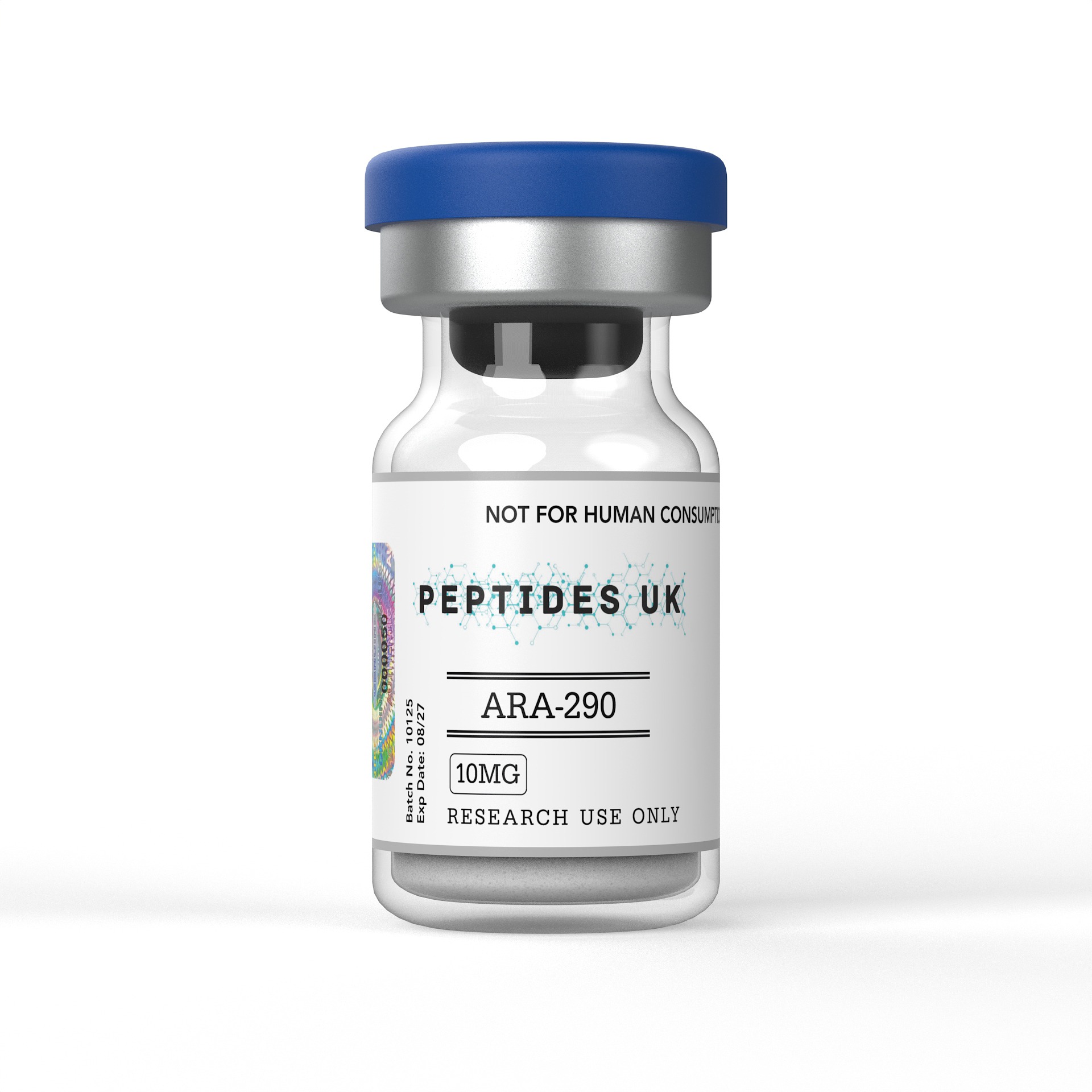
ARA-290 — synthetic 11 amino acid tissue-protective peptide derived from erythropoietin, studied in neuropathy and tissue-protective research models. HPLC-verified ≥99% purity, per-batch COA. Fast Ireland delivery.
For laboratory research use only. Not for human or veterinary use.


ARA-290 is a synthetic 11 amino acid peptide derived from the helix B surface of erythropoietin and one of the most precisely engineered innate repair receptor-targeting research peptides available to laboratories in Ireland , a non-haematopoietic EPO analogue designed to engage the tissue-protective receptor complex formed by the beta common receptor (βcR) and the EPO receptor without activating the classical homodimeric EPO receptor responsible for erythropoiesis, making it a uniquely targeted research tool for studying innate repair receptor pharmacology, neuroprotection mechanisms, peripheral neuropathy biology, anti-inflammatory signalling, metabolic tissue protection, and the tissue-protective arm of EPO biology that’s entirely separable from its red blood cell-producing haematopoietic function, Researchers and institutions across Ireland can source verified, research-grade ARA-290 directly from our Irish peptide supply, with domestic-speed dispatch and complete batch documentation.
✅ ≥99% Purity , HPLC & Mass Spectrometry Verified
✅ Batch-Specific Certificate of Analysis (CoA) Included
✅ Sterile Lyophilised Powder | GMP Manufactured
✅ Fast Dispatch to Ireland | Peptides Ireland Stock
ARA-290 . Formally designated as a cyclic helix B peptide and is an 11 amino acid synthetic peptide corresponding to a surface-exposed loop region on the B helix of the erythropoietin protein tertiary structure, specifically the sequence that structural biology research identified as the primary interaction surface between EPO and the tissue-protective receptor complex comprising the beta common receptor (βcR, also known as CD131) in heterodimeric association with the EPO receptor. The peptide is cyclised through an intramolecular disulphide bond or constrained conformation that stabilises the bioactive helical geometry of this EPO surface region , preserving the three-dimensional pharmacophore required for tissue-protective receptor complex engagement while existing as a short, synthetically accessible peptide rather than the full 165 amino acid EPO glycoprotein.
The research rationale for ARA-290 is grounded in the fundamental biological distinction between EPO’s two receptor systems and their associated biological functions and a distinction that emerged from research characterising the paradox that EPO produces tissue-protective and anti-inflammatory effects in multiple non-haematopoietic tissues at concentrations and through receptor interactions that are distinct from its erythropoietic signalling through the classical homodimeric EPO receptor (EpoR/EpoR). Erythropoiesis is driven by EPO binding to homodimeric EpoR expressed on erythroid progenitor cells in bone marrow , activating JAK2/STAT5 signalling to drive red blood cell production. Tissue protection, neuroprotection, and anti-inflammatory effects are mediated through a distinct heterodimeric receptor complex comprising EpoR in association with the beta common receptor (βcR) , a receptor complex expressed in neurons, glia, immune cells, pancreatic islet cells, cardiac tissue, and multiple other non-haematopoietic tissues that activates distinct downstream signalling pathways including PI3K/Akt, MAPK/ERK, and NF-kB modulation with predominantly anti-apoptotic, anti-inflammatory, and cytoprotective consequences.
ARA-290’s design specifically targets the tissue-protective EpoR/βcR heterodimeric complex and engaging the βcR interaction surface that mediates tissue-protective receptor signalling while lacking the structural elements required for homodimeric EpoR activation that drives erythropoiesis. This functional selectivity for tissue-protective versus haematopoietic EPO receptor biology is the defining and most research-significant property of ARA-290 , enabling study of EPO’s tissue-protective biology in isolation from its erythropoietic effects, and providing a research tool that can activate the innate repair receptor without the haematological consequences of full EPO administration that confound pre-clinical and translational research designs.
The innate repair receptor concept , proposed by Michael Brines and colleagues at the Araim Pharmaceuticals group whose work developed ARA-290 , positions the EpoR/βcR tissue-protective receptor complex as the molecular mediator of endogenous tissue repair responses, activated by stress-induced EPO expression in damaged tissues to drive neuroprotection, metabolic cytoprotection, anti-inflammatory signalling, and tissue repair mechanisms that constitute a conserved innate repair biology distinct from EPO’s haematopoietic function.
In controlled laboratory and pre-clinical settings, ARA-290 is studied across a range of innate repair receptor biology, neuroprotection, peripheral neuropathy, anti-inflammatory, and metabolic tissue protection research applications:
Innate Repair Receptor Pharmacology Research and ARA-290’s primary research application is as a selective agonist of the tissue-protective EpoR/βcR receptor complex , with studies examining its binding to the heterodimeric receptor complex, the downstream signalling cascades activated by innate repair receptor engagement, and the biological consequences of selective tissue-protective receptor activation in multiple non-haematopoietic tissue contexts. Research has characterised the PI3K/Akt and MAPK/ERK signalling pathways activated by ARA-290 through the innate repair receptor — establishing the intracellular signalling basis for its anti-apoptotic and cytoprotective effects in neurons, pancreatic cells, and other tissue-protective receptor-expressing cell types.
Peripheral Neuropathy Biology Research , ARA-290 has been extensively studied in peripheral neuropathy pre-clinical models and with research examining its effects on small fibre nerve biology, intraepidermal nerve fibre density, Schwann cell survival and function, and neuropathic pain parameters in models of diabetic, toxic, and immune-mediated peripheral neuropathy. Studies have documented ARA-290-associated improvements in peripheral nerve fibre parameters consistent with neuroprotection and possibly neuroregenerative effects through innate repair receptor activation in peripheral nervous system tissue , establishing peripheral neuropathy biology as the primary research application for ARA-290.
Neuroprotection Mechanism Research . ARA-290’s neuroprotective effects through innate repair receptor activation have been studied in multiple CNS and PNS injury models . With research characterising how EpoR/βcR activation drives anti-apoptotic signalling through PI3K/Akt pathway engagement, reduces neuroinflammatory cytokine production, and promotes neuronal survival in ischaemic, toxic, and inflammatory injury models. These neuroprotection mechanism studies have contributed to understanding of how the tissue-protective arm of EPO biology mediates endogenous neuroprotective responses and can be pharmacologically activated by ARA-290 in pre-clinical injury models.
Anti-Inflammatory Biology Research . ARA-290’s anti-inflammatory effects through innate repair receptor activation have been characterised in multiple inflammatory biology contexts . With research examining how EpoR/βcR signalling modulates macrophage polarisation, reduces pro-inflammatory cytokine production including TNF-alpha, IL-1beta, and IL-6, and influences NF-kB pathway activity in immune and tissue-resident cells. Studies have documented ARA-290-associated shifts in inflammatory microenvironment parameters consistent with anti-inflammatory innate repair receptor signalling, Contributing to understanding of how the EPO tissue-protective receptor system participates in endogenous anti-inflammatory regulation.
Diabetic Neuropathy and Metabolic Tissue Protection Research and The co-expression of EpoR/βcR innate repair receptor in pancreatic islet cells, peripheral neurons, and metabolically active tissues has made ARA-290 a research tool for studying tissue protection in diabetic contexts , with research examining how innate repair receptor activation influences pancreatic beta cell survival, peripheral nerve protection under hyperglycaemic conditions, and metabolic tissue cytoprotection parameters in diabetic pre-clinical models. These diabetic neuropathy studies have been among the most significant pre-clinical research applications for ARA-290.
Small Fibre Neuropathy Research . Small fibre neuropathy and characterised by degeneration of small diameter unmyelinated C fibres and thinly myelinated A-delta fibres that mediate pain, temperature, and autonomic function and has been a primary research focus for ARA-290 given the documented expression of innate repair receptor components in small fibre neurons. Research has examined ARA-290’s effects on small fibre density parameters, nociceptive function, and small fibre-mediated autonomic biology in relevant pre-clinical models and contributing to understanding of how innate repair receptor activation influences small fibre neuron survival and function.
Sarcoidosis-Associated Small Fibre Neuropathy Research . ARA-290 has been studied in the specific context of sarcoidosis-associated small fibre neuropathy , a complication of sarcoidosis characterised by small fibre nerve degeneration that contributes to the fatigue, pain, and cognitive symptoms experienced by sarcoidosis patients. Research examining ARA-290 in sarcoidosis-relevant contexts has contributed to understanding of how innate repair receptor activation might protect against immune-mediated small fibre damage , and has been the subject of some of the most clinically focused ARA-290 research in the literature.
Cardiac Protection Research , EpoR/βcR innate repair receptor expression in cardiac tissue has made ARA-290 a research tool for studying cardiac protection mechanisms and with studies examining how innate repair receptor activation influences cardiomyocyte survival, ischaemia-reperfusion injury parameters, and cardiac inflammatory responses. Research has characterised ARA-290-associated cardioprotective effects through anti-apoptotic and anti-inflammatory signalling in cardiac tissue and contributing to understanding of the cardiac dimension of innate repair receptor biology alongside the primary neuroprotection research focus.
Sepsis and Systemic Inflammatory Response Research , ARA-290’s anti-inflammatory properties through innate repair receptor activation have been examined in sepsis and systemic inflammatory response pre-clinical models and with research characterising how selective EpoR/βcR activation influences systemic cytokine storm parameters, organ protection in multi-organ failure models, and immune cell biology during overwhelming inflammatory responses. These sepsis biology studies have contributed to understanding of the anti-inflammatory and organ-protective capabilities of innate repair receptor signalling in systemic inflammatory contexts.
Comparison with Full EPO in Tissue Protection Research and ARA-290 has been used in comparative research alongside full EPO to dissect the haematopoietic from the tissue-protective biology of EPO signalling . With studies examining which EPO biological effects are reproduced by ARA-290’s selective tissue-protective receptor engagement and which require the classical homodimeric EpoR activation that drives erythropoiesis. These comparison studies have contributed to fundamental understanding of the functional separation between EPO’s two receptor systems and established ARA-290 as the research tool of choice when studying tissue-protective EPO biology without haematological confounds.
ARA-290 has generated a significant and growing research literature , spanning innate repair receptor pharmacology, peripheral neuropathy, neuroprotection, anti-inflammatory biology, and metabolic tissue protection , building on the extensive foundational EPO tissue-protection research that motivated its development.
Tissue-Protective Receptor Complex Selectivity Confirmed . Research has confirmed ARA-290’s selective engagement of the tissue-protective EpoR/βcR heterodimeric receptor complex without activation of the classical haematopoietic homodimeric EpoR , with binding studies documenting ARA-290’s interaction with βcR and its failure to activate erythroid progenitor cell proliferation in standard haematopoietic assays. Studies have confirmed that ARA-290 does not stimulate erythropoiesis, haematocrit elevation, or other haematopoietic biological responses associated with classical homodimeric EpoR activation and establishing its functional selectivity for the tissue-protective receptor pathway and validating the mechanistic design rationale for helix B-derived peptide development.
Peripheral Nerve Fibre Density Improvements in Pre-Clinical Models . Research has documented ARA-290-associated improvements in intraepidermal nerve fibre density parameters in pre-clinical peripheral neuropathy models and including diabetic neuropathy, toxic neuropathy, and immune-mediated neuropathy models. Studies have characterised increases in small fibre density, improvements in nociceptive function parameters, and reductions in neuropathic pain behaviour markers following ARA-290 treatment , providing pre-clinical evidence for innate repair receptor activation-driven small fibre neuroprotection and establishing peripheral nerve fibre biology as the primary pre-clinical endpoint for ARA-290 research.
Anti-Inflammatory Signalling Through βcR Characterised and Research has characterised the anti-inflammatory signalling consequences of ARA-290-mediated innate repair receptor activation , documenting reduced production of pro-inflammatory cytokines including TNF-alpha, IL-1beta, and IL-6 in macrophage and immune cell models, shifts in macrophage polarisation from M1 pro-inflammatory to M2 anti-inflammatory phenotypes, and attenuation of NF-kB-driven inflammatory gene expression following ARA-290 treatment. These anti-inflammatory signalling studies have established the molecular basis for ARA-290’s documented anti-inflammatory effects in tissue protection and neuropathy pre-clinical models.
PI3K/Akt Anti-Apoptotic Signalling Documented , Studies have characterised PI3K/Akt pathway activation as a primary downstream signalling consequence of ARA-290-mediated innate repair receptor engagement , documenting Akt phosphorylation, downstream BAD inactivation, and reduced apoptotic cell death markers in neuronal, pancreatic, and cardiac cell models treated with ARA-290. These anti-apoptotic signalling findings have provided the intracellular mechanistic basis for ARA-290’s cytoprotective effects across multiple tissue-protective receptor-expressing cell types and establishing PI3K/Akt as the primary survival-promoting pathway downstream of innate repair receptor activation.
Diabetic Neuropathy Pre-Clinical Evidence Documented . Research in diabetic neuropathy pre-clinical models has documented ARA-290-associated improvements in peripheral nerve parameters , including nerve conduction velocity, intraepidermal nerve fibre density, and nociceptive function measures . In streptozotocin-induced diabetic models and other experimental diabetic neuropathy paradigms. Studies have characterised how innate repair receptor activation protects peripheral neurons from hyperglycaemia-associated oxidative stress and inflammatory damage and contributing to understanding of the mechanism through which EPO tissue-protective signalling preserves peripheral nerve integrity under diabetic conditions.
Sarcoidosis Small Fibre Neuropathy Research Documented . Research examining ARA-290 in sarcoidosis-associated small fibre neuropathy contexts has contributed some of the most clinically focused findings in the ARA-290 literature , with studies documenting improvements in corneal nerve fibre parameters, small fibre neuropathy symptom scores, and associated fatigue and pain measures in relevant research models. These sarcoidosis neuropathy findings have been significant in establishing ARA-290’s research profile as a small fibre-targeted compound with relevance to immune-mediated neuropathy contexts , expanding its research significance beyond primary metabolic neuropathy models.
Non-Haematopoietic Profile Confirmed Across Multiple Studies , The consistent absence of haematopoietic effects , no erythrocytosis, no haematocrit elevation, no erythroid progenitor proliferation . Has been confirmed across multiple ARA-290 studies at doses producing significant tissue-protective biological effects. This non-haematopoietic profile confirmation has been important for establishing ARA-290 as a genuine functional separator of EPO’s tissue-protective from its erythropoietic biology . Validating the receptor complex selectivity hypothesis and establishing ARA-290 as the research tool that enables study of tissue-protective EPO receptor biology without haematological confounds that limit pre-clinical research designs using full EPO.
| Feature | ARA-290 | Full EPO (rhEPO) | Carbamylated EPO (CEPO) | EPO Helix B Peptide (11aa) | Darbepoetin |
|---|---|---|---|---|---|
| Type | Synthetic cyclic 11aa helix B peptide | Recombinant 165aa glycoprotein | Chemically modified EPO | Related helix B peptide series | Hyperglycosylated EPO analogue |
| Receptor Target | EpoR/βcR tissue-protective complex | EpoR homodimer + EpoR/βcR | EpoR/βcR and reduced EpoR homodimer | EpoR/βcR | EpoR homodimer + EpoR/βcR |
| Haematopoietic Activity | None , confirmed non-erythropoietic | Strong . Primary function | Greatly reduced | None | Strong |
| Tissue-Protective Activity | Strong and primary mechanism | Yes , but with haematopoietic confound | Yes . Cleaner than EPO | Yes | Yes , with haematopoietic confound |
| Anti-Inflammatory Activity | Well-documented | Documented | Documented | Documented | Limited data |
| Peripheral Neuropathy Research | Primary focus . Extensive literature | Limited . Haematological confounds | Moderate | Growing | Limited |
| Molecular Weight | ~1.2 kDa . Peptide | ~30 kDa , glycoprotein | ~30 kDa . Modified glycoprotein | ~1.2 kDa and peptide | ~37 kDa . Glycoprotein |
| Synthetic Accessibility | High and short peptide | Low , recombinant expression | Moderate . Chemical modification | High , short peptide | Low . Recombinant expression |
| Research Profile | Well-documented , growing | Extensively studied | Well-documented | Growing | Well-documented |
| Parameter | Detail |
|---|---|
| Name | ARA-290 (Cyclic Helix B Peptide) |
| Type | Synthetic Cyclic Erythropoietin Helix B Peptide |
| Origin | EPO helix B surface region , innate repair receptor interaction domain |
| Length | 11 amino acids |
| Molecular Weight | ~1.2 kDa |
| Receptor Target | EpoR/βcR tissue-protective heterodimeric innate repair receptor |
| Signalling | PI3K/Akt, MAPK/ERK . Anti-apoptotic, anti-inflammatory |
| Haematopoietic Activity | None , confirmed non-erythropoietic |
| Key Research Distinction | Selective tissue-protective EPO receptor biology without erythropoiesis |
| Primary Research Applications | Peripheral neuropathy / neuroprotection / anti-inflammatory / metabolic tissue protection |
| Purity | ≥99% HPLC & MS Verified |
| Form | Sterile Lyophilised Powder |
| Solubility | Sterile water or suitable laboratory buffer |
| Storage (Powder) | -20°C, protect from light and moisture |
| Storage (Reconstituted) | 2–8°C , use within 7 days or aliquot at -80°C |
| Manufacturing | GMP Manufactured |
| Intended Use | Research use only |
ARA-290 reconstitutes readily in sterile water or appropriate laboratory buffer. Allow the vial to reach room temperature before opening. Add sterile water or PBS slowly down the inside wall of the vial and swirl gently , don’t inject directly onto the lyophilised powder and don’t vortex or shake vigorously. Prepare a concentrated stock solution and dilute to working concentration in PBS or appropriate cell culture buffer as required by your research protocol. For cell-based innate repair receptor signalling assays and neuroprotection studies, ensure working concentrations are prepared in buffer compatible with your cell culture or tissue model system. Store reconstituted stock at 2–8°C for short-term use within 7 days, or aliquot into single-use volumes and store at -80°C for longer-term preservation. Avoid repeated freeze-thaw cycles and exposure to elevated temperatures to maintain the cyclic peptide’s structural conformation and innate repair receptor binding activity across experimental sessions.
Every order of ARA-290 in Ireland includes:
✅ Batch-Specific Certificate of Analysis (CoA)
✅ HPLC Chromatogram
✅ Mass Spectrometry Confirmation
✅ Sterility & Endotoxin Testing Report
✅ Reconstitution Protocol
✅ Technical Research Support
Yes , we supply research-grade ARA-290 to researchers and institutions across Ireland with fast dispatch and full batch documentation. This compound is supplied strictly for laboratory research purposes only.
The innate repair receptor is the term proposed by Michael Brines and colleagues to describe the tissue-protective heterodimeric receptor complex formed by the EPO receptor (EpoR) in association with the beta common receptor (βcR/CD131) , a receptor complex expressed in neurons, glia, immune cells, pancreatic islet cells, cardiac muscle, and multiple other non-haematopoietic tissues that mediates EPO’s tissue-protective, anti-apoptotic, and anti-inflammatory biological effects independently of its erythropoietic homodimeric EpoR signalling. ARA-290 targets this tissue-protective heterodimeric complex through its helix B-derived sequence , engaging the βcR interaction surface of the innate repair receptor with the three-dimensional pharmacophore geometry stabilised by the peptide’s cyclic conformation. Because this interaction surface differs from the EPO binding sites that activate the homodimeric EpoR driving erythropoiesis, ARA-290 achieves selectivity for the tissue-protective receptor pathway and activating innate repair receptor biology without the haematological consequences of classical homodimeric EpoR activation.
The inability to separate EPO’s tissue-protective from its haematopoietic effects has been a fundamental limitation of pre-clinical research using full EPO to study non-haematopoietic EPO biology. Full EPO administration at doses producing tissue-protective effects simultaneously elevates haematocrit and red blood cell mass and introducing haematological variables including altered blood viscosity, oxygen delivery, and rheology that confound the interpretation of tissue protection outcomes in pre-clinical in vivo models. Whether observed protective effects result directly from innate repair receptor activation in the target tissue or indirectly from improved oxygen delivery through EPO-driven erythrocytosis becomes a difficult mechanistic question to resolve with full EPO. ARA-290’s non-haematopoietic profile , confirmed across multiple studies and eliminates this confound entirely, allowing researchers to attribute observed tissue-protective, anti-inflammatory, and neuroprotective effects specifically to innate repair receptor activation rather than haematological changes. This mechanistic clarity makes ARA-290 a substantially more interpretable research tool than full EPO for studying the tissue-protective arm of EPO biology.
The beta common receptor (βcR, CD131) is a shared receptor subunit used by multiple cytokine receptor complexes , serving as the signal-transducing component of the receptor complexes for IL-3, IL-5, and GM-CSF alongside its role in the EPO tissue-protective heterodimeric complex. As a promiscuous receptor subunit shared across multiple cytokine signalling systems, βcR’s biology is interconnected with a broad range of inflammatory, haematopoietic, and tissue-repair cytokine responses . Making its role in the EPO tissue-protective receptor complex part of a larger βcR-dependent biology with implications for understanding how multiple cytokine systems coordinate tissue repair responses. ARA-290’s engagement of the EpoR/βcR complex through the EPO helix B interaction surface provides a pharmacological tool for studying βcR-dependent signalling specifically in the context of EPO-driven tissue protection , contributing to understanding of both EPO-specific and broader βcR-mediated tissue repair biology.
Peripheral neuropathy . Particularly small fibre neuropathy characterised by degeneration of small diameter pain and temperature-sensing nerve fibres and has been the primary pre-clinical and translational research focus for ARA-290 because of the combination of documented innate repair receptor expression in peripheral neurons, the established neuroprotective signalling downstream of EpoR/βcR activation, and the significant unmet research need in understanding small fibre degeneration mechanisms and potential protective interventions. ARA-290’s documented improvements in intraepidermal nerve fibre density parameters in pre-clinical diabetic and other neuropathy models and combined with its non-haematopoietic profile that allows neuroprotective effects to be attributed directly to peripheral nerve innate repair receptor activation and make it the most mechanistically precise research tool available for studying EPO-driven peripheral nerve protection. The relevance extends to multiple neuropathy aetiologies including diabetic, sarcoidosis-associated, and potentially other immune-mediated small fibre neuropathy contexts where innate repair receptor activation biology has been characterised.
ARA-290 is situated within a broad EPO neuroprotection research field that has accumulated substantial pre-clinical evidence for EPO-mediated neuroprotective effects in stroke, traumatic brain injury, spinal cord injury, and neurodegenerative disease models . While facing the challenge that full EPO’s erythropoietic activity limits its translational research utility through haematological side effects. ARA-290’s development addressed this translational challenge directly by providing a non-haematopoietic peptide that activates the tissue-protective receptor pathway responsible for EPO’s neuroprotective effects . Enabling pre-clinical neuroprotection research without haematological confounds and advancing mechanistic understanding of which neuroprotective EPO effects are mediated through the tissue-protective heterodimeric receptor versus which require classical homodimeric EpoR signalling. This positioning makes ARA-290 the key mechanistic probe for separating haematopoietic from neuroprotective EPO biology across the diverse neuroprotection research contexts in which EPO has demonstrated pre-clinical activity.
ARA-290’s anti-inflammatory effects through innate repair receptor activation operate through multiple interconnected mechanisms and including direct modulation of macrophage and microglial polarisation toward anti-inflammatory phenotypes through βcR-dependent signalling, suppression of pro-inflammatory cytokine production in activated immune cells through NF-kB pathway modulation downstream of EpoR/βcR engagement, reduction of neuroinflammatory signalling in glial cells through PI3K/Akt-mediated anti-inflammatory gene regulation, and potentially through effects on T cell biology through βcR expression on immune cell populations. Research has documented ARA-290-associated reductions in TNF-alpha, IL-1beta, IL-6, and other pro-inflammatory cytokines alongside shifts in macrophage polarisation markers consistent with M1-to-M2 phenotype transitions , providing a comprehensive anti-inflammatory biology profile that reflects the multiple immune cell types expressing innate repair receptor components and responsive to ARA-290-mediated receptor activation.
≥99% purity is strongly recommended for innate repair receptor binding assays, neuroprotection mechanism studies, peripheral neuropathy pre-clinical models, anti-inflammatory biology research, and in vivo tissue protection experiments , where compound purity directly determines the reliability of receptor activation measurements, signalling pathway characterisation, and tissue-level protection outcomes. Given ARA-290’s mechanism through specific cyclic peptide-receptor interaction, structural integrity of the cyclic conformation is essential for maintaining innate repair receptor binding activity and making purity verification by both HPLC and mass spectrometry important for confirming both chemical purity and correct cyclic peptide structure. All ARA-290 Ireland stock is independently verified to ≥99% purity by HPLC and mass spectrometry.
Allow the vial to reach room temperature before opening. Add sterile water or appropriate laboratory buffer slowly down the inside wall of the vial and swirl gently . Don’t inject directly onto the lyophilised powder and don’t vortex or shake vigorously. Prepare a concentrated stock solution and dilute to working concentration in PBS or cell culture media as required. Store reconstituted stock at 2–8°C for short-term use within 7 days, or aliquot into single-use volumes and store at -80°C for longer-term preservation. Avoid repeated freeze-thaw cycles and exposure to elevated temperatures , maintaining the cyclic peptide’s structural conformation is important for preserving innate repair receptor binding activity across experimental sessions. Use low-binding tubes for diluted working solutions at low concentrations to minimise surface adsorption losses.
ARA-290 is supplied exclusively for legitimate scientific research purposes conducted within licensed laboratory environments. This product isn’t intended for human consumption, self-administration, or any therapeutic application. It must be handled by qualified researchers in compliance with applicable Irish and EU regulations and institutional ethics guidelines. By purchasing, you confirm that this compound will be used solely for approved in vitro or pre-clinical research purposes.
ARA-290 isn’t authorised as a medicine by the HPRA. It’s legal to buy, hold and use as a research chemical for in-vitro laboratory work, and that’s the only use we supply it for. If you want the full regulatory picture, see our Irish researcher’s guide to peptide legality.
Every vial ships with an HPLC purity trace (typically ≥99%), mass-spec identity confirmation, and endotoxin/heavy-metal screening on the batch. The full per-batch Certificate of Analysis is available on request from research@peptideslabireland.com. Our quality system is ISO 9001 certified and third-party testing runs through a UKAS-accredited lab.
Standard protocol: let the ARA-290 vial and your bacteriostatic water come to room temperature, wipe both stoppers with a 70% isopropyl swab, then inject the water slowly down the side wall of the peptide vial. Don’t stream directly onto the powder cake. Swirl gently, don’t shake, and give it five to ten minutes to fully dissolve. Label the vial with compound, concentration and reconstitution date, store at 2–8°C between assays.
Same-day dispatch on orders placed before 2pm on a working day. Delivery is 24–48 hours to any Irish county via An Post Express or DPD. Cold chain is preserved with insulated wrap plus gel pack. No customs step, no border delays , because it never leaves Ireland.
In the Irish research space ARA-290 tends to appear in neuroprotection, cognitive-pathway and neurotransmission research. It’s often paired with Semax or Selank when researchers are studying combined mechanisms rather than the compound alone.
Lyophilised ARA-290 is stable at ≤-20°C long-term, dessicated. Once reconstituted, keep it refrigerated at 2–8°C and use within the working shelf life described on the CoA. Freeze/thaw cycles degrade peptides, so aliquot the reconstituted solution if you plan to run assays over several weeks.


Receive News