PRODUCTS SOLD ON PEPTIDESLABIRELAND.COM ARE FOR RESEARCH PURPOSES ONLY AND ARE NOT FOR HUMAN OR VETERINARY USE.
Fast Ireland delivery — dispatched to Dublin, Cork, Galway, Limerick and nationwide.
€23.50
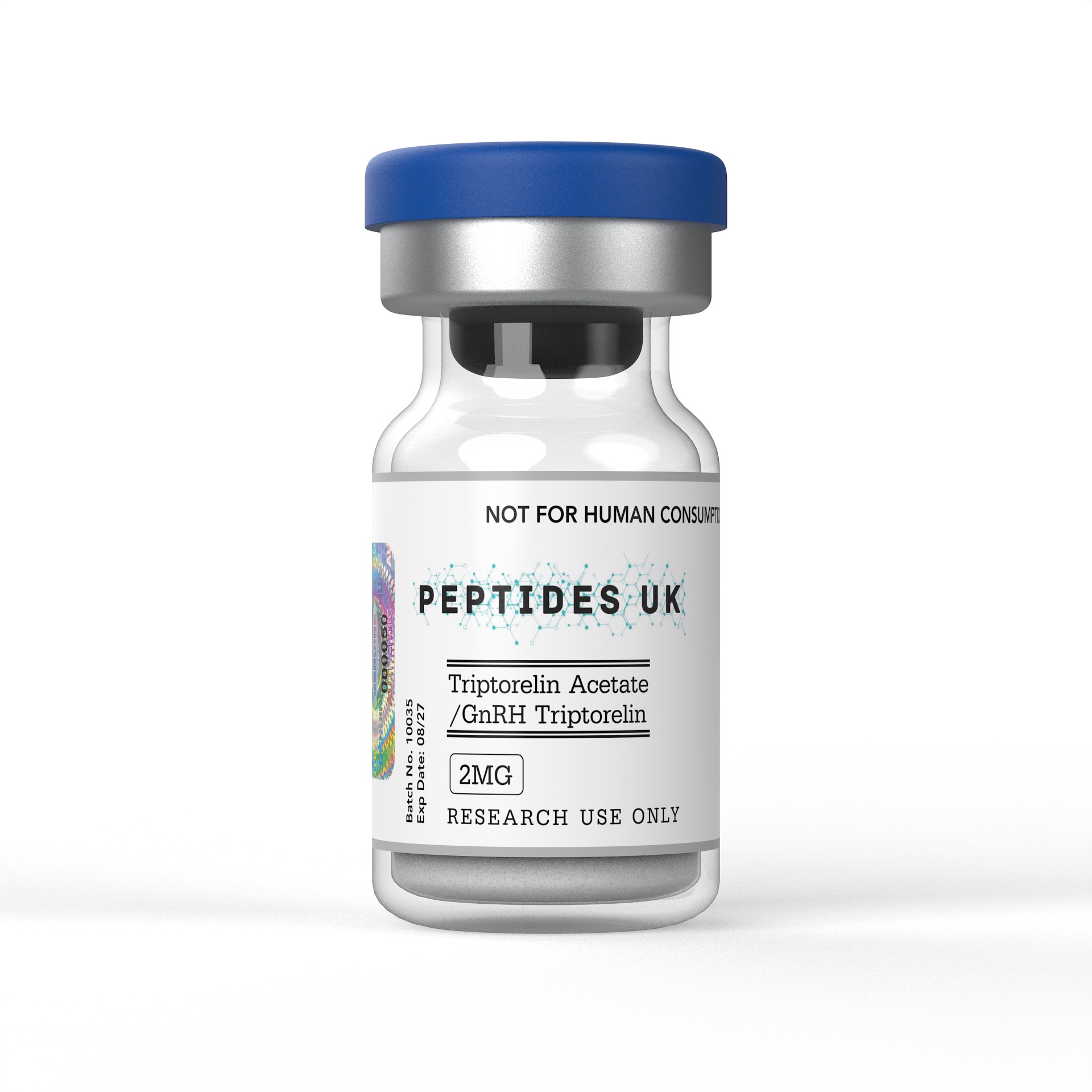
Triptorelin Acetate (GnRH) — acetate salt form of Triptorelin, synthetic GnRH agonist for reproductive endocrinology research. HPLC-verified ≥99% purity, per-batch COA.
For laboratory research use only. Not for human or veterinary use.



Triptorelin Acetate is a synthetic decapeptide GnRH agonist and one of the most mechanistically well-characterised hypothalamic-pituitary-gonadal axis research compounds available to laboratories in Ireland , a potent analogue of gonadotropin-releasing hormone (GnRH) that, through sustained receptor activation, paradoxically suppresses pituitary gonadotropin secretion and downstream gonadal steroidogenesis, making it an indispensable research tool for studying GnRH receptor pharmacology and signal transduction, hypothalamic-pituitary-gonadal (HPG) axis regulation and desensitisation biology, gonadotropin secretion dynamics and pulsatile versus continuous stimulation responses, sex hormone-dependent cancer biology including prostate and breast cancer models, and the pharmacological basis of medical castration in hormone-sensitive tumour research, Researchers and institutions across Ireland can source verified, research-grade Triptorelin Acetate directly from our Irish peptide supply, with domestic-speed dispatch and complete batch documentation.
✅ ≥99% Purity — HPLC & Mass Spectrometry Verified
✅ Batch-Specific Certificate of Analysis (CoA) Included
✅ Sterile Lyophilised Powder | GMP Manufactured
✅ Fast Dispatch to Ireland | Peptides Ireland Stock
Triptorelin Acetate is a synthetic decapeptide analogue of naturally occurring gonadotropin-releasing hormone (GnRH), also designated luteinising hormone-releasing hormone (LHRH), differing from the native decapeptide sequence at position 6 . Where D-tryptophan replaces the native glycine residue , a substitution that confers markedly increased binding affinity for the GnRH receptor, resistance to proteolytic degradation, and substantially prolonged receptor occupancy compared to the endogenous GnRH peptide. The compound was developed within the broader programme of GnRH analogue chemistry initiated by Andrew Schally’s laboratory and work that contributed directly to the Nobel Prize in Physiology or Medicine in 1977 , and has since become one of the most extensively studied GnRH agonist peptides in both pre-clinical research and clinical endocrinology.
The biological rationale for Triptorelin’s research significance rests on a critical and counterintuitive feature of GnRH receptor pharmacology , the distinction between pulsatile and continuous GnRH receptor stimulation and the paradoxical suppressive effect that continuous agonism produces on the HPG axis. Under physiological conditions, GnRH is released from hypothalamic neurones in discrete pulses at around 60–120 minute intervals, and this pulsatile pattern is essential for maintaining normal pituitary responsiveness and driving appropriate cyclic LH and FSH secretion. When GnRH receptor stimulation is converted from pulsatile to sustained and continuous . As occurs with Triptorelin’s prolonged receptor occupancy . The anterior pituitary undergoes a well-characterised desensitisation response involving GnRH receptor downregulation, post-receptor signal uncoupling, and progressive suppression of LH and FSH synthesis and secretion. This desensitisation-mediated gonadotropin suppression removes the trophic drive to gonadal steroidogenesis, producing testosterone suppression in male research models and oestrogen suppression in female models , the pharmacological basis for the HPG axis suppression that makes Triptorelin a central tool in hormone-sensitive cancer biology research, reproductive endocrinology, and GnRH receptor pharmacology.
Triptorelin Acetate’s research profile therefore spans two distinct phases of HPG axis biology and an initial stimulatory phase following first administration, during which intact GnRH receptor signalling produces a transient surge in LH, FSH, and sex hormone levels (the “flare” effect), and a subsequent suppressive phase arising from receptor desensitisation and downregulation that produces sustained gonadotropin and sex hormone suppression. Both phases are experimentally relevant and mechanistically informative and the initial stimulatory phase for studying GnRH receptor signal transduction and acute gonadotropin secretion, and the suppressive phase for studying receptor desensitisation biology, castrate-level androgen/oestrogen models, and hormone-sensitive tumour biology under medical castration conditions.
In controlled laboratory and pre-clinical settings, Triptorelin Acetate is studied across a range of GnRH receptor pharmacology, HPG axis biology, hormone-sensitive cancer research, reproductive endocrinology, and neuroendocrine biology applications:
Triptorelin’s high-affinity, protease-resistant GnRH receptor binding makes it the preferred research tool for studying GnRH receptor pharmacology examining receptor binding kinetics, signal transduction cascades activated downstream of GnRH receptor engagement, GqPCR-mediated phospholipase C activation and inositol phosphate signalling, protein kinase C activation, calcium mobilisation, and the downstream transcriptional regulation of gonadotropin subunit genes in pituitary gonadotroph cell models. Research has used Triptorelin to characterise GnRH receptor structure-function relationships, to study how receptor occupancy duration influences signalling output versus desensitisation, and to establish the molecular basis for the differential pituitary responses to pulsatile versus continuous GnRH receptor stimulation.
Triptorelin is the primary research tool for studying the mechanism of GnRH receptor desensitisation and GnRH-induced gonadotropin suppression and examining the molecular processes through which sustained GnRH receptor activation produces GnRH receptor downregulation at the plasma membrane, uncoupling of receptor-G protein interaction, impaired LH and FSH synthesis, and progressive HPG axis suppression. Research using Triptorelin has characterised the kinetics of receptor internalisation and downregulation in pituitary gonadotroph models, the roles of receptor phosphorylation, beta-arrestin recruitment, and endosomal trafficking in desensitisation, and the transcriptional suppression of gonadotropin subunit gene expression under conditions of continuous GnRH receptor stimulation.
Triptorelin is extensively used in androgen-sensitive prostate cancer research and where GnRH agonist-induced testosterone suppression to castrate levels provides a model for the androgen deprivation conditions relevant to clinical prostate cancer treatment. Research has used Triptorelin in prostate cancer cell line and animal models to study how androgen withdrawal affects prostate cancer cell proliferation, survival signalling, androgen receptor expression and activity, and the development of castration-resistant prostate cancer biology.
Triptorelin’s suppression of oestrogen synthesis through GnRH agonist-induced gonadotropin suppression makes it a research tool for studying oestrogen-dependent breast cancer biology and examining how ovarian oestrogen suppression affects breast cancer cell growth, oestrogen receptor signalling, and the molecular biology of hormone receptor-positive breast cancer under oestrogen-deprived conditions. Triptorelin is also used to study the direct anti-tumour effects of GnRH receptor activation in breast cancer cells that express GnRH receptors . A biology distinct from the HPG-axis-mediated oestrogen suppression mechanism.
Beyond its HPG axis-mediated sex hormone suppression effects, Triptorelin has been studied for direct GnRH receptor-mediated effects in cancer cells that express functional GnRH receptors at their plasma membrane , including prostate cancer, breast cancer, endometrial cancer, and ovarian cancer cell lines. Research has characterised direct antiproliferative, pro-apoptotic, and anti-invasive effects of GnRH agonist treatment in GnRH receptor-expressing cancer cell lines , examining Gαi-mediated inhibition of growth factor signalling, activation of protein tyrosine phosphatases, and how direct GnRH receptor effects in cancer cells interact with systemic sex hormone suppression.
Triptorelin is used in reproductive endocrinology research to study HPG axis regulation of reproductive function and examining how GnRH receptor stimulation pattern controls ovarian folliculogenesis, luteinisation, and corpus luteum function in female models, and spermatogenesis and Leydig cell function in male models. Research has used Triptorelin to establish gonadotropin-suppressed models for studying the role of LH and FSH in ovarian and testicular biology and to characterise the recovery kinetics of the HPG axis following withdrawal of continuous GnRH agonist treatment.
Beyond its pituitary and gonadal effects, Triptorelin has been used in research examining GnRH receptor biology in the central nervous system , where GnRH receptors are expressed in multiple brain regions outside the pituitary and where GnRH signalling has been implicated in neuroprotection, neurosteroidogenesis, and neuromodulatory functions. Research has used Triptorelin to study GnRH receptor-mediated signalling in neuronal cell models and to investigate the relationship between HPG axis suppression and central nervous system biology in models relevant to androgen- and oestrogen-dependent neural function.
Foundational research characterising Triptorelin’s GnRH receptor binding properties demonstrated substantially increased receptor binding affinity compared to native GnRH , attributable to the D-Trp6 substitution stabilising the bioactive conformation and increasing hydrophobic interaction at the receptor binding site , alongside dramatically improved resistance to proteolytic degradation that extends biological half-life from the minutes-long duration of native GnRH to hours with Triptorelin. These studies established the pharmacological foundation for Triptorelin’s sustained receptor occupancy and the resulting pituitary desensitisation that distinguishes its biological profile from native GnRH.
Research has extensively characterised the mechanism through which continuous Triptorelin-induced GnRH receptor stimulation produces pituitary desensitisation and gonadotropin suppression and documenting GnRH receptor downregulation, receptor-G protein uncoupling, and progressive impairment of LH and FSH synthesis and secretion in pituitary gonadotroph models. These studies established the cellular basis for the biphasic HPG axis response and characterised the receptor trafficking, phosphorylation, and transcriptional mechanisms underlying the transition from acute stimulation to chronic desensitisation.
Research has documented Triptorelin’s capacity to produce castrate-level testosterone suppression in pre-clinical male animal models and characterising the kinetics of testosterone suppression, the depth of suppression relative to surgical castration comparators, and the biological consequences for prostate weight, accessory sex organ morphology, and androgen-regulated gene expression. These studies validated Triptorelin as a pharmacologically relevant tool for creating the castrate androgen environment relevant to clinical androgen deprivation therapy in prostate cancer research.
Research has documented direct GnRH receptor-mediated antiproliferative effects of Triptorelin in cancer cell lines expressing functional GnRH receptors , characterising inhibition of proliferation, induction of apoptosis, reduced invasiveness, and anti-angiogenic effects in prostate, breast, endometrial, and ovarian cancer cell models. These studies established that GnRH agonist research tools have cancer cell biology relevance independent of HPG axis-mediated sex hormone suppression through distinct Gαi-mediated anti-mitogenic signal transduction.
Research has characterised the initial stimulatory flare response produced by first-dose Triptorelin administration and documenting the transient surge in LH, FSH, testosterone, and oestradiol that precedes the desensitisation-mediated suppressive phase. These studies characterised the magnitude, timing, and biological consequences of the initial stimulatory phase, Contributing to understanding of GnRH receptor desensitisation kinetics and the experimental design implications for research protocols requiring discrimination between stimulatory and suppressive phases.
Research using Triptorelin has contributed to characterising functional GnRH receptor expression in extrapituitary tissues , documenting receptor expression, binding, and signal transduction in cancer cell lines, neural tissues, immune cells, and reproductive organs. These studies expanded the biological significance of GnRH receptor pharmacology beyond the classical HPG axis context and established the framework for investigating Triptorelin’s biological effects in extrapituitary research contexts.
Research has characterised the kinetics and completeness of HPG axis recovery following cessation of continuous Triptorelin treatment . Examining how quickly GnRH receptor expression, pituitary gonadotroph responsiveness, gonadotropin secretion, and gonadal steroidogenesis recover following removal of continuous agonist-mediated suppression. These studies contributed to understanding of the reversibility of GnRH agonist-induced desensitisation and the mechanisms through which the axis returns to pulsatile GnRH sensitivity.
| Feature | Triptorelin Acetate | Leuprolide Acetate | Goserelin Acetate | Cetrorelix Acetate | Degarelix |
|---|---|---|---|---|---|
| Type | GnRH agonist , D-Trp6 analogue | GnRH agonist . D-Leu6 analogue | GnRH agonist , D-Ser(tBu)6, AzGly10 | GnRH antagonist multiple D-amino acid substitutions | GnRH antagonist , peptide |
| Mechanism | Agonism → desensitisation → LH/FSH/sex hormone suppression | Agonism → desensitisation → suppression | Agonism → desensitisation → suppression | Competitive antagonism → immediate suppression, no flare | Competitive antagonism → immediate suppression, no flare |
| Initial Gonadotropin Response | Stimulatory flare before suppression | Stimulatory flare | Stimulatory flare | Immediate suppression , no flare | Immediate suppression . No flare |
| Onset of Suppression | 2–4 weeks | 2–4 weeks | 2–4 weeks | Days | Days |
| p53 Pathway Dependence | Independent , neuroendocrine mechanism | Independent | Independent | Independent | Independent |
| Research Profile | Extensively studied and broad GnRH receptor pharmacology and cancer biology literature | Extensively studied | Well-documented | Well-documented | Well-documented |
| Parameter | Detail |
|---|---|
| Name | Triptorelin Acetate |
| Type | Synthetic GnRH Agonist Decapeptide , Research Grade |
| Structure | D-Trp6-GnRH , [pGlu1-His2-Trp3-Ser4-Tyr5-D-Trp6-Leu7-Arg8-Pro9-Gly10-NH2] acetate salt |
| Mechanism | GnRH receptor agonism → pituitary desensitisation → suppressed LH/FSH → gonadal sex hormone suppression |
| HPG Axis Response | Biphasic . Initial stimulatory flare followed by sustained gonadotropin and sex hormone suppression |
| Primary Receptor Target | GnRH receptor (GnRHR) . Gq/11-coupled GPCR on pituitary gonadotrophs and extrapituitary tissues |
| Key Research Distinction | Biphasic HPG axis pharmacology model . Both stimulatory and suppressive phases accessible in the same compound |
| Primary Research Areas | GnRH receptor pharmacology / HPG axis desensitisation biology / hormone-sensitive cancer research / reproductive endocrinology |
| Purity | ≥99% HPLC & MS Verified |
| Form | Sterile Lyophilised Powder |
| Solubility | Sterile water or 0.1% acetic acid aqueous solution |
| Storage (Powder) | -20°C, protect from light and moisture |
| Storage (Reconstituted) | -80°C in aliquots . Minimise freeze-thaw cycles |
| Manufacturing | GMP Manufactured |
| Intended Use | Research use only |
Triptorelin Acetate is a hydrophilic decapeptide with generally good aqueous solubility , reconstitution is typically straightforward but requires attention to solvent composition to maintain peptide integrity and biological activity. For standard aqueous reconstitution, add sterile water or 0.1% glacial acetic acid in sterile water slowly to the lyophilised powder and swirl gently until dissolved and mildly acidic pH improves solubility and peptide stability for GnRH analogues and is the recommended reconstitution approach. Avoid strongly alkaline conditions that can promote peptide degradation.
For cell culture experiments, prepare a concentrated aqueous stock solution and dilute into cell culture media immediately before use . Working solutions should be prepared fresh where practical given the potential for peptide adsorption to plasticware and gradual degradation in biological media at 37°C. Prepare single-use aliquots immediately after reconstitution and store at -80°C. Use low-binding polypropylene tubes throughout to minimise adsorptive losses at lower working concentrations. Avoid multiple freeze-thaw cycles and exposure to elevated temperatures that promote degradation and loss of GnRH receptor binding activity.
Every order of Triptorelin Acetate in Ireland includes:
✅ Batch-Specific Certificate of Analysis (CoA)
✅ HPLC Chromatogram
✅ Mass Spectrometry Confirmation
✅ Sterility & Endotoxin Testing Report
✅ Reconstitution Protocol , including acetic acid solubility guidance
✅ Technical Research Support
Yes . We supply research-grade Triptorelin Acetate to researchers and institutions across Ireland with fast dispatch and full batch documentation. This compound is supplied strictly for laboratory research purposes only.
GnRH , gonadotropin-releasing hormone , is a hypothalamic decapeptide neurohormone released in discrete pulses by specialised hypothalamic neurones, serving as the master regulator of the reproductive endocrine axis by stimulating pituitary gonadotroph cells to synthesise and secrete LH and FSH. The GnRH receptor is a Gq/11-coupled GPCR expressed most highly on anterior pituitary gonadotrophs but also on a range of extrapituitary tissues including cancer cells . Mediating GnRH’s effects through phospholipase C activation, calcium mobilisation, protein kinase C activation, and transcriptional regulation of gonadotropin subunit genes. What makes the GnRH receptor uniquely central to Triptorelin research is its exquisite sensitivity to stimulation pattern , pulsatile activation maintaining pituitary responsiveness, while continuous activation produces receptor downregulation, signal uncoupling, and paradoxical gonadotropin suppression and making a single compound experimentally informative across two mechanistically distinct biological states.
Native GnRH contains glycine at position 6 . A conformationally flexible and protease-susceptible residue, Substitution of D-tryptophan at this position in Triptorelin achieves two simultaneous pharmacological improvements: the D-amino acid configuration confers dramatically enhanced resistance to endoprotease degradation, extending biological half-life from the minutes-long duration of native GnRH to hours; and the bulkier D-Trp6 side chain stabilises the beta-turn bioactive conformation of GnRH, increasing receptor binding affinity. These combined improvements , proteolytic resistance and enhanced receptor binding , produce the sustained high-affinity receptor occupancy that drives pituitary desensitisation and HPG axis suppression.
The paradoxical suppression reflects homologous desensitisation . A fundamental GPCR pharmacology principle operating with particular biological consequence at the GnRH receptor. Continuous GnRH receptor stimulation engages overlapping desensitisation processes: GRK-mediated receptor phosphorylation impairs G protein coupling; beta-arrestin recruitment blocks G protein engagement and initiates receptor internalisation; receptor endocytosis and lysosomal targeting reduces plasma membrane receptor density; and transcriptional downregulation of GnRH receptor gene expression in gonadotrophs further reduces the available receptor pool. The integrated result is that sustained Triptorelin receptor occupancy progressively eliminates the pituitary’s capacity to respond to GnRH , producing LH and FSH suppression that falls to castrate-equivalent levels.
Once pituitary LH secretion is suppressed to castrate levels by Triptorelin-induced desensitisation, testicular Leydig cells are deprived of their primary trophic stimulus for testosterone biosynthesis. LH normally drives Leydig cell testosterone synthesis through LH receptor-mediated cAMP-PKA signalling and expression of steroidogenic enzymes including the rate-limiting CYP11A1. Without adequate LH stimulation, testosterone production falls to castrate-equivalent levels , withdrawing the androgen receptor activation that drives androgen-dependent prostate cancer cell proliferation and survival. Research protocols requiring immediate castrate conditions should account for the initial testosterone flare that precedes the suppressive phase.
GnRH agonists including Triptorelin produce antiproliferative effects in cancer cell lines maintained in culture , where no functional HPG axis is present . Establishing a mechanism of direct GnRH receptor-mediated anticancer activity separate from sex hormone suppression. Multiple cancer cell types express functional GnRH receptors, and GnRH agonist treatment in these cells activates signalling through Gαi rather than the Gαq pathway predominating in pituitary gonadotrophs and producing inhibition of adenylyl cyclase, activation of protein tyrosine phosphatases, and downstream inhibition of growth factor-stimulated proliferative signalling. Additional direct effects including modulation of apoptotic signalling, inhibition of cancer cell invasion, and anti-angiogenic effects have been characterised in GnRH receptor-expressing cancer cell models.
Prostate cancer has been the most extensively studied , with research examining testosterone suppression biology, androgen receptor biology under androgen deprivation, castration resistance mechanisms, and direct GnRH receptor effects in prostate cancer cell lines. Breast cancer has been extensively studied , particularly hormone receptor-positive disease where oestrogen suppression is biologically relevant, and GnRH receptor-expressing breast cancer lines where direct agonist effects have been characterised, Endometrial and ovarian cancer cell lines expressing GnRH receptors have been studied for direct effects on proliferation, apoptosis, and invasiveness. GnRH receptor expression has also been documented in pancreatic, colorectal, and bladder cancer cell lines , extending research relevance beyond the classical hormone-sensitive reproductive cancer context.
Timing controls accounting for the biphasic response are essential in HPG axis studies and protocols must distinguish the acute stimulatory phase from the suppressive phase to avoid confounding observations. Vehicle controls matched to the Triptorelin solvent should be included alongside treated wells in all cancer cell biology studies. GnRH receptor expression characterisation of cell lines used in direct cancer cell biology studies is important for attributing observed effects to receptor-mediated signalling and ideally confirmed by antagonist competition experiments. Positive HPG axis pharmacodynamic confirmation and measuring sex hormone or gonadotropin levels in in vivo studies , verifies expected suppression. GnRH-inactive control analogues provide controls for distinguishing receptor-specific from non-specific peptide effects.
≥99% purity is strongly recommended for GnRH receptor pharmacology studies, pituitary desensitisation research, hormone-sensitive cancer biology models, and pre-clinical reproductive endocrinology research and where compound purity directly determines the reliability of receptor binding measurements, HPG axis suppression kinetics, and cancer cell biology endpoints. High purity is especially important in direct cancer cell biology studies where modest antiproliferative signals are the primary endpoint , ensuring that observed effects are attributable to Triptorelin’s GnRH receptor pharmacology rather than copurified impurities with non-specific cytotoxic activity. All Triptorelin Acetate Ireland stock is independently verified to ≥99% purity by HPLC and mass spectrometry with identity confirmation.
Triptorelin Acetate is supplied exclusively for legitimate scientific research purposes conducted within licensed laboratory environments. This product isn’t intended for human consumption, self-administration, or any therapeutic application. It must be handled by qualified researchers in compliance with applicable Irish and EU regulations and institutional ethics guidelines. By purchasing, you confirm that this compound will be used solely for approved in vitro or pre-clinical research purposes.
Triptorelin Acetate/GnRH isn’t authorised as a medicine by the HPRA. It’s legal to buy, hold and use as a research chemical for in-vitro laboratory work, and that’s the only use we supply it for. If you want the full regulatory picture, see our Irish researcher’s guide to peptide legality.
Every vial ships with an HPLC purity trace (typically ≥99%), mass-spec identity confirmation, and endotoxin/heavy-metal screening on the batch. The full per-batch Certificate of Analysis is available on request from research@peptideslabireland.com. Our quality system is ISO 9001 certified and third-party testing runs through a UKAS-accredited lab.
Standard protocol: let the Triptorelin Acetate/GnRH vial and your bacteriostatic water come to room temperature, wipe both stoppers with a 70% isopropyl swab, then inject the water slowly down the side wall of the peptide vial. Don’t stream directly onto the powder cake. Swirl gently, don’t shake, and give it five to ten minutes to fully dissolve. Label the vial with compound, concentration and reconstitution date, store at 2–8°C between assays.
Same-day dispatch on orders placed before 2pm on a working day. Delivery is 24–48 hours to any Irish county via An Post Express or DPD. Cold chain is preserved with insulated wrap plus gel pack. No customs step, no border delays because it never leaves Ireland.
In the Irish research space Triptorelin Acetate/GnRH tends to appear in growth-hormone axis and hypothalamic-pituitary signalling research. It’s often paired with Ipamorelin or CJC-1295 when researchers are studying combined mechanisms rather than the compound alone.
Lyophilised Triptorelin Acetate/GnRH is stable at ≤-20°C long-term. Once reconstituted, keep it refrigerated at 2–8°C and use within the working shelf life described on the CoA. Freeze/thaw cycles degrade peptides, so aliquot the reconstituted solution if you plan to run assays over several weeks.
Receive News