PRODUCTS SOLD ON PEPTIDESLABIRELAND.COM ARE FOR RESEARCH PURPOSES ONLY AND ARE NOT FOR HUMAN OR VETERINARY USE.
Fast Ireland delivery — dispatched to Dublin, Cork, Galway, Limerick and nationwide.
€176.99
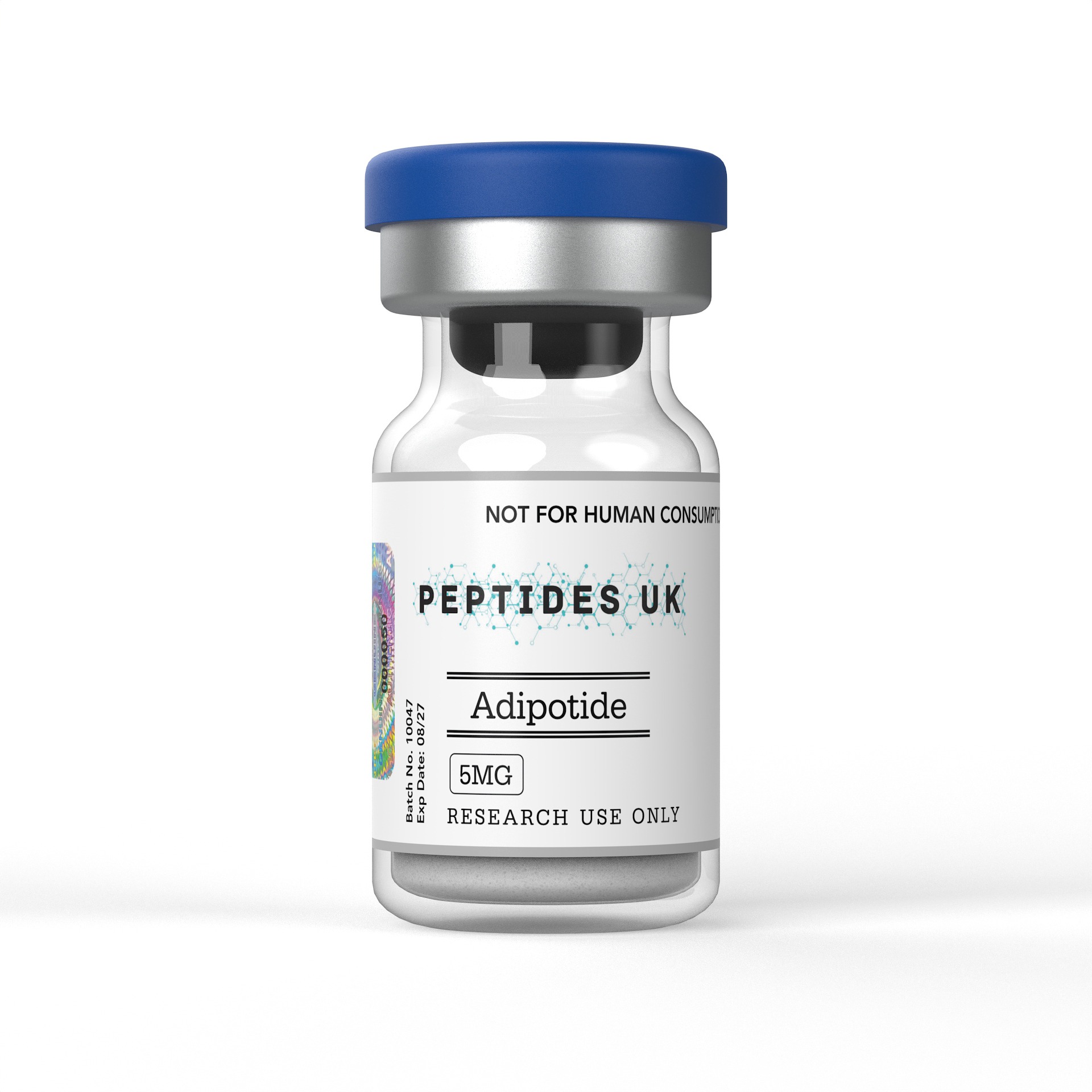
Adipotide (FTPP) — pro-apoptotic research peptide targeting adipose tissue vasculature, studied in obesity research models. HPLC-verified ≥99% purity, per-batch COA. Fast Ireland delivery.
For laboratory research use only. Not for human or veterinary use.



Adipotide is a synthetic chimeric proapoptotic peptide and one of the most mechanistically distinctive fat-selective research compounds available to laboratories in Ireland , a bispecific peptidomimetic engineered by combining a white adipose tissue vasculature-homing domain targeting prohibitin on the surface of adipose endothelial cells with a proapoptotic domain that triggers mitochondrial disruption and cell death selectively in the targeted vascular endothelium, producing white adipose tissue regression through vascular disruption-mediated ischaemic involution rather than through systemic metabolic pathways, making it an indispensable research tool for studying prohibitin biology and adipose vascular targeting, white adipose tissue vasculature and angiogenesis, proapoptotic peptide pharmacology, targeted vascular disruption as a fat-selective anti-obesity strategy, the relationship between adipose tissue vasculature and fat mass maintenance, and the emerging biology of tissue-targeted proapoptotic peptides that exploit differentially expressed vascular surface proteins as homing receptors for tissue-selective cell killing, Researchers and institutions across Ireland can source verified, research-grade Adipotide directly from our Irish peptide supply, with domestic-speed dispatch and complete batch documentation.
✅ ≥99% Purity , HPLC & Mass Spectrometry Verified
✅ Batch-Specific Certificate of Analysis (CoA) Included
✅ Sterile Lyophilised Powder | GMP Manufactured
✅ Fast Dispatch to Ireland | Peptides Ireland Stock
Adipotide . Also designated CKGGRAKDC-GG-D(KLAKLAK)2 in its full structural designation , is a synthetic chimeric peptidomimetic developed by Wadih Arap, Renata Pasqualini, and colleagues at the University of Texas MD Anderson Cancer Centre as a proof-of-concept fat-selective proapoptotic compound exploiting the differential expression of prohibitin on the luminal surface of white adipose tissue blood vessel endothelial cells. The compound belongs to the broader class of targeted proapoptotic peptides . Sometimes designated “hunters and killers” and developed through the systematic phage display-based mapping of vascular addresses that has characterised the Arap-Pasqualini laboratory programme, in which combinatorial peptide libraries are screened in vivo for tissue-selective homing to identify peptide sequences that home to the vasculature of specific organs or tissues and can then be coupled to cytotoxic payloads to produce tissue-selective vascular disruption.
The structural architecture of Adipotide reflects this bispecific design principle directly , the CKGGRAKDC sequence at the N-terminus serves as the white adipose tissue vasculature-homing domain, identified through in vivo phage display screening as a sequence that selectively homes to the luminal surface of blood vessels supplying white adipose tissue and subsequently characterised as binding prohibitin and a mitochondrial chaperone protein aberrantly expressed on the cell surface of white adipose tissue endothelial cells but not on normal endothelium of other tissues. The GG sequence serves as a flexible structural linker separating the homing and effector domains. The D(KLAKLAK)2 sequence at the C-terminus is the proapoptotic effector domain , a D-amino acid version of the amphipathic KLAKLAK repeat that disrupts mitochondrial membranes upon intracellular delivery, triggering mitochondrial-pathway apoptosis in cells that internalise the peptide. The cancer-selectivity and fat-selectivity of Adipotide therefore emerge from the same principle as PNC-27’s cancer selectivity , differential surface protein expression providing a tissue-selective homing address that concentrates the cytotoxic effector domain at the intended target while sparing tissues lacking the surface target.
Prohibitin’s role as Adipotide’s functional target represents a significant finding in adipose vascular biology the discovery that a protein with well-characterised intracellular mitochondrial chaperone and nuclear functions is aberrantly expressed on the luminal cell surface of white adipose tissue blood vessel endothelium, providing a vascular address unique to fat tissue vasculature. This aberrant surface prohibitin expression in white adipose tissue endothelium and absent from the endothelial surface of most other tissues and provides the molecular basis for Adipotide’s fat selectivity, making prohibitin cell surface biology in adipose vasculature one of the most scientifically distinctive aspects of Adipotide research and a topic of ongoing investigation into how prohibitin reaches the endothelial cell surface and what functional roles it may serve in adipose vascular biology beyond serving as an Adipotide homing receptor.
In controlled laboratory and pre-clinical settings, Adipotide is studied across a range of prohibitin vascular biology, adipose tissue vasculature, targeted proapoptotic peptide pharmacology, obesity biology, and metabolic disease research applications:
Adipotide’s most scientifically distinctive research application is the study of prohibitin expression on the luminal surface of white adipose tissue endothelial cells and a biology whose significance was established through Adipotide-based research and whose mechanistic basis remains an active area of investigation. Research has examined the evidence for prohibitin cell surface localisation in adipose endothelium using immunohistochemistry, flow cytometry of isolated endothelial cells, surface biotinylation, and in vivo phage display confirmation, the trafficking mechanisms through which prohibitin , a protein without a conventional signal peptide , reaches the endothelial cell surface, whether surface prohibitin serves functional roles in white adipose tissue endothelial biology beyond Adipotide binding, and how surface prohibitin expression in adipose vasculature correlates with fat depot type, obesity status, and metabolic state. These prohibitin cell surface biology studies have contributed to a novel and poorly understood dimension of adipose vascular biology that extends beyond prohibitin’s canonical intracellular chaperone function.
Adipotide provides a uniquely specific tool for studying white adipose tissue vasculature exploiting prohibitin surface expression to selectively target and disrupt the blood vessel endothelium supplying white adipose tissue while leaving the vasculature of other tissues largely intact. Research has used Adipotide-induced white adipose tissue vascular disruption as a model for studying how adipose tissue vasculature supports fat mass maintenance, the relationship between adipose tissue blood supply and adipocyte viability, the angiogenic biology of white adipose tissue expansion during obesity development, and how disruption of the adipose vascular network produces ischaemia-driven adipose tissue involution and fat mass reduction. These adipose vasculature studies have contributed to understanding of the vascular biology of white adipose tissue and the dependence of fat mass maintenance on an intact and functional vascular supply.
Adipotide serves as a model compound for studying the design principles and pharmacological mechanisms of targeted proapoptotic peptides and a class of bispecific compounds combining tissue-selective homing domains with intracellular cytotoxic effector domains to achieve tissue-selective cell killing. Research has characterised the pharmacological mechanism of Adipotide’s proapoptotic activity , examining the kinetics of CKGGRAKDC domain binding to surface prohibitin, the internalisation of the bound peptide-receptor complex into endothelial cells, the intracellular trafficking of internalised Adipotide to mitochondria, the mechanism of D(KLAKLAK)2-mediated mitochondrial membrane disruption and cytochrome c release, and the downstream apoptotic signalling cascade activated in targeted endothelial cells. These targeted proapoptotic peptide mechanism studies have contributed to understanding of how bispecific chimeric peptides can achieve tissue-selective cytotoxicity through homing domain-mediated concentration at target cell surfaces.
Adipotide’s fat-selective vascular disruption and resulting white adipose tissue involution make it a research tool for studying the biology of fat mass regulation and adipose tissue involution , examining how targeted elimination of white adipose tissue vasculature produces adipose tissue regression, the cellular and molecular biology of ischaemia-driven adipocyte death and fat tissue remodelling following vascular disruption, the metabolic consequences of selective white adipose tissue mass reduction including effects on insulin sensitivity, leptin levels, adipokine secretion, and systemic glucose homeostasis, and the recovery biology of adipose tissue following cessation of Adipotide treatment. These obesity biology studies have contributed to understanding of the relationship between fat mass, adipose tissue vasculature, and systemic metabolic health in pre-clinical obesity models.
Research has examined the metabolic consequences of Adipotide-induced white adipose tissue reduction . Documenting improvements in insulin sensitivity, fasting glucose, and metabolic parameters following fat mass reduction in obese pre-clinical models. These metabolic disease studies have characterised how the selective reduction of white adipose tissue mass through vascular targeting produces secondary improvements in systemic metabolism , contributing to understanding of the causal relationship between adiposity and insulin resistance, the role of adipose tissue in driving systemic metabolic dysfunction in obesity, and whether the metabolic benefits of fat mass reduction are proportional to the degree of adipose tissue loss regardless of the mechanism through which that loss is produced.
Research has examined whether Adipotide’s prohibitin-targeting mechanism produces selective effects on different white adipose tissue depots and visceral versus subcutaneous, and other anatomically distinct fat depots and given the potential for differential prohibitin surface expression and vascular biology across fat depot types. Studies have characterised the depot distribution of Adipotide-induced adipose tissue regression and examined whether visceral adipose tissue , the depot most strongly associated with metabolic disease risk and shows differential sensitivity to Adipotide-mediated vascular disruption. These depot selectivity studies have contributed to understanding of whether targeted proapoptotic approaches to fat mass reduction can be exploited to selectively target metabolically harmful visceral fat versus subcutaneous fat depots.
Adipotide emerged from the systematic in vivo phage display programme that has mapped the vascular addresses of multiple tissues and research has used the CKGGRAKDC homing domain as a tool for studying white adipose tissue vascular address biology, examining how the tissue-selective homing of phage display-identified peptides to specific vascular beds reflects underlying differential endothelial protein expression, and how the concept of organ-specific vascular addresses can be exploited for targeted drug delivery. Research has also examined whether the CKGGRAKDC homing sequence can be used to deliver other therapeutic payloads beyond the proapoptotic D(KLAKLAK)2 domain to white adipose tissue vasculature and contributing to understanding of the broader utility of prohibitin-targeting as a white adipose tissue vascular delivery platform.
Adipotide has been studied in non-human primate obesity models , specifically obese rhesus monkeys . Providing a research context that bridges pre-clinical rodent data and the translational biology relevant to human adipose tissue and metabolic disease. Non-human primate studies have characterised Adipotide’s effects on body weight, fat mass, metabolic parameters, and kidney function in a model whose adipose tissue biology, vascular anatomy, and metabolic physiology more closely resemble human biology than rodent models. These non-human primate obesity studies have contributed important translational data on Adipotide’s fat-selective biology and metabolic consequences and have characterised the nephrotoxicity that emerged as a dose-limiting safety finding in the non-human primate research context , a finding with important implications for experimental design in Adipotide research.
Foundational research from the Arap-Pasqualini laboratory documented Adipotide’s selective induction of white adipose tissue regression in pre-clinical rodent models — demonstrating marked reductions in white adipose tissue mass following Adipotide treatment, with sparing of other tissues and organs at doses producing significant fat loss. These fat selectivity studies established Adipotide as a proof-of-concept fat-selective compound and provided the primary evidence for the prohibitin surface expression-dependent targeting hypothesis , demonstrating that white adipose tissue vasculature disruption through prohibitin-targeted proapoptotic peptide treatment produces ischaemia-driven adipose tissue involution without equivalent disruption of non-adipose tissue vasculature.
Research identified prohibitin as the molecular target of the CKGGRAKDC homing domain at the surface of white adipose tissue endothelial cells . Characterising prohibitin cell surface expression in white adipose tissue vasculature using immunohistochemistry, confirming the specificity of CKGGRAKDC binding to prohibitin in pull-down and competition experiments, and demonstrating that anti-prohibitin antibody pre-treatment blocks CKGGRAKDC homing to white adipose tissue vasculature in vivo. This prohibitin identification study established the molecular basis for Adipotide’s fat selectivity and identified surface prohibitin in adipose vasculature as a previously uncharacterised vascular address with implications for targeted drug delivery to white adipose tissue.
Research has characterised the proapoptotic mechanism of Adipotide in white adipose tissue endothelial cells , documenting CKGGRAKDC-prohibitin binding-dependent internalisation of the chimeric peptide, intracellular trafficking to mitochondria, D(KLAKLAK)2-mediated mitochondrial membrane disruption, cytochrome c release, caspase activation, and apoptotic cell death in targeted endothelial cells. These mechanism studies established the cell biological pathway through which prohibitin-targeted delivery of the proapoptotic effector domain kills white adipose tissue endothelial cells . Confirming that Adipotide’s fat-selective tissue destruction proceeds through classical mitochondrial-pathway apoptosis in the targeted vascular endothelium rather than through non-specific membrane disruption or necrosis.
Research has documented significant body weight reduction and improvements in metabolic parameters following Adipotide treatment in diet-induced obese rodent models , characterising the kinetics of fat mass reduction, the degree of body weight loss achieved at various doses, improvements in insulin sensitivity and fasting glucose following fat mass reduction, and the relationship between Adipotide dose, degree of white adipose tissue regression, and magnitude of metabolic improvement. These obese rodent studies established the proof-of-concept for targeted adipose vascular disruption as an approach to producing fat mass reduction and associated metabolic improvement in pre-clinical obesity models.
Research in obese rhesus monkeys documented meaningful body weight and fat mass reduction following Adipotide treatment and with studies characterising significant decreases in body weight, fat mass by imaging, waist circumference, and insulin resistance scores in treated animals. Critically, these non-human primate studies also documented dose-dependent nephrotoxicity , manifesting as elevated serum creatinine, decreased glomerular filtration rate, and renal tubular injury at doses producing significant fat loss . That emerged as the primary dose-limiting safety finding in the Adipotide pre-clinical programme. This nephrotoxicity finding has been an important consideration for experimental design in Adipotide research and has motivated investigation into whether the kidney toxicity reflects prohibitin expression in renal vasculature or off-target proapoptotic peptide effects in renal tissue.
Research has characterised the tissue distribution of prohibitin cell surface expression across multiple vascular beds and confirming enrichment in white adipose tissue endothelium relative to endothelium from other tissues and examining what determines this differential surface prohibitin expression in adipose versus non-adipose vasculature. These tissue distribution studies have been important for understanding the basis and limits of Adipotide’s tissue selectivity . Characterising which tissue vascular beds show surface prohibitin expression that could serve as off-target homing sites for Adipotide and contributing to understanding of the molecular determinants of the adipose-specific vascular address.
Research has examined structure-activity relationships within the broader targeted proapoptotic peptide class , characterising how modifications to the CKGGRAKDC homing domain, the GG linker, and the D(KLAKLAK)2 effector domain influence prohibitin binding affinity, tissue homing selectivity, intracellular trafficking, mitochondrial disruption potency, and overall fat-selective cell killing activity. These SAR studies have contributed to understanding of the structural requirements for bispecific homing-proapoptotic peptide activity and have established design principles for optimising the balance between homing domain selectivity, linker flexibility, and effector domain potency in targeted proapoptotic peptide research.
| Feature | Adipotide | D(KLAKLAK)2 Alone | PNC-27 | GLP-1 Receptor Agonists | Semaglutide |
|---|---|---|---|---|---|
| Type | Bispecific chimeric proapoptotic peptide . Homing domain + proapoptotic domain | Proapoptotic peptide effector domain alone | Chimeric membranotropic proapoptotic peptide | Incretin hormone analogue | Long-acting GLP-1 receptor agonist |
| Homing Target | Prohibitin , white adipose tissue endothelial cell surface | None , no homing domain | HDM2 and cancer cell plasma membrane | GLP-1 receptor , systemic | GLP-1 receptor and systemic |
| Mechanism | Prohibitin-targeted internalisation → mitochondrial D(KLAKLAK)2 delivery → apoptosis in white adipose tissue endothelium | Non-selective mitochondrial membrane disruption and no tissue selectivity | Plasma membrane HDM2 binding → membrane disruption → necrosis | GLP-1 receptor agonism → insulin secretion, glucagon suppression, satiety | GLP-1 receptor agonism → food intake reduction, body weight loss |
| Cell Death Type | Apoptosis and mitochondrial pathway | Apoptosis , mitochondrial membrane disruption | Necrosis direct membrane disruption | Not applicable — receptor signalling | Not applicable |
| Tissue Selectivity Basis | Prohibitin surface expression . White adipose tissue vasculature | None , non-selective | HDM2 plasma membrane expression and cancer cells | GLP-1 receptor expression and systemic | Systemic GLP-1 receptor |
| Primary Biological Effect | White adipose tissue vascular disruption → ischaemic fat involution → fat mass reduction | Non-selective cytotoxicity , control peptide | Cancer cell membrane disruption and necrosis | Glucose regulation, satiety, weight loss | Body weight reduction, glucose regulation |
| Nephrotoxicity Risk | Documented , dose-limiting in non-human primates | Non-selective toxicity | Low in normal cells | Low | Low |
| Research Profile | Distinctive . Fat-targeted vascular disruption model | Reference control peptide | Growing , HDM2 membrane biology | Extensively studied | Extensively studied . Reference GLP-1 agonist |
| Parameter | Detail |
|---|---|
| Name | Adipotide |
| Also Designated | CKGGRAKDC-GG-D(KLAKLAK)2 |
| Type | Synthetic Bispecific Chimeric Proapoptotic Peptidomimetic , Research Grade |
| Architecture | N-terminal CKGGRAKDC white adipose tissue vasculature homing domain + GG flexible linker + C-terminal D(KLAKLAK)2 proapoptotic effector domain |
| Homing Target | Prohibitin , aberrantly expressed on luminal surface of white adipose tissue blood vessel endothelial cells |
| Mechanism | CKGGRAKDC binds surface prohibitin → peptide internalised into adipose endothelial cells → D(KLAKLAK)2 disrupts mitochondrial membranes → apoptosis → white adipose tissue vascular disruption → ischaemic fat involution |
| Cell Death Type | Apoptosis . Mitochondrial membrane disruption pathway |
| Tissue Selectivity Basis | Prohibitin cell surface expression , white adipose tissue vasculature versus absent or low in non-adipose endothelium |
| Key Research Distinction | Only proapoptotic peptide exploiting prohibitin as a white adipose tissue vascular address for fat-selective targeted cell killing |
| Primary Research Areas | Prohibitin vascular biology / adipose tissue vasculature / targeted proapoptotic peptide pharmacology / obesity and fat mass biology / metabolic disease |
| Nephrotoxicity Note | Dose-dependent nephrotoxicity documented in non-human primate studies , renal function monitoring recommended in in vivo research designs |
| Purity | ≥99% HPLC & MS Verified |
| Form | Sterile Lyophilised Powder |
| Solubility | Sterile water or aqueous buffer , see reconstitution note |
| Storage (Powder) | -20°C, protect from light and moisture |
| Storage (Reconstituted) | -80°C in aliquots . Minimise freeze-thaw cycles |
| Manufacturing | GMP Manufactured |
| Intended Use | Research use only |
Adipotide is a chimeric peptide containing both the hydrophilic CKGGRAKDC homing domain and the amphipathic D(KLAKLAK)2 proapoptotic domain . Its overall solubility profile is influenced by the amphipathic character of the proapoptotic effector sequence and requires careful reconstitution to maintain peptide integrity and prevent aggregation. For standard aqueous reconstitution, add sterile water or phosphate-buffered saline slowly to the lyophilised powder and swirl gently and don’t vortex, as the amphipathic D(KLAKLAK)2 domain promotes aggregation and foaming under mechanical agitation. If incomplete dissolution is observed at higher concentrations, brief bath sonication at room temperature may assist dissolution without introducing the mechanical shear that promotes aggregation.
For cell-based endothelial cytotoxicity assays, prepare a concentrated stock solution and dilute into cell culture media immediately before use . Working solutions should be prepared fresh as the proapoptotic peptide can adsorb to plasticware and degrade in complex biological media at 37°C. For in vivo studies, prepare fresh dosing solutions at the time of administration and maintain on ice during handling. Prepare single-use aliquots immediately after reconstitution and store at -80°C to preserve prohibitin-binding activity and proapoptotic potency , avoid multiple freeze-thaw cycles that promote peptide aggregation and reduce biological activity. Use low-binding polypropylene tubes throughout to minimise adsorptive losses at lower working concentrations. Because Adipotide’s biological mechanism involves both cell surface homing and intracellular mitochondrial disruption, careful attention to aggregation state is important for experimental validity . Aggregated peptide may show reduced prohibitin-binding selectivity and altered cell-killing mechanism relative to monomeric Adipotide.
Every order of Adipotide in Ireland includes:
✅ Batch-Specific Certificate of Analysis (CoA)
✅ HPLC Chromatogram
✅ Mass Spectrometry Confirmation
✅ Sterility & Endotoxin Testing Report
✅ Reconstitution Protocol , including amphipathic peptide solubility guidance
✅ Technical Research Support
Yes , we supply research-grade Adipotide to researchers and institutions across Ireland with fast dispatch and full batch documentation. This compound is supplied strictly for laboratory research purposes only.
Prohibitin, Encoded by the PHB1 gene . Is a highly conserved multifunctional protein with well-characterised intracellular roles as a mitochondrial chaperone involved in mitochondrial biogenesis and protein quality control, a nuclear transcriptional co-regulator interacting with E2F transcription factors and the retinoblastoma protein, and a scaffold protein with roles in cell cycle regulation and apoptosis. What makes prohibitin central to Adipotide research is the finding and established through in vivo phage display screening and subsequent molecular characterisation and that prohibitin is aberrantly expressed on the luminal surface of blood vessel endothelial cells in white adipose tissue, where it serves as a vascular address accessible to circulating peptides and isn’t equivalently expressed on the endothelial surface of most other tissues. This differential cell surface prohibitin expression in white adipose tissue endothelium — absent or low in most non-adipose vascular beds . Provides the entire molecular basis for Adipotide’s fat selectivity. Understanding how prohibitin , a protein without a conventional signal peptide or transmembrane domain reaches the endothelial cell surface specifically in white adipose tissue vasculature, what determines this adipose-specific surface expression, and what functional roles surface prohibitin may serve in adipose vascular biology are among the central unresolved questions in Adipotide-related research.
Adipotide’s fat-selective cytotoxicity emerges from the functional synergy between its two structural domains , neither of which alone produces the same fat-selective effect. The CKGGRAKDC homing domain alone binds prohibitin at the surface of white adipose tissue endothelial cells but lacks intrinsic cytotoxic activity and it concentrates at the target cell surface without killing it. The D(KLAKLAK)2 proapoptotic domain alone is cytotoxic but lacks cell type selectivity and when administered without a homing domain, it can disrupt mitochondrial membranes in any cell it enters, producing non-selective toxicity rather than fat-targeted cell killing. The chimeric combination — homing domain bringing the proapoptotic effector specifically to white adipose tissue endothelial cells through prohibitin binding, followed by internalisation of the bound complex and intracellular trafficking to mitochondria where D(KLAKLAK)2 disrupts mitochondrial membrane integrity . Produces fat selectivity as an emergent property of the bispecific design. At the tissue level, selective killing of white adipose tissue endothelial cells disrupts the vascular supply to white adipose tissue, producing ischaemia-driven adipocyte death and adipose tissue involution that reduces fat mass and while tissues whose endothelium lacks surface prohibitin expression are spared from targeted cell killing.
D(KLAKLAK)2 is a D-amino acid version of the amphipathic proapoptotic peptide (KLAKLAK)2 , where the D-amino acid configuration confers resistance to proteolytic degradation that the L-amino acid version lacks, extending intracellular half-life and improving proapoptotic potency in cell-based assays. The KLAKLAK repeat sequence forms an amphipathic helix whose hydrophobic face preferentially intercalates into and disrupts lipid bilayers , a property that, when directed to bacterial membranes, produces antimicrobial activity, and when directed intracellularly to mitochondrial membranes in eukaryotic cells, produces mitochondrial membrane disruption and apoptosis. The mechanism of D(KLAKLAK)2-mediated apoptosis involves disruption of the inner and outer mitochondrial membranes, dissipation of the mitochondrial membrane potential, release of cytochrome c from the intermembrane space, formation of the apoptosome, and activation of the caspase cascade leading to apoptotic cell death. Because D(KLAKLAK)2 requires intracellular delivery to reach mitochondria , it does not efficiently enter cells on its own at concentrations typically used in research settings and its cytotoxic activity in Adipotide is dependent on the CKGGRAKDC homing domain delivering the intact chimeric peptide into the target cell through prohibitin-mediated internalisation, providing the selectivity that makes D(KLAKLAK)2 useful as a targeted proapoptotic effector rather than a non-selective cytotoxin.
The dose-dependent nephrotoxicity documented in obese rhesus monkey Adipotide studies . Manifesting as elevated serum creatinine, reduced glomerular filtration rate, and evidence of renal tubular injury , represented an important and unexpected safety finding in the Adipotide pre-clinical programme, and its mechanistic basis has been the subject of research investigation. The most likely explanation is that prohibitin is expressed on the surface of endothelial or tubular epithelial cells in renal tissue to a degree sufficient to support Adipotide homing and proapoptotic cell killing in the kidney at higher doses and meaning the tissue selectivity of the CKGGRAKDC homing domain for white adipose tissue versus renal vasculature isn’t absolute, with renal tissue showing sufficient surface prohibitin expression to serve as an off-target homing site. For Adipotide research designs involving in vivo administration, monitoring of renal function markers including serum creatinine and blood urea nitrogen is important, and dose selection should be guided by the non-human primate safety data to minimise nephrotoxicity risk while achieving the desired degree of adipose tissue disruption. In vitro research designs using isolated endothelial cell populations aren’t subject to this nephrotoxicity consideration but should include appropriate off-target cell type controls.
Adipotide and GLP-1 receptor agonists produce fat mass reduction and metabolic improvement through entirely distinct and non-overlapping mechanisms , making them complementary rather than equivalent research tools for studying different aspects of obesity biology. GLP-1 receptor agonists including semaglutide produce weight loss primarily through central nervous system GLP-1 receptor-mediated reduction of food intake and energy intake , acting on hypothalamic and brainstem neurons to reduce appetite, increase satiety, and decrease caloric consumption, with secondary metabolic effects including enhanced glucose-stimulated insulin secretion, glucagon suppression, and gastric emptying delay. Adipotide produces fat mass reduction through a mechanistically entirely different route . Direct targeted destruction of white adipose tissue vasculature through prohibitin-mediated proapoptotic endothelial cell killing, producing ischaemic involution of white adipose tissue independent of food intake, central nervous system signalling, or incretin pathways. For research purposes, Adipotide is therefore the tool for studying the biology of adipose tissue vasculature, prohibitin cell surface biology, and the consequences of selective white adipose tissue vascular disruption , while GLP-1 receptor agonists are the tools for studying central satiety neurocircuitry, incretin pharmacology, and the metabolic consequences of food intake-mediated weight reduction.
The in vivo phage display programme that identified the CKGGRAKDC white adipose tissue-homing sequence represents one of the most systematic and productive approaches to mapping tissue-specific vascular addresses , and the identification of Adipotide’s homing domain is one of the landmark outputs of this research strategy. In vivo phage display involves intravenous injection of combinatorial phage peptide libraries into living animals, followed by recovery of phage that have homed to specific target tissues, amplification, and iterative selection rounds to enrich for tissue-selective homing sequences, Applied to white adipose tissue, this approach identified the CKGGRAKDC sequence as a peptide that selectively homes to white adipose tissue vasculature in vivo and a finding that was subsequently mechanistically explained by the identification of surface prohibitin as the homing receptor. The broader significance for research is that the in vivo phage display vascular address mapping programme has identified tissue-selective homing peptides for multiple organ vascular beds . Establishing the concept that the endothelium of different tissues expresses distinct molecular signatures or vascular addresses that can be exploited for targeted drug delivery, and demonstrating that Adipotide is one realisation of the broader principle that tissue-selective proapoptotic compounds can be built by combining in vivo phage display-identified homing domains with cytotoxic effector payloads.
Several controls are essential for rigorously interpreting Adipotide biology research and given the bispecific mechanism, the fat-selective targeting hypothesis, and the proapoptotic endpoint being studied. The D(KLAKLAK)2 peptide alone . Without the CKGGRAKDC homing domain and is an important control for distinguishing homing-dependent targeted proapoptotic activity from non-specific proapoptotic peptide cytotoxicity, and should be included at equivalent concentrations alongside Adipotide in cell-based and in vivo studies. The CKGGRAKDC homing peptide alone . Without the proapoptotic domain , provides a control for homing domain-mediated effects independent of proapoptotic killing, and can be used to study prohibitin binding and internalisation biology independently of cytotoxicity. Anti-prohibitin antibody pre-treatment or prohibitin knockdown in target cell types provides mechanistic confirmation of prohibitin-dependence of Adipotide homing and cytotoxicity. Non-adipose endothelial cell comparisons . Examining Adipotide cytotoxicity in white adipose tissue endothelial cells versus endothelial cells from other tissue sources and are essential for confirming the fat-selective cytotoxicity that’s central to Adipotide’s research significance. For in vivo studies, renal function monitoring and histological examination of kidney tissue alongside adipose tissue are important given the documented nephrotoxicity in non-human primate models.
≥99% purity is strongly recommended for prohibitin binding studies, white adipose tissue endothelial cell cytotoxicity assays, in vivo adipose tissue targeting and fat mass reduction studies, and mechanistic research examining the homing-dependent proapoptotic mechanism . Where compound purity directly determines the reliability of prohibitin binding affinity measurements, fat-selective cytotoxicity characterisation, and mechanistic attribution of observed biological effects. Given Adipotide’s chimeric amphipathic architecture, peptide impurities with non-specific membrane-active or cytotoxic properties could introduce non-specific killing signals in sensitive endothelial cell cytotoxicity assays . Making high purity verification particularly important for research designs where fat-selective targeting and prohibitin-dependence are the primary endpoints being characterised. All Adipotide Ireland stock is independently verified to ≥99% purity by HPLC and mass spectrometry with identity confirmation.
Adipotide is supplied exclusively for legitimate scientific research purposes conducted within licensed laboratory environments. This product isn’t intended for human consumption, self-administration, or any therapeutic application. It must be handled by qualified researchers in compliance with applicable Irish and EU regulations and institutional ethics guidelines. By purchasing, you confirm that this compound will be used solely for approved in vitro or pre-clinical research purposes.
Adipotide isn’t authorised as a medicine by the HPRA. It’s legal to buy, hold and use as a research chemical for in-vitro laboratory work, and that’s the only use we supply it for. If you want the full regulatory picture, see our Irish researcher’s guide to peptide legality.
Every vial ships with an HPLC purity trace (usually ≥99%), mass-spec identity confirmation, and endotoxin/heavy-metal screening on the batch. The full per-batch Certificate of Analysis is available on request from research@peptideslabireland.com. Our quality system is ISO 9001 certified and third-party testing runs through a UKAS-accredited lab.
Standard protocol: let the Adipotide vial and your bacteriostatic water come to room temperature, wipe both stoppers with a 70% isopropyl swab, then inject the water slowly down the side wall of the peptide vial. Don’t stream directly onto the powder cake. Swirl gently, don’t shake, and give it five to ten minutes to fully dissolve. Label the vial with compound, concentration and reconstitution date, store at 2–8°C between assays.
Same-day dispatch on orders placed before 2pm on a working day. Delivery is 24–48 hours to any Irish county via An Post Express or DPD. Cold chain is preserved with insulated wrap plus gel pack. No customs step, no border delays , because it never leaves Ireland.
In the Irish research space Adipotide tends to appear in GLP-1 receptor signalling and glucose-homeostasis research. It’s often paired with Tirzepatide or Retatrutide in comparison studies when researchers are studying combined mechanisms rather than the compound alone.
Lyophilised Adipotide is refrigerated post-reconstitution, working shelf life 14–28 days. Once reconstituted, keep it refrigerated at 2–8°C and use within the working shelf life described on the CoA. Freeze/thaw cycles degrade peptides, so aliquot the reconstituted solution if you plan to run assays over several weeks.
Receive News