PRODUCTS SOLD ON PEPTIDESLABIRELAND.COM ARE FOR RESEARCH PURPOSES ONLY AND ARE NOT FOR HUMAN OR VETERINARY USE.
Fast Ireland delivery — dispatched to Dublin, Cork, Galway, Limerick and nationwide.
€78.00 – €102.50Price range: €78.00 through €102.50
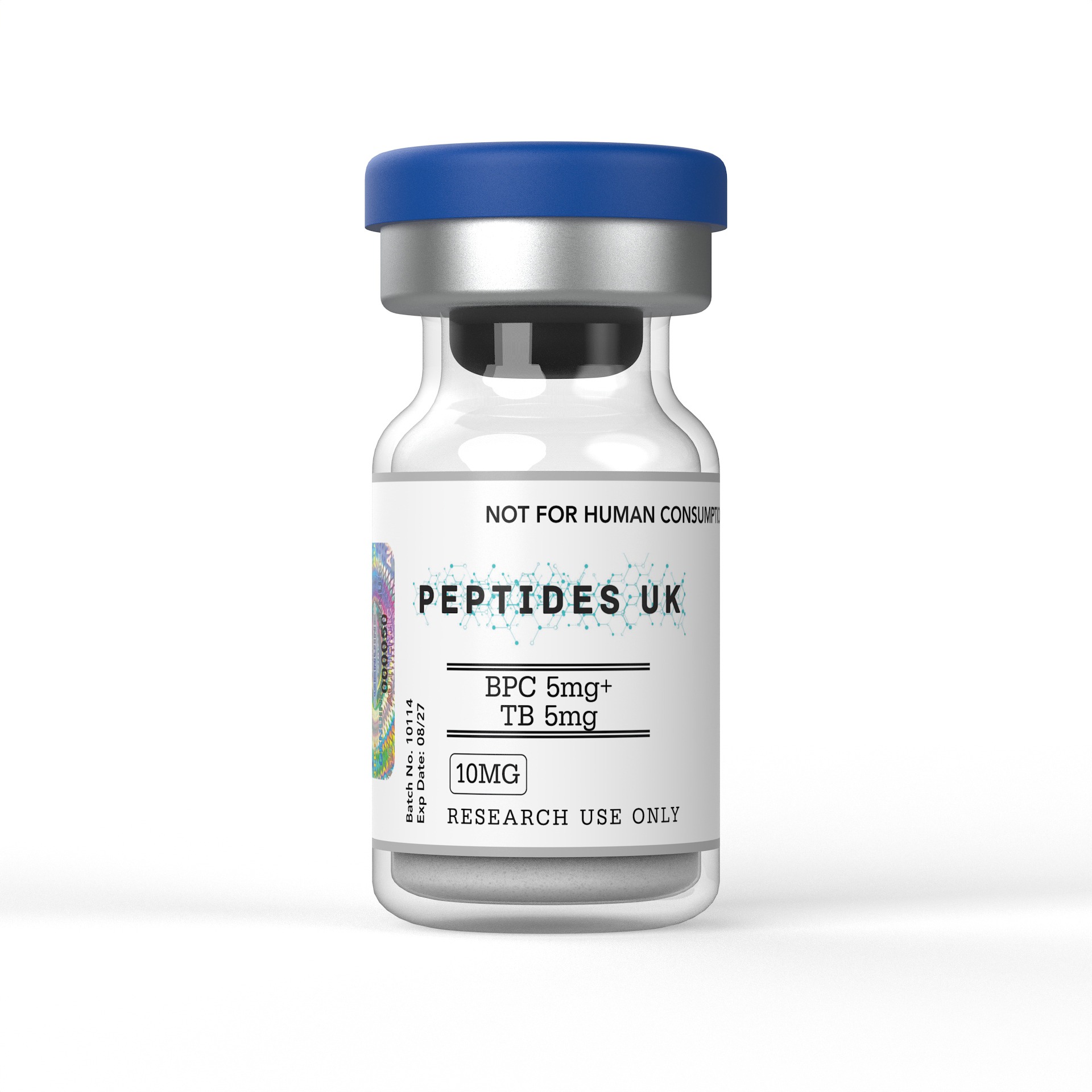
Buy BPC 5mg + TB 5mg — pre-formulated tissue-repair research blend combining 5mg BPC-157 with 5mg TB-500 in a single vial. HPLC-verified, per-batch COA. Fast Ireland delivery.
For laboratory research use only. Not for human or veterinary use.



BPC-157 and TB-500 represent the most extensively co-studied regenerative peptide pairing available to laboratories in Ireland and a research stack combining the gastric pentadecapeptide BPC-157, a 15-amino acid partial sequence of Body Protection Compound isolated from human gastric juice with potent and systemically active tissue repair, cytoprotective, and angiogenic properties, with TB-500, a synthetic analogue of the actin-sequestering thymosin beta-4 peptide that promotes cell migration, angiogenesis, and tissue remodelling through G-actin binding and downstream signalling through the PI3K/Akt pathway, producing a research combination whose complementary and potentially synergistic mechanisms across wound healing, tendon and ligament repair, muscle regeneration, neuroregeneration, anti-inflammatory biology, and vascular repair make it the most widely studied peptide pairing in pre-clinical regenerative biology research, Researchers and institutions across Ireland can source verified, research-grade BPC-157 5mg and TB-500 5mg directly from our Irish peptide supply, with domestic-speed dispatch and complete batch documentation for each compound.
✅ ≥99% Purity HPLC & Mass Spectrometry Verified
✅ Batch-Specific Certificate of Analysis (CoA) Included Per Compound
✅ Sterile Lyophilised Powder | GMP Manufactured
✅ Fast Dispatch to Ireland | Peptides Ireland Stock
BPC-157 , Body Protection Compound 157 is a synthetic pentadecapeptide comprising 15 amino acids (Gly-Glu-Pro-Pro-Pro-Gly-Lys-Pro-Ala-Asp-Asp-Ala-Gly-Leu-Val) representing a partial sequence derived from human gastric juice Body Protection Compound, first isolated and characterised by Predrag Sikiric and colleagues at the University of Zagreb School of Medicine. BPC-157 is distinguished from most other research peptides by its remarkable systemic activity following multiple routes of administration . Demonstrating biological activity whether administered systemically, locally, orally, or intraperitoneally in pre-clinical models and and by the breadth of its cytoprotective, tissue repair, and angiogenic effects across virtually every organ system examined in the research literature.
BPC-157’s mechanisms of action are multifaceted and incompletely characterised . Reflecting a compound whose biological effects span multiple molecular targets and pathways rather than operating through a single defined receptor, Established and proposed mechanisms include upregulation of growth hormone receptor expression in tendon and other connective tissue, promotion of angiogenesis through nitric oxide-dependent and VEGF-mediated pathways, modulation of the dopaminergic and serotonergic neurotransmitter systems in the central nervous system, interaction with the NO-synthase and prostaglandin systems to produce cytoprotective effects in gastrointestinal epithelium, activation of the FAK-paxillin pathway to promote cell survival and migration, and anti-inflammatory effects through modulation of inflammatory cytokine production. This mechanistic breadth has made BPC-157 a uniquely productive research compound for studying cytoprotection and tissue repair across multiple organ systems simultaneously.
TB-500 is a synthetic peptide corresponding to the actin-binding region of thymosin beta-4 (Tβ4) . Specifically the central actin-sequestering domain of this 43-amino acid endogenous peptide . That recapitulates the principal biological activities of full-length thymosin beta-4 in pre-clinical research models. Thymosin beta-4 is the most abundant G-actin sequestering peptide in mammalian cells, maintaining the pool of unpolymerised actin monomers available for cytoskeletal dynamics, and was originally identified as a thymic hormone before its much broader roles in wound healing, angiogenesis, cell migration, anti-inflammatory biology, and tissue regeneration were characterised. TB-500’s biological activity is mediated primarily through binding of the LKKTETQ actin-binding motif to G-actin and sequestering actin monomers, regulating actin polymerisation dynamics, and activating downstream signalling through the PI3K/Akt pathway that promotes cell survival, migration, and proliferation in multiple cell types relevant to tissue repair including endothelial cells, fibroblasts, keratinocytes, and myocytes.
The biological significance of TB-500 as a research compound is grounded in the observation that thymosin beta-4 , and by extension TB-500 . Is one of the most potent and broadly acting endogenous wound healing and tissue repair peptides characterised to date, with research documenting pro-angiogenic, anti-apoptotic, anti-inflammatory, and cell migration-promoting effects across cardiac, skeletal muscle, tendon, neuronal, corneal, and dermal tissue repair models. TB-500’s smaller size relative to full-length Tβ4 and its focus on the active actin-binding domain make it a research tool for studying the actin-dependent mechanisms of tissue repair promotion, for characterising PI3K/Akt-mediated cell survival and migration biology in wound healing models, and for examining the contribution of G-actin sequestration to cell motility and tissue remodelling.
The rationale for studying BPC-157 and TB-500 as a research pairing rests on their mechanistic complementarity . The two peptides promote tissue repair and regeneration through distinct and largely non-overlapping molecular mechanisms that converge on shared biological endpoints, providing the basis for additive or synergistic effects when both are present in the same research model.
BPC-157 operates mainly through growth hormone receptor upregulation in connective tissue, NO-dependent angiogenic and cytoprotective signalling, FAK-paxillin pathway activation, and neurotransmitter system modulation , producing particularly pronounced effects on gastrointestinal cytoprotection, tendon-to-bone healing, and CNS neuroprotection alongside its broader tissue repair biology. TB-500 operates primarily through G-actin sequestration, PI3K/Akt pathway activation, and promotion of endothelial cell and fibroblast migration , producing particularly pronounced effects on angiogenesis, cell migration into wound beds, cardiac and skeletal muscle repair, and the remodelling of extracellular matrix during tissue regeneration. The two mechanisms are complementary rather than redundant and BPC-157’s growth factor receptor upregulation and cytoprotective signalling creating a cellular environment permissive to repair, while TB-500’s actin dynamics modulation and PI3K/Akt activation drive the cell migration, vascular ingrowth, and matrix remodelling that execute the repair process at the tissue level.
Research has examined BPC-157 and TB-500 both individually and in combination across wound healing, musculoskeletal repair, and neuroregeneration models , with combination studies characterising whether the two peptides produce additive or synergistic effects on repair endpoints that exceed those of either peptide alone, and examining the mechanistic basis for any enhanced effects observed with the combination relative to monotherapy.
BPC-157 and TB-500 have each been extensively studied for wound healing promotion and with BPC-157 accelerating wound closure through fibroblast migration, angiogenesis, and cytoprotective effects on epithelial cells, and TB-500 promoting wound healing through PI3K/Akt-mediated keratinocyte and fibroblast migration, actin cytoskeletal dynamics that drive cell motility into wound beds, and anti-inflammatory modulation of the wound healing microenvironment. Research has characterised accelerated wound closure, improved granulation tissue formation, enhanced collagen deposition, and faster re-epithelialisation in rodent wound healing models treated with each peptide . Contributing to understanding of the distinct cellular mechanisms through which angiogenic cytoprotection and actin dynamics-driven cell migration contribute to wound repair. Combination research has examined whether simultaneous BPC-157 and TB-500 administration produces wound healing enhancement exceeding either peptide alone.
Tendon and ligament repair research represents one of the most extensively studied applications of both BPC-157 and TB-500 . Reflecting the clinical importance of tendon injuries and the challenge of achieving complete functional repair in tissues with limited intrinsic regenerative capacity. BPC-157 has been characterised as a potent promoter of tendon healing in multiple rodent tendon injury models , with research documenting accelerated tendon-to-bone reattachment, improved collagen organisation in healing tendons, upregulation of growth hormone receptor expression in tendon fibroblasts, and enhanced mechanical properties of healed tendons following BPC-157 treatment. TB-500 has been studied in tendon and ligament repair models . With research characterising promotion of tenocyte migration and proliferation, angiogenic support of the healing tendon, and anti-inflammatory effects that reduce the chronic inflammatory environment that impairs tendon repair. Combination BPC-157 plus TB-500 research has characterised whether the complementary mechanisms of growth receptor upregulation and actin dynamics-driven tenocyte migration produce additive enhancement of tendon repair outcomes.
Both BPC-157 and TB-500 have been studied in skeletal muscle injury and regeneration models — with BPC-157 characterised as promoting muscle healing through angiogenesis, anti-inflammatory effects, and cytoprotective signalling that reduces ischaemic and inflammatory muscle cell death, and TB-500 characterised as promoting skeletal muscle repair through PI3K/Akt-mediated satellite cell activation and myocyte migration, angiogenic support of regenerating muscle, and actin cytoskeletal regulation that’s fundamental to the morphological changes required for myogenic differentiation. Research has examined the timeline of muscle repair following injury in BPC-157 and TB-500 treated models , characterising myofibre regeneration, vascular ingrowth, reduction of fibrotic deposition, and restoration of contractile function as repair endpoints. These muscle repair studies have contributed to understanding of how cytoprotective and pro-migratory peptide mechanisms complement each other in the complex multicellular biology of skeletal muscle regeneration.
TB-500 has been particularly extensively studied in cardiac repair models with foundational research demonstrating that thymosin beta-4 and TB-500 promote cardiomyocyte survival following ischaemia-reperfusion injury, stimulate cardiac progenitor cell migration into infarcted tissue, reduce infarct size, and improve cardiac function in myocardial infarction models. BPC-157 has been characterised as cardioprotective in ischaemia-reperfusion models , producing reductions in infarct size, preservation of cardiac function, and anti-arrhythmic effects through NO-dependent cytoprotective mechanisms. Combination research has examined whether BPC-157’s NO-mediated cardioprotection and TB-500’s progenitor cell migration and PI3K/Akt survival signalling produce additive cardioprotective effects in ischaemia models, Contributing to understanding of how distinct cytoprotective and regenerative mechanisms interact in the complex biology of cardiac repair.
Both BPC-157 and TB-500 have been studied in neurological injury and neurodegeneration models . With BPC-157 characterised as neuroprotective and neuroregenerative across traumatic brain injury, spinal cord injury, and peripheral nerve injury models through dopaminergic and serotonergic system modulation, NO-dependent neuroprotection, and promotion of axonal outgrowth. TB-500 has been examined in brain injury and neurodegeneration models — with research documenting neuronal cell survival promotion through PI3K/Akt anti-apoptotic signalling, promotion of neurogenesis and oligodendrocyte progenitor migration following white matter injury, and anti-inflammatory effects in the injured CNS. These neuroregeneration studies have contributed to understanding of how actin dynamics-dependent cell migration and growth factor receptor-mediated cytoprotection interact in the complex biology of CNS repair , where both cell survival and the directed migration of progenitor and repair cells are essential for meaningful regeneration.
Angiogenesis promotion is a shared and mechanistically distinct biological effect of both BPC-157 and TB-500 , making vascular repair and angiogenesis biology a primary area of combination research interest. BPC-157 promotes angiogenesis through VEGF upregulation and NO-dependent endothelial cell activation . Producing new blood vessel formation in ischaemic and wound healing models. TB-500 promotes angiogenesis through PI3K/Akt-mediated endothelial cell migration and tube formation, upregulation of angiogenic growth factors, and the actin cytoskeletal dynamics that drive endothelial cell migration into avascular tissue. Research has characterised whether the two distinct angiogenic mechanisms , VEGF/NO-dependent endothelial activation and PI3K/Akt-dependent endothelial migration , produce additive or synergistic new vessel formation in ischaemia and wound healing models, contributing to understanding of the mechanistic complementarity of the two angiogenic pathways.
Both BPC-157 and TB-500 exert anti-inflammatory effects relevant to tissue repair biology , with BPC-157 characterised as suppressing pro-inflammatory cytokine production, reducing neutrophil and macrophage infiltration at injury sites, and modulating the balance between inflammatory and resolving phases of tissue repair. TB-500 has been characterised as reducing inflammatory cytokine production, modulating macrophage polarisation toward pro-repair phenotypes, and attenuating the fibrotic deposition that can impair functional tissue repair when the inflammatory phase is prolonged or dysregulated. Research has examined whether BPC-157 and TB-500 combination produces enhanced anti-inflammatory and anti-fibrotic effects in chronic injury models where dysregulated inflammation and fibrosis are the primary impediments to functional repair, Contributing to understanding of how complementary anti-inflammatory mechanisms interact in the transition from acute injury response to productive tissue regeneration.
Research has documented BPC-157’s acceleration of tendon-to-bone healing in rodent models , with studies characterising improved tendon reattachment, enhanced collagen organisation, and upregulation of growth hormone receptor expression in tendon fibroblasts at the repair site. These tendon healing studies established BPC-157 as one of the most effective peptide research tools for promoting tendon repair in pre-clinical models and characterised the growth hormone receptor-mediated mechanism through which BPC-157 produces its tendon repair-promoting effects . Distinguishing its mechanism from conventional growth factor-based repair approaches.
The most extensively documented biological effects of BPC-157 in the published research literature are its gastrointestinal cytoprotective properties and with a large body of research from the Sikiric laboratory characterising protection against ethanol-induced gastric lesions, NSAID-induced gastric and intestinal damage, stress-induced ulceration, and inflammatory bowel disease models in rodents. These GI cytoprotection studies characterised the NO-synthase-dependent and prostaglandin-mediated mechanisms of BPC-157’s gastric protection and established the breadth of its cytoprotective activity across the entire gastrointestinal tract , from oesophagus to colon . Making GI biology the most extensively documented area of BPC-157 research.
A pharmacologically distinctive feature of BPC-157 documented across the research literature is its biological activity following multiple routes of administration , with studies demonstrating equivalent or comparable tissue repair and cytoprotective effects whether BPC-157 is administered systemically, locally, orally, or intraperitoneally in rodent models. This route-independence of activity has been characterised as a defining feature of BPC-157’s pharmacological profile and has important implications for research design . Distinguishing BPC-157 from peptides whose biological activity is route-dependent and suggesting systemic rather than purely local mechanisms of action.
Research has documented TB-500 and thymosin beta-4’s cardiac repair-promoting and cardioprotective effects across multiple myocardial injury models . With studies characterising reduced infarct size, improved cardiac function, promotion of cardiac progenitor cell migration, cardiomyocyte survival through PI3K/Akt anti-apoptotic signalling, and stimulation of new vessel formation in infarcted myocardium. These cardiac repair studies established TB-500 as one of the most extensively characterised peptide research tools for studying cardiac regeneration biology and provided the foundational evidence for thymosin beta-4’s role as an endogenous cardiac repair mediator and establishing that actin-sequestering peptides have biological significance beyond cytoskeletal regulation in the context of cardiac injury response.
Research has characterised TB-500’s pro-migratory effects on multiple cell types relevant to tissue repair and documenting promotion of endothelial cell, fibroblast, keratinocyte, and myocyte migration in cell-based assays and wound healing models through PI3K/Akt activation and actin cytoskeletal dynamics modulation. These cell migration studies have characterised the molecular mechanisms through which TB-500’s actin-binding activity translates into enhanced directional cell migration . Establishing the mechanistic link between G-actin sequestration, cytoskeletal dynamics, and the cell motility that drives tissue repair.
Research has documented BPC-157’s neuroprotective and neuroregenerative effects across multiple central and peripheral nervous system injury models . With studies characterising reduced neuronal death, promotion of axonal outgrowth and functional recovery in spinal cord injury models, neuroprotection in traumatic brain injury models, and modulation of dopaminergic and serotonergic pathways relevant to both neuroprotection and behavioural recovery. These neuroregeneration studies have established BPC-157 as a research tool with broad CNS biology relevance extending beyond its gastrointestinal and musculoskeletal repair applications.
Pre-clinical safety characterisation studies have documented a favourable safety profile for both BPC-157 and TB-500 across the dose ranges studied in rodent models . With studies examining acute and chronic toxicity, organ histopathology, haematological parameters, and systemic biomarkers following BPC-157 and TB-500 administration at research-relevant doses. These safety characterisation studies have established the pre-clinical basis for the well-tolerated profile of both peptides in rodent research models and haven’t identified significant toxicological findings at doses producing meaningful biological effects and contributing to their establishment as reference research compounds in pre-clinical regenerative biology.
| Feature | BPC-157 | TB-500 | BPC-157 + TB-500 Stack | GHK-Cu | IGF-1 LR3 |
|---|---|---|---|---|---|
| Type | Synthetic pentadecapeptide . Gastric BPC partial sequence | Synthetic thymosin beta-4 actin-binding domain analogue | Complementary bispecific regenerative peptide stack | Copper-binding tripeptide , glycine-histidine-lysine | Long-acting IGF-1 analogue |
| Primary Mechanism | Growth hormone receptor upregulation / NO-dependent cytoprotection / FAK-paxillin activation | G-actin sequestration / PI3K/Akt activation / endothelial and fibroblast migration | Complementary cytoprotective + migratory mechanisms and broader pathway coverage | Copper chelation / antioxidant / collagen synthesis promotion / MMP modulation | IGF-1 receptor agonism , anabolic, myogenic, and neuroprotective |
| Primary Research Focus | GI cytoprotection / tendon repair / neuroprotection / systemic repair | Cardiac repair / angiogenesis / cell migration / wound healing | Wound healing / musculoskeletal repair / neuroregeneration / angiogenesis | Wound healing / skin biology / antioxidant / collagen remodelling | Muscle hypertrophy / neuroprotection / metabolic biology |
| Angiogenesis Mechanism | VEGF upregulation / NO-dependent | PI3K/Akt endothelial migration | Dual mechanism . VEGF/NO + PI3K/Akt migration | MMP modulation / indirect | IGF-1R-mediated |
| Route Flexibility | High . Active via multiple administration routes | Moderate | High | Topical / systemic | Systemic |
| Gastrointestinal Biology | Extensively documented . Primary research focus | Limited characterisation | BPC-157-driven GI effects with potential TB-500 anti-inflammatory contribution | Limited | Limited |
| Cardiac Repair | Documented — NO-dependent cardioprotection | Extensively documented . Reference cardiac repair peptide | Potential additive cardioprotection | Limited | Documented |
| Research Profile | Extensively studied , broad multi-organ repair literature | Extensively studied , cardiac and wound healing focus | Growing , combination synergy characterisation | Well-documented | Extensively studied |
| Parameter | Detail |
|---|---|
| Name | BPC-157 |
| Full Designation | Body Protection Compound 157 |
| Sequence | Gly-Glu-Pro-Pro-Pro-Gly-Lys-Pro-Ala-Asp-Asp-Ala-Gly-Leu-Val (15 amino acids) |
| Type | Synthetic Pentadecapeptide , Research Grade |
| Mechanism | Growth hormone receptor upregulation / NO-synthase pathway / FAK-paxillin activation / VEGF-mediated angiogenesis / neurotransmitter system modulation |
| Key Research Distinction | Systemic cytoprotective and tissue repair activity across multiple routes of administration and broadest multi-organ repair profile of any synthetic research peptide |
| Primary Research Areas | GI cytoprotection / tendon and ligament repair / skeletal muscle repair / neuroregeneration / angiogenesis / anti-inflammatory biology |
| Amount | 5mg per vial |
| Purity | ≥99% HPLC & MS Verified |
| Form | Sterile Lyophilised Powder |
| Solubility | Sterile water or 0.1% acetic acid aqueous solution |
| Storage (Powder) | -20°C, protect from light and moisture |
| Storage (Reconstituted) | -80°C in aliquots , minimise freeze-thaw cycles |
| Manufacturing | GMP Manufactured |
| Intended Use | Research use only |
| Parameter | Detail |
|---|---|
| Name | TB-500 |
| Full Designation | Thymosin Beta-4 Actin-Binding Domain Analogue |
| Sequence | Ac-LKKTETQ and surrounding actin-binding region of thymosin beta-4 |
| Type | Synthetic Thymosin Beta-4 Analogue Peptide , Research Grade |
| Mechanism | G-actin sequestration / PI3K/Akt pathway activation / endothelial cell and fibroblast migration promotion / anti-apoptotic signalling / anti-inflammatory modulation |
| Key Research Distinction | Most extensively studied actin-sequestering peptide for cardiac repair and angiogenesis , reference thymosin beta-4 analogue in pre-clinical regenerative biology |
| Primary Research Areas | Cardiac repair / angiogenesis / wound healing / skeletal muscle repair / tendon biology / neuroregeneration / anti-inflammatory biology |
| Amount | 5mg per vial |
| Purity | ≥99% HPLC & MS Verified |
| Form | Sterile Lyophilised Powder |
| Solubility | Sterile water or phosphate-buffered saline |
| Storage (Powder) | -20°C, protect from light and moisture |
| Storage (Reconstituted) | -80°C in aliquots and minimise freeze-thaw cycles |
| Manufacturing | GMP Manufactured |
| Intended Use | Research use only |
BPC-157 is a hydrophilic pentadecapeptide with good aqueous solubility , reconstitution is straightforward but requires attention to pH and handling to maintain peptide stability. Add sterile water or 0.1% acetic acid in sterile water slowly to the lyophilised powder and swirl gently until fully dissolved mildly acidic conditions improve chemical stability and are the recommended reconstitution approach. Avoid alkaline pH conditions and prolonged exposure to elevated temperatures that promote peptide degradation. BPC-157 should not be exposed to reducing agents. Prepare single-use aliquots immediately after reconstitution and store at -80°C. Use low-binding polypropylene tubes throughout to minimise adsorptive losses at working concentrations. For in vivo research, prepare fresh working solutions at the time of administration and maintain on ice . BPC-157 is stable for short periods in aqueous solution at 4°C but degrades over time in complex biological media at 37°C.
TB-500 is a hydrophilic peptide with generally good aqueous solubility and reconstitution in sterile water or phosphate-buffered saline is straightforward. Add sterile water or PBS slowly to the lyophilised powder and swirl gently until dissolved , avoid vigorous vortexing that can promote foaming and surface adsorption of the peptide. For protocols requiring higher stock concentrations, a small volume of 0.1% acetic acid solution can improve dissolution before dilution into the final experimental buffer. Prepare single-use aliquots immediately after reconstitution and store at -80°C. Use low-binding polypropylene tubes throughout. For combination studies with BPC-157, prepare each peptide as a separate stock solution and combine in the final experimental vehicle immediately before administration . Don’t co-lyophilise or co-store reconstituted solutions of the two peptides unless stability of the combination has been specifically validated.
Every order of BPC-157 + TB-500 in Ireland includes:
✅ Batch-Specific Certificate of Analysis (CoA) . One per compound
✅ HPLC Chromatogram and one per compound
✅ Mass Spectrometry Confirmation . One per compound
✅ Sterility & Endotoxin Testing Report and one per compound
✅ Reconstitution Protocol . Individual guidance for each peptide
✅ Technical Research Support
Yes , we supply research-grade BPC-157 5mg and TB-500 5mg as a combined order to researchers and institutions across Ireland with fast dispatch and full batch documentation for each compound individually. Both compounds are supplied strictly for laboratory research purposes only.
The rationale for the BPC-157 and TB-500 research pairing rests on mechanistic complementarity . The two peptides promote tissue repair through distinct molecular mechanisms that converge on shared biological endpoints without receptor-level competition or pathway redundancy. BPC-157 operates through growth hormone receptor upregulation, NO-synthase pathway activation, and FAK-paxillin signalling , producing cytoprotective, anti-inflammatory, and growth factor-mediated repair effects particularly pronounced in gastrointestinal, tendon, and neurological tissue. TB-500 operates through G-actin sequestration and PI3K/Akt activation . Producing cell migration, angiogenic, and anti-apoptotic effects particularly pronounced in cardiac, vascular, and wound healing contexts. Because the two mechanisms operate through independent molecular pathways . Growth hormone receptor versus PI3K/Akt, NO-signalling versus actin dynamics . Their simultaneous activation does not produce simple pathway redundancy but rather engages complementary aspects of the tissue repair response, providing the biological rationale for studying whether combination produces additive or synergistic repair outcomes exceeding either peptide alone.
Full-length thymosin beta-4 (Tβ4) is a 43-amino acid endogenous peptide that functions as the primary G-actin sequestering protein in mammalian cells and maintaining the cellular pool of polymerisation-competent actin monomers and regulating cytoskeletal dynamics through its central LKKTETQ actin-binding motif. TB-500 is a synthetic peptide corresponding to the actin-binding region of Tβ4 . Containing the LKKTETQ core motif and surrounding sequence . That recapitulates the principal biological activities of full-length Tβ4 in pre-clinical research models including G-actin binding, PI3K/Akt activation, promotion of cell migration, angiogenesis, and tissue repair. For research purposes, TB-500’s smaller size offers practical advantages over full-length Tβ4 in terms of synthesis, cost, and stability , while its focused representation of the active actin-binding domain makes it a useful tool for studying the actin dynamics-dependent aspects of thymosin beta-4 biology specifically, without the potential contributions of other functional regions present in the full-length molecule.
BPC-157’s documented biological activity following multiple administration routes . Systemic, local, oral, and intraperitoneal , has important implications for research design, as it distinguishes BPC-157 from most other repair peptides whose biological activity is strictly route-dependent and suggests that BPC-157’s mechanisms include both local tissue effects at the administration site and systemic effects mediated through circulating peptide or secondary signalling. For in vitro cell biology studies, BPC-157 can be added directly to culture media to examine cell-autonomous effects on fibroblasts, tenocytes, endothelial cells, or neurons without requiring cell penetration or receptor internalisation for biological activity. For in vivo studies, the choice of administration route should be guided by the specific research question local administration studies can examine site-specific repair biology, while systemic administration studies examine the capacity for circulating BPC-157 to produce tissue repair effects at sites distant from the injection site. The oral activity of BPC-157 in rodent models is particularly distinctive and has motivated research into its gastrointestinal biology and the mechanisms through which orally administered peptide produces systemic repair effects despite the proteolytic environment of the gastrointestinal tract.
BPC-157’s most extensively studied tissue applications in the published research literature span several systems with gastrointestinal tissue representing the most documented context given BPC-157’s gastric origin and the Sikiric laboratory’s primary research focus on GI cytoprotection. Within the GI system, BPC-157 has been characterised across stomach, duodenum, small intestine, colon, and oesophagus in models of ulceration, NSAID toxicity, ethanol damage, inflammatory bowel disease, and anastomotic healing, Tendon and ligament research represents the second most extensively documented tissue application . With multiple rodent tendon injury models characterising BPC-157’s acceleration of tendon-to-bone and tendon midsubstance healing through growth hormone receptor upregulation and angiogenic mechanisms. Skeletal muscle, bone, and nervous system tissue applications have each been studied across multiple injury models and collectively establishing BPC-157 as a multi-tissue repair compound whose biology is relevant across the full spectrum of connective tissue and organ repair research.
TB-500’s most extensively studied tissue applications reflect the original characterisation of thymosin beta-4 as a cardiac repair mediator — with cardiac ischaemia and myocardial infarction models representing the most documented research context for TB-500 biology. Research has characterised TB-500’s cardiac effects across infarction size reduction, cardiomyocyte survival, cardiac progenitor cell migration, and functional recovery in multiple rodent cardiac injury models. Wound healing and dermal repair represent the second major research focus . With TB-500 documented as promoting wound closure, granulation tissue formation, re-epithelialisation, and angiogenesis in dermal wound models. Corneal repair, tendon biology, skeletal muscle repair, and neurological injury models have each been examined , collectively establishing TB-500 as a broad-spectrum repair peptide with particular depth of characterisation in cardiac and wound healing biology.
Rigorous combination research design requires several controls for meaningful mechanistic interpretation. Individual peptide monotherapy groups and BPC-157 alone and TB-500 alone at the same doses used in the combination group and are essential for determining whether combination effects are additive, synergistic, or less than additive relative to each individual peptide. Vehicle controls matched to the combined reconstitution solvent are required for baseline comparison. For mechanistic studies, pathway-specific inhibitors , including NO synthase inhibitors for BPC-157 NO-dependent mechanism studies, PI3K inhibitors for TB-500 PI3K/Akt mechanism studies, and growth hormone receptor antagonists for BPC-157 GHR-mediated effects , are important for attributing observed effects to specific molecular mechanisms within each peptide’s pathway. Dose-response characterisation for each peptide individually before combination studies is important for establishing that the doses used produce submaximal individual effects and allowing detection of additive or synergistic combination responses. For in vivo repair studies, histological, biomechanical, and functional endpoints should be evaluated alongside molecular mechanism markers to provide comprehensive characterisation of combination effects at tissue and molecular levels simultaneously.
≥99% purity is strongly recommended for both BPC-157 and TB-500 in tissue repair biology research, mechanistic pathway studies, combination pharmacology research, and all pre-clinical models where repair endpoint reliability and mechanistic attribution are primary requirements. For BPC-157, high purity is particularly important in gastrointestinal cytoprotection assays and cell viability studies where impurities with non-specific cytoprotective or cytotoxic properties could confound the measurement of BPC-157-specific repair effects. For TB-500, high purity is important in cell migration assays and PI3K/Akt signalling studies where actin-binding peptide impurities could independently modulate cytoskeletal dynamics and introduce non-specific migratory signals. For combination studies where the goal is to characterise additive or synergistic interactions between the two peptides, high purity of both components is essential to ensure that observed combination effects reflect the intended BPC-157 plus TB-500 pharmacology rather than impurity interactions. All BPC-157 and TB-500 Ireland stock is independently verified to ≥99% purity by HPLC and mass spectrometry with identity confirmation for each compound.
BPC-157 and TB-500 are supplied exclusively for legitimate scientific research purposes conducted within licensed laboratory environments. These products aren’t intended for human consumption, self-administration, or any therapeutic application. They must be handled by qualified researchers in compliance with applicable Irish and EU regulations and institutional ethics guidelines. By purchasing, you confirm that these compounds will be used solely for approved in vitro or pre-clinical research purposes.
BPC isn’t authorised as a medicine by the HPRA. It’s legal to buy, hold and use as a research chemical for in-vitro laboratory work, and that’s the only use we supply it for. If you want the full regulatory picture, see our Irish researcher’s guide to peptide legality.
Every vial ships with an HPLC purity trace (typically ≥99%), mass-spec identity confirmation, and endotoxin/heavy-metal screening on the batch. The full per-batch Certificate of Analysis is available on request from research@peptideslabireland.com. Our quality system is ISO 9001 certified and third-party testing runs through a UKAS-accredited lab.
Standard protocol: let the BPC vial and your bacteriostatic water come to room temperature, wipe both stoppers with a 70% isopropyl swab, then inject the water slowly down the side wall of the peptide vial. Don’t stream directly onto the powder cake. Swirl gently, don’t shake, and give it five to ten minutes to fully dissolve. Label the vial with compound, concentration and reconstitution date, store at 2–8°C between assays.
Same-day dispatch on orders placed before 2pm on a working day. Delivery is 24–48 hours to any Irish county via An Post Express or DPD. Cold chain is preserved with insulated wrap plus gel pack. No customs step, no border delays and because it never leaves Ireland.
In the Irish research space BPC tends to appear in the pathways described above. It’s often paired with related research compounds when researchers are studying combined mechanisms rather than the compound alone.
Lyophilised BPC is stable at ≤-20°C long-term. Once reconstituted, keep it refrigerated at 2–8°C and use within the working shelf life described on the CoA. Freeze/thaw cycles degrade peptides, so aliquot the reconstituted solution if you plan to run assays over several weeks.

Receive News