PRODUCTS SOLD ON PEPTIDESLABIRELAND.COM ARE FOR RESEARCH PURPOSES ONLY AND ARE NOT FOR HUMAN OR VETERINARY USE.
Fast Ireland delivery — dispatched to Dublin, Cork, Galway, Limerick and nationwide.
€52.50
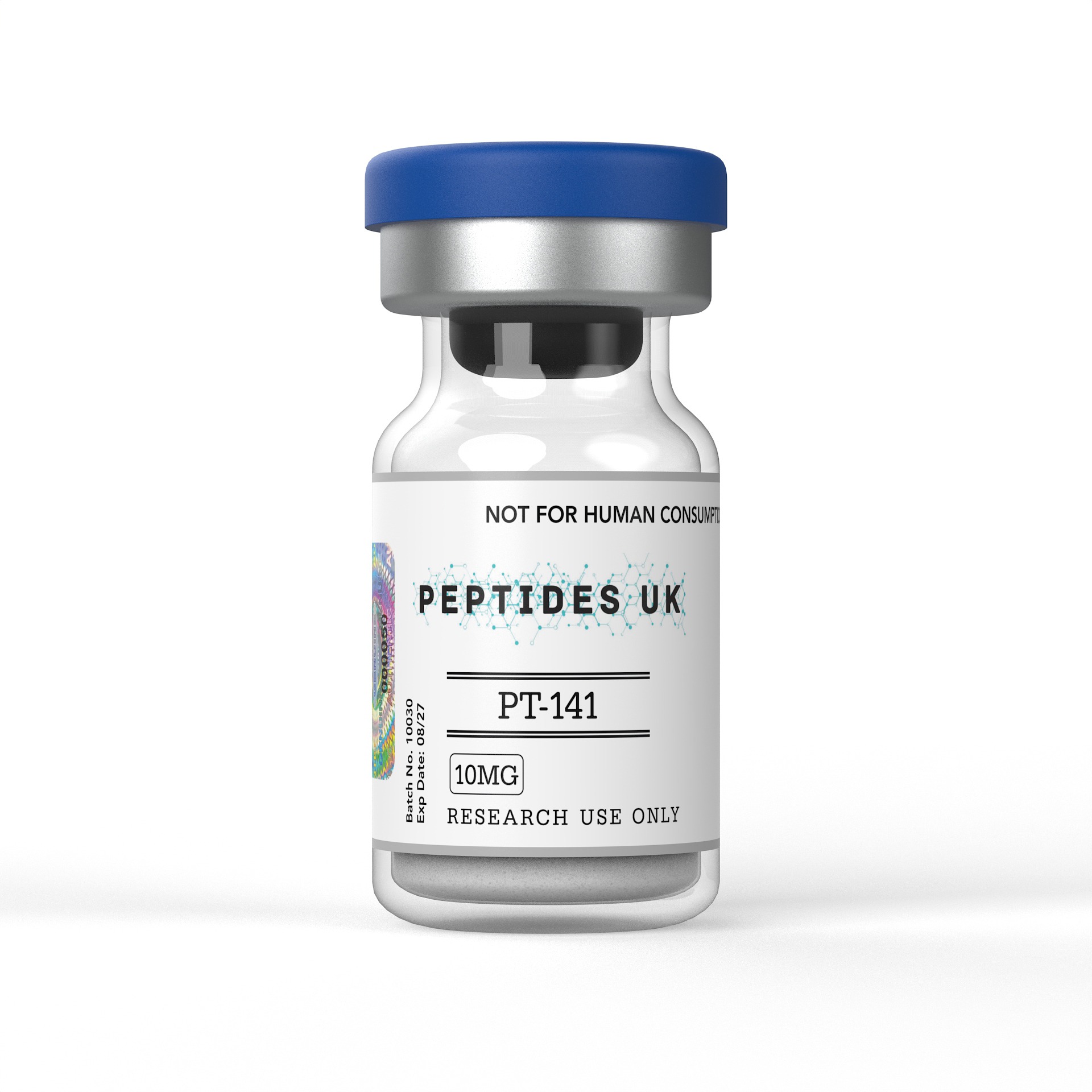
PT-141 (Bremelanotide) — cyclic heptapeptide melanocortin receptor agonist studied in reproductive neuroendocrinology and MC4R/MC3R receptor pharmacology research. HPLC-verified ≥99% purity, per-batch COA. Fast Ireland delivery.
For laboratory research use only. Not for human or veterinary use.


PT-141 , also designated Bremelanotide , is a synthetic cyclic heptapeptide melanocortin receptor agonist and one of the most mechanistically distinctive centrally acting sexual function research compounds available to laboratories in Ireland , a metabolically stable cyclic analogue of alpha-melanocyte-stimulating hormone (α-MSH) that activates melanocortin MC3R and MC4R receptors in hypothalamic and limbic circuits governing sexual motivation and arousal, producing pro-erectile and pro-sexual behaviour effects through central nervous system melanocortin pathway activation rather than through peripheral vascular mechanisms, making it an indispensable research tool for studying melanocortin receptor pharmacology and MC3R/MC4R signal transduction, hypothalamic sexual motivation neurocircuitry, the central nervous system regulation of sexual arousal and erectile function, the melanocortin system’s roles in energy homeostasis and feeding behaviour, the interaction between melanocortin and dopamine reward circuitry in motivated sexual behaviour, and the comparative pharmacology of melanocortin receptor agonists with differing receptor subtype selectivity profiles, Researchers and institutions across Ireland can source verified, research-grade PT-141 directly from our Irish peptide supply, with domestic-speed dispatch and complete batch documentation.
✅ ≥99% Purity and HPLC & Mass Spectrometry Verified
✅ Batch-Specific Certificate of Analysis (CoA) Included
✅ Sterile Lyophilised Powder | GMP Manufactured
✅ Fast Dispatch to Ireland | Peptides Ireland Stock
PT-141 . Bremelanotide , is a synthetic cyclic heptapeptide with the sequence cyclo-(Nle4,Asp5,D-Phe7)-α-MSH(4-10) , representing a cyclised, metabolically stabilised analogue of the melanocortin peptide Melanotan II (MT-II) from which it was derived through hydrolysis of the C-terminal amide, producing a compound with preserved melanocortin receptor agonist activity but improved metabolic stability and an altered pharmacokinetic profile. PT-141 was developed through the research programme examining Melanotan II’s unexpected pro-erectile effects , originally discovered incidentally during sunless tanning research when α-MSH analogue administration produced spontaneous penile erections in human volunteers . And subsequently characterised as a melanocortin MC3R and MC4R agonist acting through central hypothalamic and limbic circuits to produce sexual arousal and pro-erectile effects through a mechanism entirely distinct from phosphodiesterase-5 inhibitors and other peripherally acting erectile function compounds.
The melanocortin system , comprising five receptor subtypes (MC1R through MC5R), the endogenous agonist ligands α-MSH, β-MSH, γ-MSH, and ACTH derived from the POMC precursor, and the endogenous antagonists agouti and agouti-related protein (AgRP) . Is one of the most pleiotropic signalling systems in mammalian biology, regulating pigmentation, energy homeostasis, inflammation, immune function, sexual function, and cardiovascular biology through receptor subtype-selective mechanisms across peripheral and central tissues. PT-141’s primary pharmacological relevance for sexual function research derives from its preferential activity at MC3R and MC4R . The centrally expressed melanocortin receptor subtypes enriched in hypothalamic nuclei governing energy balance, sexual behaviour, and autonomic function . Where its activation produces the neurochemical changes in dopaminergic, oxytocinergic, and serotonergic circuits that drive sexual motivation and arousal behaviour independently of peripheral vascular changes.
PT-141’s cyclic structure . Formed through lactam bridge cyclisation between Asp5 and Lys10 in the parent MT-II sequence , confers the metabolic stability that distinguishes it from linear α-MSH fragments, enabling systemic administration with sufficient bioavailability and duration of action for in vivo research paradigms. The Nle4 substitution replacing methionine prevents oxidative inactivation, and the D-Phe7 substitution confers resistance to endopeptidase cleavage and contributes to the conformational stabilisation of the pharmacophore required for melanocortin receptor binding.
In controlled laboratory and pre-clinical settings, PT-141 is studied across melanocortin receptor pharmacology, sexual behaviour neuroscience, energy homeostasis, hypothalamic circuit biology, and comparative melanocortin agonist research applications:
PT-141 is used as a reference agonist for MC3R and MC4R pharmacology , characterising receptor binding affinities at each melanocortin receptor subtype, Gs-coupled cAMP-PKA signal transduction downstream of MC3R and MC4R engagement, receptor internalisation and desensitisation kinetics, and how MC3R versus MC4R selective activation contributes to the distinct biological outputs of central melanocortin signalling. Research uses PT-141 alongside subtype-selective agonists and antagonists to dissect the individual contributions of MC3R and MC4R to pro-sexual, anorectic, and autonomic effects of melanocortin pathway activation.
PT-141’s pro-sexual and pro-erectile effects through central MC3R/MC4R activation make it the primary research tool for studying central nervous system regulation of sexual motivation and arousal and examining the hypothalamic nuclei and limbic circuits through which melanocortin receptor activation produces sexual behaviour, the neurochemical mediators downstream of melanocortin receptor activation including dopamine release in the nucleus accumbens and oxytocin release from the paraventricular nucleus, and how these downstream neurochemical changes drive the motivational and physiological components of sexual arousal. Research has characterised the neural circuits linking melanocortin receptor activation in the medial preoptic area and paraventricular nucleus to downstream sexual behaviour and autonomic pro-erectile signalling.
PT-141’s pro-erectile effects . Mediated through central MC4R activation driving hypothalamic oxytocin neurone activation and downstream spinal parasympathetic outflow rather than through direct penile vascular PDE5 inhibition , make it a research tool for studying central mechanisms of erectile function. Research has characterised the spinal and peripheral autonomic pathways through which central melanocortin receptor activation produces penile erection and examining oxytocin receptor-mediated spinal mechanisms, the role of NO-synthase activation in PT-141-induced erection, and how central melanocortin pathway activation interacts with peripheral vascular mechanisms that govern penile haemodynamics. These studies distinguish the central neurogenic mechanism of PT-141 from the peripheral haemodynamic mechanism of PDE5 inhibitors.
MC4R is the primary melanocortin receptor mediating the anorectic and energy expenditure-promoting effects of hypothalamic melanocortin signalling and and PT-141’s MC4R agonist activity makes it a research tool for studying melanocortin pathway contributions to energy balance alongside its sexual function biology. Research has characterised PT-141’s acute anorectic effects in rodent feeding models and examining food intake reductions following PT-141 administration, the hypothalamic nuclei mediating MC4R-driven anorexia, and how the energy balance and sexual behaviour effects of MC4R activation interact and are neuroanatomically segregated. These studies contribute to understanding of the shared melanocortin receptor biology underlying both energy homeostasis and sexual function regulation.
MC4R activation in the ventral tegmental area and nucleus accumbens modulates mesolimbic dopamine signalling . And research has examined how PT-141-induced melanocortin receptor activation in reward circuits influences dopamine release, dopamine receptor expression, and motivated behaviour. Studies have characterised the interaction between melanocortin and dopamine systems in producing the motivational component of PT-141-induced pro-sexual behaviour and examining whether dopamine receptor antagonists attenuate PT-141’s pro-sexual effects and characterising the anatomical sites of melanocortin-dopamine system convergence.
PT-141’s pro-erectile and pro-sexual effects are substantially mediated through MC4R activation of oxytocinergic neurones in the paraventricular nucleus , making it a research tool for studying the melanocortin-oxytocin pathway axis in hypothalamic sexual behaviour circuits. Research has characterised how PT-141 drives oxytocin release from PVN neurones, the downstream spinal and peripheral mechanisms through which centrally released oxytocin contributes to pro-erectile autonomic outflow, and whether oxytocin receptor antagonists block PT-141-induced sexual behaviour , establishing the oxytocinergic mechanism as a key effector pathway for melanocortin-mediated sexual function.
PT-141 is used in comparative research alongside other melanocortin agonists , including Melanotan II, α-MSH, MTII, and receptor subtype-selective agonists , to characterise how cyclisation, amino acid substitutions, and receptor subtype selectivity differences influence the sexual behaviour, feeding, and cardiovascular biology profiles of melanocortin receptor agonism. These comparative studies examine how structural differences between PT-141 and its parent compound MT-II alter the pharmacokinetic profile, receptor subtype selectivity, and balance of on-target versus off-target melanocortin receptor-mediated effects.
PT-141 and melanocortin receptor agonists produce transient blood pressure and heart rate changes through central autonomic melanocortin receptor activation and and research has characterised the cardiovascular biology of PT-141 administration as both a safety-relevant pharmacological property and as a tool for studying central melanocortin receptor contributions to cardiovascular autonomic regulation. Studies have examined the MC3R and MC4R mechanisms underlying PT-141’s cardiovascular effects , characterising the hypothalamic autonomic centres mediating melanocortin-induced blood pressure changes and how these cardiovascular effects are temporally and mechanistically related to the pro-sexual effects of PT-141 administration.
Research has established PT-141’s pro-erectile mechanism as centrally mediated through hypothalamic MC4R activation , demonstrating that PT-141 produces erections in rodent models through oxytocin and dopamine-dependent spinal mechanisms rather than through direct penile vascular effects, and that this central mechanism remains active in conditions where peripheral PDE5 inhibition is ineffective. These mechanistic studies established PT-141 as the prototype centrally acting pro-erectile research compound with a mechanistically distinct profile from sildenafil and related PDE5 inhibitors.
Research using MC3R and MC4R knockout mice and subtype-selective antagonists has established MC4R as the primary receptor mediating PT-141’s pro-erectile and pro-sexual effects . With MC4R-null mice failing to show PT-141-induced erections and MC4R-selective antagonists blocking pro-sexual behaviour, while MC3R-selective blockade produces more limited attenuation. These receptor subtype attribution studies established the MC4R-centred mechanism of PT-141’s sexual function pharmacology.
Research has documented that PT-141-induced erections are substantially blocked by central oxytocin receptor antagonist administration , characterising the oxytocinergic mechanism through which MC4R activation in the paraventricular nucleus drives downstream pro-erectile autonomic outflow. These oxytocin pathway studies established the mechanistic link between melanocortin receptor activation and oxytocin neurone engagement in sexual function biology.
Research has documented PT-141’s enhancement of sexual behaviour across male and female rodent models and characterising increased mount frequency, reduced inter-mount interval, and enhanced sexual motivation in male models, and increased solicitation behaviour, lordosis, and sexual receptivity in female models. These behavioural studies established PT-141’s sex-independent pro-sexual biology and characterised the motivational versus consummatory components of PT-141’s effects on sexual behaviour.
Research has characterised significant food intake reductions following PT-141 administration in rodent feeding models . With studies documenting dose-dependent anorexia mediated through MC4R activation in the hypothalamic paraventricular nucleus and arcuate nucleus. These feeding biology studies established that PT-141’s MC4R agonist activity simultaneously engages sexual function and energy homeostasis circuits . Demonstrating the shared MC4R basis of these distinct behavioural outputs.
Clinical research confirmed PT-141’s pro-sexual effects in human subjects , with studies in men with erectile dysfunction and women with hypoactive sexual desire documenting improvements in sexual arousal, genital response, and sexual satisfaction following PT-141 administration. These clinical studies validated the translational relevance of the pre-clinical melanocortin sexual function biology and established PT-141 as a pharmacologically active pro-sexual compound through a central mechanism in humans.
Research has characterised PT-141’s transient blood pressure increases . Documenting mean arterial pressure elevation peaking within 30 minutes and resolving within two hours following administration, mediated through central autonomic melanocortin receptor activation. These cardiovascular characterisation studies established the transient and centrally mediated nature of PT-141’s haemodynamic effects and their mechanistic relationship to melanocortin autonomic biology.
| Feature | PT-141 (Bremelanotide) | Melanotan II (MT-II) | α-MSH | Sildenafil | SHU9119 |
|---|---|---|---|---|---|
| Type | Cyclic heptapeptide melanocortin agonist | Cyclic heptapeptide melanocortin agonist and PT-141 parent compound | Endogenous linear tridecapeptide melanocortin agonist | PDE5 inhibitor . Small molecule | Cyclic melanocortin antagonist / partial agonist |
| Receptor Profile | MC3R / MC4R agonist and MC1R activity; no significant MC2R | MC1R / MC3R / MC4R agonist . Broader subtype activity than PT-141 | MC1R / MC3R / MC4R / MC5R agonist . Full endogenous profile | No melanocortin receptor activity | MC3R / MC4R antagonist , MC1R partial agonist |
| Mechanism | Central MC3R/MC4R → oxytocin/dopamine → pro-sexual / pro-erectile | Central MC3R/MC4R → pro-sexual + MC1R → tanning | Peripheral and central melanocortin signalling , full receptor profile | PDE5 inhibition → cGMP elevation → penile smooth muscle relaxation | Blocks MC3R/MC4R , reference antagonist |
| Sexual Function Effect | Pro-sexual and pro-erectile , central mechanism | Pro-sexual and pro-erectile + tanning + anorexia | Pro-sexual . Short duration | Pro-erectile , peripheral vascular only | Blocks melanocortin pro-sexual effects |
| Tanning Effect | Minimal MC1R activity lower than MT-II | Yes and significant MC1R pigmentation activity | Minimal at research doses | None | Blocks tanning |
| Central vs Peripheral | Central , hypothalamic MC3R/MC4R | Central and peripheral | Central and peripheral | Peripheral and penile vasculature | Central antagonist |
| Half-Life | Hours , cyclic structure metabolic stability | Hours and cyclic structure | Minutes — rapid degradation | Hours | Hours |
| Research Profile | Extensively studied . Reference central pro-sexual melanocortin agonist | Extensively studied | Extensively studied | Extensively studied | Well-documented . Reference MC3R/MC4R antagonist |
| Parameter | Detail |
|---|---|
| Name | PT-141 |
| Also Designated | Bremelanotide / cyclo-(Nle4,Asp5,D-Phe7)-α-MSH(4-10) |
| Type | Synthetic Cyclic Heptapeptide Melanocortin Receptor Agonist , Research Grade |
| Structure | Cyclic lactam heptapeptide , Nle4 substitution prevents oxidation / D-Phe7 confers protease resistance / Asp5-Lys10 lactam bridge provides cyclic constraint and metabolic stability |
| Molecular Weight | 1025.2 Da |
| Mechanism | MC3R and MC4R agonism → hypothalamic PVN oxytocin neurone activation → spinal oxytocin receptor-mediated pro-erectile autonomic outflow + mesolimbic dopamine release → sexual motivation and arousal and central mechanism independent of peripheral PDE5 |
| Primary Receptor Targets | MC4R (primary for sexual function and anorexia) / MC3R / MC1R (lower affinity) |
| Key Research Distinction | Only centrally acting melanocortin receptor agonist research compound for studying hypothalamic sexual motivation neurocircuitry through MC3R/MC4R-oxytocin-dopamine pathway and mechanistically distinct from all peripherally acting sexual function compounds |
| Primary Research Areas | Melanocortin receptor pharmacology / MC3R and MC4R biology / central sexual motivation neuroscience / hypothalamic energy homeostasis / melanocortin-oxytocin pathway / melanocortin-dopamine interaction / cardiovascular autonomic biology |
| Purity | ≥99% HPLC & MS Verified |
| Form | Sterile Lyophilised Powder |
| Solubility | Sterile water or 0.1% acetic acid aqueous solution |
| Storage (Powder) | -20°C, protect from light and moisture |
| Storage (Reconstituted) | -80°C in aliquots and minimise freeze-thaw cycles |
| Manufacturing | GMP Manufactured |
| Intended Use | Research use only |
PT-141 is a cyclic heptapeptide with good aqueous solubility and reconstitute by adding sterile water or 0.1% acetic acid in sterile water slowly to the lyophilised powder and swirling gently. The cyclic lactam structure confers metabolic stability and does not require special redox conditions avoid strongly alkaline pH that can promote lactam hydrolysis over extended incubation. Avoid oxidising conditions that could modify the Nle4 residue. Prepare single-use aliquots and store at -80°C. For in vivo behavioural studies, prepare fresh working solutions in sterile saline at the time of administration. For receptor binding and cell-based MC4R signalling assays, dilute into assay buffer immediately before use. Use low-binding tubes at lower working concentrations.
Every order of PT-141 in Ireland includes:
✅ Batch-Specific Certificate of Analysis (CoA)
✅ HPLC Chromatogram
✅ Mass Spectrometry Confirmation
✅ Sterility & Endotoxin Testing Report
✅ Reconstitution Protocol — including cyclic peptide stability guidance
✅ Technical Research Support
Yes and we supply research-grade PT-141 to researchers and institutions across Ireland with fast dispatch and full batch documentation. Supplied strictly for laboratory research purposes only.
PT-141 was derived from Melanotan II through hydrolysis of MT-II’s C-terminal amide and producing a compound with preserved MC3R/MC4R agonist activity and pro-sexual effects but reduced MC1R-mediated pigmentation activity relative to MT-II. PT-141 is the more pharmacologically selective research tool for studying central sexual function biology without the tanning and broader melanocortin receptor activation profile of MT-II.
PDE5 inhibitors act peripherally . Inhibiting cGMP degradation in penile smooth muscle to enhance nitric oxide-mediated vasodilation and erection. PT-141 acts centrally , activating hypothalamic MC4R to drive oxytocin neurone firing and downstream spinal pro-erectile autonomic outflow. The two mechanisms are anatomically and pharmacologically independent , PT-141 can produce erections in models where peripheral vascular PDE5 mechanisms are compromised, and PDE5 inhibitors don’t engage central sexual motivation circuits activated by PT-141.
MC4R is selectively expressed in hypothalamic nuclei governing sexual behaviour . Including the paraventricular nucleus, medial preoptic area, and ventromedial hypothalamus , and its activation drives oxytocin release and mesolimbic dopamine signalling that produce sexual motivation and pro-erectile autonomic outflow. MC4R knockout mice fail to show PT-141-induced erections, and MC4R-selective antagonists block pro-sexual behaviour . Establishing MC4R as the non-redundant receptor for this biology.
MC4R activation by PT-141 in the paraventricular nucleus directly stimulates oxytocinergic neurones . Driving central oxytocin release that activates spinal oxytocin receptors on sacral parasympathetic neurones governing penile erection. Central oxytocin receptor antagonist administration substantially blocks PT-141-induced erections , establishing oxytocin neurone activation as the primary downstream effector mechanism linking MC4R engagement to peripheral pro-erectile autonomic output.
Vehicle controls matched to reconstitution solvent are essential. MC4R selective antagonist controls HS014 or SHU9119 , confirm receptor specificity of pro-sexual and anorectic effects. Oxytocin receptor antagonist controls establish oxytocinergic mechanism dependence. Dopamine receptor antagonist controls characterise the dopaminergic contribution to PT-141’s motivational effects. For sexual behaviour studies, non-sexual behaviour controls confirming that PT-141-induced changes aren’t secondary to locomotion or anxiety changes are important for mechanistic interpretation.
≥99% purity is essential for melanocortin receptor pharmacology studies, sexual behaviour paradigms, MC4R signal transduction research, and comparative melanocortin agonist studies. Impurities including linear peptide fragments or partially cyclised species would show altered receptor subtype selectivity and could confound dose-response characterisation and mechanistic attribution. All PT-141 Ireland stock is verified to ≥99% purity by HPLC and mass spectrometry with cyclic structure confirmation.
PT-141’s MC4R agonist activity simultaneously engages the energy balance circuits in which MC4R is the primary mediator of hypothalamic melanocortin-driven anorexia , producing significant food intake reductions alongside its pro-sexual effects. This dual biology makes PT-141 a research tool for studying how the same hypothalamic MC4R population governs both sexual motivation and energy homeostasis, and for examining the neuroanatomical segregation , or convergence . Of these distinct behavioural outputs from shared receptor activation.
PT-141 is supplied exclusively for legitimate scientific research purposes conducted within licensed laboratory environments. This product isn’t intended for human consumption, self-administration, or any therapeutic application. It must be handled by qualified researchers in compliance with applicable Irish and EU regulations and institutional ethics guidelines. By purchasing, you confirm that this compound will be used solely for approved in vitro or pre-clinical research purposes.
PT-141 isn’t authorised as a medicine by the HPRA. It’s legal to buy, hold and use as a research chemical for in-vitro laboratory work, and that’s the only use we supply it for. If you want the full regulatory picture, see our Irish researcher’s guide to peptide legality.
Every vial ships with an HPLC purity trace (most of the time ≥99%), mass-spec identity confirmation, and endotoxin/heavy-metal screening on the batch. The full per-batch Certificate of Analysis is available on request from research@peptideslabireland.com. Our quality system is ISO 9001 certified and third-party testing runs through a UKAS-accredited lab.
Standard protocol: let the PT-141 vial and your bacteriostatic water come to room temperature, wipe both stoppers with a 70% isopropyl swab, then inject the water slowly down the side wall of the peptide vial. Don’t stream directly onto the powder cake. Swirl gently, don’t shake, and give it five to ten minutes to fully dissolve. Label the vial with compound, concentration and reconstitution date, store at 2–8°C between assays.
Same-day dispatch on orders placed before 2pm on a working day. Delivery is 24–48 hours to any Irish county via An Post Express or DPD. Cold chain is preserved with insulated wrap plus gel pack. No customs step, no border delays and because it never leaves Ireland.
In the Irish research space PT-141 tends to appear in melanocortin-receptor and libido-pathway research. It’s often paired with Kisspeptin-10 when researchers are studying combined mechanisms rather than the compound alone.
Lyophilised PT-141 is stable at ≤-20°C long-term. Once reconstituted, keep it refrigerated at 2–8°C and use within the working shelf life described on the CoA. Freeze/thaw cycles degrade peptides, so aliquot the reconstituted solution if you plan to run assays over several weeks.
Receive News