PRODUCTS SOLD ON PEPTIDESLABIRELAND.COM ARE FOR RESEARCH PURPOSES ONLY AND ARE NOT FOR HUMAN OR VETERINARY USE.
Fast Ireland delivery — dispatched to Dublin, Cork, Galway, Limerick and nationwide.
€23.99 – €37.99Price range: €23.99 through €37.99
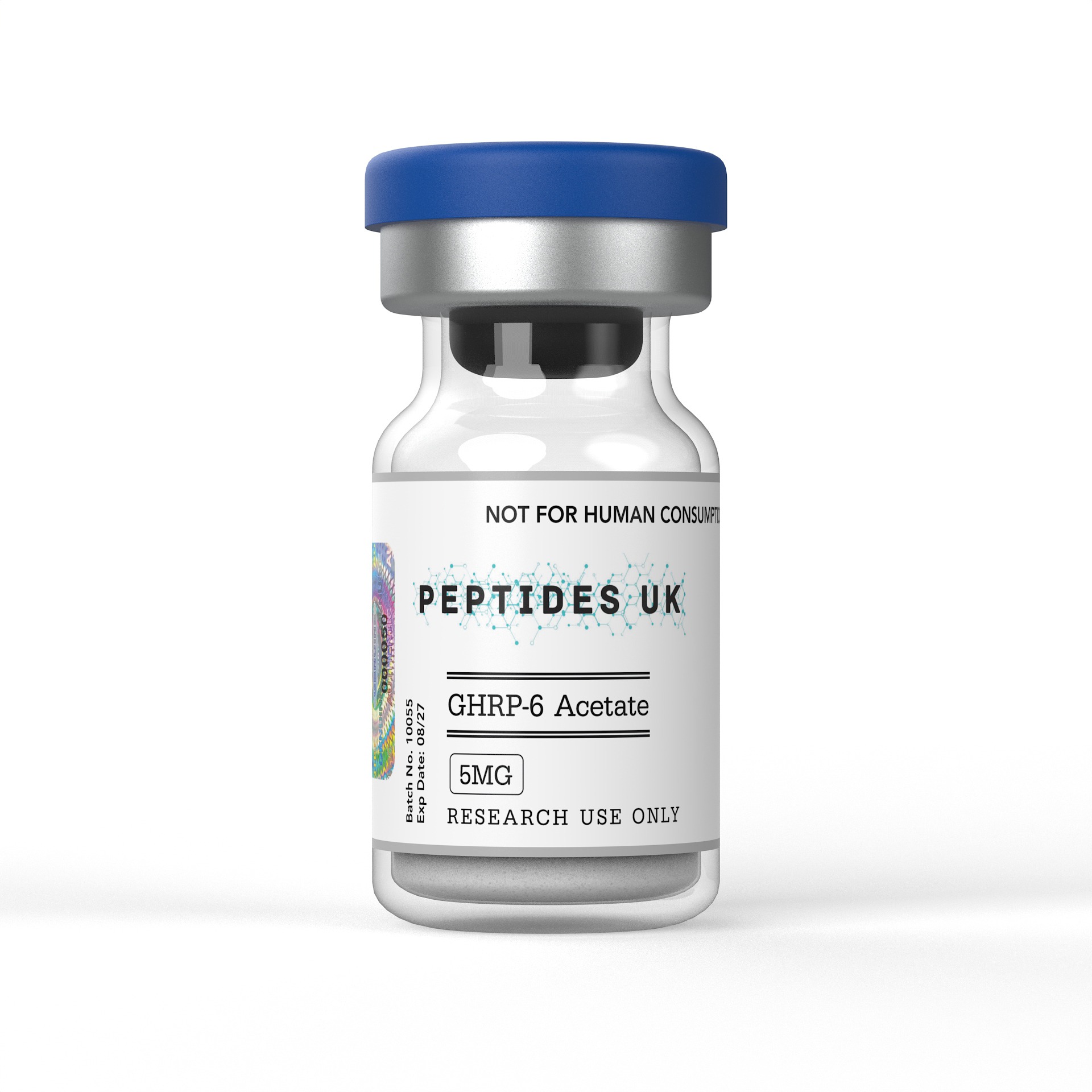
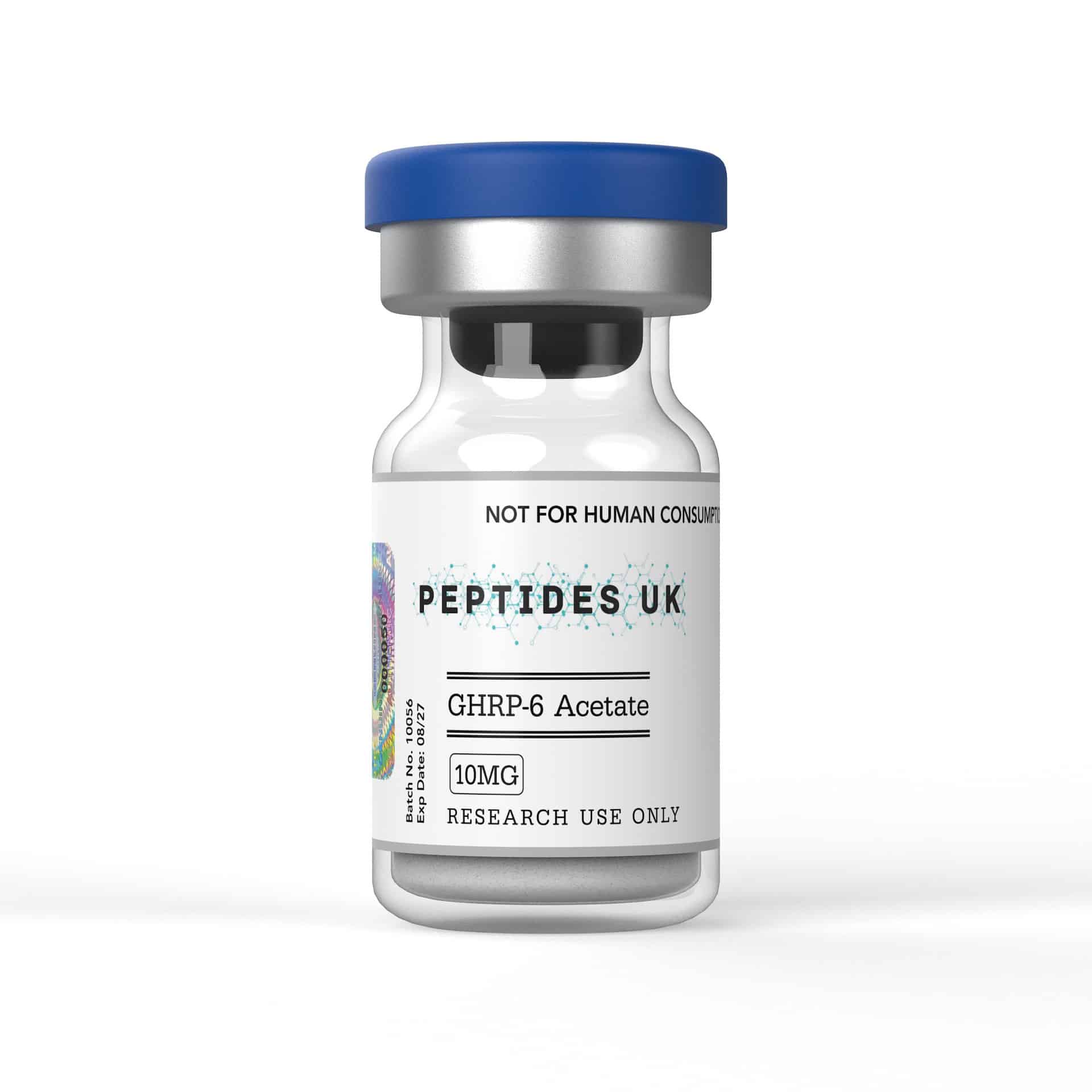
GHRP-6 Acetate — synthetic hexapeptide GH secretagogue with GHS-R1a receptor engagement and appetite-stimulating profile in research models. HPLC-verified ≥99% purity, per-batch COA. Fast Ireland delivery.
For laboratory research use only. Not for human or veterinary use.



GHRP-6 , Growth Hormone Releasing Peptide-6 , is a synthetic hexapeptide ghrelin receptor agonist and one of the most extensively characterised growth hormone secretagogue research compounds available to laboratories in Ireland and a His-D-Trp-Ala-Trp-D-Phe-Lys-NH2 hexapeptide that potently activates the growth hormone secretagogue receptor (GHS-R1a) in pituitary somatotroph cells and hypothalamic arcuate nucleus neurones to drive growth hormone release through mechanisms complementary to and synergistic with endogenous GHRH, making it an indispensable research tool for studying GHS-R1a receptor pharmacology and signal transduction, the ghrelin axis and growth hormone secretagogue biology, pituitary somatotroph cell biology and GH synthesis and secretion, the complementary and synergistic regulation of GH release by GHRH and ghrelin receptor agonists, IGF-1 axis downstream biology, ghrelin receptor-mediated appetite and energy balance regulation, the cytoprotective and anti-inflammatory biology of ghrelin receptor activation beyond GH secretion, and the comparative pharmacology of first, second, and third generation growth hormone secretagogues in the research context of the ghrelin axis, Researchers and institutions across Ireland can source verified, research-grade GHRP-6 directly from our Irish peptide supply, with domestic-speed dispatch and complete batch documentation.
✅ ≥99% Purity HPLC & Mass Spectrometry Verified
✅ Batch-Specific Certificate of Analysis (CoA) Included
✅ Sterile Lyophilised Powder | GMP Manufactured
✅ Fast Dispatch to Ireland | Peptides Ireland Stock
GHRP-6 and His-D-Trp-Ala-Trp-D-Phe-Lys-NH2 , is a synthetic hexapeptide growth hormone secretagogue developed through the systematic structure-activity relationship programme that began with the identification of met-enkephalin-derived peptides as GH-releasing compounds in the 1970s and 1980s , a research programme conducted primarily in Cyril Bowers’ laboratory at Tulane University that established the pharmacophore requirements for synthetic GH secretagogue activity and ultimately led to the characterisation of the GHS-R1a receptor and the subsequent discovery of ghrelin as its endogenous ligand. GHRP-6 emerged from this programme as one of the most potent and pharmacologically well-characterised first-generation synthetic GH secretagogues , a hexapeptide incorporating D-amino acids at positions 2 and 5 to confer proteolytic resistance and stabilise the pharmacophore conformation required for high-affinity GHS-R1a binding.
The GHS-R1a receptor . The growth hormone secretagogue receptor subtype 1a , is a Gq/11-coupled GPCR expressed at highest density in pituitary somatotroph cells and hypothalamic arcuate nucleus neurones, with expression also characterised in peripheral tissues including stomach, heart, liver, adipose tissue, and immune cells. Its endogenous ligand ghrelin , an acylated 28 amino acid peptide produced mainly in gastric X/A-like cells and was identified in 1999 by Kojima and colleagues as the natural GHS-R1a agonist, establishing that the ghrelin axis represents a physiological GH regulatory system operating in parallel with and synergistically to the classical GHRH-somatostatin axis. GHRP-6’s GHS-R1a agonism recapitulates the GH-releasing and appetite-stimulating effects of endogenous ghrelin , making it a pharmacologically tractable research tool for studying GHS-R1a biology with the practical advantages of a synthetic hexapeptide over the larger acylated ghrelin protein.
GHRP-6’s GH-releasing mechanism is mechanistically distinct from and synergistic with GHRH and with GHRH acting through Gs-coupled cAMP-PKA signalling in somatotrophs to drive GH gene transcription and secretion, and GHRP-6 acting through GHS-R1a-Gq/11-PLC-IP3-calcium signalling to produce a complementary and potentiating GH secretory stimulus. When GHRP-6 and GHRH are administered together, the combined GH secretory response substantially exceeds the sum of individual responses . Establishing the synergistic relationship between the two GH regulatory pathways and making GHRP-6 an essential research tool for studying their interaction. Beyond its GH-releasing biology, GHRP-6’s GHS-R1a agonism produces appetite stimulation through hypothalamic and vagal mechanisms, cytoprotective effects in cardiac and hepatic tissue, and anti-inflammatory biology . Establishing GHS-R1a as a pleiotropic receptor whose biological significance extends substantially beyond GH secretion regulation.
In controlled laboratory and pre-clinical settings, GHRP-6 is studied across GHS-R1a receptor pharmacology, GH secretion biology, ghrelin axis research, appetite regulation, cytoprotection, and comparative growth hormone secretagogue applications:
GHRP-6 is the primary reference first-generation agonist for GHS-R1a receptor pharmacology and used to characterise receptor binding kinetics, Gq/11-PLC-IP3 calcium mobilisation, PKC activation, and downstream GH secretory responses in pituitary somatotroph cell models. Research uses GHRP-6 to establish reference pharmacodynamic profiles for GHS-R1a activation and characterising concentration-response relationships, receptor internalisation kinetics, desensitisation dynamics, and the signal transduction cascade linking GHS-R1a engagement to GH granule exocytosis. These signal transduction studies provide the reference dataset against which second and third generation GH secretagogue pharmacology is evaluated.
GHRP-6 drives potent and dose-dependent GH release from pituitary somatotroph cells and making it a primary research tool for studying the cellular biology of GH synthesis, storage, and secretion. Research has characterised GHRP-6-induced GH secretion kinetics in isolated somatotroph cells and anterior pituitary preparations , examining calcium-dependent GH granule exocytosis, GH gene transcription regulation, somatotroph cell calcium dynamics following GHS-R1a activation, and how GHS-R1a signalling integrates with somatostatin-mediated inhibition and GHRH-mediated stimulation to determine net somatotroph secretory output. These somatotroph biology studies have established GHRP-6 as the reference GH secretagogue for studying pituitary GH secretory biology in vitro.
GHRP-6 and GHRH produce synergistic GH release when administered together , with the combined response exceeding the sum of individual responses through complementary Gq/11 and Gs signalling pathway interactions in somatotrophs. Research has used GHRP-6 in combination with GHRH to characterise the molecular basis of this synergy and examining how GHS-R1a-driven calcium mobilisation potentiates GHRH-induced cAMP-PKA signalling, how the two pathways converge on GH granule exocytosis machinery, and what the physiological implications of ghrelin-GHRH synergy are for GH pulse generation and amplitude modulation. These synergy studies have established GHRP-6 as an essential research tool for studying integrated GH axis regulation.
GHRP-6 serves as a pharmacological surrogate for ghrelin in GHS-R1a biology research . Enabling controlled receptor activation studies without the acylation-dependent instability and larger molecular size of native ghrelin. Research has used GHRP-6 to examine GHS-R1a biology in tissues and contexts where ghrelin’s complex pharmacology and including unacylated ghrelin’s partially distinct biology and complicates mechanistic interpretation. Studies have compared GHRP-6 and acylated ghrelin pharmacology to characterise the extent to which the synthetic hexapeptide recapitulates endogenous ghrelin’s receptor activation biology , establishing GHRP-6 as a valid surrogate for the GHS-R1a agonism component of ghrelin biology.
GHS-R1a activation by GHRP-6 produces robust appetite stimulation . Through hypothalamic arcuate nucleus NPY/AgRP neurone activation and vagal afferent signalling , making GHRP-6 a research tool for studying the ghrelin receptor’s role in appetite and energy balance regulation. Research has characterised GHRP-6-induced food intake increases in rodent feeding paradigms . Examining the hypothalamic neurochemical changes including NPY and AgRP upregulation, the orexigenic signalling pathways downstream of GHS-R1a activation in arcuate nucleus neurones, and how ghrelin receptor-mediated appetite stimulation interacts with leptin, insulin, and other metabolic hormone signals in the hypothalamic energy balance circuit. These feeding biology studies have established GHRP-6 as a research tool for studying the orexigenic biology of GHS-R1a independently of its GH-releasing effects.
GHS-R1a activation produces cytoprotective effects in cardiac, hepatic, and other tissue contexts, Independently of GH secretion . Through direct tissue GHS-R1a-mediated anti-apoptotic, anti-inflammatory, and pro-survival signalling. Research has used GHRP-6 to characterise cardioprotective effects in cardiac ischaemia-reperfusion injury models , documenting reduced infarct size, improved post-ischaemic cardiac function, reduced cardiomyocyte apoptosis, and attenuation of inflammatory responses in GHRP-6-treated hearts. Studies have characterised the GHS-R1a-mediated cardioprotective signalling mechanisms , examining PI3K-Akt pro-survival pathway activation, NF-κB anti-inflammatory signalling, and mitochondrial protection as components of the GHS-R1a cytoprotective biology that operates independently of pituitary GH secretion.
GHS-R1a is expressed on macrophages, neutrophils, and other immune cells . And GHRP-6’s GHS-R1a agonism produces anti-inflammatory effects in these cell types through cAMP and PI3K-Akt-mediated suppression of pro-inflammatory cytokine production. Research has examined GHRP-6’s anti-inflammatory biology in macrophage models . Characterising reduced TNF-alpha, IL-1beta, and IL-6 production, inhibition of NF-κB activation, and modulation of macrophage polarisation state following GHS-R1a activation. These immune biology studies have established GHS-R1a as a pharmacologically accessible anti-inflammatory target and GHRP-6 as the reference agonist for studying ghrelin receptor-mediated immune modulation.
GHRP-6 is studied alongside second-generation GH secretagogues including GHRP-2, Ipamorelin, and Hexarelin, and third-generation non-peptide secretagogues including MK-677 and characterising how structural evolution across the GH secretagogue class modifies GHS-R1a binding affinity, selectivity, GH release potency, appetite stimulation, prolactin and cortisol co-secretion, and cytoprotective biology. These comparative studies examine GHRP-6 as the first-generation reference compound and establishing potency ratios, receptor selectivity profiles, and biological effect comparisons that characterise the pharmacological evolution of the GH secretagogue class from GHRP-6 through to highly selective second-generation compounds like Ipamorelin.
Research has documented GHRP-6’s potent and dose-dependent GH secretion in rodents, dogs, non-human primates, and humans and characterising GH pulse amplitude increases, GH secretory kinetics, and dose-response relationships across species. These multi-species GH secretion studies established GHRP-6 as a pharmacologically validated GHS-R1a agonist with conserved GH-releasing biology across mammalian species and provided the translational foundation for human GH secretagogue research.
Research has mechanistically characterised the synergistic GH release produced by GHRP-6 and GHRH co-administration . Documenting that combined responses exceed individual responses by 3–10 fold in multiple species, and characterising the complementary Gq/11 calcium and Gs cAMP signalling interactions through which GHS-R1a and GHRH receptor activation converge on enhanced GH granule exocytosis. These synergy studies established the molecular basis for integrated GH axis regulation and validated the physiological relevance of ghrelin-GHRH interaction in GH pulse generation.
Research has documented significant cardioprotective effects of GHRP-6 in rodent cardiac ischaemia-reperfusion models and characterising 25–40% reductions in infarct size, improved left ventricular function recovery, reduced cardiomyocyte apoptosis, and attenuated inflammatory infiltration in GHRP-6-treated hearts. These cardioprotection studies established that GHS-R1a agonism produces cardiac protection through GH-independent direct tissue mechanisms and contributed to characterisation of the cytoprotective biology of the ghrelin receptor beyond its neuroendocrine GH axis function.
Research has documented GHRP-6’s robust appetite stimulation in rodent feeding paradigms . Characterising significant food intake increases, NPY and AgRP upregulation in arcuate nucleus neurones, and hypothalamic orexigenic signalling pathway activation following GHRP-6 administration. These feeding biology studies established GHS-R1a as a physiologically significant appetite-regulating receptor and characterised the hypothalamic neurochemical mechanisms through which ghrelin receptor agonism drives food intake.
Research has characterised GHRP-6’s stimulation of prolactin and cortisol secretion alongside GH release , establishing these as off-target effects of first-generation GH secretagogue GHS-R1a activation that reflect incomplete receptor subtype selectivity. Comparative studies have used this prolactin and cortisol co-secretion profile as a benchmark against which second-generation selective secretagogues like Ipamorelin and which produce minimal prolactin and cortisol co-stimulation . Are evaluated, establishing GHRP-6’s endocrine co-secretion profile as an important variable in comparative GH secretagogue research design.
Research has documented GHRP-6’s anti-inflammatory effects in macrophage and immune cell models . Characterising reduced pro-inflammatory cytokine production, NF-κB pathway suppression, and modulation of macrophage activation state through GHS-R1a-mediated signalling. These immune biology studies established that GHS-R1a’s anti-inflammatory biology is a direct receptor-mediated effect independent of GH secretion and contributed to understanding of the ghrelin receptor as a pleiotropic immune-regulatory target.
Research characterising GHRP-6 and related synthetic GH secretagogues as potent GHS-R1a agonists prior to ghrelin’s identification established the pharmacological and receptor biology framework that guided the reverse pharmacology strategy through which ghrelin was ultimately discovered as the endogenous GHS-R1a ligand . Validating GHRP-6’s foundational role in establishing the ghrelin axis as a physiological GH regulatory system and appetite-regulating neuroendocrine pathway.
| Feature | GHRP-6 | GHRP-2 | Ipamorelin | Hexarelin | MK-677 (Ibutamoren) |
|---|---|---|---|---|---|
| Type | Synthetic hexapeptide , first generation GHS | Synthetic hexapeptide , second generation GHS | Synthetic pentapeptide second generation selective GHS | Synthetic hexapeptide . First/second generation GHS | Non-peptide small molecule , third generation GHS |
| GHS-R1a Affinity | High , reference first generation | Higher than GHRP-6 | High — selective | High , highest GH release potency in class | High and orally bioavailable |
| GH Release Potency | High | Higher than GHRP-6 | High , selective | Highest peptide GHS | High and oral dosing |
| Prolactin Co-secretion | Yes , off-target | Yes off-target | Minimal , key selectivity advantage | Yes and pronounced | Minimal |
| Cortisol Co-secretion | Yes . Off-target | Yes , off-target | Minimal | Yes . Pronounced | Minimal |
| Appetite Stimulation | Pronounced , NPY/AgRP | Pronounced | Moderate | Moderate | Pronounced |
| Cardioprotection | Yes . Documented | Yes | Limited data | Yes and pronounced | Limited direct data |
| Half-Life | ~15–60 minutes | ~15–60 minutes | ~2 hours | ~15–60 minutes | ~24 hours , oral |
| Key Research Distinction | Reference first generation GHS . Foundational GHS-R1a pharmacology and synergy research | Enhanced GH potency vs GHRP-6 and second generation reference | Selective GH release without prolactin/cortisol . Selectivity reference | Highest GH amplitude , cardioprotection biology | Oral GHS . Chronic GH axis stimulation research |
| Research Profile | Extensively studied foundational GHS compound | Extensively studied | Extensively studied | Extensively studied | Extensively studied |
| Parameter | Detail |
|---|---|
| Name | GHRP-6 |
| Also Designated | Growth Hormone Releasing Peptide-6 / His-D-Trp-Ala-Trp-D-Phe-Lys-NH2 |
| Sequence | His-D-Trp-Ala-Trp-D-Phe-Lys-NH2 |
| Type | Synthetic Hexapeptide GHS-R1a Agonist , First Generation Growth Hormone Secretagogue and Research Grade |
| Molecular Weight | 873.0 Da |
| Mechanism | GHS-R1a agonism . Gq/11-PLC-IP3 → calcium mobilisation → PKC activation → GH granule exocytosis from somatotrophs + hypothalamic arcuate NPY/AgRP activation → appetite stimulation + peripheral GHS-R1a cytoprotective and anti-inflammatory signalling |
| Primary Receptor | GHS-R1a . Gq/11-coupled GPCR , pituitary somatotrophs / hypothalamic arcuate nucleus / peripheral tissues |
| Key Research Distinction | Foundational first-generation GHS-R1a agonist , reference compound for GHS-R1a pharmacology, GHRH-GHRP synergy research, ghrelin axis biology, and comparative GH secretagogue pharmacology |
| Primary Research Areas | GHS-R1a pharmacology / GH secretion and somatotroph biology / GHRH-GHRP synergy / ghrelin axis research / appetite and energy balance / cardioprotection / anti-inflammatory biology / comparative GH secretagogue research |
| D-amino Acids | D-Trp2 and D-Phe5 — endopeptidase resistance and pharmacophore stabilisation |
| Prolactin / Cortisol Co-secretion | Yes , characteristic first generation GHS off-target profile |
| Purity | ≥99% HPLC & MS Verified |
| Form | Sterile Lyophilised Powder |
| Solubility | Sterile water or 0.1% acetic acid aqueous solution |
| Storage (Powder) | -20°C, protect from light and moisture |
| Storage (Reconstituted) | -80°C in aliquots . Minimise freeze-thaw cycles |
| Manufacturing | GMP Manufactured |
| Intended Use | Research use only |
GHRP-6 is a hydrophilic hexapeptide with good aqueous solubility . Reconstitute by adding sterile water or 0.1% acetic acid in sterile water slowly to the lyophilised powder and swirling gently until dissolved. The D-Trp2 residue provides endopeptidase resistance but remains susceptible to oxidation under strongly oxidising conditions , avoid hydrogen peroxide and strong oxidants. The Trp residues at positions 2 and 4 are light-sensitive . Protect reconstituted solutions from direct light exposure and prepare working solutions in amber or foil-wrapped tubes where possible. Avoid strongly alkaline conditions that can compromise the C-terminal amide. Prepare single-use aliquots and store at -80°C. For GH secretion studies in isolated pituitary preparations, dilute into physiological buffer at 37°C immediately before addition. For in vivo GH secretion studies, prepare fresh working solutions in sterile saline at the time of administration and administer via intravenous or subcutaneous routes according to established GH secretagogue protocols. For GHRH synergy studies, prepare GHRP-6 and GHRH separately in matched vehicles and administer simultaneously or in defined sequence according to the experimental protocol.
Every order of GHRP-6 in Ireland includes:
✅ Batch-Specific Certificate of Analysis (CoA)
✅ HPLC Chromatogram
✅ Mass Spectrometry Confirmation
✅ Sterility & Endotoxin Testing Report
✅ Reconstitution Protocol . Including Trp residue light sensitivity and acetic acid solubility guidance
✅ Technical Research Support
Yes , we supply research-grade GHRP-6 to researchers and institutions across Ireland with fast dispatch and full batch documentation. Supplied strictly for laboratory research purposes only.
GHS-R1a is the growth hormone secretagogue receptor subtype 1a — a Gq/11-coupled GPCR expressed at highest density in pituitary somatotrophs and hypothalamic arcuate nucleus neurones, with peripheral expression in stomach, heart, liver, and immune cells. It is the receptor through which both synthetic GH secretagogues like GHRP-6 and the endogenous ligand ghrelin produce GH release, appetite stimulation, and cytoprotective effects. GHS-R1a’s constitutive activity , unusually high baseline signalling in the absence of ligand , and its pleiotropic tissue distribution make it a pharmacologically complex and biologically significant research target extending well beyond pituitary GH secretion.
GHRH acts through Gs-coupled cAMP-PKA signalling in somatotrophs and driving GH gene transcription and secretion through adenylate cyclase activation. GHRP-6 acts through GHS-R1a-Gq/11-PLC-IP3 signalling and producing calcium mobilisation and PKC activation that drives GH granule exocytosis through a complementary calcium-dependent mechanism. The two pathways converge on GH secretory machinery and produce synergistic responses when activated simultaneously establishing GHRP-6 and GHRH as pharmacologically complementary rather than redundant GH regulatory research tools.
GHS-R1a activation by GHRP-6 in hypothalamic arcuate nucleus neurones drives NPY and AgRP upregulation , producing orexigenic signalling through the same hypothalamic circuits engaged by endogenous ghrelin during fasting and caloric restriction. This appetite stimulation is a direct GHS-R1a-mediated effect at hypothalamic GH-independent sites , reflecting the ghrelin receptor’s physiological role as an energy deficit sensor driving food-seeking behaviour. Research uses GHRP-6’s orexigenic biology to study ghrelin receptor-mediated appetite circuits in the absence of the full complexity of native ghrelin’s pharmacology.
First-generation GH secretagogues including GHRP-6 produce prolactin and cortisol co-secretion alongside GH release , reflecting incomplete GHS-R1a subtype selectivity or off-target receptor engagement at pituitary lactotrophs and corticotrophs. This co-secretion profile is pharmacologically significant as a confounding variable in research designs where GH-specific effects need to be isolated from prolactin and cortisol-mediated biology. Second-generation selective secretagogues like Ipamorelin were specifically developed to eliminate this co-secretion and making GHRP-6 versus Ipamorelin comparative studies a standard approach for identifying GH-specific versus co-secretion-dependent biological effects in GH secretagogue research.
Vehicle controls matched to reconstitution solvent are essential. GHS-R1a antagonist controls — [D-Lys3]-GHRP-6 is the standard GHS-R1a antagonist reference compound , confirm receptor specificity of GH secretion, appetite, and cytoprotective effects. GHRH receptor antagonist controls distinguish GHRP-6-specific from GHRH pathway-mediated GH secretion components. For GH-independent cytoprotective studies, GH receptor antagonist controls or hypophysectomised animal models confirm that observed cardioprotective effects are direct tissue GHS-R1a-mediated rather than secondary to GH release. For appetite studies, NPY/AgRP pathway antagonist controls characterise the hypothalamic neurochemical basis of GHRP-6-induced orexigenic responses.
≥99% purity is essential for GHS-R1a receptor pharmacology, GH secretion studies, GHRH synergy research, and comparative GH secretagogue pharmacology , where impurities including des-His1 fragments, oxidised Trp species, or D-to-L amino acid epimerisation products would show substantially altered GHS-R1a binding affinity and confound dose-response characterisation. D-amino acid configuration verification at Trp2 and Phe5 positions is a critical purity specification. All GHRP-6 Ireland stock is verified to ≥99% purity by HPLC and mass spectrometry with D-amino acid configuration confirmation.
GHRP-6 is supplied exclusively for legitimate scientific research purposes conducted within licensed laboratory environments. This product isn’t intended for human consumption, self-administration, or any therapeutic application. It must be handled by qualified researchers in compliance with applicable Irish and EU regulations and institutional ethics guidelines. By purchasing, you confirm that this compound will be used solely for approved in vitro or pre-clinical research purposes.
GHRP-6 Peptide isn’t authorised as a medicine by the HPRA. It’s legal to buy, hold and use as a research chemical for in-vitro laboratory work, and that’s the only use we supply it for. If you want the full regulatory picture, see our Irish researcher’s guide to peptide legality.
Every vial ships with an HPLC purity trace (typically ≥99%), mass-spec identity confirmation, and endotoxin/heavy-metal screening on the batch. The full per-batch Certificate of Analysis is available on request from research@peptideslabireland.com. Our quality system is ISO 9001 certified and third-party testing runs through a UKAS-accredited lab.
Standard protocol: let the GHRP-6 Peptide vial and your bacteriostatic water come to room temperature, wipe both stoppers with a 70% isopropyl swab, then inject the water slowly down the side wall of the peptide vial. Don’t stream directly onto the powder cake. Swirl gently, don’t shake, and give it five to ten minutes to fully dissolve. Label the vial with compound, concentration and reconstitution date, store at 2–8°C between assays.
Same-day dispatch on orders placed before 2pm on a working day. Delivery is 24–48 hours to any Irish county via An Post Express or DPD. Cold chain is preserved with insulated wrap plus gel pack. No customs step, no border delays . Because it never leaves Ireland.
In the Irish research space GHRP-6 Peptide tends to appear in GLP-1 receptor signalling and glucose-homeostasis research. It’s often paired with Tirzepatide or Retatrutide in comparison studies when researchers are studying combined mechanisms rather than the compound alone.
Lyophilised GHRP-6 Peptide is refrigerated post-reconstitution, working shelf life 14–28 days. Once reconstituted, keep it refrigerated at 2–8°C and use within the working shelf life described on the CoA. Freeze/thaw cycles degrade peptides, so aliquot the reconstituted solution if you plan to run assays over several weeks.
Receive News