PRODUCTS SOLD ON PEPTIDESLABIRELAND.COM ARE FOR RESEARCH PURPOSES ONLY AND ARE NOT FOR HUMAN OR VETERINARY USE.
Fast Ireland delivery — dispatched to Dublin, Cork, Galway, Limerick and nationwide.
€92.00
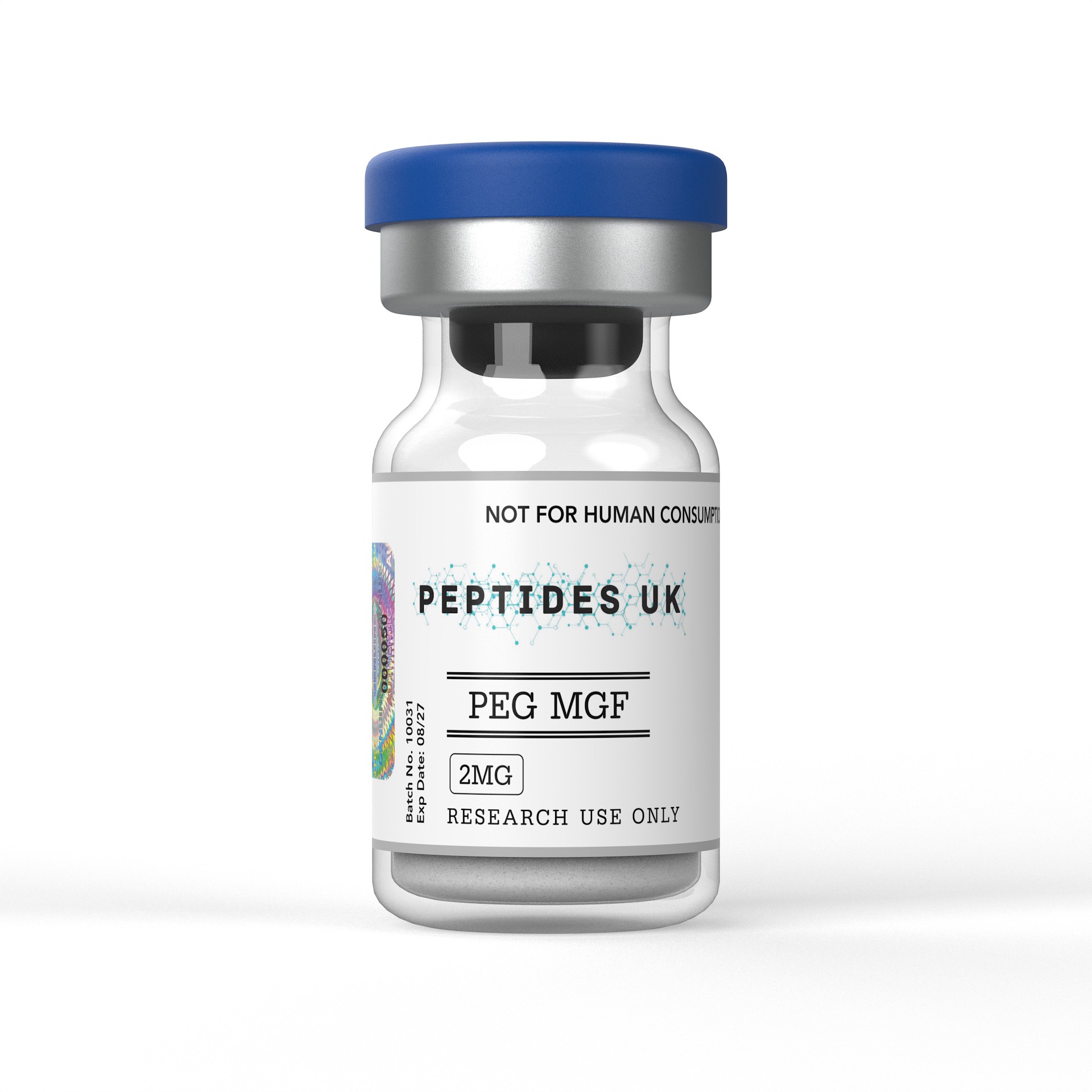
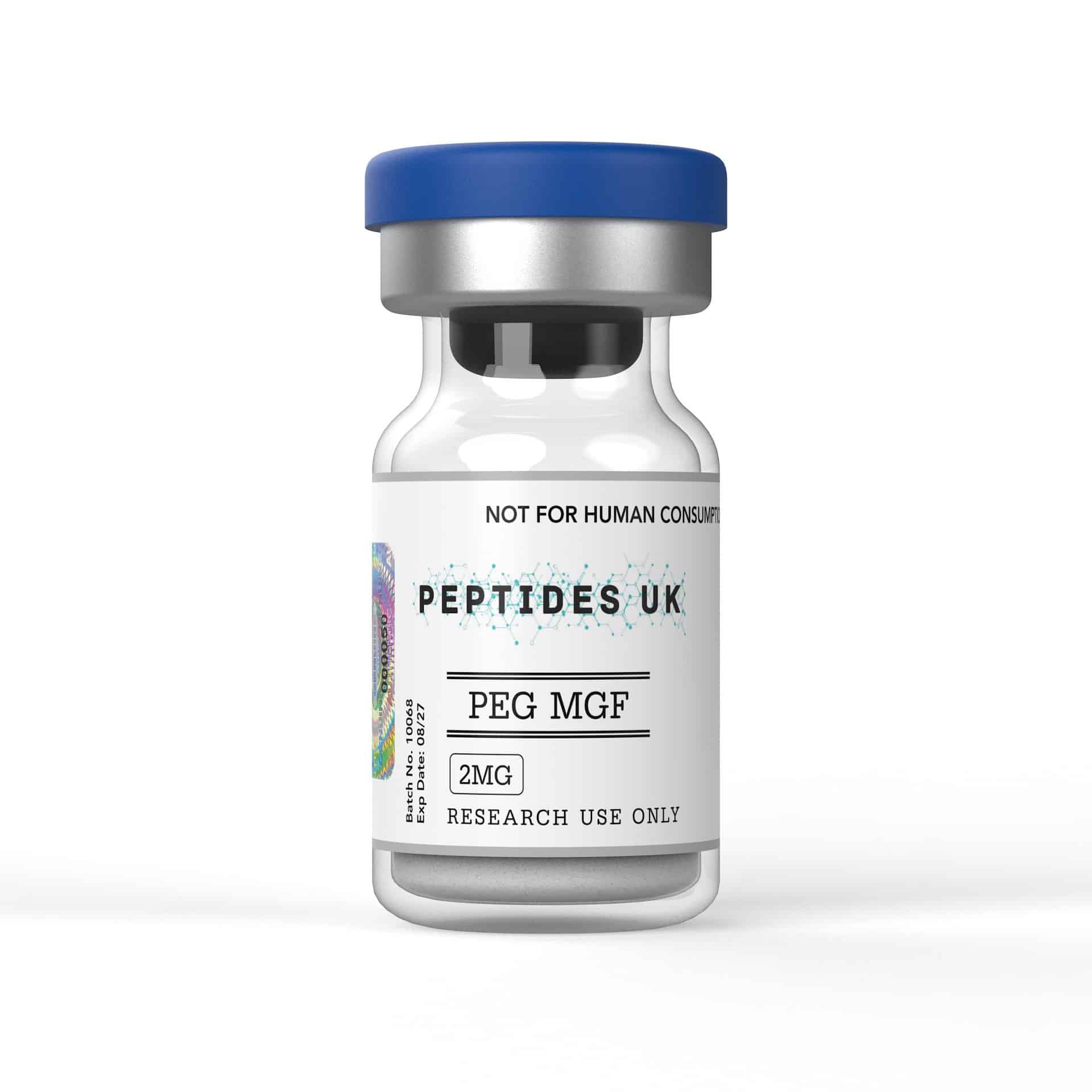
PEG-MGF (Pegylated Mechano Growth Factor) — PEG-modified extended-half-life MGF analogue studied in muscle repair and regeneration research. HPLC-verified ≥99% purity, per-batch COA. Fast Ireland delivery.
For laboratory research use only. Not for human or veterinary use.


PEG MGF , PEGylated Mechano Growth Factor . Is a synthetic polyethylene glycol-conjugated analogue of the mechano growth factor splice variant of insulin-like growth factor-1 and one of the most extensively characterised long-acting IGF-1 splice variant research compounds available to laboratories in Ireland and a PEGylated peptide corresponding to the unique C-terminal E-domain of the MGF splice variant of IGF-1 that activates distinct MGF-specific receptors and signalling pathways in skeletal muscle satellite cells, cardiomyocytes, and neural tissue to drive muscle progenitor cell activation, myoblast proliferation, tissue repair initiation, and cytoprotective biology through mechanisms distinct from and complementary to the canonical IGF-1 receptor pathway . With PEGylation of the native MGF E-domain peptide extending circulating half-life from minutes to days and enabling sustained tissue exposure not achievable with unconjugated MGF . Making it an indispensable research tool for studying MGF-specific receptor pharmacology and signal transduction distinct from IGF-1R biology, mechano-sensitive IGF-1 splice variant regulation and muscle satellite cell activation, the role of the MGF E-domain peptide in muscle repair and regeneration initiation, PEGylation as a half-life extension strategy for labile splice variant peptides, cardiac and neural MGF biology and cytoprotective signalling, and the comparative pharmacology of MGF E-domain peptide versus full-length IGF-1 splice variants in the research context of tissue repair and growth factor biology, Researchers and institutions across Ireland can source verified, research-grade PEG MGF directly from our Irish peptide supply, with domestic-speed dispatch and complete batch documentation.
✅ ≥99% Purity , HPLC & Mass Spectrometry Verified
✅ Batch-Specific Certificate of Analysis (CoA) Included
✅ Sterile Lyophilised Powder | GMP Manufactured
✅ Fast Dispatch to Ireland | Peptides Ireland Stock
PEG MGF , PEGylated Mechano Growth Factor , is the polyethylene glycol-conjugated form of the MGF E-domain peptide, a synthetic 24-amino acid peptide corresponding to the unique C-terminal extension domain that distinguishes the mechano growth factor splice variant of IGF-1 from other IGF-1 splice variants including IGF-1Ea and IGF-1Eb. Mechano Growth Factor is produced in skeletal muscle, cardiac muscle, bone, and neural tissue through mechano-sensitive alternative splicing of the IGF-1 pre-mRNA , a splicing event triggered by mechanical loading, muscle damage, exercise, and tissue injury that inserts a 49-nucleotide sequence producing the MGF reading frame shift and generating the unique MGF E-domain peptide sequence absent from all other IGF-1 splice variants. This mechano-sensitive production distinguishes MGF from the systemic liver-derived IGF-1 axis , MGF represents a locally produced, mechanically regulated autocrine and paracrine tissue repair signal whose biology is architecturally distinct from the systemic endocrine IGF-1-IGF-1R axis.
The pharmacological research interest of the MGF E-domain peptide derives from its receptor pharmacology . The MGF C-terminal E-domain peptide activates biological responses in skeletal muscle satellite cells, cardiomyocytes, and neural tissue that aren’t fully recapitulated by IGF-1 acting through the canonical IGF-1R and that aren’t blocked by IGF-1R antagonists , establishing that the MGF E-domain engages receptor targets distinct from or in addition to the IGF-1R. Research has characterised MGF E-domain peptide-specific activation of satellite cell proliferation, myoblast activation, and muscle repair initiation biology through proposed MGF-specific receptor interactions that remain an active area of investigation , with evidence suggesting involvement of distinct membrane receptor complexes, integrin signalling, and IGF-1R-independent intracellular signalling pathways including ERK1/2 MAPK and calcineurin-NFAT pathways in MGF-stimulated satellite cell responses.
Native MGF E-domain peptide has an extremely short half-life in biological matrices and degraded rapidly by serum proteases with a circulating half-life estimated at under 5 minutes , severely limiting its utility as a research tool for in vivo studies and chronic tissue exposure paradigms. PEGylation , the covalent attachment of polyethylene glycol chains to the peptide , addresses this limitation by sterically shielding the MGF E-domain peptide from proteolytic degradation, reducing renal clearance through molecular weight increase, and dramatically extending circulating half-life to approximately 24–72 hours depending on PEG chain molecular weight and conjugation site. This PEG-mediated half-life extension transforms the MGF E-domain peptide from a research tool limited to acute in vitro applications into a compound enabling in vivo tissue exposure studies, chronic satellite cell activation research, and systemic tissue repair biology investigations not accessible with the native unconjugated peptide.
In controlled laboratory and pre-clinical settings, PEG MGF is studied across skeletal muscle satellite cell biology, MGF-specific receptor pharmacology, muscle repair and regeneration, cardiac MGF biology, neural cytoprotection, PEGylation pharmacokinetics, and comparative IGF-1 splice variant applications:
PEG MGF is the primary research tool for studying MGF E-domain peptide-driven satellite cell activation and the critical first step in skeletal muscle repair following mechanical damage or injury. Research has used PEG MGF to characterise satellite cell activation kinetics, proliferative burst magnitude, and myoblast commitment in primary satellite cell cultures and ex vivo muscle fibre preparations . Examining the transition from quiescent Pax7+/MyoD- satellite cells to activated Pax7+/MyoD+ myoblasts following MGF E-domain peptide stimulation, the downstream myogenic regulatory factor expression changes including MyoD, Myf5, and myogenin upregulation, and how PEG MGF-driven satellite cell activation compares to mechanical loading-induced endogenous MGF production in its capacity to initiate the myogenic repair programme. These satellite cell biology studies have established PEG MGF as the reference long-acting MGF research tool for studying muscle progenitor cell activation biology.
The MGF E-domain peptide activates satellite cell and myoblast responses that aren’t fully explained by IGF-1R engagement , making PEG MGF a research tool for characterising the IGF-1R-independent receptor pharmacology of the MGF C-terminal domain. Research has examined PEG MGF signalling in satellite cells and myoblasts in the presence of IGF-1R blocking antibodies and small molecule IGF-1R inhibitors . Characterising the residual MGF E-domain peptide signalling that persists despite IGF-1R blockade and identifying the alternative receptor interactions mediating IGF-1R-independent MGF biology. Studies have characterised PEG MGF activation of ERK1/2 MAPK, PI3K-Akt, and calcineurin-NFAT pathways in satellite cells , examining how these signalling cascades downstream of MGF-specific receptor engagement drive satellite cell proliferation and myogenic differentiation commitment independently of canonical IGF-1R signalling.
PEG MGF’s extended half-life enables in vivo muscle repair and regeneration studies not achievable with native MGF , making it a research tool for characterising the contribution of MGF E-domain biology to the full muscle repair programme following mechanical damage, eccentric injury, or freeze-crush injury in rodent models. Research has examined PEG MGF administration in muscle injury models . Characterising satellite cell activation kinetics, myofibre regeneration rates, cross-sectional area recovery, fibrosis attenuation, and functional force recovery in PEG MGF-treated versus vehicle control muscles. These in vivo repair biology studies have established PEG MGF as a pharmacological tool for studying the causal contribution of sustained MGF E-domain signalling to muscle regeneration outcomes and characterised the temporal window of MGF-responsive satellite cell biology in the repair process.
MGF E-domain peptide is expressed in cardiac muscle following ischaemic injury and mechanical stress , and PEG MGF activates cytoprotective responses in cardiomyocytes through anti-apoptotic and pro-survival signalling pathways. Research has used PEG MGF in cardiac ischaemia-reperfusion injury models . Characterising reduced cardiomyocyte apoptosis, decreased infarct size, improved left ventricular functional recovery, and attenuation of oxidative stress-induced cell death following PEG MGF treatment. Studies have examined the cardiac MGF signalling mechanisms , characterising PI3K-Akt pro-survival pathway activation, Bcl-2 family anti-apoptotic protein upregulation, mitochondrial membrane potential preservation, and HSP70 stress response induction as components of the cardiomyocyte cytoprotective biology driven by MGF E-domain peptide stimulation. These cardiac biology studies have established PEG MGF as a research tool for studying the cardioprotective biology of locally produced IGF-1 splice variants in cardiac stress and injury contexts.
MGF is expressed in brain and spinal cord tissue following mechanical injury and ischaemic insult and and the MGF E-domain peptide produces neuroprotective responses in neurons and neural progenitor cells through mechanisms including anti-apoptotic signalling, oxidative stress resistance, and neural progenitor activation. Research has used PEG MGF in models of traumatic brain injury, spinal cord injury, and neural ischaemia , characterising reduced neuronal apoptosis, enhanced neural progenitor proliferation, attenuated inflammatory responses, and improved functional recovery outcomes following PEG MGF treatment. These neuroprotection studies have established the MGF E-domain peptide as a tissue-protective signalling molecule in neural injury contexts and positioned PEG MGF as a research tool for studying locally produced IGF-1 splice variant biology in the central and peripheral nervous system.
PEG MGF serves as a model compound for characterising PEGylation as a half-life extension strategy for short-lived bioactive peptides . Enabling research into how PEG chain molecular weight, conjugation site, and conjugation chemistry modify proteolytic stability, renal clearance, tissue distribution, receptor access, and biological activity duration relative to the native unconjugated MGF E-domain peptide. Research has used PEG MGF pharmacokinetic characterisation to examine the relationship between PEG molecular weight and half-life extension magnitude, the extent to which PEGylation modifies MGF E-domain receptor binding kinetics and biological potency, and whether steric shielding from PEG chains reduces on-target receptor engagement as a trade-off against proteolytic stability gains. These PEGylation pharmacokinetics studies have contributed to understanding of PEG-peptide conjugate biology with implications for PEGylation strategy optimisation across therapeutic peptide development.
PEG MGF is studied in comparative paradigms alongside full-length MGF, IGF-1Ea, IGF-1Eb, and mature IGF-1 , characterising which aspects of local muscle and tissue repair biology are attributable to the MGF E-domain peptide specifically versus the shared IGF-1 domain common to all splice variants, and establishing the pharmacological boundaries between MGF-specific and IGF-1R-mediated biology in muscle, cardiac, and neural tissue repair contexts. These comparative studies examine satellite cell activation, myoblast proliferation, terminal differentiation kinetics, IGF-1R phosphorylation, and downstream anabolic signalling , establishing how MGF E-domain biology complements, precedes, and differs from the canonical IGF-1-IGF-1R anabolic axis in tissue repair and growth factor research.
Research has documented MGF E-domain peptide-driven satellite cell activation and myoblast proliferative responses in primary satellite cell cultures and in vivo muscle injury models and characterising the transition from quiescent to activated satellite cell states, MyoD upregulation, proliferative burst kinetics, and myoblast pool expansion following MGF E-domain stimulation. PEGylation has been documented to extend these satellite cell activation responses into sustained in vivo tissue exposure windows not achievable with native MGF, enabling chronic satellite cell biology research in intact muscle models.
Research has characterised an IGF-1R-independent component of MGF E-domain peptide biology in satellite cells and myoblasts — documenting ERK1/2 MAPK activation, calcineurin-NFAT pathway engagement, and proliferative responses that persist in the presence of IGF-1R blockade. These IGF-1R-independent signalling studies have established the MGF E-domain as a pharmacologically distinct entity from mature IGF-1 and contributed to characterisation of the alternative receptor interactions mediating MGF-specific satellite cell biology.
Research has documented significant cardioprotective effects of MGF E-domain peptide in rodent cardiac ischaemia-reperfusion models . Characterising reduced cardiomyocyte apoptosis, decreased infarct size, PI3K-Akt pro-survival pathway activation, and improved post-ischaemic functional recovery following MGF E-domain peptide treatment. These cardiac biology studies established the MGF E-domain as an endogenous cardioprotective signal whose biology is recapitulated and extended temporally by PEG MGF’s prolonged circulating half-life.
Research has documented neuroprotective effects of MGF E-domain peptide in traumatic brain injury and ischaemia models , characterising reduced neuronal apoptosis, neural progenitor activation, and attenuated inflammatory responses. These neuroprotection studies established that MGF E-domain biology extends beyond skeletal and cardiac muscle into the central nervous system and positioned PEG MGF as a research tool for studying the neuroprotective component of locally produced IGF-1 splice variant biology.
Research has validated PEG MGF’s extended circulating half-life relative to native MGF E-domain peptide . Documenting dramatically reduced proteolytic degradation in serum stability assays and extended plasma exposure windows in rodent pharmacokinetic studies consistent with PEG-mediated protease shielding and reduced renal clearance. These pharmacokinetic studies established that PEGylation achieves the intended half-life extension for the MGF E-domain without abolishing receptor-active peptide biology.
Research has documented enhanced muscle regeneration outcomes in rodent muscle injury models following PEG MGF administration and characterising accelerated satellite cell activation kinetics, increased regenerating myofibre cross-sectional area, reduced fibrotic tissue deposition, and improved functional force recovery in PEG MGF-treated muscles relative to vehicle controls. These in vivo regeneration studies established PEG MGF as a pharmacological tool for studying sustained MGF E-domain biology in the full muscle repair programme.
| Feature | PEG MGF | Native MGF (Unconjugated) | IGF-1 (Mature) | IGF-1Ea | Insulin | GHRP-6 |
|---|---|---|---|---|---|---|
| Type | PEGylated MGF E-domain peptide and long-acting | Native MGF E-domain peptide , short-acting | Mature 70-aa IGF-1 and canonical growth factor | Full-length liver-type IGF-1 splice variant | Pancreatic peptide hormone | Synthetic hexapeptide GHS-R1a agonist |
| Primary Mechanism | MGF-specific receptor + IGF-1R-independent signalling → satellite cell activation + cytoprotection | Same , short half-life limits in vivo utility | IGF-1R tyrosine kinase → PI3K-Akt + MAPK → anabolic and mitogenic biology | IGF-1R agonism + Ea domain biology | IR and IGF-1R agonism → glucose uptake + anabolic signalling | GHS-R1a agonism → GH release → indirect IGF-1 elevation |
| Half-Life | ~24–72 hours and PEG-dependent | ~2–5 minutes and serum protease labile | ~10–16 hours (free) / days (IGFBP-bound) | ~hours | ~5 minutes | ~15–60 minutes |
| Satellite Cell Activation | Direct and primary research application | Direct and in vitro only | Indirect . IGF-1R mediated | IGF-1R mediated | Minimal direct effect | Indirect via GH/IGF-1 axis |
| IGF-1R Engagement | Partial , IGF-1R-independent component documented | Partial . IGF-1R-independent component | Full canonical IGF-1R agonism | Full canonical IGF-1R agonism | IR primary / IGF-1R secondary | Indirect only |
| Cardioprotection | Yes . Documented | Yes, Limited by half-life | Yes . IGF-1R mediated | Yes | Partial . IR-mediated | Yes and GHS-R1a mediated |
| Neuroprotection | Yes and documented | Limited by half-life | Yes | Yes | Limited | Limited |
| Anabolic / Mitogenic Biology | Limited , E-domain primary activity | Limited | Pronounced , IGF-1R mediated | Pronounced | Pronounced . IR mediated | Indirect via GH |
| Key Research Distinction | Long-acting MGF E-domain . In vivo satellite cell activation and tissue repair research | Reference short-acting MGF E-domain and in vitro only | Canonical IGF-1R reference agonist | Systemic IGF-1 splice variant reference | IR/IGF-1R metabolic reference | Reference GHS-R1a agonist and indirect IGF-1 |
| Parameter | Detail |
|---|---|
| Name | PEG MGF |
| Also Designated | PEGylated Mechano Growth Factor / PEG-MGF E-domain peptide / Long-Acting MGF |
| Type | PEGylated Synthetic MGF C-Terminal E-Domain Peptide , Long-Acting IGF-1 Splice Variant Research Compound , Research Grade |
| Peptide Sequence | 24-amino acid MGF C-terminal E-domain peptide Tyr-Gln-Pro-Pro-Ser-Thr-Asn-Lys-Asn-Thr-Lys-Ser-Gln-Arg-Arg-Lys-Gly-Ser-Thr-Phe-Glu-Glu-Arg-Lys |
| PEG Conjugation | Polyethylene glycol chain covalently conjugated to peptide — molecular weight and conjugation site per batch specification |
| Molecular Weight | Peptide ~2867 Da + PEG chain and total MW per batch CoA |
| Mechanism | MGF E-domain receptor engagement → ERK1/2 MAPK + calcineurin-NFAT + PI3K-Akt signalling → satellite cell activation + myoblast proliferation + cytoprotective anti-apoptotic biology — IGF-1R-independent component documented |
| Primary Research Areas | Satellite cell activation / muscle repair and regeneration / MGF-specific receptor pharmacology / IGF-1R-independent signalling / cardiac cytoprotection / neuroprotection / PEGylation pharmacokinetics / comparative IGF-1 splice variant biology |
| Half-Life | ~24–72 hours . PEG chain molecular weight dependent |
| Key Research Distinction | Only long-acting MGF E-domain research compound , enables in vivo satellite cell activation, chronic tissue repair biology, and sustained MGF receptor pharmacology studies not achievable with native unconjugated MGF |
| Purity | ≥99% HPLC & MS Verified |
| Form | Sterile Lyophilised Powder |
| Solubility | Sterile water or sterile PBS pH 7.4 and PEGylation substantially improves aqueous solubility relative to native MGF |
| Storage (Powder) | -20°C, protect from light and moisture |
| Storage (Reconstituted) | -80°C in single-use aliquots and minimise freeze-thaw cycles |
| Manufacturing | GMP Manufactured |
| Intended Use | Research use only |
PEG MGF reconstitutes readily in sterile water or sterile PBS pH 7.4 . The PEG conjugation substantially improves aqueous solubility and reduces aggregation tendency relative to the native unconjugated MGF E-domain peptide. Add reconstitution solvent slowly to the lyophilised powder and swirl gently until fully dissolved and don’t vortex as mechanical agitation can promote PEG-peptide conjugate aggregation. The PEG chain provides steric protection against proteolytic degradation in biological matrices but does not protect against chemical degradation under extreme pH conditions . Avoid strongly acidic or alkaline reconstitution buffers. For in vitro satellite cell activation and myoblast proliferation assays, prepare working dilutions in serum-free or low-serum assay medium immediately before addition to cell cultures . Note that serum-containing media won’t substantially degrade PEG MGF due to PEG-mediated protease shielding, allowing longer pre-incubation in serum-containing conditions than would be possible with native MGF. For IGF-1R-independent signalling studies, confirm IGF-1R blockade with validated antibodies or small molecule inhibitors before PEG MGF addition to distinguish MGF-specific from IGF-1R-mediated signalling components. For in vivo muscle repair studies, prepare fresh working solutions in sterile saline at the time of administration. Store reconstituted aliquots at -80°C and avoid repeated freeze-thaw cycles that can degrade PEG-peptide conjugate stability over time.
Every order of PEG MGF in Ireland includes:
✅ Batch-Specific Certificate of Analysis (CoA)
✅ HPLC Chromatogram
✅ Mass Spectrometry Confirmation . Including PEG conjugation verification
✅ PEG Chain Molecular Weight Specification
✅ Sterility & Endotoxin Testing Report
✅ Reconstitution Protocol and including PEGylation solubility and in vitro assay guidance
✅ Technical Research Support
Yes . Research-grade PEG MGF is available to researchers and institutions across Ireland with fast dispatch and full batch documentation. Supplied strictly for laboratory research purposes only.
Mechano Growth Factor is produced by mechano-sensitive alternative splicing of the IGF-1 pre-mRNA in muscle, cardiac, and neural tissue following mechanical loading or injury , generating a unique C-terminal E-domain peptide sequence absent from all other IGF-1 splice variants. The MGF E-domain activates IGF-1R-independent signalling pathways and satellite cell responses not produced by mature IGF-1, establishing MGF as a locally produced tissue repair signal pharmacologically distinct from the systemic endocrine IGF-1 axis.
Native unconjugated MGF E-domain peptide has a circulating half-life of under 5 minutes due to rapid serum protease degradation , limiting its utility to acute in vitro applications. PEGylation extends half-life to 24–72 hours through steric protease shielding and reduced renal clearance, enabling in vivo tissue exposure studies, chronic satellite cell activation research, and systemic tissue repair biology investigations not achievable with the native peptide.
Research has documented both IGF-1R-dependent and IGF-1R-independent components of MGF E-domain biology. Satellite cell and myoblast responses to MGF E-domain peptide persist partially in the presence of IGF-1R blockade and establishing that the MGF C-terminal domain engages receptor targets distinct from or in addition to IGF-1R. The full receptor pharmacology of the MGF E-domain remains an active research area.
Vehicle controls in matched reconstitution buffer, native unconjugated MGF E-domain peptide as a short-acting reference, mature IGF-1 as an IGF-1R reference agonist, IGF-1R blocking antibody or small molecule inhibitor controls to dissect IGF-1R-dependent versus independent signalling components, and scrambled MGF E-domain sequence peptide as a sequence-specificity negative control. For PEGylation pharmacokinetics studies, PEG-only controls confirm absence of PEG chain-intrinsic biological effects.
IGF-1 LR3 is a long-acting IGF-1 analogue acting through canonical IGF-1R signalling with reduced IGFBP binding . Producing anabolic, mitogenic, and metabolic IGF-1R-mediated biology. PEG MGF acts primarily through the MGF E-domain with an IGF-1R-independent signalling component , driving satellite cell activation and tissue repair initiation biology distinct from IGF-1R-mediated anabolic responses. The two compounds address complementary rather than overlapping research questions in IGF-1 axis biology.
≥99% purity by HPLC and mass spectrometry is essential and unconjugated MGF E-domain peptide impurities, PEG chain heterogeneity beyond specification, and oxidised peptide variants would produce confounded pharmacokinetic and receptor pharmacology data. PEG conjugation verification by mass spectrometry confirming expected molecular weight of the PEG-peptide conjugate is a critical specification beyond standard peptide purity assessment. All PEG MGF Ireland stock is verified to ≥99% purity with PEG conjugation confirmed.
PEG MGF is supplied exclusively for legitimate scientific research purposes conducted within licensed laboratory environments. This product isn’t intended for human consumption, self-administration, or any therapeutic application. It must be handled by qualified researchers in compliance with applicable Irish and EU regulations and institutional ethics guidelines. By purchasing, you confirm that this compound will be used solely for approved in vitro or pre-clinical research purposes.
PEG MGF isn’t authorised as a medicine by the HPRA. It’s legal to buy, hold and use as a research chemical for in-vitro laboratory work, and that’s the only use we supply it for. If you want the full regulatory picture, see our Irish researcher’s guide to peptide legality.
Every vial ships with an HPLC purity trace (typically ≥99%), mass-spec identity confirmation, and endotoxin/heavy-metal screening on the batch. The full per-batch Certificate of Analysis is available on request from research@peptideslabireland.com. Our quality system is ISO 9001 certified and third-party testing runs through a UKAS-accredited lab.
Standard protocol: let the PEG MGF vial and your bacteriostatic water come to room temperature, wipe both stoppers with a 70% isopropyl swab, then inject the water slowly down the side wall of the peptide vial. Don’t stream directly onto the powder cake. Swirl gently, don’t shake, and give it five to ten minutes to fully dissolve. Label the vial with compound, concentration and reconstitution date, store at 2–8°C between assays.
Same-day dispatch on orders placed before 2pm on a working day. Delivery is 24–48 hours to any Irish county via An Post Express or DPD. Cold chain is preserved with insulated wrap plus gel pack. No customs step, no border delays . Because it never leaves Ireland.
In the Irish research space PEG MGF tends to appear in muscle-cell hypertrophy and satellite-cell activation research. It’s often paired with IGF-1 or CJC-1295 when researchers are studying combined mechanisms rather than the compound alone.
Lyophilised PEG MGF is stable at ≤-20°C long-term. Once reconstituted, keep it refrigerated at 2–8°C and use within the working shelf life described on the CoA. Freeze/thaw cycles degrade peptides, so aliquot the reconstituted solution if you plan to run assays over several weeks.


Receive News