
PRODUCTS SOLD ON PEPTIDESLABIRELAND.COM ARE FOR RESEARCH PURPOSES ONLY AND ARE NOT FOR HUMAN OR VETERINARY USE.
Fast Ireland delivery — dispatched to Dublin, Cork, Galway, Limerick and nationwide.
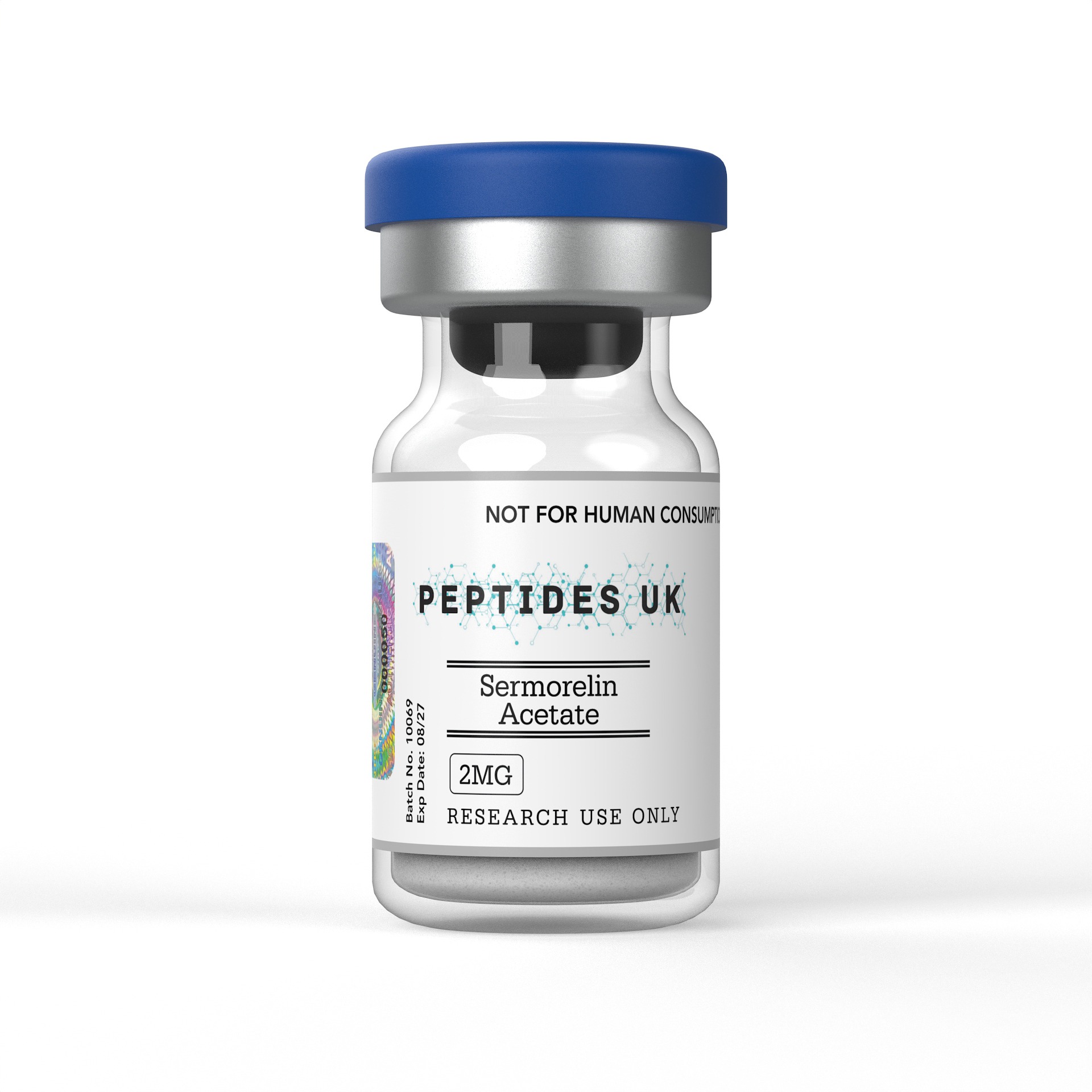
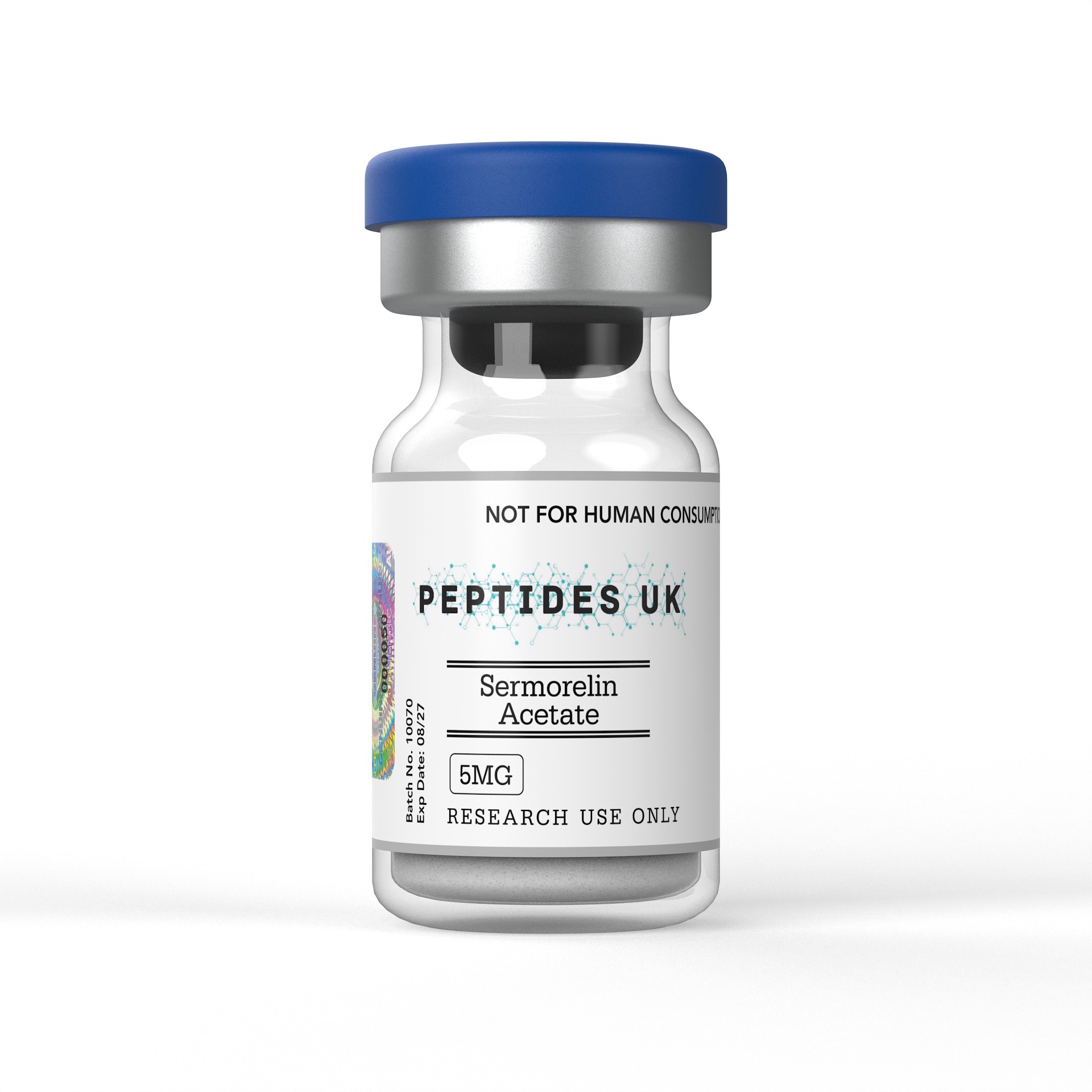
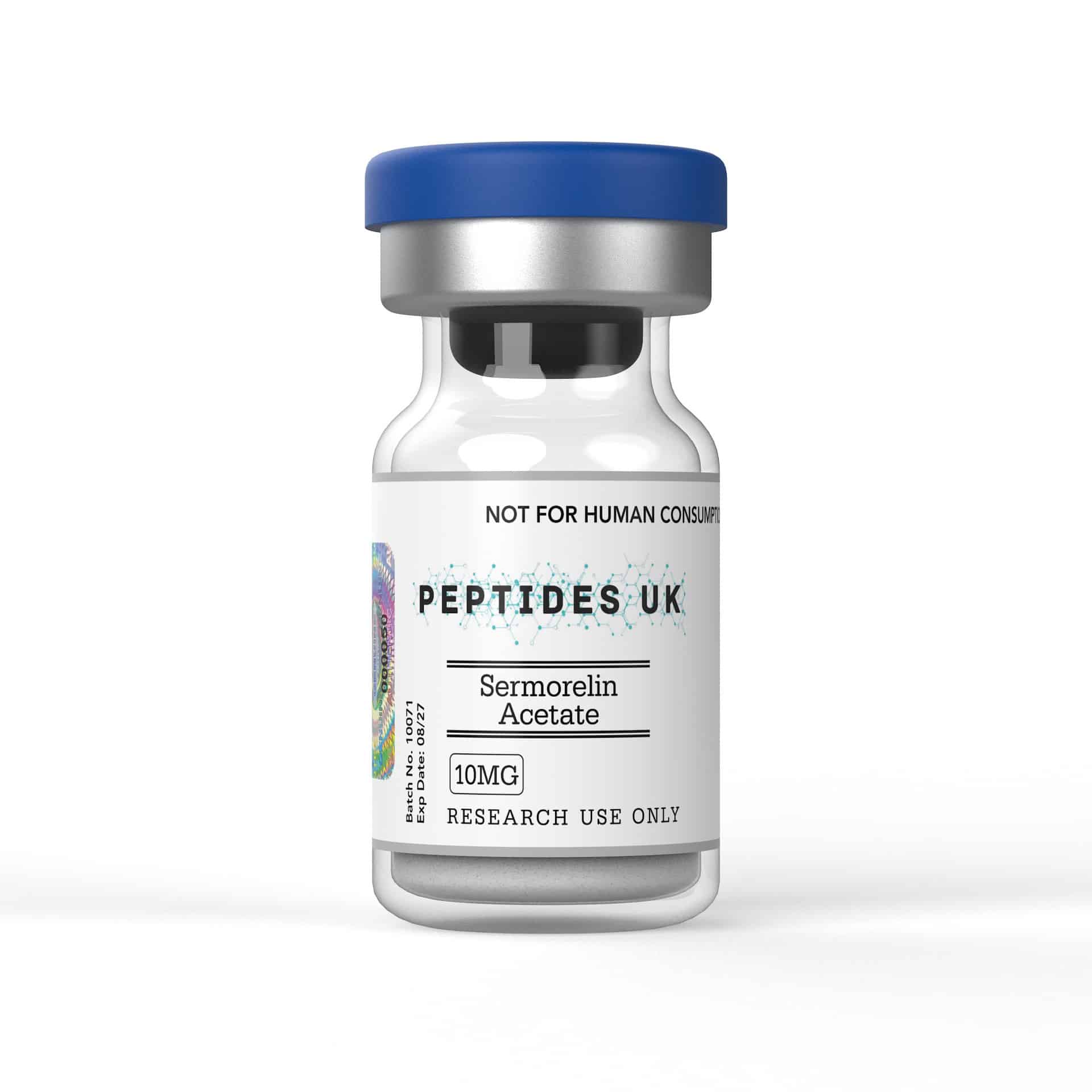
€28.00 – €114.00Price range: €28.00 through €114.00
Sermorelin Acetate — GHRH(1-29) analogue and one of the earliest-generation GHRH receptor agonists. Studied extensively in GH-axis biology research. HPLC-verified ≥99% purity, per-batch COA. Fast Ireland delivery.
For laboratory research use only. Not for human or veterinary use.



Sermorelin Acetate , GHRH(1-29)NH₂ acetate salt and is a synthetic 29-amino acid N-terminal fragment of endogenous human growth hormone releasing hormone and one of the most extensively characterised and clinically validated short-acting GHRH receptor agonist research compounds available to laboratories in Ireland , a biologically active truncation of the native 44-amino acid GHRH sequence retaining the minimal receptor-binding domain sufficient for full GHRH receptor activation and potent GH release from pituitary somatotrophs, supplied as the acetate salt for enhanced aqueous solubility and lyophilisation stability , making it an indispensable research tool for studying GHRH receptor pharmacology and Gs-cAMP-PKA signal transduction in pituitary somatotroph cells, the minimal GHRH sequence requirements for full GHRHR biological activity and structure-activity relationship research, physiological pulsatile GH secretion biology and somatotroph regulatory mechanisms, the synergistic interaction between GHRH receptor and GHS-R1a agonism in GH pulse generation, hypothalamic-pituitary GH axis integrity assessment and diagnostic GH secretory reserve evaluation, IGF-1 axis downstream biology under physiological GHRH receptor stimulation, the comparative pharmacology of native-sequence GHRH truncations versus proteolytically stabilised GHRH analogues including Modified GRF(1-29) and long-acting CJC-1295 With DAC, and somatotroph biology research requiring a clinically validated native-sequence GHRH receptor agonist reference standard, Researchers and institutions across Ireland can source verified, research-grade Sermorelin Acetate directly from our Irish peptide supply, with domestic-speed dispatch and complete batch documentation.
✅ ≥99% Purity , HPLC & Mass Spectrometry Verified
✅ Batch-Specific Certificate of Analysis (CoA) Included
✅ Sterile Lyophilised Powder | GMP Manufactured
✅ Fast Dispatch to Ireland | Peptides Ireland Stock
Sermorelin Acetate . H-Tyr-Ala-Asp-Ala-Ile-Phe-Thr-Asn-Ser-Tyr-Arg-Lys-Val-Leu-Gly-Gln-Leu-Ser-Ala-Arg-Lys-Leu-Leu-Gln-Asp-Ile-Met-Ser-Arg-NH₂ acetate salt, GHRH(1-29)NH₂ and is a synthetic 29-amino acid C-terminally amidated peptide corresponding to the biologically active N-terminal fragment of endogenous human growth hormone releasing hormone that was identified through systematic truncation studies of native GHRH(1-44) as the minimal sequence retaining full GHRHR binding affinity and biological activity. The discovery that GHRH(1-29)NH₂ retains the complete biological activity of the full-length 44-amino acid native sequence established that the C-terminal 15 residues of endogenous GHRH contribute no essential receptor-binding pharmacophore elements . A structure-activity relationship finding that defined the minimal active GHRH domain, established Sermorelin as the reference short GHRH peptide for receptor pharmacology research, and provided the pharmacological foundation for all subsequent GHRH analogue development programmes including Modified GRF(1-29), CJC-1295, and tesamorelin. The acetate salt form provides enhanced aqueous solubility and superior lyophilisation stability relative to the free base, and is the formulation used in the clinically approved Geref diagnostic and therapeutic preparations , making Sermorelin Acetate the most extensively clinically characterised GHRH receptor agonist in human GH axis research.
The GHRH receptor , GHRHR , is a Gs-coupled class B GPCR expressed predominantly on pituitary somatotroph cells, with lower expression in peripheral tissues including lung, kidney, and immune cells. Sermorelin’s engagement of GHRHR activates adenylate cyclase through Gs coupling , elevating intracellular cAMP, activating PKA, phosphorylating CREB and other transcription factors driving GH gene expression, and triggering the calcium-dependent exocytosis cascade releasing GH granules from somatotroph secretory vesicles. The Tyr1 residue at Sermorelin’s N-terminus is essential for full GHRHR binding affinity , des-Tyr1 truncations show dramatically reduced receptor engagement . And the His2 and Asp3 residues at positions 2 and 3 contribute critically to receptor contact geometry. The C-terminal amide of Sermorelin , NH₂ rather than the free carboxyl of non-amidated truncation forms . Is required for full biological activity and receptor binding potency, establishing the amidated GHRH(1-29)NH₂ sequence as the biologically active form and the acetate salt of this amidated peptide as the research-grade standard.
Sermorelin’s pharmacokinetic profile reflects its native GHRH sequence , the absence of the proteolytic stabilisation substitutions incorporated in Modified GRF(1-29) and CJC-1295 means that Sermorelin retains the principal proteolytic vulnerabilities of endogenous GHRH, including DPP-IV susceptibility at the Tyr1-Ala2 dipeptide and endopeptidase sensitivity at multiple internal sites , producing a circulating half-life of about 10–12 minutes following intravenous administration. This short half-life produces the episodic, pulsatile GH secretory response characteristic of physiological GHRH pulse biology , making Sermorelin the reference compound for studying native-sequence GHRHR activation dynamics, physiological GH pulse generation, and somatotroph responses to authentic GHRH pharmacophore stimulation without the modified pharmacokinetics introduced by amino acid substitutions in second-generation GHRH analogues.
In controlled laboratory and pre-clinical settings, Sermorelin Acetate is studied across GHRH receptor pharmacology, physiological GH secretion biology, somatotroph regulatory mechanisms, GH axis integrity assessment, GHRH-GHS synergy, IGF-1 axis biology, and comparative GHRH analogue applications:
Sermorelin Acetate is the reference native-sequence GHRHR agonist for receptor pharmacology research, Used to characterise GHRHR binding kinetics with the authentic N-terminal GHRH pharmacophore, Gs-cAMP-PKA signal transduction in somatotroph cell models, receptor desensitisation and resensitisation dynamics under pulsatile native-sequence GHRHR stimulation, and the complete downstream effector cascade linking GHRHR engagement to GH granule exocytosis. Research uses Sermorelin to establish the canonical native-sequence GHRHR activation profile . Characterising concentration-response relationships for cAMP accumulation, PKA activation, CREB phosphorylation, GH gene transcription, and insulin secretory GH exocytosis providing the physiological receptor activation benchmark against which proteolytically stabilised GHRH analogues including Modified GRF(1-29) and CJC-1295 With DAC are evaluated. These signal transduction studies establish the reference dataset for native-sequence GHRHR pharmacology and provide the molecular foundation for interpreting how amino acid substitutions in second-generation analogues modify receptor engagement relative to the authentic GHRH N-terminal sequence.
Sermorelin’s identity as GHRH(1-29)NH₂ . The minimal biologically active GHRH truncation — makes it the central reference compound for GHRH structure-activity relationship research examining which sequence elements within the 1-29 residue range are essential for GHRHR binding affinity and biological activity. Research has used Sermorelin alongside shorter GHRH truncations and GHRH(1-28), GHRH(1-27), GHRH(1-24), and shorter fragments . And N-terminal deletion series to characterise the critical pharmacophore residues required for full GHRHR activation, the relative contributions of the N-terminal Tyr1-Ala2-Asp3 triad, the central helical amphipathic region, and the C-terminal amide to receptor contact and biological activity. These structure-activity studies have established Sermorelin as the minimal active GHRH reference and provided the pharmacophore map guiding rational design of proteolytically stabilised GHRH analogues retaining full receptor activity while eliminating proteolytic vulnerability.
Sermorelin’s short half-life and native-sequence pharmacokinetics produce the episodic pulsatile GH secretory responses characteristic of physiological GHRH pulse biology , making it the reference GHRHR agonist for studying physiological GH pulse generation, somatotroph secretory kinetics, and the cellular biology of acute GHRHR-driven GH granule exocytosis in native-sequence pharmacological conditions. Research has characterised Sermorelin-induced GH secretion profiles in isolated somatotroph cells, anterior pituitary preparations, and in vivo rodent and primate models , examining GH pulse amplitude, duration, and inter-pulse interval biology following Sermorelin administration, the somatostatin-GHRH interaction governing GH pulse generation, somatotroph calcium dynamics following acute GHRHR activation, and the secretory reserve capacity of somatotroph populations under graded Sermorelin stimulation. These physiological GH secretion studies have established Sermorelin as the native-sequence GHRHR agonist reference for studying GH pulse biology under authentic GHRH pharmacophore conditions.
Sermorelin’s clinical validation as a GH secretory reserve assessment tool having received FDA approval for diagnostic evaluation of GH deficiency in the Geref diagnostic formulation and establishes it as the reference pharmacological probe for assessing hypothalamic-pituitary GH axis integrity in pre-clinical research models. Research has used Sermorelin stimulation testing paradigms to characterise somatotroph secretory reserve across rodent models of GH deficiency, ageing-related GH axis decline, hypothalamic lesion models, and pituitary tumour models and establishing Sermorelin-stimulated peak GH responses as a functional readout of somatotroph population size, GHRHR expression and coupling efficiency, and the integrity of the downstream GH secretory machinery. These GH axis integrity studies have established Sermorelin as the reference GHRHR agonist stimulation test compound for pre-clinical GH axis assessment and the benchmark against which novel GHRH analogue diagnostic utility is evaluated.
Sermorelin and GHS-R1a agonists including GHRP-6, GHRP-2, and Ipamorelin produce synergistic GH release when co-administered , with the combined response substantially exceeding the sum of individual responses through complementary Gs-cAMP and Gq/11-calcium signalling pathway interactions in somatotrophs. Research has used Sermorelin as the native-sequence GHRHR component in GHRH-GHS synergy studies . Characterising the molecular basis of Gs-Gq/11 pathway convergence on GH granule exocytosis machinery, the dose-response relationships for synergistic GH responses across GHRHR and GHS-R1a agonist concentration matrices, and how the native-sequence GHRHR activation profile of Sermorelin compares to proteolytically stabilised GHRH analogues as the GHRHR synergy partner in combined GH secretagogue research protocols. These synergy studies have established Sermorelin as the physiological-fidelity reference GHRHR agonist for studying the fundamental biology of GHRH-ghrelin axis GH regulatory interactions.
Sermorelin has been extensively used in ageing biology research , characterising the somatotroph secretory reserve decline associated with the somatopause, the relative contributions of hypothalamic GHRH deficiency versus intrinsic somatotroph dysfunction to age-related GH decline, and the GH secretory responsiveness of aged somatotroph populations to exogenous GHRHR agonist stimulation. Research has employed Sermorelin stimulation paradigms in aged rodent models , comparing peak GH responses, GH pulse architecture, and IGF-1 axis downstream biology following Sermorelin administration in young versus aged animals to characterise the cellular and molecular basis of age-related somatotroph responsiveness decline. These ageing biology studies have established Sermorelin as the reference GHRHR agonist for studying the neuroendocrine biology of somatopause and the pharmacological accessibility of aged somatotroph populations to native-sequence GHRHR stimulation.
Sermorelin-induced GH release drives hepatic IGF-1 production and IGF-1 axis activation through the GH-IGF-1 axis and making Sermorelin a research tool for studying downstream IGF-1 biology under physiological pulsatile GH secretory stimulation conditions that more closely replicate endogenous GHRH pulse-driven GH biology than sustained long-acting GHRH analogue administration. Research has characterised the IGF-1 axis responses to Sermorelin . Examining hepatic GH receptor signalling, IGF-1 and IGFBP-3 production kinetics following pulsatile Sermorelin-driven GH pulses, tissue-level IGF-1 receptor signalling in muscle, bone, and adipose tissue, and the anabolic and metabolic biology of IGF-1 axis activation under native-sequence pulsatile GHRHR stimulation. These IGF-1 axis studies have established Sermorelin as the reference GHRHR agonist for studying the downstream consequences of physiologically patterned GH secretory stimulation on IGF-1 axis biology.
Sermorelin is studied in direct comparative paradigms alongside Modified GRF(1-29) , CJC-1295 Without DAC , and long-acting CJC-1295 With DAC to characterise how proteolytic stabilisation substitutions and albumin-binding DAC technology modify GHRHR binding kinetics, GH secretory amplitude and duration, receptor desensitisation dynamics, and downstream IGF-1 axis biology relative to the native-sequence GHRH(1-29)NH₂ reference. These comparative pharmacology studies establish the pharmacological consequences of structural modification as independent variables in GHRH analogue research . Characterising how Ala8, Gln15, Ala18, and Leu27 substitutions in Modified GRF(1-29) alter GHRHR engagement relative to Sermorelin’s native sequence, and how the resulting half-life differences translate into distinct GH secretory profiles and biological outcomes. These comparative studies position Sermorelin as the native-sequence authenticity reference against which GHRH analogue structural engineering consequences are pharmacologically quantified.
Research has established that Sermorelin’s GHRH(1-29)NH₂ sequence retains the full biological activity of native GHRH(1-44) in GHRHR binding assays and in vivo GH secretion studies , documenting equivalent GHRHR binding affinity, comparable GH pulse amplitudes, and identical signal transduction pathway engagement. These equivalence studies established the minimal active GHRH domain, validated Sermorelin as a pharmacologically authentic GHRH receptor agonist research tool, and provided the foundational structure-activity relationship defining the GHRH pharmacophore.
Research has documented Sermorelin’s pulsatile GH secretory profile and characterising acute GH pulse induction with physiological amplitude and duration kinetics, inter-pulse interval dynamics governed by somatostatin rebound, and GH secretory patterns closely replicating endogenous GHRH pulse-driven somatotroph biology. These physiological kinetics studies established Sermorelin as the reference native-sequence GHRHR agonist for studying authentic GH pulse biology and validated its use as a diagnostic GH secretory reserve assessment tool in pre-clinical research paradigms.
Sermorelin Acetate received FDA approval as Geref for diagnostic GH secretory reserve assessment and therapeutic GH deficiency treatment and establishing it as the most extensively clinically characterised GHRH receptor agonist and providing the human pharmacology and safety dataset that positions Sermorelin as the reference clinically validated GHRHR agonist for translational GH axis research. This clinical validation uniquely distinguishes Sermorelin from proteolytically stabilised GHRH analogues whose human pharmacology characterisation is less extensively documented.
Research has documented synergistic GH release from Sermorelin and GHS-R1a agonist co-administration and characterising combined responses exceeding individual responses through complementary Gs-cAMP and Gq/11-calcium pathway convergence in somatotrophs. These synergy studies validated Sermorelin as a functional GHRHR synergy partner for GHS-R1a agonist co-administration research and established the native-sequence GHRHR activation synergy profile as the physiological reference for GHRH-ghrelin axis GH regulatory interaction studies.
Research has characterised age-related somatotroph responsiveness decline using Sermorelin stimulation paradigms and documenting reduced peak GH responses in aged versus young rodents, establishing the relative contributions of hypothalamic GHRH deficiency and intrinsic somatotroph dysfunction to somatopause biology, and validating Sermorelin stimulation testing as a functional probe for somatotroph secretory reserve across the lifespan. These ageing biology studies established Sermorelin as the reference pharmacological tool for somatopause research and contributed to mechanistic understanding of GH axis ageing biology.
Research has pharmacokinetically characterised Sermorelin’s DPP-IV susceptibility at Tyr1-Ala2 and endopeptidase sensitivity at internal cleavage sites and documenting the resulting 10–12 minute half-life and establishing the molecular basis of Sermorelin’s short pharmacokinetic profile. These pharmacokinetic characterisation studies provided the structural rationale for the Ala8 DPP-IV resistance modification incorporated in Modified GRF(1-29) and established the half-life differential between native-sequence Sermorelin and proteolytically stabilised GHRH analogues as the key pharmacological variable in comparative GHRH analogue research.
| Feature | Sermorelin Acetate | Modified GRF(1-29) | CJC-1295 With DAC | GHRP-6 | Ipamorelin | Tesamorelin |
|---|---|---|---|---|---|---|
| Type | Native-sequence GHRH(1-29)NH₂ acetate , minimal active GHRH truncation | Tetrasubstituted GHRH(1-29) , proteolytically stabilised | Tetrasubstituted GHRH(1-29) + albumin-binding DAC | Synthetic hexapeptide GHS-R1a agonist , first generation | Synthetic pentapeptide selective GHS-R1a agonist | Trans-3-hexenoic acid modified GHRH(1-44) analogue |
| Receptor | GHRHR . Gs-cAMP , native sequence | GHRHR , Gs-cAMP and stabilised | GHRHR , Gs-cAMP . Albumin-bound long-acting | GHS-R1a and Gq/11-calcium | GHS-R1a and Gq/11-calcium selective | GHRHR . Gs-cAMP . Full-length stabilised |
| Half-Life | ~10–12 minutes . Native sequence DPP-IV labile | ~30 minutes . Stabilised | ~6–8 days . DAC albumin depot | ~15–60 minutes | ~2 hours | ~26–38 minutes |
| GH Secretory Profile | Episodic physiological pulse , short duration | Episodic pulse . Extended | Sustained elevated pulsatile , multi-day | Episodic pulse and GHS-R1a | Episodic pulse , selective GHS-R1a | Episodic pulse , full GHRH sequence |
| Native GHRH Sequence | Yes and authentic GHRH(1-29) | No four substitutions | No . Four substitutions + DAC | N/A and GHS-R1a mechanism | N/A , GHS-R1a mechanism | No and trans-3-hexenoic acid modification |
| Clinical Validation | Yes , FDA approved Geref and most extensively clinically characterised | No | No | No | No | Yes FDA approved Egrifta for HIV lipodystrophy |
| Proteolytic Stability | Limited , native sequence DPP-IV labile | Enhanced . Ala8 DPP-IV resistance | Maximum — DAC albumin shielding | Moderate and D-amino acids | High Aib + D-amino acids | Moderate . Structural modification |
| GHRH-GHS Synergy | Yes and native-sequence reference | Yes | Yes , sustained synergy backbone | Synergistic with GHRH | Synergistic with GHRH | Yes |
| Key Research Distinction | Native-sequence authenticity , minimal active GHRH domain , clinical validation . Physiological GH pulse reference | Proteolytic stability without DAC and intermediate half-life GHRH reference | Only long-acting GHRH . Multi-day GH axis | Reference first-generation non-selective GHS | Defining selective GHS-R1a reference | Full-length stabilised GHRH and visceral fat biology |
| Parameter | Detail |
|---|---|
| Name | Sermorelin Acetate |
| Also Designated | GHRH(1-29)NH₂ acetate / GRF(1-29)NH₂ acetate / Geref (clinical formulation) / Sermorelin |
| Sequence | H-Tyr-Ala-Asp-Ala-Ile-Phe-Thr-Asn-Ser-Tyr-Arg-Lys-Val-Leu-Gly-Gln-Leu-Ser-Ala-Arg-Lys-Leu-Leu-Gln-Asp-Ile-Met-Ser-Arg-NH₂ |
| Type | Synthetic 29-Amino Acid Native-Sequence GHRH N-Terminal Fragment GHRHR Gs-cAMP Agonist Acetate Salt . Research Grade |
| Molecular Weight | 3357.9 Da (free base) / acetate salt per batch CoA |
| C-Terminal Modification | C-terminal amide (NH₂) — essential for full GHRHR binding affinity and biological activity |
| Salt Form | Acetate . Enhanced aqueous solubility and lyophilisation stability and same salt form as clinical Geref preparation |
| Mechanism | GHRHR Gs-coupled adenylate cyclase → cAMP elevation → PKA activation → CREB phosphorylation → GH gene transcription + calcium-dependent GH granule exocytosis , native-sequence physiological pulsatile GH release |
| Primary Receptor | GHRHR and Gs-coupled class B GPCR and pituitary somatotrophs |
| Half-Life | ~10–12 minutes (IV) . Native-sequence DPP-IV susceptibility at Tyr1-Ala2 |
| DPP-IV Sensitivity | Yes Tyr1-Ala2 N-terminal dipeptide susceptible , primary half-life determinant |
| Clinical Validation | FDA approved , Geref diagnostic and therapeutic formulation , most extensively clinically characterised GHRHR agonist |
| Key Research Distinction | Native-sequence GHRH(1-29)NH₂ , physiological authenticity reference , minimal active GHRH domain . Clinical validation benchmark , standard for comparative GHRH analogue structure-activity research |
| Primary Research Areas | GHRHR pharmacology / native-sequence GH pulse biology / minimal GHRH sequence SAR / GH axis integrity assessment / GHRH-GHS synergy / somatopause ageing biology / IGF-1 axis pulsatile stimulation / comparative GHRH analogue pharmacology |
| Purity | ≥99% HPLC & MS Verified |
| Form | Sterile Lyophilised Powder |
| Solubility | Sterile water or 0.1% acetic acid aqueous solution . Acetate salt enhances aqueous solubility |
| Storage (Powder) | -20°C, protect from light and moisture Met27 residue susceptible to oxidation |
| Storage (Reconstituted) | -80°C in single-use aliquots and minimise freeze-thaw cycles , avoid oxidising conditions |
| Manufacturing | GMP Manufactured |
| Intended Use | Research use only |
Sermorelin Acetate reconstitutes readily in sterile water or 0.1% acetic acid in sterile water . The acetate salt form provides excellent aqueous solubility and the acetic acid reconstitution vehicle stabilises the peptide in solution. Add reconstitution solvent slowly to the lyophilised powder and swirl gently until fully dissolved. The Met27 residue in Sermorelin’s sequence is susceptible to oxidation under prolonged storage in reconstituted form or under strongly oxidising conditions , producing methionine sulfoxide variants with potentially altered GHRHR binding affinity. Avoid oxidising reconstitution conditions, prepare working solutions under inert atmosphere where possible for long-term storage preparations, and verify Met27 integrity by mass spectrometry before critical experiments if reconstituted solutions have been stored for extended periods. The Tyr1 N-terminal residue is also light-sensitive , prepare and store reconstituted solutions in amber or foil-wrapped tubes. For in vivo GH secretion studies requiring authentic pulsatile GHRHR stimulation, prepare fresh Sermorelin Acetate working solutions in sterile saline immediately before administration and administer by intravenous or subcutaneous routes . Note that subcutaneous administration produces a delayed and attenuated GH pulse relative to intravenous injection due to absorption kinetics modifying the effective GHRHR stimulation pulse. For isolated pituitary somatotroph cell studies, dilute into physiological buffer at 37°C immediately before addition to cells. For GHRH-GHS synergy studies, prepare Sermorelin Acetate and GHS-R1a agonist compounds in matched vehicles separately and administer simultaneously or in defined sequence. For comparative studies with Modified GRF(1-29) and CJC-1295 With DAC, prepare all compounds at equivalent molar concentrations in matched vehicles , note that the half-life differential between Sermorelin and stabilised analogues is the primary pharmacological variable and experimental designs should account for this in dosing interval and biological effect window planning.
Every order of Sermorelin Acetate in Ireland includes:
✅ Batch-Specific Certificate of Analysis (CoA)
✅ HPLC Chromatogram
✅ Mass Spectrometry Confirmation , including C-terminal amide verification and Met27 oxidation assessment
✅ Sterility & Endotoxin Testing Report
✅ Reconstitution Protocol . Including Met27 oxidation protection, Tyr1 light sensitivity, and comparative analogue study design guidance
✅ Technical Research Support
Yes , research-grade Sermorelin Acetate is available to researchers and institutions across Ireland with fast dispatch and full batch documentation. Supplied strictly for laboratory research purposes only.
Sermorelin is the only native-sequence GHRH(1-29)NH₂ research compound and retaining the authentic endogenous GHRH N-terminal pharmacophore without amino acid substitutions. This native-sequence authenticity makes it the physiological reference standard for GHRHR pharmacology and the benchmark against which all structurally modified GHRH analogues are pharmacologically evaluated. Its FDA approval as Geref further distinguishes it as the most extensively clinically characterised GHRHR agonist available.
The C-terminal amide (NH₂) of Sermorelin GHRH(1-29)NH₂ is required for full GHRHR binding affinity . Non-amidated GHRH(1-29) free acid forms show substantially reduced receptor engagement and GH-releasing potency. The amide group contributes to the pharmacophore geometry and charge distribution required for optimal GHRHR contact at the C-terminal binding region and is a critical quality specification distinguishing biologically active from inactive GHRH truncation forms.
Sermorelin’s 10–12 minute half-life produces discrete episodic GH pulses following each administration and ideal for studying physiological GH pulse biology but requiring frequent administration for sustained GH stimulation paradigms. For in vitro studies, the short half-life is operationally managed by direct addition to cell cultures where DPP-IV activity is absent or minimal. For in vivo sustained GH stimulation, Modified GRF(1-29) or CJC-1295 With DAC are preferred . With Sermorelin reserved for physiological pulsatility studies where native-sequence GHRHR kinetics are the research requirement.
Vehicle controls in matched acetate buffer, des-Tyr1-Sermorelin as a minimal activity N-terminal deletion control confirming Tyr1 pharmacophore requirement, GHRHR antagonist controls confirming receptor specificity, GHS-R1a antagonist [D-Lys3]-GHRP-6 for synergy studies distinguishing GHRHR from GHS-R1a contributions, and Met27-oxidised Sermorelin as a degradation control confirming activity dependence on intact Met27. For comparative studies, Modified GRF(1-29) at equivalent molar concentrations establishes the half-life extension contribution to pharmacological differences.
Sermorelin Acetate’s FDA approval as Geref provides an extensive human pharmacology, safety, and clinical efficacy dataset unavailable for non-approved GHRH analogues . Establishing validated human GH secretory response parameters, safety characterisation across clinical populations, and pharmacokinetic data in human subjects. This clinical validation dataset makes Sermorelin the preferred GHRHR agonist for translational research bridging pre-clinical GH axis biology to human pharmacology contexts and provides the reference human GH secretory response benchmark for comparative GHRH analogue research.
≥99% purity by HPLC and mass spectrometry is essential Met27 oxidation products, des-Tyr1 truncation fragments, non-amidated C-terminal variants, and DPP-IV cleavage products showing Tyr1-Ala2 dipeptide loss would show substantially altered GHRHR binding affinity and GH secretory potency. C-terminal amide integrity verification and Met27 oxidation assessment are critical specifications beyond standard HPLC purity. All Sermorelin Acetate Ireland stock is verified to ≥99% purity with C-terminal amide and Met27 integrity confirmed by mass spectrometry.
Sermorelin Acetate is supplied exclusively for legitimate scientific research purposes conducted within licensed laboratory environments. This product isn’t intended for human consumption, self-administration, or any therapeutic application. It must be handled by qualified researchers in compliance with applicable Irish and EU regulations and institutional ethics guidelines. By purchasing, you confirm that this compound will be used solely for approved in vitro or pre-clinical research purposes.
Sermorelin Acetate isn’t authorised as a medicine by the HPRA. It’s legal to buy, hold and use as a research chemical for in-vitro laboratory work, and that’s the only use we supply it for. If you want the full regulatory picture, see our Irish researcher’s guide to peptide legality.
Every vial ships with an HPLC purity trace (typically ≥99%), mass-spec identity confirmation, and endotoxin/heavy-metal screening on the batch. The full per-batch Certificate of Analysis is available on request from research@peptideslabireland.com. Our quality system is ISO 9001 certified and third-party testing runs through a UKAS-accredited lab.
Standard protocol: let the Sermorelin Acetate vial and your bacteriostatic water come to room temperature, wipe both stoppers with a 70% isopropyl swab, then inject the water slowly down the side wall of the peptide vial. Don’t stream directly onto the powder cake. Swirl gently, don’t shake, and give it five to ten minutes to fully dissolve. Label the vial with compound, concentration and reconstitution date, store at 2–8°C between assays.
Same-day dispatch on orders placed before 2pm on a working day. Delivery is 24–48 hours to any Irish county via An Post Express or DPD. Cold chain is preserved with insulated wrap plus gel pack. No customs step, no border delays and because it never leaves Ireland.
In the Irish research space Sermorelin Acetate tends to appear in GLP-1 receptor signalling and glucose-homeostasis research. It’s often paired with Tirzepatide or Retatrutide in comparison studies when researchers are studying combined mechanisms rather than the compound alone.
Lyophilised Sermorelin Acetate is refrigerated post-reconstitution, working shelf life 14–28 days. Once reconstituted, keep it refrigerated at 2–8°C and use within the working shelf life described on the CoA. Freeze/thaw cycles degrade peptides, so aliquot the reconstituted solution if you plan to run assays over several weeks.

Receive News